2024-06-10 07:03
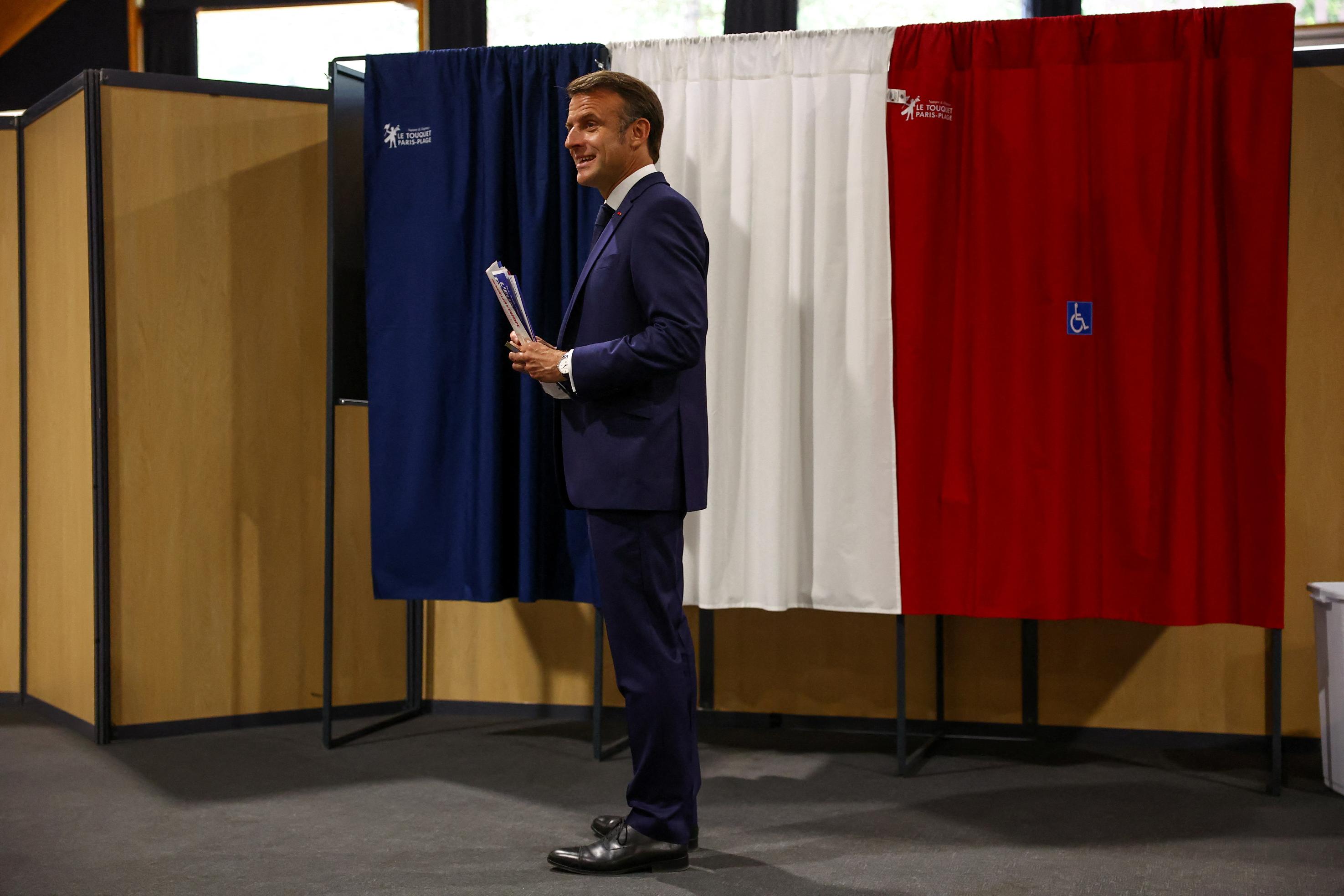
Macron calls early election after far-right surge in EU vote Possible hung parliament, risk to Macron's domestic agenda Euro and French stocks fall after far-right gains at EU level PARIS, June 10 (Reuters) - The far-right National Rally was forecast on Monday to win a snap election in France but fall short of an absolute majority in the first opinion poll published after President Emmanuel Macron's shock decision to dissolve parliament. Following a massive loss for his Renaissance party in Sunday's European Parliament election, Macron announced snap elections for the lower house of parliament, with the first round scheduled for June 30, less than three weeks away, and the run-off on July 7. Marine Le Pen's anti-immigration, eurosceptic National Rally party, known as RN, would win 235 to 265 seats in the National Assembly, a huge jump from its current 88 but short of the 289 needed for an absolute majority, according to the survey by Toluna Harris Interactive for Challenges, M6 and RTL. Macron's centrist alliance would see its number of lawmakers possibly halve, from 250 to 125-155, the poll showed on Monday. Leftwing parties could together control 115 to 145 seats, though each party could run on its own. There is no certainty the RN would run the government, with or without an alliance with others. Other scenarios include a wide-ranging coalition of mainstream parties, or a completely hung parliament. But Macron's shock decision does offer the increasingly popular far right a real shot at power. Amounting to a roll of the dice on his political future, this immediately sent the euro down, while French stocks and government bonds tumbled. RN won 31.4% of the European Parliament vote while the Renaissance party coalition had 14.6% Even if RN does score a majority in the French parliament, Macron would remain president for three more years and still be in charge of defence and foreign policy. But he would lose control over the domestic agenda including economic policy, security, immigration and finances, which would in turn impact other policies, such as aid to Ukraine, as he would need parliament's backing to finance any support as part of France's budget. "We're still in shock," Emmanuel Pellerin, a lawmaker from Macron's Renaissance party, told Reuters. "Everything points to the RN winning a relative or absolute majority. But that forces the French to think about what is at stake." In that context, political parties were racing to field candidates and discuss possible alliances. PARTY TALKS RN leaders Jordan Bardella and Le Pen held talks on Monday with Marion Marechal of the smaller far-right Reconquete party. Marechal is Le Pen's niece and used to be a prominent member of her party before they fell out. Bardella said after the meeting that talks were under way over forming an alliance. He added he was also talking with some members of the conservative Les Republicains. "I fervently wish that we can find ways to all come together," Marechal told reporters. Leaders of the very divided French left - the hard left LFI (France Unbowed), Communists, Socialists and Greens - were also holding talks. "We don't have time to procrastinate," Manon Aubry, of LFI, told reporters. "The objective is to be able to meet again, to build the future and above all to go and win." A source close to Macron said the 46-year-old leader, whose power has been diminished since he lost his absolute majority in parliament two years ago, calculated that there was a chance he could win back a majority by taking everyone by surprise. For Le Pen and Bardella, the challenge is to transform popularity into a win. The vote is likely to revolve not only around discontent with Macron's style of power, cost of living and immigration policies, but also about whether the RN can be trusted to run a major European government. Among policies put forward by the party, the RN has proposed higher public spending, despite already significant levels of French debt, threatening to further raise funding costs at banks. The RN also wants to expel more migrants, stop family reunification, restrict childcare benefits to French citizens, give French nationals preference in access to social housing and jobs and withdraw residency for migrants who are out of work for more than a year. The euro fell by as much as 0.6%, while Paris blue-chip stocks dropped by 1.4%, led by steep losses in banks BNP Paribas (BNPP.PA) New Tab, opens new tab and Societe Generale (SOGN.PA) New Tab, opens new tab. The early election will come shortly before the July 26 start of the Paris Olympics, when all eyes will be on France. Sign up here. https://www.reuters.com/world/europe/france-enters-election-mode-after-far-right-win-european-parliament-vote-2024-06-10/
2024-06-10 06:52
Goldman Sachs forecasts Brent rise to $86 in third quarter U.S. dollar rises to four-week high against other currencies U.S. jobs data dampens hopes for near-term rate cuts NEW YORK, June 10 (Reuters) - Oil prices climbed about 3% to a one-week high on Monday, buoyed by hopes of rising fuel demand this summer despite a stronger U.S. dollar and expectations the U.S. Federal Reserve will leave interest rates higher for longer. The Fed hiked interest rates aggressively in 2022 and 2023 to tame a surge in inflation. Those higher rates have boosted borrowing costs for consumers and businesses, which can slow economic growth and reduce demand for oil. Similarly, a stronger U.S. dollar can reduce demand for oil by making dollar-denominated commodities like oil more expensive for holders of other currencies. Brent futures rose $2.01, or 2.5%, to settle at $81.63 a barrel, while U.S. West Texas Intermediate (WTI) crude rose $2.21, or 2.9%, to settle at $77.74. That was the highest close for both crude benchmarks since May 30. "Futures are higher as expectations of summer demand are supportive of prices ... despite the broader macro landscape remaining less optimistic than weeks previous," analysts at energy consulting firm Gelber and Associates said in a note. Goldman Sachs analysts said they expect Brent to rise to $86 a barrel in the third quarter, noting in a report that solid summer transport demand will push the oil market into a third-quarter deficit of 1.3 million barrels per day (bpd). The U.S. dollar (.DXY) New Tab, opens new tab, meanwhile, rose to a four-week high against a basket of other currencies as the euro fell sharply due to political uncertainty in Europe after gains by far-right parties in voting for the European Parliament prompted a bruised French President Emmanuel Macron to call a snap national election. Oil last week posted a third straight weekly loss on concerns that a plan to unwind some production cuts by the Organization of the Petroleum Exporting Countries (OPEC) and its allies, known collectively as OPEC+, from October will add to rising supply. Despite the OPEC+ cuts, oil inventories have risen. U.S. crude stocks increased in the latest week, as did gasoline stocks. Energy consultancy FGE also expects oil to rally, with prices reaching the mid-$80s into the third quarter. "We continue to expect the market to firm up," FGE said. "But it will likely need a convincing signal of tightening from preliminary inventory data." LOOKING AHEAD Investor attention now turns to the release of U.S. consumer price index data for May on Wednesday for hints on when the Fed may start reducing interest rates. The market is also waiting for the conclusion of the Fed's two-day policy meeting on Wednesday, in which the central bank is overwhelmingly expected to hold interest rates steady. Markets dialed back expectations for rate cuts by the Fed in September after stronger-than-expected jobs data on Friday, with pricing now reflecting a less-than-50% chance of a reduction. Expectations for a cut had risen as high as 69% last week. Traders also trimmed their expectations for the amount of Fed easing this year, with pricing implying just one cut versus two prior to the payrolls data, according to data from financial firm LSEG. The market is also waiting for monthly oil supply and demand data from the U.S. Energy Information Administration (EIA) and OPEC on Tuesday and the International Energy Agency (IEA) on Wednesday. Sign up here. https://www.reuters.com/markets/commodities/oil-slips-dollars-strength-us-jobs-data-2024-06-10/

2024-06-10 05:50
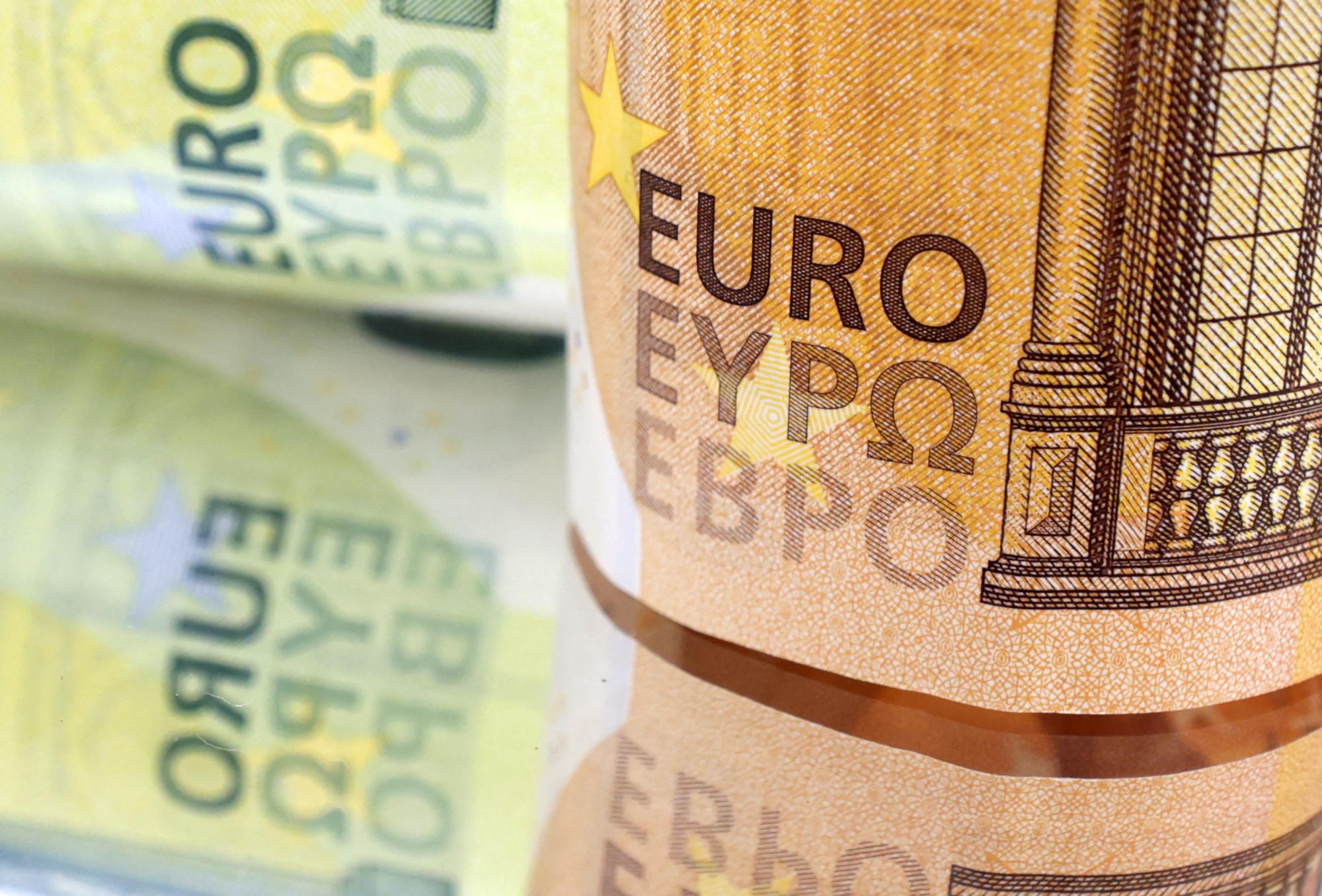
NEW YORK/LONDON, June 10 (Reuters) - The euro fell on Monday after gains by the far right in European Parliament elections on Sunday prompted French President Emmanuel Macron to call a snap national election. The uncertainty in France adds one more element to what will be a busy week for markets with U.S. inflation data due on Wednesday, the same day as the Federal Reserve's policy decision at its two-day meeting, and a Bank of Japan meeting on Friday rounding off the week. The euro was last down 0.4% against the dollar at $1.076 and got as low as $1.0733, its lowest since May 9. It also fell 0.4% on sterling to a near two-year low of 84.52 pence , and was last down 0.4% on the Swiss franc at a seven-week low of 0.9648 francs. The increase in support for right wing parties was "generally what was expected, but the surprise element is that Macron has reacted by calling a snap election, so that makes the market more nervous," said Lee Hardman, senior currency analyst at MUFG. The U.S. dollar was also boosted after Friday’s jobs report showed that employers added more jobs than expected in May, while wages also rose more than anticipated, leading traders to pare back expectations that the U.S. central bank will cut rates as soon as September. "The market was clearly caught wrong footed," said Paula Comings, head of foreign exchange sales at U.S. Bank in New York. Wednesday’s consumer price index (CPI) for May will be the next major data point to drive Fed expectations. If inflation comes in softer, “the market's going to feel some relief. I think the dollar could weaken, but probably not out of its recent range,” said Comings. If it is high, however, "euro/dollar would continue to trade down towards the lower end of the range" and it will "impact (emerging market) currencies disproportionately," Comings said. Fed officials have said that they want to see several months of inflation falling back closer to their 2% annual target before cutting rates. Economists polled by Reuters expect headline consumer price inflation to ease to 0.1%, from 0.3% last month, and core price pressures to remain steady on the month at 0.3%. (USCPI=ECI) New Tab, opens new tab, (USCPF=ECI) New Tab, opens new tab A New York Fed survey on Monday showed that the U.S. public’s outlook on the future path of inflation was mixed in May, though inflation is seen as being 3.2% a year from now, compared with April’s expectation of 3.3%. Fed policymakers will update their economic and interest rate projections when they conclude their two-day meeting on Wednesday. At the last such release in March, the median projection was for three 25 basis point cuts this year and investors anticipate the new forecast will show an expectation of fewer rate reductions. The dollar index was last up 0.09% at 105.15 and earlier reached 105.39, the highest since May 14. The paring back of expectations for rate cuts has been supporting the dollar for much of 2024, with the Japanese yen in particular suffering due to the large interest rate gap between the U.S. and Japan. The dollar was last up 0.25% on the Japanese currency at 157.08 yen, the highest in a week. . The Bank of Japan will hold its two-day monetary policy meeting on Thursday and Friday, with the central bank widely expected to maintain short-term interest rates in a 0-0.1% range. Reuters reported last week that BOJ policymakers are brainstorming ways to slow its bond buying and may offer fresh guidance. In cryptocurrencies, bitcoin gained 0.71% to $69,768. Sign up here. https://www.reuters.com/markets/currencies/euro-slips-one-month-low-macron-calls-french-election-2024-06-10/
2024-06-10 05:48
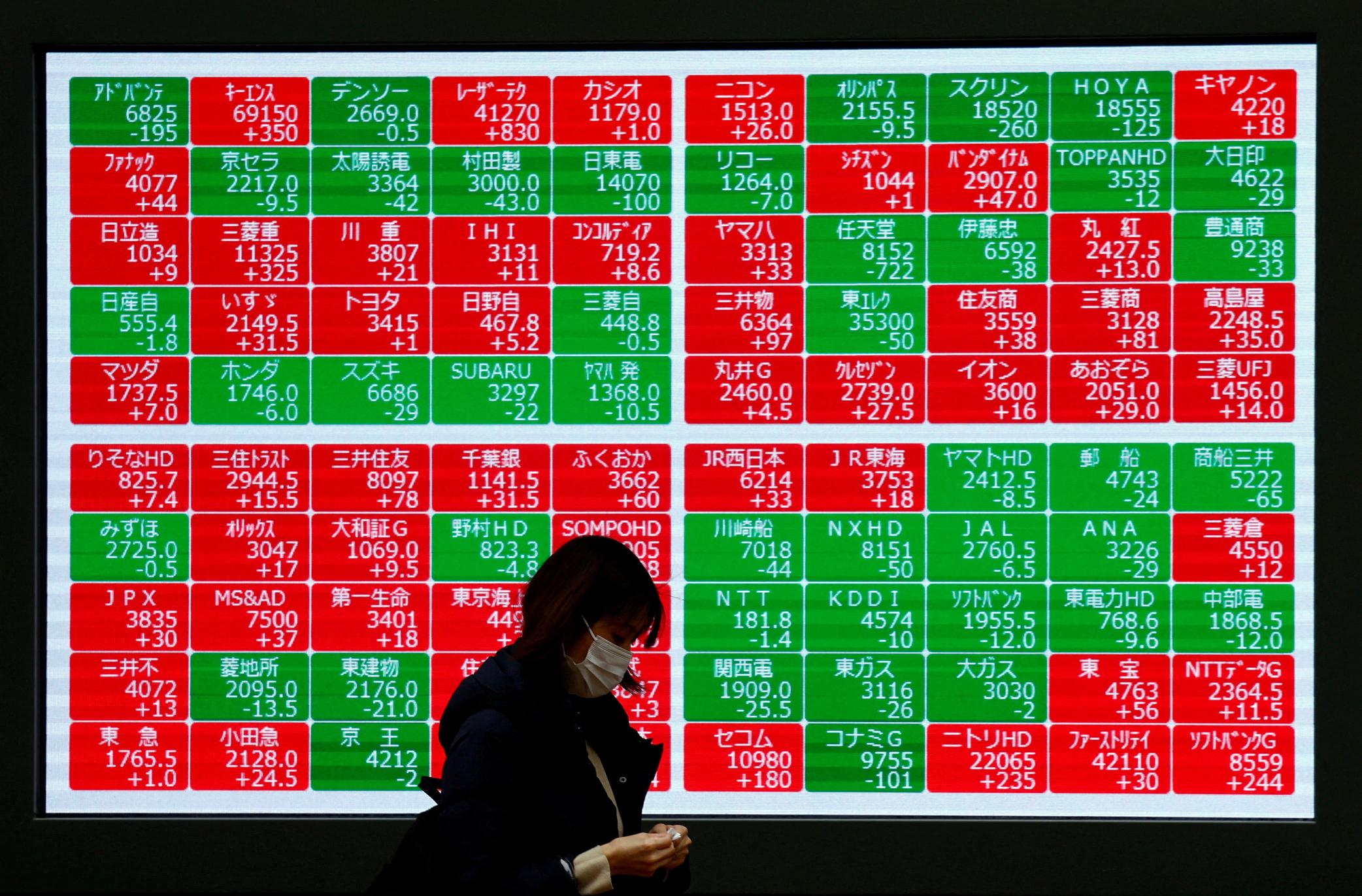
European markets jolted by French election news Fed, BOJ meetings this week, US CPI add to caution NEW YORK/LONDON, June 10 (Reuters) - MSCI'S global equities index edged higher on Monday while investors waited for key U.S. inflation data and central bank policy meetings but the euro fell after French President Emmanuel Macron called a snap election. U.S. Treasury yields rose as investors digested Friday's labor market data and looked toward consumer price data and a Federal Reserve policy announcement this week. Investors are also waiting on Bank of Japan policy news. Adding further uncertainty to a busy week was fresh political uncertainty in the euro zone's second-biggest economy after far-right gains in European Parliament elections on Sunday prompted a bruised Macron to call a national election. The euro fell to a one-month low against the dollar , while European stocks slipped. "There's a little bit of uncertainty coming from a couple of areas. Look at the elections over the weekend in Europe. The uncertainty there is creating a fair amount of volatility," said Chad Oviatt, director of investment management at Huntington National Bank. Europe's STOXX 600 (.STOXX) New Tab, opens new tab index earlier closed down 0.27% while France's blue-chip CAC 40 index .FCHI fell 1.4% to touch a more than three-month low. But MSCI's gauge of stocks across the globe (.MIWD00000PUS) New Tab, opens new tab turned from red to green as the day wore on and Wall Street regained some lost ground. The global index was last up 0.75 points, or 0.09%, at 794.99. On Wall Street, the S&P 500 and the Nasdaq composite managed to mark their second record closing highs in four days. The Dow Jones Industrial Average (.DJI) New Tab, opens new tab rose 69.05 points, or 0.18%, to 38,868.04, the S&P 500 (.SPX) New Tab, opens new tab gained 13.80 points, or 0.26%, to 5,360.79 and the Nasdaq Composite (.IXIC) New Tab, opens new tab gained 59.40 points, or 0.35%, to 17,192.53. Huntington's Oviatt said investors are eagerly awaiting U.S. consumer price index (CPI) inflation data due on Wednesday morning just ahead of the Fed's next policy decision due Wednesday afternoon. Adding to uncertainty about what the economic data will mean for the Fed's rate policy was Friday's payrolls report, which showed the U.S. economy created far more jobs than expected in May while annual wage growth re-accelerated. "It seems that everybody is itching for a rate cut, but it's not justified as of yet. And so they're clinging on Wednesday morning, CPI data, hoping that'll give us more direction and additional commentary from the Fed later on that afternoon, trying to get some clarity," said Jim Barnes, director of fixed income at Bryn Mawr Trust in Berwyn, Pennsylvania. U.S. Treasury yields, which move inversely to prices, rose on Monday, reflecting the higher-for-longer U.S. rate expectations. The yield on benchmark U.S. 10-year notes rose 4.1 basis points to 4.469%, from 4.428% late on Friday, while the 30-year bond yield rose 4.8 basis points to 4.5958%. The 2-year note yield, which typically moves in step with interest rate expectations, rose 1.5 basis points to 4.8846%, from 4.87% late on Friday. In currencies, the euro fell to its lowest level against the U.S. dollar since May 9, and was last off 0.37% against the greenback at $1.076. Earlier, it hit a near 2-year low against sterling . The dollar index , which measures the greenback against a basket of currencies including the euro and Japan's yen, gained 0.08% at 105.14. Against the Japanese yen , the dollar strengthened 0.21% to 157.03. The Bank of Japan (BOJ) holds a two-day monetary policy meeting this week and could offer fresh guidance on how it plans to scale back its massive bond purchases. In commodities, oil prices rose to a one-week high on hopes of rising fuel demand this summer, though gains were capped by dollar strength and receding expectations of U.S. rate cuts. U.S. crude settled up 2.93% at $77.74 a barrel and Brent settled at $81.63 per barrel, up 2.52%. Gold prices rebounded after dropping the most in 3-1/2 years in the previous session, as investors waited for inflation data and the Fed's policy statement. Spot gold added 0.72% to $2,309.15 an ounce. Sign up here. https://www.reuters.com/markets/global-markets-wrapup-1-2024-06-10/
2024-06-10 05:02
June 10 (Reuters) - The United States is merrily chipping away at the pillars that hold up the dollar as the world's reserve currency, with the latest blows coming from some powerful Americans questioning the rule of law following the conviction of Donald Trump. In doing so, it is effectively daring the rest of the world to find an alternative - and so far, it appears to be winning. The attacks on the legal system in the aftermath of former President Trump’s conviction follow other moves that are seen by some as the United States throwing down the gauntlet to the rest of the world. The country has radically increased the use of sanctions as a punitive foreign policy tool. And it is adding on an immense amount of debt, leaving hapless foreigners who seek the safety and depth of its markets to fund its excesses. Over the past three weeks, I have been asking financial services executives, global investors and other experts in Asia and the United States how long they think the Americans can keep at it without meaningful blowback. Several of the sources requested anonymity to speak candidly about the situation. These conversations showed consternation is growing, both at home and abroad, about the consequences of U.S. hubris. But despite trying, no one so far has been able to find a credible alternative or expects one to emerge anytime soon, and they have partly themselves to blame. In Asia, for example, people are asking with increasing urgency what's their 'America plus 1', as they search for ways to reduce their U.S. exposure and boost non-dollar trade flows. But attempts to build such systems are slow-going or haven't gotten traction. And rising authoritarianism, threats to individual and property rights and geopolitical tensions have meant that even if U.S. assets are less attractive than they were before, other options are worse. A recent survey, for example, shows central bank reserve managers plan to increase their dollar holdings over the next 12-24 months as the rise in global geopolitical tensions and need for liquidity draw them to the currency. "Perhaps ironically, the U.S. dollar's strength is, in part, due to its near-unchallenged safe-haven status," said Steve H. Hanke, a professor of applied economics at Johns Hopkins University, who served on former President Ronald Reagan's Council of Economic Advisers. "That said, most investors don't understand geopolitics and the dangers that lurk below the surface – until it's too late." DOLLAR'S DOMINANCE At its core, the dollar's dominant role in the world draws from the United States' democratic principles. It is supported by the massive size of its economy, the depth of its markets, and the strength of its institutions and the rule of law. The belief in democracy runs deep. Last week, I asked U.S. Securities and Exchange Commission Chair Gary Gensler, who has been in government since 1997, whether partisan politics had made the job of officials like him harder. A conservative-leaning U.S. appeals court had struck down one of his signature initiatives that morning. "I believe in this constitutional system that we have. It's messy," Gensler said. "It's democracy." Nevertheless, the messiness is testing some of the underpinnings of the dollar's global appeal. Attacks on the U.S. legal system have increased after the Trump verdict in a New York court. Florida Governor Ron DeSantis, for example, called it a "kangaroo court" on the social media platform X, saying "the verdict represents the culmination of a legal process that has been bent to the political will of the actors involved." A major investor based in Asia said potential threats to U.S. institutions were also worrying. Any debasing of the Federal Reserve's authority -- as Trump allies are reportedly contemplating -- would affect the dollar’s credibility, the investor said, adding that such a development could see a double-digit depreciation of the currency. Trump's campaign for his Republican presidential bid has played down such reports of what conservative groups might be planning. THICKET OF SANCTIONS A senior New York-based financial services executive who was traveling in Asia said he is hearing from clients who think the U.S. and Western financial policy is "undermining the dollar and the Western financial system more broadly." He pointed to an "ever expanding thicket of sanctions" as one reason. And the West is pushing the envelope further. The financial executive said the discussion that the West might seize some $300 billion of sovereign Russian assets that were blocked over Ukraine undermined the United States' safe haven status. "The West crossed a Rubicon there," the executive said. An October 2021 Treasury Department review of sanctions found such designations had increased to 9,421 by that year from 912 in 2000. It noted at the time that "American adversaries — and some allies — are already reducing" their use of the dollar. An Asia-based investor said he was watching another court case closely to test the strength of the rule of law: ByteDance's challenge of a U.S. ban on TikTok. He is watching for the evidence that the U.S. government would produce to back up claims of the app being a national security threat. If no proof is publicly offered, then it would "feel that the checks and balance, the independence of the legal system, may not be there -- at least in this case," the investor said. But then he added that even that may not turn him away from the United States. It's still more independent and better than many other places, he said. Sign up here. https://www.reuters.com/markets/currencies/market-how-us-is-daring-world-find-dollar-alternative-2024-06-10/
2024-06-10 04:41
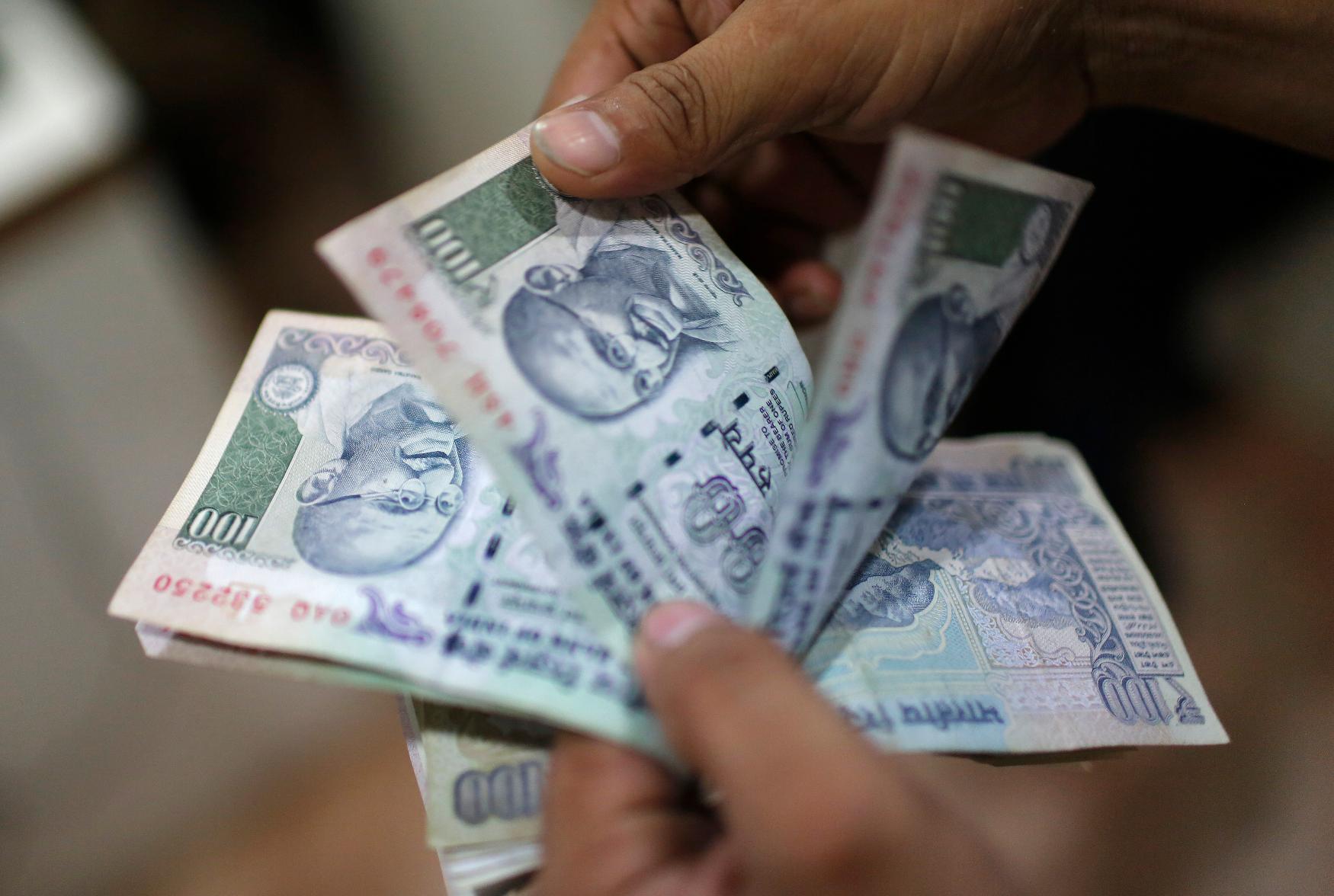
MUMBAI, June 10 (Reuters) - The Indian rupee weakened on Monday tracking its Asian peers amid a pullback in hopes of policy easing by the U.S. Federal Reserve, which also prompted a decline in dollar-rupee forward premiums. The rupee was at 83.4925 against the U.S. dollar as of 09:50 a.m. IST, down 0.1% from its close at 83.3725 on Friday. Stronger than expected U.S. labour market data boosted the dollar and U.S. bond yields as odds of September rate cut fell below 50%, according to CME's FedWatch tool. The dollar index was up 0.2% at 105.3, adding to Friday's gains, while the Korean won led losses in Asian currencies with a 0.9% fall. Expect the dollar-rupee pair to be "overall biddish due to trimmed rate cute expectations," but the range continues to be 83.35-83.60, a foreign exchange salesperson at a large private bank said. Dollar-rupee far forward premiums also dropped with the 1-year implied yield down 3 basis points at 1.58%, its lowest in over two months, pressured by a rise in U.S. bond yields. The 1-year U.S. Treasury yield ticked higher to 5.20% in Asia hours after rising 9 basis points on Friday. "Asia FX could face volatility amid the rise in U.S. yields," Lloyd Chan, senior currency analyst at MUFG Bank said in a note. Meanwhile, benchmark Indian equity indexes, the BSE Sensex (.BSESN) New Tab, opens new tab and Nifty 50 (.NSEI) New Tab, opens new tab, hit record highs in early trading before paring gains to trade little changed on the day. The focus this week will be on local and U.S. inflation data alongside the Fed's policy decision on Wednesday. With the U.S. central bank expected to keep rates unchanged, investors will pay attention to Chair Jerome Powell's commentary and any updates to the interest rate dot plot. Sign up here. https://www.reuters.com/markets/currencies/rupee-declines-tracking-asian-peers-forward-premiums-drop-2024-06-10/