2024-06-07 04:34
A look at the day ahead in European and global markets from Rae Wee Closely watched U.S. nonfarm payrolls data on Friday marks the final piece in an eventful week that's been nothing short of a boon for the global rate cut rally. The durability of that optimism depends on whether those jobs figures affirm the case for a Fed rate cut or not. Expectations are for the world's largest economy to have added 185,000 jobs last month - slightly more than April's 175,000, which was the smallest gain in half a year. With a slew of economic data this week pointing to an easing of labour market conditions, that puts even more emphasis on Friday's numbers to reinforce that narrative. So any upside surprise could deliver a nasty shock to markets. Investors have already been adding to bets the Fed could ease rates in September, following similar moves by the European Central Bank and Bank of Canada this week. World stocks have rallied, bond yields compressed and the dollar was headed for a weekly loss. The two-year U.S. Treasury yield ticked slightly higher on Friday, having fallen for six straight days in the previous session. That's the longest uninterrupted decline going back to late last year, according to Tradeweb data, or back to March 2020, according to Reuters/Refinitiv indicative pricing. LEFT OUT China, however, was an outlier to the global rally. Risk sentiment in the world's second-largest economy turned sour after a group of U.S. lawmakers said leading Chinese battery companies with ties to Ford Motor and Volkswagen should be banned from shipping goods to the U.S., the Wall Street Journal reported. Chinese blue-chips (.CSI300) New Tab, opens new tab fell 0.7%, while Hong Kong's Hang Seng Tech index (.HSTECH) New Tab, opens new tab tumbled 1.4%. The negative headlines overshadowed domestic data which showed China's exports grew more quickly and for a second month in May, providing some relief to the economy as it seeks a durable recovery amid a protracted property crisis. Key developments that could influence markets on Friday: - Germany industrial output (April) - Germany imports, exports data (April) - Euro zone revised GDP (Q1) - U.S. nonfarm payrolls (May) Sign up here. https://www.reuters.com/markets/europe/global-markets-view-europe-2024-06-07/
2024-06-07 02:50
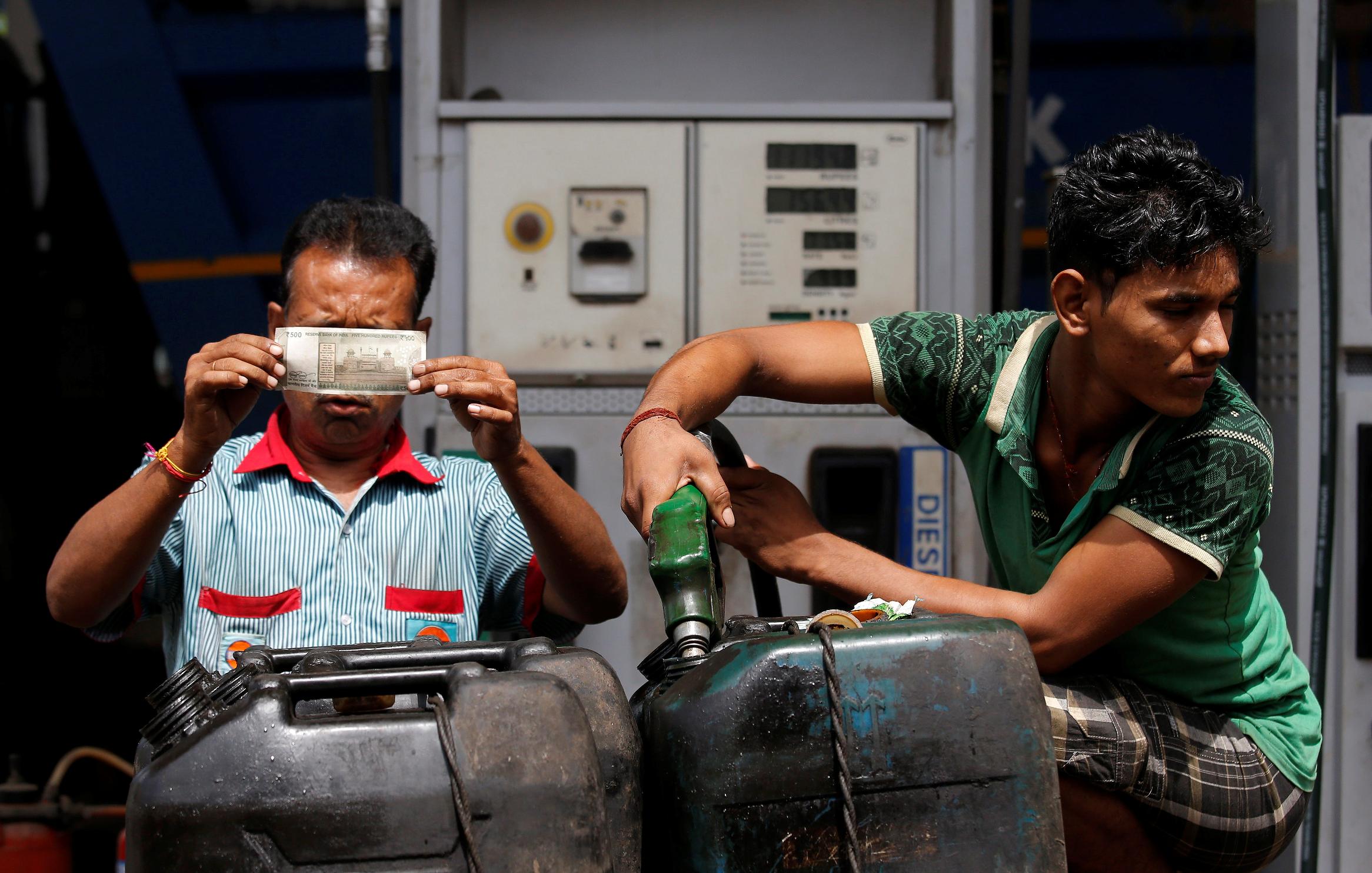
MUMBAI, June 7 (Reuters) - The Indian rupee is expected to open broadly unchanged on Friday, holding near to a key level and awaiting the Reserve Bank of India's policy decision and the U.S. non-farm payroll report. Non-deliverable forwards indicate rupee will mostly be flat from 83.4725 in the previous session. "Now with the election excitement out of the way, it should be a quiet session," a spot currency trader at a bank said. There is a "low probability that we inch past 83.50 (on dollar/rupee) and on the downside, the dip will not be at most 3-4 paise." On the RBI's policy, he said it was "difficult to see any form of market-moving stuff". The RBI is widely expected to make no changes to the policy rate or the stance amid robust growth and inflation higher than its target level. The focus will be on inflation and liquidity commentary. "On the growth front, domestic demand remains resilient, reflected in high-frequency growth indicators, while external demand suggests nascent signs of revival," Morgan Stanley said in a note. "We expect the RBI to continue with its measures to support liquidity amid frictional tightening." The rupee's Asian peers were mostly higher and the dollar index marginally lower before the release of the monthly U.S. jobs report. The data is crucial in the backdrop of uncertainty on the Federal Reserve interest rate outlook. Heading into the data, interest rate futures are pricing two rate cuts this year, with the first in September. Two major central banks have already cut rates before the Fed - the European Central Bank cut rates on Thursday, a day after the Bank of Canada. KEY INDICATORS: ** One-month non-deliverable rupee forward at 83.54; onshore one-month forward premium at 6.5 paise ** Dollar index down at 104.08 ** Brent crude futures up 0.1% at $79.9 per barrel ** Ten-year U.S. note yield at 4.3% ** As per NSDL data, foreign investors sold a net $576.1mln worth of Indian shares on Jun. 5 ** NSDL data shows foreign investors bought a net $72.1mln worth of Indian bonds on Jun. 5 Sign up here. https://www.reuters.com/markets/currencies/rupee-hold-above-8350usd-awaits-cenbank-policy-us-jobs-data-2024-06-07/
2024-06-07 01:00
LONDON, June 6 (Reuters) - U.S. oil and gas production are finally showing signs of flattening out as drilling rigs and well completion crews have been idled in response to the retreat in prices since the middle of 2022. Nationwide crude and condensates production was running at almost 13.2 million barrels per day (b/d) in March 2024 according to the latest data from the U.S. Energy Information Administration (EIA). However, there had been no net growth since October 2023, indicating the surge in production after the end of the coronavirus pandemic and Russia’s invasion of Ukraine had ended. Production from the Lower 48 states excluding federal waters in the Gulf of Mexico was up by less than 0.5 million b/d in March compared with the same month a year earlier. Growth had slowed from 0.9 million or 1.0 million b/d in the second half of 2023 as the impetus from the previous high prices in 2022 faded. Chartbook: U.S. oil and gas production New Tab, opens new tab Inflation-adjusted front-month U.S. futures prices retreated to around $81 per barrel by December 2022 (50th percentile for all months since the start of the century) from a high of $124 in June 2022 (83rd percentile). Production started to stabilise or retreat about 10-12 months later, in line with the historic relationship between price and output changes. Clear evidence that U.S. oil production was turning over was masked by unusual weather in December 2023 and January 2024 distorting year on year comparisons. But with the return of more normal weather in March 2024 the lack of net growth over the last six months has become apparent. OIL STABILISATION? U.S. futures prices have averaged $73-78 per barrel in May and June 2024, putting them in the 45-50th percentiles in real terms for all months since 2000. At these prices, there is no strong signal to increase or decrease production. The number of rigs drilling for oil fell to an average of just 497 in May 2024 from a cyclical peak of 623 in December 2022. If futures prices remain around current levels, U.S. production is likely to remain basically flat for the rest of 2024 through at least the middle of 2025. Lower prices and limited growth in U.S. output would create space for Saudi Arabia and its OPEC⁺ allies to reverse some of their own production cuts later this year and into 2025. U.S. GAS PRODUCTION The decline in gas prices since the middle of 2022 has been even more severe and has brought all growth in production to a halt. Dry gas production averaged 102.6 billion cubic feet per day (bcf/d) in March 2024 compared with 102.9 bcf/d in March 2023. Dry gas production appears to have peaked at the end of 2023 and has since been trending gently but steadily lower. Inflation-adjusted futures prices collapsed to an average of $1.75 per million British thermal units in March 2024, the lowest for more than three decades, slumping from more than $9 in August 2022. In consequence, the number of rigs drilling for gas had fallen to an average of just 115 in March 2024 from a cyclical high of 162 in September 2022, according to oilfield services company Baker Hughes. The number of active rigs has since fallen even further to an average of just 101 in May 2024 as major producers have scaled back drilling programmes in response to ultra-low prices. Unless there is an unexpected rebound in prices, production is likely to remain broadly flat throughout the rest of 2024 and 2025, helping rebalance the market. Flat or falling output, combined with strong gas combustion by generators this summer, colder weather next winter, and an increase in LNG exports, should eliminate surplus inventories before the end of winter 2024/25. Related columns: - U.S. gas surplus will be eliminated before end of winter 2024/25 (May 8, 2024) - U.S. oil and gas production rebounds after winter storm(May 1, 2024) - U.S. oil and gas output was severely hit by winter storm (April 3, 2024) - Record U.S. oil and gas production keeps prices under pressure(March 1, 2024) John Kemp is a Reuters market analyst. The views expressed are his own. Follow his commentary on X https://twitter.com/JKempEnergy New Tab, opens new tab Sign up here. https://www.reuters.com/markets/commodities/us-oil-gas-production-show-signs-flattening-kemp-2024-06-06/

2024-06-07 00:54
US jobs data dampens hope for near-term rate cut ECB rate cut had spurred hopes for similar Fed action OPEC+ may adjust output, Saudi energy minister indicates US oil rig count hits the lowest since January 2022 NEW YORK, June 7 (Reuters) - Oil prices edged down on Friday and posted a third straight weekly loss as investors weighed OPEC+ reassurances against the latest U.S. jobs data that lowered expectations that the Federal Reserve will cut interest rates soon. Brent crude futures settled 25 cents lower at $79.62 a barrel, while U.S. West Texas Intermediate crude (WTI) fell 2 cents to $75.53. Data showed U.S. jobs growth accelerated far more than expected in May, keeping the Fed on track to hold off starting to cut interest rates until September at the earliest. The European Central Bank went ahead with its first interest rate cut since 2019 on Thursday, despite an increasingly uncertain inflation outlook. High borrowing costs can slow economic activity and dampen demand for oil. "The jobs report indicated higher rates for longer," said Andrew Lipow, president of Lipow Oil Associates. "That tends to dampen enthusiasm on the oil market." The dollar rallied 0.8% to a more than one-week high shortly after the release of the jobs report. However, oil prices have been buttressed by support from OPEC+ members Saudi Arabia and Russia, indicating readiness to pause or reverse oil output increases. Still, crude fell for a third straight week on demand concerns, with Brent down 2.5% and WTI off 1.9%. Oil slipped earlier this week after analysts saw Sunday's OPEC+ meeting as an indication of rising supply, which is bearish for prices. The U.S. active oil rig count, an early indicator of future output, fell by four this week to 492, the lowest since January 2022, energy services firm Baker Hughes said. Meanwhile, in China, data showed that although exports grew for a second month in May, crude oil imports fell, signalling demand concerns in the world's largest crude oil buyer. "Exports handsomely beat expectations," said Tamas Varga of oil broker PVM. "But worryingly for oil, overall imports were again down." In Russia, the operations of the Novoshakhtinsk oil refinery in southern Rostov region suffered significant disruptions after a fire following a drone attack on Thursday. Money managers cut their net long U.S. crude futures and options positions in the week to June 4, the U.S. Commodity Futures Trading Commission (CFTC) said. Sign up here. https://www.reuters.com/business/energy/oil-prices-climb-opec-reassures-markets-ecb-cuts-interest-rate-2024-06-07/
2024-06-07 00:33
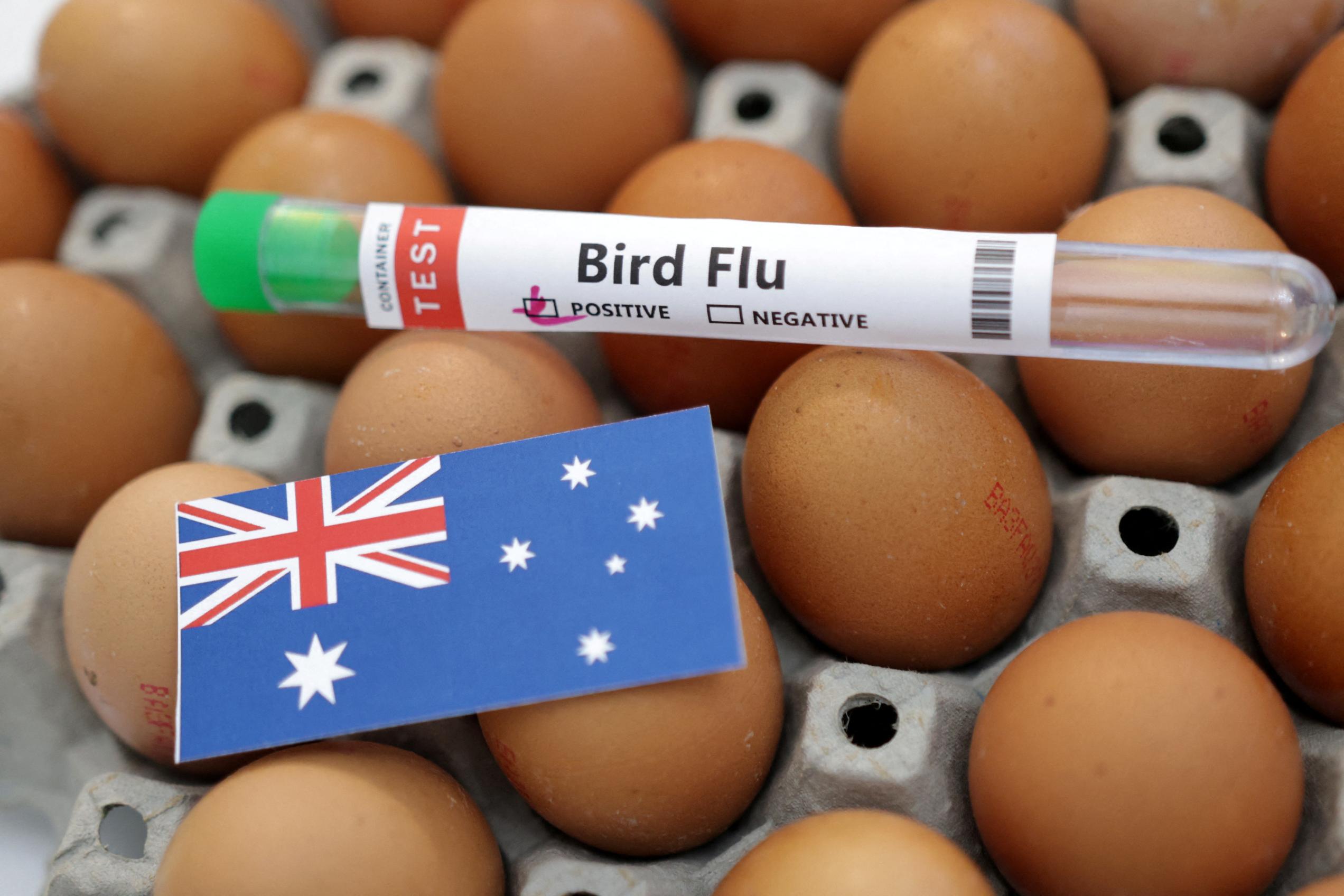
CANBERRA, June 7 (Reuters) - A fifth poultry farm near Melbourne has been infected with a highly pathogenic strain of avian influenza, the government of Australia's Victoria state said on Wednesday. The farm is close to three others where an H5N3 strain of the flu had already spread and authorities said the latest detection was not unexpected. Another farm in Victoria has hosted an outbreak of a different H7N9 strain of the virus. Neither strain is the same as the H5N1 type that has spread globally through bird and mammal populations and even into humans. Sign up here. https://www.reuters.com/business/healthcare-pharmaceuticals/h7-bird-flu-hits-another-australian-poultry-farm-quarantine-zone-2024-06-07/
2024-06-07 00:18
KUALA LUMPUR, June 7 (Reuters) - On a secluded Malaysian beach, a group of volunteers carefully retrieved newly laid sea turtle eggs in the sand and moved them to a shady, cooler location, in response to fears by researchers that warmer weather is leading to fewer male hatchlings. The temperature of the developing turtle eggs is what determines sex. Observers at the Chagar Hutang Turtle Sanctuary on Redang Island believe they are already seeing fewer males being hatched due to climate change - with the situation made worse this year by prolonged hot and dry spells caused by the El Niño weather phenomenon. "Sea turtle conservationists were concerned that uncontrolled global warming in the future, in the next 15, 20, 30 years, will be detrimental... because it will feminise sea turtle hatchling populations," Nicholas Tolen, a researcher at University of Malaysia Terengganu said. Moving nests to shadier spots or irrigating them with water has been proven to help lower incubation temperatures, though the success of the sanctuary's program was still being measured. Such methods were also preferable to artificial incubators, which could disrupt sea turtle hatchlings' understanding of the earth's magnetic field, affecting their orientation and ability to nest, the researchers said. Sign up here. https://www.reuters.com/business/environment/malaysia-warmer-temperatures-mean-fewer-male-turtles-hurting-conservation-2024-06-07/