2024-06-06 11:50
ATHENS, June 6 (Reuters) - Safety dangers are growing from ageing and unregulated vessels, leading ship management firm V.Group told Reuters, adding it had stopped providing services to 30 tankers last year after they were sold to companies that did not pass compliance checks. Up to 850 oil tankers are estimated to form the so-called shadow fleet transporting oil from countries such as Iran and Venezuela as well as Russia, which has multiple restrictions on its oil exports. V.Group's CEO Rene Kofod-Olsen said they "lost 30 ships to the dark fleet" last year. "Typically we will try and retain management of a new owner. Clearly that was not possible for us," he said on the sidelines of Posidonia shipping week in Athens, with new owners failing to pass the company's compliance standards. Maritime services provider V.Group works with over 3,500 ships with close to 300 tankers under its management through subsidiary V.Ships, and has one of the largest crewing pools of seafarers in the world. Kofod-Olsen said since last year they had been approached by other new companies seeking V.Group to manage their vessels, but those also did not meet compliance checks. Ships carrying sanctioned oil cargoes pose a massive environmental challenge, industry and analyst sources say, since they are hard to track because of their opaque ownership and use of non-Western insurance and other marine services, and have little incentive to follow cleaner shipping standards. Kofod-Olsen said the wave of shadow fleet tanker acquisitions had abated lately. "Ship owners that we know are much more conservative in terms of trading assets," he said. Nevertheless, the existing shadow fleet was active. "These assets are ageing, the risk is just going to go up," he said. "They are sailing full of fossil fuels or molecules and they are a sailing danger." Others also raised the alarm in Athens this week. "If elements within the industry circumvent the rules and regulations, we have a problem," said Harry Conway, chair of UN agency the International Maritime Organization's Marine Environment Protection Committee. "Dark fleet vessels have no accountability because they operate under the radar - they don’t respect the rules," Conway told a Tradewinds Shipowners Forum at Posidonia. Sign up here. https://www.reuters.com/business/autos-transportation/safety-dangers-sanctioned-tanker-fleet-growing-ship-manager-vgroup-says-2024-06-06/

2024-06-06 11:40
LONDON, June 6 (Reuters) - The pound softened versus the euro on Thursday ahead of a European Central Bank meeting and after data showed a fall in British businesses' expectations for wage growth in the coming year. The euro was last up 0.12% on sterling at 85.09 pence, though still at the weak end of its recent range, after May saw the British currency strengthen against most major peers, as hotter-than-expected services inflation caused markets to give up on expectations of a June Bank of England rate cut. Versus the dollar, the pound was a touch softer down 0.07% on the day $1.2784, but close to Tuesday's two and a half month top of $1.2818. The main British macro news of the day was the release of a Bank of England survey showing British businesses' expectations for wage growth over the coming year fell sharply last month to 4.1% in May from 4.6% in April, while on a three-month average basis, the measure fell to 4.5% from 4.8%. Both were the lowest since the current series started in May 2022, and may ease policymakers' worries that it will be hard to keep inflation on target and make it easier for them to cut interest rates. Market pricing currently reflects expectations of one or two 25 basis point Bank of England rate cuts this year, with the first most likely to come in September. So far the British election, due 4 July has had fairly little effect on the pound, though the election was announced the same day as the hotter-than expected inflation data. Polls are currently pointing to a large majority for the opposition Labour Party, an outcome analysts at MUFG said in a Thursday note would be positive for the British currency. "It (a Labour landside) would lead to political stability and would raise expectations in the market of increased fiscal spending." "It would potentially reduce BoE rate cut expectations given the increased expectations of fiscal spending and over the medium-term would put the Labour Party in a better position to tackle the thorny Brexit topic in order to try and reduce frictions and improve relations," they wrote. The main event in markets Thursday is the ECB policy decision. A rate cut is all but certain, but markets will be watching to see what President Christine Lagarde says about their future path. Sign up here. https://www.reuters.com/markets/currencies/sterling-ticks-lower-wage-growth-expectations-ease-2024-06-06/
2024-06-06 11:34
KYIV, June 6 (Reuters) - Ukraine's Ukrhydroenergo said on Thursday it had initiated international arbitration seeking damages for Russia's destruction of the Kakhovka Dam and power station in June 2023. The state-run hydro-electric company estimated the damage at 2.5 billion euros ($2.72 billion), it said. The Kakhovka dam, one of six dams on the Dnipro river that carves through central and southern Ukraine, was captured at the start of Moscow's February 2022 invasion. Russian forces blew up the Kakhovka Dam on the night of June 6, 2023, which flooded swathes of arable land, leaving tens of thousands of people without drinking water and Europe's largest nuclear power plant without enough water to cool the reactors. "The company's actions aim to compensate for the losses caused by the destruction of the Kakhovka hydroelectric power plant," Ukrhydroenergo said in a statement. "The company believes that initiating international arbitration process is the most promising way to compensate for the losses." Ukrhydroenergo said the Russian president, the government, and other authorised bodies were officially informed of the dispute. Electricity from Ukrainian hydro-electric power plants was a key energy sources for Ukraine, and the company's plants were repeatedly subjected to Russian missile attacks. Ukrhydroenergo said that since the start of the invasion, Russia had fired more than 110 missiles at the company's stations. ($1 = 0.9199 euros) Sign up here. https://www.reuters.com/world/europe/ukrhydroenergo-seeks-damages-russias-destruction-dam-2024-06-06/

2024-06-06 11:32
SHANGHAI, June 6 (Reuters) - Chinese electric vehicle maker Nio (9866.HK) New Tab, opens new tab said on Thursday it expected deliveries in the second quarter to more than double from a year earlier to between 54,000 and 56,000. Revenue would also nearly double to about $2.3 billion in the three-month period starting April, the company said. The nine-year-old company, however, is still yet to turn profitable. It reported a $718 million net loss for the first quarter, compared with a loss of $772 million in the fourth quarter of 2023. The company, ranked eighth by EV sales in China, saw deliveries of its Nio-branded EVs priced from $4,000 rebound to more than 20,000 units in May after it lowered fees in a battery rental scheme that encouraged sales. Like many of its peers, Nio is broadening its customer base and boosting sales with cheaper models amid a bruising price competition in China. The company has also trimmed workforce and deferred long-term projects that would not contribute to financial performance within three years. It has won approval to build a third factory in China that would boost its total approved production capacity to 1 million cars, almost at par with Tesla's (TSLA.O) New Tab, opens new tab massive Shanghai plant, Reuters reported on Wednesday. The F3 plant is located in Huainan city in eastern province of Anhui and will primarily produce vehicles for Nio's newly launched affordable car brand, Onvo. Nio in May unveiled the Onvo L60 SUV with a sticker price starting at 219,900 yuan ($30,300), while Tesla's Model Y starts at 249,900 yuan in China. ($1 = 7.2437 Chinese yuan renminbi) Sign up here. https://www.reuters.com/business/autos-transportation/chinas-nio-expects-q2-ev-sales-more-than-double-2024-06-06/

2024-06-06 10:57
MUMBAI, June 6 (Reuters) - India's monsoon rains have advanced into the western state of Maharashtra after covering almost all of the southern region, but they could weaken and deliver lower-than-normal rainfall next week, two senior weather officials told Reuters. Summer rains, critical to spur economic growth in Asia's third-largest economy, usually begin in the south around June 1 before spreading nationwide by mid-July, allowing farmers to plant crops such as rice, corn, cotton, soybeans and sugarcane. The monsoon arrived in Maharashtra on Thursday after spreading through the southern states earlier than usual, a senior official of the India Meteorological Department (IMD) told Reuters. Maharashtra is India's biggest producer of sugar and its second largest producer of cotton and soybeans. India has received 7% more rainfall than normal since the season began on June 1, the IMD says. The monsoon will advance further across India in the next few days but could weaken from next week, another weather official said. "The monsoon will take a pause for few days," the official added. "Except for the west coast, most of the other regions will receive less rain," the official added. Farmers need to wait for proper moisture levels in the soil before sowing summer crops and should not sow them in a hurry, the official said. Both officials sought anonymity because they were not authorised to brief the media. The lifeblood of the nearly $3.5-trillion economy, the monsoon brings nearly 70% of the rain India needs to water farms and refill reservoirs and aquifers. In the absence of irrigation, nearly half the farmland in the world's second-biggest producer of rice, wheat and sugar depends on the annual rains that usually run from June to September. Sign up here. https://www.reuters.com/world/india/indias-monsoon-hits-key-western-state-may-falter-next-week-sources-say-2024-06-06/
2024-06-06 10:23
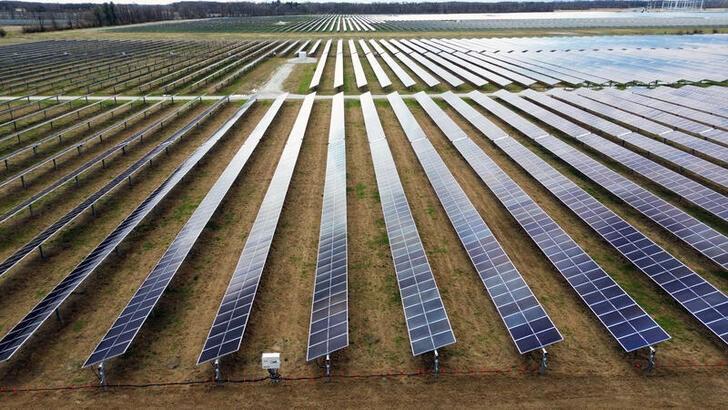
June 6 (Reuters) - A two-year U.S. tariff holiday on solar panels from Southeast Asia expires on Thursday, starting the clock ticking for American project developers to use the huge amount of equipment they stockpiled duty-free over that period by the end of this year. The dynamic could result in a mini-boom in already red-hot U.S. solar installations, while also annoying the nascent domestic manufacturing industry which is keen to see developers make the switch to American-made gear. U.S. solar developers accumulated around 35 gigawatts (GW) of imported panels in U.S. warehouses since President Joe Biden lifted the duties on Malaysia, Thailand, Cambodia and Vietnam in 2022 to help speed domestic projects to fight climate change, according to energy advisory firm Clean Energy Associates. That is nearly as much solar capacity as the U.S. will install during all of 2024, according to research firm Wood Mackenzie. The vast majority of the inventory is believed to have come from the targeted countries, and once the tariffs snap back into place on June 6, companies will have just 180 days to use that Southeast Asian stock or they will need to pay up. Companies have already dramatically increased project building, with utility-scale installations soaring 135% to 9.8 GW in the first quarter, according to Wood Mackenzie. "The temporary tariff moratorium did its job to ensure a sufficient supply of solar modules to support the need for increased clean energy deployment," said Stacy Ettinger, senior vice president of supply chain and trade for the Solar Energy Industries Association, a trade group. An attorney for U.S. solar manufacturers who are seeking new tariffs on Southeast Asian imports said it was unrealistic to expect all the inventory to be used in the next six months. "The tariff moratorium led to this surge and glut of inventories that we're seeing today, that has also contributed to the 50% price collapse in the market that is harming the U.S. industry," Tim Brightbill, a trade attorney with Wiley Rein, said, referring to domestic manufacturers of panels. The glut of panels marks an about-face for the U.S. industry, which until a year ago was struggling with tight supplies due to the coronavirus pandemic and concerns about solar equipment linked to forced labor, among other constraints. Solar imports surged since the beginning of 2023 and were up nearly 14% in the first quarter this year – with 88% of that from the targeted countries, according to S&P Global Market Intelligence. The tariffs are meant to target imports by companies found to be dodging U.S. duties on Chinese goods by finishing panels in the four Southeast Asian nations. The White House said last month that it would vigorously enforce the 180-day deadline to prevent stockpiling. SEIA did not address the deadline in its statement to Reuters. SEIA had lobbied against the circumvention tariffs, saying they would drive up project costs and threaten the nation's ability to address climate change. It did not lobby for an extension of the tariff holiday. Sign up here. https://www.reuters.com/world/us/us-solar-projects-could-boom-amid-deadline-use-up-tax-exempt-panel-glut-2024-06-06/