2024-06-06 07:05
LONDON, June 6 (Reuters) - Trading house Trafigura posted a more than 74% drop in net profit in the first half of its 2024 financial year, the lowest since 2020 for the same period, as the extreme turbulence that defined commodity markets in recent years fizzled out. Top trading executives warned the market earlier this year that the staggering returns of the last few years were unlikely to be repeated. Trafigura and its rivals like Vitol posted record or near-record results every year between 2020 to 2023 thanks to unprecedented market dislocations resulting from the COVID-19 pandemic and Europe's energy crisis coupled with Russia's invasion of Ukraine. Geneva-based Trafigura's 2023 results marked the fourth successive year of record profits, but the bulk of its earnings - $5.5 billion - came in the first half of the company's financial year, which doubled profits compared with the 2021-2022 first half. Markets have since stabilised. In the six months ending March 31, 2024, Trafigura generated about $1.5 billion in profit. The performance over this period was very much in continuity of "what we've been through in the second-half year 2023, which is a more normalised market condition," said outgoing CFO Christophe Salmon in a video accompanying the results. Revenue dipped 5% in the first half to roughly $124.2 billion, reflecting lower average commodity prices, partially offset by higher trading volumes, particularly for crude oil and bulk minerals, the privately-held company said. Core earnings before interest, tax, depreciation and amortisation (EBITDA) roughly halved to $4.3 billion. Traded oil volumes rose 15% to around 7.2 million barrels per day (bpd) compared to the same period last year, due to new supply agreements European refineries. Trading houses have been spending billions of dollars on new assets and expensive hires. Still, commodity markets remain vulnerable to price spikes and a cushion is desirable, incoming group CFO Stephan Jansma suggested, noting the company has built up its equity to just over $17 billion. For instance, he said, "(in) the copper market, there was a massive spike less than a month ago, which does require you to have an extra buffer." Sign up here. https://www.reuters.com/markets/commodities/trafiguras-first-half-net-profit-falls-calmer-market-2024-06-06/
2024-06-06 06:19
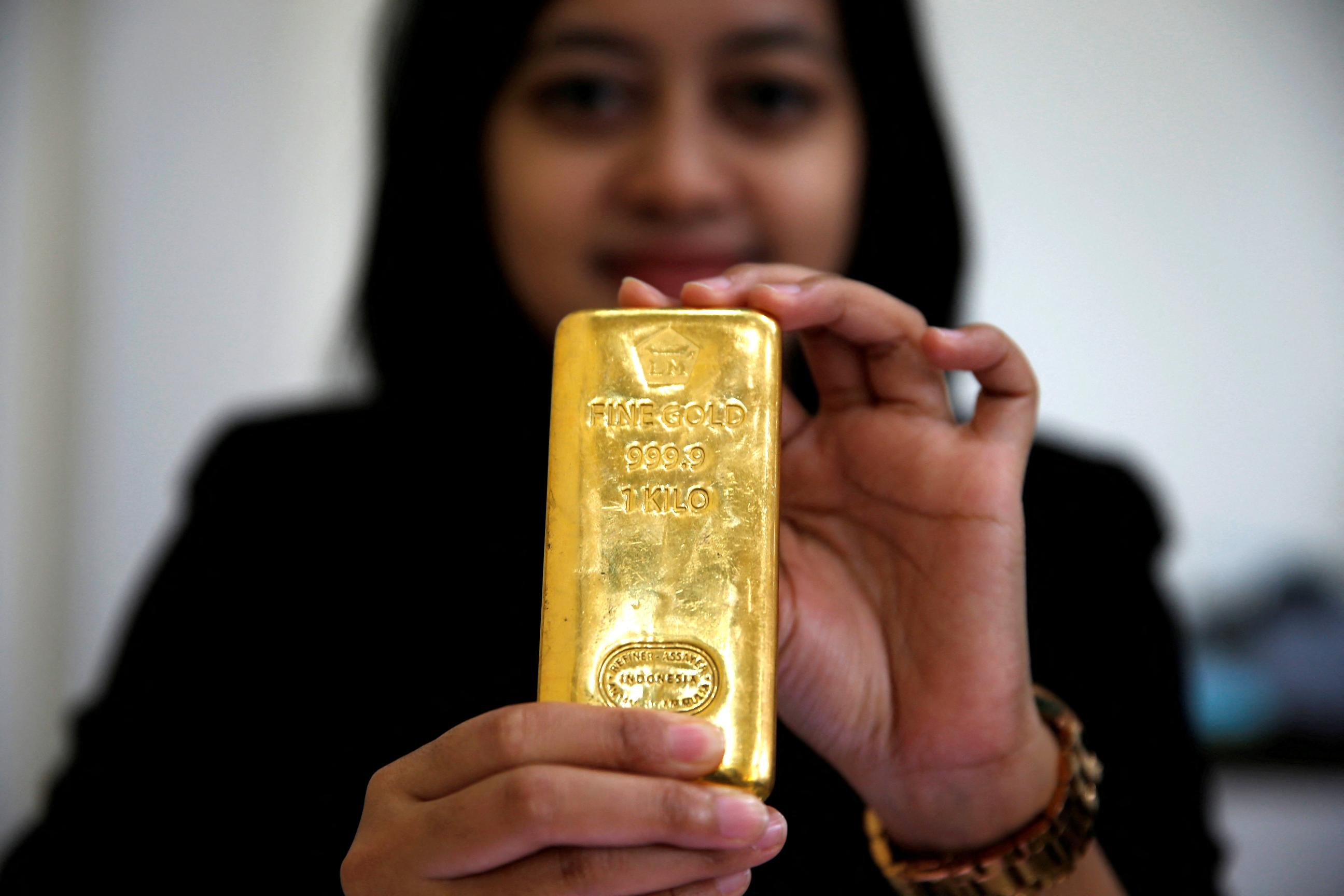
June 6 (Reuters) - The London Bullion Market Association (LBMA) said it is reviewing allegations involving Indonesian state miner Aneka Tambang (Antam) (ANTM.JK) New Tab, opens new tab over the purity of its gold products. Indonesia's Attorney General Office has named six former general managers at Antam's Precious Metal Processing and Refining Business Unit as suspects for alleged misuse of Antam's stamping service. Investigators said over the period of 2010-2021, the suspects oversaw production of around 109 tons of gold through the alleged illegal practice. The investigators did not disclose from where the gold originated from or where it was distributed to after stamping. Aneka Tambang last week denied there were 109 tons of counterfeit Antam gold circulating in the community in the period 2010-2021. "All Antam precious metal gold products (are) derived with official certificates, and processed at the only gold processing and refining plant in Indonesia that has been certified by the London Bullion Market Association," the miner said in the May 31 statement. LBMA, an industry body whose rules for gold refineries include requirements they source gold responsibly, said on Wednesday an Incident Review Process (IRP). It added it was difficult to commit to a timeline, given that process involves numerous stakeholders. Antam did not immediately respond when reached for comments on Thursday. Aneka Tambang remains on LBMA's Good Delivery List currently, the gold refinery accreditor in London said. Sign up here. https://www.reuters.com/markets/commodities/london-gold-body-reviews-purity-concerns-about-indonesian-state-miner-2024-06-06/
2024-06-06 06:15
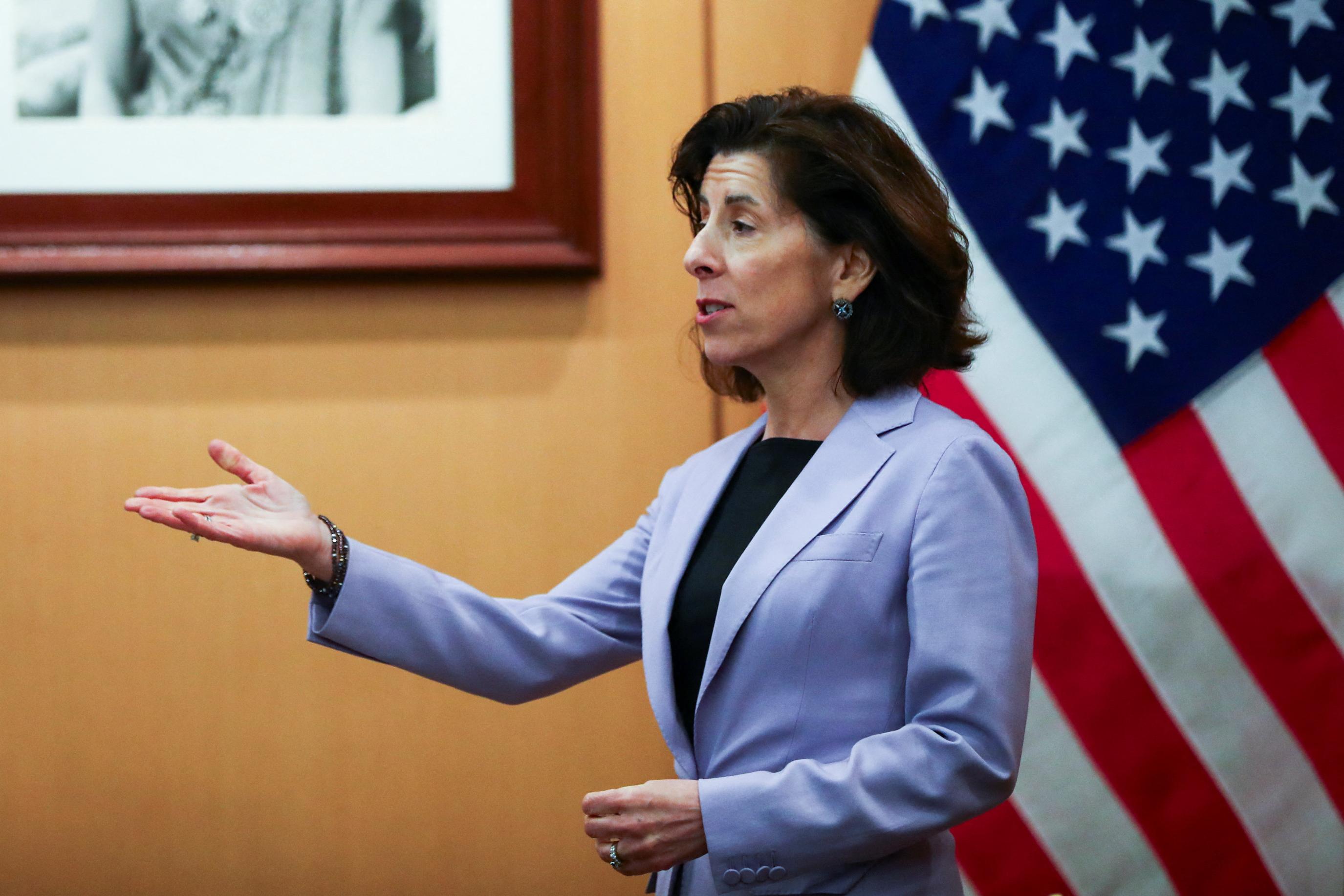
SINGAPORE, June 6 (Reuters) - KKR (KKR.N) New Tab, opens new tab, Global Infrastructure Partners (GIP) and the Indo-Pacific Partnership for Prosperity have formed a coalition to invest $25 billion in infrastructure in the Indo-Pacific region, U.S. Commerce Secretary Gina Raimondo said on Thursday. Raimondo, speaking in Singapore, said investment would include green data centres in Indonesia, renewable energy in the Philippines and smart metres and hybrid renewables in India. "Coalition members (of the Indo-Pacific Economic Framework) will help facilitate the identification, promotion, and development of successful infrastructure projects across the region," the three organisations said in a joint statement. The coalition will initially focus on scaled infrastructure investment across the energy, transportation, water and waste, and digital sectors, they said in the statement. Private equity firms KKR and GIP will co-chair the initiative, while global investors including BlackRock (BLK.N) New Tab, opens new tab, GIC (GIC.UL), Rockefeller Foundation and Temasek (TEM.UL) will be a part of the coalition, the statement showed. Raimondo said over $23 billion of investment opportunities had been identified by the Indo-Pacific Economic Framework (IPEF). Investment opportunities numbering 69 "sustainable infrastructure" projects were identified at an IPEF Investor Forum, Singapore's trade ministry, which organised the forum, said on Thursday. "Of these, 20 investment-ready projects worth about $6 billion were presented to investors. Remaining projects worth about $17 billion were also identified as potential investment opportunities," the ministry said. Sign up here. https://www.reuters.com/markets/asia/kkr-gip-indo-pacific-group-form-25-billion-regional-infrastructure-tie-up-us-2024-06-06/
2024-06-06 05:59
ECB cuts euro zone rates for first time since 2019 Euro rises against the dollar NEW YORK/LONDON, June 6 (Reuters) - World stocks climbed and the euro rose on Thursday after the European Central Bank cut interest rates for the first time in nearly five years, while signaling that further moves could take a while. ECB policymakers delivered their widely flagged quarter-point cut to 3.75%. The euro and German government bond yields rose after the ECB move as investors took into account the central bank's refusal to promise further rate cuts. The euro inched up to almost $1.0890 against the dollar and government bond yields - which reflect borrowing costs and move inversely to price - ticked up too. The pan-European STOXX 600 (.STOXX) New Tab, opens new tab rose 0.7%. MSCI's 47-country main world index (.MIWD00000PUS) New Tab, opens new tab rose as much as 0.3%, near a record-high set on May 20, before trimming gains slightly. Wall Street, however, was more muted, with the S&P 500 index (.SPX) New Tab, opens new tab unchanged after hitting an all-time high earlier on Thursday. The Dow Jones Industrial Average (.DJI) New Tab, opens new tab rose 0.2%, and the Nasdaq Composite Index (.IXIC) New Tab, opens new tab was flat, also pulling back from an all-time high hit earlier in the day. Chip maker Nvidia (NVDA.O) New Tab, opens new tab fell 1.1% after hitting a record high, a day after crossing $3 trillion in market valuation. Marchel Alexandrovich, a partner at Saltmarsh Economics, said markets will now focus on whether the U.S. Federal Reserve will cut rates in September. The euro's gain, after a 2% rise over the last month, took it to $1.0887, although most traders were sitting on their hands. ECB President Christine Lagarde stressed at the start of her post-meeting press conference: "We are not pre-committing to a particular rate path." Stronger-than-expected data over the last few weeks, plus Thursday's increase in the ECB's in-house inflation forecasts, have raised doubts about how many more rates cuts will be justified this year. "This was a cautious cut," said Samuel Zief, head of global FX strategy at J.P. Morgan Private Bank. "We currently think that September could be next. But (there is) no reason to expect significant reductions any time soon with growth actually picking up steam of late." GOLDILOCKS STORY The Bank of Canada pipped the ECB to become the first G7 country to cut rates in this cycle on Wednesday. The U.S. Federal Reserve meets next week, although is not expected to move until September, at the earliest. "This move ahead of the Fed was not at all obvious just three months ago," said Eric Vanraes, the head of fixed income at Eric Sturdza Investments. "We still believe that the first rate cut will come before the fourth quarter, in September." By contrast, the debate at the Bank of Japan, which meets the week after, will be about whether to raise rates, and when. Canada's dollar trimmed some of the losses from its post-cut dip on Thursday to stand at C$1.37 per U.S. dollar. In the bond markets, Germany's two-year government bond yield , which is sensitive to policy rate expectations, rose as high as 3.037%. It hit 3.125% on Friday, its highest since mid-November. Benchmark 10-year U.S. Treasury yields were flat at 4.287%, although that was still near their lowest in two months, after data this week hinted that the U.S. labor market is finally cooling. The data included private U.S. payrolls on Wednesday and a report on Tuesday that showed job openings fell in April to their lowest in more than three years. Markets are now pricing nearly two quarter-point Fed cuts again this year, with a September move seen as a 68% chance compared to 47.5% last week. "We're still in the 'Goldilocks' range, so bad economic news has been good for equities, as Fed rate cuts are back on the table," said Ben Bennett, Asia-Pacific investment strategist at Legal and General Investment Management. Investor attention will soon turn to the U.S. nonfarm payroll report for May on Friday, with a Reuters poll of economists expecting payrolls to have risen by 185,000 jobs. "We need that to be around 100-150k to maintain the Goldilocks narrative," Bennett said. "Much higher than that and yields could move back up, but if we get zero or negative, then we could be talking about a hard landing again." In commodities, Brent crude futures rose as much as 1.9% to $79.86 a barrel, while U.S. West Texas Intermediate crude futures rose 2% to $75.53. Gold gained 0.8% to $2,372.77 per ounce after a 1% rise previously, while the cryptocurrency bitcoin was at $71,415, shuffling back towards March's record high. Sign up here. https://www.reuters.com/markets/global-markets-wrapup-1-2024-06-06/

2024-06-06 05:38
NEW YORK/LONDON/SINGAPORE, June 6 (Reuters) - The dollar traded sideways on Thursday ahead of Friday's U.S. employment data that could help the Federal Reserve set a timetable for easing, while the euro held steady after a widely anticipated European Central Bank rate cut. The euro rose 0.17% to $1.0887, approaching the 2-1/2 month peak of $1.0916 hit earlier in the week. Against the Japanese currency it was off 0.09% at 169.57 yen. The dollar index , which measures the greenback against a basket of currencies including the yen and euro, was 0.09% lower at 104.16, barely reacting to news that applications for unemployment benefits rose more than expected last week to 229,000. Weekly jobless claims were also slightly above last week's upwardly revised 221,000. The data supported this week's market narrative that labor market tightness is ebbing, which would be good for inflation and helped benchmark U.S. Treasury yields edge lower. Inflation in the 20 countries that share the euro has fallen from more than 10% in late 2022 to just above the European Central Bank's 2% target in recent months, largely thanks to lower fuel costs and a normalization in supply after post-pandemic snags. That progress has stalled recently and what had looked like the start of a major ECB easing cycle a few weeks ago now appears more uncertain due to signs that euro zone inflation may prove sticky, as has been the case in the United States. "It was so much as expected, what ECB has said and done, that when you make the adjustments for the 25 basis point cuts right now the swaps market hasn't changed all that much," said Marc Chandler, chief market strategist at Bannockburn Global Forex in New York. Chandler was referring to the euro zone/U.S. interest rate differentials that determine forward pricing for FX pairs and affect spot. He said it is not unusual for the dollar to weaken ahead of monthly employment release, then to rally back. The Canadian dollar firmed 0.11% to C$1.37 per U.S. dollar a day after the Bank of Canada's expected rate cut. Ahead of Friday's U.S. jobs report, investors are grappling with the implications for the Fed of several other pieces of U.S. data this week showing employment growth moderating, albeit along with a pick up in service sector activity. The Federal Open Market Committee meets next week but is not expected to lower rates yet. Markets are pricing in two 25 basis points Fed cuts this year, with the first most likely in September. The euro was also steady against the pound at 85.14 pence though towards the bottom of its recent range. Versus the dollar, sterling was almost flat at $1.2790. YEN RISES The yen was firm at 155.65 per dollar as investors digested Thursday remarks from Bank of Japan Governor Kazuo Ueda that it would be appropriate to reduce the central bank's bond buying as it moves toward an exit from massive monetary stimulus. The BOJ holds its two-day monetary policy meeting next week. "This was almost a momentum play from the Japanese central bank - that is, add in JPY positive news flow when funding currencies - JPY and CHF - were already being covered and bought back, and the result was the JPY rally gaining additional legs," said Chris Weston, head of research at Pepperstone. The Japanese currency had a brief rally earlier in the week as investors unwound positions in yen-funded carry trades, following a strong election victory for Mexico's ruling party which sparked concern about disputed constitutional reform. That resulted in a squeeze on long peso/short yen positions, which has been a favourite among carry trades. In a carry trade, an investor borrows in a currency of a country with low interest rates and invests the proceeds in a higher-yielding currency The peso was down fractionally against the yen at 8.8703 yen, a day after rising 2.6%. It had fallen roughly 6% against the Japanese currency at the start of the week, in the wake of Mexico's election results. In cryptocurrencies, bitcoin fell 0.43% at $70,887.00. Ethereum declined 0.88% at $3829.9. Sign up here. https://www.reuters.com/markets/currencies/euro-steadies-ahead-ecb-decision-dollar-dips-2024-06-06/

2024-06-06 05:17
NEW DELHI, June 6 (Reuters) - Sweltering heat and policy measures are fuelling a surge in the use of gas-fired power in India, with imports of liquefied natural gas (LNG) forecast to rise sharply over the next two years, industry officials and experts say. The country's gas-fired power generation doubled in April and May to 8.9 billion kilowatt-hours (kWh) compared with the same period last year, data from Grid India showed, eating into the share of coal-fuelled electricity for the first time since the COVID-19 pandemic. More than 75% of India's power generation was from coal in 2023, while gas-fired plants have accounted for only about 2% in recent years, largely because of the high cost of gas relative to coal. In May, coal's share dipped to 74%, compared with 75.2% during the same month last year, while gas's share nearly doubled to 3.1% from 1.6%. An emergency clause invoked to force operation of idle gas-fired power plants to avoid power cuts during the 43-day federal elections that ended last week also drove gas usage, industry officials said, as power outages have historically been a key electoral issue. "The current growth of Indian power demand suggests the rising need for greater availability (of natural gas) and flexibility will remain a fixture in coming years," said Joachim Moxon, LNG analyst at ICIS. LNG IMPORTS TO RISE India's gas-fired power output is expected to grow by 10.5% in the fiscal year ending in March 2025, following 35% growth the prior year. To meet that demand, LNG imports by the price-sensitive buyer swelled in May to the highest levels since October 2020, data from analytics firms LSEG and Kpler showed, despite global prices up five-fold from the pandemic-hit lows of 2020. Demand for LNG in India, the world's fourth-largest importer of the fuel, is set to increase by 19% in 2024, with imports forecast to reach more than 28 million metric tons in 2025, up from 22.1 million tons in 2023, according to ICIS. "India's LNG imports will continue to be driven higher by the power sector in at least the next two years," said Victor Vanya, director at Indian power analytics firm EMA Solutions. Industry officials and analysts have argued allocating more domestically produced gas could allow gas-fired generation to better compete with coal, but most local gas has gone to other sectors in recent years. "The insufficient local gas output is increasingly being used to supply the city gas network and fertiliser companies, and power generators will have to import," said a senior executive at a large Indian gas exchange who declined to be named because he was not authorised to speak to media. Despite being cheaper, solar and wind are harder to control and forecast than gas, while coal and nuclear power cannot be ramped up or down as quickly in response to sudden demand spurts or dips. Gas's flexibility and a 2022 federal regulation that provided a policy framework for operating more expensive gas-fired power plants have helped boost the fuel's use, industry officials and experts said. "Until we have optimal, large-scale battery storage solutions in India, peaking requirements such as ramping up and ramping down quickly will be met by thermal sources including natural gas," said Sadek Wahba, managing partner at Miami-based private equity firm I Squared Capital, which has invested billions of dollars in natural gas and renewables in India. Sign up here. https://www.reuters.com/world/india/scorching-heat-drives-indias-gas-fired-power-use-multi-year-highs-may-2024-06-06/