2024-06-05 16:29
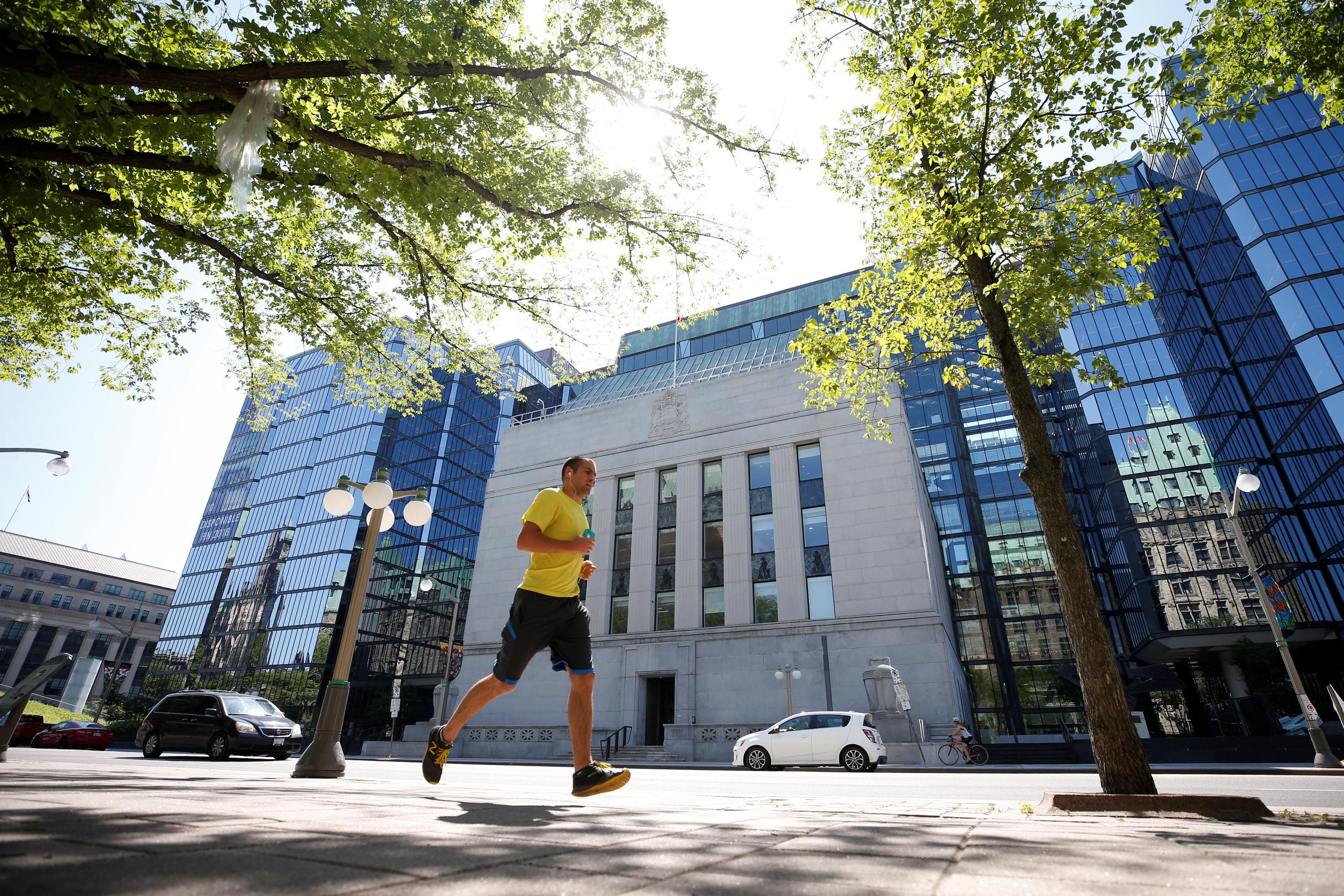
BoC says more rate cuts to be gradual, data-dependent Rate cuts to happen if inflation continues to ease Limits to how much BoC could diverge from Fed, Macklem says OTTAWA, June 5 (Reuters) - The Bank of Canada trimmed its key policy rate on Wednesday, the first G7 country to do so, in a widely expected move that will ease pressure on highly indebted consumers, but indicated further easing would be gradual and dependent on data. "Let's just enjoy the moment for a bit," said Governor Tiff Macklem at a press conference after announcing the central bank had reduced rates to 4.75% from 5%, the first cut in four years. Macklem stressed the timing of the next cut would depend on whether inflation continued its downward trajectory and the economy evolved in line with the bank's expectations. Some economists predicted the BoC would cut again in July even though financial markets had priced in a 39% chance of a cut to 4.50% next month. A majority of economists polled by Reuters had expected Wednesday's easing. U.S. inflation is stickier and markets expect the Federal Reserve will cut rates only once this year. Economists have questioned whether the BoC is running the risk of diverging too much from the Fed. "There are limits to how far we can diverge from the United States, but we're not close to those limits," Macklem said. Following the decision, the Canadian dollar pared its early gains and weakened by 0.22% to 1.3708 to the U.S. dollar, or 72.98 U.S. cents. The BoC joins Sweden's Riksbank and the Swiss National Bank in bringing down rates that have burdened households and businesses alike, amid muted economic growth despite easing price pressures. The European Central Bank is most likely to follow suit on Thursday, according to a Reuters poll. Inflation in Canada has slowed this year to hit a three-year low of 2.7% in April. While inflation has stayed below 3% for four months in a row, it is still higher than the Bank's 2% target. "If inflation continues to ease, and our confidence that inflation is headed sustainably to the 2% target continues to increase, it is reasonable to expect further cuts to our policy interest rate," Macklem said in an indication of what future reductions could look like. "But we are taking our interest rate decisions one meeting at a time," he added. "We have increasing confidence that the Bank of Canada will move again in July," Royce Mendes, head of macro strategy for Desjardins Group, wrote in a note. Andrew Grantham, senior economist at CIBC, also said he expected a cut in July, adding that he foresees a total of four reductions this year. The next rate announcement is due on July 24, when the bank will also release its latest quarterly forecasts. RUNWAY IN SIGHT After keeping interest rates at a more than two-decade high of 5% for almost a year, the BoC said the indicators for underlying inflation looked increasingly positive. The bank had increased interest rates by 475 basis points in a space of 16 months until July 2023 and since then had kept it steady at 5%. Macklem said rates would fall at a slower pace than they had risen and said rates would settle at a level higher than they had been before the COVID-19 pandemic. Economic growth in the first quarter was slower than expected at an annualized rate of 1.7%, helping boost market anticipation of a rate cut. Macklem said the economy was operating in excess supply - essentially meaning the amount of goods produced exceeds demand - leaving room for growth even as the overall inflation rate continues to drop. When asked whether the economy could be in for soft landing, he said: "The runway is in sight, but we still need to land this." He reiterated that the bank would remain focused on a mismatch between demand and supply, inflation expectations, wage growth and corporate pricing behavior. Sign up here. https://www.reuters.com/markets/rates-bonds/bank-canada-cuts-rates-first-time-four-years-2024-06-05/
2024-06-05 14:50
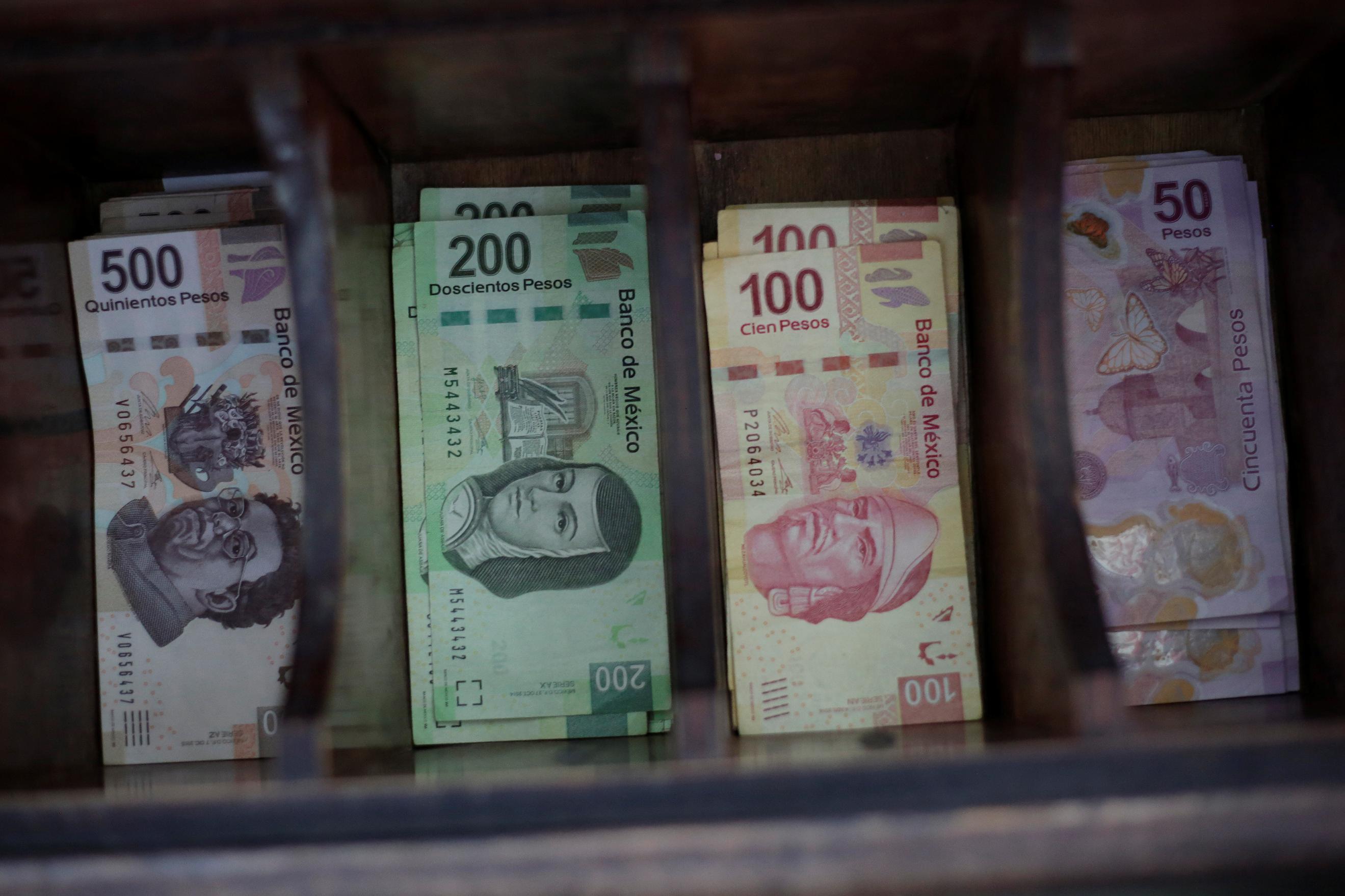
LONDON, June 5 (Reuters) - A sharp drop in Mexico's currency after a landslide election result has shaken foreign exchange markets as far as Hungary and Turkey this week, leaving investors asking whether the unwinding of hugely popular "carry trades" will continue. A carry trade involves investors borrowing in currencies that have low interest rates, such as the Japanese yen or Swiss franc , and buying higher yielding ones such as the Mexican peso or, recently, the U.S. dollar. It has boomed in popularity as interest rates have diverged around the world and market volatility has stayed low. Yet the peso's dramatic fall against the yen this week - it dropped 4.4% on Monday in its biggest daily decline since the COVID-19 crisis - is a sign that investors have been rapidly backing out of some of their favourite, and most lucrative, trades. Pockets of volatility remained on Wednesday, with the yen falling sharply against the dollar, leaving investors to consider whether the old approach is still viable. "The generalised rise in emerging market FX volatility ... has prompted de-leveraging in carry around the world," said Chris Turner, head of global markets at lender ING. "Where do we go from here?" ELECTION SHOCKS The news that Claudia Sheinbaum was set to win by a landslide in Mexico's presidential election caused the peso to tumble, with markets spooked by possible constitutional reforms and impact on the U.S. trade relationship. India's rupee also stumbled on Tuesday as it became clear that business-friendly Prime Minister Narendra Modi would lose his majority. The twin drops caused wild swings across emerging markets, knocking other favoured currencies such as Hungary's forint and the Turkish lira . Low-yielding "funding currencies" like the yen and peso rallied, while the euro and dollar bounced around in the ripples. Volatility is a big threat to carry trades. A rise in the currency in which investors borrow, or a fall in the one in which they invest, can wipe out gains from yield differentials. "My sense is participants have in large part liquidated these trades and moved to flat," said Neil Jones, a senior FX sales executive at TJM Europe. "The market is likely still holding core long term carry trades, but certainly far reduced from 48 hours prior." Yet some spy an opportunity. "With the peso-yen cross having fallen 6.3% in two days, we ask if the shakeout has largely played out and if this is a time to re-engage," said Chris Weston, head of research at Pepperstone. "That trade feels aggressive, but let's see how Japanese traders play the yen moves today." MOVING PARTS Investors will have to gauge a whole host of factors when deciding whether to return to carry trade strategies. ING's Turner said markets will be keeping a close eye on Sheinbaum's policies and the path of the U.S. dollar, the main driver of global currencies. "In Mexico, it seems local authorities are already trying to calm investors over possible fiscal concerns," he said. "And internationally, we think the scope for slightly lower U.S. rates and a softer dollar can support the risk environment, lower volatility and limit a further sell-off in the carry trade." Also of major concern is the yen's likely path. Another factor driving the Japanese currency higher this week has been speculation that the Bank of Japan could raise interest rates in July, with officials warning that they are watching moves in the yen closely. Intervention remains a threat, after Japanese authorities spent $62 billion propping up the currency around a month ago. A rally in the yen - which has languished at 34-year lows this year - could spell more problems for the carry trade. Sign up here. https://www.reuters.com/markets/currencies/unwinding-hugely-popular-currency-trade-rocks-markets-2024-06-05/
2024-06-05 13:56
AMSTERDAM, June 5 (Reuters) - It's likely, but not inevitable, that a digital euro would be introduced in Europe, the European Central Bank's Evelien Witlox said on Wednesday, an effort partly driven by the region's dependence on payment services from elsewhere. The ECB is looking at the possibility of issuing a digital euro, which would be an electronic equivalent to cash, allowing people to use central bank money for payments, which would be a public good, Witlox, the ECB's digital euro director, said at the fintech conference, Money20/20. "I think there is certainly a high likelihood… But it is not inevitable at the moment," Witlox said. If draft legislation is adopted, it will make the digital euro legal tender, meaning that merchants that offer digital means of payment would need to accept it, Witlox said. The push for a digital euro has partly been driven by concerns about Europe's reliance on payment services from outside the region, undermining its economic independence and the security of data involved in payments. "We find the fact that we are so dependent on non-European players something that is not good for our economic sovereignty, because what would happen if at one moment in time, these providers will not be able to provide their services for one reason or another," Witlox said. "Moreover, also a lot of data are involved in payments, so we really do see this as a serious concern." ADOPTED BY MANY NATIONS As of March, 134 countries representing 98% of the global economy were exploring digital versions of their currencies. Some countries have already introduced them. There have been widespread concerns that digital currencies would allow governments to spy on people's payments. The ECB has said privacy would be an important design feature. The digital euro would not be programmable – in other words, it would not be designed to be used only in certain circumstances, like vouchers – and it would not give governments the ability to track individuals’ spending, Witlox said. After a two-year "investigation phase", the ECB is now in a "preparation phase" which began in November 2023, its website says. Witlox said the ECB is due to publish a progress report later this month. The ECB has not decided whether or not a digital euro will use blockchain technology - which is behind cryptocurrencies such as bitcoin - the website says. Sign up here. https://www.reuters.com/markets/currencies/digital-euro-likely-not-inevitable-ecb-digital-currency-chief-says-2024-06-05/

2024-06-05 12:44
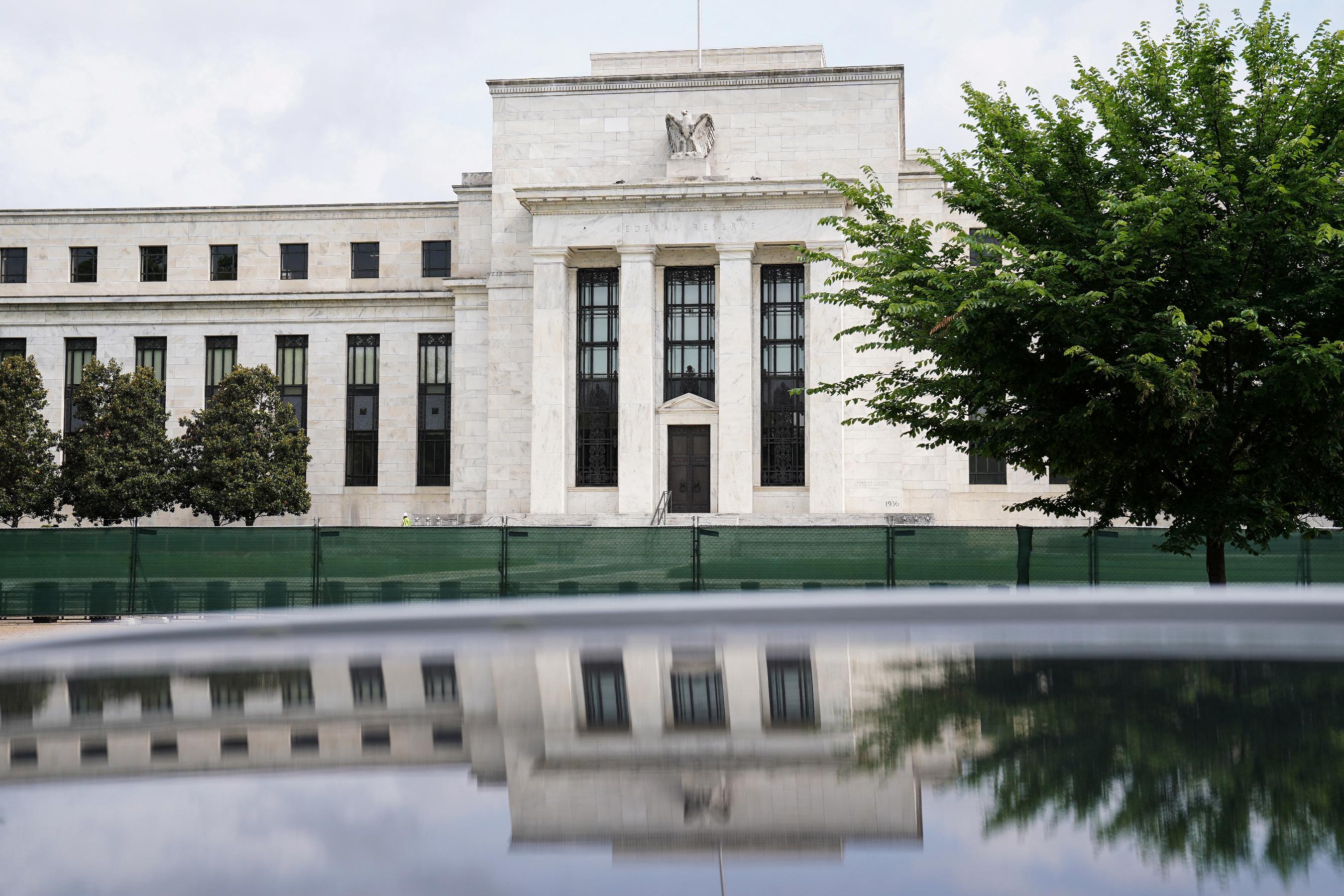
BENGALURU, June 5 (Reuters) - The U.S. Federal Reserve will cut its key interest rate in September and once more this year, according to a majority of forecasters in a Reuters poll that also showed a significant risk they opt for only one or none at all. Economists in Reuters surveys over the past few months have remained consistent in predicting two cuts, unlike markets which until last week were pricing in one, in November, before flipping back to two. That shift in fed funds futures bets was partly because official data showed the U.S. economy expanded at a slower pace last quarter than estimated earlier, even as key inflation measures remained sticky. But over the past few months, Fed officials have made clear they are in no hurry to cut the policy rate. Some economists think the Fed's latest quarterly "dot plot" projection, due this month, would show two or fewer rate cuts for this year, down from a very close call of three in March. Still, nearly two-thirds of economists, 74 of 116, in the May 31-June 5 Reuters poll predicted the first cut in the fed funds rate to a 5.00%-5.25% range would come in September. That was the same conclusion as last month's poll, with a similar majority. Only five expect a July cut, down from 11 in the May survey, and none predicted a reduction at the June 11-12 policy meeting. "They (the Fed) are in a good place in terms of the amount of restriction monetary policy is currently exerting on the economy," said Oscar Munoz, chief U.S. macro strategist at TD Securities, who sees cuts in September and December. "They don't want to overdo it either. So, as long as the economy is holding up but also normalizing and inflation continues to drop, then they start easing. It's more the calibration of policies, not really moving policy to a more restrictive or less restrictive stance." Around 60% of participants in the latest poll, 68 of 116, predicted two quarter-point cuts this year, broadly unchanged from last month's survey. A sizeable 28% minority of economists, 33 of 116, saw only one rate cut this year or none. Only 15 expect more than two. Among 21 primary dealers polled, 10 expected the Fed to reduce rates only once or not at all in 2024. Inflation, particularly the personal consumption expenditures (PCE) price index which the Fed targets at 2%, has remained elevated. Taken together with very low unemployment, that makes an early Fed rate cut very unlikely. None of the measures of inflation - the Consumer Price Index (CPI), core CPI, PCE and core PCE - were expected to reach 2% until at least 2026, according to median forecasts in the poll. "The Fed will be raising its inflation forecast at the June meeting and...it would look odd to raise your inflation forecast and then cut rates quickly after that," said Michael Gapen, chief U.S. economist at Bank of America, who expects just one cut this year, in December. "Our baseline is the economy remains resilient but growth is softening on the margin. The labor market is cooling on the margin. So, the next move is a cut. But I think the primary risk to our baseline is the Fed just doesn't cut...and the labor market doesn't look all that weak to me right now," Gapen added. Economists predicted the unemployment rate to remain closely around the current 3.9% at least until 2027, indicating persistent tightness in the labor market. The U.S. economy, which grew at a 1.3% annualized pace in the first quarter, was forecast to expand 2.4% this year, faster than what Fed officials currently see as the non-inflationary growth rate of 1.8%. (For other stories from the Reuters global economic poll:) Sign up here. https://www.reuters.com/markets/rates-bonds/fed-cut-rates-twice-this-year-starting-sept-one-or-none-still-risk-2024-06-05/
2024-06-05 12:36
FCA expected to row back on proposals, sources say Lawyers say plan remains too problematic Row tests mettle of FCA's top team, new competitiveness remit LONDON, June 5 (Reuters) - Britain's markets regulator is expected to narrow down plans to name companies under investigation, four lawyers told Reuters, after a government and industry backlash labelled the proposals misjudged and harmful to London's competitive ranking. The anticipated move by the Financial Conduct Authority (FCA) is designed to defuse anger over plans that critics say risk dealing irreparable and unjustified damage to companies and to the finance industry, which contributes more than 10% of UK taxes. The FCA in February published proposals to publicly name some companies when investigations are opened in an effort to deter wrongdoing and encourage whistleblowing and transparency. But they met with unprecedented calls from trade bodies, lawyers and the Treasury to rethink or ditch the plans. Legal sources, who declined to be named, say the FCA's co-head of enforcement, Therese Chambers, started rowing back almost immediately during a charm offensive with corporate clients at their law firms' offices around March. Fielding "challenging questions", she made concessions to February's consultation paper that included a longer notice period than the proposed one day - or no notice at all New Tab, opens new tab - before an investigation is announced, one source said. However, without a route to appeal, that is unlikely to be enough, lawyers said. Chambers was also open to taking account of firms' interests when applying a proposed, looser "public interest test" to naming corporate suspects. At present, companies under investigation are named only in "exceptional" circumstances. "We all saw those as immediate concessions," the source said. Since unveiling the proposal, the FCA has said its plans remain subject to discussions New Tab, opens new tab, but details on how it rowed back during industry meetings have not previously been reported. "We have listened carefully and we're considering all the feedback that we've received as we decide on next steps," an FCA spokesperson said when asked about Chambers' meetings. TESTING THE METTLE Bank of England Governor Andrew Bailey, a former FCA CEO, is one of the few high-profile officials to back the plans. He said last month that a lengthy probe into unsuitable pension advice for former steelworkers demonstrated how consumers could be harmed if they were unaware of a regulatory inquiry. And when asked by lawmakers why the FCA cannot use existing rules to name companies in exceptional circumstances, FCA CEO Nikhil Rathi said investment fraud was "sadly ... not exceptional". However, Chambers and her joint enforcement head Steve Smart told lawmakers in a public letter last month that there might be value in potential alternatives, such as publishing anonymised new investigations in the FCA's "enforcement watch" New Tab, opens new tab newsletter. Rathi told a parliamentary hearing in May that the regulator would take "several months" to consider feedback before publishing a final policy. Some lawyers say the FCA's aims are laudable, but that the original proposals allow the regulator too broad a discretion when publishing details of investigations - and offer scant due process. Finance minister Jeremy Hunt, trade bodies and some lawyers say that investment in London is at risk if companies are publicly shamed before evidence is gathered, when 65% of FCA investigations end without action. "Our clients are unanimously opposed to these proposals," said Thomas Donegan, a partner at law firm A&O Shearman, who did not meet with the FCA. He said many investigations involve isolated incidents that put neither consumers nor investors at risk. "There is no public interest in disclosing run-of-the-mill investigations like these until they have run their course," he added. Laura Bridgewater, a partner at law firm Macfarlanes, said even watered-down proposals deserved a fresh consultation and a cost-benefit analysis. The row tests the mettle of a relatively new FCA leadership team, which is being accused of sidelining a mandatory remit to boost London's global financial competitiveness as it squares off against rivals, such as New York, Amsterdam, Paris and Frankfurt to attract new stock market listings. "The deterrence effect of this proposal is not evidence-based and risks diminishing the UK's attractiveness as a leading international financial centre," said Miles Celic, CEO of TheCityUK, which promotes the UK financial sector globally. Sign up here. https://www.reuters.com/world/uk/backlash-blunts-edges-uk-watchdogs-naming-shaming-plan-2024-06-05/

2024-06-05 12:31
CAIRO, June 5 (Reuters) - Gas supplies will gradually resume flowing as of Thursday to fertilizer factories in Egypt after several chemical and fertilizer companies shut down plants on a temporary basis, the petroleum ministry said. The companies said in bourse disclosures that increased consumption-driven pressures on the natural gas network led to fluctuations in supply. Some cited high temperatures as a reason for the disruption, as more gas was used for power generation. On Tuesday, a joint statement by the petroleum and electricity ministries announced an extension of rolling power cuts across the country for an extra hour to allow for preventative maintenance on its regional gas and power networks, and because of increased consumption caused by a heatwave. Temperatures rose to between 38-40 degrees Celsius (100.4°F) across Egypt on Tuesday and Wednesday and are expected to rise further on Thursday and Friday. Egypt Kuwait Holding (EKHO.CA) New Tab, opens new tab (EKH), Misr Fertilizers Company (MFPC.CA) New Tab, opens new tab (MoPCO), and Abu Qir Fertilizers and Chemical Industries said they were shutting down plants for 24 hours until network pressure stabilised. Egyptian Chemical Industries Corp (EGCH.CA) New Tab, opens new tab (KIMA), Sidi Kerir Petrochemicals Co. (SKPC.CA) New Tab, opens new tab also announced closures, but did not give a timeline. Supplies of the natural gas that helps Egypt generate electricity have been dwindling at a time when an expanding population and urban development have been pushing up electricity demand. When temperatures rise, air conditioning use drives up power consumption. Scheduled power outages began in Egypt last summer, coming as a shock to Egyptians accustomed to years of reliable power supplies under President Abdel Fattah al-Sisi. The government said they would be temporary but the load shedding continued after temperatures dipped. After a pause earlier this year for the holy month of Ramadan, when many Muslims fast during daylight hours, two-hour daily cuts resumed. The government has heavily subsidised power prices for years and has deferred cuts to the subsidies amid economic pressures on citizens and businesses. Sign up here. https://www.reuters.com/business/energy/egyptian-fertilizer-plants-shut-down-temporarily-due-gas-supply-pressures-2024-06-05/