
2024-06-04 17:51
Canadian dollar falls 0.4% against the greenback Trades in a range of 1.3621 to 1.3698 Price of U.S. oil decreases 0.8% 10-year yield hits a two-month low at 3.432% TORONTO, June 4 (Reuters) - The Canadian dollar weakened against its U.S. counterpart on Tuesday as oil prices fell and investors braced for the potential start this week of an interest rate cutting campaign by the Bank of Canada. The loonie was trading 0.4% lower at 1.3680 to the U.S. dollar, or 73.10 U.S. cents, after trading in a range of 1.3621 to 1.3698. Investors see a roughly 80% chance the BoC would cut its benchmark interest rate on Wednesday for the first time since March 2020, swap market data shows. The policy rate has been on hold since the central bank raised it to a 22-year high of 5% last July. "A June cut will weigh on CAD as markets tend to add more cuts after the first move," strategists at TD Securities, including Jayati Bharadwaj, said in a note. The strategists recommended going long USD-CAD call spreads to take advantage of expected policy divergence between the BoC and the Federal Reserve. A call spread involves buying a call option while at the same time selling another call at a higher strike. The Canadian central bank would be willing to cut interest rates three times ahead of the Fed's first move before a declining currency threatens to endanger the inflation outlook, the median estimate of seven analysts in a straw poll last month showed. The price of oil, one of Canada's major exports, fell on scepticism about an OPEC+ decision to boost supply later this year into a global market where demand has already shown signs of weakness. U.S. crude oil futures were down 0.8% at $73.60 a barrel. Canadian government bond yields eased across the curve, tracking moves in U.S. Treasuries. The 10-year was down 8.2 basis points at 3.432%, its lowest level since March 21. Sign up here. https://www.reuters.com/markets/currencies/c-weakens-investors-eye-start-boc-rate-cuts-2024-06-04/

2024-06-04 17:44
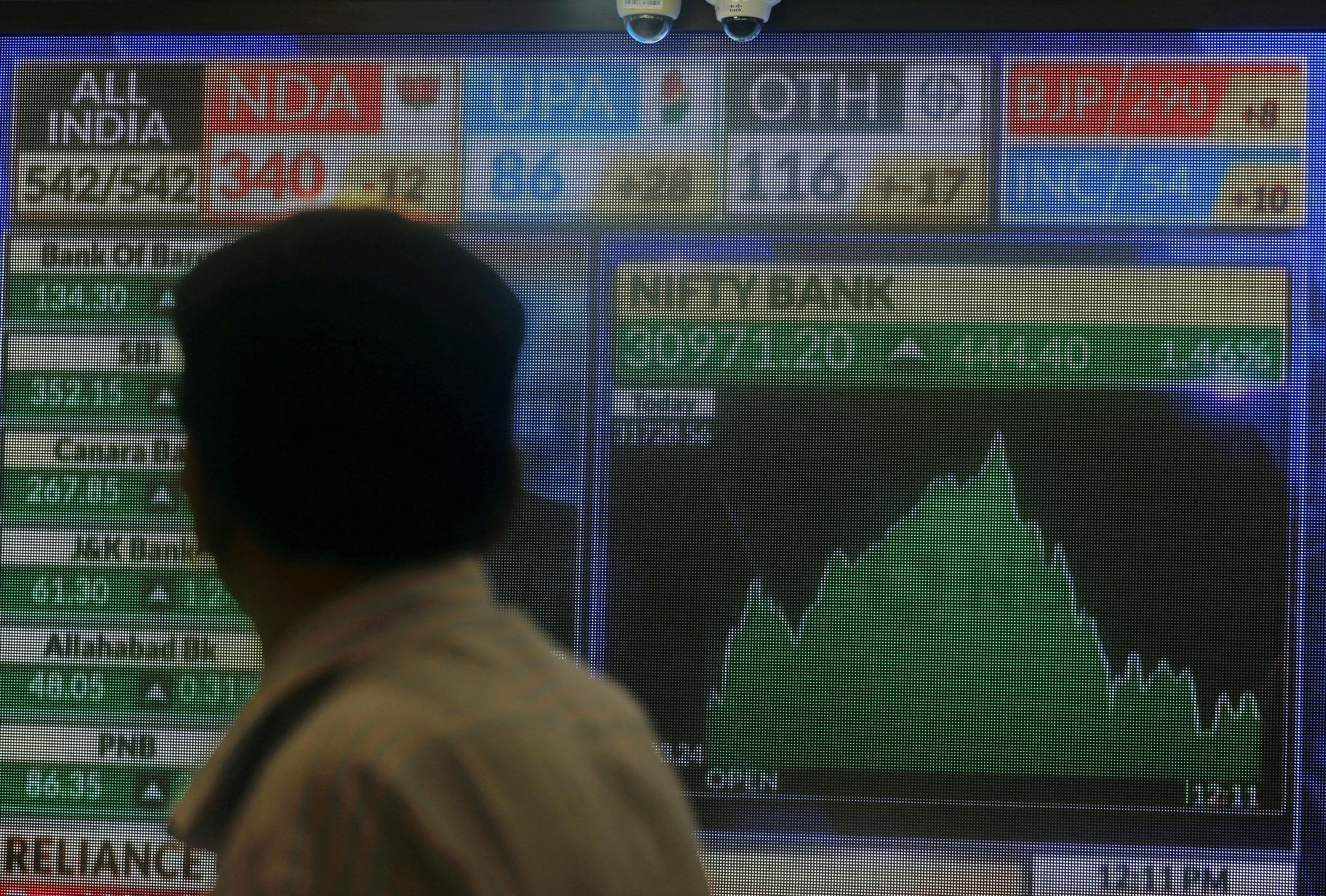
LONDON, June 4 (Reuters) - A clobbering for South Africa's, Mexico's and even India's heavyweight markets in recent days has proved without doubt that politics can still deliver an unexpected uppercut in big emerging economies. Mexico's peso and South Africa's rand were both still sliding on Tuesday following their respective election surprises, while the likelihood that Narendra Modi hadn't scored a landslide win in India's marathon elections sent its equity markets sprawling. The peso fell 1.5% to just shy of 18 to the U.S. dollar at one point as traders continued to fret about the ramifications of the resounding win for the Claudia Sheinbaum-led MORENA party and its allies in Sunday's Mexican election. That took its drop in recent days to nearly 5% and means that June is currently on track to be the peso's worst month since a 17% plunge at the start of the COVID-19 pandemic in March 2020. South Africa's rand, which has also been hit by the prospect of a potentially fraught coalition government after a poor election showing from the ruling ANC party, fell another 1.3% too , to take its fall over the last week to around 3.5%. "This is all a reminder of the importance of political risk events," said Graham Stock, a senior emerging market sovereign strategist at RBC Bluebay Asset Management. "You go into these events with a base case, but if you underestimate the tails and they materialise, then it is going to surprise market participants." Taiwan, Pakistan, Indonesia, Russia, Turkey have all held important elections this year but this week's trio have triggered the most dramatic market reactions so far. Indian shares swooned almost 6% on Tuesday in what was their heaviest fall since the COVID rout - a move all the more jarring after they had hit record highs on Monday. With over half the votes counted from an election that began back in April, Prime Minister Modi looked set to lose his majority, raising questions whether the new alliance he spearheads will need to spend more on welfare measures rather than key infrastructure projects and reforms. Analysts at brokerage Emkay Global said that difficult but potentially beneficial changes to land and labour policies, along with privatisation of some of India's big state-run firms, were now "off the table". WHIPLASH The jitters had also pushed up India's government borrowing costs in the bond markets, while the rupee dropped 0.5% against the dollar which, although not seismic, was its biggest fall in 16 months. "The India stock market reaction today was the classic whiplash where people got overexcited," said Ashmore's Head of Research, Gustavo Medeiros, referring to the recent record highs. International investors have been buying into both India and Mexico over the last year or two as an alternative to China, meaning that they had been susceptible to a selloff, he added. But he said it was reassuring that there had been no real EM-wide "contagion". In terms of Mexico, he cautioned that the "window of most concern" could still be ahead, however. Come September, outgoing president Andres Manuel Lopez Obrador will be in his last weeks of power and could try to use MORENA's new "super majority" to ram through previously rejected constitutional changes. The election campaign in the neighbouring U.S. will also be ramping up and Kieran Curtis, who heads EM local currency debt for EM-focused fund manager abrdn, thinks that is now the big crunch vote to watch for in analysing emerging markets. With the unpredictable Donald Trump promising harsh new trade tariffs and strong anti-China, U.S.-first policies as well as other shake-ups if he regains power, it will be crucial. Curtis said that with most of the big EM elections now complete, the U.S. was the crucial vote to watch, noting that as it will be highly populist and had some major underlying debt issues, the contest had certain EM-like characteristics itself. "That is going to be the one that everybody really watches after this month," he said. Sign up here. https://www.reuters.com/markets/mexico-south-africa-india-deliver-political-punch-markets-2024-06-04/
2024-06-04 17:02
MEXICO CITY, June 4 (Reuters) - Mexican finance minister Rogelio Ramirez de la O sought to reassure investors and markets, saying on Tuesday he would stay in his current role with the incoming government and work to reduce public debt and maintaining financial discipline. Ramirez de la O briefly spoke to analysts on a closed call, an audio of which was shared with Reuters, after a Sunday landslide election victory for the ruling MORENA party and its coalition spooked markets, tanking local stocks and the Mexican peso. In his remarks, Ramirez de la O said he would be continuing in his role as finance minister for an "indefinite period" as part of president-elect Claudia Sheinbaum's new government, which takes office in October. He said he will seek to "refresh" communication with credit rating agencies and investors about Mexico's priorities, including economic stability and fiscal prudence. Ramirez de la O said in a short statement published by the finance ministry following the meeting that the new government would seek "the reduction of debt generated each year by 2025 to levels compatible with a sustainable debt/GDP range in the medium term of around 3% of GDP." The minister said the new government plans to abide by the "central bank's autonomy, adherence to the rule of law" and facilitate "national and foreign private investment." Markets have been volatile since the Sunday election due to the possibility the ruling coalition will secure a two-thirds super-majority, or very close, in both houses of Congress, allowing them to pass constitutional reforms unopposed. Mexico's peso currency clawed back on Tuesday morning some of its losses a day earlier, dipping 0.45% against the dollar after hours earlier losing as much as 2.9%. On Monday, Mexican stocks fell over 6% and the peso closed at its weakest since November, ending the session down 3.8% at 17.671 per dollar. The minister also said the government planned to work closely with indebted state oil firm Pemex (PEMEX.O) New Tab, opens new tab to optimize its use of its resources. Sign up here. https://www.reuters.com/markets/emerging/mexican-finance-minister-seeks-soothe-investors-reduce-public-debt-2024-06-04/

2024-06-04 16:38
BRASILIA, June 4 (Reuters) - Brazil's economy rebounded in the first quarter from a sluggish second half of 2023 on stronger investments and consumer demand, official figures showed on Tuesday, adding to caution at the central bank, which has slowed the pace of interest-rate cuts. The data boosted the outlook for Latin America's largest economy, but concerns remain about the impact of disastrous flooding in southern Brazil last month, which left a trail of destruction, opened the door to more government spending and pushed up food prices. Brazil's gross domestic product (GDP) expanded by 0.8% in the three months through March, gaining momentum from a revised 0.1% contraction in the prior quarter, according to the government statistics agency IBGE. Economic growth from the prior quarter was in line with the 0.8% median forecast in a Reuters poll of economists, while the 2.5% year-on-year rise exceeded the expected 2.2% growth. The stronger momentum has been fueled by a robust labor market, which spurred household consumption 1.5% higher from the previous quarter, while government spending remained flat. Fixed business investment also showed a recovery, rising 4.1% amid a monetary easing cycle that has cut the benchmark interest rate by 325 basis points since August last year. Rafaela Vitoria, chief economist at Inter bank, said that the stronger domestic demand is consistent with the central bank's cautious stance since its decision to reduce the pace of rate cuts in May and stop providing forward guidance. Hawkish comments from policymakers since then have led interest-rate futures to price in a pause in the easing cycle at the next rate-setting meeting this month. On the supply side, Brazil's services-sector activity rose by 1.4% in the three months through March, compared to the previous quarter. Agricultural output surprised positively with a rise of 11.3% after a steep contraction in the second half of 2023. Industrial output decreased by 0.1%. Juliana Trece, an economist at FGV Ibre, said the result was positive as robust growth was more broadly spread across sectors compared to the economic out-performance in 2023, which was far more concentrated around the benefits of a bumper harvest. However, Trece warned that the tragedy in the southern state of Rio Grande do Sul, where recent storms and flooding killed more than 170 people and left nearly 580,000 displaced, "can and will impact the economy this year." William Jackson, chief emerging markets economist at Capital Economics, said he doubts current growth rates will be sustained, as leading indicators point to a weaker second quarter. Brazil's Manufacturing Purchasing Managers' Index (PMI) dropped sharply in May and a key consumer confidence indicator has declined in recent months, Jackson noted. The Finance Ministry acknowledged that growth is expected to slow in the second quarter, reflecting the floods in the south. "Even with the positive result similar to that projected ... in the first quarter, uncertainties remain regarding the growth estimate for 2024," it said. President Luiz Inacio Lula da Silva's government recently raised its GDP growth projection to 2.5% this year, while private economists forecast a 2.05% expansion in the central bank's weekly survey. Both projections indicate a slowdown from the 2.9% growth in 2023, when a record agricultural performance boosted the economy. Sign up here. https://www.reuters.com/markets/emerging/brazilian-economy-rebounds-with-08-growth-first-quarter-2024-06-04/

2024-06-04 16:32
June 4 (Reuters) - U.S. job openings fell more than expected in April, pushing the number of available jobs per job-seeker to its lowest in nearly three years as labor market conditions soften in a manner that could help the Federal Reserve's fight against inflation. Job openings, a measure of labor demand, were down 296,000 to 8.059 million on the last day of April, the lowest level since February 2021, the Labor Department's Bureau of Labor Statistics said on Tuesday in its Job Openings and Labor Turnover Survey, or JOLTS report. That left 1.24 openings in April for every unemployed person, down from 1.3 in March and the lowest since June 2021. The ratio, watched closely by Fed Chair Jerome Powell as a sign of labor market tightness, is well below its post-pandemic peak of nearly two to one, and now matches the high-water mark of pre-pandemic times. Though still elevated, the drop in job openings points to "an ongoing normalization between supply and demand for labor," said Rubeela Farooqi, chief U.S. economist at High Frequency Economics. "From a policy perspective, the Fed’s challenge will be to maintain rates at a level that not only helps keep inflation in check but also prevents a significant weakening in the labor market going forward." Economists polled by Reuters had forecast 8.355 million job openings in April. Vacancies peaked at a record 12.0 million in March 2022. Data for March was revised lower to show 8.355 million unfilled positions instead of the previously reported 8.488 million. Openings fell broadly across sectors; only five industries - professional services, private education, retail, finance and insurance, and transportation - had an increase in openings. Still the report did not suggest an alarming weakening of the labor market. The number of people quitting their jobs rose 98,000 to 3.507 million in April. The quits rate was 2.2% for the sixth straight month, and the lowest since September 2020. And layoffs, at 1.52 million, were at their lowest since December 2022. Federal Reserve officials next week are expected to leave the U.S. central bank's policy rate in the same 5.25%-5.50% range where it has been since last July. They have said a rate cut will likely wait until data shows inflation, after a stronger-than-expected run during the first quarter, is headed back down toward their 2% goal. Fed officials have said that only an unexpected and meaningful weakening of the labor market could trigger a rate cut sooner than otherwise. They have so far welcomed evidence of labor market cooling as a sign of a rebalancing that eases upward pressure on prices. Attention on the U.S. labor market front turns now to the monthly jobs report for May, due out on Friday and expected to show the unemployment rate steady at 3.9%. Financial markets are pricing in a first Fed rate cut in September, and traders are increasingly confident of a second rate cut in December. A separate report out Tuesday showed orders for U.S.-manufactured goods increased for a third straight month in April, boosted by demand for transportation equipment. Factory shipments rose for a third straight month to the highest since June 2022, the report showed, and the inventories-to-shipments ratio fell - further indications of strength in demand for manufactured goods. Nondefense capital goods orders fell 1.6% while their shipments - which go into the calculation of the business spending on equipment component of gross domestic product - increased 2.3%. Sign up here. https://www.reuters.com/markets/us/us-job-openings-fall-more-than-expected-april-2024-06-04/

2024-06-04 12:56
NEW YORK, June 4 (Reuters) - "Roaring Kitty" Keith Gill, the stock influencer behind the 2021 meme stock frenzy, may be sitting on a paper profit of tens of millions of dollars on his position in GameStop options, but reaping those gains might not be easy. GameStop soared 21% on Monday after Gill’s Reddit account posted a screenshot showing a $116 million bet on the embattled video game retailer. The post, the first from the account in three years, also showed a position of 120,000 GameStop June 21 call options at a strike price of $20, worth $65.7 million at Friday's close. Call options convey the right to buy shares at a fixed price in the future. Reuters was unable to independently verify if the Reddit post was made by Keith Gill or if the positions disclosed were authentic. However, Trade Alert data showed the number of open contracts in GameStop soared to 145,000 by the end of May, from just about 15,000 on May 19. Figuring an average trading price of $5.52 during that period, a buyer of 120,000 options contracts would have been up about $54 million on Monday, based on the contracts' closing price of $10 a piece. Exiting an options trade could mean selling the options themselves or taking delivery of the underlying shares. Both choices could be problematic, given the size of the position and the spotlight on GameStop, options mavens said. It would be difficult to sell even a partial chunk of the options position without drawing attention, potentially knocking down the price of the options as well as the underlying stock, market participants said. "It's much easier to sell 10 to 12 million shares than if you sold 120,000 call options," said Steve Sosnick, chief strategist at Interactive Brokers and a former options market maker. It might also damage Gill’s reputation for having “diamond hands” - meme stock parlance for someone with high risk tolerance and an unwillingness to cave under pressure by selling their holdings. "Unless he is super committed to being a long term investor and taking delivery of (the shares), it's going to be challenging to monetize this without moving the market just because everybody's hyper aware of this now," said Garrett DeSimone, head of quantitative research at OptionMetrics. The other variant - taking delivery of 12 million shares that the disclosed options contracts command, may require hundreds of millions in capital, analysts said. One way for Gill to get around this and still make money, options traders said, would be to short 12 million shares of GameStop before the options expire. An investor going short borrows shares and sells them in the hopes of being able to buy back the stock at a lower price in the future. If GameStop’s share price is above the options’ $20 strike price at expiration, Gill could, in theory, exercise his options - buying the stock at $20 a piece and use the shares to close out his short position. Using Monday’s closing prices, Gill would be selling the shares at $28 and exercising his options to buy them back at $20, netting himself about $8 per share, or $96 million. "That would make it seem like he's still 'a diamond hands' and he's still going to make money," said Chris Murphy, co-head of derivative strategy at Susquehanna Financial Group. (This story has been corrected to show pricing was as of Friday's close of trading, not Monday, in paragraph 2) Sign up here. https://www.reuters.com/technology/roaring-kittys-gamestop-options-up-millions-cashing-may-be-tricky-2024-06-04/


