2024-06-04 12:38
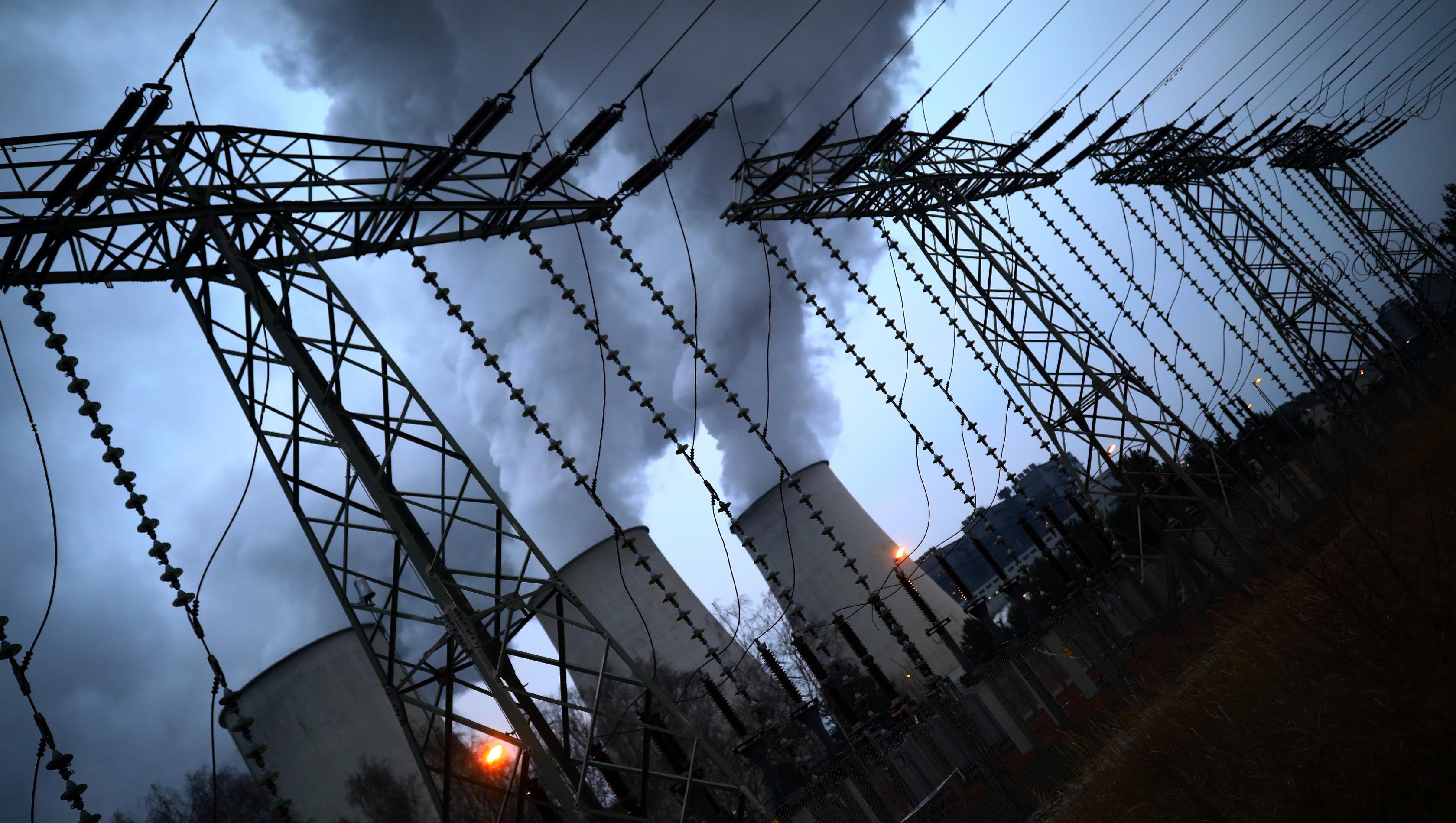
BERLIN, June 4 (Reuters) - Germany's economy ministry said it won the European Commission's clearance in principle to compensate power company LEAG with up to 1.75 billion euros ($1.90 billion) for exiting coal by 2038, part of Berlin's efforts to speed up decarbonisation. In 2020, Germany's previous government agreed to shut coal-fired power plants by 2038 as part of Berlin's ambitions to become climate neutral by 2045. It agreed with LEAG on the compensation amount, pending EU approval. But the transition, and efforts to accelerate it, have received a mixed welcome in the eastern mining region of Lusatia, where people remain sceptical about the social and ecological impact of such exit and the technical challenges to be overcome. "This is an important step, especially for the people of the region," Economy Minister Robert Habeck said in a statement. The Commission had concerns about approving the state payment and in 2021 opened an investigation to determine whether it distorted free competition in the EU's internal market. Some 1.2 billion euros of the compensation is meant for social costs of the exit and for repurposing opencast mines in the region, the economy ministry said. Around 550 million euros are earmarked as compensation for LEAG's forgone earnings due to the 2038 exit, subject to later adjustments based on the market situation, carbon prices and the final phase-out date. "This is an essential building block for our continued successful transformation into a green powerhouse," LEAG CEO Thorsten Kramer said in a statement. ($1 = 0.9204 euros) Sign up here. https://www.reuters.com/sustainability/climate-energy/eu-approves-175-bln-eur-compensation-german-coal-exit-germany-says-2024-06-04/
2024-06-04 12:15
LUSAKA, June 4 (Reuters) - The International Monetary Fund (IMF) said on Tuesday that Zambia's government had asked for its $1.3 billion loan programme to be increased to $1.7 billion to help it respond to a severe drought. The IMF also said in a statement that it had reached a staff-level agreement on the third review of the southern African country's Extended Credit Facility. Once the latest review is approved by IMF's executive board at a meeting expected by the end of June, Zambia will have access to roughly $573 million, the fourth disbursement under the facility. Zambia is one of a handful of African countries grappling with a drought induced by the El Niño weather phenomenon that has plunged parts of the region into hunger. The copper-rich country is close to emerging from a debt-restructuring process beset by delays after more than three and a half years. Zambia's finance ministry said last week that more than 90% of holders of its $3 billion in outstanding international bonds had accepted a restructuring proposal. Finance Minister Situmbeko Musokotwane said the staff-level agreement announced on Tuesday was "testament to Zambia's determination to rebuild macroeconomic and debt sustainability" and its efforts to finalise restructuring talks within the parameters of its IMF programme. Sign up here. https://www.reuters.com/markets/zambia-asks-imf-loan-be-increased-17-billion-2024-06-04/
2024-06-04 12:02
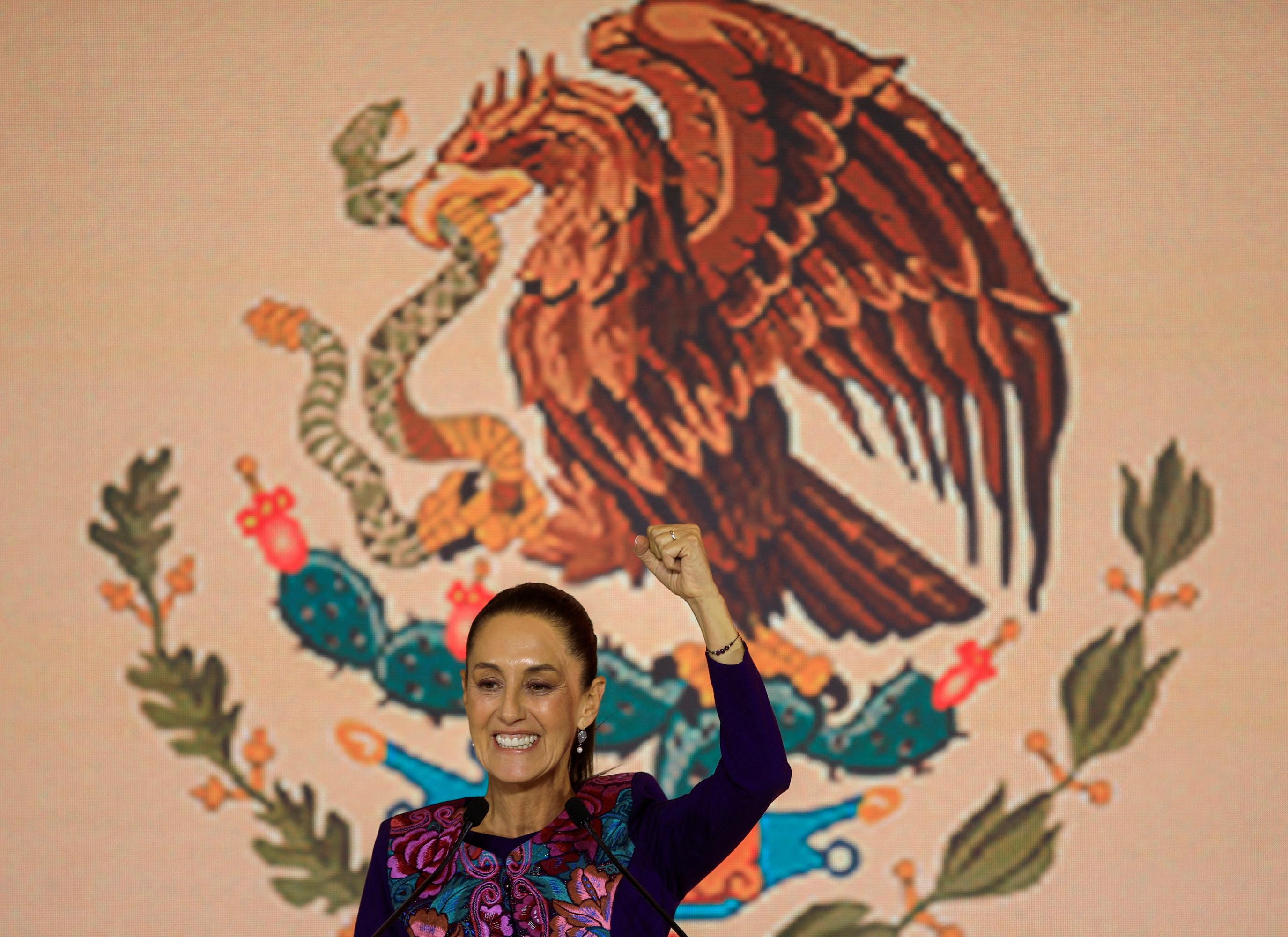
MEXICO CITY, June 4 (Reuters) - Mexico's President-elect Claudia Sheinbaum, an accomplished climate scientist, could struggle to fulfill her environmental pledges after she sailed to victory, in part, on the popularity of a predecessor who doubled down on fossil fuels. Sheinbaum, elected as Mexico's first woman president by a sweeping margin Sunday, inherits a country grappling daily with climate change and environmental challenges: pervasive drought, a water crisis in the sprawling capital of Mexico City, and rampant deforestation. The 61-year-old leftist leader, who was part of a United Nations panel of climate scientists that received a Nobel Peace Prize in 2007, has spoken about her belief in an academic and scientific approach to politics. She campaigned on a pledge to significantly boost renewable energy in the oil-producing country to as much as 50% by the end of her term in 2030. But despite her best intentions to improve Mexico's green record, Sheinbaum's mentor, the highly popular outgoing President Andres Manuel Lopez Obrador, spent billions propping up Mexico's fossil fuel-dependent state energy giants, oil firm Pemex and power utility CFE. Her overwhelming victory - and the possible congressional super majority won by the ruling coalition - is in many ways a referendum on Lopez Obrador's policies and initiatives, said Mariana Campero, senior associate with the CSIS Americas Program. Sheinbaum could be hard-pressed to break cadence with Lopez Obrador's style at the risk of losing support, limiting her ability to prioritize climate change policies. "She has said repeatedly that she will continue with his policies and that her government will be a continuation of his government," said Campero. "But she has always said that green energy is important.. So how will she square that circle?" GREEN AT HEART? Sheinbaum has credited her upbringing by a chemical engineer father and cellular biologist mother for fostering her interest in science and politics. She has a doctorate in energy engineering from the National Autonomous University of Mexico. As mayor of Mexico City, she installed a roof-top solar project at a busy central market and inaugurated a 100% electric bus line. But she faced criticism for some projects, including the construction of a bridge in the Xochimilco ecological zone that community members said damaged wetlands. She also supports some of Lopez Obrador's most controversial projects, including the Mayan Train, a tourist railway that activists and scientists decry for endangering pristine wilderness and ancient cave systems beneath the jungle floor. Still, her rise to the presidency has fueled hope among some that she could turn things around for the country's track record on climate change policies, which deteriorated under Lopez Obrador, according to the Climate Change Performance Index New Tab, opens new tab, largely due to increased subsidies for fossil fuels and poor progress in curbing deforestation. "I definitely think that she has that will and intention to put Mexico back on net-zero targets and in the good graces of the international community," Arthur Deakin, director of energy at consultancy America's Market Intelligence. THE PEMEX PROBLEM Sheinbaum has pledged to boost wind and solar energy as part of a $13.57 billion investment in new energy generation projects. She is, however, also facing the biggest budget deficit in decades, left behind by Lopez Obrador, a reality that will force her to pick and choose how to dedicate spending. Despite being the world's most indebted energy company, Pemex is still a major contributor to state coffers, said Alejandra Lopez, a public policy consultant who specializes in energy issues. The firm is a heavy emitter of greenhouse gases, but it is also an important national symbol of energy sovereignty for many Mexicans, including Lopez Obrador. Pemex stirs a sense of "emotional, historical and sentimental" importance within the country, Lopez said. Sheinbaum is a vocal believer in the role of the state in Mexico's energy sector, long dominated by Pemex, which could make it tough to keep her promise to increase renewable energy. A business-savvy approach could enable her to attract investment and spur realistic change towards decarbonizing the energy and transportation sectors, Deakin said. Sheinbaum could start by increasing the limit for Distributed Generation (DG) projects, typically small privately-funded solar or wind farms that are built to supply energy to a specific factory or industrial site. Upping the cap from the current 0.5 megawatts to 5 megawatts, like Brazil has done, could increase clean electricity for commercial industrial users, Deakin said. She could introduce biofuel policies and increase electric vehicle (EV) subsidies and charging infrastructure. A national carbon credit framework could help accelerate interest in low carbon initiatives. "It's a little harder when you're struggling with a more constrained budget, but there's other ways that emerging markets are able to create a more attractive environment for renewable electricity," Deakin said. Sign up here. https://www.reuters.com/world/americas/can-mexicos-sheinbaum-climate-scientist-shake-lopez-obradors-oil-legacy-2024-06-04/
2024-06-04 12:00
LITTLETON, Colorado, June 4 (Reuters) - Germany's power system has continued to clean up its act over the first five months of 2024, setting several key milestones in terms of expanded clean electricity generation and reduced fossil fuel use. Wholesale power prices so far in 2024 are averaging 30% less than in 2023, and are back to levels last seen before Russia's invasion of Ukraine in early 2022 roiled regional power markets. Cheaper, cleaner power is in turn fostering a recovery in energy use among Germany's industries, many of which were forced to curb production since 2022 due to high energy bills and diminished consumer demand. However, total German power generation by utilities remains somewhat constrained by the cuts made to fossil fuel generation and due to the complete halt to output from Germany's nuclear fleet just over a year ago. Through May, total electricity output from utilities was down 5.4% from the same months in 2023, according to German Federal generation data, which indicates that power firms may struggle to meet any further climb in electricity demand without resorting to increased fossil fuel-powered output. REGIONAL LYNCHPIN As Europe's largest economy, top manufacturer and key driver of regional policy ambitions, Germany's energy transition momentum is closely tracked as a leading indicator of power sector decarbonisation progress for the entire region. And with clean electricity output at new highs through May - and fossil fuel generation down nearly 17% - 2024 could enter the record books as the first year that a clear majority of Germany's electricity comes from clean sources. Clean power sources accounted for 63.4% of total German electricity generation from January through May, according to the German Federal Network Agency's electricity market data platform, SMARD. That clean share compares to 55.6% over the same period in 2023, and means that the German generation system relied on fossil fuels for less than 40% of electricity so far this year. But thanks to annual "Dunkelflauten", or spells of low wind speeds during the summer that cut wind-powered electricity generation, total German clean power output may be capped over the coming months and may place strain on power providers if total demand creeps higher. EBBS AND FLOWS Some sources of clean power are likely to climb during June, July and August when both solar and hydropower output peaks. German solar output is on track to set a new annual generation record, with cumulative generation through May already running more than 16% ahead of last year's record. And as solar can account for more than 25% of total generation during the summer, higher overall solar production will be a key source of clean electricity for power firms this year. Hydro output is on course to hit its highest since at least 2019 this year, especially from pumped storage facilities that look set to hit their highest output levels in several years thanks to capacity expansions. However, as wind has accounted for around 55% of clean power generation in Germany so far this year - and around 35% of all power - the expected further decline in wind generation is likely to constrain Germany's power systems this summer. Monthly output data already indicates that wind generation levels from both onshore and offshore sites are close to their expected lows for the year. But historical trends suggest wind output will likely remain stuck near those generation doldrums until September, when weather conditions change and usher in higher wind speeds at turbine level. MORE IMPORTS AND/OR MORE FOSSIL OUTPUT To offset the impact of sustained low levels of wind output, Germany's power producers may look to increase electricity imports from neighbouring nations such as France. In 2023, Germany's electricity imports jumped from around 120,000 megawatt hours (MWh) in May to more than 3 million MWh in each of the following three months, according to SMARD. German electricity imports then surged to more than 5.4 million MWh in September just as French power prices dropped to their widest discount to German power prices in over three years, data from LSEG shows. So far in 2024, French power prices have again fallen sharply below Germany's, spurring renewed imports that last month were 18 times larger than the volumes of May 2023. Additional large electricity imports look likely throughout the summer, but German power firms will also likely need to increase power output from coal and natural gas plants in order to ensure stable market conditions throughout the summer when wind generation dies off. Coal and gas output through May have dropped by around 30% and 15% respectively from the same months in 2023, SMARD data shows. Lower fossil fuel use has in turn helped cut German power sector emissions by around 20 million metric tons of carbon dioxide (CO2) and equivalent gases through the first four months of the year, according to energy think tank Ember. However, those cuts to fossil fuel use and emissions could be quickly reversed if power firms crank coal and gas-fired power over the remainder of 2024, which may be inevitable if clean power supplies remain capped just as total electricity demand rises. Any such revival of power generation from dirty sources could dent Germany's recent energy transition momentum, and threaten to tarnish its reputation as a green power leader. But if German power firms manage to keep fossil fuel output to a minimum during spells of low clean power generation, the country should remain a key blueprint for ongoing energy transition efforts elsewhere in the region. Sign up here. https://www.reuters.com/markets/commodities/cleaner-german-power-sector-coming-under-scrutiny-2024-2024-06-04/

2024-06-04 11:59
Output rises 145,000 bpd from April Group exceeds target by about 250,000 bpd Details by country LONDON, June 4 (Reuters) - OPEC oil output rose in May, a Reuters survey found on Tuesday, as higher exports from Nigeria and Iraq offset the impact of ongoing voluntary supply cuts by some members agreed with the wider OPEC+ alliance. The Organization of the Petroleum Exporting Countries pumped 26.63 million barrels per day (bpd) last month, up 145,000 bpd from April, the survey, based on shipping data and information from industry sources, found. The increase from Iraq comes despite the country, OPEC's second-largest producer, along with OPEC+ member Kazakhstan pledging to compensate for earlier over-production by making further cutbacks in the rest of 2024. Several members of OPEC+, which includes OPEC, Russia and other allies, made new cuts in January to counter economic weakness and increased supply outside the group. Producers decided on Sunday to keep them in place for the third quarter, having earlier extended them until June. Iraq and Nigeria each raised output by 50,000 bpd and there were smaller hikes in Saudi Arabia and the United Arab Emirates, the survey found. Only Algeria cut output, as a result of oilfield maintenance. OPEC pumped about 250,000 bpd more than the implied target for the nine members covered by supply cut agreements, with Iraq accounting for the bulk of the excess, the survey found. Among those not required to cut output, Iran and Venezuela boosted output slightly. Iran is pumping near a five-year high reached in November after posting one of OPEC's biggest output increases in 2023 despite U.S. sanctions still being in place. The Reuters survey aims to track supply to the market and is based on shipping data provided by external sources, LSEG flows data, information from companies that track flows - such as Petro-Logistics and Kpler - and information provided by sources at oil companies, OPEC and consultants. Sign up here. https://www.reuters.com/markets/commodities/opec-oil-output-rises-may-led-by-nigeria-iraq-survey-shows-2024-06-04/

2024-06-04 11:07
Most Norway gas export to Britain halted since Sunday Outage caused by crack in pipeline at offshore platform Flow set to resume early June 7; some uncertainty remains Norway is Europe's biggest supplier of natural gas OSLO, June 4 (Reuters) - An outage affecting Norway's gas exports to Britain that sent prices soaring on Monday will likely be repaired by Friday, easing supply crunch concerns but still serving as a fresh reminder of Europe's dependence on Norwegian gas. Europe's benchmark gas price, the Dutch front-month contract , eased on the news that the repair would be limited in time, shedding 4% to 34.93 euros/MWh by 0925 GMT. Monday's outage had driven up European gas prices on Monday to a peak of 38.56 euros - their highest level since December. Gassco attributed it to a crack in a two-inch pipeline onboard Equinor's (EQNR.OL) New Tab, opens new tab offshore Sleipner Riser platform. The outage drove up prices in the United States and Asia too, on concerns it could tighten supply at a time of worries over remaining Russian volumes and an Asian heatwave increasing competition for liquefied natural gas (LNG). The United States is a main exporter of LNG and supply outages elsewhere increases demand for U.S. exports and in turn lifts domestic gas prices. Norway in 2022 overtook Russia as Europe's biggest gas supplier after Moscow's invasion of Ukraine, making any outages at Norwegian fields a possible trigger for higher prices. Norway in 2022 provided 26% of all natural gas consumed in Britain and the European Union, making it the continent's largest supplier, according to the Norwegian Offshore Directorate, an industry regulator. "The outages once again highlight the risks on the European gas market, which is still highly dependent on individual producer countries," Commerzbank's head of commodity research Thu Lan Nguyen said in a note on Tuesday. REPAIRS "Based on what we have heard from the field operator, this is the repair time we think it will take to fix the problem," Alfred Hansen, head of system operations at Gassco, told Reuters on Tuesday, following a meeting with Equinor. Repairs could take longer or also less time, but were not expected to take weeks, he added. Gassco will stay in frequent contact with Equinor throughout the repair period and update outage timings on its transparency website to reflect the latest estimates, Hansen said. Equinor did not immediately respond to a request for comment. The company has previously referred questions on the outage to Gassco. Sleipner Riser is a connection point in the North Sea for the Langeled North and Langeled South pipelines connecting the Nyhamna plant on Norway's west coast to the Easington terminal in northeast England. Norwegian gas supply nominations rose marginally to 264 million cubic metres (mcm) per day on Tuesday, from 256 mcm/day nominated on Monday, according to Gassco data but were still well below the 300 mcm or more per day normally scheduled. Nyhamna is able to process up to 79.8 mcm per day, while Britain's Easington terminal has a capacity of 72.50 mcm/day. Sign up here. https://www.reuters.com/business/energy/norway-gas-export-outage-extended-duration-remains-uncertain-2024-06-04/