
2024-06-04 11:04
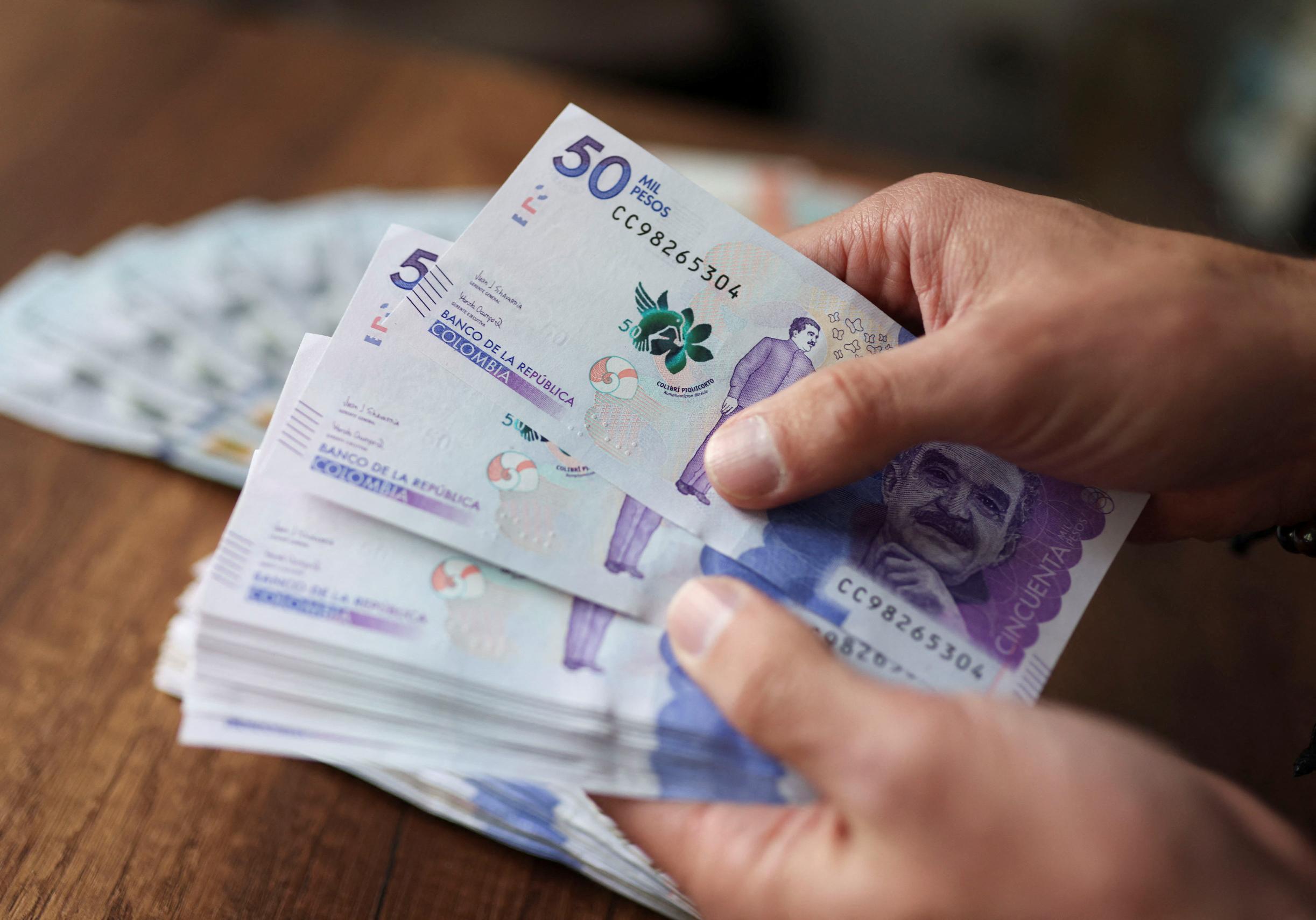
BOGOTA, June 4 (Reuters) - A collapse in Colombia's tax collection is setting off alarm bells for the market, which says the government will need to contend with an estimated budget shortfall of some 27 trillion pesos, about $6.9 billion, this year. Finance Minister Ricardo Bonilla has predicted fiscal adjustments in the fourth quarter, but analysts said changes will need to come sooner, lest the country miss fiscal targets or ratings agencies take notice. Tax collection fell 40.9% in April to $4.83 billion, taking the overall shortfall to about $2.85 billion in the first four months of the year compared to the target. The DIAN tax agency has already said the country will not meet targeted collection of nearly $2.6 billion from arbitrations during 2024, and a court decision allowing extractive companies to continue deducting royalties from their taxes will also hit public coffers. "The fiscal situation is worrying, both at the level of spending and of income," said Andres Abadia, head economist for Latin America for Pantheon Macroeconomics. "The economy will have to pay for it." The government will need to make adjustments in its mid-year fiscal plan in mid-June if it wants to avoid a crisis in investor confidence, analysts said. The finance ministry did not respond to requests for comment. Various market sources who spoke to Reuters said the government faces a dilemma when trying to react to lower-than-expected income - should it significantly reduce spending, take on more debt or both? Either decision would have fiscal effects, they said. "I think (the changes) will be insufficient," said Camilo Perez, the director of economic studies at Banco de Bogota. He expects spending cuts and the government to increase the issuance of peso-denominated TES bonds. Many analysts also expect the government to continue debt swaps to extend expiries. More debt would mean an increase in the fiscal deficit for this year to about 5.3% of gross domestic product, only just complying with the fiscal rule, a 2011 measure that imposes policy constraints to protect public finances. A deficit of that level would create volatility, with investors uncertain about capacity to control the fiscal imbalance and higher risk premiums and financing costs, analysts said. "We have not yet completely incorporated the fiscal risk," said Mauricio Guzman, head of investment strategy at Sura Investments, who manages a portfolio of $20.5 billion, with some $2.5 billion concentrated in Colombian public debt. "Investors will be very reluctant to take on risk until there is more fiscal clarity." A drastic cut in spending could hit growth, in turn putting pressure on 2025 finances, said Sergio Olarte, head economist for Colombia at Scotiabank. "They will need to present a super austere budget next year or modify the fiscal rule," he said. Sign up here. https://www.reuters.com/world/americas/colombia-facing-budget-shortfall-nearly-7-billion-2024-06-04/
2024-06-04 10:35
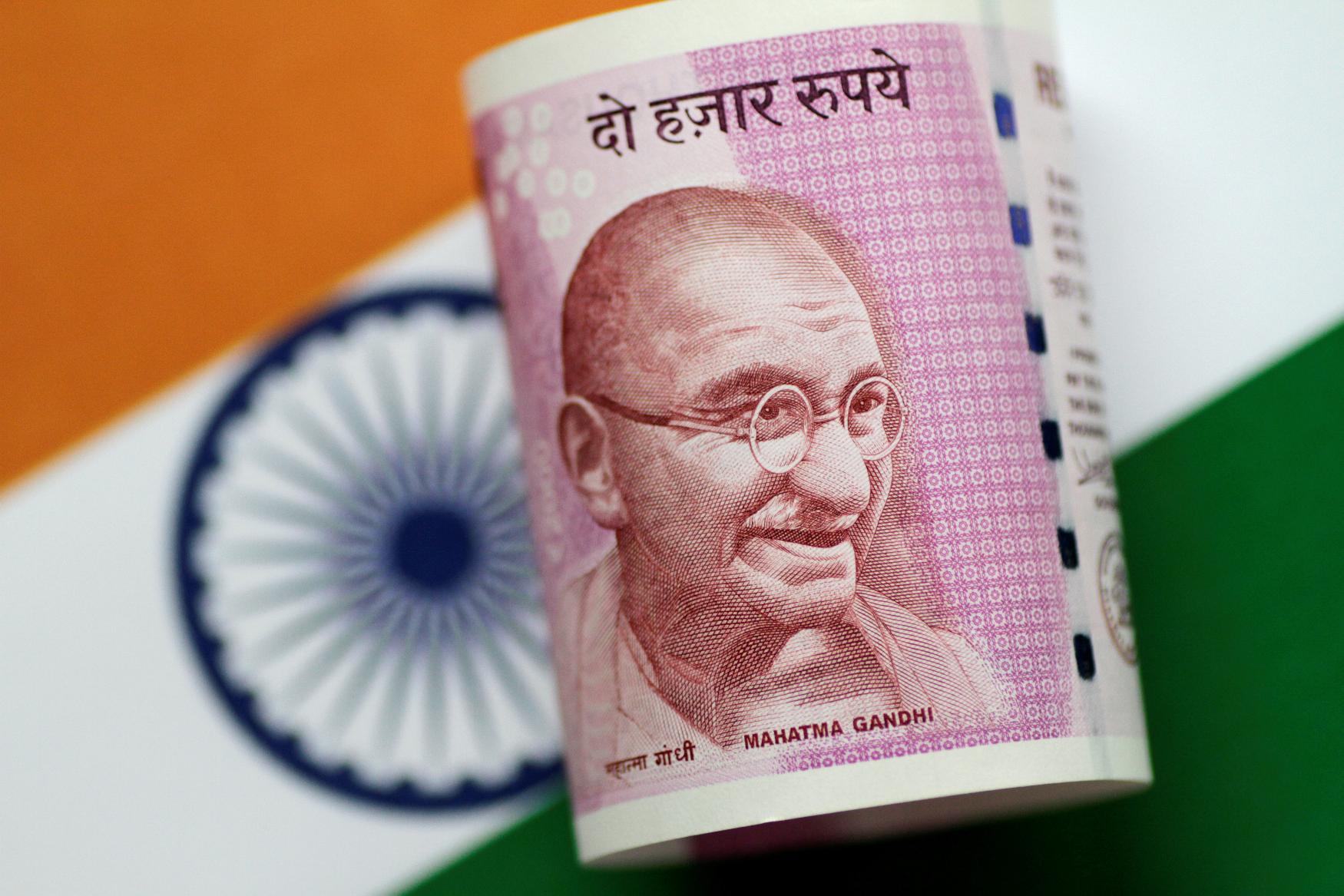
MUMBAI, June 4 (Reuters) - The Indian rupee slumped on Tuesday after vote counting trends signalled that Prime Minister Narendra Modi's Bharatiya Janata Party-led alliance would win a narrower majority than was expected, spurring a selloff in local equities. The rupee closed at 83.53 against the U.S. dollar, down 0.47% on the day, its worst single-day percentage fall since February last year. The Reserve Bank of India (RBI) likely stepped in to limit the rupee's decline, traders said. State-run banks were spotted offering dollars near 83.50 levels, likely on behalf of the RBI. The sales were intended to plug likely outflows instead of pushing the dollar-rupee pair lower, a foreign exchange trader at a large private bank said. Indian equity indices plunged on worries about the election outcome. The Nifty 50 Index had its worst day in over 4 years and Indian bond yields rose. Markets reacted negatively due to the smaller-than-expected mandate and (PM Modi's) Bharatiya Janata Party not achieving a majority on its own, Shreya Sodhani, regional economist at Barclays Bank said. "The government is still likely to be stable, but markets will likely take a while to gain confidence in the new government," she added. Modi was well short of the landslide predicted in exit polls, the Election Commission of India website showed. The worry for Indian markets was that a slimmer mandate for the Modi-led alliance could hamper the undertaking of more economic reforms. Meanwhile, the dollar index rose 0.2% to 104.3 while most Asian currencies rose, with the Thai baht up 0.6% and leading gains. Sign up here. https://www.reuters.com/markets/currencies/rupee-falls-most-over-year-vote-count-shows-narrower-win-modi-led-alliance-2024-06-04/
2024-06-04 10:24
LONDON, June 4 (Reuters) - Volvo Cars is launching the world's first EV battery passport recording the origins of raw materials, components, recycled content and carbon footprint for its flagship EX90 SUV, which is about to start production, the Swedish automaker told Reuters. The passport was developed by Volvo (VOLCARb.ST) New Tab, opens new tab, which is owned by China's Geely (GEELY.UL), in partnership with UK startup Circulor, which uses blockchain technology to map supply chains for companies, and took over five years to develop. Battery passports will be mandatory for electric vehicles (EVs) sold in the European Union from February 2027 showing the composition of batteries, including the origin of key materials, their carbon footprint and recycled content. Volvo's head of global sustainability Vanessa Butani told Reuters that introducing the passport nearly three years before regulations kick in was aimed at being transparent with car buyers as the automaker targets producing only fully-electric cars by 2030. "It's really important for us to be a pioneer and a leader," Butani said. The EX90 SUV with a battery passport is due to start production soon at Volvo's plant in Charleston, South Carolina, and will be delivered to customers in Europe and North America from the second half of the year. Volvo owners can access a simplified version of the passport using a QR code on the inside of the driver's door. Butani said the passport would be gradually rolled out to all of Volvo's EVs. A more complete version of the passport will be passed to regulators. It will also include up-to-date information on the EV battery's state of health - vital for assessing used EV values - for 15 years and will Volvo cost around $10 per car, Circulor CEO Douglas Johnson-Poensgen told Reuters. Circulor's system traces battery materials from the mine to individual cars, piggybacking on suppliers' production systems to track materials throughout the supply chain and checking suppliers' monthly energy bills - and how much of their energy comes from renewable sources in order to calculate a total carbon footprint. If Volvo brings on board a supplier, Circulor will need to audit it to keep information current, Johnson-Poensgen said. The passport has also required changes in how Volvo traces parts through its manufacturing process to understand the origins of every part in every vehicle. "Car manufacturing has never been about which rock went into which component and which got connected to which car," Johnson-Poensgen said. "It's taken a long time to figure that out." While there is no such mandate in the United States, automakers are showing interest there because they may need to prove they qualify for EV subsidies under the U.S. Inflation Reduction Act, Johnson-Poensgen said. Volvo has invested in Circulor, as has Jaguar Land Rover and BHP (BHP.AX) New Tab, opens new tab, the world's largest listed miner. Johnson-Poensgen said there was a rush among automakers to create battery passports, and that even if they started now many may find it hard to meet the EU's 2027 deadline. Sign up here. https://www.reuters.com/business/autos-transportation/volvo-issue-worlds-first-ev-battery-passport-ahead-eu-rules-2024-06-04/

2024-06-04 10:12
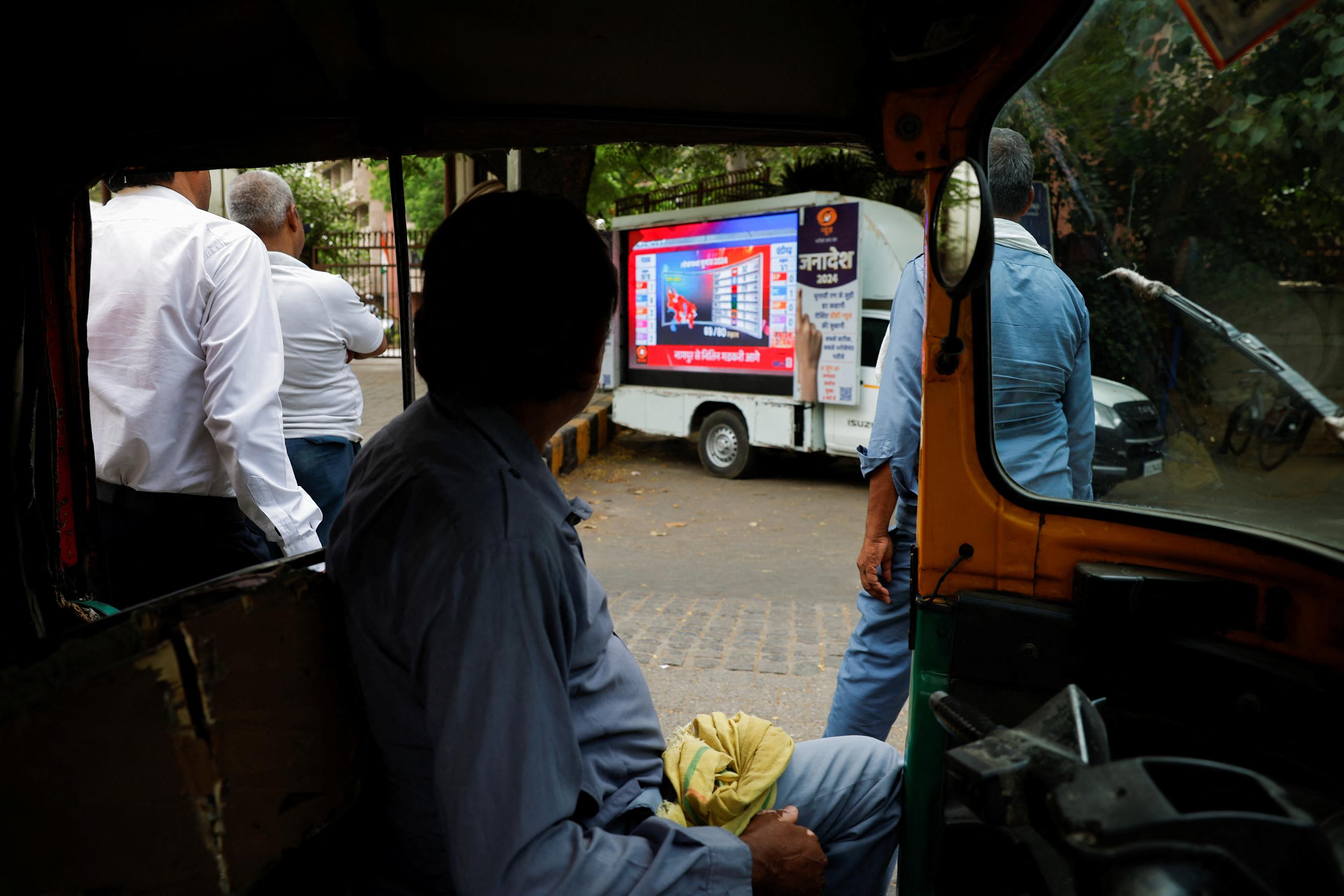
Indian markets slide after early vote count Rand slides again on political drag Zambia bondholders to vote on debt restructuring June 4 (Reuters) - Emerging market stocks looked on course for their steepest fall in seven weeks on Tuesday, with Indian shares slumping on nervousness around election results, while political uncertainty continued to weigh on the South African rand. The MSCI EM equities index (.MSCIEF) New Tab, opens new tab fell 1.6%, having dropped as much as 1.9% earlier in the session. The benchmark was set for its biggest percentage drop since April 16. India's main stock indexes (.BSESN) New Tab, opens new tab, (.NSEI) New Tab, opens new tab slid more than 5% each, pulling back from record levels hit on Monday, as vote counting trends showed Prime Minister Narendra Modi's alliance was winning a majority of seats in the general election, but well short of the landslide predicted in exit polls. The updates spooked financial markets which had expected a hefty win for Modi, with the rupee falling to 83.5 per dollar and benchmark bond yields rising. "The margin of the BJP victory will be less than previously expected. The strong gains on equities and the rupee that we saw yesterday looked very much overdone," said Jon Harrison, managing director for EM macro strategy at TS Lombard. "The reality is that any new government is going to face a lot of pressure to do more welfare spending and they're going to be constrained in terms of the reforms that they can do." Stock markets in South Africa (.JTOPI) New Tab, opens new tab, Hungary (.BUX) New Tab, opens new tab and Poland (.WIG20) New Tab, opens new tab also fell as investors considered the prospect that the U.S. economy's "exceptionalism" may be starting to unwind as manufacturing activity there further weakened. The dollar ticked up on Tuesday following losses overnight, weighing broadly on EM currencies. The Official Monetary and Financial Institutions Forum said more global reserve managers plan to increase exposure to the now high-yielding U.S. dollar as their interest in China's yuan has soured due to low returns and geopolitical tensions. The South African rand fell more than 1% to trade at 18.72 per dollar after data showed the economy contracted 0.1% in the first quarter in quarter-on-quarter seasonally-adjusted terms. Economists polled by Reuters had predicted a growth of 0.1%. The currency was hammered last week after the African National Congress (ANC) lost its majority in last week's election. The ANC has up to two weeks to agree to a coalition pact. Meanwhile, Tuesday will see Zambia's international bondholders vote through their part of a $13.4 billion debt restructuring and make it the first to complete a full-blown rework under the G20-led 'Common Framework' architecture. HIGHLIGHTS: ** Hungary's Q1 GDP up 1.1% y/y, in line with the first reading ** Oman sovereign wealth fund says total assets reach $49.98 bln in 2023 ** Brazil's IPC-Fipe price index rises in May For TOP NEWS across emerging markets For CENTRAL EUROPE market report, see For TURKISH market report, see For RUSSIAN market report, see Sign up here. https://www.reuters.com/markets/asia/election-anxiety-india-south-africa-weigh-em-equities-fx-2024-06-04/
2024-06-04 10:08
A look at the day ahead in U.S. and global markets from Mike Dolan With a still-powerful "buy the dip" instinct in stocks, U.S. markets are having a rare bout of jitters about a slowing economy - with Treasury yields, the dollar and oil prices all swooning over the past 24 hours. Wall Street's tech-led "bounce-ability" was on display again on Monday as the S&P500 (.SPX) New Tab, opens new tab clawed back sharp intra-day losses to close higher on the day. But the rates, currency and commodities complex is riffing heavily off further signs of a sharp U.S. factory slowdown. While an economic stumble at this stage could be a double-edged sword for near-record high stocks - twinning the earnings implications with the higher chance of lower Federal Reserve rates - the push-pull could continue up to this week's key employment report at least. S&P500 futures are back in the red ahead of Tuesday's open, with stock losses across most of Asia and Europe today too. On Monday, the ISM's latest U.S. manufacturing survey showed a deeper contraction in May activity than forecast, amplifying similarly stark readings from Chicago's equivalent factory poll late last week and signs of an erosion of household spending in April to boot. The combination has been enough to drag the Atlanta Fed's real-time "GDPNow" estimate back down as low as 1.8% - from as high 3.5% a week ago and more than 4% in mid-May and its lowest reading all year. The week's big labor market soundings get underway later on Tuesday with April job openings data. Full-year Fed rate cut expectations have now crept back above 40 basis points (bps) - almost 10 bps higher than a week ago. Both driven by and feeding off a post-OPEC slide in crude oil prices - itself a casualty of the manufacturing anxiety - 10-year Treasury yields fell back to their lowest in almost three weeks. Oil prices snowballed further on Tuesday to their lowest since Feb. 6 - bringing year-on-year gains back below 2% for the first time in three months. And the 25 bps pullback in 10-year yields over the past week has been enough to zap the newly re-emerged "term premium" on long-term debt holdings back below zero again. ELECTION RESULTS The dollar was also a victim, with its DXY index (.DXY) New Tab, opens new tab falling to the its lowest level in almost two months before steadying. The euro briefly hit its highest since mid-March ahead of this week's widely-expected European Central Bank interest rate cut, while dollar/yen recoiled to 155 for the first time since May 16. Checking the dollar's fall more broadly, however, has been an ongoing slide in Mexico's peso , a recoil in India's rupee and renewed losses in South Africa's rand after election results this week in all three countries. The rupee fell sharply to a three-week low as provisional results in India's protracted election showed Narendra Modi's BJP-led alliance was well short of the super-majority weekend exit polls had suggested. But the real hit was to Indian stocks (.NSEI) New Tab, opens new tab, which tanked more than 8% in the biggest loss in more than four years - after hopes on Monday of major reforms and spending in the event of a two-thirds majority parliamentary were doused and knocked the market back from record highs. The peso, meantime, has racked up losses of up to 5% since Friday after Claudia Sheinbaum's presidential election win and near-super majority for the left-wing Morena party. The concern surrounds possible constitutional changes that could occur as well as an apparent free rein on public spending. Key diary items that may provide direction to U.S. markets later on Tuesday: * US April job openings, April factory goods orders * US corporate earnings: Hewlett Packard Enterprise, Bath & Body Works Sign up here. https://www.reuters.com/markets/us/global-markets-view-usa-2024-06-04/

2024-06-04 10:05
CHICAGO, June 4 (Reuters) - Mark Tuttle planted more soy and less corn on his northern Illinois farm this spring as prices for both crops hover near three-year lows and soybeans' lower production costs offered him the best chance of turning a profit in the country's top soy producing state. He even planted soybeans in one of his fields for a second straight year, breaking the traditional soy-corn-soy rotation for field management. He and many other farmers are hoping to just minimize losses. Planting more soy at a time of sputtering demand from importers and domestic processors will only serve to drive prices lower, further swell historically large global supplies and erode U.S. farm incomes New Tab, opens new tab already poised for the steepest annual drop ever in dollar terms. But Midwest farmers' other main options - seeding more corn or leaving fields fallow - could have resulted in even wider losses. "There's a better chance of making money with soybeans than there is for corn right now," Tuttle said. "But if we have another bigger crop, prices are going to go lower and that's not going to bode well for the farmer." In March, the U.S. Department of Agriculture forecast farmers would plant 86.5 million acres of soybeans nationwide this spring, the fifth most ever. Some analysts expect soybean acres to increase by another million acres or more as heavy rains close the window on corn planting. In nearby Princeton, Illinois, Evan Hultine also increased soy plantings and scaled back corn. High production costs due in part to a jump in interest rates looked likely to erode most or all of his corn returns, while soybeans remained marginally profitable, he said. The farm's profits will likely be the thinnest in at least five years, Hultine said. In an annual early season crop budget estimate New Tab, opens new tab, University of Illinois agricultural economists projected negative average farmer returns in the state for both crops, though losses would be smaller for soybeans. UNPROFITABLE CROPS In northern Illinois, farmers could lose $140 per acre on average for corn and $30 an acre for soybeans with autumn delivery prices of $4.50 and $11.50 a bushel, respectively, the analysis showed. Actual returns vary significantly from farm to farm, however, depending on factors like crop yields, the timing of grain sales and whether farmers own or rent their land. Fertilizer costs are down from highs last year, but crop prices are also down, while land costs remain elevated and borrowing rates for operating loans and equipment have jumped, likely forcing farmers to cut expenses, the economists said. When looking to cut costs, farmers often favor planting soybeans rather than corn because they require less fertilizer and pesticides and seed costs tend to be lower. High interest rates have been a particularly painful expense recently. "If you're borrowing $700 an acre to put a corn crop in at 7% to 8%, you're talking about some real dollars there just on the price of money. You can put a bean crop in a lot cheaper. Your interest cost per acre might be half," Tuttle said. MORE SOY, LESS CORN An early-spring forecast from the USDA projected soy plantings would expand by 3.5% this year while corn plantings were expected to shrink 4.9%. The expansion is expected to swell the U.S. soy stockpile next season by more than 30% to the highest in five years and the sixth highest level on record as demand from the domestic and export markets is not keeping pace with rising production, according to the USDA. Now, rain-saturated fields in some areas could clip corn acres and even further expand seedings of soybeans, which, unlike corn, can be planted well into June without significant risk to yields. Cash prices offered for the next corn and soybean harvest have improved from earlier this spring in Spencer, Iowa, where Brent Swart has been struggling to plant the last of his corn acres due to overly wet weather. But neither crop pencils a profit at current prices. Nearly a foot of rain over the past month, seven inches more than normal, has left his fields too soggy for field work. Swart estimates his remaining corn fields may not be in shape to plant until after his planting deadline date of June 1, when crop insurance benefits begin to drop with each day. Swart's best option in some of his fields may be to file an insurance claim saying he was prevented from planting due to waterlogged soils. Soybean prices remain some 40 cents a bushel under his estimated cost of production, he said. "If you switch to soybeans, you're potentially looking at a loss. If you prevent plant, you're looking at more of a breakeven scenario," Swart said. Only farmers with severe weather issues will be able to file for insurance, however. Weather delays and a favorable price versus corn could boost soy plantings by 500,000 to 1 million acres above the USDA's latest forecast for 86.5 million, said Tanner Ehmke, lead economist for grains and oilseeds at CoBank. "The signal from the marketplace to the farmer right now is that, if you have a doubt about your acreage, send those acres to soybeans," he said. Sign up here. https://www.reuters.com/markets/commodities/us-farmers-opt-soy-limit-losses-all-crop-prices-slump-2024-06-04/


