2024-06-04 05:23
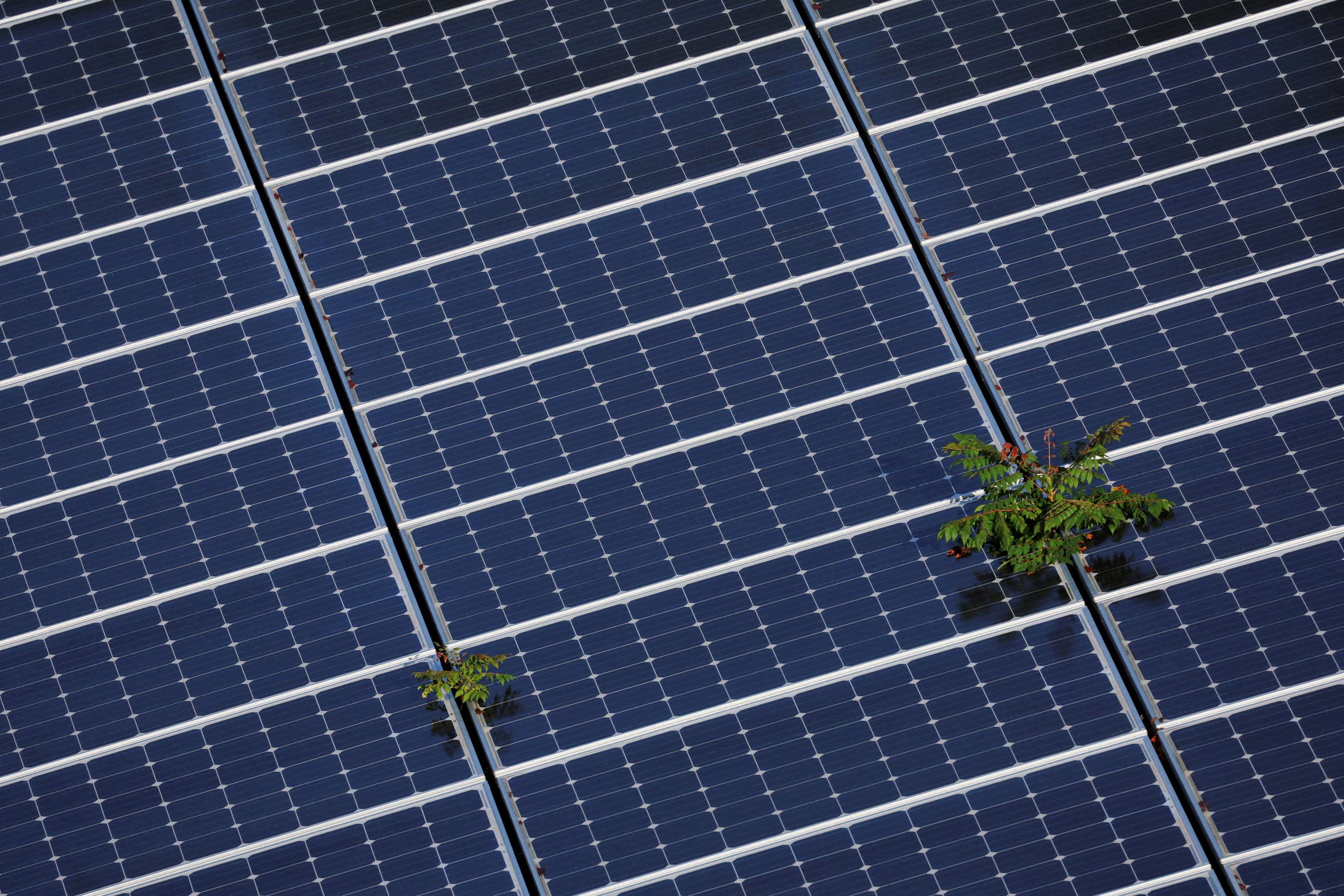
LONDON, June 4 (Reuters) - Countries' climate plans are not yet in line with a goal to triple renewable energy capacity worldwide by 2030 which was set at the COP28 climate summit in Dubai last year, a report by the International Energy Agency (IEA) said on Tuesday. WHY IT'S IMPORTANT The target would involve increasing installed renewable energy capacity to at least 11,000 gigawatts (GW) by the end of the decade, compared to 4,209 GW in 2023. Very few countries - just 14 out of a total of 194 - have included specific targets for total renewable power capacity for 2030 in their commitments under the Paris Agreement climate pact, called nationally determined contributions (NDCS). Official commitments in current NDCs amount to 1,300 GW – just 12% of what is required to meet the global tripling objective set in Dubai, the IEA said. BY THE NUMBERS The domestic goals of governments in nearly 150 countries across the world go further than commitments under NDCs, corresponding to almost 8,000 GW of installed renewable capacity by 2030. That means that if countries were to include all their existing policies, plans and estimates in their new NDCs due to be presented next year, they would reflect 70% of what is needed by 2030 to reach the tripling goal but the world would still be 30% short of the goal. CONTEXT Countries had to submit their new or updated NDCs every five years after 2020 so next year they have to include revised ambitions for 2030. A U.N. climate meeting is taking place in Bonn, Germany, from June 3-13 to work on the new round of plans, among other issues such as climate finance. KEY QUOTE "This report makes clear that the tripling target is ambitious but achievable – though only if governments quickly turn promises into plans of action,” said IEA executive director Fatih Birol. Sign up here. https://www.reuters.com/business/environment/countries-plans-not-yet-aligned-with-tripling-renewables-capacity-goal-2024-06-04/
2024-06-04 05:09
LAUNCESTON, Australia, June 4 (Reuters) - Renewable energy capacity additions have been dominated by China in recent years, but if 2030 climate targets are to be met other countries in Asia are going to have step up the pace of deployment. The opportunity for nations like India and the major Southeast Asian economies of Indonesia, Thailand, Malaysia, Vietnam and the Philippines to boost their renewable energy capacity is one of the major themes from a new report released on Tuesday by the International Energy Agency (IEA). The report found that China installed almost 350 gigawatts (GW) of new renewable capacity in 2023, more than half the global total, and if the world's second-biggest economy maintains this pace it will likely exceed its 2030 target this year. China's formal target is to have wind and solar installed capacity of 1,200 GW by 2030, but the IEA said as of April this year it was already at 1,130 GW. The IEA report said that modelling based on China's decarbonisation ambitions give an "estimated 2030 ambition trajectory" of more than 3,000 GW of all types of renewables, including hydro, by the end of this decade. This represents a doubling of current installed capacity and means China will remain a leader in deploying renewables. But the IEA also said the main opportunities lie elsewhere in Asia, especially since many of the region's countries are at the start of their renewables journey. The agency said excluding China the Asia-Pacific region has plans for nearly 1,200 GW of renewables by 2030, based on targets from the various countries, which is about double the current levels. But the question is whether this is ambitious enough for the region to meet climate goals. "This amounts to roughly 15% of total planned renewable energy capacity globally, lower than the region's 22% share in greenhouse gas emissions from power generation and heat production in 2022," the IEA report said. India leads planned renewable additions with 500 GW of non-fossil fuel capacity by 2030, a figure that includes nuclear of about 15 GW while the majority is 293 GW of solar and 100 GW of wind. Members of the Association of Southeast Asian Nations (ASEAN) have ambitions for 225 GW of new renewables by 2030, led by Vietnam with 84 GW, Indonesia at 44 GW and the Philippines at 30 GW. MORE TO DO But the IEA report shows there is considerable scope for a more aggressive rollout of renewables given that the variable renewable generation (VRE) shares of 15 of the 18 Asia-Pacific countries analysed remains below 10% of total generation. "Thus, low-cost photovoltaic and wind technologies can quickly provide many economic benefits by reducing the overall cost of power supply, decreasing fuel import dependency, and cutting greenhouse emissions," the IEA said. "Nevertheless, despite these advantages, 12 of the 15 countries with low VRE shares plan to increase renewable energy capacity by a factor of only less than three by 2030, and seven countries by less than two, leaving significant potential untapped," the report said. Part of the problem is that many Asian countries have over-capacity in fossil fuel plants, and some of these were recently built meaning they will have to operate for many years to pay back the capital invested. This means that for renewables to claim a larger share of power generation in Asia, it's likely that some form of government intervention and policy changes will be required to ease fossil fuel plants from the energy mix. Putting in place the correct policy framework is one of the main challenges in many Asian countries, as governments tend to prioritise energy security, availability and cost over the amount of carbon emissions. Displacing coal is also extremely difficult, especially when just three countries in Asia, namely China, India and Indonesia, are responsible for almost 75% of the global total coal burned. Massive domestic coal reserves, large populations and ambitious economic growth targets are also common to those three Asian countries, factors that make displacing coal even harder. The opinions expressed here are those of the author, a columnist for Reuters. Sign up here. https://www.reuters.com/business/energy/china-leads-renewables-charge-asia-others-need-catch-up-russell-2024-06-04/

2024-06-04 04:47
June 4 (Reuters) - UBS raised its year-end 2024 forecast for the MSCI All Country (AC) World index (.MIWD00000PUS) New Tab, opens new tab to 830 from 800 on Tuesday, citing improving equity risk appetite, optimism around artificial intelligence and a potential slowing of U.S. wage growth. The brokerage's current forecast gives a 6% 'upside' potential by the end of the year for the benchmark index, which is used to gauge the broader global equity market performance. Expectations of monetary policy easing by major central banks, weaker global economic data and euphoria around AI has supported global equities this year. "The market seems to be transitioning much more quickly than we had expected to reacting positively to weaker data," said UBS strategists in a note. On the AI front, UBS added, "If GenAI pushes up productivity growth by 1% from 2028, then the equity risk premium is 4.7%." UBS also sees factors like earnings revisions, a pause in interest rates by the U.S. Federal Reserve also boosting the global equity market. Sign up here. https://www.reuters.com/business/finance/ubs-lifts-msci-ac-world-indexs-end-2024-forecast-830-2024-06-04/

2024-06-04 04:38
JAKARTA, June 4 (Reuters) - Indonesia's Mount Ibu volcano erupted on Tuesday, spewing thick columns of grey ash five km (three miles) into the sky, the volcanology agency said, but there were no immediate reports of evacuations. The volcano on the eastern island of Halmahera erupted at 5:36 a.m. for about two minutes, said Heruningtyas Desi Purnamasari, an official of the PVMB agency, with all activities barred within seven kilometres (4.4 miles) of the crater. "The volcano is recently active because there is an intense magma movement," Heruningtyas said, adding that its alert status was at the highest level, where it has been since May 16. Clouds of grey ash billowed into the sky from the crater in video images provided by the agency, PVMB, following a smaller eruption on Monday. They are the latest in a series since May that spurred authorities to evacuate seven nearby villages, although Tuesday's incident forced no new evacuation, the BNPB disaster agency said. Indonesia straddles the so-called "Pacific Ring of Fire," an area of high seismic activity where multiple tectonic plates meet. Last month, the eruption of the Ruang volcano in North Sulawesi spewed incandescent lava, forcing the evacuation of more than 12,000 people. More than 60 were killed after flash floods and cold lava flow from Mount Marapi, one of the most active volcanoes in the province of West Sumatra, inundated several nearby districts following torrential rain on May 11. Sign up here. https://www.reuters.com/world/asia-pacific/indonesias-mt-ibu-volcano-erupts-spewing-clouds-ash-2024-06-04/
2024-06-04 04:36
A look at the day ahead in European and global markets from Kevin Buckland The once invincible dollar was still reeling on Tuesday after more macro evidence that the U.S. exceptionalism narrative may be fading. The dollar index staggered to a new two-month low in Asian hours, taking its decline since Wednesday to more than 1%, following a flurry of weaker U.S. economic readings, most recently a factory slowdown and surprise contraction in construction work. The big test comes on Friday with monthly payrolls figures, but a jobs market reading later today could also deal the dollar a blow in the form of the JOLTS report - a favourite of former Fed Chair Janet Yellen - which is forecast to show job openings sinking to deeper three-year lows. Equity markets aren't sure how to take the news, which on the one hand brings forward potential Federal Reserve rate cuts, but on the other sends a worrying signal about corporate profits. Not so the bond market, where yields are firmly lower. From a coin toss a week ago, odds are now 60:40 for a September rate cut, according to the CME Group's FedWatch Tool. The next Fed meeting runs from Tuesday to Wednesday of next week, and while it might not bring a policy change, updated economic and rates projections will give fresh fodder for punters. Of course, the ECB meeting is only two days away, and markets are braced for a hawkish cut. Inflation is flaring up again, making for a murky view of potential policy easing later in the year. German unemployment is the only euro-zone data of particular note today. Switzerland, meanwhile, publishes CPI. Inflation is ticking up there too, but economists and traders currently still lean slightly toward a rate cut this month, after the SNB became the first major central bank to kick off an easing cycle earlier this year. Key developments that could influence markets on Tuesday: -Germany unemployment (May) -Switzerland CPI (May) -US JOLTS job openings (Apr) Sign up here. https://www.reuters.com/markets/global-markets-view-europe-2024-06-04/

2024-06-04 04:30
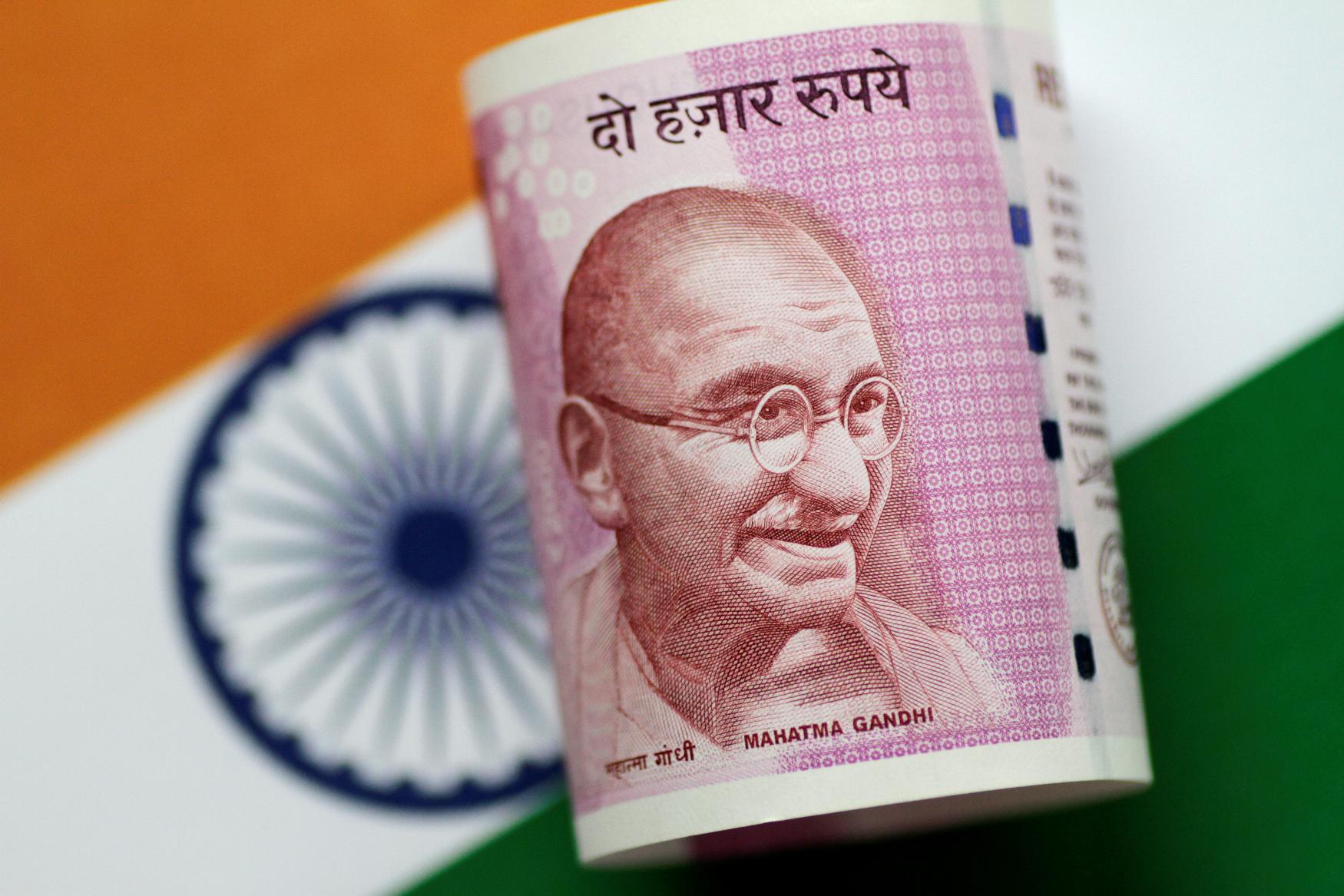
MUMBAI, June 4 (Reuters) - The Indian rupee declined on Tuesday, as early trends in election results spurred broad-based dollar demand amid a lack of clarity about the performance of Indian Prime Minister Narendra Modi-led alliance. The rupee was at 83.3575 against the U.S. dollar as of 09:55 a.m. IST, down from 83.1425 in the previous session. The rupee touched an intra-day low of 83.4375 in early trading. Early trends showed Prime Minister Narendra Modi's alliance is leading, but the tally could fall short of what exit polls predicted, a foreign exchange salesperson at a private bank said. Indian equity indices, the BSE Sensex and Nifty 50, fell nearly 3% amid nervousness about the election outcome while bond yields climbed. It is "evident that markets are not too happy in the context of what the exit polls had indicated. You can see it across equities, bonds and FX markets," Kunal Kurani, associate vice president at Mecklai Financial, said. The rupee's struggles were in contrast to moves in Asian peers, which advanced after weaker-than-expected U.S. manufacturing data spurred a drop in Treasury yields. Odds of a Federal Reserve rate cut at the September meeting rose. Sign up here. https://www.reuters.com/markets/currencies/rupee-declines-early-election-trends-spur-dollar-buying-2024-06-04/