2024-06-04 04:16
US job openings fall in April US factory orders rise 0.7% month-on-month Yen rises to three-week high vs dollar NEW YORK, June 4 (Reuters) - The U.S. dollar on Tuesday edged higher from its more than two-month lows against the euro, sterling and Swiss franc, as investors consolidated gains in other currencies ahead of a key nonfarm payrolls report later this week. The greenback, however, pared gains against a basket of currencies led by the euro, extending losses versus the yen after U.S. job openings fell more than expected in April to their lowest in more than three years, according to the Job Openings and Labor Turnover Survey, or JOLTS report. Job openings, a measure of labor demand, were down 296,000 to 8.059 million on the last day of April, the lowest since February 2021. Market participants had their focus on the JOLTS data ahead of Friday's U.S. job report, which is expected to show 185,000 new jobs created in May, up from 175,000 in April. "I would look at what's coming now as basically noise ahead of the important data coming out, which is the jobs report, on Friday and the Federal Reserve meeting next week," said Eugene Epstein, head of structuring for North America at Moneycorp in New Jersey. "Certainly we had the JOLTS data which was pretty weak. That is still good news for the Fed." The JOLTS report followed data on Monday showing a second straight month of slowdown in manufacturing activity and an unexpected decline in construction spending. U.S. factory orders, on the other hand, rose for a third straight month in April, boosted by demand for transportation equipment. Data showed factory orders rose 0.7%, matching the revised pace in March. In afternoon trading, the dollar index was up 0.1% at 104.12, having fallen to its lowest since mid-April overnight at 103.99. The euro, the biggest component in the dollar index, fell 0.2% to $1.0879 . The European Central Bank is holding a meeting on Thursday and is widely expected to cut interest rates. The Bank of Canada is meeting on Wednesday and investors see a roughly 80% chance the BoC would cut its benchmark interest rate for the first time since March 2020. The U.S. dollar was last up 0.4% at C$1.3682 . "If the BOC and the ECB cut rates, which are already priced in, I would focus on the tone of the statement and see if there is a divergence from the Fed. That is really the key more than the cuts," Epstein said. YEN RISES TO THREE-WEEK HIGH The yen, on the other hand, rose to a three-week peak against the greenback, as Bank of Japan officials warned they are keeping a close eye on the currency, and a Bloomberg report said the central bank could soon discuss reducing bond purchases. The dollar was last down 0.8% at 154.74 yen . BOJ Deputy Governor Ryozo Himino said on Tuesday the central bank must be "very vigilant" to the impact of the yen's fluctuations on inflation, in guiding monetary policy. Bloomberg said the BOJ would address slowing its bond purchases at its two-day policy meeting next week. That could push up yields in the coming weeks and may come before an interest-rate hike in July. Alex Loo, FX and macro strategist at TD Securities in Singapore, said investors are also likely unwinding carry trades, leading to gains in the yen and Swiss franc, given Monday's losses in the Indian rupee and Mexican peso after the recent election results. In carry trades, investors borrow in low-yielding currencies such as the yen or Swiss franc to purchase higher-yielding ones such as emerging market currencies. The Mexican peso was still down on the day against the dollar, but not as much as on Tuesday when losses were more than 4%. The dollar was last up 1.1% at 17.857 pesos. The Indian rupee also fell versus the greenback, which last traded up 0.5% at 83.524 rupees, amid a lack of clarity about the performance of the alliance led by Indian Prime Minister Narendra Modi after it lost its outright majority. In Britain, sterling hit its highest since mid-March at $1.2818 before falling to sit 0.3% lower at $1.2777. Against the Swiss franc, the dollar also slid to its lowest since March of 0.8884 francs. It was last down 0.7% at 0.8898 francs. Data showed Swiss inflation held steady at 1.4% year-on-year in May. Sign up here. https://www.reuters.com/markets/currencies/dollar-wallows-multi-month-lows-fed-cut-bets-grow-2024-06-04/
2024-06-04 02:36
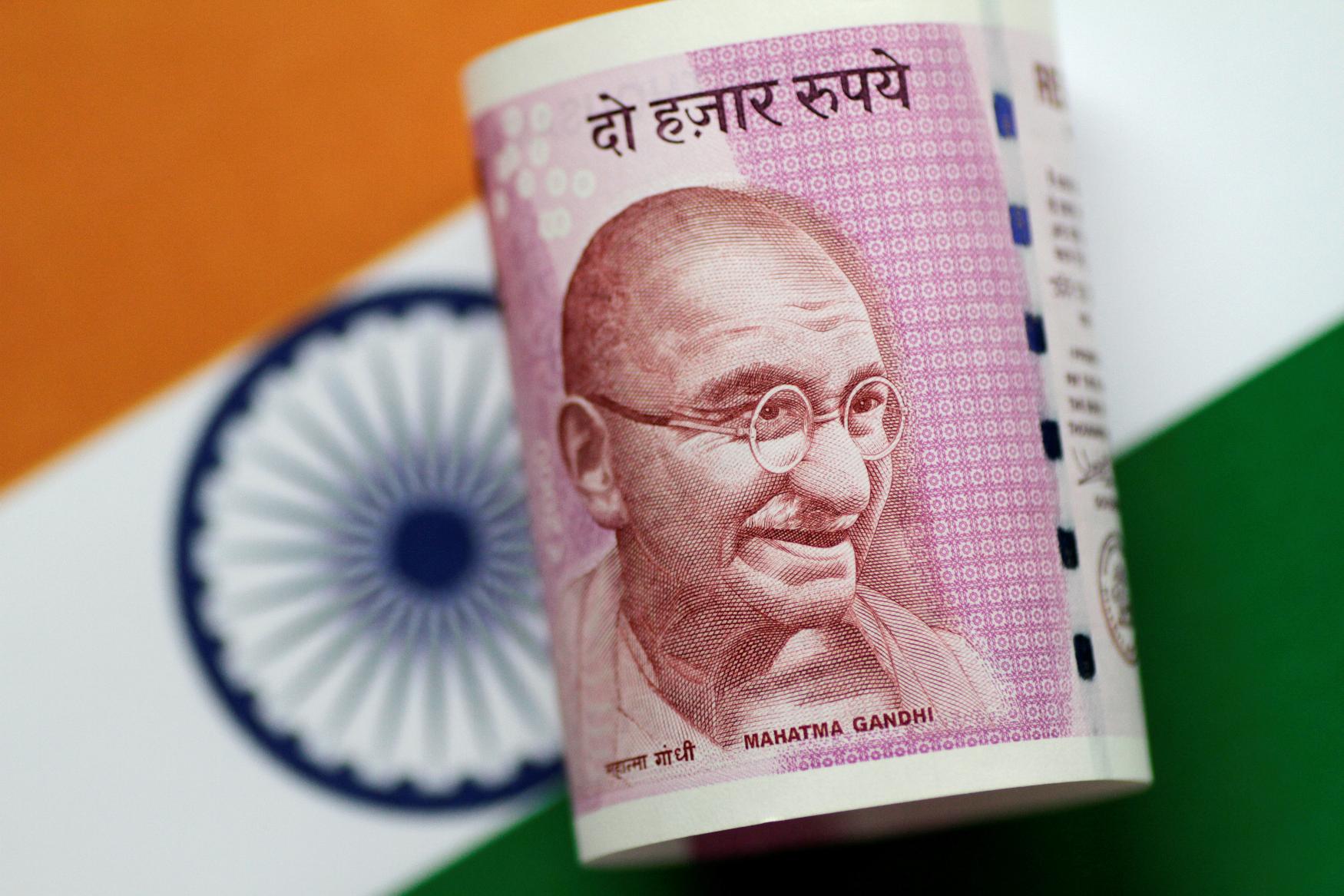
MUMBAI, June 4 (Reuters) - The Indian rupee will open marginally higher on Tuesday, with the intraday direction to be dictated by results of the country's general elections. Non-deliverable forwards (NDF) indicate the rupee will open at 83.08-83.10 to the U.S. dollar compared with 83.1425 in the previous session. The uptick at open indicated by NDF "has got to do with the overall dollar weakness and hardly matter today", a FX trader at a bank said. The vote count trends will begin trickling in from 8:00 a.m. IST. "Within a few hours, you will get a sense of whether the results back up what the exit polls have predicted. We will take it from there," the trader said. The rupee climbed to 82.9475 on Monday after exit polls forecasted a third term for Prime Minister Narendra Modi. However, broad dollar buying from foreign and public sector banks pulled the currency off highs. Looking at "yesterday's price action, you would have to say that it will be difficult" for rupee to hold above 83, another trader said. Asian currencies rose and the dollar index dipped to 104 after U.S. manufacturing activity unexpectedly declined, remaining in contraction territory. U.S. Treasury yields dropped and odds of a Federal Reserve rate cut at the September meeting rose. KEY INDICATORS: ** One-month non-deliverable rupee forward at 83.15; onshore one-month forward premium at 6.75 paise ** Dollar index at 104.08 ** Brent crude futures down 0.6% at $77.9 per barrel ** Ten-year U.S. note yield at 4.41% ** As per NSDL data, foreign investors bought a net $261.4 mln worth of Indian shares on May 31 ** NSDL data shows foreign investors sold a net $79.4 mln worth of Indian bonds on May 31 Sign up here. https://www.reuters.com/markets/currencies/rupee-inch-up-open-traders-eye-election-verdict-2024-06-04/
2024-06-04 00:34
OPEC+ to ease cuts for eight members from October U.S. inventory and product data due on Tuesday, Wednesday HOUSTON, June 4 (Reuters) - Oil prices fell more than $1 a barrel on Tuesday on scepticism about an OPEC+ decision to boost supply later this year into a global market where demand has already shown signs of weakness. Extending losses from a four-month low reached on Monday, Brent crude futures settled down 84 cents, or 1.07%, at $77.52 a barrel. Brent's closing price on Monday was below $80 for the first time since Feb. 7 after falling more than 3%. At its lowest on Tuesday, Brent traded at $76.76, less than $2 shy of this year's nadir of $74.79 at the beginning of January. U.S. West Texas Intermediate crude futures finished down 97 cents, or 1.31%, at $73.25. WTI had fallen by 3.6% on Monday to settle near a four-month low. The Organization of the Petroleum Exporting Countries and allies led by Russia, together known as OPEC+, agreed on Sunday to extend most of their oil output cuts into 2025 but left room for voluntary cuts from eight members to be unwound gradually, beginning in October. "My base case is that the market is over-reacting to the OPEC announcement," said Phil Flynn with Price Futures Group. The planned October unwinding adds jitters about oversupply in an environment where traders are already spooked about high interest rates hampering global economic activity. A steady flow of dim signals from major economies such as the U.S., China and Europe suggest that their appetite for oil may not be as healthy as hoped through the rest of the year. "If we do see a significant drop in oil prices, then you will have to question the soundness of global economy," Flynn said. "Then it will look like the Federal Reserve has done too much." On top of this, supply is rising from non-OPEC producers such as the U.S. Meanwhile on the demand side in the world's top oil consumer, weekly U.S. oil data will show how much gasoline was consumed around last week's Memorial Day weekend, the start to the U.S. summer driving season. The American Petroleum Institute will release inventory data on Tuesday afternoon. The U.S. government will release inventory and product supplied data on Wednesday. Sign up here. https://www.reuters.com/business/energy/oil-prices-extend-losses-worries-supply-rising-later-2024-2024-06-04/

2024-06-03 23:27
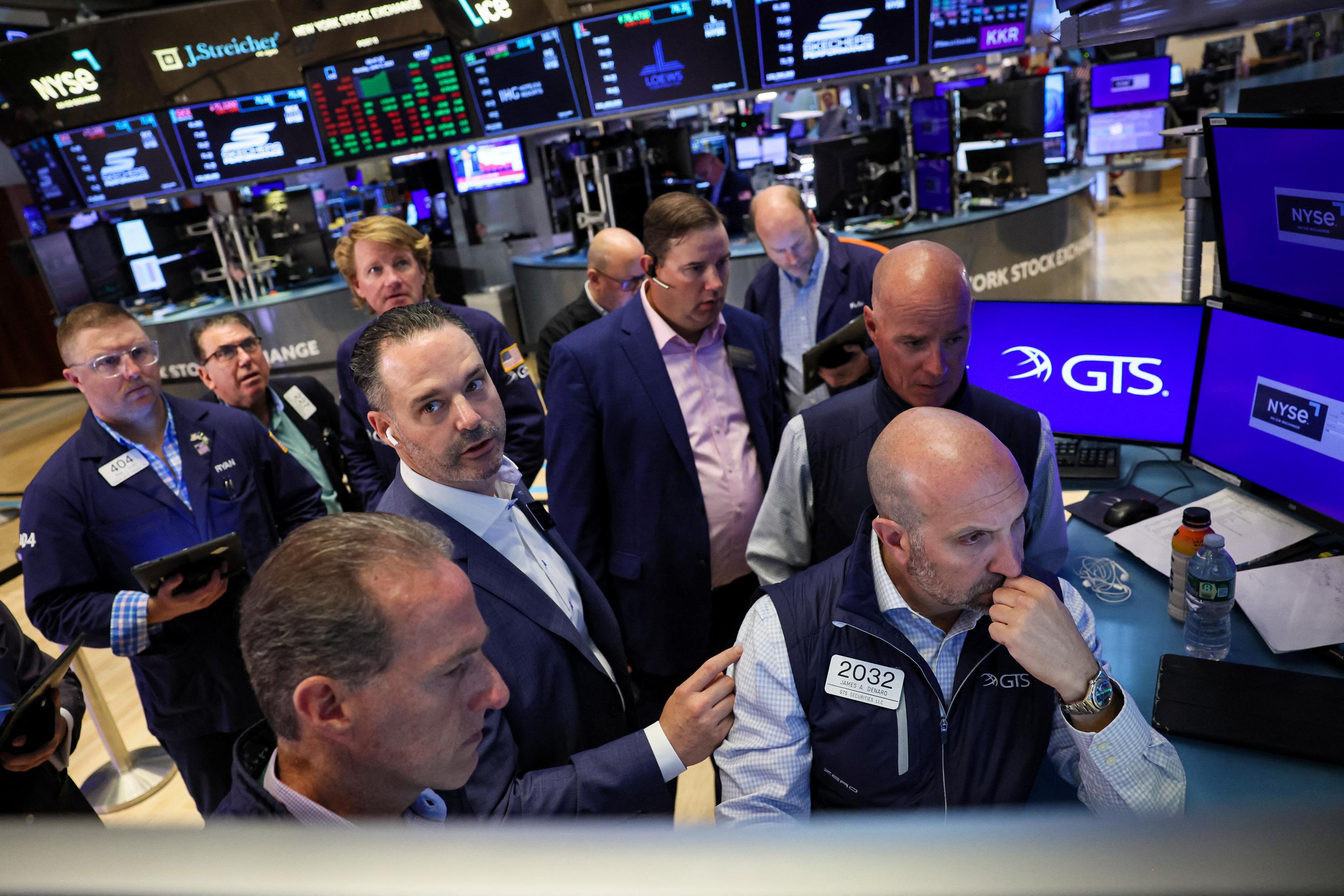
NYSE glitch triggers trading halts US manufacturing falls for second straight month Nvidia gains on next-generation AI chip platform expectations GameStop soars after Keith Gill's Reddit post Indexes mixed: Dow down 0.30%, S&P up 0.11%, Nasdaq up 0.56% NEW YORK, June 3 (Reuters) - S&P 500 and the Nasdaq edged higher in a choppy session on Monday amid soft manufacturing sector data and as a glitch on the NYSE briefly caused trading halts in dozens of equities. A glitch at the New York Stock Exchange had triggered massive swings in the shares of Berkshire Hathaway (BRKa.N) New Tab, opens new tab and Barrick Gold . Trading in at least 60 NYSE-listed stocks were halted due to the volatility, before the bourse fixed the technical issue and activity resumed. Benchmark S&P 500 (.SPX) New Tab, opens new tab and the Nasdaq finished higher after paring earlier losses on the sesson, while the Dow lost ground. Technology stocks (.SPLRCT) New Tab, opens new tab were the biggest gainers, while energy equities (.SPNY) New Tab, opens new tab were the biggest drag. Markets had weighed data showing U.S. manufacturing activity had slowed for the second straight month, raising concerns of weakening economic growth. "It's one of those days where people are waiting for the next catalyst with a choppy move after earnings," said Keith Lerner, co-chief investment officer at Truist Advisory Services in Atlanta. "There's bit of a tug of war between the market seeing weakening data and the expectation that the Fed may cut rates," Lerner added. Traders see a 59% chance that the Fed will begin cutting rates in September, up from about 53% before the ISM data was released, according to the CME's FedWatch tool. Benchmark U.S. 10-year note yields fell to a two-week low following the soft manufacturing data. The Dow Jones Industrial Average (.DJI) New Tab, opens new tab fell 115.29 points, or 0.30%, to 38,571.03, the S&P 500 (.SPX) New Tab, opens new tab gained 5.89 points, or 0.11%, to 5,283.40 and the Nasdaq Composite (.IXIC) New Tab, opens new tab gained 93.66 points, or 0.56%, to 16,828.67. Nvidia (NVDA.O) New Tab, opens new tab rose 4.9% after CEO Jensen Huang revealed that the company's next-generation AI chip platform would be rolled out in 2026. Shares of other megacaps, including Apple (AAPL.O) New Tab, opens new tab, Amazon (AMZN.O) New Tab, opens new tab, Alphabet (GOOGL.O) New Tab, opens new tab, and Meta (META.O) New Tab, opens new tab closed higher. Microsoft (MSFT.O) New Tab, opens new tab and Tesla (TSLA.O) New Tab, opens new tab finished lower. GameStop (GME.N) New Tab, opens new tab soared 21% after a weekend Reddit post from stocks influencer Keith Gill, also known as "Roaring Kitty", showed a $116 million bet on the gaming retailer. Investors will be eyeing a data-packed week that includes surveys on the services sector, factory orders and Friday's closely watched nonfarm payrolls report, which could provide clues to the Fed's likely course of action with regards to rates. Advancing issues outnumbered decliners by a 1.03-to-1 ratio on the NYSE. On the Nasdaq, 2,146 stocks rose and 2,171 fell as declining issues outnumbered advancers by a 1.01-to-1 ratio. The S&P 500 posted 25 new 52-week highs and 3 new lows while the Nasdaq Composite recorded 68 new highs and 101 new lows. Total volume of shares traded across U.S. exchanges was about 11.5 billion shares, compared with the 12.6 billion average over the last 20 trading days. Sign up here. https://www.reuters.com/markets/us/megacaps-boost-nasdaq-futures-summer-trading-begins-2024-06-03/
2024-06-03 23:25
E3 submit text despite U.S. concerns about escalation Draft follows up on last resolution 18 months ago Widens scope to include inspectors, 2023 joint statement Raises prospect of 'comprehensive' report if Iran refuses VIENNA, June 4 (Reuters) - A draft resolution European powers submitted to the U.N. nuclear watchdog's Board of Governors on Monday for a vote this week presses Iran again to explain uranium traces found at undeclared sites and also covers issues such as its barring of inspectors. The text seen by Reuters follows a resolution passed 18 months ago ordering Tehran to urgently comply with a years-long International Atomic Energy Agency investigation into those traces. The new text calls on Iran to cooperate without delay, including by letting the IAEA take samples if the agency needs to. It also goes further, addressing problems that have arisen more recently, such as Iran's barring of many of the IAEA's top uranium-enrichment experts on the inspection team. It calls on Iran to reverse that step and implement a March 2023 joint statement that the IAEA saw as a sweeping pledge of cooperation. "(The Board) Calls on Iran to provide sufficient cooperation with the Agency and take the essential and urgent actions as decided by the Board in its November 2022 resolution, to resolve safeguards issues which remain outstanding despite numerous interactions with the Agency since 2019," the text said. Iran will react if the Board of Governors passes a resolution against Tehran, the semi-official Fars news agency quoted the country's nuclear chief Mohammad Eslami as saying. The 35-nation Board of Governors meets quarterly and is one of the IAEA's two top policy-making bodies. The other meets only once a year. Since that 2022 resolution the number of sites being investigated over the traces has been narrowed to two from three but Iran still has not explained how the traces got there. The IAEA refers to that as "outstanding safeguards issues". Britain, France and Germany, known as the E3, are pushing for the resolution despite U.S. concerns the move could lead Iran to respond by escalating its nuclear activities, since Tehran has bristled at such resolutions in the past and taken such steps in response. The E3 argue that Iran's continued lack of cooperation with the IAEA and its advancing nuclear programme make such a step necessary, diplomats say. The E3 would not have submitted the text had they not been confident it would pass. Only Russia and China opposed the last resolution against Iran. Iran is enriching uranium to up to 60% purity, close to the 90% of weapons grade, and has amassed enough material enriched to that level, if enriched further, for three nuclear bombs, according to an IAEA yardstick. Western powers say there is no credible civilian justification for enriching to that level, and the IAEA says no other country has done so without producing nuclear weapons. Iran says its aims are entirely peaceful. The text said if Iran failed to cooperate, IAEA Director General Rafael Grossi might draw up a "comprehensive" report, which would raise pressure on Tehran further. "Continued failure by Iran to provide the necessary, full and unambiguous cooperation with the Agency to resolve all outstanding safeguards issues may necessitate the production, by the Director General, of a comprehensive and updated assessment on the possible presence or use of undeclared nuclear material," it said. Sign up here. https://www.reuters.com/world/europe/europeans-submit-draft-resolution-iran-iaea-board-2024-06-03/

2024-06-03 23:20
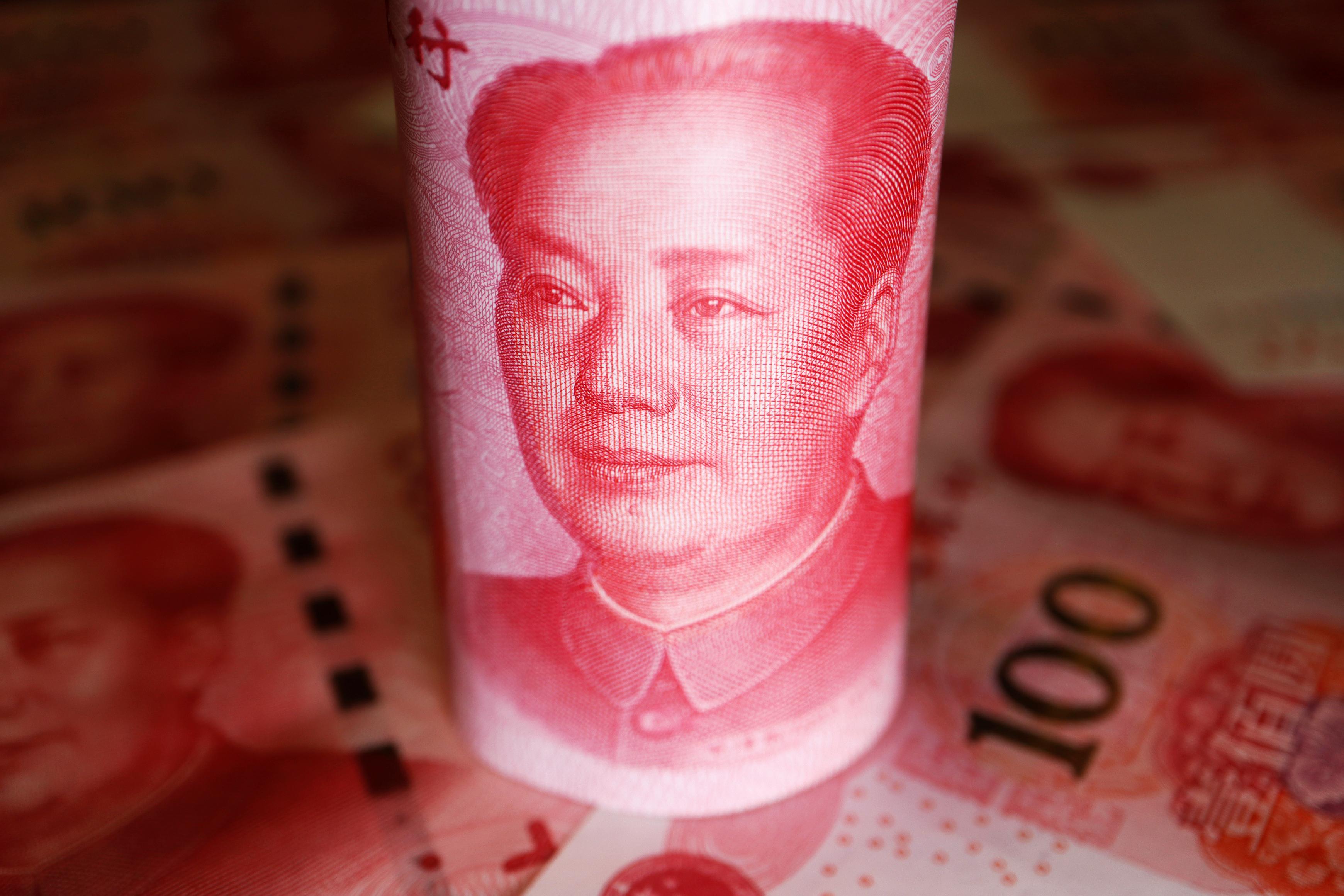
LONDON, June 4 (Reuters) - More global reserve managers plan to increase exposure to the now high-yielding U.S. dollar as their interest in China's yuan has soured due to low returns and geopolitical tensions, the Official Monetary and Financial Institutions Forum said. The data, from a survey carried out by the think tank and published on Tuesday, challenges - at least in the short term - the trend towards de-dollarisation, the idea that countries will diversify away from dollars. A net 18% of reserve managers surveyed said they intended to boost exposure to the U.S. dollar in the next 12-24 months, more than any other currency. They cited the dollar's role in global trade and expectations of higher relative returns as reasons. But demand for China's currency among reserve managers has stalled. "This is the first year we've seen any meaningful share of reserve managers looking to downscale their renminbi holdings," said Nikhil Sanghani, OMFIF Economic and Monetary Policy Institute managing director, referring to China's currency by its other name. Some 12% of 73 central bank reserve managers surveyed by OMFIF plan to reduce their yuan holdings in the next 12-24 months, while 13% plan to increase them. In 2023 just 3% said they intended to reduce yuan holdings, while none did in 2022 or 2021 when over 30% of respondents said they planned to up their exposure to the Chinese currency. "Lots (of managers) flagged market transparency and geopolitics as some hurdles, and, at least in the near term, quite a few mentioned that it's simply a returns point - policy rates are low in China and you can earn higher yields in U.S. or European government bonds now," Sanghani said. In the longer term, though, he added, reserve managers still anticipated increasing their exposure to the Chinese currency. China's 10-year bond yield is around 2.3% compared to a 4.5% yield for the 10-year U.S. Treasury note. The survey also found that central banks planned to continue to increase their exposure to gold, a trend that has already helped the precious metal to record highs this year. Some 15% of respondents expect to increase their exposure to gold this year, the survey found. Should this occur, OMFIF calculates, this would mean an additional $600 billion of reserves will be made up of gold in the coming years. Sign up here. https://www.reuters.com/markets/currencies/central-banks-turn-cautious-chinas-yuan-keen-dollars-gold-2024-06-03/