2024-06-03 23:00
LONDON, June 3 (Reuters) - The vicious squeeze on the CME copper contract appears to have largely passed but fund managers are sticking with their bullish convictions on both U.S. and London markets. There has been some light profit-taking as the price has retreated from last month's record highs but fund long positioning remains elevated both on the CME and London Metal Exchange (LME). The money surge into copper is part and parcel of a broader rotation of funds into the base metals sector but copper's super-charged rally to a CME peak of 5.20 cents per lb and an LME high of $11,404.50 per ton has made it the star attraction. However, Doctor Copper's new investor friends may find their bullish resolve tested in the days ahead. With the short-covering momentum on the CME contract now abating, fund longs are left waiting for fundamentals to catch up with their price expectations. LONG AND STRONG Fund managers trimmed their long positions on the CME copper contract by 7.4% over the week to May 28, according to the latest Commitments of Traders Report (COTR). However, bets on higher prices amounted to a hefty 128,344 contracts, which is still the largest bull commitment since January 2018. The net collective long position is lower at 63,787 contracts. There has been no short capitulation. Indeed outright money manager short positions edged up by 2.0% to 64,557 contracts. However, it's clear that the bulk of the recent investment flow remains sitting on the long side of the market. The situation is similar in London, where the record investment long position shrank only marginally in the week to May 20. At 105,262 contracts, it is still by some margin higher than anything seen since the LME launched its own COTR in 2018. SQUEEZE DISSIPATES The upwards price momentum has faded as the CME squeeze has steadily dissipated, LME three-month metal currently consolidating just above the $10,000 level. There remain pockets of tightness across nearby CME time-spreads but the immediate panic appears to be over and the cash premium over the London contract has shrunk from over $1,000 per ton in the middle of May to around $250. Short positions have either been covered or rolled with a view to delivering physical copper. The explosion in the arbitrage with the LME is expected to draw metal to CME warehouses in the United States. Some 100,000 tons of copper are reported to be on their way, although nothing has yet arrived. CME registered stocks fell another 2,256 short tons last week to a six-month low of 16,607 tons. CHINESE GLUT Outside of the United States, though, copper stocks have been building. LME headline inventory has edged up from an early-May low of 103,100 tons to a current 116,000 tons. The ratio of metal awaiting physical load-out has shrunk from 20% at the start of May to just 5%, or 6,025 tons. The stocks build in China has been more pronounced. Shanghai Futures Exchange warehouses hold 321,695 tons of copper, the most since April 2020. This year has seen the usual seasonal surge around the Chinese New Year holidays but not the usual post-holiday decline. Stocks have simply continued climbing, up another 20,731 tons over the course of last week. Local data provider Shanghai Metal Market estimates bonded warehouse stocks have also risen from under 10,000 tons at the start of the year to 76,000 tons. Clearly, no-one is short of copper in China right now. WAITING GAME Copper's recent rally to all-time highs has been accompanied by a profusion of headlines about the lack of supply growth relative to strong energy-transition demand. The bull narrative has spread far beyond the closeted world of industrial metal traders to the retail investment crowd. Fear of missing out has played its part in the buying frenzy and it's understandable given the ever higher price forecasts being bandied around. Hedge fund manager Pierre Andurand has grabbed the super-bull crown, telling New Tab, opens new tab the Financial Times he expects copper to nearly quadruple in price to $40,000 over the coming years. It's worth stressing the extended time-frame around that prediction because right now copper dynamics don't look quite so bullish. The extent of the stocks build in China is a major discrepancy in copper's bull narrative. The country is the world's largest buyer of the metal but shows every sign of entering a de-stocking cycle in response to the recent price surge and still-stuttering demand. Bullish fund managers may face a tense wait for supply-chain reality to catch up with copper's elevated price. The opinions expressed here are those of the author, a columnist for Reuters Sign up here. https://www.reuters.com/markets/commodities/funds-keep-faith-with-copper-even-squeeze-fades-2024-06-03/

2024-06-03 21:59
VIENNA, June 3 (Reuters) - Britain, France and Germany have submitted a wide-ranging draft resolution against Iran to the U.N. nuclear watchdog's 35-nation Board of Governors for it to be voted on later this week, the text seen by Reuters showed on Monday. The text follows a resolution passed 18 months ago ordering Tehran to urgently comply with an International Atomic Energy Agency investigation into uranium traces found at undeclared sites in Iran. It calls on Iran to cooperate without delay, including by letting the IAEA take samples. It also goes further, addressing problems that have arisen more recently, such as Iran's barring of many of the IAEA's top uranium-enrichment experts on the inspection team. It calls on Iran to reverse that step and implement a March 2023 joint statement that the IAEA saw as a sweeping pledge of cooperation. "(The Board) Calls on Iran to provide sufficient cooperation with the Agency and take the essential and urgent actions as decided by the Board in its November 2022 resolution, to resolve safeguards issues which remain outstanding despite numerous interactions with the Agency since 2019," the text said. Since that 2022 resolution the number of sites being investigated over the uranium traces has fallen to two from three but Iran still has not explained how the traces got there, which the IAEA refers to as "outstanding safeguards issues". The European powers, known as the E3, are pushing for the resolution despite U.S. concerns that the move could lead Iran to respond by escalating its nuclear activities, since Tehran has tended to bristle at such resolutions in the past and take such steps in response. The E3 argue that Iran's continued lack of cooperation with the IAEA and its advancing nuclear programme make such a step necessary, diplomats say. Iran is enriching uranium to up to 60% purity, close to the 90% of weapons grade, and has amassed enough material enriched to that level, if enriched further, for three nuclear bombs, according to an IAEA yardstick. Western powers say there is no civilian justification for enriching to that level. Iran says its aims are entirely peaceful. Sign up here. https://www.reuters.com/markets/commodities/europeans-submit-draft-resolution-iran-iaea-board-2024-06-03/

2024-06-03 21:47
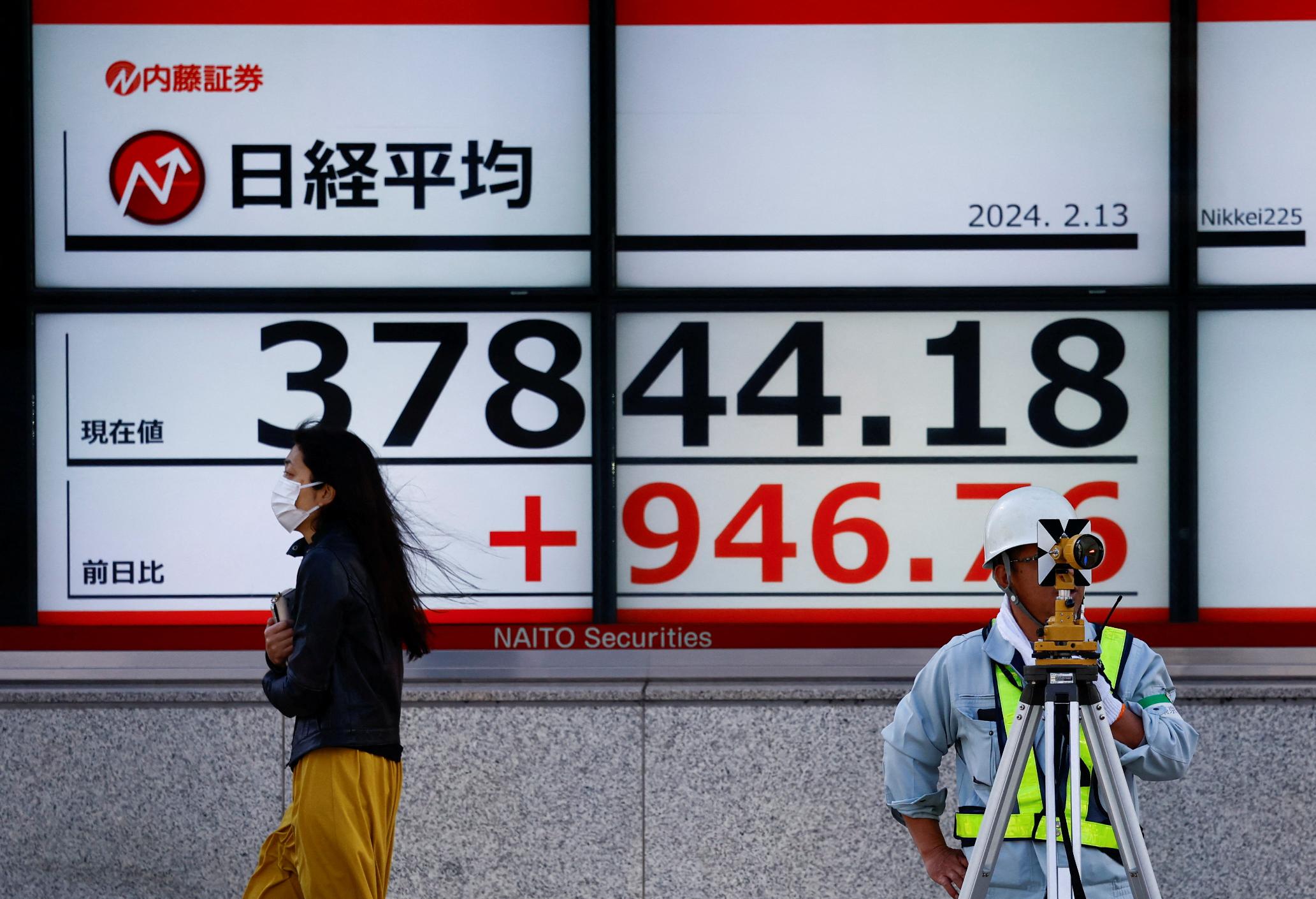
June 4 (Reuters) - A look at the day ahead in Asian markets. Asian markets could be in for a choppy ride on Tuesday, with investors unsure whether to interpret Monday's steep fall in U.S. Treasury yields and the dollar as an encouraging sign for risky assets or a warning that growth is evaporating. Given that Asian shares on Monday posted their biggest rise this year, before the weak ISM U.S. manufacturing report triggered the slide in yields, investors may err on the side of caution and pare back risk exposure, not add to it. If so, it will suggest the 'bad news is bad news' narrative is taking hold - easing financial conditions on their own are not enough to lift asset prices; instead, the deteriorating macro conditions driving down yields and the dollar are what's important for asset prices. By some measures, a shift in the U.S. economic outlook is already underway. The Atlanta Fed on Monday slashed its GDPNow model forecast for second quarter growth to 1.8% from 2.7%. Two weeks ago it was 3.5%, and three weeks ago it was over 4.00%. The sugar high of rate cut expectations can only last so long. And in truth, rate cut expectations have not shifted all that much lately because inflation remains stickier than policymakers would like. The U.S. growth engine is particularly important for Asia right now because China's post-lockdown recovery is so fragile, and uncertainty persists around Japan's policy normalization, rising bond yields and record weak currency. That's the backdrop to Asian markets on Tuesday which also sees the release of manufacturing PMI data from Malaysia and Thailand, South Korean inflation, and the official results from India's general election. Indian markets' initial reaction on Monday to the weekend's exit polls showing a decisive mandate and third term for Prime Minister Narendra Modi was overwhelmingly positive - shares hit lifetime highs, the rupee gained and bond yields dropped. The broader Nifty index closed 3.25% higher at 23,263.90 points after touching a record high 23,338.70 earlier in the day, while the BSE index closed up 3.39% at 76,468.78 points, just off its lifetime peak of 76,738.89 also touched earlier. India's boom helped drive the continent's stocks higher. The MSCI Asia Pacific ex-Japan index snapped a four-day losing streak, surging more than 2% for its best day since November. Surprisingly strong factory activity from China, and to a lesser extent South Korea and Taiwan, also helped. China's 'unofficial' Caixin/S&P Global manufacturing PMI report showed the fastest pace of growth since June 2022, contrasting with an official survey on Friday that showed a surprise fall in activity. The Caixin survey is believed to be skewed more toward smaller, export-oriented firms, which may help explain why Asian stocks took off so much on Monday. Some of that optimism, however, may cool on Tuesday. Here are key developments that could provide more direction to markets on Tuesday: - South Korea inflation (May) - India election results - Australia current account (Q1) Sign up here. https://www.reuters.com/markets/asia/global-markets-view-asia-graphic-pix-2024-06-03/
2024-06-03 20:43
WASHINGTON, June 3 (Reuters) - The U.S. is buying another 3 million barrels of oil for the country's Strategic Petroleum Reserve, the Department of Energy said on Monday, as it slowly replenishes the stockpile after the largest sale ever in 2022. The oil, which is for delivery to the SPR in November, is being purchased at an average price of $77.69 per barrel, the department said. The replenishment of the SPR is needed after President Joe Biden ordered the sale of 180 million barrels over six months in 2022 in an effort to control fuel prices after Russia's invasion of Ukraine. The DOE said it has purchased back 38.6 million barrels, and that it would continue to look for opportunities to buy back oil for the stockpile. The Biden administration has said it is looking to buy back oil for the SPR at about $79.99 per barrel or lower. The U.S. government created the SPR after the Arab oil embargo in the 1970s sparked fears about supply, damaging the economy. The DOE awarded contracts on Monday to BP Products North America Inc, for 600,000 barrels, Macquarie Commodities Trading US LLC, for 1.5 million barrels, and Atlantic Trading & Marketing, which sold 900,000 barrels. The Biden administration says it has a three-pronged strategy to return oil to the reserve. That includes buying back oil, the return of oil loaned from the SPR to companies, and the cancellation of congressionally mandated sales of 140 million barrels of SPR oil through 2027. Democratic and Republican lawmakers had voted for those sales to pay for government programs. Sign up here. https://www.reuters.com/business/energy/us-buys-3-million-barrels-oil-strategic-petroleum-reserve-2024-06-03/

2024-06-03 20:33
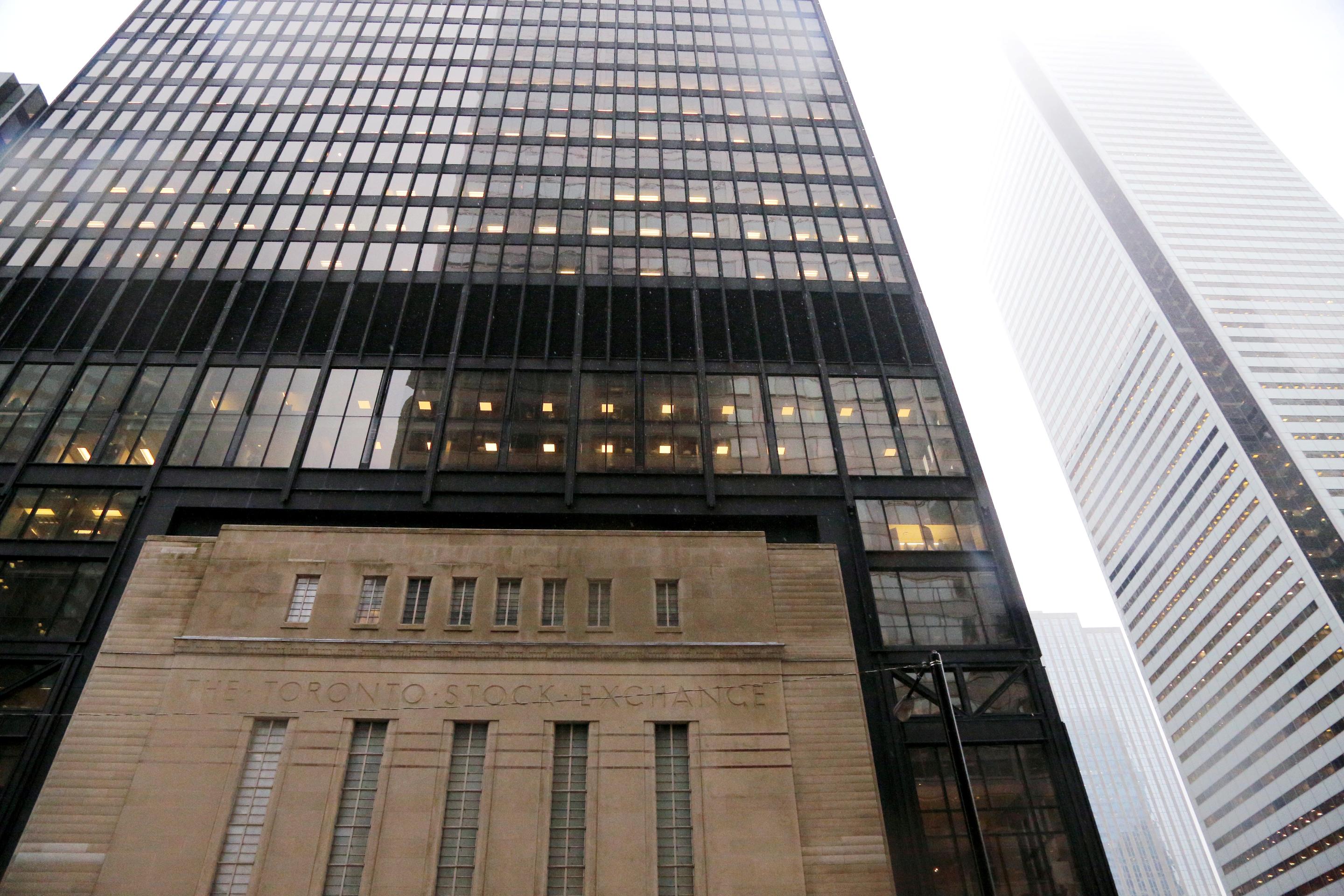
TSX ends down 0.68% at 22,116.69 Energy falls 4.42%; oil settles 3.60% lower Utilities add 0.50% GFL Environmental jumps 10.42% June 3 (Reuters) - Canada's main stock index fell on Monday as a drop in oil prices weighed on energy stocks, with the move in energy offsetting gains for high-dividend paying utilities stocks ahead of a potential Bank of Canada interest rate cut this week. The Toronto Stock Exchange's S&P/TSX composite index (.GSPTSE) New Tab, opens new tab ended down 152.43 points, or 0.68%, at 22,116.69. "The primary driver is the big sell-off in crude oil which is dragging on the energy sector pretty much across the board," said Colin Cieszynski, chief market strategist at SIA Wealth Management. The price of oil settled 3.60% lower at $74.22 a barrel as investors worried about the demand outlook and took a complicated OPEC+ output decision as a sign that members of the producer group were eager to export more crude. The energy sector (.SPTTEN) New Tab, opens new tab, which accounts for 20% of the Toronto market's weighting, lost 4.42% and industrials ended 0.84% lower. Financials also lost ground, falling 0.3%. A former TD Bank (TD.TO) New Tab, opens new tab employee falsified documents to open dozens of accounts and provided concierge-like services to help cash flow across borders, Bloomberg News reported. TD's shares ended 1.02% lower. "Utilities are up probably because Treasury yields are down today and also there's the Bank of Canada in two days and at least some people out there are thinking they might cut rates," Cieszynski said. The utilities sector added 0.50% and real estate, which could also particularly benefit from lower interest rates, ended 0.70% higher. The BoC will trim interest rates to 4.75% on Wednesday, according to three-quarters of economists in a Reuters poll which showed three further cuts this year. GFL Environmental Inc (GFL.TO) New Tab, opens new tab was a standout. Its shares climbed 10.42% to the highest closing level since April 10. Sign up here. https://www.reuters.com/markets/tsx-futures-dip-ahead-boc-rate-decision-this-week-2024-06-03/
2024-06-03 20:23
OSLO, June 3 (Reuters) - Maersk (MAERSKb.CO) New Tab, opens new tab faces significant terminal congestion in Mediterranean and Asian ports, causing substantial delays in its vessel schedule, the Danish shipping group said in a statement on Monday. As a result of that congestion, the world's second-largest container shipping company, will skip two westbound sailings from China and South Korea that had been planned to depart in early July, it added. The notice from Maersk comes as global supply chains are suffering cascading delays and higher costs due to the Yemen's Houthi militant attacks on commercial vessels near the Suez Canal. Major ocean container carriers like Maersk, MSC and Hapag-Lloyd (HLAG.DE) New Tab, opens new tab for safety have rerouted ships to the longer route around Africa. Singapore, home to the world's second-largest container seaport, is the latest to be hit by congestion, according to Linerlytica. Data from that firm also showed congestion at ports in China, Dubai, Spain and the United States. Ports in China have been hit by high winds and other weather that has affected cargo flows, shipping experts told Reuters. The worsening congestion in Singapore and Dubai's Jebel Ali ports are driven by the sudden surge in cargo demand as well as continued disruptions caused by the diversion of ships from the Red Sea, Lynerlytica said. Ultra-large ships from the Far East are offloading containers at western Mediterranean ports such as Barcelona and then reloading on smaller ships headed for final destinations at central and eastern Mediterranean ports, straining operations at affected ports, according to pricing platform Xeneta. Backups also are growing at two U.S. East Coast ports, according to the Journal of Commerce. Charleston, South Carolina, congestion is due to an ongoing infrastructure project, while backups at Savannah, Georgia, are tied to a recent software malfunction, the trade publication reported. Sign up here. https://www.reuters.com/world/europe/maersk-faces-significant-port-congestion-asia-mediterranean-2024-06-03/