2024-06-02 22:11
June 3 (Reuters) - Wind and solar power generation in the European Union increased by 46% from 2019, when the current European Commission took office, to 2023, displacing a fifth of the bloc's fossil fuel generation, a report by think tank Ember showed. WHY IT'S IMPORTANT The Commission has proposed a target of 45% of renewable energy sources in the overall energy mix by 2030. European Parliament elections are held on June 6-9. Polls suggest the main pro-EU groups around the political centre - the centre-right, centre-left, Greens and liberals - will have a smaller majority than currently, while the far-right will make gains. While many EU policies to curb greenhouse gas emissions are already in place, some laws have reviews coming up in the next five years and pushing through more ambitious legislation might be tougher. CONTEXT EU wind and solar capacity has increased 65% since 2019. Wind capacity rose 31% to 219 gigawatts (GW) in 2023, while solar capacity more than doubled to 257 GW, equivalent to installing more than 230,000 solar panels every day during the four years, the report said. Without this expansion, fossil generation would have fallen just 1.9% (21 TWh) instead of 22%, as lower electricity demand was offset by a decrease in generation from other clean energy sources. KEY QUOTE "The EU now has more home grown wind and solar than ever, pushing both coal and gas electricity generation down to historic lows," said Sarah Brown, Europe programme director at Ember. "The EU is now in the midst of a historic, permanent shift away from reliance on fossil fuels for power." BY THE NUMBERS The additional solar and wind capacity helped push the share of total renewables to 44% of the EU electricity mix in 2023 from 34% in 2019. Meanwhile, a decline in coal and gas generation has pulled the share of fossil fuel generation down to 32.5% from 39%. Sign up here. https://www.reuters.com/sustainability/eu-wind-solar-growth-displaces-fossil-fuel-generation-report-says-2024-06-02/

2024-06-02 21:47
June 3 (Reuters) - A look at the day ahead in Asian markets. Asia kicks off the new trading month for global markets on Monday, with manufacturing PMI data from the continent's biggest economies setting the local tone and investors still banking on U.S. and other interest rates coming down soon. Purchasing managers index figures will show how factory activity in China, Japan, Taiwan, Australia, South Korea and India fared last month, and Indonesia's latest inflation figures will also be released. The most important Asian PMI for markets will be China's unofficial Caixin number, which is expected to inch up to 51.5 from 51.4. That would be welcome relief following the disappointing official PMI figures on Friday that showed factory activity contracting again, reviving doubts about the strength of China's economic recovery. Economists at Barclays reckon growth in the second quarter will be virtually zero, and Citi's economic surprises index for China is negative for the first time in nearly four months. Japan's flurry of economic indicators late last week sent mixed signals. Surprisingly strong retail sales suggests the consumer is in good health, but the same cannot be said for the industrial sector as production was much weaker than expected. Global economic signals may be beginning to deteriorate too. Regional U.S. business activity data on Friday were much weaker than expected, bolstering the view that the Federal Reserve will cut rates soon, and the Atlanta Fed's Q2 GDP Nowcaster growth tracker fell to 2.7% from 3.5%. The European Central Bank is set to cut rates this week, and Citi's economic surprises indices across major and emerging economies have all fallen substantially recently. Asian markets also wake up on Monday to news that OPEC+ has agreed to extend most of its deep oil output cuts well into 2025, exceeding expectations, to offset tepid demand growth, high interest rates and rising rival U.S. production. Elsewhere on the Asian data front, Indonesia's annual inflation rate is expected to have cooled slightly in May to 2.9% from 3.0% in April, slipping further into the central bank's target range of 1.5% to 3.5%. Although inflation appears to be under control, the central bank unexpectedly raised rates in April to support the rupiah, which had fallen to a four-year low against the U.S. dollar. The rupiah's bounce lasted only a few weeks. The currency is back probing fresh four-year lows, and last week fell 1.6% for one of its biggest weekly losses since the pandemic. On the political front, Indian markets will give their initial verdict on Prime Minister Narendra Modi's likely victory in the country's election. Exit polls released this weekend after six weeks of voting projected Modi's alliance will increase its 303 seats in the 543-member lower house and likely get the two-thirds majority needed to initiate amendments to the constitution. Here are key developments that could provide more direction to markets on Monday: - Manufacturing PMIs - China, Japan, South Korea (May) - Indonesia inflation (May) - India exit polls reaction Sign up here. https://www.reuters.com/markets/global-markets-view-asia-graphic-pix-2024-06-02/

2024-06-02 20:33
June 2 (Reuters) - Russia's attempts to conclude a major gas pipeline deal with China have run aground over what Moscow sees as Beijing's unreasonable demands on price and supply levels, the Financial Times reported on Sunday citing three people familiar with the matter. China had asked to pay close to Russia's heavily subsidised domestic prices and would only commit to buying a small fraction of the pipeline's planned annual capacity of 50 billion cubic metres of gas according to the report. Russia has been in talks for years about building the Power of Siberia-2 pipeline to carry 50 billion cubic metres of natural gas a year from the Yamal region in northern Russia to China via Mongolia. Russian Deputy Prime Minister Alexander Novak said last month that Russia and China expect to a sign a contract "in the near future" on the Power of Siberia-2 gas pipeline. Sign up here. https://www.reuters.com/business/energy/russia-china-gas-pipeline-deal-stalls-over-beijings-price-demands-ft-2024-06-02/

2024-06-02 17:08
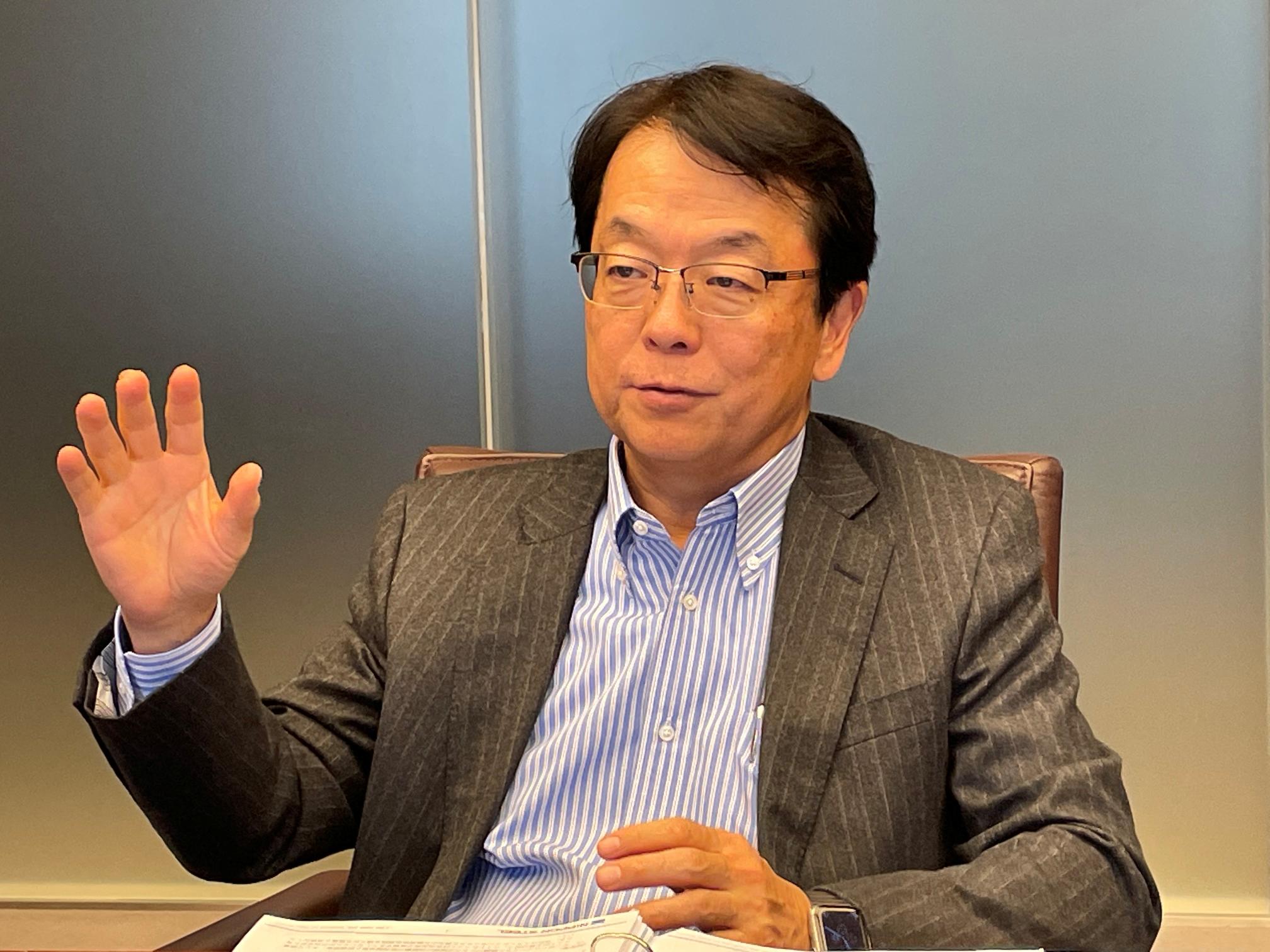
TOKYO, June 3 (Reuters) - Nippon Steel's vice chairman (5401.T) New Tab, opens new tab plans to return to the United States this week for more talks over the proposed acquisition of U.S. Steel (X.N) New Tab, opens new tab and would study selling some assets if necessary for the deal to go through. Vice Chairman Takahiro Mori's visit so soon after a May 20-26 trip highlights the efforts Nippon Steel is taking to close the purchase amid growing regulatory scrutiny and political opposition. That includes resistance from President Joe Biden, who wants U.S. Steel to remain domestically owned, and objections from the powerful United Steelworkers (USW) union over fears of job losses. The deal would give Nippon Steel greater access to the profitable U.S. market and further its long-term financial goals. The two steelmakers said last month that they have received all regulatory approvals outside of the United States for their proposed $14.9 billion merger, a step forward towards the completion of the controversial deal. Mori said in a May 30 interview he will return to the U.S. this week for more talks, including in Washington D.C. This follows his May 20-26 trip to meet business and political leaders, including four U.S. senators, and community leaders in Pennsylvania, where U.S. Steel is based. Mori said that Nippon Steel might examine selling some assets if that is required by U.S. regulators to approve the deal. "If the U.S. authorities tell me: you have to do this otherwise this deal can not be admitted, in that case we should study this seriously," he said. A manufacturing plant in Calvert, Alabama, jointly owned by Nippon Steel and Luxemburg-based ArcelorMittal (MT.LU) New Tab, opens new tab, is a focus of antitrust concerns by U.S. authorities, Politico reported in March. However Mori downplayed the likelihood of any asset sales saying, "I do not think this is necessary for this deal's closure." During the May visit, Mori said he pointed to the 2011 takeover of U.S. company Standard Steel by Sumitomo Metal Industries, which is now part of Nippon Steel, as an example of what he hopes the U.S. Steel purchase could achieve. Standard became profitable in 2013 after that deal and has continued to be through technology transfers and the dispatch of highly qualified engineers from Japan, he said. JOB SECURITY Nippon Steel has sought to address the job security concerns raised by the USW by pledging to honour all agreements in place between U.S. Steel and the union. It is also promising to additionally invest $1.4 billion to upgrade U.S. Steel factories. However, a number of meeting requests by Mori to the head of the USW since their last meeting in March have not been accepted, he said. "The USW says our offers are not good enough, but it is not clear what is not good enough," Mori said, citing the need for a face-to-face meeting. "We are always open to talk." The world's No. 4 steelmaker wants to build public opinion to back the deal, hoping this may push the union to come to the table, Mori said, adding that his confidence in the deal succeeding is "growing stronger". In an email to Reuters, the USW called Nippon Steel's proposals "hollow promises". "The USW has already expressed its deep and ongoing concerns with the proposed sale and agrees with President Biden and others who have called for U.S. Steel to remain domestically owned and operated," it said. Mori believes the takeover process would likely run more smoothly after the U.S. presidential election as the deal will be no longer a political issue. If completed by the end of December as planned, the deal should boost Nippon Steel's annual business profit by 150 billion yen ($954 million) or more, helping to achieve its long-term goal of reaching 1 trillion yen profit in the 2025 financial year, Mori said. ($1 = 157.2000 yen) Sign up here. https://www.reuters.com/markets/deals/nippon-steels-mori-returns-us-this-week-talks-us-steel-takeover-2024-06-02/
2024-06-02 11:32
MOSCOW, June 2 (Reuters) - A fire on Sunday at an oil refinery owned by Lukoil (LKOH.MM) New Tab, opens new tab in Russia's Komi Republic region killed two people and left another seriously injured, the country's nuclear and environmental watchdog Rostechnadzor said. Vladimir Uiba, head of the Komi Republic, said the fire at the refinery near the city of Ukhta had been caused by a failure to comply with safety rules and not by drone attacks that have targeted some Russian refineries since the war with Ukraine. The Pechora branch of Rostechnadzor said two people had died and one was in a serious condition. The Komi Republic's Investigative Committee opened a criminal investigation. The regional branch of Russia's emergencies ministry said 74 of its staff were working to extinguish the fire, which occurred in a tank at the refinery, four kilometres (2.5 miles) from Ukhta. The fire was localised after several hours and extinguished at 07:30 p.m. (1630 GMT), the ministry said. "According to revised data, it was established that a fire occurred during routine technical works by a contracting company," the ministry said. The refinery's press service said the plant was operating normally. "I would like to immediately reassure the residents of Ukhta and Komi - the fire is not connected with attacks by enemy drones," Uiba wrote on Telegram. Several Russian oil facilities have had to contend with outbreaks of fires in recent months. Some were caused by drone attacks from Ukraine, adding to uncertainty in global oil and gas markets which were already jittery due to the conflict in the Middle East. Russia and Ukraine have both used drones to strike critical infrastructure, military installations and troop concentrations in their more than two-year conflict. Sign up here. https://www.reuters.com/world/europe/fire-reported-lukoil-oil-refinery-northwest-russia-agencies-2024-06-02/
2024-06-02 11:15
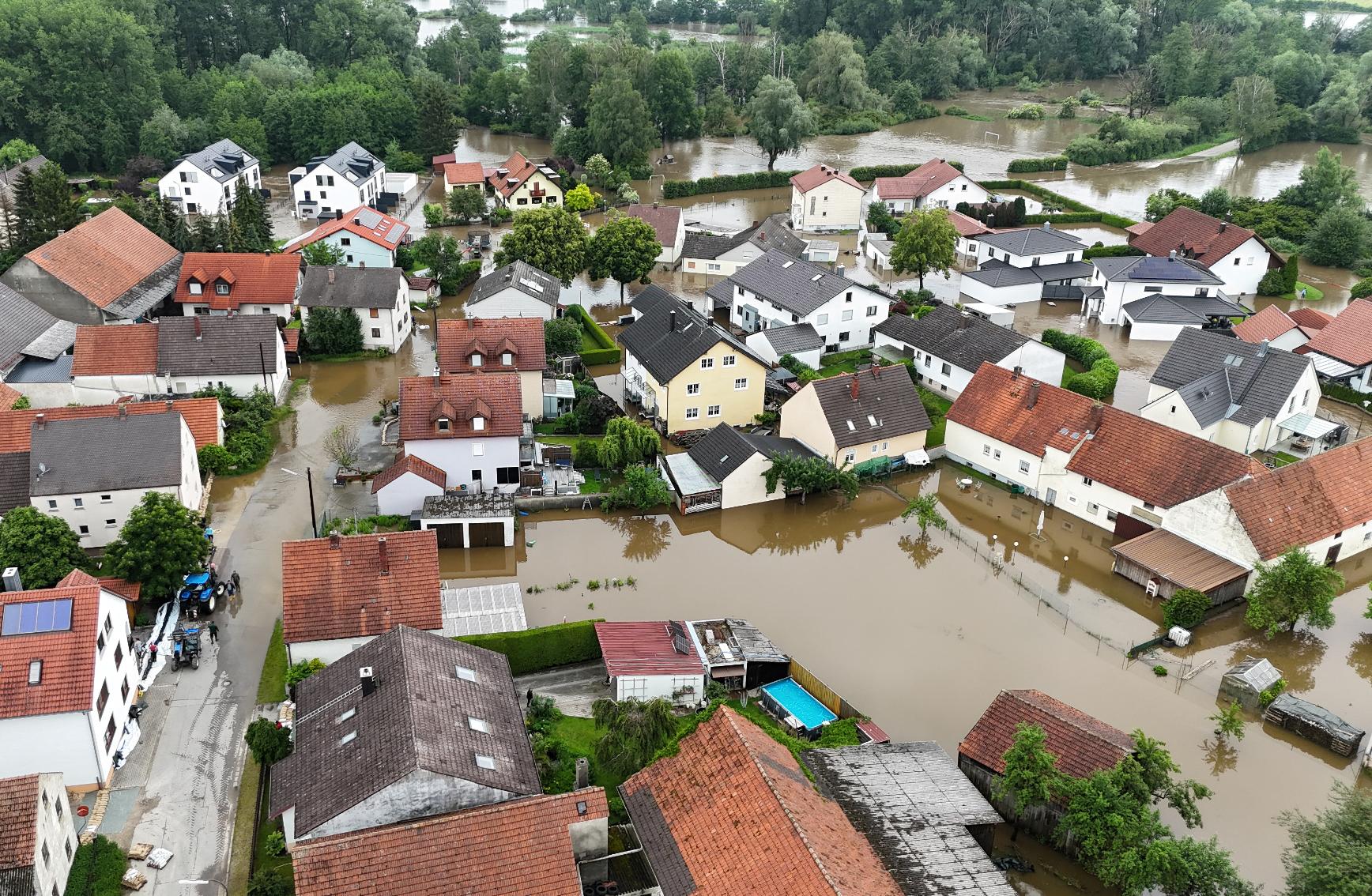
FRANKFURT, Germany, June 2 (Reuters) - A firefighter died while trying to rescue trapped residents and several thousand people were forced to leave their homes as heavy rain caused flooding in southern Germany. The 42-year-old man who died was in a rescue boat carrying four firefighters that capsized late on Saturday. His body was recovered early on Sunday, said a spokesperson for the Bavarian town of Pfaffenbach an der Ilm, around 50 km (30 miles) north of Munich. Municipalities had days to prepare for the flooding but around 3,000 people had to be evacuated in southern Germany as the water cut off some areas, authorities said. "We owe our thanks and respect to the rescue workers and helpers who are battling the consequences of the floods in many places," Chancellor Olaf Scholz said on X. Scholz is scheduled to travel to the region on Monday, where he will meet with Interior Minister Nancy Faeser and Bavaria's premier at around 1100 CET to get an overview, a government spokesperson said. Economy Minister and Vice Chancellor Robert Habeck pledged support for the affected regions during a visit on Sunday and noted that climate change is causing more severe weather events. "Natural disasters have always accompanied mankind. What we are seeing is that the frequency of these events is increasing significantly. Record floods occur every few years ... record rainfall every few years," Habeck, of the Greens Party, told broadcaster n-tv. Parts of Europe were hit by major flooding in 2021 that killed nearly 200, with Germany bearing the brunt. The disaster was largely blamed on the consequences of climate change and prompted calls for stricter warning and safety measures. Sign up here. https://www.reuters.com/world/europe/rescue-worker-dies-southern-germany-floods-2024-06-02/