2024-06-02 07:50
OPEC+ prolongs some cuts by one year OPEC+ to phase out other cuts very slowly Group faces rising oil stocks, tepid demand growth Factbox: What is OPEC+ and how does it affect oil prices? Why does OPEC+ often clash over oil capacity? LONDON/DUBAI, June 2 (Reuters) - OPEC+ agreed on Sunday to extend most of its deep oil output cuts well into 2025 as the group seeks to shore up the market amid tepid demand growth, high interest rates and rising rival U.S. production. Brent crude oil prices have been trading near $80 per barrel in recent days, below what many OPEC+ members need to balance their budgets. Worries over slow demand growth in top oil importer China have weighed on prices alongside rising oil stocks in developed economies. The Organization of the Petroleum Exporting Countries and allies led by Russia, together known as OPEC+, have made a series of deep output cuts since late 2022. OPEC+ members are currently cutting output by a total of 5.86 million barrels per day (bpd), or about 5.7% of global demand. Those include 3.66 million bpd of cuts, which were due to expire at the end of 2024, and voluntary cuts by eight members of 2.2 million bpd, expiring at the end of June 2024. On Sunday, OPEC+ agreed to extend the cuts of 3.66 million bpd by a year until the end of 2025 and prolong the cuts of 2.2 million bpd by three months until the end of September 2024. OPEC+ will gradually phase out the cuts of 2.2 million bpd over the course of a year from October 2024 to September 2025. "We are waiting for interest rates to come down and a better trajectory when it comes to economic growth ... not pockets of growth here and there," Saudi Energy Minister Prince Abdulaziz bin Salman told reporters. OPEC expects demand for OPEC+ crude to average 43.65 million bpd in the second half of 2024, implying a stocks drawdown of 2.63 million bpd if the group maintains output at April's rate of 41.02 million bpd. The drawdown will be less when OPEC+ starts phasing out the 2.2 million bpd voluntary cuts in October. The International Energy Agency, which represents top global consumers, estimates that demand for OPEC+ oil plus stocks will average much lower levels of 41.9 million bpd in 2024. "The deal should allay market fears of OPEC+ adding back barrels at a time when demand concerns are still rife," said Amrita Sen, co-founder of Energy Aspects think tank. Prince Abdulaziz said OPEC+ could pause the unwinding of cuts or reverse them if demand wasn't strong enough. QUICK DEAL Analysts had expected OPEC+ to prolong voluntary cuts by a few months due to falling oil prices and sluggish demand. But many analysts had also predicted the group would struggle to set targets for 2025 as it had yet to agree individual capacity targets for each member, an issue that had previously created tensions. The United Arab Emirates, for instance, has been pushing for a higher production quota, arguing its capacity figure had been long under-estimated. But in a surprise development on Sunday, OPEC+ postponed the discussions on capacities until November 2025 from this year. Instead, the group agreed a new output target for the UAE which will be allowed to gradually raise production by 0.3 million bpd, up from the current level of 2.9 million. OPEC+ agreed that it would use independently assessed capacity figures as guidance for 2026 production instead of 2025 - postponing a potentially difficult discussion by one year. Prince Abdulaziz said one of the reasons for the delay was difficulties for independent consultants to assess Russian data amid Western sanctions on Moscow for its war on Ukraine. The meetings on Sunday lasted less than four hours - relatively short for such a complex deal. OPEC+ sources said Prince Abdulaziz, the most influential minister in the OPEC group, had spent days preparing the deal behind the scenes. He invited some key ministers - mostly those who contributed to the voluntary cuts - to come to the Saudi capital Riyadh on Sunday despite meetings being largely scheduled online. The countries which have made voluntary cuts to output are Algeria, Iraq, Kazakhstan, Kuwait, Oman, Russia, Saudi Arabia and the United Arab Emirates. "It should be seen as a huge victory of solidarity for the group and Prince Abdulaziz," said Sen, adding the deal would ease fears of Saudi Arabia adding barrels back due to Aramco's (2222.SE) New Tab, opens new tab share listing. Saudi Arabia's government has filed papers to sell a new stake in state oil giant Aramco that could raise as much as $13.1 billion, a landmark deal to help fund Crown Prince Mohammed bin Salman's plan to diversify the economy. OPEC+ will hold its next meeting on Dec. 1, 2024. Sign up here. https://www.reuters.com/business/energy/opec-seen-prolonging-cuts-2024-into-2025-two-sources-say-2024-06-02/
2024-06-02 04:45
BEIJING, June 2 (Reuters) - China and the United Arab Emirates have emphasised a readiness to exchange experiences on defence and security, with a view to upgrading capacities of military personnel and security institutions in both countries, China's foreign ministry said on Sunday. China said both sides appreciated their defence, military and security cooperation and coordination, the increased visits between both militaries, as well as mutual participation in training, exhibitions and official activities. This was announced in a joint declaration after UAE President Sheikh Mohammed bin Zayed Al Nahyan had a bilateral meeting with China's President Xi Jinping in Beijing on Thursday. Chinese armed forces held the first air force drills with the UAE in China last August, a move widely seen as Beijing working to increase influence in the Gulf to counter the United States. China also signed a deal to export attack planes to the UAE last year. On energy, both countries agreed to explore cooperation on crude oil reserves, to encourage and support Chinese and Emirati enterprises to strengthen coordination in renewable energy, oil, natural gas, petrochemicals, strategic oil storage, hydrogen and ammonia. Both countries also have eyes set on exploring joint nuclear energy projects including constructing nuclear power stations and more research and development. Sign up here. https://www.reuters.com/world/china-uae-ready-trade-defence-security-experiences-2024-06-02/

2024-06-01 14:03
OPEC+ set to decide output policy for 2024, possibly into 2025 Will also cover members' production capacities Series of meetings expected to begin at 0900 GMT on Sunday LONDON/DUBAI, June 1 (Reuters) - Despite moving Sunday's oil output decision-making meeting online, several OPEC+ ministers plan to fly to Saudi Arabia's capital Riyadh, two OPEC+ sources said. OPEC oil-producing nations plus others including Russia make up OPEC+, which is set to decide its production policy for the remainder of 2024 and possibly next year. Sources said OPEC+ is expected to discuss a complex deal that may extend deep oil production cuts into 2025. Several OPEC+ ministers have been invited to Riyadh, sources said on Friday. OPEC+ members are currently cutting output by a total of 5.86 million barrels per day (bpd), or about 5.7% of global demand. Some sources suggested that the meeting on Sunday will involve countries making voluntary supply cuts of 2.2 million bpd as part of the group's overall effort to curb supply, balance the market and support crude prices. Those extra cuts are due to expire this month. The countries making them are Algeria, Iraq, Kazakhstan, Kuwait, Oman, Russia, Saudi Arabia and the United Arab Emirates. Saudi Arabia's energy ministry did not immediately respond to a request for comment about the meetings. OPEC+ has made a series of cuts since late 2022 amid rising output from non-members such as the United States, and worries over demand amid high interest rates. Sunday's policy-setting meeting was originally scheduled to be an in-person event held in Vienna at the Organization of the Petroleum Exporting Countries' headquarters but was moved online last week. A series of meetings is expected to begin at 0900 GMT on Sunday. Besides production cuts, OPEC+ is set to debate members' production capacity figures, a historically contentious issue. Capacity estimates help OPEC+ establish baseline production figures from which cuts are made. Sign up here. https://www.reuters.com/business/energy/some-opec-ministers-heading-riyadh-oil-output-meeting-sources-say-2024-06-01/
2024-06-01 11:27
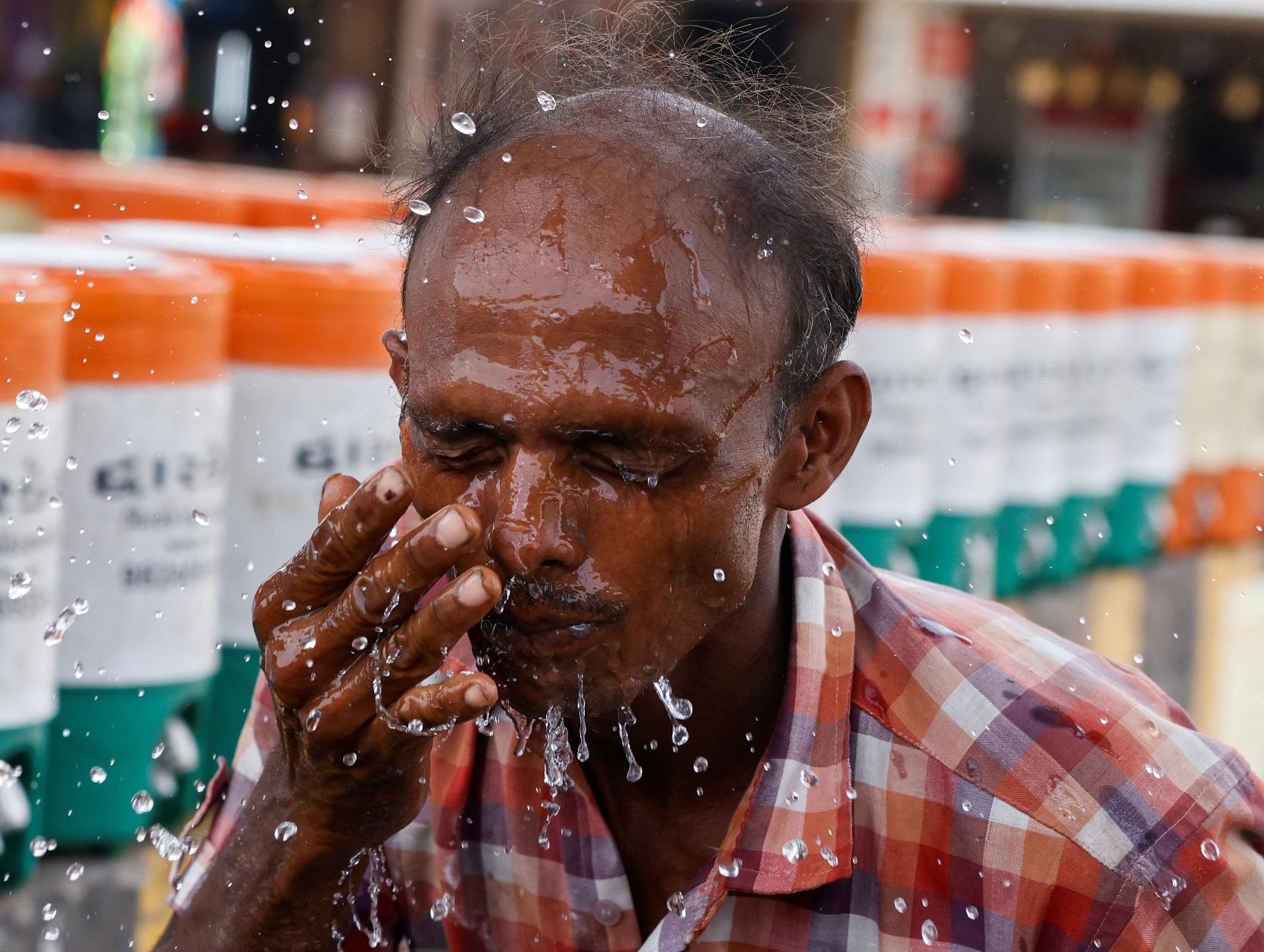
NEW DELHI, June 1 (Reuters) - A record temperature registered this week for the capital New Delhi of 52.9 degree Celsius (127.22 Fahrenheit) was too high by 3 C, the Indian government said on Saturday, blaming a weather sensor error. The Indian Meteorological Department (IMD) had investigated Wednesday's reading by the weather station at Mungeshpur, a densely packed corner of Delhi, "and found a 3°C sensor error", Earth Sciences Minister Kiren Rijiju said "Corrective measures are now in place," the minister said, sharing the conclusion of a draft report about the all-time high reading on social media platform X. He did not give a corrected figure for Wednesday's temperature. The IMD said in a statement that the maximum temperature reported by the Mungeshpur weather station "is not correct due to malfunctioning of the sensor". However the city's record for heat still appears to have been broken. Two weather stations in the capital reported temperatures of 49 C (120.2 F) and 49.1 C (120.38 F) for Wednesday. The IMD said these two stations had been checked and it did not report any sensor errors. The highest temperature previously recorded in New Delhi was 48.4 C (119.12 F)in May 1998, the draft IMD report said. Severe heat has been scorching parts of India for days. At least 33 people, including election officials on duty, died of suspected heatstroke in the states of Uttar Pradesh and Bihar in the north, and Odisha in the east on Friday. Sign up here. https://www.reuters.com/world/india/india-says-delhis-record-529-celsius-temperature-last-week-was-wrong-by-3-c-2024-06-01/
2024-06-01 08:33
FRANKFURT, June 1 (Reuters) - Thyssenkrupp's (TKAG.DE) New Tab, opens new tab chairman on Saturday defended a move to sell a stake in the group's steel unit to Czech billionaire Daniel Kretinsky against the will of worker representatives, adding the company could not afford to delay critical decisions. Powerful labour leaders at the German conglomerate, who hold half the seats on its supervisory board, are in open conflict with management, arguing they are being sidelined in Thyssenkrupp's efforts to sell its steel business TKSE. A plan to sell 20% in the business to Kretinsky could only be approved by the board because the vote of chairman Siegfried Russwurm counts twice in the event of a stalemate. "We've hit rough waters with the steel business. Time plays a major role here. Especially as Thyssenkrupp has been waiting for too long," he told weekly Welt am Sonntag, adding - in a potential warning against strike action - that any suspension of production could damage the business. "The steel business must no longer be the risk that drags down all other areas of the group. We need a solution, not maybe or at some point, but now." Russwurm did not rule out using his double vote in future stalemates, adding it was the duty of a chair to ensure appropriate decisions are made. Germany's biggest union IG Metall earlier this week said that TKSE needed 4 billion euros ($4.3 billion) in funds for a standalone future. Thyssenkrupp wants to create a 50:50 steel joint venture with Kretinsky and pare back funding. Russwurm said he expected all stakeholders to work together to develop a future strategy to ensure that TKSE, which has come under pressure from high energy costs and cheap Asian imports, can be self-sustainable. "Otherwise, it is only a matter of time before this company no longer exists." ($1 = 0.9224 euros) Sign up here. https://www.reuters.com/markets/commodities/thyssenkrupp-cant-afford-delays-over-future-steel-unit-chairman-says-2024-06-01/
2024-06-01 07:38
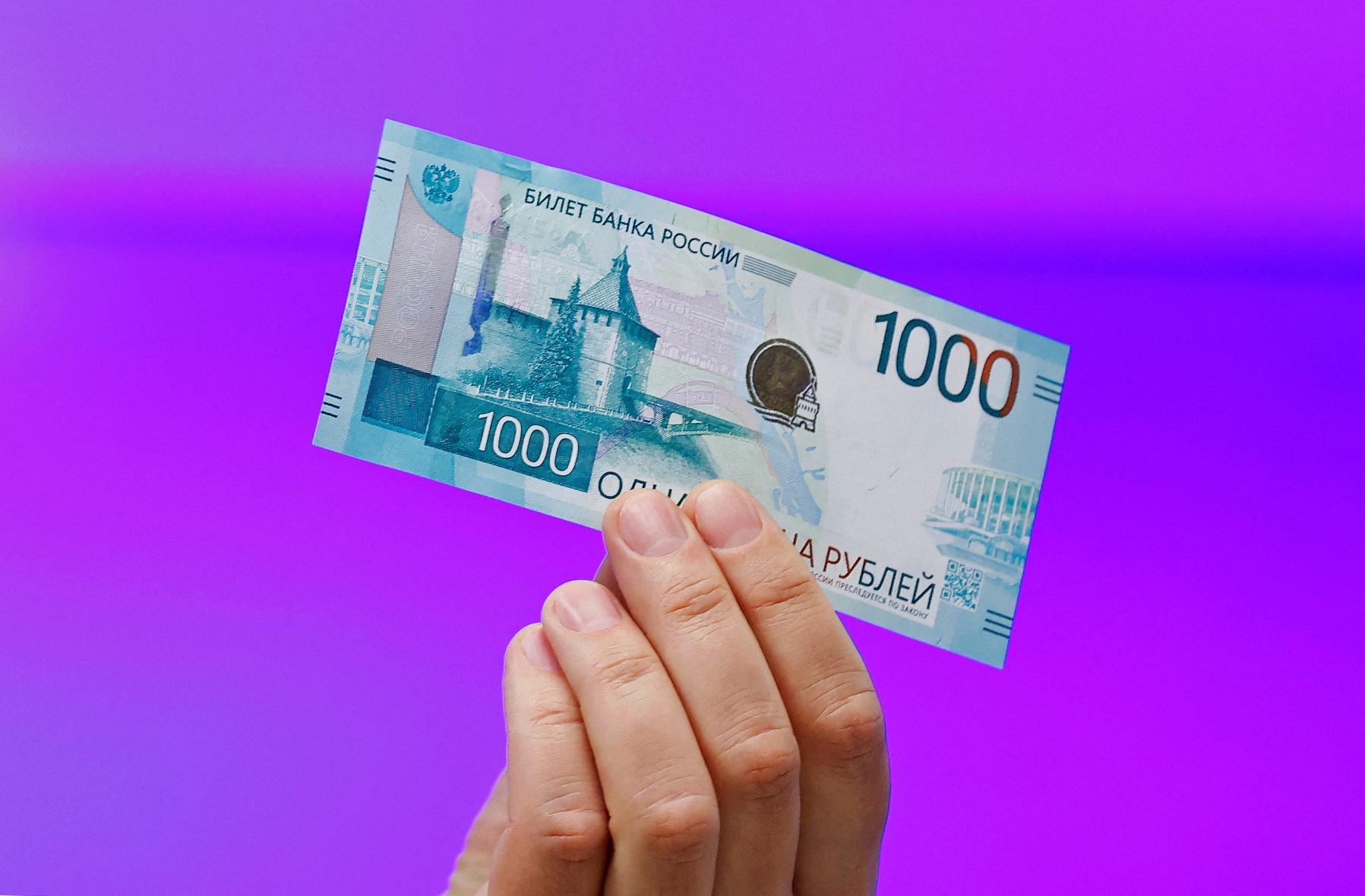
MOSCOW, June 1 (Reuters) - The Russian government has softened requirements for mandatory sales of foreign currency for exporters if more than half of the value of their contracts is paid in roubles, according to changes New Tab, opens new tab to a government decree. President Vladimir Putin signed the decree in October mandating the reintroduction of capital controls, affecting dozens of companies in the fuel, energy, metal, chemical, timber and grain industries in order to prop up the rouble. The Russian currency was under pressure from capital outflows and limited foreign currency supply. In April, the capital controls measures were extended for a year. Certain Russian exporters were required to deposit no less than 80% of foreign currency earnings with Russian banks and then sell at least 90% of those proceeds on the domestic market within two weeks. According to a changes in a government decree, signed on May 30, the government commission on foreign investments may drop the foreign currency sales requirements for the companies if more than half of the value of their foreign contracts are settled in roubles. The central bank has long voiced doubts over the controls' efficacy, disagreeing publicly with the government over the issue. The controls were introduced as the rouble tumbled past the 100 mark against the dollar and authorities sought to wrest back control of the foreign exchange market. The rouble now trades near to 90 to the dollar. The government has argued that the controls reduce rouble depreciation risk. The central bank believes that high interest rates of 16% and strong export revenues were more impactful in supporting the rouble. Sign up here. https://www.reuters.com/markets/europe/russia-eases-forex-sales-requirements-contracts-roubles-2024-06-01/