2024-05-31 09:04
May 31 (Reuters) - The start of a new month can mean only one thing for investors: time for the all-important monthly U.S. employment report, but also for a likely European Central Bank rate cut, as well as the outcome of India's marathon general election. Here is a look at what's happening in markets in the coming week, from Ira Iosebashvili in New York, Swati Bhat in Mumbai, Yoruk Bahceli in Amsterdam, Anousha Sakoui and Amanda Cooper in London. 1/COOL STORY Is the U.S. economy finally cooling? It will take several months of data to answer that question, but one key piece of the puzzle comes with the closely watched employment report, out on June 7. Investors had been worried that an overly strong economy might prevent the U.S. Federal Reserve from lowering rates this year at all, or even require a rate rise. But those concerns were put to rest last month, albeit temporarily, by data showing slowing inflation and a cooling labour market. Still, policymakers have urged patience on rate cuts, saying they would like to see several months of data to be sure inflation is heading back towards their 2% target. The employment report could prove the economy is losing steam if it shows the slowdown in job creation has continued. 2/BIG ELECTIONS, BIG CONSEQUENCES India's six-week long national election is in its final stages, with votes due to be counted on June 4. Investors are gearing up for Prime Minister Narendra Modi securing a third term in office. Markets see a Modi win as providing political stability and continuity in India to support sustained economic growth. Indian equities outperformed most major markets in 2023 and are already trading at lofty valuations. They could get another boost if Modi remains in power, even as part of a coalition government. Mexicans also went the polls on Sunday, at which ruling party hopeful Claudia Sheinbaum looks set to win a landslide victory to become the first woman president. The peso has sold heavily in the past week, as traders ponder the uncertainty for the economy stemming from the vote. 3/IT'S A GAS, GAS, GAS The oil market is entering into a sweet spot in the year - the summer driving season in the United States. The price of crude , is up 10% year-on-year and intensifying Middle East tensions are keeping the market nervous. Meanwhile, gasoline futures have fallen by 7%, offering a potential boon to customers at the pump. But, U.S. gasoline inventories aren't declining as quickly as they ordinarily would at this time of year, which suggests consumption isn't quite hot enough to put a dent into supply. A measure of demand for immediate delivery of crude is also around its lowest since December . A lot is riding on the outlook for growth and, therefore, demand for fuel. The world's biggest oil exporters agreed on Sunday to extend most of their deep oil output cuts well into 2025, as the group seeks to shore up the market in the face of tepid demand growth. 4/UK FOR SALE BHP Group (BHP.AX) New Tab, opens new tab may have failed in its bid for Anglo American (AAL.L) New Tab, opens new tab, taking $49 billion out of bankers' league tables. But the emergence of the bid in April highlights a revival in UK M&A. April saw 38 companies in the UK under offer, the most since June 2022, according to Peel Hunt. Take one away and that high-water mark doesn't change. Bankers pinpoint that it's companies driving the charge, and they expect more UK deals, as the interest rate outlook and economic backdrop stabilise and competition from private equity funds for assets is still muted. Driving the inbound interest is the persistent cheapness of UK assets. The FTSE 100 12-month forward price-to-earnings ratio continues to trade at the widest discount to the S&P 500's since at least 1990, and lags the performance in the pan-European STOXX 600 (.STOXX) New Tab, opens new tab and Germany's DAX (.GDAXI) New Tab, opens new tab. 5/CUT IT OUT The ECB is all but certain to become the first major central bank to cut interest rates this cycle on Thursday. Policymakers have practically promised a June cut that is expected to lower the bank's key rate by 25 basis points to 3.75%. So all focus will be on what hints ECB boss Christine Lagarde gives on what happens next. Inflation in the bloc's dominant services sector remains sticky and its economy is recovering faster than expected, while a closely-watched wage growth figure accelerated last quarter, leaving the outlook beyond June less certain. Traders are still much more confident that the ECB will cut rates multiple times this year compared to its U.S. and British peers, though they have also reduced their bets on its moves. They now expect two cuts and less than a 50% chance of a third - compared with three when the ECB last met and at least five at the start of the year. Sign up here. https://www.reuters.com/business/take-five/global-markets-themes-graphic-2024-05-31/

2024-05-31 07:57
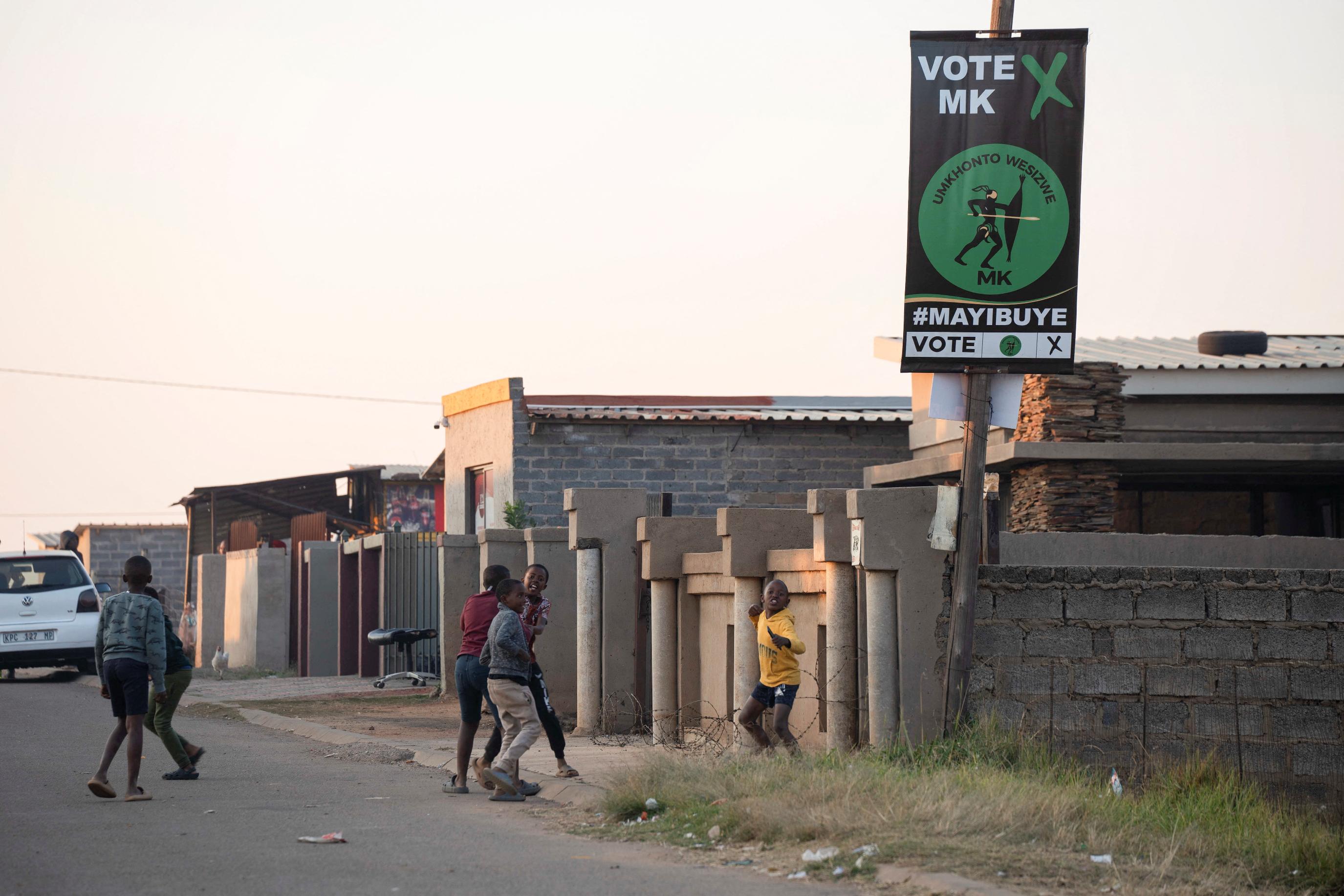
BOTLENG, South Africa, May 31 (Reuters) - With South Africa's ruling party on track to get about 42% of the vote in the national election, the anger in its heartland coal-mining belt gives a hint as to why it faces its worst result ever - and the prospect of sharing power with its rivals. In the township of Botleng - once a source of cheap farm labour for the country's hated white minority ex-rulers - roads are riddled with potholes, power cuts frequent and unemployed youths smoke cheap heroin to ease boredom and despair. Car wash owner Emmanuel Mthimunye, 34, says he had always cast his ballot for the African National Congress in the past. This time he wants to see something different. "I don't want to see unemployment, I don't want to see those shacks," he told Reuters, gesturing to some tin edifices set against yellowing grass littered with trash. "I don't want to see those potholes, I don't want to see young guys smoking nyaope (heroin mixed with cannabis) ... because there's nothing else to do." For Mthimunye and others in Mpumalanga, the province where the town of Botleng is situated, the promises of a better life for the country's Black majority after Nelson Mandela propelled the ANC to victory 30 years ago ring hollow. That may explain why the party's share of the vote in the eastern province has tumbled to 53% currently from 72% in the previous poll in 2019. One such promise was government-sponsored housing, for which Mthimunye applied in 2012 and is still waiting. He says he sought financial support for his business but failed - something he blames on a lack of connections with anyone in the party's local office. He worries about not being able to afford his rent and ending up in a makeshift shack as well. "Those guys (the ANC) fought for freedom but that freedom has slowly but surely been taken away from us," he said. "We can't do anything with no money." An ANC spokesperson declined to comment on the accusations of failing to deliver on promises or nepotism, and ANC leaders have said little about these widespread claims. In a church service in Cape Town earlier this month, President Cyril Ramaphosa admitted the ruling party had made "mistakes". "We have humbled ourselves and admitted where we have gone wrong. Our focus is on fixing those mistakes and working hard to renew the ANC," he said. "YOU GET NO HELP" Mpumalanga has for decades attracted poor Black South Africans to jobs in coal mining or power stations, which keep the nation's lights on. But its townships suffer major power shortages while a decline in the business as coal-fired power stations get retired or break down has left many out of work. With nearly 55% of votes counted nationally, Electoral Commission data showed the biggest hit to the ANC's majority comes from the new uMkhonto we Sizwe (MK) party set up by ex-president Jacob Zuma in December. MK is the party Mthimunye voted for, and it has snatched 11% of the national vote. In Mpumalanga, the MK has 18% - the main driver behind the ANC's share falling to just under half, compared with 72% in the previous 2019 poll. The pro-business Democratic Alliance (DA) and far-left Economic Freedom Fighters (EFF) rose by 2 and 1 percentage points respectively to 12% and 13%. A court barred Zuma from running as MK candidate because of his conviction for contempt of court in one of several corruption trials against him, but for supporters like Lenie Modise, 35, unemployed, "Jacob Zuma knows the mistakes he made and so he won't do it anymore." Other defectors to the MK party, like Eugene Du Toit, 31 and also unemployed, just saw the appeal of a new party and didn't associate it with Zuma, while 34-year-old Nomsa Masango, hopes any change will improve her chances of finding a job. "I used to vote ANC," she said, donning her green-and-black MK T-shirt. "I switched when I saw no change in my life." She begged her local ANC councilor to help her find work, but, she says, he didn't help her because she wasn't a friend or relative. "If you don't know anyone, you get no help," she said. Across the province, the resentment runs deep. "Why are we in Mpumalanga being load-shedded (having our power cut) when it's us producing the electricity," Julius Mohadi, 28, a teacher, said. He grew up in a family that campaigned for the ANC but now he votes EFF. "The ANC really forgot about us," he said. Sign up here. https://www.reuters.com/world/africa/south-africas-coal-belt-anc-heartland-voters-defect-en-masse-2024-05-31/
2024-05-31 07:39
KYIV, May 31 (Reuters) - Missiles fired by the Ukrainian navy struck an oil terminal at the Russian port of Kavkaz in the Krasnodar region on Friday, the Ukrainian military said via the Telegram messaging app. The military reported explosions at the site as it worked to verify the damage from the attack carried out with Ukrainian-made Neptune missiles. Ukrainian drones also struck another oil depot in the Krasnodar region, the statement said. "Russia's 'modern' and 'effective' air defence system once again proved powerless against our missiles and unmanned systems and failed to protect important facilities used for logistics and supply of the Russian army," the Ukrainian military said. The Russian defence ministry said on Telegram that its air defence systems destroyed five missiles and 29 drones targeting Krasnodar. Falling drone debris sparked a fire at an oil depot in the Temryuk district, damaging several tanks filled with fuel and injuring two people, according to local Russian officials. Sign up here. https://www.reuters.com/world/europe/ukraine-missiles-hit-oil-terminal-port-kavkaz-russias-krasnodar-region-military-2024-05-31/

2024-05-31 07:19
Crypto "re-staking" platforms attract rapid inflows Analysts concerned about hidden risks in system Crypto risk-taking returns with bitcoin near all-time highs LONDON, May 31 (Reuters) - More than $18 billion worth of cryptocurrency has moved into a new type of platform which offers investors rewards in exchange for locking up their tokens, in a complex scheme that analysts warn poses a risk for users and the crypto market. The soaring popularity of so-called "re-staking" is the latest sign of risk-taking in crypto markets as prices rally and traders hunt for yield. Bitcoin , the biggest cryptocurrency, is near all-time highs while ether , the second biggest, is up more than 60% this year. At the heart of the re-staking boom is Seattle-based start-up EigenLayer. The company, which in February raised $100 million from U.S. venture capital firm Andreessen Horowitz's crypto arm, has attracted $18.8 billion worth of crypto to its platform - up from less than $400 million six months ago. EigenLayer invented re-staking to expand a long-standing crypto practice called staking, its founder Sreeram Kannan told Reuters. Blockchains are a kind of database, which involve many computers in a network checking and confirming who owns which cryptocurrencies. To do this, owners of crypto tokens, such as ether, allow their assets to be locked up as part of the validation process. Holders lose instant access to their tokens for as long as they participate in staking but they earn a yield in return. Some staking platforms also give users newly-created cryptocurrencies to represent the cryptocurrencies they have staked. Re-staking enables owners to take those new tokens and stake them again with different blockchain-based programmes and applications in the hope of bigger returns. The crypto world is divided as to how risky re-staking is, with some insiders saying the practice is too nascent to know. But others, including analysts, fear that if new tokens representing the re-staked cryptocurrencies are used as collateral in crypto's vast lending markets, there could be endless loops of borrowing based on a small number of underlying assets. That could destabilise broader crypto markets if everyone tried to exit simultaneously, they say. "When there’s anything that has collateral on collateral it’s not ideal, it adds a new element of risk that wasn’t there," said Adam Morgan McCarthy, research analyst at crypto data provider Kaiko. The appeal for investors is the yield: returns from staking on the Ethereum blockchain are typically in the 3%-5% range but analysts say returns could be higher for re-staking, as investors can earn multiple yields at once. Re-staking is the latest development in the risky world of decentralised finance, or DeFi, in which cryptocurrency holders invest in experimental schemes in the hope of generating large returns on their holdings without having to sell them. The EigenLayer platform is yet to pay out staking rewards directly to users, however, because the mechanism for doing so has not been developed. Users are joining the platform in anticipation of future rewards, or other giveaways known as airdrops. For now EigenLayer has been giving out its own newly-created token to people who use the platform. Users hope this token called, "EIGEN", will be worth something in future. Kaiko's Morgan McCarthy said the growth of re-staking platforms was fuelled by users seeking such airdrops, calling it "really, really speculative, this free money thing." "It's very risky," said David Duong, head of research at U.S. crypto exchange Coinbase (COIN.O) New Tab, opens new tab, which offers staking but not re-staking. "They’re doing this pre-emptively right now, (with the) expectation that they will be rewarded with something but they don’t know what," Duong said. ENTER EIGENLAYER EigenLayer was launched last year by Sreeram Kannan, a former assistant professor at the University of Washington in Seattle and part of a team that launched the first student-designed micro-satellite in India, according to his academic website. EigenLayer describes itself as a marketplace for validation services, connecting would-be stakers with applications which need staked tokens. New re-staking platforms have emerged, including EtherFi, Renzo and Kelp DAO, which re-stake clients' tokens on EigenLayer for them and generate new tokens to represent those re-staked assets. These tokens can be used elsewhere, for example as collateral in borrowing. Kannan said his platform's aim is to allow users to choose where to stake their tokens and to help new blockchain services grow, not to incentivise ever more crypto-backed borrowing. “We don’t have any official relationships with any of these players...This is an emergent phenomenon,” he said. Coinbase’s Duong says re-staking could come with “hidden risks” - if re-staking tokens are used in crypto lending there could be forced liquidations and more volatility during market downturns, he wrote in a note. The 2022 selloff in crypto markets was exacerbated by high-risk lending, as crypto tokens used as collateral quickly lost their value following the collapse of the Terra and Luna tokens. Kannan distances EigenLayer from the risks. "The risk isn’t in re-staking but rather it’s in the lending protocols. The lending protocols are mispricing risk," he said. Some experts are unconcerned about re-staking, noting that the cash in re-staking protocols is tiny relative to the global crypto industry's $2.5 trillion in net assets. Regulators have long been concerned about losses in the crypto world spilling over to wider financial markets. “For now, we do not see any meaningful risk of contagion from restaking issues to traditional financial markets,” said Andrew O’Neill, digital assets analytical lead at S&P Global Ratings. Still, the crypto world is becoming increasingly connected to mainstream finance, and re-staking is catching on with institutional investors. Standard Chartered crypto’s arm, Zodia Custody, has seen significant institutional interest in staking but considers re-staking a step too far because it is difficult to establish a “paper trail” of where the assets go and how rewards are apportioned, Chief Risk Officer Anoosh Arevshatian said. Nomura’s crypto arm, Laser Digital, has partnered with Kelp DAO to re-stake some of its funds, Kelp DAO said in an April blog post. Laser Digital did not respond to a Reuters comment request. Swiss crypto-focused bank Sygnum said it stakes clients’ crypto assets and expects “a new ecosystem around re-staking to emerge”. Sign up here. https://www.reuters.com/technology/crypto-re-staking-platforms-boom-traders-chase-bigger-returns-2024-05-31/

2024-05-31 07:19
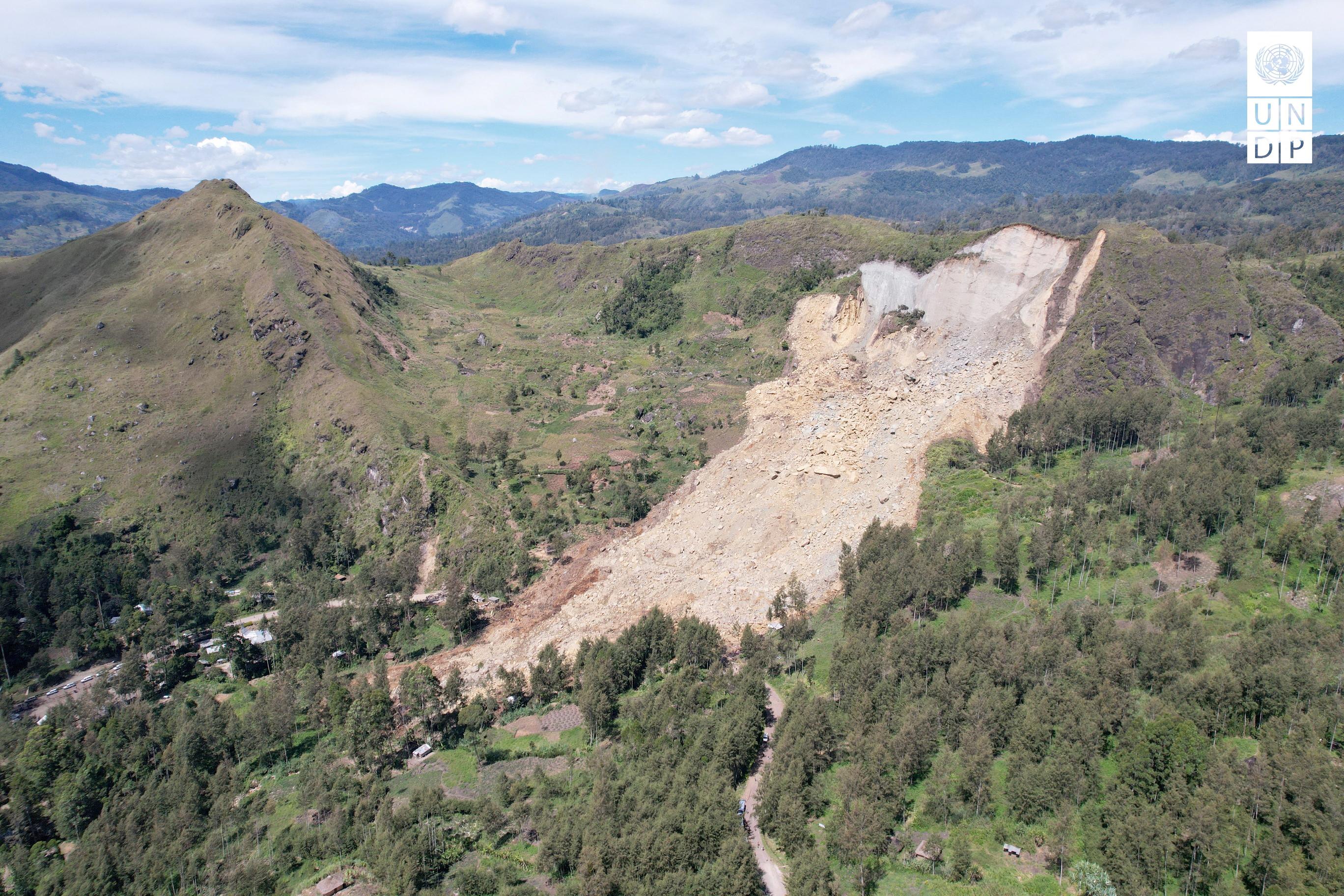
SYDNEY, May 31 (Reuters) - Papua New Guinea (PNG) Prime Minister James Marape on Friday made his first visit to a remote village hit by a deadly landslide last week and thanked international aid donors for their support. Officials are still trying to pinpoint how many people are buried under parts of a mountain which collapsed onto the Yambali village in the Enga region a week ago. More than 2,000 people may have been buried alive, according to the PNG government. A U.N. estimate put the death toll at around 670. Marape apologised to residents for not visiting earlier, The Papua New Guinea Post Courier reported. "I'm sorry," Marape was cited as saying. "The country is with you in your time of sorrow." He has pledged 20 million Kina ($5.1 million) for emergency response and initial recovery measures. Marape also inspected the disaster site by helicopter, the United Nations migration agency said. Heavy equipment and aid have been slow to arrive because of treacherous terrain and tribal unrest in the area. As of Thursday, PNG government officials had ruled out finding survivors under the rubble and said that they would shift focus on recovering bodies. The U.N. migration agency said the disaster site will be quarantined by PNG authorities after 14 days and access will be restricted in a bid to prevent the spread of diseases from decaying bodies. The United Nations has said water flowing under the debris had contaminated the village's water sources. Those who remain undiscovered will be declared missing, the agency said. ($1 = 3.9479 kinas) Sign up here. https://www.reuters.com/world/asia-pacific/papua-new-guinea-leader-visits-community-hit-by-landslide-2024-05-31/
2024-05-31 07:12
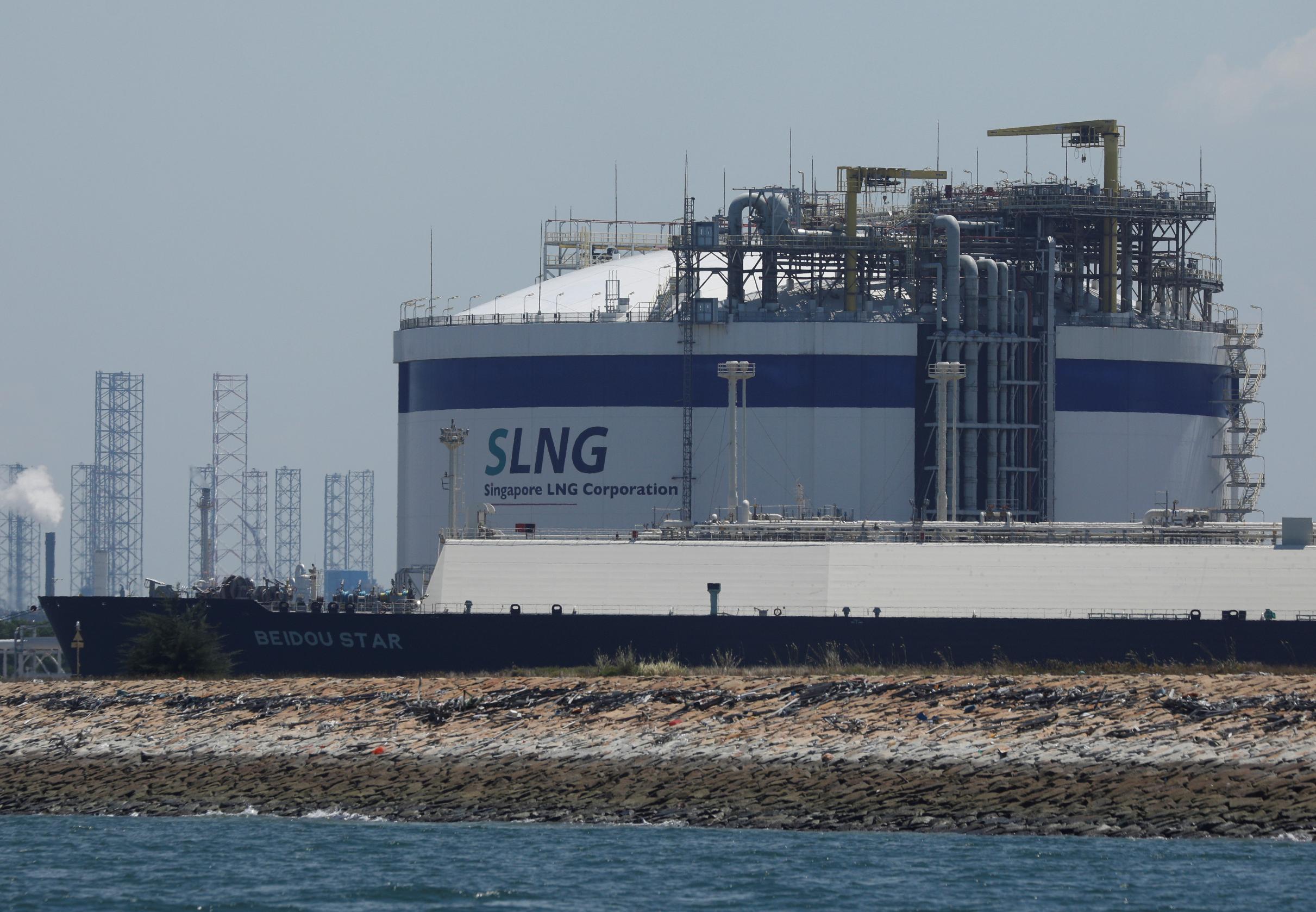
SINGAPORE, May 31 (Reuters) - Extreme temperatures across Asia are driving up liquefied natural gas (LNG) demand in the region as importers seek cargoes ahead of summer, with imports in South Asia hitting records. This could tighten available supply and further lift Asian spot prices that have already gained a third since April, with heatwaves across South and Southeast Asia boosting air-conditioner use and other cooling demand. Prices are now at a near six-month peak at $12 per million British thermal units (mmBtu) and are expected to remain elevated. "Spot prices are now driven by Asian demand. Temperatures in South Asia are rising due to a heatwave, increasing power demand," said Siamak Adibi, principal consultant at energy consultancy FGE. While China may still see lower demand compared with its record breaking shipments in 2021, demand from India and the rest of Asia has compensated for any drop-off, Adibi said. Parts of South and Southeast Asia saw extreme heat and record temperatures in April and May, increasing electricity consumption for cooling and straining power supplies. In India on Thursday, at least 15 people died of suspected heatstroke in the eastern states of Bihar and Odisha. South Asian LNG imports rose nearly 20% from a year earlier to 3.8 million metric tons in May, according to analytics firm Kpler. India saw its highest import levels ever for May at 2.4 million tons, while Bangladesh LNG volumes hit an all-time monthly record at 0.6 million tons, according to Kpler data. New importers the Philippines and Vietnam, which started taking LNG shipments last year, have also bumped up their purchases. Vietnam received three cargoes in April and May for power generation, while buyers in the Philippines shipped nine cargoes so far this year versus 11 for all of last year. Rising demand for cooling is set to continue as Northeast Asia enters its summer. Japan's meteorological agency forecast likely higher-than-average temperatures from June to August, and China's energy regulator warned power supply will be tight in some regions the next few months amid growing consumption. "Various weather forecasts suggest Northeast Asia may experience hotter-than-normal weather from May," said Energy Aspects analyst Min Na in a note, adding that restocking demand for LNG in Asia will be higher year-on-year this summer. "We forecast a total restocking demand of 2.4 million tons this summer across Japan, South Korea and Taiwan, up by 2.3 million tons year-on-year and 0.1 million tons above the five-year average." Japan government data showed LNG stockpiles by utilities at 2.06 million tons as of May 26, below the five-year average for the period, as Tokyo is already experiencing hot weather. South Korean power generation company Korea Midland Power Co (KOMIPO), Thailand state-energy firm PTT (PTT.BK) New Tab, opens new tab, Philippines power producer First Gen (FGEN.PS) New Tab, opens new tab and Bangladesh's state-owned Rupantarita Prakritik Gas Co Ltd (RPGCL) have all also issued tenders seeking LNG for delivery in July. Sign up here. https://www.reuters.com/markets/commodities/extreme-asian-heat-spurs-lng-demand-ahead-summer-months-2024-05-31/