
2024-05-30 22:50
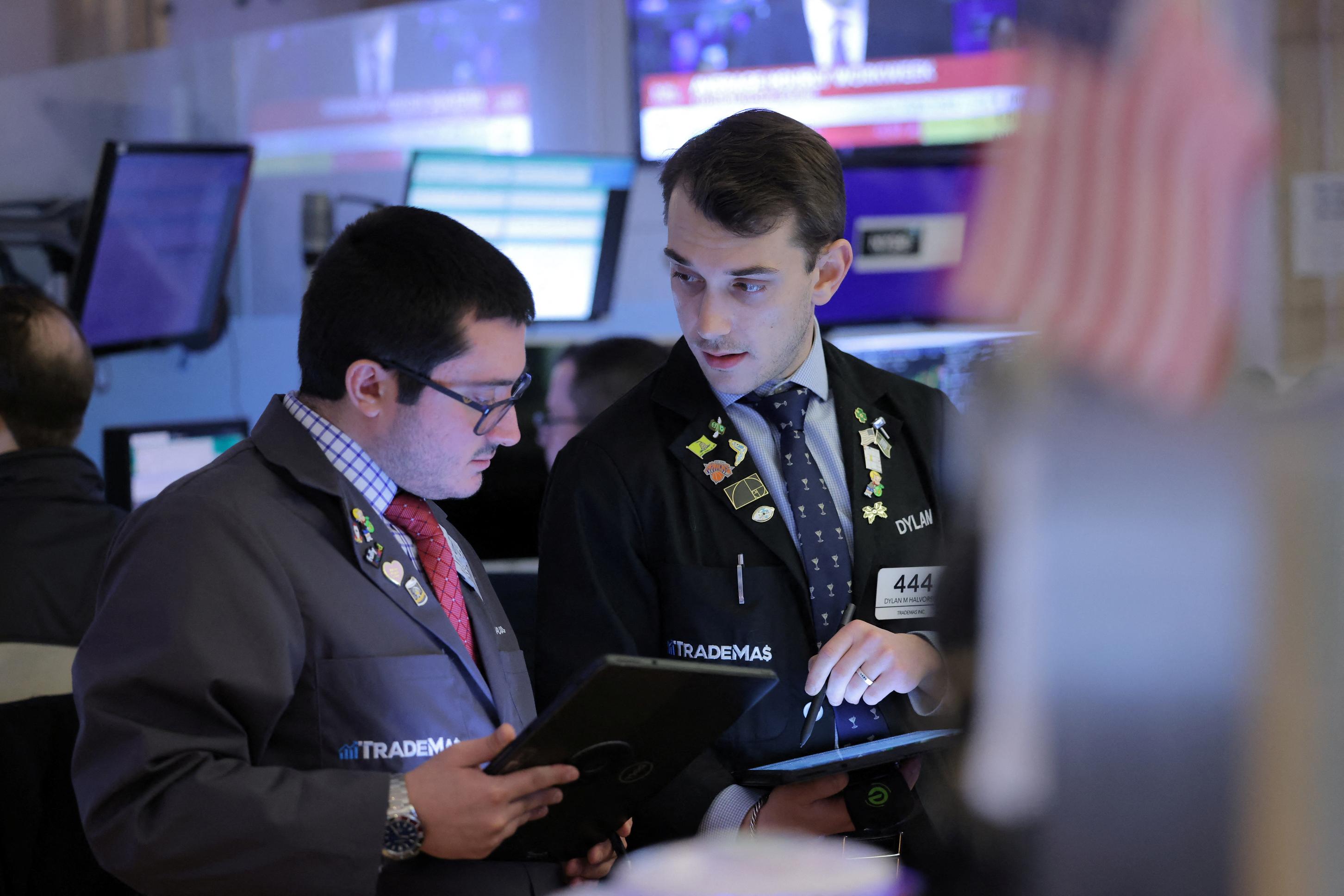
US first-quarter economic growth revised lower Tesla up after report on push to roll out advanced FSD in China Dell shares fall after earnings Indexes down: Dow 0.9%, S&P 500 0.6%, Nasdaq 1.1% May 30 (Reuters) - U.S. stocks ended lower on Thursday, with the Nasdaq falling more than 1% and technology shares leading declines after a disappointing Salesforce forecast. Investors also digested data showing the economy had grown slower than previously expected in the first quarter. A separate report showed weekly jobless claims rose more than expected. Salesforce (CRM.N) New Tab, opens new tab shares plunged 19.7%, a day after the company forecast second-quarter profit and revenue below Street estimates due to weak client spending on its cloud and enterprise business products. The S&P 500 technology sector (.SPLRCT) New Tab, opens new tab dropped 2.5% and was the biggest drag on the benchmark index. The communication services sector (.SPLRCL) New Tab, opens new tab fell 1.1%, while the rest of the S&P 500 sectors ended higher. The Commerce Department report showed the economy grew slower in the first quarter than previously estimated, after downward revisions to consumer and equipment spending and a key measure of inflation ticked lower, ahead of Friday's personal consumption expenditure report for April. "Normally you’d expect the market to rally off of a downward revision to GDP because it signals the economy is moderating, the Fed’s job is done, we can get rate cuts. That’s not the reaction we’re getting today," said Mark Hackett, chief of investment research at Nationwide. "So I’m a little surprised but not that surprised simply because after the six week (rally) that we've had, it's pretty healthy and expected to see some consolidation or sideways move for a while.” The S&P 500 (.SPX) New Tab, opens new tab lost 31.47 points, or 0.60%, to end at 5,235.48, while the Nasdaq Composite (.IXIC) New Tab, opens new tab lost 183.50 points, or 1.08%, to 16,737.08. The Dow Jones Industrial Average (.DJI) New Tab, opens new tab fell 330.06 points, or 0.86%, to 38,111.48. U.S. Treasury yields dipped following the day's data, while chances for an at least 25-basis-point interest rate reduction in September edged up to 50.4%, from 48.7% before the data, according to the CME Group's FedWatch Tool. Bond yields had hit multi-week highs earlier in the week. After the close, Dell Technologies (DELL.N) New Tab, opens new tab shares fell more than 12% as the company reported quarterly results. The stock ended the regular session down 5.2%. During the regular session, HP (HPQ.N) New Tab, opens new tab shares jumped 17% after it posted better-than-expected second-quarter revenue. Tesla (TSLA.O) New Tab, opens new tab rose 1.5% after Reuters reported the company was preparing to register its 'Full Self-Driving' software in China. Retailer Best Buy (BBY.N) New Tab, opens new tab shares shot up 13.4% after beating forecasts for quarterly profit, while department-store chain Kohl's (KSS.N) New Tab, opens new tab slumped 22.9% after cutting its annual sales and profit forecasts. Advancing issues outnumbered decliners by a 2.57-to-1 ratio on the NYSE and by a 1.41-to-1 ratio on the Nasdaq. The S&P 500 posted 14 new 52-week highs and 10 new lows while the Nasdaq Composite recorded 51 new highs and 95 new lows. Volume on U.S. exchanges was 12.10 billion shares, compared with the 12.39 billion average for the full session over the last 20 trading days. Sign up here. https://www.reuters.com/markets/us/futures-slip-rate-cut-uncertainty-persists-data-tap-2024-05-30/
2024-05-30 22:43
May 30 (Reuters) - The California Public Utilities Commission on Thursday approved a new solar energy program that the industry had said would not go far enough to incentivize smaller community projects. The decision marked the latest disappointment for the solar industry in California, which is the top U.S. solar market overall but ranks eighth out of 50 states in community solar. In the last two years, California has reduced incentives for the clean energy technology, in part because regulators worried the subsidies were being funded by ratepayers who do not have solar. The CPUC voted to expand two existing programs and create a third, which was supported by utilities, in a 3 to 1 vote. The new program will be able to tap $250 million in federal funds provided under President Joe Biden's climate change law, the Inflation Reduction Act. The program update, which was required by state law, was in part meant to expand solar energy to lower-income Californians who may live in apartments or cannot afford rooftop systems. Despite its reputation as a leader in solar energy, California has lagged other states in building community solar projects. As of the end of 2023, California had 163 megawatts of community solar, compared with more than 2 gigawatts in New York and 1.1 GW in Massachusetts. "It's disappointing that the CPUC's decision fails to provide meaningful improvements to California's lackluster community solar program," Steven King, a clean energy advocate with green group Environment California, said in a statement. "Utilizing spaces such as rooftops, parking lots, and roadside land for generating solar power is essential to address the climate crisis and reach 100% clean energy as soon as possible." California has among the most ambitious climate change goals of any U.S. state, and Governor Gavin Newsom has pledged to decarbonize the state's economy by 2045. The CPUC decision marked a rejection of a scheme backed by solar project developers, ratepayer advocates, environmental groups and others that would have compensated project subscribers for energy exported to the grid based on the value of the electricity at that time. The PUC said that proposal would have increased costs for ratepayers not participating in the program. Instead, the regulator embraced a proposal to treat community solar projects like wholesale facilities and compensate them at a rate they would pay for power elsewhere, known as the avoided cost. That scheme was backed by utilities including Southern California Edison and Pacific Gas & Electric. The PUC said it would sweeten the returns for project developers with state and federal funds. Sign up here. https://www.reuters.com/world/us/california-approves-community-solar-program-backed-by-utilities-2024-05-30/

2024-05-30 22:33
May 31 (Reuters) - Rio Tinto (RIO.AX) New Tab, opens new tab said on Friday it entered an agreement buy Sumitomo Chemical Co's (4005.T) New Tab, opens new tab 20.64% stake in New Zealand Aluminium Smelters (NZAS) to get full control of the country's only aluminum smelter. NZAS is a joint venture between Rio, which held 79.36% stake and Japan's Sumitomo Chemical, which owned the rest. It operates the Tiwai aluminium smelter in South Island of New Zealand. Separately, NZAS has concluded deals with energy generators Meridian Energy (MEL.NZ) New Tab, opens new tab, Contact Energy (CEN.NZ) New Tab, opens new tab and Mercury NZ (MCY.NZ) New Tab, opens new tab to secure energy supply for at least next 20 years. The deals include 20-year demand response agreements with Meridian and Contact, under which NZAS may be requested to reduce electricity consumption by up to 185 megawatts, to ensure secure supply to homes and businesses in New Zealand. In 2020, the miner had announced it would close NZAS due to high costs and a challenging market, but reached an agreement with Meridian Energy in 2021 to allow the smelter to continue operations until December 2024. Rio Tinto has also signed a deal to buy Sumitomo Chemical's 2.46% interest in Boyne Smelters, which owns and operates the Boyne Island aluminium smelter in Gladstone, Australia. It did not reveal the value of the deal. Sign up here. https://www.reuters.com/markets/commodities/rio-tinto-signs-deal-become-sole-owner-new-zealand-aluminium-smelters-2024-05-30/
2024-05-30 21:48
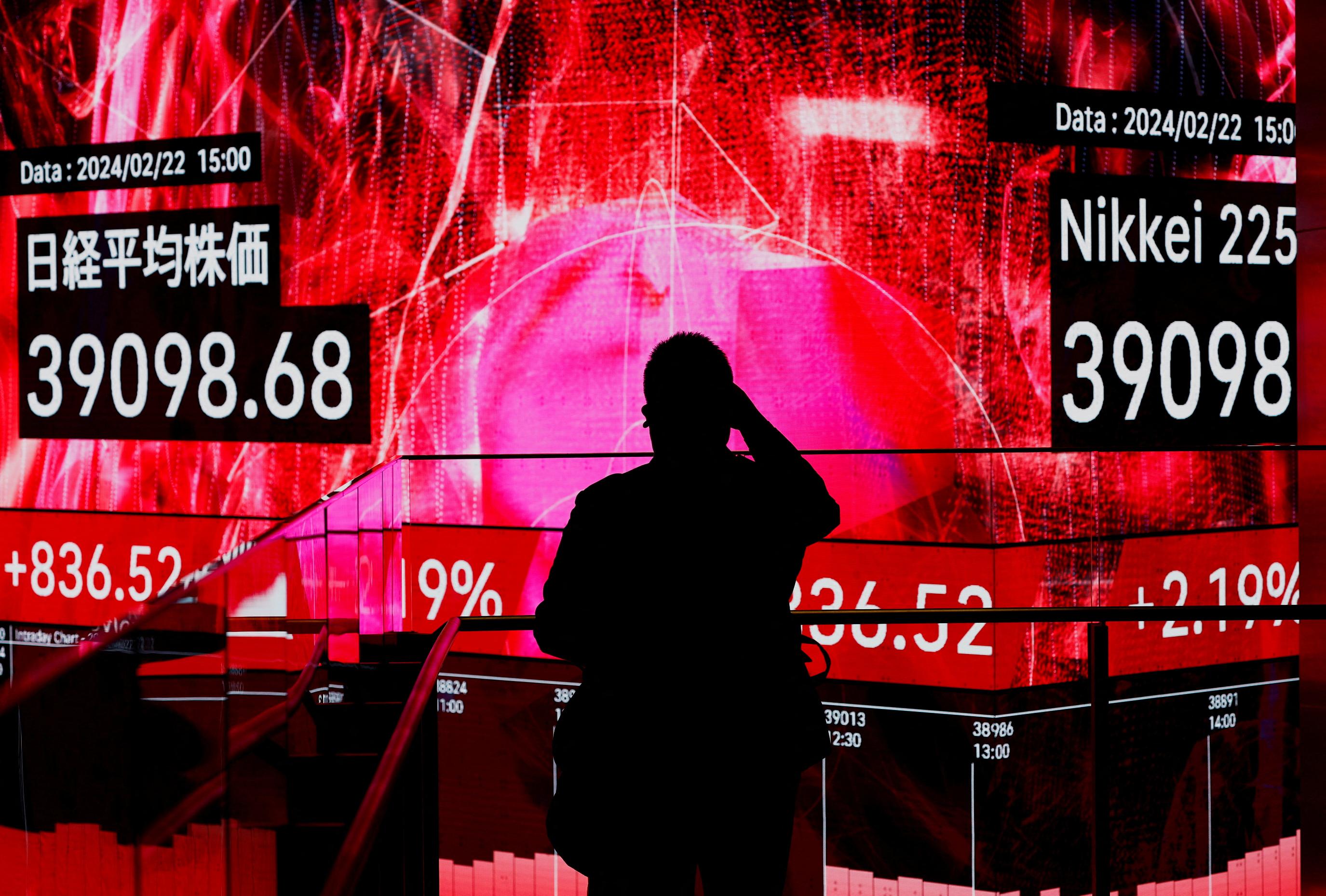
May 31 (Reuters) - A look at the day ahead in Asian markets. An Asian economic calendar on Friday overflowing with top-tier indicators awaits investors, who look set to close out the week and the month on a downbeat note as worries grow over the strength of the U.S. and global economies. Investors often cheer 'bad news' on the U.S. economy by bidding up risk assets on the view that the Fed will be forced to ease policy. Equally, 'good news' often drags stocks and bonds lower because rates may have to stay higher for longer. Investors' reaction to revised U.S. GDP figures on Thursday followed neither play book - bad news was bad news. Slower GDP growth in Q1 pushed stocks, the dollar and bond yields lower, and relatively dovish comments from New York Fed president John Williams failed to provide much comfort. The MSCI World, MSCI Asia ex-Japan, MSCI emerging market and Japan's Nikkei 225 indexes are all poised for their second weekly loss in a row. Rising bond yields, and now U.S. growth concerns, are taking their toll. And could the U.S. tech fairy tale be starting to fade too? Financial conditions certainly seem to be biting. According to Goldman Sachs, emerging market, Chinese and global financial conditions are the tightest in a month. Little wonder, perhaps, that investors are taking some chips off the table as the month end approaches. It may be month-end on Friday, but there will be no rest for Asian markets. Not if the economic calendar is anything to go by. China's official purchasing managers' index reports for May, a raft of top-tier indicators from Japan including retail sales, industrial production and Tokyo inflation, and first quarter GDP from India and Taiwan are all on tap. China's PMIs are expected to show that manufacturing activity in May grew at a similar pace to the previous month when it barely managed to stay expansionary, reinforcing the fragile nature of the recovery in the world's No.2 economy. China's economy blew past expectations to post growth of 5.3% in the first quarter, and a string of April indicators including factory output, trade and consumer prices suggest it has successfully navigated some near-term downside risks. But the crisis-hit property sector remains a major drag, deflationary pressures persist, and capital is just as liable to be flowing out of the country than in. Core inflation in Japan's capital, meanwhile, is expected to have picked up in May to 1.9% from a two-year low of 1.6% in April, and India's economy likely grew at a 6.5% rate in the January-March quarter - its slowest pace in a year - due to weak demand. Here are key developments that could provide more direction to markets on Friday: - China official PMIs (May) - Tokyo inflation (May) - India GDP (Q1) Sign up here. https://www.reuters.com/markets/asia/global-markets-view-asia-graphic-pix-2024-05-30/
2024-05-30 21:22
May 30 (Reuters) - U.S. energy firm Vistra (VST.N) New Tab, opens new tab on Thursday said it intends to add up to 2,000 megawatts of dispatchable, natural-gas-fueled power capacity in west, central, and north Texas to improve grid reliability. Vistra said the company intends to build up to 860 MW of advanced simple-cycle peaker plants, used for backup generation during peak demand hours, to be located in west Texas to support growing demand in the region, including from the oil and gas industry. The company would also re-power a retired coal plant as a gas-fueled one and upgrade existing gas plants to lift capacity. Texas has faced power shortages in recent weeks due to fast population and economic growth, which has left generators struggling to keep pace with the rapid increase in load. Vistra said it is planning to file a notice of intent to apply for the Texas Energy Fund for these new peakers on May 31. The Texas A&M University System had also offered land it owns to set up peaker plants earlier this week and has requested interested companies to submit proposals by June 21. Sign up here. https://www.reuters.com/business/energy/vistra-plans-add-up-2000-mw-gas-fueled-power-capacity-texas-2024-05-30/
2024-05-30 21:04
May 30 (Reuters) - Costco Wholesale (COST.O) New Tab, opens new tab beat third-quarter revenue expectations on Thursday, as cash-strapped consumers flocked to its warehouses to grab low-priced discretionary items and groceries. The membership-only retailer saw strong momentum for its fresh foods and bakery items including newly added products lemon blueberry loaf and morning buns, and chocolate chop cookie as consumers grappling with still-high cost of living preferred cooking more meals at home. "As inflation has leveled off, members are returning to purchasing more discretionary items, with growth led by toys, furnishing, lawn and garden supplies as well as health and beauty aids products," CFO Gary Millerchip said on a post-earnings call. Earlier this month, retail bellwether Walmart (WMT.N) New Tab, opens new tab beat quarterly estimates and forecast positive annual targets, supported by steady demand for cheaper groceries and expectations of a rebound in demand for non-essentials. Another larger peer Target (TGT.N) New Tab, opens new tab, however, reported a dour quarter on tepid consumer spending. Costco's total revenue was $58.52 billion for the quarter ended May 12, compared with analysts' average estimate of $58.07 billion, according to LSEG data. The company also posted a profit of $3.78 per share, above estimates of $3.70. "In a world where most retailers have suffered from some sort of volatility or pocket of softness, Costco is a rare beacon of consistency," said Scot Ciccarelli, analyst at Truist Securities. In the first quarter, visits to Costco Wholesale were up 8.9% on a year-over-year basis, while visits to Walmart and Target were up 3.9% and 3.5% respectively, as per Placer.ai New Tab, opens new tab data. Costco's total comparable sales rose 6.5% on an adjusted basis in the quarter, compared to a 3.5% rise last year. The company's ecommerce comparable sales rose 20.7%, led by gold and silver bullion, gift cards and appliances. Shares of the company were down 1.7% in after-market trading amid broader market declines. Sign up here. https://www.reuters.com/business/retail-consumer/costco-beats-quarterly-revenue-estimates-strong-grocery-demand-2024-05-30/


