2024-05-30 16:19
ORLANDO, Florida, May 30 (Reuters) - Japan solidified its status as the world's largest creditor last year as the country's net international investment position grew to a new all-time high as a share of gross domestic product. Should Japanese investors decide to repatriate a chunk or even a fraction of their overseas equity and bond investments, the impact on global asset prices, exchange rates - and the yen in particular - could be seismic. The key question, however, is: Why would they? To make it an attractive proposition, substantial policy tightening from the Bank of Japan would be required to sufficiently narrow the interest rate gap with the U.S. and other major economies. Ministry of Finance figures this week show that Japanese investors had no appetite to repatriate investments last year even as speculation over a BOJ exit from ultra-loose policy began to mount. As long as yields on foreign bonds remain significantly above equivalent Japanese yields, repatriation flows back into Japan are unlikely to materialize. "Japanese wealth is large and repatriation flows are powerful, but there is a second order question of whether there is appetite in the private sector to repatriate," says Shekhar Hari Kumar, macro strategist at Exante Data. "I think there will be a continued slow leak of Japanese investors buying foreign fixed-income assets. It's hard to see the outflow turning around any time soon." ALL IN BONDS The total value of financial assets and investments held by Japanese investors abroad at the end of last year exceeded the value of Japanese assets and investments held by foreigners to the tune of 471.3 trillion yen, MOF figures show. That's $3.36 trillion at Dec. 31 exchange rates and marks an increase of 51.3 trillion yen, or $366.5 billion, from a year earlier. It's also a record 84.3% of GDP, up sharply from 76.6% a year earlier and a reminder of Japan's muscle on the global financial stage. A deeper dive into the MOF figures reveals that the $366.5 billion net increase in Japan's paper wealth last year was enhanced by asset purchases, valuation changes and, more significantly, the weakness of the yen. Exchange rate moves boosted Japan's overall international investment position by 59.23 trillion yen, or $423 billion, and net asset buying in the broadest terms lifted it by $166.5 billion. These effects were offset by $223 billion of "other changes" such as mark-to-market changes in asset prices. Of the 86.1 trillion yen or $615 billion increase in the value of Japan's portfolio investments abroad last year, around 40% was due to exchange rate moves, almost a third a result of "other changes", and only 20% from actual asset purchases. The near $300 billion increase in Japanese holdings of foreign debt securities was evenly accounted for by actual buying and FX fluctuations, while the $320 billion increase in equity holdings was entirely a result of FX and "other" changes. That meant Japanese investors actually sold $16 billion of foreign stocks, which analysts say was probably to offset the rise in equity prices and meet rebalancing requirements. RIPPLE EFFECTS The figures underline just how much the yen's depreciation has increased profits for Japanese investors and financial institutions holding overseas investments, and the value of these holdings. The yen fell 7% against the dollar last year, 12% the year before that, and is down a further 10% so far this year to an all-time low 160.00 per dollar. The yen's broad effective exchange rate is the weakest it has been since the era of free-floating exchange rates was established in the early 1970s. Any Japanese investor holding overseas assets has benefited hugely in recent years from exchange rate trends, the widening interest rate gap between Japan and the rest of the world, and latterly, the AI-fueled boom on Wall Street. Exante Data's Hari Kumar estimates that 70% to 80% of the boost to Japan's international investment position over the last two years has come from the yen's depreciation and mark-to-market changes in asset prices. The exchange rate, in particular, has boosted Japan's paper wealth. As Deutsche Bank's George Saravelos noted recently, the government pension investment fund (GPIF) - the world's largest public pension fund - has roughly made more profit over the last two years than the last 20 years combined. "Exchange rate fluctuations and their valuation effects can also affect the lives of those who may not appear to be interested in FX investments," Hiroyuki Ito, professor of economics at Portland State University, wrote in a paper last year on the yen and Japan's international investment position. Some Japanese investors may be tempted to turn that paper profit overseas into realized profit at home. But with the yen still anchored at historic lows and Japanese yields still lagging well behind their global peers, their record wealth is likely to remain offshore. (The opinions expressed here are those of the author, a columnist for Reuters.) Sign up here. https://www.reuters.com/markets/asia/japan-keep-record-wealth-overseas-mcgeever-2024-05-30/

2024-05-30 12:52
NEW DELHI, May 30 (Reuters) - Animals collapsed, people jumped on water tankers with buckets amid shortages and government employees changed their work hours as blistering summer heat kept its grip on north India on Thursday. Although Thursday's readings were marginally lower in Delhi than the previous day when one area recorded an all-time high of 52.9 degree Celsius (127.22 Fahrenheit), the region still saw temperatures touching 47 C (116.6 F). Delhi, which has a population of 20 million, recorded its first heat-related death on Wednesday, with a 40-year old labourer dying of heatstroke, local media reported. Authorities said they are investigating if the 52.9 C reading in the Mungeshpur neighbourhood on Wednesday was caused by a sensor error at the local weather station. Television images showed people chasing water tankers or climbing on top of them in parts of the city to fill containers amidst an acute water shortage that the government blames on low levels in the Yamuna River - Delhi's primary source of water. Along the river's banks, women in shanties endured stifling conditions in their homes as their cooking stoves aggravated the sweltering weather. "The heat is worse this year. We work like this everyday so we get into the habit," said Seema, 19, who cooks for her family twice a day. In the neighbouring state of Uttar Pradesh, a policeman used CPR to revive a monkey that he said had fainted and fallen from a tree because of the heat, pumping its chest for 45 minutes, local media reported, and Delhi also saw cases of heatstroke among birds. As more people chose to order food and groceries by home delivery instead of venturing out in the heat, delivery personnel have been spending more time on their scooters and motorbikes, their employers said. "Order frequency has been higher during the afternoon when people are avoiding stepping out," said Ateef Shaikh, a delivery fleet manager at a Swiggy delivery app store in Mumbai. Zomato and its grocery delivery business, Blinkit, have taken additional measures to help delivery workers, including providing refreshments and comfortable clothing, their spokespersons said. Blinkit is installing air coolers in the waiting areas of all its stores, the spokesperson added. The extreme temperatures have also sparked more fires in several parts of the country, including in the northern state of Jammu and Kashmir, where authorities are using drones to monitor forest fires. The country, which is nearing the end of multi-phase national elections, is not alone in experiencing unusually high temperatures. Billions across Asia are grappling with the heat and in neighbouring Pakistan the temperature crossed 52 C (125.6 F)this week. Scientists say this trend has been worsened by human-driven climate change. India, the world's third-biggest greenhouse gas emitter, has long held that, as a developing nation, it should not be forced to cut its energy-related emissions but has set a target of becoming a net-zero emitter by 2070. Sign up here. https://www.reuters.com/world/india/indias-capital-sees-first-heat-related-death-this-year-media-reports-2024-05-30/

2024-05-30 12:42
MOSCOW, May 30 (Reuters) - U.S. plans to further curb operations of Russia's so-called "shadow fleet" of oil tankers are unacceptable, Russian Foreign Ministry spokesperson Maria Zakharova said on Thursday. The United States and its allies are weighing additional sanctions and could act further to increase Russia's cost of using a shadow fleet of tankers to evade a Group of Seven countries' cap on the Russian oil price. "We decisively condemn introduction of price caps, restrictions on oil sales, attempts to set up buyers' cartels and demands to lower the prices," Zakharova said during a weekly briefing. The fleet of ageing tankers has helped Moscow transport Russian cargoes as well as oil from Iran and Venezuela, countries also contending with Western sanctions. The G7 group of industrialised nations approved a price cap of $60 per barrel for Russian oil after Washington lobbied to curb the Kremlin's revenue amid the conflict with Ukraine while keeping Russian oil flowing to avoid an energy price spike. Sign up here. https://www.reuters.com/markets/commodities/us-moves-against-oil-tankers-unacceptable-russia-says-2024-05-30/
2024-05-30 12:39
NEW DELHI, May 30 (Reuters) - India's Tata Steel (TISC.NS) New Tab, opens new tab wants to accelerate efforts towards decarbonisation in Britain, its chief executive said on Thursday, in the backdrop of trade unions voting to strike against the company's plans to cut jobs. "We want to move fast and build the new electric arc furnace faster, so that's why, for us, the timelines are clear," Tata Steel CEO and Managing Director T. V. Narendran told Reuters in an interview. The company is in the process of closing its two blast furnaces in Britain, with a loss of up to 2,800 jobs at its Port Talbot steelworks in Wales. The British trade union community has voted for strike action against these job-cut plans. The union, which did not give a date for industrial action, said members have voted to demand a better deal for the workforce. "We will deal with it when it comes to that," Narendran said. Sign up here. https://www.reuters.com/markets/commodities/indias-tata-steel-ceo-says-want-move-fast-uk-decarbonisation-2024-05-30/

2024-05-30 12:38
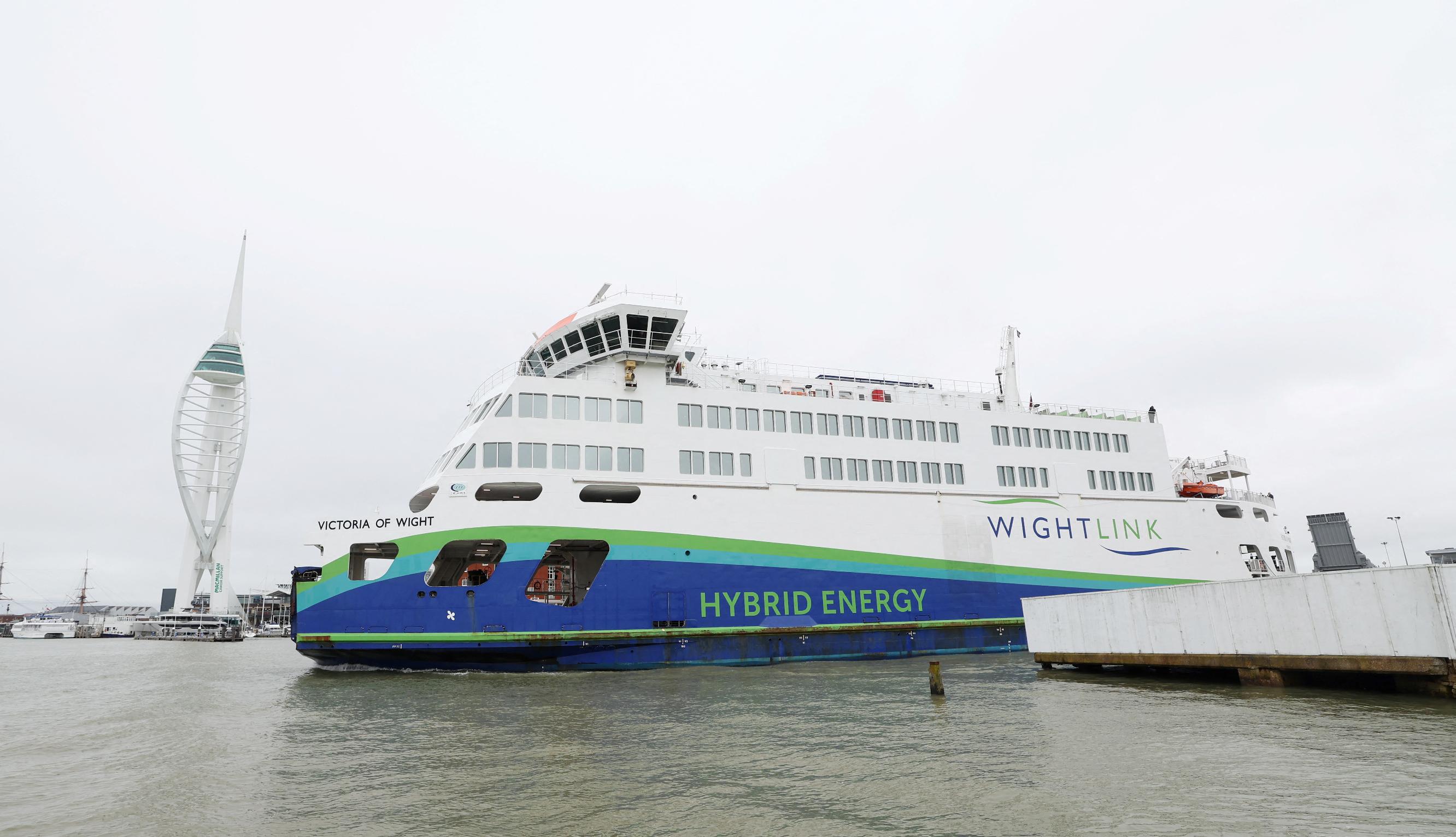
PORTSMOUTH, England, May 30 (Reuters) - British ferry operator Wightlink wants to order a $60 million, state-of-the-art electric ferry to make its crossings cleaner and greener. But it can't commission the vessel until it gets a power upgrade. The company carries 4 million islanders, holidaymakers and festival goers every year on a five nautical mile crossing between England's picturesque southern coast and the Isle of Wight. The strait, known as the Solent, is popular with yachts and leisure craft, while much of the coastline is protected. Wightlink has funding in place for a electric-powered car ferry that would reduce emissions both at sea and in port, following in the path of pioneer Norway, which introduced the world's first in 2015. The government has said decarbonising maritime transport is essential to achieving Britain's net zero target by 2050. Domestic maritime vessels represented around 5% of Britain's greenhouse gas emissions from transport in 2020, more than rail and buses combined, the government said in a 2022 report. And the long average lifespan of vessels means that greener ships must start being deployed by next year to achieve a green fleet by the 2050 deadline. But interviews with 22 people - including investors, power company employees, government officials, Wightlink staff and countryside campaigners - revealed that long waits for grid connections combined with planning obstacles are putting millions of pounds of green transport investment at risk. "We want to go electric. We think it's the right thing," Wightlink Chief Executive Keith Greenfield told Reuters onboard a hybrid ferry, which uses diesel to charge electric batteries, saving around 20% in emissions. "We're held back by a lack of shore power." Wightlink needs to order its next ship within 12-18 months to replace an ageing vessel, but cannot commit to go solely electric without a legally binding power contract, Greenfield said. Regional network operator Scottish & Southern Electricity Networks (SSEN) (SSE.L) New Tab, opens new tab told Wightlink two years ago that a new connection at its Portsmouth terminal would require infrastructure upgrades, including at a nearby substation on the national high-voltage network, according to a document reviewed by Reuters and ferry company executives. The substation improvements by National Grid were not scheduled to be completed until 2037. After Reuters interviewed Wightlink executives, SSEN said this month enough power may be available without the National Grid work, and it would hold new talks with the ferry company. If Wightlink accepts a new quote from SSEN, it will be able to guarantee the capacity and confirm its place in the connections queue. "We look forward to meeting them early next month to progress proposals," a SSEN spokesperson told Reuters, adding that there could be more network capacity available than previously forecast so the company had "potential to progress" with Wightlink's request. Britain will hold a general election on July 4 with polls predicting a victory for the opposition Labour party after 14 years of Conservative rule. Wightlink's dilemma underscores the challenge Britain's next government will face in delivering the renewable energy and grid infrastructure needed to power a shift to electric ferries, cars and domestic heating in Europe's second-largest economy. Britain was the first major economy to create a legally binding 2050 net zero target. It's a leader in offshore wind and it has halved emissions since 1990 after closing coal power plants. Central to the net zero target is a plan to decarbonise the electricity system by 2035. But the state adviser, the Climate Change Committee, said in a progress report in June 2023 that the government lacked a full strategy to get there. CHANGING DATES How to achieve net zero, and at what cost, has become a battleground both nationally and locally. Britons support the policy of net zero but they often baulk at the costs and infrastructure that may be required to get there, surveys show. Prime Minister Rishi Sunak scrapped some targets last year, saying he needed to retain public support in the face of "unacceptable costs". Labour has pledged to decarbonise the electricity grid by 2030, five years ahead of the Conservatives' target of 2035. Reforming grid connections is one part of its ambitious plan. To hit net zero, Britain needs to expand the high-voltage network in England and Wales carried overhead on large pylons, which then connect to regional distribution networks. The grid, owned and operated by London-listed National Grid Plc (NG.L) New Tab, opens new tab, was built to transmit power generated from coalfields in areas like Yorkshire and Nottinghamshire across the country. Today more electricity is coming from wind farms in Scotland and off Britain's east coast, and new infrastructure is needed to transmit it to London and the south. Currently wind farms are being paid to switch off in strong winds, when the grid cannot absorb all the generated power, data from the country's electricity system operator shows. The government has said reinforcements needed to increase capacity, including new substations, power lines or supergrid transformers, could take up to 13 years to complete, in part due to regulatory and planning approval. It wants to halve that time, and is working with the regulator, Ofgem, network operators and the industry to accelerate connections. National Grid said in May it would spend more than 30 billion pounds ($38 billion) on the grid over the next five years. "We're driving forward the biggest reforms to our electricity grid since the 1950s," the Department for Energy Security & Net Zero told Reuters. It set a target in November to cut the average delay faced by viable net zero-aligned projects like Wightlink for connections from around five years to six months, saying a faster system needed to be in place by 2025. INFRASTRUCTURE V CONSERVATION One issue that stands in the way of developing the grid and the renewable energy projects needed to power it are Britain's planning laws. Approval times have ballooned in recent years, as local councils struggle to process applications and rural communities bring legal challenges to oppose major works. The time it takes to secure consent for large-scale projects like wind farms has increased by 65% since 2012, stretching to 4.2 years, according to a government-requested report by the National Infrastructure Commission in 2023. The rate of schemes subject to lengthy judicial reviews has leapt to 58%, from a long-term average of 10%, it said. That pushes up project costs, threatening investment. Fiera Infrastructure, the Canadian co-owner of Wightlink, warned that investors can always spend their capital elsewhere. "Global investors are not yet at the point of turning their backs on UK infrastructure, but missteps around policy have eroded investor confidence," President Alina Osorio told Reuters. The sentiment was echoed by other infrastructure investors, including one of the biggest in Britain, which has backed a company building electric vehicle chargers at motorways. The fund manager, who asked not to be named, said a lack of new power had forced the company to adapt some of its projects. Minal Patel, a partner at Schroders Greencoat, a renewable investment manager, said strong investor demand for renewable assets showed Britain remained attractive, but slow grid connections were a challenge. CONNECTION For Wightlink, the hunt for a connection has been fraught. In 2022, SSEN quoted Wightlink 4.6 million pounds for 12MW connections to power the chargers it needs to install in Portsmouth and Fishbourne, according to documents seen by Reuters. The units must charge the electric ferry in the 20 minutes it has between sailings. Work could be completed in around 12 months in Fishbourne - one of Wightlink's terminals on the Isle of Wight - but there was no timeline given for the Portsmouth connection. Under the rules, a project like Wightlink's must accept a quote from the distribution network provider to secure a place in the connections queue. But Wightlink's Greenfield said it could not order a 50 million pound ferry without a guarantee of power. In the last week, SSEN said there could be enough capacity to deliver more than the power Wightlink initially wanted. Wightlink's Head of Engineering & Estates Charlie Field is hoping that a contract can finally be agreed. "A few weeks ago, all deals were off as far as we were concerned. We had to wait until 2037," said. "Now that might not be the case." ($1 = 0.7865 pounds) Sign up here. https://www.reuters.com/sustainability/climate-energy/britains-creaking-power-grid-leaves-green-energy-revolution-adrift-2024-05-30/
2024-05-30 12:16
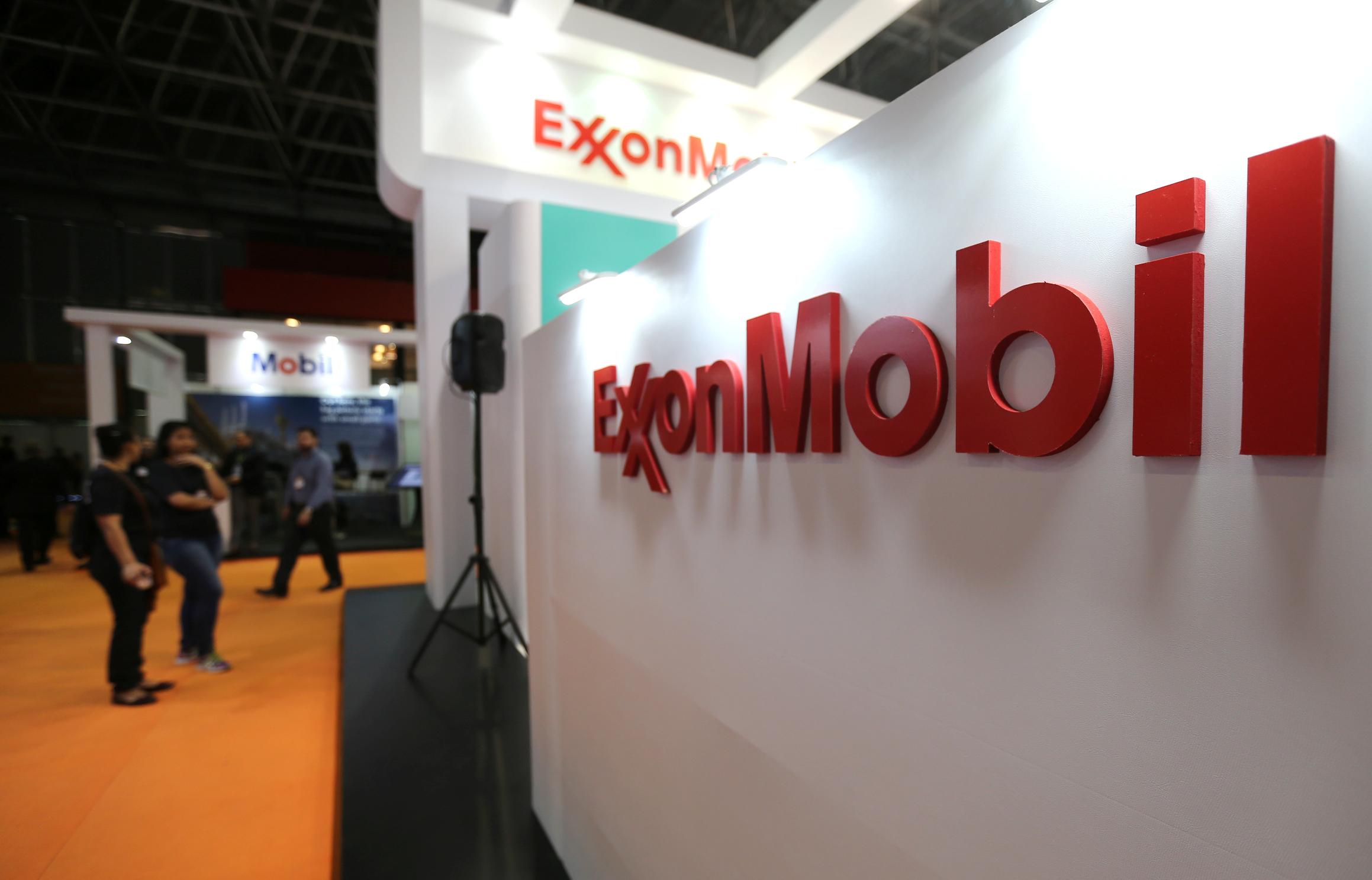
LAGOS, May 30 (Reuters) - ExxonMobil (XOM.N) New Tab, opens new tab is not renewing a 33-year-old lease on its expansive offices in Lagos's upscale Lekki district which expires on Friday, three sources inside the company told Reuters, as it looks to scale down operations in Nigeria. Exxon, Shell (SHEL.L) New Tab, opens new tab, TotalEnergies (TTEF.PA) New Tab, opens new tab and Eni (ENI.MI) New Tab, opens new tab have all sought to leave Nigeria's oil-rich Niger delta in recent years, citing security concerns, but such moves have been stalled by regulatory hurdles. ExxonMobil's plan to sell its land and shallow-water assets to local oil firm Seplat Energy (SEPLAT.LG) New Tab, opens new tab, agreed in 2022, is nearing close as the local oil sector regulator told Reuters that an agreement signed on Wednesday between Nigerian state oil firm NNPC and Exxon's local unit is a "precursor to regulatory approval". Yet Exxon's relocation to smaller offices and an absence of any new investments highlight how serious it is about scaling down its Nigerian operations, even as the country's government turns on the charm for multinational oil firms. Exxon is relocating staff from the 12-floor Mobil House, reportedly leased at the cost of $10 million annually, to a six-floor office building 22 kilometers away in the upscale Ikoyi area, built to accommodate half the personnel working at the former offices. "The new office leaves no one in doubt about its future plans for Nigeria," a staff member of the company told Reuters. Exxon did not immediately comment on its relocation plans. Having agreed on the disposal to Seplat Energy, ExxonMobil has said it will focus on its deepwater assets in Nigeria, through its local units Esso Exploration and Production Nigeria and Esso Exploration and Production Nigeria (Deepwater). Nigerian President Bola Tinubu, who took office last year, has made attracting investment a key priority and has directed that divestment deals be resolved as quickly as possible. Sign up here. https://www.reuters.com/business/energy/exxon-moves-smaller-offices-it-cuts-back-nigerian-operations-2024-05-30/