2024-05-29 06:36
CANBERRA, May 29 (Reuters) - Strikes have again delayed the start of cane processing at Australia's largest sugar producer and more delays are likely due to industrial action planned over the coming days in a battle over wage hikes, the company said. Wilmar Sugar and Renewables, owned by Singapore-based Wilmar International (WLIL.SI) New Tab, opens new tab, said workers would vote on its pay proposal on June 10, but a union representative said the offer was too low and would be rejected. Workers have already walked out for four 24-hour periods this month and they plan a range of work bans and stoppages extending into early June, a spokesperson for Wilmar said. "Industrial action has already impacted our 2024 sugar production season, with work stoppages over the past two weeks forcing us to further delay the start of production at a number of our factories," they said. The company has eight mills on Australia's east coast that run 24 hours a day during the cane processing season from June to November, producing over two million tons of raw sugar, more than half of Australia's total. Processing start dates would be delayed by between six and nine days at six mills and by two days at two mills, the spokesperson said. "These start dates may push back even further if planned industrial action proceeds," they said. Wilmar said it was offering a 14.25% wage increase over three-and-a-half years and a A$1,500 ($1,000) sign-on bonus. Workers are asking for 18% over three years, having initially asked for 25%, said Jim Wilson at the Australian Workers' Union. Workers reduced their request in an effort to reach a deal that would avoid disruption to the cane crush, growers and supply chains, Wilson said. "Wilmar has shown their willingness to sacrifice the whole community for their profits by rejecting our proposal," he said. "We will be voting down this deal once again, and Wilmar will be back at square one." Most of Australia's sugar production is exported. Sign up here. https://www.reuters.com/markets/commodities/strikes-further-delay-processing-australias-biggest-sugar-producer-2024-05-29/

2024-05-29 06:28
NEW DELHI, May 29 (Reuters) - Record heat seared parts of the Indian capital for a second day on Wednesday, reaching a temperature of 52.3 degrees Celsius (126.14 degrees Fahrenheit), while an unprecedented heat wave continued to parch some northwestern regions. The unusually high summer temperatures have brought "heat wave to severe heat wave" conditions over the last few days, weather officials said, but added they were likely to ease from Thursday over northwest and central India. Students fainted in the heat at a government school in the eastern state of Bihar, news agency ANI said, with video images showing a girl lying on a classroom bench as teachers sprinkled her face with water and fanned her with a book. "Electrolyte imbalance is causing fainting, vomiting, and dizziness," said Rajnikanth Kumar, a doctor at the hospital treating the students. Asia has sweltered in a hotter summer this year - a trend scientists say has been worsened by human-driven climate change. India declares a heat wave when the maximum temperature is 4.5 degrees C to 6.4 degrees C higher than usual and a severe heat wave when it is 6.5 degrees C higher than normal or more. Residents handed out free cold drinks in Delhi's Narela area on Wednesday, where temperatures had also ranged as high as 49.9 degrees C (122 degrees F) on Tuesday. Local government authorities have set curbs on water supply, citing a shortage, and imposed a fine of 2,000 rupees ($24) on those wasting water, such as by washing cars. The federally-appointed lieutenant governor called for water to be handed out at construction sites and measures to shade their workers from the heat, while urging paid time-off from noon to 3 p.m., when temperatures peak, media said. A city court declined to hear a consumer case against a telecom company, citing the lack of an air conditioner or cooler in the court, as well as washrooms with scarce water supply. "In these circumstances, arguments cannot be heard," the court's panel of three said in a May 21 order made public this week. Three deaths were blamed on heat stroke on Tuesday in Jaipur in India's western desert state of Rajasthan, media said, taking the toll to four in the city and at least 13 in the state. Rising temperatures prompted India's election body to make additional arrangements when Delhi voted in general elections last week, such as posting paramedics at polling stations. ($1=83.3221 Indian rupees) Sign up here. https://www.reuters.com/world/india/india-issues-heat-wave-alert-delhi-posts-record-high-temperature-2024-05-29/

2024-05-29 06:09
NEW YORK/LONDON, May 29 (Reuters) - A global equities gauge fell on Wednesday while U.S. Treasury yields rose after a third weak government debt auction in a row, and investors worried about higher interest rates while they waited for a key U.S. inflation report due on Friday. The dollar index gained as it was bolstered by higher bond yields across the board and the greenback rose to a four-week high against the Japanese yen. With Wall Street indexes losing ground after European stocks closed lower, MSCI's gauge of stocks in 47 countries (.MIWD00000PUS) New Tab, opens new tab fell 8.58 points, or 1.08%, to 783.87. The last time it had a bigger one-day percentage drop was April 30. "On the equity market side we're getting close to month-end" so people may be taking profit, said Charlie Ripley, senior investment strategist for Alliance Investment Management, also citing a weak 7-year U.S. Treasuries note auction following similar results for Tuesday's 2-year and 5-year note auctions. "With the seven-year auction selling notes at a higher rate than the pre-auction level, that's three auctions in a row where yields came in higher. Higher rates are less attractive from an equity valuation standpoint," said Ripley. He noted that investors focused on the Treasury auctions as they were waiting for key economic data releases. The U.S. Core Personal Consumption Expenditures (PCE) price index report - the Federal Reserve's preferred measure of inflation - is not due out until Friday and the May labor report is not due until a week later. In late afternoon, a U.S. Federal Reserve survey known as the Beige Book showed economic activity continued to expand from early April through mid-May but firms grew more downbeat about the future amid weakening consumer demand while inflation continued to increase at a modest pace. The Dow Jones Industrial Average (.DJI) New Tab, opens new tab closed down 411.32 points, or 1.06%, at 38,441.54, the S&P 500 (.SPX) New Tab, opens new tab finished off 39.09 points, or 0.74%, at 5,266.95 and the Nasdaq Composite (.IXIC) New Tab, opens new tab fell 99.30 points, or 0.58%, to close at 16,920.58. Earlier Europe's STOXX 600 (.STOXX) New Tab, opens new tab index closed down 1.08% for its biggest one-day percentage decline since mid-April, as bond yields rose on worries interest rates will stay elevated for longer globally with fresh evidence of persistently high inflation in the region's biggest economy exacerbating concerns. The U.S. 10-year Treasury yield hit a four-week high and was last up 7.2 basis points at 4.614%. The 2-year note yield, which typically moves in step with interest rate expectations, rose 1.8 basis points to 4.9747%. A closely watched part of the U.S. Treasury yield curve measuring the gap between yields on two- and 10-year Treasury notes , seen as an indicator of economic expectations, narrowed to negative 36.3 basis points. The seven-year yield rose to 4.64% from 4.56%. An auction on Wednesday of $44 billion in U.S. seven-year debt resulted in a high yield of 4.65%, above the expected rate. This raised concerns about demand for government debt after lackluster auctions of U.S. two-year and five-year notes on Tuesday. In currencies, the dollar index , which measures the greenback against a basket of currencies, gained 0.44% to 105.12, with the euro down 0.51% at $1.08. Against the Japanese yen , the dollar strengthened 0.34% to 157.69, after hitting its highest level since May 1. Oil prices eased on worries over weak U.S. gasoline demand and concerns the Fed will keep interest rates higher for longer. U.S. crude settled down 0.75% at $79.23 a barrel and Brent fell 0.74% at $83.60 per barrel. Spot gold lost 1.01% to $2,337.07 an ounce as a stronger dollar, higher bond yields and hawkish comments from a Fed official on Tuesday still weighed on sentiment. Sign up here. https://www.reuters.com/markets/global-markets-wrapup-1-2024-05-29/
2024-05-29 06:06
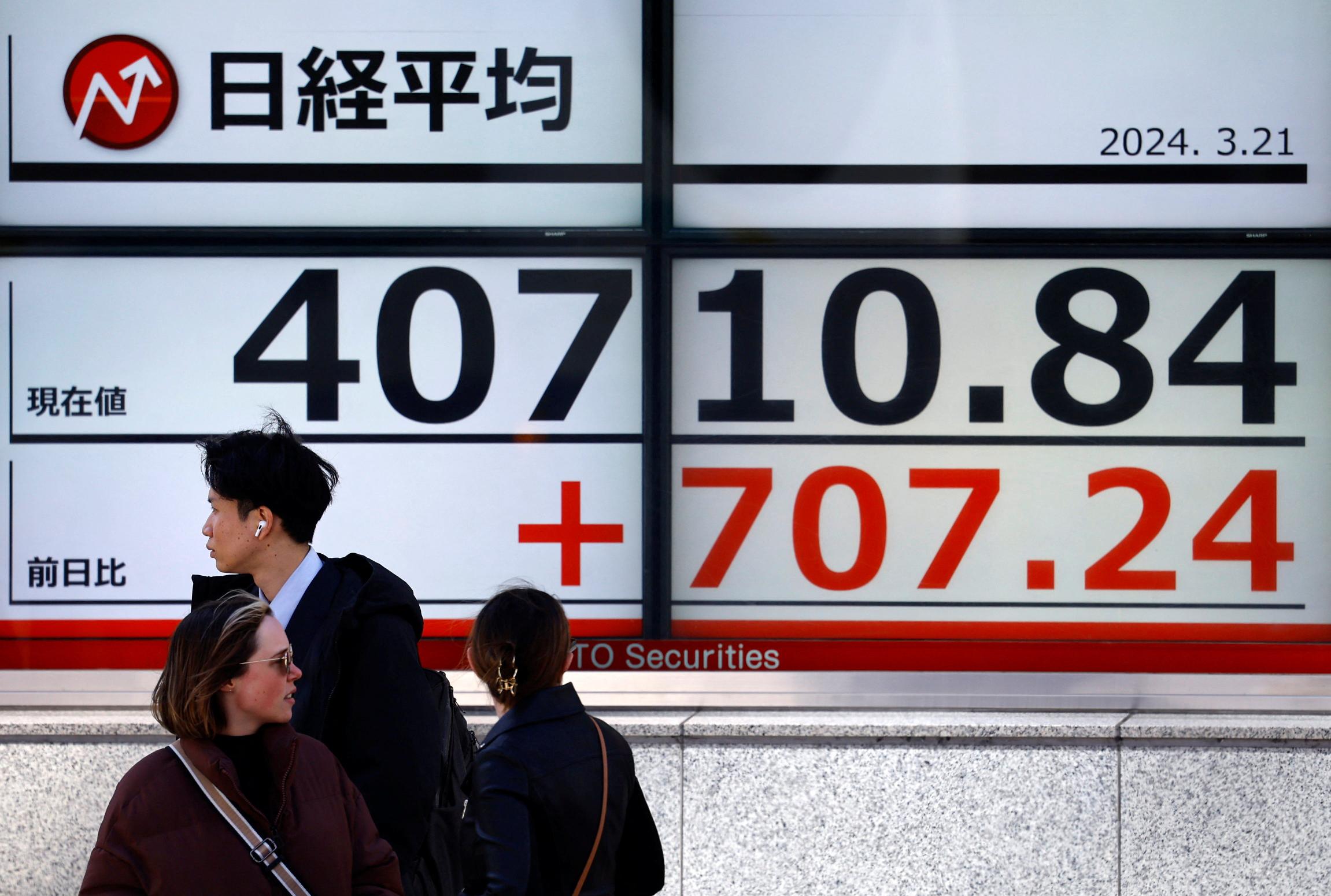
BERLIN, May 29 (Reuters) - German consumer sentiment improved for the fourth month in a row heading into June as the outlook brightened somewhat in Europe's biggest economy and income expectations rose, a survey showed on Wednesday. The consumer sentiment index rose by 3.1 points to -20.9 points heading into June from a revised -24.0 the month before. It was above expectations of analysts polled by Reuters for a -22.5 reading. An improved willingness to buy and less appetite to save boosted the index, published jointly by the GfK institute and the Nuremberg Institute for Market Decisions (NIM). "Falling inflation rates combined with respectable wage and salary increases are boosting consumers' purchasing power," said Rolf Buerkl, consumption expert at NIM. "Nevertheless, there still seems to be uncertainty among German consumers," he said, adding that they were lacking the clear economic prospects needed to invest in larger purchases. NOTE - The survey period was from May 2-13, 2024. The consumer climate indicator forecasts the progress of real private consumption in the following month. An indicator reading above zero signals year-on-year growth in private consumption. A value below zero indicates a drop compared with the same period a year earlier. According to GfK, a one-point change in the indicator corresponds to a year-on-year change of 0.1% in private consumption. The "willingness to buy" indicator represents the balance between positive and negative responses to the question: "Do you think now is a good time to buy major items?" The income expectations sub-index reflects expectations about the development of household finances in the coming 12 months. The additional business cycle expectations index reflects respondents' assessment of the general economic situation over the next 12 months. Sign up here. https://www.reuters.com/world/europe/german-consumer-sentiment-recovers-further-heading-into-june-2024-05-29/

2024-05-29 05:30
LONDON, May 29 (Reuters) - The growing shadow fleet of tankers transporting sanctioned Iranian, Venezuelan and Russian oil is filling up with the cheapest fuel available, hindering industry efforts to use cleaner fuel to cut shipping emissions, according to shipping data and sources. The global shipping industry is under increasing pressure to use cleaner fuel to reduce both carbon and sulphur dioxide emissions and other pollutants and meet broader green targets. Hundreds of tankers that are transporting sanctioned oil are posing a challenge since they are hard to track because of their opaque ownership and use of non-Western insurance and other marine services, and they have little incentive to follow cleaner shipping standards. "You're seeing greater numbers of ships that have found ways to circumvent sanctions by operating outside Western jurisdiction," said Michelle Wiese Bockmann, principal analyst with maritime data group Lloyd's List Intelligence. "The dark fleet has gone on steroids. And the deceptive shipping practices that they're engaging in are getting more and more complex and sophisticated." Those include dangerous ship-to-ship transfers of oil in international waters to avoid port state control scrutiny, falsifying ship identification numbers, tankers sending false information about their position, and the use of flag registries with lower standards of technical oversight and expertise, Bockmann said. Lloyd's List Intelligence estimates the shadow fleet had grown to around 630 tankers from 530 a year ago, to make up 14.5% of the overall global tanker fleet. Some industry estimates put the number even higher, at over 800 tankers. The numbers mark further rapid expansion following Moscow's invasion of Ukraine in 2022 and Western curbs on Russian energy exports, which has led to ships being hit with sanctions. Before the war, the shadow tanker fleet totalled around 280-300 vessels, according to Lloyd's List Intelligence. Such growth has raised concerns about its environmental impact as well as safety and the effectiveness of sanctions, including a Western ban on shipment and trading of Russian oil priced above a $60 per barrel limit. Under the so-called IMO 2020 convention adopted by the United Nations' International Maritime Organization (IMO), ships have to switch to low sulphur fuel from the higher sulphur fuel diesel the industry has used for decades. NO 'SCRUBBERS' Enforcement of these regulations designed to lower emissions is up to IMO member countries, which can levy fines or detain ships for non-compliance. In April, the IMO called on its members to increase inspections on vessels deemed to be shadow ships and toughen fines for any irregularities. The IMO rules say ships can only burn high sulphur fuel if they have exhaust gas cleaning systems, known as scrubbers. Shadow fleet tankers, however, can run on higher sulphur diesel - that is estimated to cost 20% less than the greener fuel - without checks unless they are stopped at ports enforcing the regulations, people familiar with the matter said. "A lot of shadow vessels have no scrubbers but they buy high sulphur fuel oil when they are in Russia," one industry source said. "So, they are breaching the IMO's sulphur limit." It is difficult to gauge the extent of non-compliance with IMO 2020 across the shadow fleet, but there has been a rise in cases of ships detained because of sulphur-related breaches. Port authorities in Europe and Asia detained at least 10 ships in the first five months of 2024 in connection with the convention, up from six in the same period last year and five for the whole of 2022, according to Reuters analysis based on data from port enforcement authorities. Of the 10 tankers detained, nine had made previous calls to Russia. RUSSIAN, IRANIAN FUEL SUPPLIES Russia and its partners in the Eurasian Economic Union, which includes Kazakhstan, Kyrgyzstan, Armenia and Belarus agreed in December they would continue using high sulphur fuel until the end of 2026. This means that ships can still get high sulphur fuel at ports servicing those countries, people involved in the fuel shipping trade say. Iran, another producer of high sulphur fuel, has supplied ships in the Middle East Gulf, the sources say. In one such operation, the Casinova tanker loaded such fuel at Iran’s Bandar Imam Khomeini port in recent months, said Claire Jungman, chief of staff at U.S. advocacy group United Against Nuclear Iran, which tracks Iran-related tanker traffic via satellite data. The Casinova later transferred some of the fuel onto smaller ships waiting around the Basra Anchorage in southern Iraq, Jungman said. The vessel's Liberia based owner Le Monde Marine Services could not be reached for comment. Casinova's ship insurer West P&I said it was in the process of cancelling the vessel's coverage after Reuters requested comment. Ship certifier ABS, which has provided safety cover for the Casinova, was investigating its activity, a spokesperson for the U.S.-headquartered company said. "ABS treats every allegation and the subject of sanctions very seriously," the spokesperson said. "We remain committed to compliance with U.S. and UN sanctions regimes and all other applicable laws." Sign up here. https://www.reuters.com/sustainability/boards-policy-regulation/growing-armada-shipping-sanctioned-oil-burns-dirty-fuel-setback-clean-up-efforts-2024-05-29/

2024-05-29 05:25
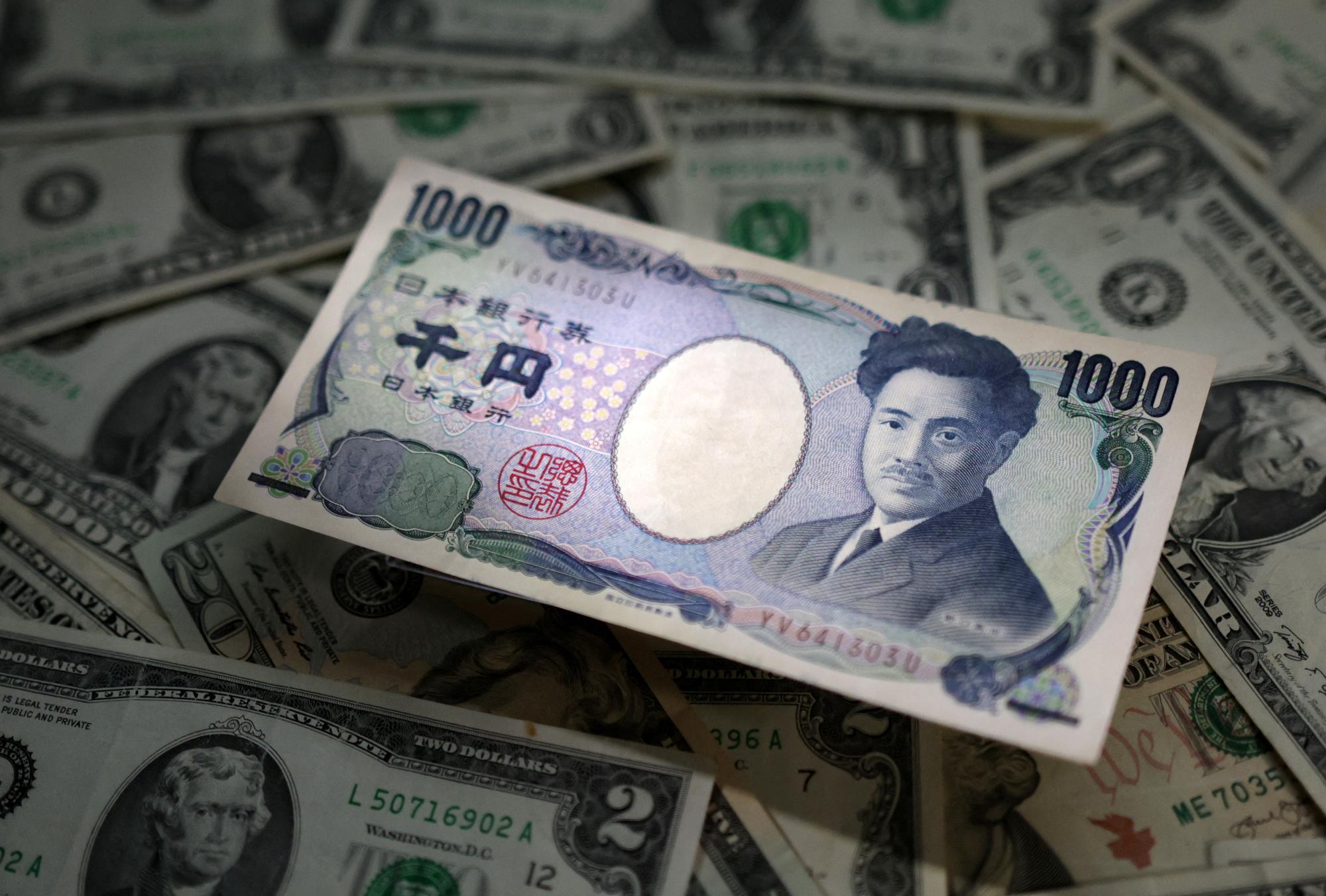
NEW YORK, May 29 (Reuters) - The dollar rose on Wednesday, boosted by higher U.S. bond yields ahead of key inflation data later in the week, and strengthened against the Japanese yen. The dollar reached as high as 157.715 yen on Wednesday, edging closer to levels that led to bouts of likely intervention from Tokyo at the end of April and early May. It was last at 157.665 yen, up 0.3% on the day. "I think it's just going to continue to be a grind higher for dollar/yen, all across yen pairs as well," said Brad Bechtel, global head of FX at Jefferies. "It's basically tiptoeing its way back towards that 160 level." Slightly softer U.S. consumer price inflation data this month weakened the dollar across the board. Since then, U.S. Treasury yields have resumed their climb, with the benchmark 10-year yield at its highest in almost four weeks at 4.57%. The main drivers were Tuesday's lackluster auction of two- and five-year notes that raised doubts about demand and data showing U.S. consumer confidence unexpectedly improved in May. The U.S. dollar index was last up 0.43% at 105.11. The U.S. core personal consumption expenditures (PCE) price index report - the Federal Reserve's preferred measure of inflation - will be released on Friday. Expectations are for it to hold steady on a monthly basis. Apart from the Japanese yen, most foreign currencies have rallied against the U.S. dollar since mid-April, said Marc Chandler, chief market strategist at Bannockburn Global Forex. "I'm thinking that that move is over and we should look for a dollar rebound." The Aussie dollar was down 0.47% at $0.6618 , even after Australian consumer price inflation unexpectedly rose to a five-month high in April, adding to risks that the next move in local interest rates might be up. Also in the mix for the yen was the carry trade, which involves borrowing in a low-yielding currency to invest in higher yielders. "The yen remains under considerable downward pressure with carry appetite elevated due to low FX volatility," Derek Halpenny, head of research global markets EMEA at MUFG, said in a note, citing elevated levels in euro/yen and sterling/yen. The euro dropped to a near two-year low on the pound of 84.84 pence, driven by strong German regional inflation data. It recovered after nationwide German data showed inflation rose slightly more than expected to 2.8% in May, though that is unlikely to change expectations for a European Central Bank rate cut next month. The common currency was last down 0.49% at $1.0804. The pound weakened to $1.2702 a day after hitting a two-month high. Sign up here. https://www.reuters.com/markets/currencies/dollar-steady-ahead-inflation-data-yen-wobbles-2024-05-29/