2024-05-28 01:56
TOKYO, May 28 (Reuters) - Japanese Finance Minister Shunichi Suzuki said on Tuesday he was concerned more about the negative aspects of the current weakness in the yen right now, reiterating Japan's warnings against excessive currency moves. "The weak yen boosts exporters' profits but also increases burdens on companies and consumers as it pushes up import prices," Suzuki told a parliament committee. "As our policy goal has been to achieve wage increases that exceed the rise in prices, we are concerned more about the negative impact of the yen's weakness at this point," he said. Suzuki also reiterated that Japanese authorities would continue to monitor the impact of the currency on the economy and households and would respond appropriately. The yen has languished near the 157 per dollar level and last stood at 156.80 per dollar in early Asia trading on Tuesday. Over the weekend, finance leaders of the Group of Seven (G7) advanced nations reaffirmed their commitment to warn against excessively volatile currency moves, language Japan sees as a green light to intervene in the market to arrest rapid falls in the yen. Sign up here. https://www.reuters.com/markets/currencies/japan-concerned-more-about-negative-aspects-weak-yen-finance-minister-says-2024-05-28/

2024-05-27 22:51
RIO DE JANEIRO, May 27 (Reuters) - Petrobras' new chief executive said a basin in Brazil's Equatorial Margin, an environmentally sensitive offshore prospect seen as the country's most promising frontier for oil exploration, was a matter of "national interest." Magda Chambriard, who took over as the state-controlled oil company's chief executive after President Luiz Inacio Lula da Silva fired its former CEO this month, said on Monday she wanted to escalate talks about the region near Guyana to the National Council of Energy Policy (CNPE), which advises the president. In her first public comments since taking the company's helm on Friday, Chambriard said replenishing oil reserves was a priority for Petrobras, and that exploring the Equatorial Margin was part of that effort. Petrobras has been waiting for about a year for Brazil's environmental agency Ibama to rule on an appeal made by the firm after the agency denied it the license to drill in the Equatorial Margin's Foz do Amazonas basin over concerns about the impact it could have on the environment and Indigenous peoples. It is about 175 km (109 miles) off the coast of the state of Amapa, in the Amazon region. The offshore basin is seen as a potential bonanza because it shares geology with nearby Guyana, where Exxon Mobil (XOM.N) New Tab, opens new tab is developing huge fields. Chambriard said discussions on whether or not to explore the promising new oil frontier should not be left to one single government body, without specifying whether she meant Ibama, the environment ministry or some other organization. "I think that every time we restrict a discussion to a single institution, and do not expand this discussion to national interests, we lose," Chambriard said. The discussion on whether or not to explore the region must be held taking into account the benefits it could bring to Brazilian society, she said. Chambriard noted that the president would be the one to sign off on any deliberation by the CNPE. "Every deliberation of the National Council of Energy Policy is signed by the president." Chambriard also said Petrobras would maintain its current pricing policies for gasoline and diesel sales, stressing that the company had to be profitable while also meeting shareholder needs. Chambriard said she intended to maintain the adjustments to the company's motor fuel pricing strategy made by the prior management team. Petrobras implemented last year a more market-based fuel pricing policy for gasoline and diesel sales to favor greater flexibility while avoiding drastic price swings. Chambriard, a former head of oil and gas regulator ANP, vowed to better insulate the company's fuel prices from international market volatility. Sign up here. https://www.reuters.com/business/energy/brazils-petrobras-keep-current-fuel-pricing-policy-ceo-2024-05-27/

2024-05-27 22:13
COLOMBO, May 27 (Reuters) - Sri Lanka's tea producers on Monday condemned a government order to increase wages by 70%, saying it would make their tea globally uncompetitive and reduce dollar earnings essential for the island nation to emerge from a financial crisis. The $1.3 billion industry produces popular Ceylon Tea and employs about 615,000 workers. The island annually exports about 95% of the 250 million kilos of tea it produces. The government has ordered worker salaries be increased to 1,700 rupees ($5.66) per day from 1,000 rupees, which the industry says will increase tea production costs by 45%. The fallout from Sri Lanka's protracted financial crisis, caused by a severe shortfall of foreign exchange in 2022, has also hit the tea industry, quadrupling fertiliser, fuel and power costs, the Planters' Association of Ceylon (PAoC) said. "This is unsustainable and unfair. This decision was made without proper consultation and will result in the quality of Sri Lanka's tea declining," PAoC spokesperson Roshan Rajadurai told reporters. "Sri Lanka's key rivals, India and Kenya, have lower prices and higher productivity." The industry must start paying the salary increase from next month, Sri Lanka's Labour Ministry said on Sunday, warning that plantation companies refusing to comply could be taken over by the government. Implementing the wage hike will cost plantation companies an additional 35 billion rupees, the association said. Plantation companies and worker unions have been negotiating for months to increase salaries, which unions contend is essential as Sri Lanka's financial crisis plunged around a quarter of the population into poverty in 2023. ($1 = 300.4000 Sri Lankan rupees) Sign up here. https://www.reuters.com/markets/asia/sri-lankas-tea-producers-warn-70-wage-hike-will-hit-industry-2024-05-27/

2024-05-27 20:43
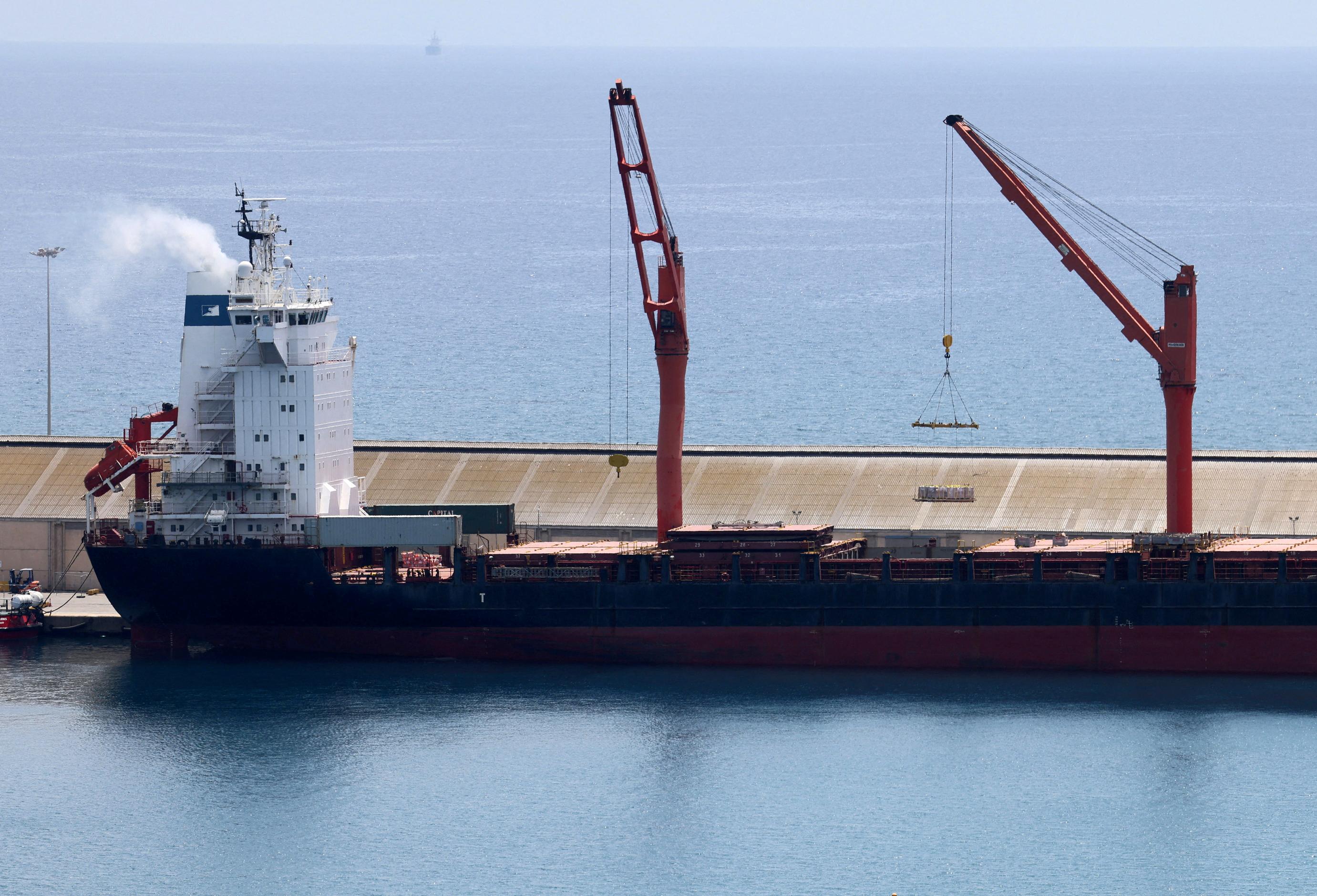
NICOSIA, May 27 (Reuters) - Cyprus has scrapped a 1.2 billion euro ($1.30 billion) concession agreement for the development of Larnaca port, in a legal wrangle that the state and the contractor traded blame for on Monday. Operator Kition Ocean Holdings held a long-term lease to develop and operate both a yachting marina and a commercial port in the southern port town. The Cypriot government said Kition were in breach of contract for failing to renew a letter of guarantee. The company countered, saying in a statement that the government's action coincided with separate legal proceedings Kition had initiated to seek implementation of the concession agreement. Larnaca is the staging post of a maritime shuttle of international aid into Gaza. The issue will not affect activity at the port, government officials said. Kition Ocean Holdings had failed to renew a letter of guarantee for the project which legal authorities considered a contractual breach, Transport Minister Alexis Vafeades said. "This effectively activates a process where the port and the marina... are reverting to the administration of the state," Vafeades said. Kition Ocean Holdings said the government's decision was in breach of the terms of its agreement with the state. "We applied to the court two months ago to force the Government to follow their own agreement and to meet and solve the disputes in line with the agreement. "The Government’s behaviour undermines the rule of law that should exist to protect investors," it said. ($1 = 0.9208 euro) Sign up here. https://www.reuters.com/world/middle-east/cyprus-scraps-13-billion-port-concession-legal-wrangle-2024-05-27/
2024-05-27 19:28
May 27 (Reuters) - (This May 27, 2024 story has been corrected to change the company description to a renewable energy company, and not a solar panel maker, in paragraph 1 and to renewable energy firms, not solar panel manufacturers, in paragraph 4) Spanish renewable energy company Solaria (SLRS.MC) , opens new tab said on Monday it expected energy prices to recover over the year, which would help the firm reach its 2024 profitability target. The company expects earnings before interest, taxes, depreciation and amortisation between 232 million and 251 million euros ($252 million-$272 million) this year compared to 200 million euros posted in 2023. Solaria shares rose as much as 6% before paring gains to trade around 5.2% higher at closing. Lower energy prices and higher interest rates are weighing on renewable energy firms' profits after they benefited from higher power prices in the last two years. Solaria, however, said it expected wind and hydro energy production to decrease, driving electricity prices higher in the course of the year. Victor Peiro, Head Of Equity Research at GVC Gaesco, however predicted more softness in the near-term after weak demand and high production of cheaper hydro power depressed prices in March. "April was the same, so the second quarter will also be weak," Peiro said. Despite lower prices, the solar panel maker reported a smaller than expected drop in first-quarter net profit thanks to higher revenues and the sale of some of its assets. Solaria's net profit fell 5% to 23.6 million euros in the quarter compared with a year ago, well ahead of analysts' average forecast of 10.7 million euros, according to LSEG data. Solaria booked 13 million euros from the sale of non-strategic assets in Spain and Portugal in the quarter. Renta 4 analysts said asset disposals had not been expected. Solaria sales rose 6% to 40 million euros in January-March as a 22% increase in electricity production to 406 gigawatt-hour helped offset weaker prices. The company said it will update its strategic plan in September. Alongside drugmaker Grifols (GRLS.MC) , opens new tab, Solaria has been the worst performing stock on the Spanish blue chip index (.IBEX) , opens new tab this year, down around 37%. ($1 = 0.9212 euros) Sign up here. https://www.reuters.com/business/energy/solaria-sees-higher-energy-prices-later-this-year-shares-rise-2024-05-27/

2024-05-27 19:17
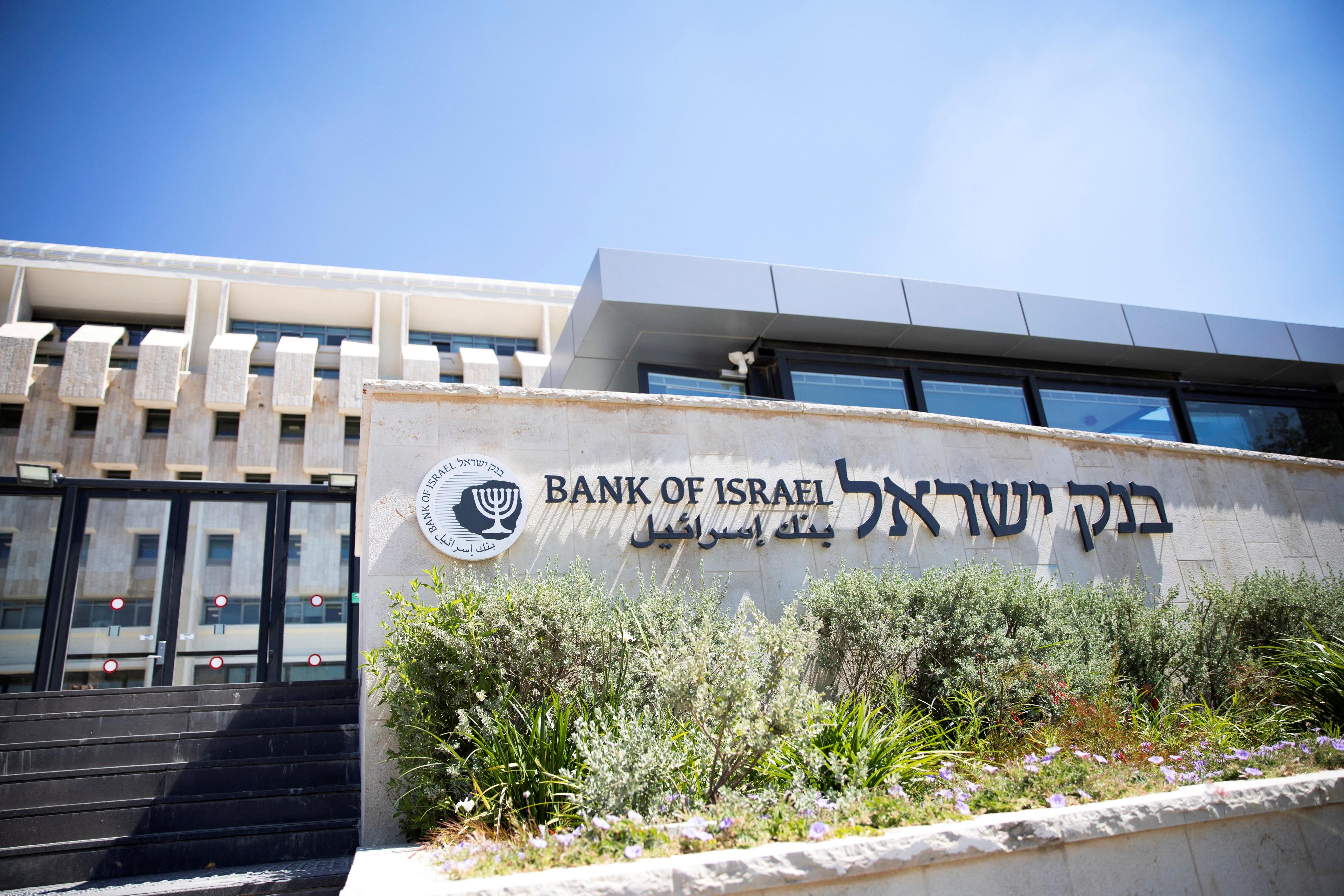
JERUSALEM, May 27 (Reuters) - The Bank of Israel held short-term interest rates steady on Monday for the third straight meeting, citing rising price pressures, a rebound in economic activity and continued geopolitical uncertainty resulting from Israel's war with Hamas in Gaza. The central bank kept its benchmark rate (ILINR=ECI) New Tab, opens new tab at 4.50%. It had lowered the rate by 25 basis points in January after inflation eased and economic growth was hit by the war, but kept policy steady in February and April. Governor Amir Yaron indicated it would be difficult to lower rates further as long as inflation pressures persist and the war remains uncertain and drives up government spending. "All these parameters are putting more of a burden on the process of interest rate normalisation because we are determined to not allow inflation to diverge," Yaron told Reuters. The rate cut process "is going to be very cautious and very measured." All 15 analysts polled by Reuters had expected no change in rates on Monday and many economists believe the rate could stay put for the rest of 2024. "There has been some increase in the inflation environment," the central bank said in a statement. "Inflation expectations... for the coming year increased, and are around the upper bound of the target range." It noted that economic activity and the labour market continue to recover gradually, while continued geopolitical uncertainty is reflected in the economy’s high risk premium. "In view of the war, the monetary (policy) committee’s policy is focusing on stabilizing the markets and reducing uncertainty, alongside price stability and supporting economic activity," the bank said. The shekel was flat versus the dollar at 3.675, having strengthened from 3.83 to the dollar a month ago due to expectations of a delay in the monetary easing cycle. The Bank of Israel reiterated that the interest rate path will be determined by future inflation, and continued stability in the financial markets, economic activity and fiscal policy. When the bank cut rates in January, policymakers had believed the easing cycle would be gradual and result in cuts of up to one percentage point in 2024, but inflation has remained stubborn. Morgan Stanley economist Alina Slyusarchuk said a 25 basis point rate cut could come in November with another 100 basis points in 2025. "The risks to our call are skewed to a delay, with the chance the cutting cycle would resume in 2025 only," she said. Israel's annual inflation rate rose to 2.8% in April, still within the bank's target range of 1-3%, after reaching 2.5% in February. Despite a rise in living costs and higher mortgage and other loan rates that make it tough for many households to make ends meet, the economy grew an annualised 14.1% in the first quarter from the prior three months after shrinking in the fourth quarter after the war broke out on Oct. 7. Sign up here. https://www.reuters.com/world/middle-east/bank-israel-holds-rates-higher-inflation-gaza-war-uncertainty-2024-05-27/