2024-05-27 16:56
DUBAI, May 27 (Reuters) - Yemen's Iran-backed Houthis said on Monday they launched attacks on three ships in the Indian Ocean and the Red Sea, and two U.S. destroyers in the Red Sea. The group, which describes its attacks as acts of solidarity with Palestinians in Israel's war in Gaza, said the ships were the Larego Desert and the MSC Mechela in the Indian Ocean, and the Minerva Lisa in the Red Sea. It did not name the destroyers. There was no immediate confirmation from shipping companies or the U.S. military of any attacks in those areas The Houthis' military spokesperson, Yahya Saree, did not specify when the attacks took place, but said in a televised speech the group had used missiles against the ships and drones against the U.S. destroyers. The group has launched repeated drone and missile strikes in the Red Sea region since November, later expanding to the Indian Ocean. It has said it will attack any ships sailing towards Israeli ports, even in the Mediterranean Sea. Its attacks have forced shippers to re-route cargo to longer and more expensive journeys around southern Africa and stoked fears of the Israel-Hamas war spreading and destabilising the Middle East. The United States and Britain have carried out strikes against Houthi targets in retaliation for their attacks on vessels. Sign up here. https://www.reuters.com/world/middle-east/yemens-houthis-say-they-attack-three-ships-two-us-destroyers-2024-05-27/

2024-05-27 12:18
DUBLIN, May 27 (Reuters) - The European Central Bank will cut interest rates at a slower or faster pace depending on the strength of underlying inflation and demand, ECB chief economist Philip Lane said on Monday. "The subsequent pace of rate cuts will be slower if there are upward surprises to underlying inflation (especially in relation to the underlying dynamics of domestic inflation and services inflation) and the level of demand (in view of the implications of demand conditions for the medium-term inflation outlook) and will be faster if there are downward surprises," Lane told an audience in Dublin. Sign up here. https://www.reuters.com/markets/europe/ecbs-lane-says-cuts-will-depend-underlying-inflation-demand-2024-05-27/

2024-05-27 11:40
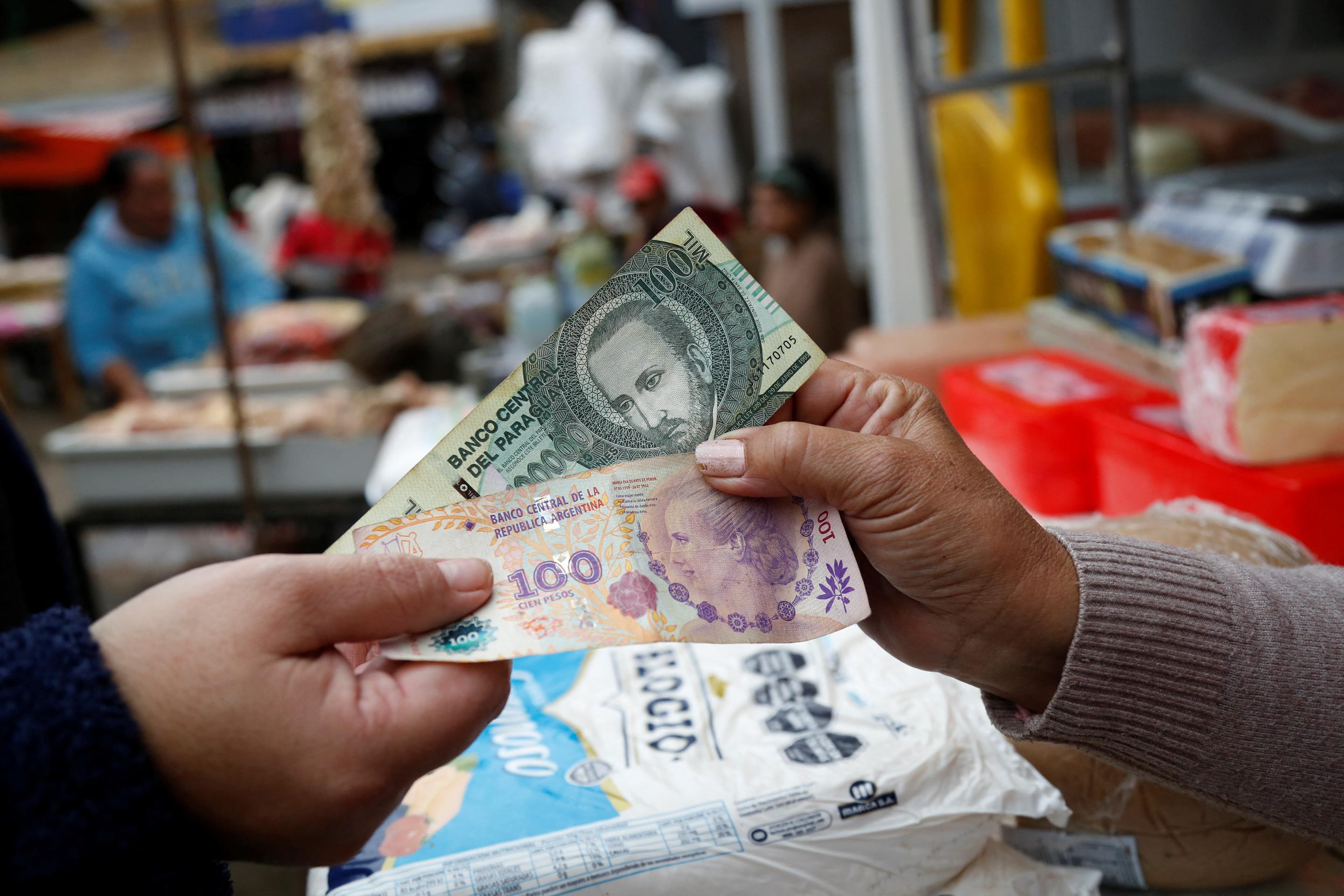
NANAWA, Paraguay, May 27 (Reuters) - Paraguayan shoppers used to flock in their droves to the border town of Nanawa to buy cheap imports from Argentina, where the weak peso currency for years kept relative prices low for fuel, medicine and groceries smuggled in across the frontier. Now Nanawa is a ghost town, with prices of the contraband pushed up steeply by Argentina's rare mix of near 300% inflation and a propped-up peso that has even rallied against the dollar in widely-used parallel markets under libertarian President Javier Milei. "Before, things worked very well, we sold everything," said Marta, 57, a pharmacy employee in Nanawa who only wanted to go by her first name. "Now there is nothing left. For two months we've been like this, the town is dead." Shopkeepers in Nanawa, 30 km (18 miles) from capital Asuncion, estimated to Reuters that sales had plunged between 60-80% since Milei took office in December when he sharply devalued the official peso currency and ushered in austerity. Since then the peso has been allowed to depreciate just 2% per month on a controlled 'crawling-peg', and monthly inflation - while slowing - has been some 10-20% each month. That's meant prices in dollar terms have soared. Something that cost 1,000 pesos on Jan. 1 would have been worth $1.24 at the official exchange rate that day. With 65% accumulated inflation though April, that same product would have cost 1,650 pesos, worth $1.88, on April 30, an over 50% rise. That's made Argentina far more expensive in relative terms, stoking claims by analysts that the peso is overvalued and calls for another devaluation. Meanwhile tourists and exporters have felt the pinch of less competitive local prices. "For Argentina this process is painful," said Economist Gimena Abreu, who analyses relative prices across on the Uruguay-Argentina border at the Catholic University of Uruguay, adding in the short-term exports and tourism would be hit. Data from her team shows the price gap between Uruguay and Argentina plunged from 180% in September before Milei took office to 50% in March as Argentine relative prices shot up. "In the short-term Argentine exports will become less competitive," Abreu said. Argentina's top exports include soy products, corn, wheat, beef, energy products and automobiles. BEEFED UP PRICES That's pushed up costs for regular Argentines, hitting consumption. A kilo of beef last September cost on average 2,846 pesos (some $3.70 at freely accessible parallel exchange rates then), official data show, much cheaper than a minimum of $7 in regional capitals like Montevideo and Santiago in Chile. The latest data in April shows the Argentine beef price at 6,505 pesos, nearly $7, largely erasing the cost advantage. "My relatively comfortable dollar income lifestyle has gone to the other extreme," said Buenos Aires resident Paige Nichols, 37, who moved to Argentina from the United States 17 years ago. "I now need to be very mindful of what I'm spending." Nichols told Reuters her monthly household expenditure had shot up by roughly 150% since the December devaluation, driven primarily by health insurance, utilities and groceries. Products like olive oil and toothpaste are becoming small luxuries. Reuters found on average a half liter bottle of olive oil cost $15 in Buenos Aires, with some brands priced as high as $26. Colgate toothpaste was 4,976 pesos or $5 for a single 90g tube, twice what retailers charge in Paraguay and Uruguay. Nichols, who works in the travel sector, said once cheap prices for tourists were getting in line with regional neighbors and even the United States. She said dining out in Buenos Aires was almost twice as expensive as a year ago. 'FEWER PEOPLE CROSSING OVER' Despite that, government data show that incoming tourist numbers were up in the first two months of the year, though there are signs of strain as prices rise, a potential risk to the $3.2 billion travelers brought into the economy last year. Between January and March 2024, arrivals from neighbor Uruguay - who spent $1.3 billion in Argentina last year - fell 25% versus a year ago, Uruguayan outbound tourism figures show. Border towns in Paraguay, Chile and elsewhere have seen lower local demand for Argentina imports, but others have cheered the shifting trend, which has also meant fewer locals making day trips to Argentina to look for bargains. "What I will say is I've heard of fewer people crossing over the bridge to Argentina to shop," said Uruguayan cafe owner Lilian who runs Helianthus Bistro in the border town of Fray Bentos, just across the Uruguay River from Argentina. "Things are getting more expensive there, so there are no longer lines of cars bumper to bumper crossing the bridge." Back in Nanawa, 36-year-old supermarket employee Raquel Alvarenga, said flourishing demand previously for cheaper Argentine imports meant the store had to expand outside its doors to deal with the number of customers. Now that was over. "It has been quite damaging. Sales have dropped by 50% and it's hitting trade... Argentine businesses raise their prices through the sky constantly. They change every day," she said. "Before we had to serve people outside because we couldn't fit everyone in the store. Now we have time to drink (local tea) terere." Sign up here. https://www.reuters.com/world/americas/argentinas-300-inflation-propped-up-peso-spawn-paraguay-border-ghost-town-2024-05-27/
2024-05-27 11:38
MUMBAI/NEW DELHI, May 27 (Reuters) - India is likely to receive above-average monsoon rains this year, the weather office said on Monday, retaining its April forecast and keeping alive the possibility of higher farm output and economic growth in Asia's third-biggest economy. This year's monsoon rains are expected to be 106% of the long-term average, Mrutyunjay Mohapatra, director-general of the India Meteorological Department (IMD) told a virtual news conference. The IMD defines average or normal rainfall as between 96% and 104% of a 50-year average of 87 cm (35 inches) for the four-month season beginning June. The monsoon, critical for India's nearly $3.5 trillion economy, delivers almost 70% of the rain needed to water crops and replenish reservoirs and aquifers. Nearly half of India's farmland, without any irrigation, depends on the June-September rains to grow a number of crops such as rice, corn, cotton, soybeans and sugar cane. Plentiful rains could lift farm output and wider economic growth, helping to bring down food price inflation, which has remained above the central bank's comfort level in recent months and prompted it to resist cutting lending rates. Mohapatra said the La Niña weather phenomenon, which increases rainfall in India, would set in during July and September, boosting rainfall across the country. India's rice and rubber growing states in the south, and soybean, pulse, cotton and sugar cane growing central states, are likely to receive above-average monsoon rains during the season, Mohapatra said. Key rice-growing states in the northeast could receive below-average rains, he said. Below-average rains in 2023 depleted reservoir levels and hit food production. The government responded by imposing curbs on exports of sugar, rice, onions, and wheat. Resuming exports depends on how quickly production recovers in 2024, which is not possible without good monsoon rainfall. India is the world's second-biggest producer of wheat, rice, and sugar, and the biggest importer of palm oil, soyoil, and sunflower oil. The monsoon is forecast to hit the Kerala coast in the southwest on May 31. India is likely to receive average rains in June, although maximum temperatures in the month are likely to remain above normal, Mohapatra said. The northwestern parts of the country could see heat wave conditions for four to six days in June, compared with the normal three heat wave days, he said. Sign up here. https://www.reuters.com/world/india/india-weather-office-retains-above-average-monsoon-rains-forecast-2024-05-27/

2024-05-27 10:15
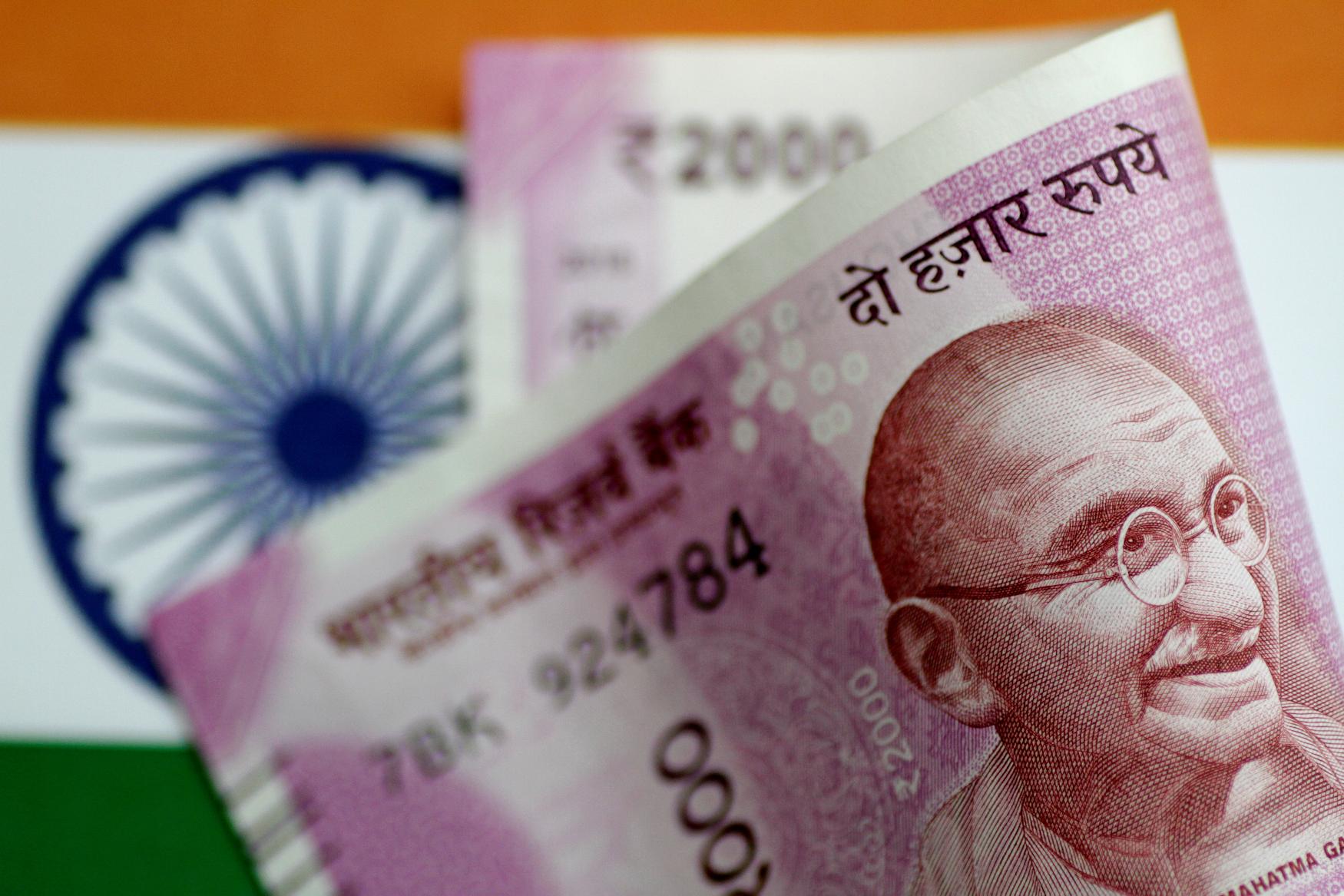
MUMBAI, May 27 (Reuters) - The Indian rupee closed slightly down on Monday, unable to build on recent gains as local dollar demand pressured the currency even as most of its Asian peers rose. The rupee ended at 83.13 against the U.S. dollar, against its close at 83.0975 in the previous session. The rupee had rallied to a two-month high of 83.0250 on Friday. The dollar index declined 0.1% to 104.6 extending its decline from Friday, while most Asian currencies rose between 0.1% to 0.4%. Trading volumes were relatively muted with the U.S. holiday "keeping the market steady", a foreign exchange trader at a private bank said. U.S. and U.K. markets were shut on Monday. Meanwhile, benchmark Indian equity indices BSE Sensex (.BSESN) New Tab, opens new tab and Nifty 50 (.NSEI) New Tab, opens new tab hit record highs but ended the session in the red. Foreign flows into Indian equities are likely to be a key driver for the rupee this week as investors position for the outcome of the country's national elections on June 4. Overseas investors have net sold $2.6 billion of Indian stocks so far in May, according to depository data. "Looking at Asian currencies and economic data out of U.S., USD/INR may again bounce back to 83.30-40 levels with RBI (Reserve Bank of India) also likely to intervene (to buy the pair) at lower levels," Abhilash Koikarra, head of forex and rates at Nuvama Professional Clients Group said. Meanwhile, dollar-rupee forward premiums declined with the 1-year implied yield down 2 basis points at 1.64% after investors pared expectations of rate cuts by the Federal Reserve. Investors are currently pricing in 34 basis points of rate cut over 2024, down from near 50 basis points of cuts expected earlier this month. Sign up here. https://www.reuters.com/markets/currencies/rupee-closes-mildly-weaker-forward-premiums-slip-2024-05-27/
2024-05-27 10:04
May 27 (Reuters) - Oil major BP (BP.L) New Tab, opens new tab and U.S. shale producer EOG Resources (EOG.N) New Tab, opens new tab are in discussions to jointly develop a natural gas field off the coast of Trinidad and Tobago, the British company said. The field holds just under 1 trillion cubic feet (tcf) of natural gas, but will eventually be tied back to another BP discovery, bringing the area to be developed closer to 1.5 tcf of gas, two people with knowledge of the project told Reuters. First gas is expected in late 2026 and is planned to feed Trinidad's flagship liquefied natural gas (LNG) project, Atlantic LNG, in which BP and Shell (SHEL.L) New Tab, opens new tab each have equity stakes of 45%. Trinidad and Tobago is Latin America's largest exporter of the superchilled gas and the world's second-largest exporter of methanol and ammonia. Output from Atlantic LNG represents a large part of BP's total LNG portfolio, but its operations have been hampered by declining natural gas production from aging fields. A spokesperson for BP's Trinidad and Tobago unit said the company is "in active negotiation with EOG Resources Trinidad for the formation of a joint venture" to develop BP's Coconut field. EOG would be the operator of the project, the people said, which is similar to an arrangement it has with BP for the Mento project, which is a tie-back to EOG's Pelican platform. EOG declined to comment on the proposed joint venture. BP's Trinidad and Tobago president, David Campbell, told Reuters in January that BP's future in Trinidad was in the deep water, where the firm believes it can make larger discoveries and where it is trying to develop with Woodside Energy (WDS.AX) New Tab, opens new tab the Calypso gas discovery. BP is working with EOG to progress regulatory approvals and reach commercial agreements, the company said of the Coconut joint venture. Sign up here. https://www.reuters.com/business/energy/bp-eog-resources-talks-jointly-develop-trinidad-gas-field-2024-05-27/