
2024-05-24 22:17
May 24 (Reuters) - Credit rating agency Moody's raised Saudi Arabia's local and foreign currency rating to 'Aa1' from 'Aa2' on Friday, citing increased predictability of the government's decision-making processes affecting the private sector. For the world's largest crude exporter, non-oil economic growth is a top priority and the government has accelerated policies to drive investment into tourism and expand the private sector. The change in rating reflects, "increased predictability of policies and decision-making processes affecting non-government issuers given institutional improvements," the ratings agency said in a statement. The "zero-notch gap" between rating for the foreign currency and the local currency is aided by the central bank's very large foreign-exchange reserve and reflects very low transfer and convertibility risks, Moody's added. It, however, attributed reliance on a single revenue source for both the private and the government sector and challenging regional geopolitical dynamics for the "three-notch gap" between the local-currency rating and the 'A1' sovereign rating. Fellow rating agency S&P Global in March affirmed Saudi Arabia's sovereign rating and outlook betting on social and economic reforms to improve the country's prospects. Sign up here. https://www.reuters.com/markets/currencies/moodys-raises-saudi-arabias-local-foreign-currency-rating-aa1-2024-05-24/

2024-05-24 21:46
WASHINGTON, May 24 (Reuters) - The U.S. Trade Representative's (USTR) office on Friday announced a further extension of all China Section 301 tariff exclusions on 352 Chinese import and 77 pandemic-related categories through June 14, and said some would be extended through May 31, 2025. WHY IT'S IMPORTANT The administration of former President Donald Trump used Section 301 of the Trade Act of 1974, a statute aimed at combating trade partners' unfair practices, to launch the China tariffs in 2018 and 2019. Friday's action means certain goods will maintain exclusions from import tariffs, including animal-feeding machinery, DC electric motors, blood pressure monitors, and thermostats designed for air conditioning or heating systems not connected to the internet. WHAT'S NEXT The exclusions were previously scheduled to expire May 31, but USTR said it was extending the exclusions through June 14 to allow for a transition. It said certain exclusions would be extended through May 31, 2025 to support efforts to shift sourcing out of China, or provide additional time in cases where availability of the product outside of China remains limited. But many will once again face tariffs, USTR said, including 102 categories where no public comments requested further extension, or where there was no evidence that further extension would aid efforts to shift sourcing out of China. Those product categories include garage-door openers, switches used in motor vehicles, printed circuit board assemblies, electric motorcycles, natural graphite and an array of duffel and messenger bags. CONTEXT U.S. President Joe Biden has retained additional tariffs placed on a plethora of Chinese exports under the Trump administration and added new restrictions prohibiting the export of advanced semiconductors and the equipment to make them, citing security concerns. Earlier this month, Biden announced plans to increase tariffs on an array of Chinese imports, including electric vehicles as part of a broader push to support domestic manufacturing. Trump imposed tariffs in 2018 and 2019 on thousands of imports from China valued at some $370 billion at the time, after a Section 301 investigation found that China was misappropriating U.S. intellectual property and coercing U.S. companies to transfer sensitive technology to do business. China has called U.S. 301 tariffs on Chinese imports "discriminatory." Tariffs are one component of strains in U.S.-China relations of late. Other contentious issues include Taiwan, spying allegations, human rights and the origins of the pandemic. Sign up here. https://www.reuters.com/business/ustr-extends-some-chinese-tariff-exclusions-many-fall-away-2024-05-24/
2024-05-24 21:27
May 24 (Reuters) - The U.S. has imposed import curbs on certain poultry and byproducts from Victoria, Australia after determining highly pathogenic avian influenza, or bird flu, in domestic birds. The Department of Agriculture's Animal and Plant Health Inspection Service said on Friday the restrictions from May 22 will continue until further notice. Unprocessed avian products and byproducts originating from or transiting the State of Victoria will not be permitted to enter the United States, the U.S. department said. Imports of poultry, commercial birds, ratites and hatching eggs have also been prohibited. Pet and zoo birds may be imported under an import permit, subject to a 30-day quarantine. Australia earlier this week reported its first human case of avian influenza in a child who authorities said had been infected in India but made a full recovery, while a different highly contagious strain was found on an egg farm. The avian influenza has spread to humans and other mammal species, including among U.S. dairy cattle in March, raising concerns of it mutating into a virus that is transmissible between humans and sparking a pandemic. However, the U.S. Center for Disease Control and Prevention has said the risk to the general public remains low. Since 2022, bird flu in the U.S. has infected more than 90 million chickens, 9,000 wild birds, 52 dairy herds and three people. Colombia in April became the first country to restrict the import of beef and its products from U.S. states where dairy cows tested positive for bird flu, a sign of a broadening economic impact of the virus. The Australian state of Victoria was the site of an H7N7 outbreak in 2020, the most recent of the country's nine outbreaks of bird flu since 1976. All were quickly reined in and stamped out, according to Australia's government. Sign up here. https://www.reuters.com/world/us/us-restricts-import-certain-poultry-australia-state-bird-flu-concerns-2024-05-24/

2024-05-24 20:54
MEXICO CITY, May 24 (Reuters) - Mexican state energy company Pemex had its crude oil production hit because it keeps accumulating debt with its service providers, two sources said, a situation that has forced it to publicly reiterate twice this week that the debts would be paid. While Pemex has not published its latest figures for crude oil and condensate output, data from the hydrocarbon regulator showed earlier this week that production for both fell 6% year-on-year in April to 1.75 million barrels per day (bpd). Crude oil production alone was 1.47 million bpd, the lowest output for the company in 45 years. One of the sources said that Pemex not paying its service providers was one of the main reasons that affected output over the past couple of months, followed by an accident on an offshore platform in April. Pemex never gave details of the accident although Reuters reported an initial decline of 20,000 bpd. In its latest debt report, Pemex listed pending payments worth about $8.82 billion as of the end of April. The number does not include taxes, amounts in still litigation or those in settlement talks. In its first-quarter results, Pemex had listed $21.9 billion in pending payments. It later reported that it had paid $6 billion in the meantime. None of these numbers include the $101.5 billion financial debt, which is largely held in the form of bonds. One of the sources said that as a result of not getting paid for their services, some companies stopped working for Pemex either partially or completely. The source did not disclose names. It was also not clear which companies Pemex owed the most. Pemex did not respond to a request for comment. In public documents it has listed Dowell Schlumberger (SLB.N) New Tab, opens new tab, Halliburton (HAL.N) New Tab, opens new tab, Baker Hughes (BKR.O) New Tab, opens new tab, Weatherford (WFRD.O) New Tab, opens new tab and Sinopec as some of the hundreds of companies it owes. While the second source confirmed this, they added that some payments would be scheduled and once companies receive them they would return to work and production would pick up in May. Earlier this year, several industry groups representing service providers as well as private producers sounded alarm that production, investment and in some cases even the survival of companies were at risk. Pemex had resumed some payments in February, favoring larger companies at the expense of others. Late on Wednesday, Pemex issued a statement pledging to pay its debts and highlighting that it had been paying between 39 billion pesos ($2.34 billion) and 70 billion pesos per month since the start of the year. On Thursday, Pemex doubled down with another statement in which it pledged to pay 70 billion pesos in May. Mexico holds a general election on June 2, and President Andres Manuel Lopez Obrador has been keen to show that his policies have helped the ailing state company over almost six years in office, and that his successor would continue to do so. Claudia Sheinbaum, the candidate from Lopez Obrador's ruling National Regeneration Movement, has been leading most polls by a substantial margin. Under Lopez Obrador, Pemex received financial lifelines in the form of cash injections and tax cuts of about $90 billion. ($1 = 16.6891 Mexican pesos) Sign up here. https://www.reuters.com/business/energy/pemex-production-hurt-by-late-payments-suppliers-sources-say-2024-05-24/
2024-05-24 19:03
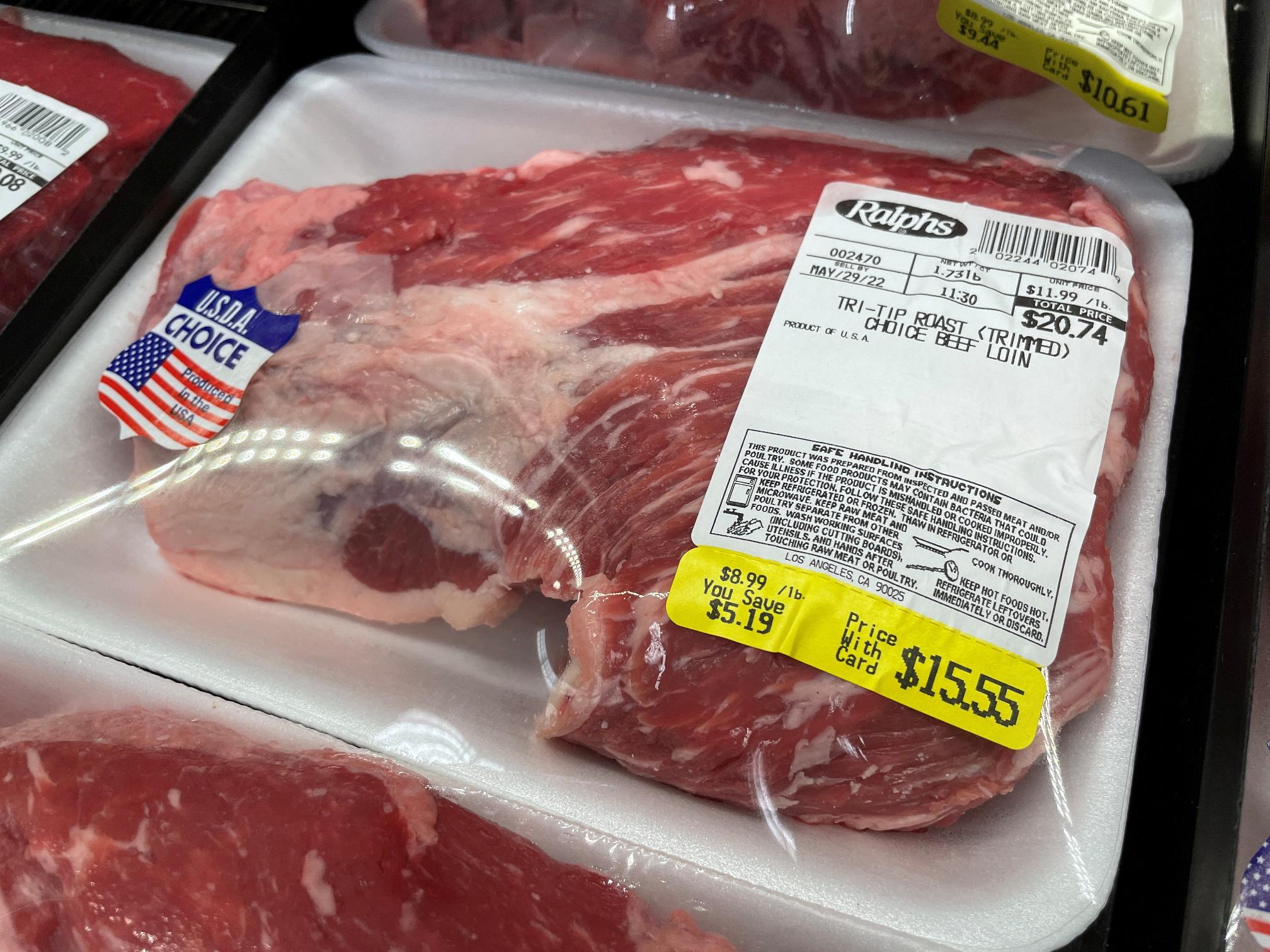
May 24 (Reuters) - Bird flu virus particles were found in tissue samples taken from one dairy cow sent to slaughter at a U.S. meat processing plant, but none were detected in samples from 95 other cattle, the U.S. Department of Agriculture (USDA) said on Friday. Meat from the animals was prevented from entering the nation's food supply, USDA said. Agriculture and health officials have scaled up testing of meat and dairy products and livestock, as an outbreak of bird flu has expanded in dairy cattle. Two U.S. dairy workers have tested positive for bird flu since the virus was first detected in cattle in late March. Older dairy cows are often processed for hamburger meat. USDA's testing results come at the start of peak U.S. grilling season around the U.S. Memorial Day weekend. To date, USDA said it has completed testing on beef tissue from 96 of 109 muscle samples that were collected as part of a meat safety study. The agency said it collected tissue samples at slaughter facilities from dairy cattle that were condemned for systemic diseases and then analyzed them using PCR testing. The testing does not differentiate between live virus or fragments, USDA said. The U.S. Food and Drug Administration previously said it found viral particles in pasteurized milk samples from retail stores, but they did not contain live virus. The FDA has warned against consuming raw unpasteurized milk. USDA personnel identified signs of illness in the positive cow during a routine post-mortem inspection and prevented its meat from entering the food supply, according to USDA. "These actions provide further confidence that the food safety system we have in place is working," the agency said. USDA has confirmed bird flu in 58 dairy herds across nine states. It previously reported that no viral particles were found in samples of ground beef collected at retail stores, and that no bird flu virus was found after cooking ground beef to medium to well done, after it was injected with a virus surrogate as part of an experiment. Sign up here. https://www.reuters.com/world/us/bird-flu-detected-tissue-samples-us-dairy-cow-sent-slaughter-usda-says-2024-05-24/
2024-05-24 18:51
May 24 (Reuters) - U.S. political independents, who typically occupy the center ground in a closely watched monthly survey of overall consumer attitudes about the economy, have drifted closer this year to the dour views held by Republicans, a potential warning sign for Democrats hoping to hold onto the White House in the Nov. 5 presidential election. In another indication of the difficulty President Joe Biden faces with voters on the economy - consistently ranked as the U.S. electorate's top concern ahead of the election - the University of Michigan's monthly consumer sentiment survey fell to a six-month low in May. Assessments of the current situation were the lowest in a year and household expectations were the weakest since December. The breakdown by party not surprisingly shows Democrats - in control of the White House since January 2021 - notably more optimistic than Republicans, a partisan divide that has been routine since the survey began asking for respondents' political affiliations each month beginning at the start of Republican Donald Trump's presidency in 2017. When Trump was in office, it was Republicans who were persistently more optimistic. Political independents, seen as a critical swing voting block who may well determine the winner in November, have typically hewed closely to the survey's overall score - until this year. Sentiment among independents more often than not registers as slightly less optimistic about the economy regardless of which party is in power, but since January it has swung materially below the overall survey reading. On both an absolute and percentage basis, the downside deviation in May - 6.6 index points or 9.6%, respectively - was the largest since the monthly readings have been published. Since January, independents have registered an average reading 5.1 points, or 6.7%, below the overall Consumer Sentiment Index compared with an average downside gap of 1.6 points, or 2.2%, since February 2017, when monthly readings began. In fact, readings from independents in five of the last six months have been more than one standard deviation below the series average, indicating the gap is both materially outside the norm and persistent. Readings from two of the last three months have been more than two standard deviations below average. A Reuters/IPSOS poll published on Tuesday showed Biden's overall approval rating this month fell to 36%, the lowest level in about two years. The economy was picked by 23% of respondents as the most important problem facing the country, making it voters' top concern. Forty percent of respondents said Trump had better policies on the economy versus 30% who picked Biden, while the rest said they didn't know or didn't answer the question. Sign up here. https://www.reuters.com/world/us/us-political-independents-drift-closer-republicans-sour-view-economy-2024-05-24/


