2024-05-23 12:52
KUALA LUMPUR, May 23 (Reuters) - Malaysia's scandal-hit state fund 1Malaysia Development Berhad (1MDB) has filed a lawsuit against a top PetroSaudi International executive seeking the return of $1.83 billion invested in a joint venture, state news agency Bernama reported on Thursday. The fund entered what would ultimately become a failed joint venture with PetroSaudi to develop oil fields in 2009. In a May 7 court filing to the Kuala Lumpur High Court, 1MDB alleged that PetroSaudi Chief Investment Officer Patrick Mahony aided several individuals, including former Malaysian Prime Minister Najib Razak and fugitive financier Jho Low, to misappropriate its funds. 1MDB also named UK-based law firm White & Case LLP as a defendant in the suit, claiming that it acted on Mahony's instructions to prepare purchase and loan agreements on behalf of PetroSaudi to deceive 1MDB, Bernama reported. Reuters was unable to reach Mahony for comment. White & Case did not immediately respond to a request for comment. The state fund is seeking for Mahony and White & Case to repay the $1.83 billion to it, among other damages. Lim Chee Wee Partnership, the Malaysian law firm representing 1MDB, confirmed the filing to Reuters. Malaysian and U.S. investigators estimate $4.5 billion was siphoned away New Tab, opens new tab from 1MDB following its inception in 2009, implicating Najib Razak, Goldman Sachs (GS.N) New Tab, opens new tab staff and high-level officials elsewhere. Sign up here. https://www.reuters.com/markets/commodities/malaysias-state-fund-1mdb-sues-petrosaudi-executive-seeking-183-bln-2024-05-23/

2024-05-23 12:34
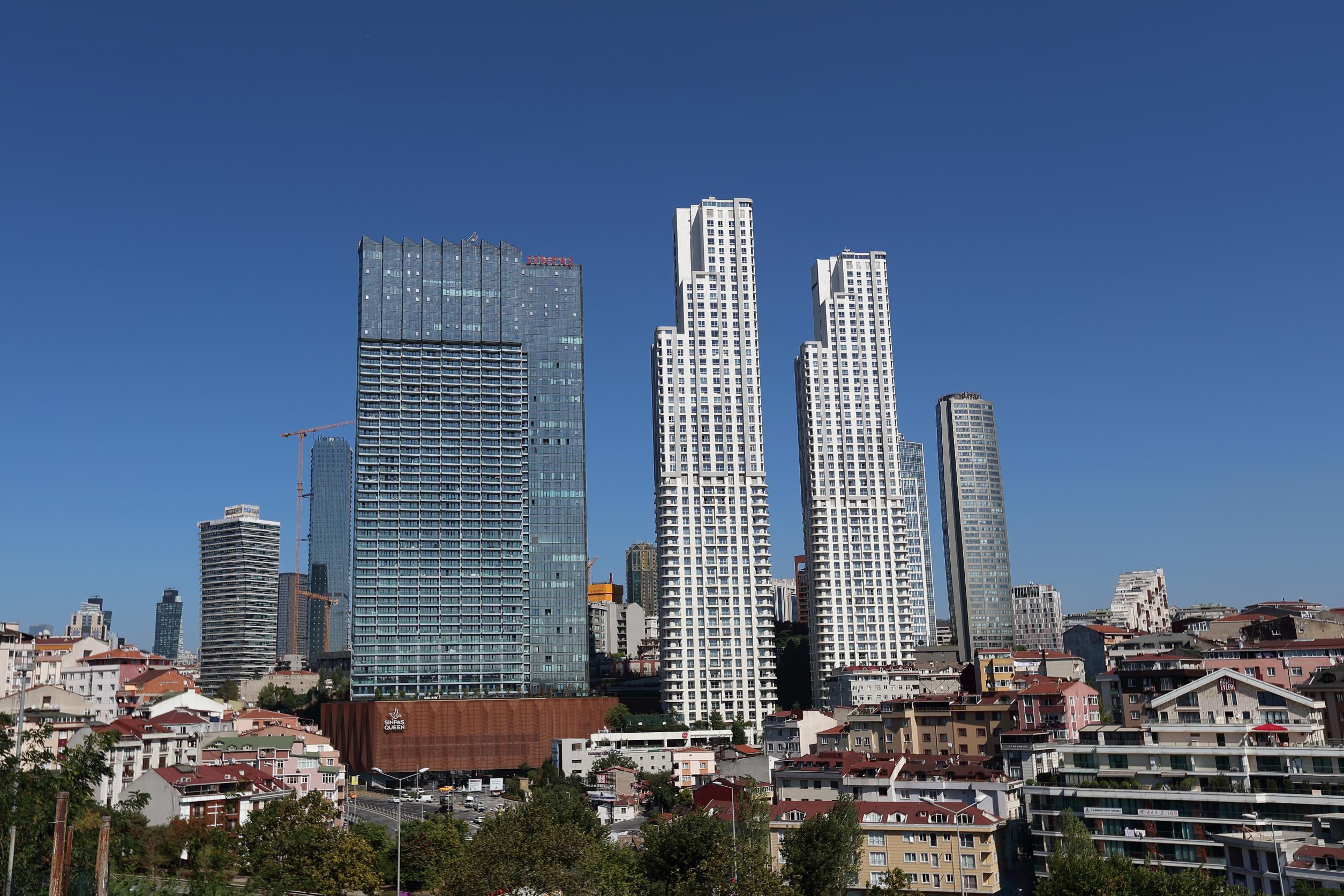
Erdogan's policy shift on rates lures back investors Returns on local government bonds beat wider index Turkish stocks are up 45% year to date, lira stabilising Vanguard says Turkish CDS could be a big trade LONDON, May 23 (Reuters) - International investors are ramping up exposure to Turkey, focusing on local bonds and Credit Default Swaps (CDS) as monetary policy normalisation is becoming more deep rooted, investors and analysts said. Almost a year ago, President Tayyip Erdogan - then fresh from securing an election victory - endorsed big interest rate hikes sought by markets to tackle runaway inflation, marking a shift from an unorthodox policy that had deterred investors from Turkey for nearly a decade. The central bank has raised its policy rate by 4,150 basis points in total since June last year. In its policy meeting on Thursday, the bank kept the main interest rate steady at 50% as expected, though it remained wary of inflation risks. "Investors are getting back in quite aggressively now - the numbers are really strong. There's been a lot of inflows," said Nick Eisinger, co-head of Emerging Markets Active Fixed Income at Vanguard, which has more than $7 trillion in assets under management. "We're long on the lira. We're long on the local bonds, but not a lot, and then we're quite long on the credit," he said, referring to the country's hard-currency debt. Analysts at Citi agreed, saying the shift in policy had stimulated interest in Turkish assets. "We see the current moment as somewhat of a renaissance for Turkish markets across local, external, corporate credit and equity markets," Citi's Luis Costa wrote in a note to clients. The rally across Turkish assets has been broad-based, with the country's main stock index up more than 46% since the beginning of the year, propelled by an around 80% rally in the banking sector over the same period. , Returns on domestic government bonds are more than 4% year-to-date, far outperforming the less than 1% on the wider JPMorgan GBI-EM Global Diversified index. The bonds had already enjoyed an initial wave of foreign interest in November, after which it cooled. But interest had been revived after a 500 basis point interest rate hike in March and the opposition's success in local elections that followed on March 31. STABILISING LIRA Turkey's hard-currency debt has returned 2.4% - broadly in line with the wider JPMorgan EMBI Global Diversified index. However, over the last 12 months, returns for Turkey were at 24.6% - more than double those of the wider index. While the lira has weakened more than 8% against the dollar year-to-date, the currency has stabilised since hitting a record trough in mid-April. Monetary conditions are quite tight now, said Vanguard's Eisinger, with de-dollarization underway. "In real terms, the currency appreciates, which is a good thing, and they want to do that because it's a good anchor to cut inflation," Eisinger said. On stocks, Citi said it had turned neutral on banks following the strong share market rally. Turkish Banks Association Chairman Alparslan Cakar said the banking sector was strong, with no problems in asset quality and the non-performing loans rate low. Looking forward, CDS - instruments used to insure exposure to an issuer against default - could be the next big trade for investors, said Eisinger. Turkey's 5-year CDS stood at 264 basis points on Thursday - less than half the 673 bps they were at 12 months ago. "Turkey's CDS could easily be 225 if they get it right - that's a big trade," said Eisinger. "If you put that on in size and they get that right, that's a big deal." Sign up here. https://www.reuters.com/world/middle-east/foreign-investors-pile-back-into-turkey-vanguard-spots-opportunity-2024-05-23/
2024-05-23 12:18
THIRUVANANTHPURAM, India, May 23 (Reuters) - At least seven people have died in India's southern state of Kerala after heavier than normal pre-monsoon rains, authorities said, even as much of South Asia grappled with a heatwave. Pre-monsoon rains were 18% above normal in Kerala this year, causing flooding in parts and disrupting flights at the Kozhikode airport, officials said. According to the state's Disaster Management Authority (KSDMA), a 70-year-old man died in a lightning strike in Kasaragod district on Wednesday, while brothers aged 18 and 21 died after falling into a quarry filled with water in Palakkad on Tuesday. Four people also died in Idukki and Pathanamthitta districts after falling into water, said an official at the SDMA. The local weather department has issued a red alert, warning of extremely heavy rainfall in three districts on Thursday. In contrast to Kerala, most of India and Pakistan faced heatwaves, with India's capital New Delhi ordering the closure of schools earlier this week. Temperatures often peak during May, but India's weather department was predicting seven to ten heatwave days in northwestern regions this month, compared to the usual two to three days. New Delhi will vote on Saturday, along with the nearby states of Haryana and Uttar Pradesh among others, in the penultimate phase of a seven-stage national vote, with temperatures predicted to touch 46 degrees Celsius (115 Farenheit) on the day. In neighbouring Pakistan, authorities advised people to stay indoors and avoid non-essential travel, as temperatures were predicted to go beyond 48 C in some parts. "The soaring temperatures across South Asia can put millions of children’s health at risk if they are not protected or hydrated," the U.N. children's agency UNICEF said. Extreme temperatures in Asia have been made more likely from human-driven climate change, international scientists New Tab, opens new tab said earlier this month. Sign up here. https://www.reuters.com/world/india/seven-dead-south-india-after-heavier-than-normal-pre-monsoon-rains-2024-05-23/
2024-05-23 11:54
LONDON, May 23 (Reuters) - Big-money investors are beginning to place more cash in emerging markets as they chase returns in what could be a structural shift in the way they allocate their money, a veteran Bank of America economist told Reuters. Large global fixed income funds, which have more firepower than those dedicated to emerging markets, are placing bets in "huge sizes" in key places, David Hauner, head of global emerging markets fixed Income Strategy at Bank of America told Reuters. Countries with positive growth or reform stories, including Mexico, Brazil, Turkey, India and Poland, are getting the money. Short-term bets in Egypt and Nigeria have also become popular. "I think that is the beginning of a structural story," Hauner said, adding investors wanted specific country exposures, rather than index products that package together a range of emerging market assets. "You're seeing outflows from dedicated (funds) and at the same time people involved in crossover. That is the new thing. I don't recall that this has ever happened before." The flows suggest that investors are rewarding certain countries as they implement reforms that are painful to citizens, such as currency devaluations and subsidy cuts, in an effort to shore up state finances. They also belie closely watched data from EPFR that show some $5 billion in outflows year to date from emerging market debt funds, excluding China. Hauner said there was no single data point that captured the investments. EPFR data reflects exchange-traded and mutual funds that comprise a set mix of emerging markets, often dominated by China. But as fates fracture among developing countries, with China, for example, lagging in returns, and other typically riskier countries, such as Egypt, on the rise after an influx of cash from the UAE and the International Monetary Fund, a wider range of investors want to place money in select emerging markets - rather than via a fund with a set mix of assets. Alejandro Arevalo, head of emerging market debt at Jupiter Asset Management, said the unexpectedly strong performance of economies such as Mexico, India and Vietnam had made them "darlings of investors." "Money has been flowing in into these into these countries," he said, adding that they had done well in battling inflation and positioning themselves to benefit from trade tensions between the United States and China. He said traditional flows would likely reflect the shift soon. Already, Hauner said there are "puzzle pieces" illustrating the current cash flows, including Institute of International Finance figures, which rely on balance of payment data. IIF data, for example, showed foreigners adding about $32.7 billion to their emerging market portfolios in March, a fifth consecutive month of overall foreign net flows to emerging markets. This year's rally in high-yield bonds from Egypt to Pakistan, and the market's absorption of billions in bond issuance from Turkey to Ivory Coast, also lend credence to the view of inflows. "It just reflects that EMs (are) growing up and that global debt investors want to have a fair share of exposure," Hauner said. "They're more stable than it used to be. And yet they're offering quite attractive yields." Sign up here. https://www.reuters.com/markets/bigger-investors-pouring-money-into-emerging-markets-belie-em-outflows-2024-05-23/

2024-05-23 11:48
May 23 (Reuters) - Recurrent Energy, a unit of solar technology firm Canadian Solar (CSIQ.O) New Tab, opens new tab, said on Thursday it has secured multi-currency revolving credit facility of up to 1.3 billion euros ($1.41 billion) with 10 banks. The credit facility will be used for the construction of renewable energy projects in several European countries. Recurrent Energy and the participating financial institutions signed the deal New Tab, opens new tab in Seville, Spain. WHY IT'S IMPORTANT Rising renewable energy capacity and the deployment of electric vehicles are expected to make energy storage a priority technology. The revolving credit facility will provide flexible financing for the construction of solar and battery energy storage projects across Spain, Italy, the United Kingdom, the Netherlands, France and Germany. CONTEXT As renewable energy expands across Europe to meet decarbonization goals, battery usage needs to grow to smooth out the intermittent supply of renewable energy. BY THE NUMBERS The facility will be available for three years with optional extensions. It is initially sized at 674 million euros but includes potential upsizing to about 1.3 billion euros. KEY QUOTES "This agreement solidifies Recurrent Energy's growth strategy and our transformation into one of the world's leading independent renewable energy producers and developers," Ismael Guerrero, CEO of Recurrent Energy, said. ($1 = 0.9223 euros) Sign up here. https://www.reuters.com/business/energy/canadian-solar-unit-secures-up-14-bln-financing-european-renewable-energy-2024-05-23/
2024-05-23 11:47
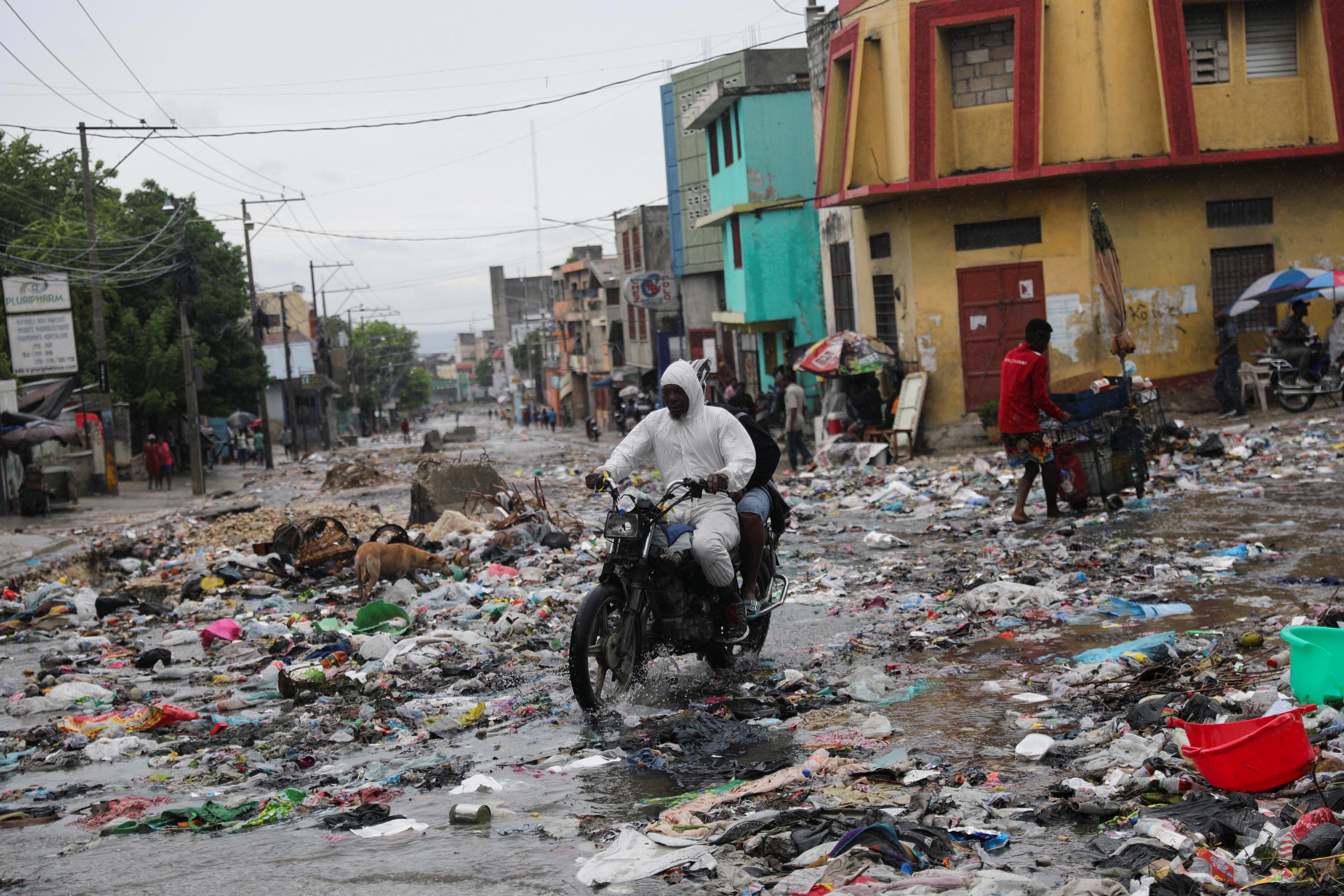
May 23 (Reuters) - A tornado in northwest Haiti has injured at least 50 people, destroyed 200 houses and left more than 300 families homeless, according to the United Nations. Haitian weather authorities have warned of flooding and landslides after Tuesday's storm on the Caribbean nation that is one of the world's poorest and is prone to natural disasters. The U.N. Office for the Coordination of Humanitarian Affairs, which coordinates assistance, said in a statement on Wednesday that the local Red Cross and civil protection agency were providing aid and assessing damages at the worst-hit area of Bassin Bleu, around 15 miles (25 km) south of Port-de-Paix. More than 360,000 people are already internally displaced in Haiti, according to U.N. estimates, mostly from the capital Port-au-Prince due to a conflict with armed gangs who have taken over most of the city. Many are staying in makeshift camps or have traveled south. A deployment of Kenyan police officers to lead an international anti-gang force intended to help national police restore security was expected to land this week, but sources told Reuters this has been delayed. With the onset of the rainy season, the U.N. has warned of growing risks from waterborne diseases such as cholera, particularly for people who are displaced. Sign up here. https://www.reuters.com/world/americas/tornado-haiti-leaves-more-than-300-families-homeless-2024-05-23/