2024-05-23 07:36
DUBAI, May 23 (Reuters) - A merchant ship off the coast of Yemen reported a missile hitting the water nearby, Britain's sea trade monitoring agency reported on Thursday, adding that vessel and all crew are safe and are proceeding to the next port of call. The United Kingdom Maritime Trade Operations (UKMTO) agency said it had received a report of the incident 98 nautical miles south of Yemen's port city of Hodeidah. The master of the merchant vessel had reported the missile impacting the water near the ship's port side. British security firm Ambrey said it received a report that a merchant vessel was suspiciously approached 68 nautical miles southwest of Hodeidah and had undergone what it described as "missile attack." "No injuries or damages were reported," Ambrey said. Sign up here. https://www.reuters.com/world/middle-east/ukmto-ambrey-receive-reports-incident-south-yemens-hodeidah-2024-05-23/

2024-05-23 07:36
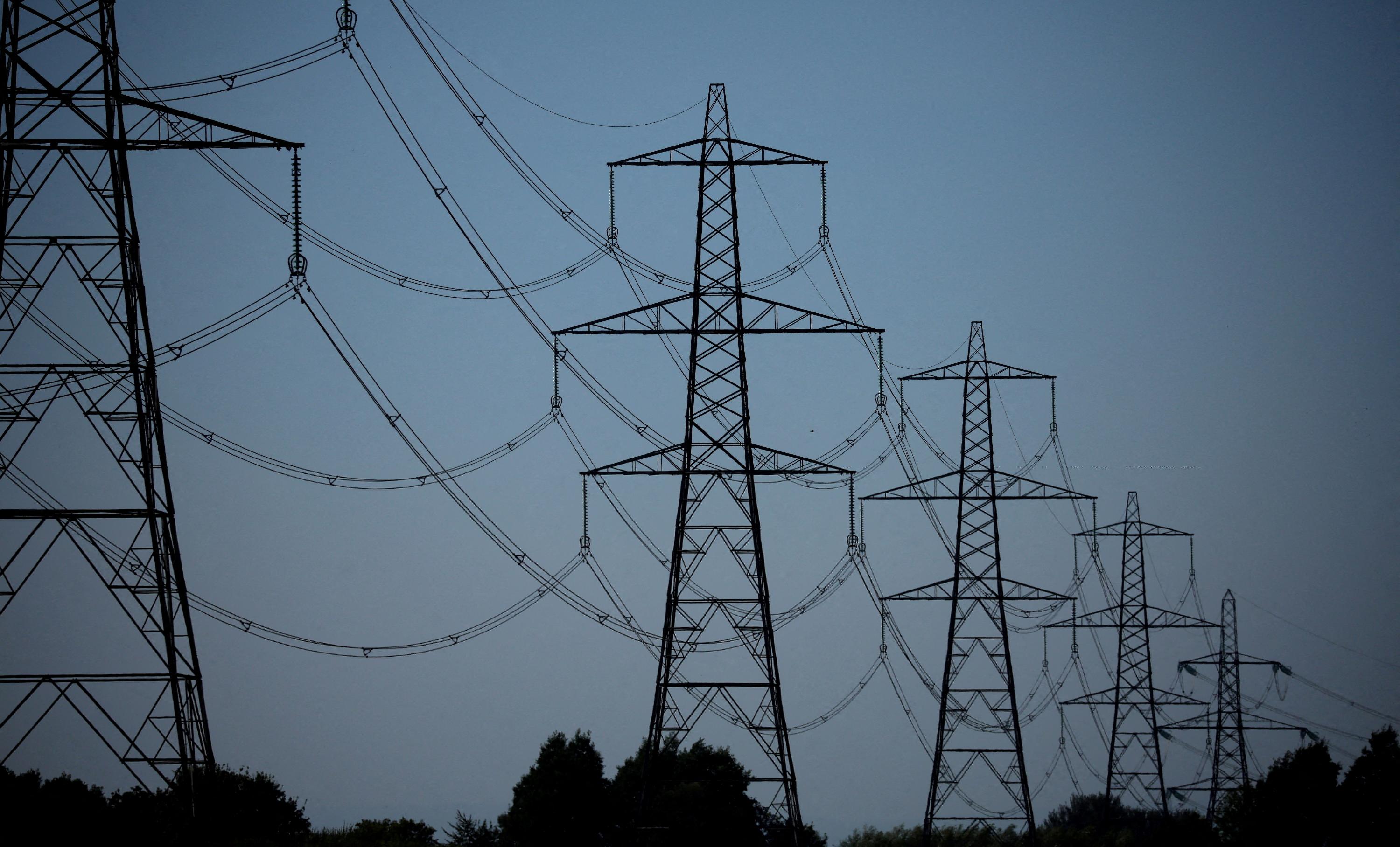
Plans to issue 1.09 billion new shares Pricing at 645p per share Shares down more than 10% May 23 (Reuters) - Britain's National Grid (NG.L) New Tab, opens new tab plans to raise about 7 billion pounds ($8.9 billion) in the largest UK rights issue since 2009 as it gears up to invest 60 billion pounds in energy networks, it said on Thursday. Britain has a target to decarbonise its power sector by 2035, which will require many more renewable power plants connected to the electricity grid. Thursday's announcement comes a day after UK Prime Minister Rishi Sunak called a national election on July 4. "I don't see a material impact if we see a change of government," CEO John Pettigrew said in a media call, adding that the country has a stable regulatory framework. Shares in National Grid were down more than 10% at 10.09 pounds by 1040 GMT. Other British utilities were also down sharply on concern over political risk in the sector. The planned rights issue is National Grid's largest ever and its first since 2010, a company spokesperson said. It is also the largest in the UK since 2009 and Europe's biggest since 2021, Dealogic data shows. The company, which runs Britain's energy systems and operates electricity and gas businesses in New York and Massachusetts, allocated about 31 billion pounds for UK electricity transmission and distribution, with the rest earmarked for the United States. DISCOUNTED SHARES The rights issue of 1.09 billion new shares is at 645 pence per share on the basis of seven new shares for every 24 existing shares, the company said, representing a 34.7% discount, adjusted to reflect a recommended 2024 final dividend of 39.12 pence a share. The London-based company said it intends to sell its Grain liquefied natural gas terminal and its U.S. onshore renewables business to shift focus to its networks business. National Grid said it will invest the 60 billion pounds in the five years to the end of March 2029, nearly double its investment over the past five years, creating more than 60,000 jobs. "National Grid has the traditional pros of a utility, but also major growth opportunities – a rarity for the sector," Hargreaves Lansdown analyst Aarin Chiekrie wrote in a note. The company also reported a 15% fall in pretax profit from continuing operations to 3.05 billion pounds for the year to March 31. The utility company forecast annual asset growth of 10% in the five-year period to the end of its 2029 financial year. National Grid's top shareholders include BlackRock, Capital Research Global, The Vanguard Group, sovereign wealth Abu Dhabi Investment Authority and Lazard Asset Management. ($1 = 0.7862 pounds) Sign up here. https://www.reuters.com/world/uk/uks-national-grid-raise-about-9-bln-via-rights-issue-2024-05-23/
2024-05-23 07:13
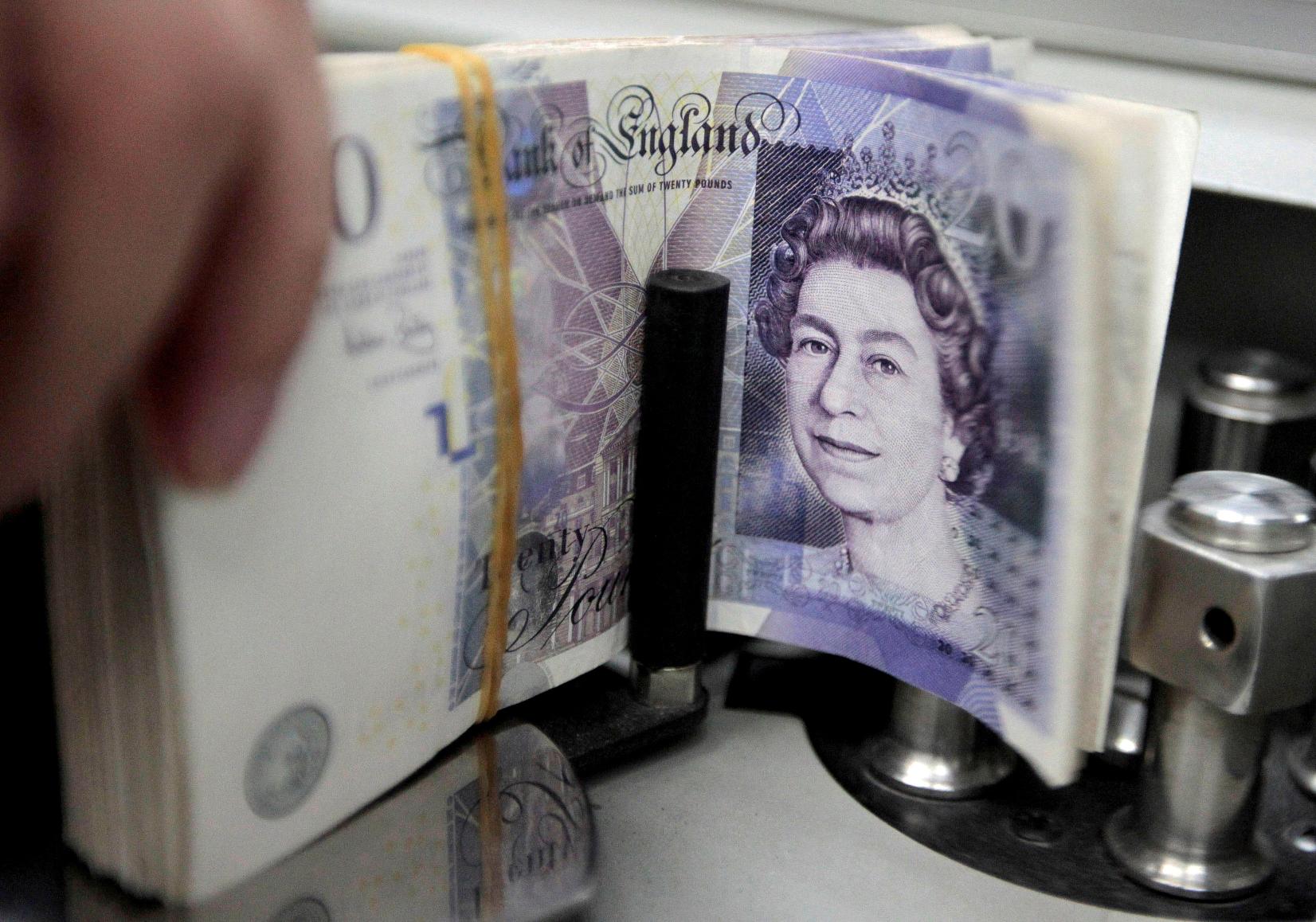
LONDON, May 23 (Reuters) - The pound held broadly steady on Thursday near multi-month highs a day after British Prime Minister Rishi Sunak called a national election and data showed inflation did not slow as much as expected in April. Sterling was flat on the dollar at $1.2714, having touched a two month high of $1.2761 the day before after data showed British consumer prices rose by 2.3% in annual terms in April, nearing the Bank of England's 2% target but slowing less than markets had expected. The British currency reached its strongest in three months versus the euro in early trade but then weakened after euro zone business activity data helped the common currency to rise 0.2% to 85.26 pence. Sterling options volatility, a measure of trader demand for protection in the case of large price swings in the future, rose for contracts that cover the election date of July 4. Two-month sterling options volatility rose by the most in one day since mid-April on Wednesday, and was last at 6.09%, though this was still only its highest in a week. The start of the election campaigns of British Prime Minister Rishi Sunak and his Labour Party rival Keir Starmer, drew eyes on Thursday though analysts said the poll was unlikely to have a major effect on markets. Sunak's Conservative Party trails Labour by around 20 percentage points in opinion polls. "The last time UK politics had any material impact on the pound outside budget announcements was when there was Liz Truss - and that was related to the budget too - outside of that it was the Brexit discussions," said Francesco Pesole, FX strategist at ING. "Sterling now is trading almost entirely on the back of monetary policy in the UK and the U.S., so the question we should be asking ourselves is 'Will the election have any clear implications for Bank of England timing for rate cuts?' and we don't think so." Sunak's predecessor Liz Truss's short lived premiership in 2022 was derailed by a programme of unfunded tax cuts which caused a sell off in British government bonds, and also hit the pound. Market pricing currently indicates expectations the Bank of England is most likely to start cutting interest rates at its September meeting, though markets are not ruling out August, both after the election. Before the inflation data it was seen as a toss up as to whether the BoE would start cutting at its June or August meetings. "It could have been a tricker one (for the Bank of England inflation had come in lower - the important bit was services inflation which was still too high - as the chance of a rate cut in June has declined," said Pesole. Sign up here. https://www.reuters.com/markets/currencies/pound-steady-day-after-election-announcement-inflation-data-2024-05-23/
2024-05-23 06:45
Fed officials held faith in disinflation despite doubts Fed minutes reflect discussion of possible further hikes India may reduce gold imports by nearly a fifth in 2024 Silver holds above crucial level of $30 per ounce Platinum is up 11% so far this month LONDON, May 23 (Reuters) - Gold prices declined to a one-week low on Thursday, extending their fall for a third consecutive session on profit-taking after minutes from the U.S. Federal Reserve's latest meeting indicated that interest rates would stay higher for longer. Spot gold fell 0.5% to $2,367.66 per ounce as of 1214 GMT, after hitting its lowest since May 15 at $2,354.79 earlier in the session. The non-yielding bullion hit a record high of $2,449.89 on Monday and is up 14.8% so far this year. The market has also been concerned that high gold prices could affect purchases by central banks, which were active buyers in 2022-2023, as well as demand from Chinese investors. "We expect them to continue with strong purchases on any price dips, and we don't expect the downside to gold prices to be pronounced," said Nitesh Shah, commodity strategist at WisdomTree. Gold could see the next level of support at $2,300, and signals that the Fed is ready to cut interest rates would be the next major catalyst for its price gain, he added. Meanwhile, imports to India, the world's second-biggest gold consumer, could fall by nearly a fifth in 2024 as high prices spur consumers to exchange old jewellery for new items, according to an industry body. Spot silver fell 0.3% to $30.66. The recent rally in gold and copper prices drove it to $32.5, an 11-year high, earlier this week. Platinum was steady at $1,034.60. The metal is up 11% so far this month after a wave of forecasts of the second year of structural market deficit. Providing further support, platinum's technical chart formed a golden cross - a bullish pattern - in late April when its short-term moving average pierced through a long-term moving average, Shah said. Palladium was down 1.0% at $989.39 under pressure from future market share growth of electric vehicles and despite structural supply deficit. Sign up here. https://www.reuters.com/markets/commodities/gold-prices-drift-lower-hawkish-fed-minutes-2024-05-23/
2024-05-23 06:39
SAN PEDRO GARZA GARCIA, Mexico, May 22 (Reuters) - A stage collapsed at a Mexican election campaign rally on Wednesday, killing nine people and injuring dozens as high winds tore apart the large, concert-style structure, scattering politicians and attendees. Around 50 people were injured at the rally for the Citizens' Movement party in the northern Mexican state of Nuevo Leon, Samuel Garcia, the state's governor, said on social media. The victims were eight adults and one child, Garcia said, adding he was headed to a hospital where three people were in surgery. Many of the injured were being treated at local clinics, the director of Mexico's social security institute reported. Jorge Alvarez Maynez, the presidential candidate for the centrist Citizens' Movement party, said a gust of wind caused the stage to collapse at the event in the city of San Pedro Garza Garcia, a wealthy enclave near the industrial hub of Monterrey. Video of the accident showed the structure suddenly falling forward into the crowd, sending politicians on the stage and panicked attendees running for cover. "I've never experienced something so sudden," Alvarez Maynez told reporters, referring to how quickly the wind picked up before the stage collapsed. Alvarez Maynez, who returned to the scene of the accident after being cleared at a local hospital, said he was suspending campaign activities and that he hoped authorities investigate what occurred, requesting transparency in the process. Alvarez Maynez's campaign coordinator Laura Ballesteros was hospitalized with a broken foot, according to the party, and mayoral candidate for San Pedro Garza Garcia, Lorenia Canavati, wrote on social media that she was coordinating with authorities to support those impacted and their families. Members of Mexico's national guard and army were on the scene to provide support, Interior Minister Luisa Alcalde said on social media. Governor Garcia warned residents to stay indoors amid strong thunderstorms in the area. Alvarez Maynez is polling in third place in Mexico's presidential election set for June 2. He is trailing far behind ruling party candidate Claudia Sheinbaum and second-place Xochitl Galvez, who represents a broad opposition coalition. Galvez and Sheinbaum both offered condolences for the families of the victims in posts on social media, with Sheinbaum canceling a rally planned for Thursday evening in Monterrey. Sign up here. https://www.reuters.com/world/americas/least-4-killed-mexico-after-stage-collapse-campaign-event-local-media-report-2024-05-23/

2024-05-23 06:37
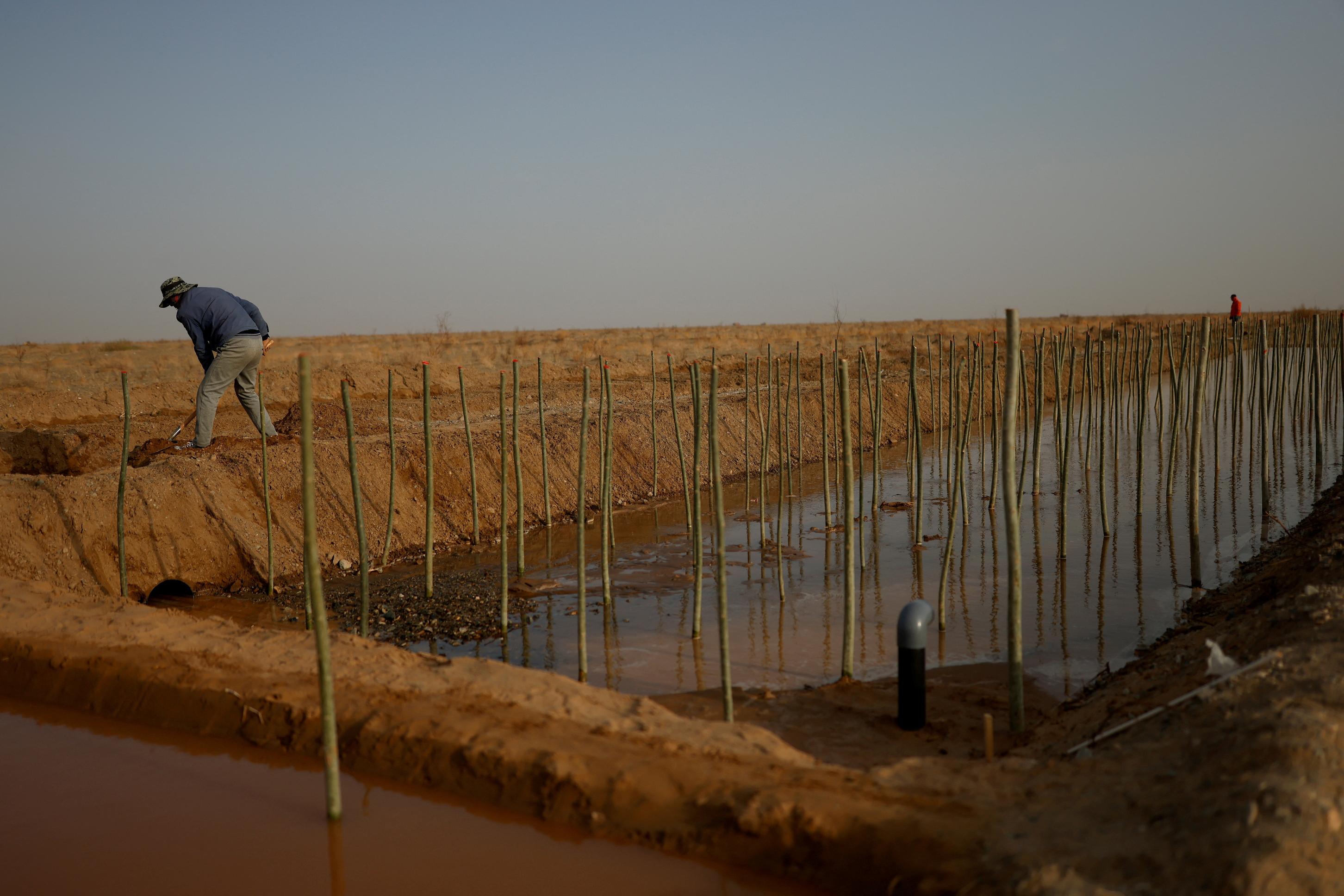
In 10 years, China aims to slash grains, soybean imports Outlook diverges sharply with US forecasts for China Lack of arable land, soil damage pose challenges China needs bigger farms to speed productivity growth BEIJING, May 23 (Reuters) - China, the world's biggest agriculture importer, has set targets to drastically reduce its reliance on overseas buying over the coming decade in line with its push for food security, but they will be exceedingly difficult to meet, experts say. With limited land and water, China will have to sharply increase farming productivity through technology, including genetically modified crops, and expand area under cultivation to meet Beijing's 10-year projections. The government envisions 92% self-sufficiency in staple grains and beans by 2033, up from 84% during 2021-2023, according to a document released in late April, on a path towards President Xi Jinping's goal to become an "agriculture power" by the middle of the century. Cutting the country's imports would be a blow to producers from the U.S. to Brazil and Indonesia, who have expanded capacity to meet demand from China's 1.4 billion people, the world's largest market for soybeans, meat and grains. Over the 10 years to 2033 the agriculture ministry projects a 75% plunge in corn imports to 6.8 million tons and a 60% drop for wheat to 4.85 million tons. For soybeans, the biggest item on a farm import bill that totalled $234 billion last year, Beijing sees imports falling 21% to 78.7 million tons in a decade. Those targets defy the trends of the past decade in which grains and oilseed imports have surged 87%. "Forecasting a sharp reversal where in 10 years the country will be importing less than it does today seems questionable," said Darin Friedrichs, co-founder of Shanghai-based Sitonia Consulting. China will struggle to meet its targets mainly due to a lack of land and water, five analysts and industry executives say. In stark contrast to Beijing's projections, the U.S. Department of Agriculture (USDA) sees China's corn imports in 2033/34 roughly in line with current levels and wheat imports declining 20%. In the biggest divergence, USDA expects soybean imports to rise 39%. The USDA also expects growth in demand for animal feed, a key user of soybeans and corn, to outpace domestic corn output expansion and spur imports of sorghum and barley. NATIONAL SECURITY Food security has long been a priority for China, which has a painful history of famine and must feed nearly 20% of the global population with less than 9% of its arable land and 6% of its water resources. The urgency to cut dependence on imports grew after the country faced supply chain disruptions during the COVID pandemic and the Russia-Ukraine conflict. A trade war with the U.S., its No.2 agriculture supplier after Brazil, and climate shocks such as heavy rains last year that damaged China's wheat harvest, have added to the challenge. On June 1, China will implement a food security law that calls for absolute self-sufficiency in staple grains and requires local governments to include food security in their economic and development plans. That will add to other efforts to bolster food production, including stepped up grains insurance cover for farmers to protect their income, announced this week. Last month, Beijing launched a drive to raise grain output by at least 50 million tons by 2030, spotlighting upgraded farmland and investments in seed technology for higher crop yields and quality. SOIL CHALLENGES China increased production of corn, soybeans, potatoes and oilseeds last year after expanding planting on previously uncultivated land and encouraging farmers to switch from cash crops to staples. However, even as the world's no. 2 corn producer harvested a record 288.84 million metric tons last year, imports surged to a near-record 27.1 million tons, driven by traders' preference for corn from overseas that is often higher quality and cheaper. Production growth has hit a bottleneck due to insufficient arable land, small production scale and a lack of farmers and agriculture technology, state media reported. China's arable land per capita is less than one-third the level in Brazil and one-sixth the level of the U.S., World Bank data from 2021 shows. Degraded and polluted soil in a country where a significant share of land is either rocky mountains or desert leave it with little space for expansion. The government, which has increasingly called for protection of its fertile black soil, is set to complete a four-year soil survey in 2025. The last survey, in 2014, found that 40% of its arable land was degraded from overuse of chemicals and heavy metal contamination. To compensate, China is pouring millions of dollars into research of farming water-intensive crops such as rice in the deserts of Inner Mongolia and Xinjiang. By turning sand into soil and breeding saline-tolerant crops, it aims to develop more farmland, a strategy industry executives say will take time and heavy investments in fertiliser, irrigation and biotechnology. One obstacle is China's predominance of small farms, run by aging owners who may not be able to afford or operate machinery such as drone sprayers, more productive seeds and technology such as big data and AI. Farms in China average 0.65 hectares, compared to 187 hectares in the U.S. and 60 hectares in Germany. China is gradually shifting towards a consolidation of its fragmented farms. After decades of hesitation, it is slowly adopting genetically modified crops, this year approving the planting of corn and soybean varieties that are higher-yielding and insect-resistant, as well as gene-edited disease-resistant wheat in hopes of accelerating production growth. China's soybean yields at 1.99 tons per hectare lag the 3.38 and 3.4 ton-yields in Brazil and the U.S., which have embraced genetically modified soybeans. But analysts say the government's target for cutting soybean imports is unrealistic. At best, China could ease its dependence on soybean imports to 70% from more than 80% now, said Carl Pray, an agriculture professor at Rutgers University in the U.S. Almost all of China's soybeans are high protein varieties to produce tofu, and to replace imports it would need to rapidly expand production of high-oil producing varieties for cooking oil, which he said would be hard, even with research. "To produce enough soybeans to replace the Brazilian and U.S. imports, there is just not enough land," Pray said. ($1 = 7.2276 yuan) Sign up here. https://www.reuters.com/world/china/chinas-food-security-dream-faces-land-soil-water-woes-2024-05-23/