2024-05-17 09:54
HONG KONG, May 17 (Reuters) - Hong Kong will allow mainland China's pilot digital currency to be used in shops in the city, the head of its de facto central bank said on Friday, marking a step forward for Beijing's efforts to internationalise the yuan amid rising geopolitical tensions. The programme, backed by Beijing, will allow mainland Chinese and Hong Kong residents to open digital yuan wallets via a mobile app developed by China's central bank and will permit them to make payments in retail shops and some online stores in Hong Kong and in mainland China. Transactions using e-CNY, predominantly for domestic retail payments in China, hit 1.8 trillion yuan ($249.27 billion) as of end of June 2023, with 120 million digital wallets opened, according to the latest disclosure from China's central bank. Using the wallet, users can make payments at over 10 million merchants in 17 provinces and cities in the mainland. Each wallet used in the city will be subject to a balance limit of 10,000 yuan, with single transactions and daily payments capped at 2,000 yuan and 5,000 yuan, respectively, officials from the Hong Kong Monetary Authority said. Peer-to-peer transfers will not be allowed at the moment, according to the HKMA. "By expanding the e-CNY pilot in Hong Kong .. users may now top up their wallets anytime, anywhere without having to open a mainland bank account, thereby facilitating merchant payments in the mainland by Hong Kong residents," HKMA Chief Eddie Yue said. Currently, users of other digital yuan wallets such as those operated by Ant Group and Tencent can make payments in the city. Industrial and Commercial Bank of China (601398.SS) New Tab, opens new tab, , Bank of China Ltd , China Construction Bank Corp (601939.SS) New Tab, opens new tab and Bank of Communications Co have been selected as e-CNY wallet operators. The yuan's use in global finance remains low, though it has shown steady increases. ($1 = 7.2211 Chinese yuan renminbi) Sign up here. https://www.reuters.com/markets/currencies/hong-kong-allows-chinas-digital-yuan-be-used-local-shops-2024-05-17/

2024-05-17 09:38
May 17 (Reuters) - Markets are hoping for evidence that will solidify a brightening global economic outlook, though rising trade tensions are casting a cloud, while G7 finance ministers gather in Italy. AI darling Nvidia reports results, London has its sights on a revival in stock listings, while New Zealand's central bank is stuck in rut between lacklustre growth and sticky inflation. Here's your look at what's happening in markets this coming week from Kevin Buckland in Tokyo, Lewis Krauskopf in New York, and Anousha Sakoui, Dhara Ranasinghe and Karin Strohecker in London. 1/ CLOUDS ON HORIZON Upcoming May business activity numbers from big economies should reinforce a brighter global economic outlook. A slow euro area recovery appears to be underway after six straight quarters of stagnant or negative growth, U.S. inflation just resumed its downward trend and China grew faster than expected in Q1. So, global PMIs should stay on the right side of the 50 divider between expansion and contraction. Yet steep U.S. tariff increases on Chinese imports from electric vehicle batteries to computer chips highlight a fragile outlook for global trade and growth. China vows retaliation. Manufacturers in Germany, Europe's biggest economy, are already experiencing shifts in world trade and geopolitics. Heightened trade tensions - with a U.S. election looming - could hurt them further, upend China's recovery and reignite U.S. inflation. Global PMIs are pointing up for now. But that could easily change. 2/ CHIP TIME Nvidia's quarterly results on Wednesday could set the tone for U.S. stock markets and reverberate through companies exposed to the burgeoning artificial intelligence field. The semiconductor company at the center of the excitement over AI's business potential is expected to report a massive jump in revenue and profit for its fiscal first quarter. Revenue is expected to rise to $24.8 billion, from $7.2 billion a year earlier, with earnings per share soaring to $5.57 from $1.09, according to LSEG data. Nvidia may need to meet those lofty expectations and then some to keep its soaring stock price moving higher. Shares have jumped over 90% this year after more than tripling in 2023, making the AI darling the third-largest U.S. company by market value. 3/ SHEIN AND SPARKLE Reports on the diminished status of London's stock market have been aplenty: Europe's most popular listing venue during the 2021 boom has been home to just 1% of all European IPO volumes year-to-date, according to Dealogic. Could this be about to change? A string of household names have emerged as potential London listing contenders. Chinese fast fashion brand Shein is stepping up preparations for a potential London float that could be the venue's largest ever if its valued at $66 billion. Diamond firm De Beers is another that might bring some sparkle. A positive driver is the improved global fund flows. 4/ WATCH, WORRY AND WAIT The central bank that was at the forefront of monetary policy shifts globally has been forced to take a back seat in bringing interest rates down from painful multi-year peaks. The Reserve Bank of New Zealand, expected to leave rates unchanged on Wednesday for a seventh consecutive meeting, was the first major monetary authority to ease at the start of the pandemic, and the first to hike in the aftermath. But sticky inflation and a flatlining economy keeps the RBNZ in the "watch, worry and wait" stance it adopted a year ago. Market wagers for an eventual cut in October put it behind the ECB which is expected to move in June, followed by the BoE in August and the U.S. Fed in September. Switzerland and Sweden have started easing. The RBNZ itself is even less optimistic, projecting no lowering of rates until next year. 5/ FROZEN ASSETS Finance chiefs from the Group of Seven major democracies will back a European Union plan to use the income from frozen Russian assets to help Ukraine's war effort at a May 24-25 meeting, according to Italy, which holds the rotating presidency of the group. The prospect of more funding potentially in the near future comes at a critical time for Ukraine, which faces a new Russian offensive in the north eastern Kharkiv region. The G7 froze some $300 billion worth of financial assets soon after Moscow's attack on its neighbour in February 2022 - and has debated since then whether and how to use the funds to help Ukraine. While Washington has proposed seizing the assets in their entirety, Europe has balked at that push, citing risks to the euro and legal repercussions. Italy has said it will also try to revive an international deal on how to share taxing rights on large corporations which the United States is struggling to ratify in Congress. Sign up here. https://www.reuters.com/business/take-five/global-markets-themes-graphic-2024-05-17/
2024-05-17 07:50
OSLO, May 17 (Reuters) - Norway's $1.6 trillion sovereign wealth fund said on Friday it had asked Shell (SHEL.L) New Tab, opens new tab to make additional disclosures regarding the company's revised climate targets. The Norwegian fund will however oppose an independent resolution at Shell's annual shareholders' meeting next week, filed by 27 investors, that called on the energy company to set tighter climate targets. Norges Bank Investment Management (NBIM), which operates the Norwegian fund, is Shell's second biggest shareholder with a stake of 3.03%, according to LSEG data. Shell in March weakened a 2030 carbon reduction target and scrapped a 2035 carbon intensity reduction objective, citing expectations for strong gas demand and uncertainty in the energy transition. The company however reaffirmed a plan to cut emissions to net zero by 2050. "Shell's energy transition strategy has evolved under the new CEO. We nevertheless believe that it sufficiently retains the core components of a Paris-aligned transition plan," the fund, one of the world's largest investors, said on its website. "We have encouraged Shell to make additional strategy disclosures that could reduce uncertainty about the company's direction in the mid-2030s," it added. (This story has been corrected to fix the date to May 17 and day to Friday in paragraph 1) Sign up here. https://www.reuters.com/sustainability/norway-wealth-fund-asks-shell-more-climate-policy-disclosure-2024-05-17/

2024-05-17 07:11
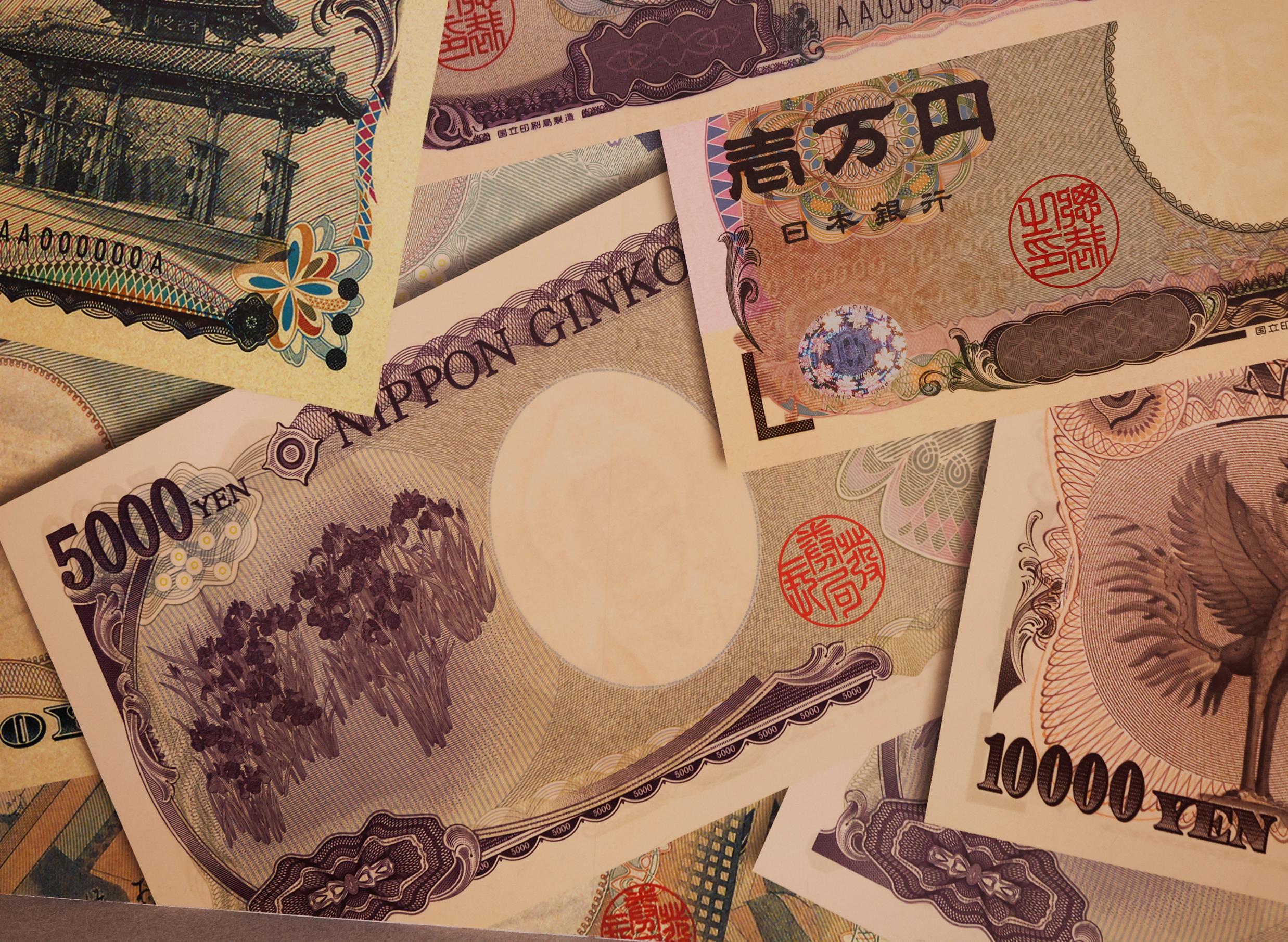
LONDON, May 17 (Reuters) - Pressure on Japan to prop up a weak yen may have ebbed, but currency weakness remains a headache for Tokyo. The yen is down 9.4% against the dollar so far this year, and looks set for a fourth year of declines. That's created a two-speed economy, with exports and tourism benefiting from a more competitive exchange rate while households and small businesses are squeezed by rising import prices. Four investment managers shared four ideas on how to trade yen weakness. Their views do not represent recommendations or trading positions, which they cannot reveal for regulatory reasons. 1/ FLORIN COURT CAPITAL * Diversified systematic asset manager * Size: $2 billion assets under management (AUM) * Founded in 2016 * Key trade: Short-Asia currencies ex-Japan Florin Court CIO Doug Greenig says that instead of playing a weak yen, investors should put on bets against Asia's emerging market currencies. "Investors can consider shorting other Asian currencies like the Korean Won or the Thai Baht, where real interest rates are also relatively low versus some other EM currencies," Greenig said. "And you don't directly face the risk of BOJ intervention." The Bank of Japan (BOJ) was believed to have intervened twice, on April 29 and May 1, to stabilise a yen that had slumped to 34-year lows around 160 per dollar. It is now around 155.6. The yen has weakened sharply for clear reasons: real interest rates are much higher outside of Japan. U.S. rates have been kept high by loose fiscal policy and a robust economy. By contrast, Japan does not have a free hand in raising policy rates, Greenig said. Japan's huge public debt pile is 263% of GDP, but the Bank of Japan holds almost half of that, so the situation might be more nuanced than it looks, he said. 2/ AQR CAPITAL MANAGEMENT * Systematic asset manager * Size: $108 billion * Founded in 1998 * Long Japanese stocks Jonathan Fader, managing director in the Macro Strategies Group at AQR Capital Management, says BOJ intervention complicates matters for yen bears but the key driver of yen weakness remains - accommodative Japanese monetary policy while rates elsewhere are at multi-year highs. He favours Japanese stocks that benefit from currency weakness. Fader noted that the tight relationship between the yen and Japanese shares broke down as Tokyo stepped up verbal intervention. But stock tailwinds remained, such as governance improvements and banks benefiting from an end to negative rates. The BOJ in March delivered its first rate hike in 17 years. "Should yen volatility calm down, Japanese shares could well resume their outperformance," said Fader. Japan's blue-chip Nikkei is off record highs hit earlier this year, but is still up some 16% year-to-date. 3/ MOUNT LUCAS MANAGEMENT * Macroeconomic hedge fund * Size: $1.5 billion * Founded in 1986 * Dollar/yen forwards For David Aspell, partner at Mount Lucas, a large U.S/Japan rate gap means investors will continue to use the yen as a funding currency for carry trades. One way to play yen weakness is through currency forwards, contracts that allow investors to hedge FX risk, he said. Buying a dollar/yen one-year forward contract which trades at a discount to current levels means the currency pair would need to weaken over a year to loose money, said Aspell. Investors would gain if there is no change or dollar/yen strengthens. "Intervention has the best chance of working medium term when it is a genuine surprise and when it is helped along by the fundamentals," Aspell said. 4/ PINEBRIDGE INVESTMENTS * Global asset manager * Size: $168.2 billion * Independent since 2010 * Buy high quality, investment grade portions in short duration, refinanced U.S. 2024 CLOs The BOJ has also abandoned yield curve control where it capped long-term interest rates around zero, but said it would keep broadly buying government bonds as before and ramp up purchases if yields rise rapidly. Since this policy's 2016 start, Japanese investors sought higher returning investments elsewhere. The plus 5% yields on investment grade tranches (portions) of U.S. collateralized loan obligations (CLOs) drew many. "Right now as investors in CLOs, they are our competition because they have such a strong demand for U.S. fixed income assets," Laila Kollmorgen, a PineBridge managing director, adding that what Japanese investors do will determine how Pinebridge invests later in the year. Now that JGB yields have hit decade highs, this might tempt Japanese investors to bring funds back home. "We must remain nimble," Kollmorgen says. While the typical CLO deal length is eight years, she'd opt for newly reset CLOs in 2024. On these, the deal time has been restarted. She'll look for an extended three-year reinvestment period, refinanced debt and lender protection against the bonds being paid back in full during the first year. (This story has been corrected to fix the name the name after the quote to 'Greenig', not Court', in paragraph 10) Sign up here. https://www.reuters.com/markets/currencies/hedge-funds-play-weak-japanese-yen-2024-05-17/
2024-05-17 07:02
Gold up 2% so far for the week Silver breaks above $30/oz milestone, up 9% this week Platinum gains 8% this week May 17 (Reuters) - Gold prices, aided by China's stimulus measures, looked poised to clock their second consecutive weekly gain on Friday on renewed hopes for U.S. interest rate cuts, with silver breaking the $30 barrier to hit an 11-year high. Spot gold rose 1.5% to $2,412.83 per ounce by 1745 GMT, closing in towards an all-time high of $2,431.29 hit on April 12. U.S. gold futures settled 1.3% higher at $2417.40 per ounce. "Gold is moving higher despite (an uptick in) the dollar and yields. I think in this instance, China stimulus has helped as we're also seeing other (base) metals do very well," said Bart Melek, head of commodity strategies at TD Securities. The market was lifted after China, a major consumer of industrial metals as well as gold, announced "historic" steps to stabilise the crisis-hit property sector. Spot gold prices are up over 2% so far this week. Meanwhile, London's gold price benchmark ended the week at a record high of $2402.60 per troy ounce, the London Bullion Market Association (LBMA) said. "Ultimately gold is responding to the idea that U.S. inflation is probably under control ... any talk of a prolonged period of high interest rates is going to be mitigated," Melek said. Traders expect roughly two quarter-point cuts from the Fed this year, with November being the most likely starting point. FEDWATCH Lower interest rates tend to boost non-yielding bullion's appeal. Spot silver jumped 4.8% to $31.02 per ounce after breaking above a major resistance level of $30. The last time silver hit the $30 price level was in early 2021, but sustaining it for an extended period has eluded silver for more than a decade. "Anytime we're talking about China stimulating, that is accretive for platinum markets," Melek said. Platinum added 2.3% to $1,081.37, after hitting a one-year high on Thursday. The metal is up 9% so far this week due to continued structural deficits. Palladium rose 1.2% to $1,007. Sign up here. https://www.reuters.com/markets/commodities/gold-prices-set-second-weekly-gain-fed-rate-cut-optimism-2024-05-17/

2024-05-17 06:41
LONDON, May 17 (Reuters) - Investors poured money into stocks and bonds in the week to Wednesday, favouring laggards such as utilities, but pulling money from pricier parts of the market such as technology stocks, BofA research showed on Friday. Equity funds saw $11.9 billion in inflows, while bond funds drew in $11.7 billion, BofA said citing data from EPFR. Within fixed income, Treasury inflation-protected securities (TIPS) saw outflows of $700 million, the most in nine weeks. Data on Wednesday showed U.S. consumer inflation moderated in line with expectations in April, offering investors confidence that a recent pickup in fuel prices has not translated into an overall rise in consumer price pressures that could delay much-anticipated rate cuts. Sign up here. https://www.reuters.com/markets/investors-pour-money-into-stocks-bonds-inflation-worries-ebb-bofa-says-2024-05-17/