
2024-05-16 06:03
LITTLETON, Colorado, May 16 (Reuters) - U.S. coal-fired power generation over the first four months of 2024 shrank to its lowest total in four years, but retained a more than 15% share of the national power mix despite widespread efforts to transition energy systems away from fossil fuels. Coal power output was 8.3 million megawatt hours (MWh) through April, compared to 8.5 million MWh during the same period in 2023, according to LSEG data. That 1.8% drop in coal-fired output from the year before extends coal's steady decline in U.S. power generation, and the output total marks a 30% fall from the same four months of 2021. However, coal accounted for an average share of 15.6% of total U.S. power generation through April, which is down from a 16.4% share through April 2023 but is still larger than the power share of any form of renewable energy during that period. In addition, coal-fired generation routinely climbs from now through September as power firms must boost supplies to meet elevated electricity demand for air conditioning during the hottest months of the year. This means that coal's share of the U.S. power mix will almost certainly climb further over the coming months, resulting in elevated power sector emissions across several states. SHOULDER SEASON LOWS Coal use in the U.S. power system tends to drop to its lowest levels for the year each spring and autumn, when overall power demand for heating and cooling is at its minimum. Due to recent rapid increases in generation capacity from wind and solar farms, renewables and other clean power sources had been widely expected to account for a majority of U.S. generation needs during the so-called spring shoulder season, and for fossil fuel use to be curbed to a minimum. But while coal use this year did hit a low for the January through April window, total coal-fired generation across the U.S. did not drop as sharply as it could have due to fairly anaemic growth in U.S. wind power output during that period. Total wind power generation grew by only 1.4% during the first four months of 2024 from the same period in 2023, LSEG data shows, which is substantially less than total estimated wind capacity increases over that same period. That relatively flat growth rate from wind farms meant power firms needed to maintain relatively high levels of fossil fuel-fired power through early May, even though total power use for heating usually drops off from April. ALREADY CRANKING UP Recent heat waves in Texas have forced power suppliers there to already lift generation for cooling systems, ensuring the 2024 spring shoulder season may already be behind us and power supplies may keep growing until the end of summer. Texas is the largest coal-fired power generator in the United States, and produced 71,615 gigawatt hours of coal-fired electricity in 2023, according to energy think tank Ember. Texas is also the top emitter of coal-fired pollution, discharging nearly 60 million metric tons of carbon dioxide and related gases last year from coal power plants. However, coal only accounts for a relatively small share of Texas' total power generation at just over 13% in 2023. Five other states rely on coal to produce more than half of their total electricity supplies: North Dakota, Missouri, Kentucky, Wyoming and West Virginia. West Virginia's power system uses coal to produce over 85% of its electricity, while Wyoming and Kentucky both rely on coal for around 70% of electricity supplies. An additional eight states rely on coal for a fifth or more of electricity supplies. Such a wide span of coal-dependent power systems means that further steep cuts to coal use will likely be difficult over the near term, even with the widespread rollout of new renewable energy sites throughout the country. What's more, with temperatures throughout the United States averaging above long-term averages and trending higher, even greater use of air conditioners can be expected in each state during the hottest parts of the year, adding to power demand. That means power firms may have no choice but to keep using large amounts of coal and other fuels to ensure sufficient power supplies over the near-to-medium term. The opinions expressed here are those of the author, a columnist for Reuters. Sign up here. https://www.reuters.com/markets/commodities/coal-proves-hard-dislodge-us-power-system-maguire-2024-05-16/

2024-05-16 06:02
DUBAI, May 16 (Reuters) - Abu Dhabi investor Lunate Capital is launching an exchange-traded fund (ETF) tracking Japanese equities that will be listed on the Abu Dhabi securities exchange (ADX), the firm said in a statement on Thursday. Lunate said the Chimera S&P Japan UCITS ETF, its third ETF so far this year, will list on May 29 and give investors access to the top 30 most liquid Japanese stocks listed on the Tokyo Stock Exchange including Toyota (7203.T) New Tab, opens new tab and Sony (6758.T) New Tab, opens new tab. Lunate, which manages $105 billion of assets, is part of a business empire steered by Sheikh Tahnoun bin Zayed Al Nahyan, the United Arab Emirates' (UAE) national security adviser and brother of UAE President Sheikh Mohammed bin Zayed Al Nahyan. The firm's investments, which include the acquisition announced last month of a 40% stake in the entity that leases ADNOC's oil pipelines, shed a light on how Abu Dhabi is creating a new national champion in alternative investments. In January, it launched an ETF tracking the performance of Shariah-compliant Indian equities listed in Mumbai and in March it teamed up with JPMorgan to develop the first ETF tracking the performance of bonds in the UAE. The ETF market will contribute to bolster "Abu Dhabi's plan to diversify its economy and attract more investors to its financial centre," ADX's CEO Abdulla Salem Alnuaimi was quoted as saying in Thursday's statement. Investors will be able to subscribe to the ETF between 16-23 May, Lunate added. Sign up here. https://www.reuters.com/world/middle-east/abu-dhabis-lunate-launches-etf-tracking-japan-equities-2024-05-16/
2024-05-16 05:17
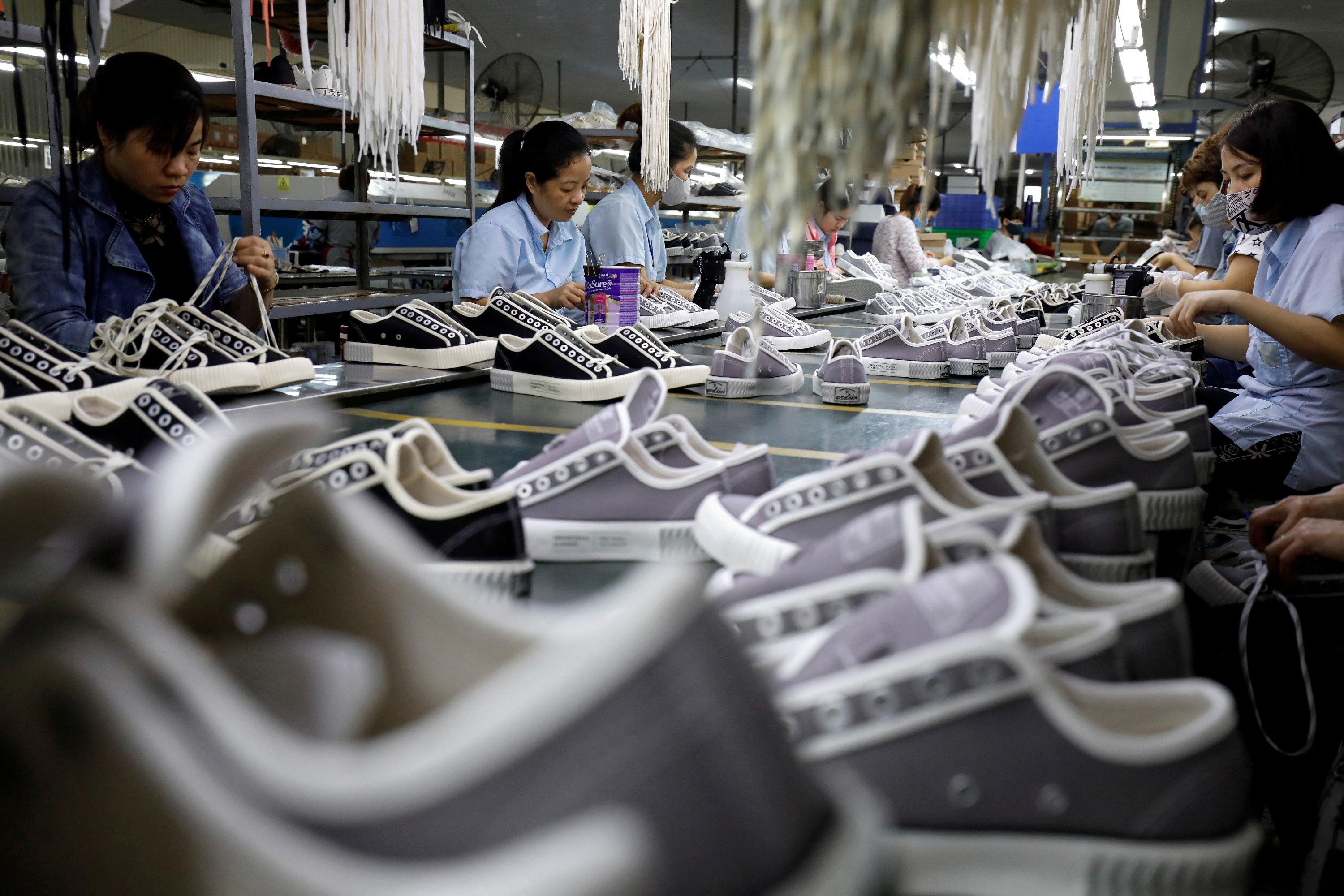
US imports from Vietnam largely match Vietnam imports from China Vietnam has huge trade surplus with US, relies on China input Vietnam is most sanctioned country in US over Xinjiang ban HANOI, May 16 (Reuters) - As the United States intensifies efforts to reduce trade with China by hiking tariffs, it has greatly boosted imports from Vietnam, which relies on Chinese input for much of its exports, data show. The surge in the China-Vietnam-U.S. trade has vastly widened trade imbalances, with the Southeast Asian country last year posting a surplus with Washington close to $105 billion - 2.5 times bigger than in 2018 when the Trump administration first put heavy tariffs on Chinese goods. Vietnam now has the fourth-highest trade surplus with the United States, lower only than China, Mexico and the European Union. The increasingly symbiotic relationship emerges from trade, customs and investment data reviewed by Reuters from the United Nations, the U.S., Vietnam and China, and is confirmed by preliminary estimates from the World Bank and half a dozen economists and supply chains experts. It shows that Vietnam's export boom has been fuelled by imports from neighbouring China, with inflows from China almost exactly matching the value and swings of exports to the United States in recent years. In preliminary estimates shared with Reuters, the World Bank reckons a 96% correlation between the two flows, up from 84% before Donald Trump's presidency. "The surge in Chinese imports in Vietnam coinciding with the increase in Vietnamese exports to the U.S. may be seen by the U.S. as Chinese firms using Vietnam to skirt the additional tariffs imposed on their goods," said Darren Tay, lead economist at research firm BMI, noting that could lead to tariffs against Vietnam after U.S. elections. The growing trade imbalance comes as Vietnam seeks to obtain market economy status in Washington after President Joe Biden pushed to elevate diplomatic ties with its former foe. At over $114 billion last year, U.S. imports of goods from Vietnam were more than twice as big as in 2018 when the Sino-American trade war began, which boosted the Southeast Asian nation's appeal among manufacturers and traders who sought to reduce risks linked to China-U.S. tensions. That surge accounted for more than half the $110-billion drop since 2018 in imports from Beijing, U.S. trade data show. In key industries such as textiles and electric equipment, "Vietnam captured more than 60% of China's loss," said Nguyen Hung, a specialist in supply chains at RMIT University Vietnam. But Chinese input remains crucial, as much of what Vietnam exports to Washington is made of parts and components produced in China, data show. Imported components accounted in 2022 for about 80% of the value of Vietnam's export of electronics - the U.S.'s main import from Hanoi - according to data from the Asian Development Bank. One-third of Vietnam's imports come from China, mostly electronics and components, according to Vietnam data which did not provide further detail. Around 90% of intermediate goods imported by Vietnam's electronics and textile industries in 2020 were subsequently "embodied in exports", the Organisation for Economic Co-operation and Development said in a report, noting that was higher than a decade earlier and far above the average in industrialised countries. The symbiotic relationship is reflected in latest data: In the first quarter of this year, U.S. imports from Vietnam amounted to $29 billion, while Vietnam's imports from China totalled $30.5 billion, mirroring similarly corresponding flows in past quarters and years. As inflation remains high, the White House has remained quiet on Vietnam's large trade surplus, but that may change after the November vote, analysts say. "A possible scenario is that after elections, whoever wins may change the policy towards Vietnam," said Nguyen Ba Hung, principal economist at ADB's Vietnam mission, noting that would however raise U.S. import costs. The U.S. Embassy in Hanoi declined to comment on trade imbalances. Vietnam's foreign and trade ministries did not reply to requests for comment. China's commerce ministry did not immediately respond to a request for comment. COTTON AND PANELS The surge in the China-Vietnam-U.S. trade reflects the rise in investments in the Southeast Asian manufacturing hub, as companies relocate some activities from China. Many of those manufacturers are Chinese firms that add value in their new factories in Northern Vietnam but still rely heavily on supply chains from their homeland. But in some cases the trade involves finished products labelled as "Made in Vietnam" despite no value being added in the country, as the U.S. Department of Commerce concluded in an investigation over solar panels last year. A separate probe on aluminium cables and second on allegedly unfairly subsidised solar panels are underway. Another reason Vietnam is drawing U.S. scrutiny is its exposure to Xinjiang, the Chinese region from where the U.S. bans imports over accusations of human rights violations against minority Uyghurs. Xinjiang is China's main source of cotton and polysilicon used in solar panels. Both are key for Vietnam's industry, whose exports of cotton apparel and solar panels accounted for about 9% of exports to the U.S. last year. Vietnam is the country with the highest volume of shipments by value denied entry into the U.S. over Uyghur forced labour risks, according to U.S. customs data. Vietnam's import of raw cotton from China fell by 11% last year to 214,000 tons, but it was roughly twice as big as in 2018. China also exported to Vietnam at least $1.5 billion-worth of cotton apparel, up from nearly $1.3 billion in 2022. Meanwhile, U.S. imports of cotton clothes from Vietnam fell by 25% to $5.3 billion last year, according to the data, which may not include all cotton items. The fall in U.S. imports came as Vietnam last year surpassed China as the main exporter of products covered by the Xinjiang ban, said Hung Nguyen of RMIT. Sign up here. https://www.reuters.com/markets/us-hikes-china-tariffs-imports-soar-china-reliant-vietnam-2024-05-16/
2024-05-16 05:07
NEW YORK, May 16 (Reuters) - U.S. stocks are at fresh records, bitcoin is soaring and investors are spurning insurance against portfolio declines as evidence that the economy is headed for a so-called soft landing whets market participants' appetite for risk. Call it the Goldilocks trade - a bet that the Federal Reserve will be able to tame inflation while keeping growth from declining too rapidly. While that outcome was in doubt as recently as last month, investors have been reassured by a more recent spate of economic data - including Wednesday’s report showing U.S. consumer prices slowed more than expected in April. Investors' newfound renewed penchant for risk-taking can be seen across asset classes. The S&P 500 hit a new record high on Wednesday and is up 11% year-to-date as it rebounds from last month's decline. The Nasdaq Composite Index (.IXIC) New Tab, opens new tab and Dow Jones Industrial Average (.DJI) New Tab, opens new tab scaled fresh heights as well. Assets such as bitcoin and meme stocks, which are often seen as barometers of risk appetite though their ties to economic fundamentals are often questioned, have also soared. Meanwhile, participants’ growing confidence was reflected in a survey of fund managers by BofA Global Research: the firm’s broadest measure of investor sentiment, based on cash levels, equity allocations and economic growth expectations, stood at its most bullish since November 2021. "Investors' appetite for risk assets appears to be on the rise," said Garrett DeSimone, head quant at OptionMetrics. Here's a chart-based look at how investors' new found optimism is reverberating throughout markets: After worries over the Federal Reserve's ability to cut interest rates in the face of stubborn inflation prompted a 4.2% pullback for the S&P 500 index in April, investors now appear eager to ride stocks higher. Many are opting to do so with little attention to hedging their downside. The Cboe Volatility index (.VIX) New Tab, opens new tab, which measures demand for protection from market swings, closed at a four-month low on Wednesday. The lesser-known VVIX index (.VVIX) New Tab, opens new tab, a gauge of how much investors expect the VIX to move, has also dipped and now stands near its lowest level in about a decade. While there are few takers for options hedges that would guard against a drop in the market, call contracts that would benefit from further stock market gains are in high demand. The one month average daily trading in calls outnumber puts 1.2-to-1, the most bullish this measure has been in about a month, according to data from Options analytics firm Trade Alert. Some market participants have also pointed to the rally in meme stocks as a sign of investors’ robust risk appetite. Shares of GameStop have soared 140% over the last week, after a string of posts on the X platform from an account linked to Keith Gill, the central figure behind the previous frenzy. Shares of other companies, including theater chain AMC (AMC.N) New Tab, opens new tab and headphones maker Koss (KOSS.O) New Tab, opens new tab have followed suit. Like GameStop, many of the stocks are heavily shorted and their fundamentals have declined over the last few years. Hopes that softening U.S. economic data may give the Fed the leeway to cut rates later this year has pressured the dollar in recent sessions. The greenback, a popular haven during uncertain times, has dipped 2% against a basket of its peers (.DXY) New Tab, opens new tab since hitting a 17-month high in mid-April. That has helped boost some emerging market currencies, which are sometimes considered riskier than those tied to developed markets. The Polish zloty is up 3.7% for the month while the South African rand and the Colombian peso have advanced 2.8% and 2.7%, respectively. Bond market volatility expectations have also slipped in recent sessions. U.S. Treasury yields - which move inversely to bond prices - fell to more than five-week lows on Wednesday. Bitcoin , often viewed as a key barometer of risk-taking sentiment, hit a 3-week high of $66,261 on Tuesday and is creeping closer to the record high of $73,803 touched in March. Sign up here. https://www.reuters.com/markets/us/investors-reach-riskier-assets-fear-seeps-out-markets-2024-05-16/

2024-05-16 05:07
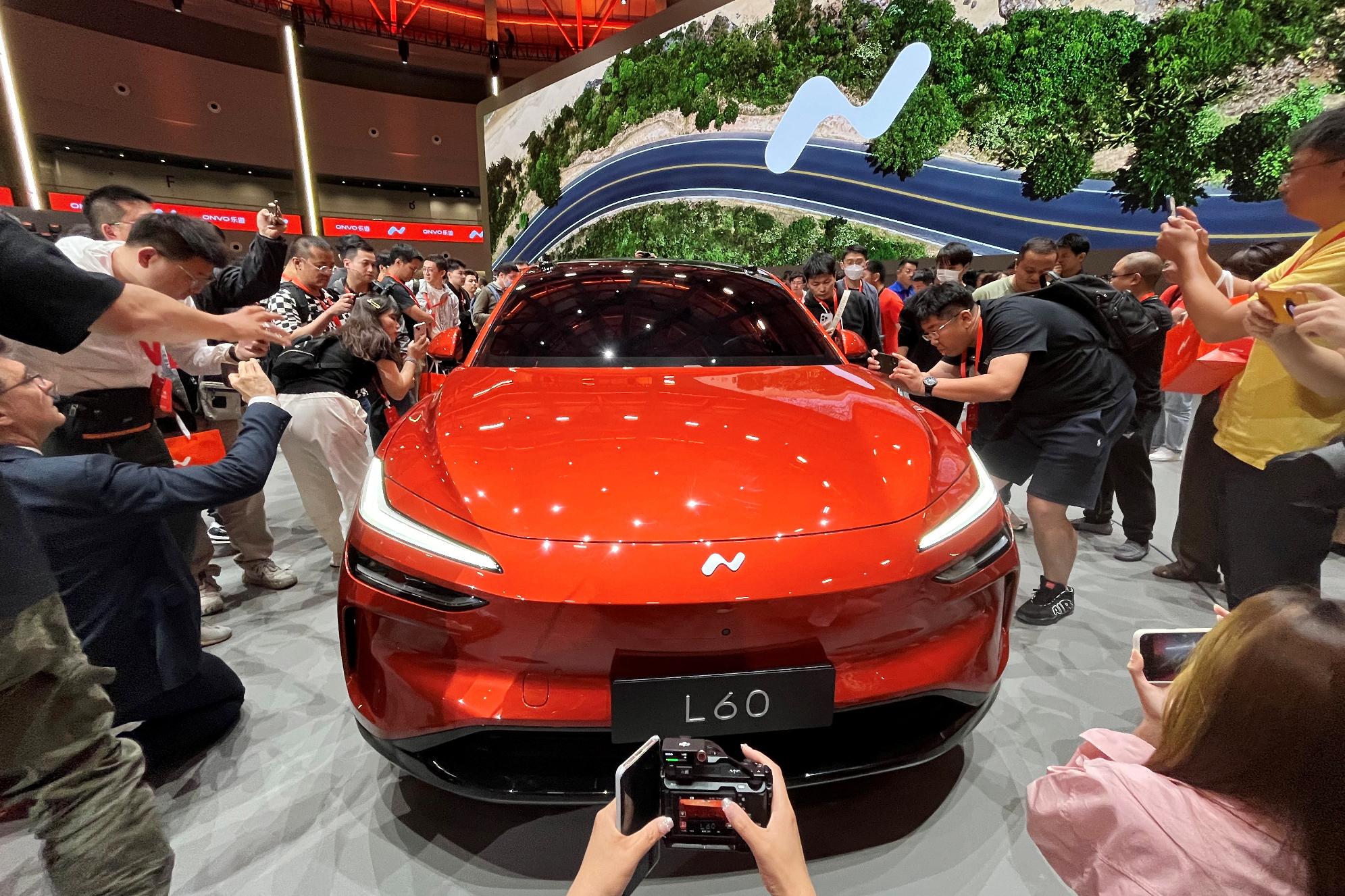
SHANGHAI, May 16 (Reuters) - Chinese electric vehicle maker Nio (9866.HK) New Tab, opens new tab said on Thursday it would launch one new model per year under its lower-priced Onvo brand and price them similarly to gasoline vehicles, as the firm expands its lineups to family cars in the country's overcrowded auto market. The announcement came a day after the company unveiled the Onvo L60 SUV with a sticker price starting from 219,900 yuan ($30,476), 12% below the price of Tesla's (TSLA.O) New Tab, opens new tab Model Y which starts at 249,900 yuan in China. Nio said on Thursday it would have a second Onvo model targeting larger families coming up next and expected the newly launched brand to positively contribute to its overall profitability when monthly sales reach 20,000 units. "China has 110 auto brands... and it's now already consolidated to 20-30 active players," Nio Chief Executive William Li said. "The consolidation will continue but will not be very severe." EV makers in China, the world's biggest auto market, are grappling with thin margins and slowing sales after more than a year of bruising price war amid weakening consumer demand. Many players are now shifting their focus to overseas markets. Nio, which has a third affordable brand under development, is among the smaller players struggling to turn profitable. Its sales account for around 3% of China's overall EV market by volume and the company has been focusing on cost cuts to stay afloat. The company said the Onvo L60 sacrificed acceleration speed that many EV models have focused on and instead prioritised safety and comfortableness to target buyers looking for family cars and to lower its price tag. "People don't need family cars for racing... It is thus very important for them to save unnecessary costs in high-performance electric motors, which would also improve insurance and maintenance-related cost savings," said Alan Ai, president of Onvo. REVENUE STREAM Nio - which has spent heavily in EV infrastructure such as battery-swapping and charging stations, raising concerns over financial burden - said it would invest further, hoping to monetise it with increased user numbers. Li expects the company's battery-swapping services to earn $10 billion annually when its user base grows by 100 times from half a million units currently. "That's why we believed it (battery swapping) is worth our long-term investments," Li said, announcing a plan to add 1,000 more battery-swapping stations this year on top of the existing 2,415. Nio has been in partnership with at least six Chinese EV makers since late last year to allow access to its battery-swapping stations. They include Geely Holding Group (GEELY.UL), which owns eight car brands such as Zeekr and Volvo, as well as Guangzhou Automobile Group (601238.SS) New Tab, opens new tab and Changan Automobile (000625.SZ) New Tab, opens new tab. Sign up here. https://www.reuters.com/business/autos-transportation/chinas-nio-aims-launch-one-new-car-model-per-year-under-onvo-brand-2024-05-16/
2024-05-16 04:49
LAUNCESTON, Australia, May 16 (Reuters) - China's demand for imported iron ore has most likely peaked, but the composition of future imports are likely to shift as the world's biggest steel producer seeks to decarbonise. China, which buys about 75% of all seaborne iron ore, imported 1.18 billion metric tons of the key steel raw material in 2023, a record high, according to customs data. But since 2019, iron ore imports have been locked in a fairly narrow range between 1.07 billion and the 2023 peak. The consensus of views at last week's Iron Ore Forum in Singapore, which brought together miners, traders and steel producers, was that China's demand will remain relatively flat around current levels. This view is based on two large caveats, namely that Beijing continues with its informal policy of capping annual steel production around 1 billion tons, and that China's domestic iron ore output remains steady on a contained iron basis, with any increase in mined volumes being offset by declining grades. Assuming those two conditions are indeed maintained, it's hard to make a case that China's demand for imported iron ore will do anything other than stagnate, albeit at a very high level. The question then becomes how will the market dynamics shift, as for the last two decades iron ore has been driven largely by the relentless growth of China, which saw imports surge six-fold between 2004 and 2024. The first thing to note is that while China will remain the biggest buyer of seaborne iron ore, its dominance will slip somewhat as other steel producers emerge in Asia, especially in India and Southeast Asia. India is the fifth-biggest iron ore exporter, but as its domestic industry expands it is likely to export less, and may even turn to being a net importer in the 2030s. Countries such as Vietnam and Thailand are also expected to boost steel production over the coming decade, and will largely rely on imported iron ore. However, the demand drivers for iron ore are weakening, making it more likely that supply will be the key price determinant over the coming decade. DECARBONISATION Within that supply picture there are likely to be several factors of rising importance, namely what type of iron ore is likely to be most sought after in coming years. Steel production accounts for about 8% of global carbon emissions, and about 16% of China's total emissions, making efforts to decarbonise the industry vital to the net-zero goals put forward by most countries and companies. The low-hanging fruit for steel makers is to use better quality iron ore in the process, as this increases the efficiency of furnaces and also limits the need for sintering, which is the process of using heat to agglomerate iron ore fines for use in a basic oxygen furnace (BOF). Chinese steelmakers at last week's event in Singapore were keen to show their commitment to reducing their carbon intensity, while still using much of their existing technology. This makes sense for them as much of the steel mills' capital equipment is relatively new and has a long lifespan ahead. One way the mills see to reduce carbon emissions is to use higher-grade agglomerates such as pellets and hot briquetted iron (HBI). It's possible to upgrade iron ore fines, even lower grade material, into pellets and HBI, and it's furthermore possible to do this using a green energy source such as hydrogen, or a less polluting than coal fuel, such as natural gas. Major iron ore miners are already taking steps, with Brazil's Vale (VALE3.SA) New Tab, opens new tab advancing plans to build hubs in the Middle East to produce HBI using natural gas. There are also studies underway to use green hydrogen to produce HBI in Western Australia, where top exporters Rio Tinto (RIO.AX) New Tab, opens new tab, BHP Group (BHP.AX) New Tab, opens new tab and Fortescue Metals Group (FMG.AX) New Tab, opens new tab have mines and port facilities. The likely issue is whether the cost of making higher-grade material can be recovered through more efficient steel production, or whether some form of carbon taxes is needed to make the process viable. The opinions expressed here are those of the author, a columnist for Reuters. Sign up here. https://www.reuters.com/markets/commodities/china-iron-ore-imports-likely-peak-demand-composition-shift-russell-2024-05-16/


