2024-05-16 04:32
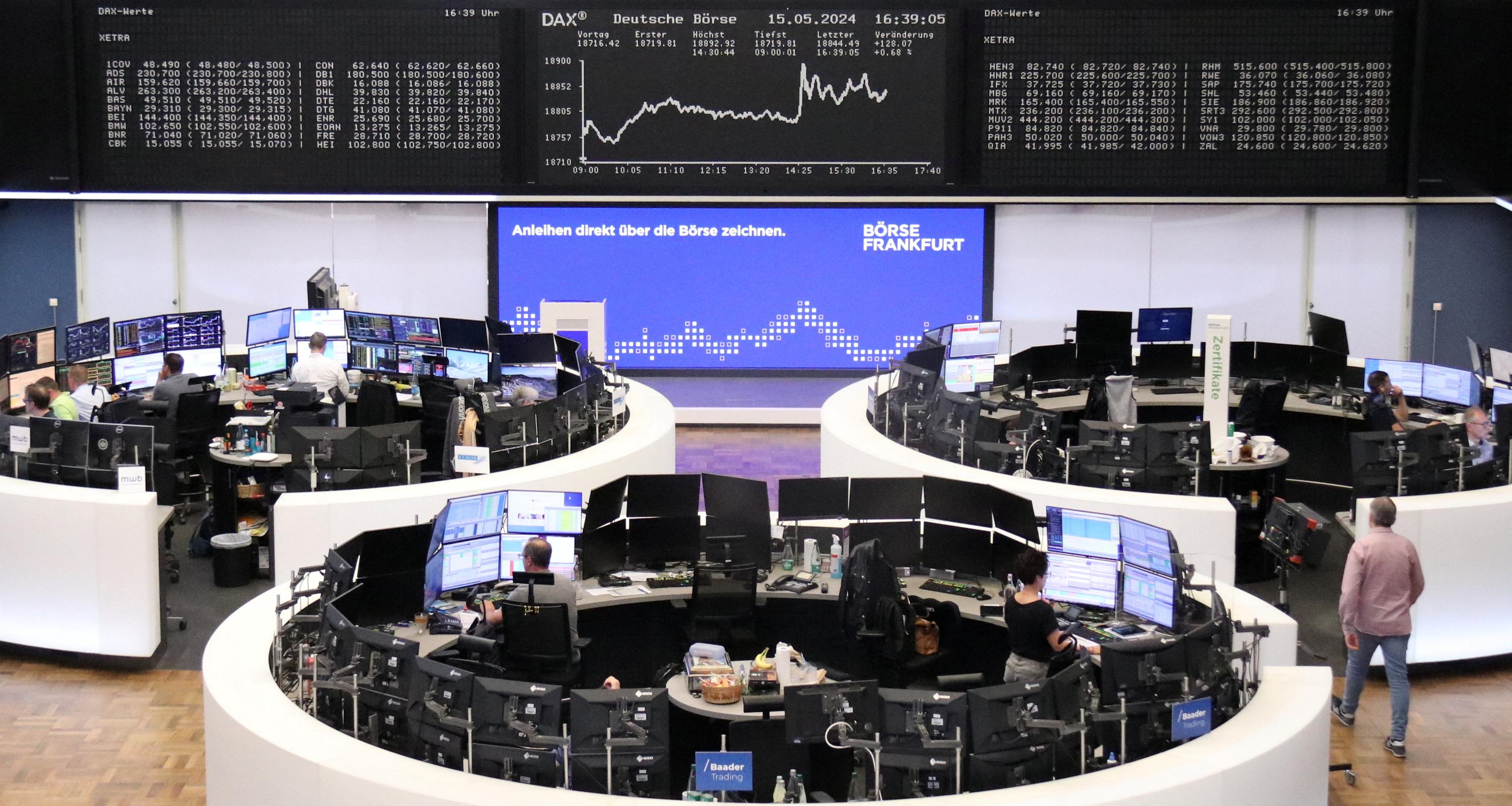
A look at the day ahead in European and global markets from Kevin Buckland Hopes that the U.S. inflation genie is back in the bottle has given investors globally the confidence to snap up stocks and riskier currencies, at the notable expense of the dollar. Wall Street's rally to new records set up gains across Asia, boding well for the European open, with fresh all-time highs beckoning for the FTSE and DAX. The focal point later in the day will be weekly American jobless claims for further evidence the labour market is also cooling down. The data set, which doesn't usually garner so much attention, will be getting a lot more eyeballs after the surprisingly weak reading last week. The market is back to betting squarely on two quarter-point interest rate cuts from the Federal Reserve this year, with the first fully priced for September, and July now in play. Europe's data calendar is relatively light, with Norway's GDP release the highlight. There are plenty of central bank speakers throughout the day though, with no less than four regional Fed heads speaking at various venues: Thomas Barkin, Raphael Bostic, Loretta Mester and Patrick Harker. Fed Vice Chair for Supervision Michael Barr also testifies before the Senate. European Central Bank (ECB) speakers include Vice President Luis de Guindos, Bank of Spain Governor Pablo Hernandez de Cos, and Bank of Portugal boss Mario Centeno. Megan Greene takes the podium for the Bank of England (BoE) to talk about Britain's labour market. Market folk still see the ECB as likely the first among the biggest global central banks to cut rates, with June all but locked in by traders. The BoE could follow in just a matter of days though, with its June 20 policy decision a coin toss. Key developments that could influence markets on Thursday: -US jobless claims -Norway GDP -BT, Deutsche Telecom earnings (This story has been corrected to say interest rate cuts, not hikes, in paragraph 4) Sign up here. https://www.reuters.com/markets/europe/global-markets-view-europe-2024-05-16/
2024-05-16 04:30
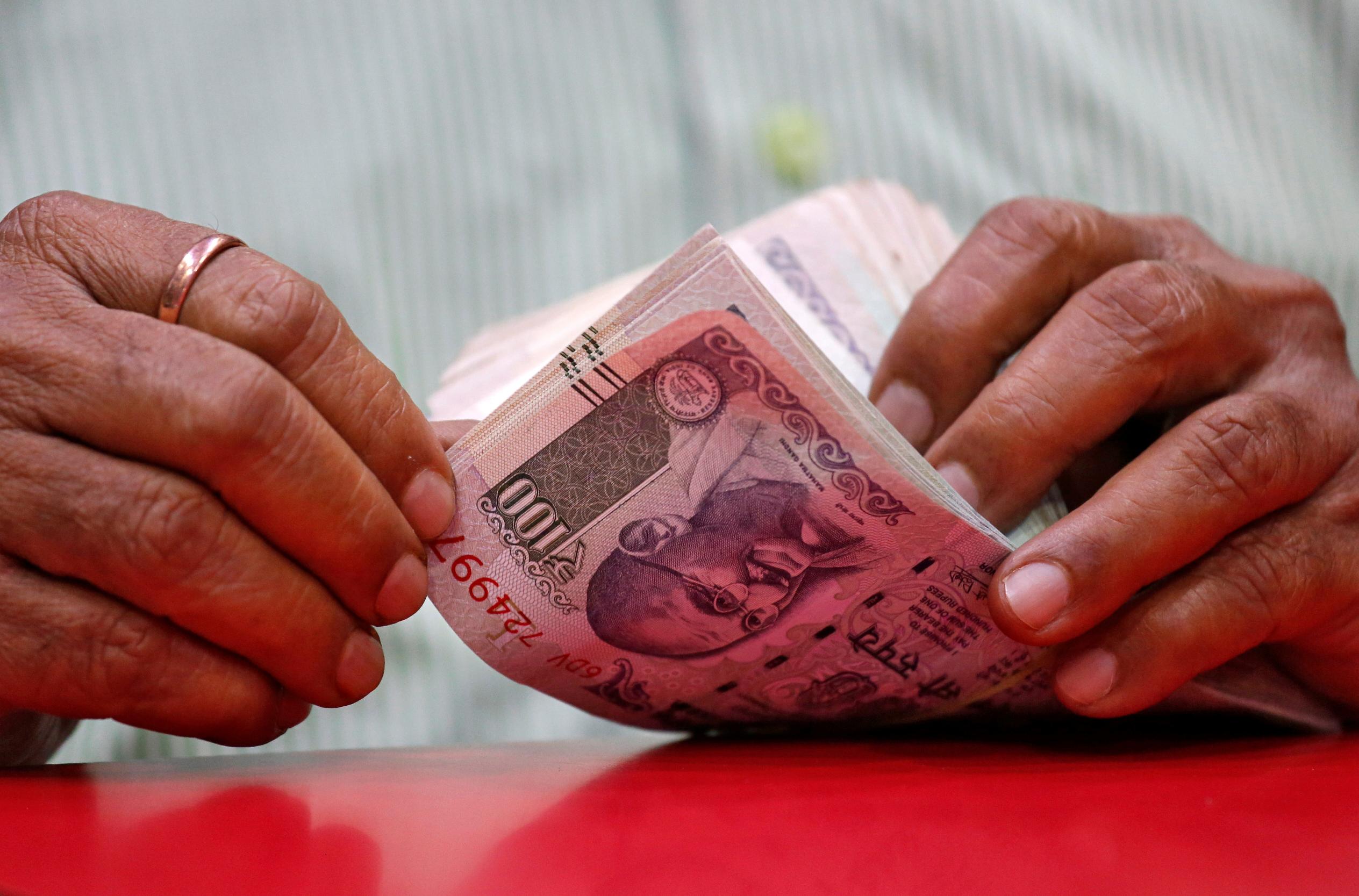
MUMBAI, May 16 (Reuters) - The Indian rupee rose slightly on Thursday, aided by a drop in U.S. bond yields and a weaker dollar after soft U.S. inflation data boosted hopes that the Federal Reserve may begin easing policy rates from September. The rupee was at 83.46 against the U.S. dollar as of 09:40 a.m. IST, up from its previous close at 83.50. Asian currencies gained, with the Korean won up nearly 1.7% and leading gains, while the Thai baht also rose 1%. The dollar index was at 104.2 after declining 0.7% on Wednesday. The U.S. consumer price index rose 0.3% in April, lower than the 0.4% increase anticipated by economists polled by Reuters. Meanwhile, retail sales were flat month-on-month, well below the consensus expectations of a 0.4% rise. The data prompted investors to raise the odds of a Fed rate cut in September to nearly 75%, up from 65% a day earlier, according to the CME's FedWatch tool. However, Minneapolis Federal Reserve Bank President Neel Kashkari said on Wednesday the U.S. central bank should keep policy rates on hold "for a while longer until we figure out where underlying inflation is headed". U.S. bond yields dropped with the 10-year Treasury yield declining to 4.31%, its lowest in more than a month. The rupee "should strengthen a bit, but don't think the move would be very sharp as INR would continue to underperform in times of broad USD short positions buildup," a foreign exchange trader at a private bank said. Dollar-rupee forward premiums ticked higher with the one-year implied yield up 2 basis points at 1.70%, lifted by lower U.S. bond yields. The rupee is unlikely to see sharp gains till it holds below 83.30, said Dilip Parmar, a foreign exchange research analyst at HDFC Securities. Sign up here. https://www.reuters.com/markets/currencies/rupee-gains-lags-behind-asian-peers-forward-premiums-rise-2024-05-16/
2024-05-16 03:14
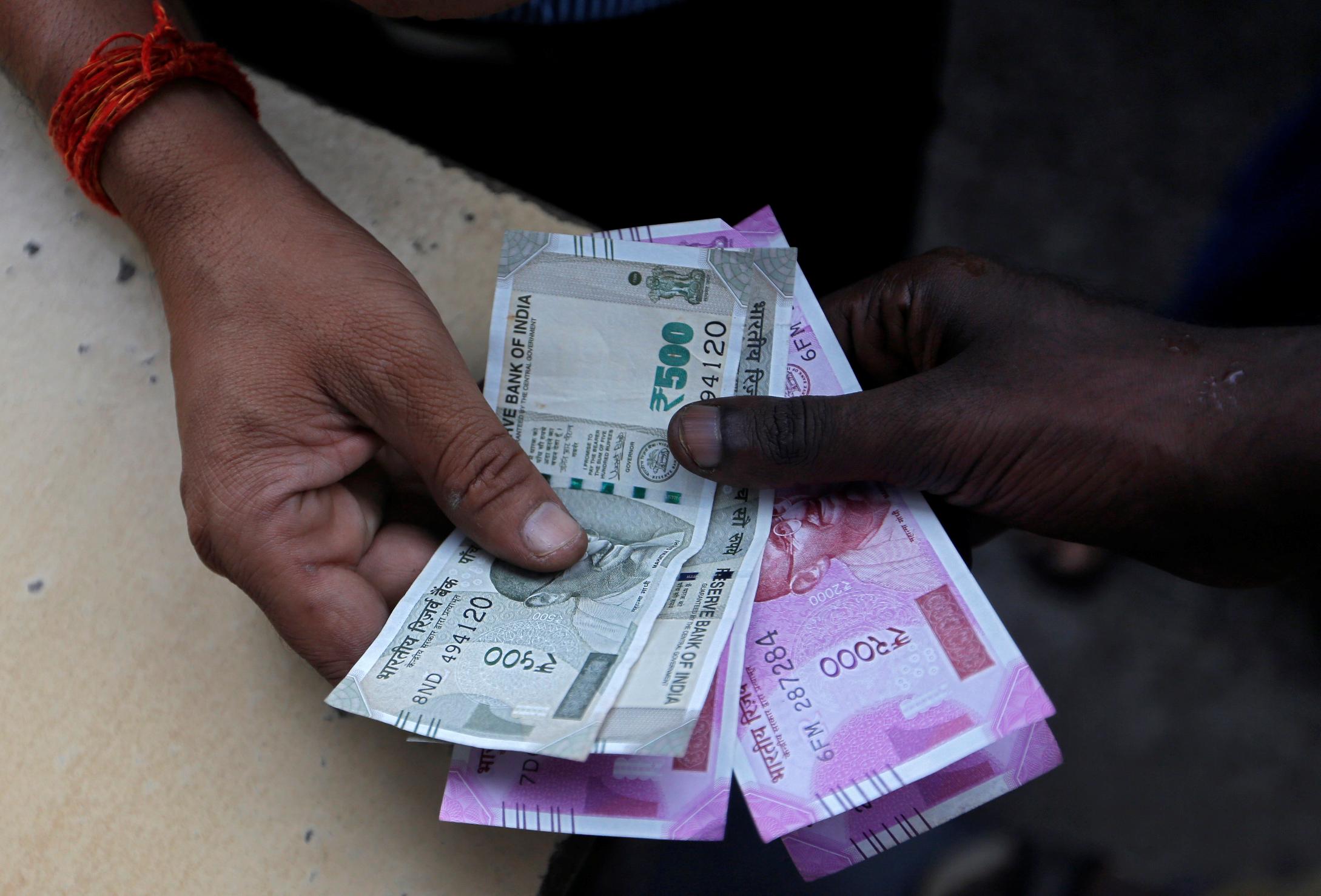
MUMBAI, May 16 (Reuters) - The Indian rupee will open higher on Thursday after weak U.S. retail sales and cooling U.S. inflation made it more likely that the Federal Reserve will cut rates later this year. Non-deliverable forwards indicate the rupee will open at 83.42-83.44 to the U.S. dollar, up from 83.50 in the previous session. U.S. consumer prices increased less than expected in April, fuelling hopes that the Fed will reduce borrowing costs, most likely at the September meeting. U.S. retail sales were unexpectedly flat in April against the expected 0.4% increase, providing one more reason to bet that the Fed will reduce interest rates. Control retail sales fell 0.3% on-month. Control retail sales, which are used to help calculate GDP, have been negative in three of the first four months of this year, ANZ Bank pointed out. The dollar index and the 10-year U.S. Treasury yield were down to their lowest in more than a month, while U.S. equities rallied. Futures are pricing in two interest rate cuts this year . The Korean won and the Thai baht led Asian currencies higher, climbing 1.5% and 0.8%, respectively. Asian equities followed their U.S. peers higher and futures on the S&P 500 Index rose more. "Well, we have a number of positive cues (for the rupee). While you will obviously not expect to see the kind of move that Asia has, let's see if we can at least move past the 83.35-83.40 region," an FX trader at a bank said. The upside in the rupee is expected to be capped by the ongoing nervousness about the India election outcome, which is prompting foreign outflows. Foreigners have withdrawn more than $3 billion from Indian equities in nine sessions in May so far, NSDL data shows. KEY INDICATORS: ** One-month non-deliverable rupee forward at 83.50; onshore one-month forward premium at 7.75 paise ** Dollar index down at 104.16 ** Brent crude futures up 0.5% at $83.1 per barrel ** Ten-year U.S. note yield at 4.32% ** As per NSDL data, foreign investors sold a net $300.9mln worth of Indian shares on May. 14 ** NSDL data shows foreign investors sold a net $9.8mln worth of Indian bonds on May. 14 Sign up here. https://www.reuters.com/markets/currencies/rupee-open-higher-after-data-boosts-odds-fed-rate-cuts-2024-05-16/
2024-05-16 02:57
Unemployment pops up to 4.1% in April, above forecasts Employment rises 38,500, but lags growth in workforce Markets price out rate hike, see chance of cut this year SYDNEY, May 16 (Reuters) - Australian employment rose by more than expected in April, data showed on Thursday, but the jobless rate still climbed to a three-month top as the growth in workforce outpaced job creation. The jump in unemployment was seen as erasing any chance of a further rate hike from the Reserve Bank of Australia (RBA), a big swing from early in the month when the probability had been as high as 40%. Markets now imply around a 54% chance of a cut in the 4.35% cash rate as early as December, cheering investors who were still celebrating a slowdown in U.S inflation and a revival of hopes for an easing in policy there. Data from the Australian Bureau of Statistics showed net employment rose 38,500 in April from March, topping forecasts for a bounce of 23,700. All the gains were in part-time work, with full-time employment dipping 6,100. The jobless rate rose to 4.1%, from an upwardly revised 3.9%, and above market forecast. The participation rate ticked up to 66.7%, while hours worked were flat. "A 30,000 people increase in unemployment reflected more people without jobs available and looking for work, and also more people than usual indicating that they had a job that they were waiting to start in," said Bjorn Jarvis, ABS head of labour statistics. That suggested employment could rise again in May as those workers started, perhaps pulling unemployment back down. Still the employment-to-population ratio was steady at 64.0% in April, indicating that jobs gains were only just keeping pace with rapid population growth. "This suggests that the labour market remains tight, though less tight than late 2022 and early 2023," said Jarvis. The RBA had expected unemployment to gradually rise to 4.2% by the end of the year as employment lags behind growth in the labour force, and is keen to not risk a deeper downturn by raising interest rates too far. Rates are already at a 12-year high and putting a painful squeeze on borrowers across the economy. While inflation surprised on the upside in the first quarter at an annual 3.6%, there are signs pressures are easing with consumer demand very weak and wages coming off the boil. Figures out this week showed wage growth unexpectedly eased to an annual 4.1% in the March quarter, while growth in the private sector fell for the first time since late 2020. Australia's Labor government also announced rebates on energy bills and rents that it predicts will lop half a percentage point off consumer price inflation in the coming 12 months, at least temporarily. Sign up here. https://www.reuters.com/markets/australian-jobless-rate-rises-april-erasing-risk-rate-hike-2024-05-16/
2024-05-16 01:00
NEW YORK/LONDON, May 16 (Reuters) - The dollar rose on Thursday after data showed U.S. import prices increased 0.9% last month, a jump that raised concerns the Federal Reserve's fight to tame inflation is not yet done and could delay plans for policymakers to cut interest rates. Economic data this week offered the U.S. central bank good news, but policymakers haven't openly shifted their views on the timing of rate cuts many investors believe will start this year. The jump in the price index for U.S. imports in April was the largest one-month increase since it rose 2.9% in March 2022, the Bureau of Labor Statistics said. Prices for U.S. imports last declined on a monthly basis in December, the BLS said. The market also was grappling with a drop in the number of Americans filing new claims for unemployment benefits last week that pointed to underlying strength in the U.S. labor market. A strong economy could keep rates higher for longer. "The market is, of course, very sensitive to signs of inflation from wherever it may come, and the import price series that we got today was meaningfully stronger than expected," said Brain Daingerfield, head of G10 FX strategy at NatWest Markets in Stamford, Connecticut. "The Fed wants to see consistent progress in more than just one point. The number we got yesterday - the CPI - was not as bad as feared," he said. "But I don't think it was enough to materially change the market's outlook for the Fed and that's reflected in the way that the dollar has bounced back today." The dollar rebounded from a sharp decline against all major currencies on Wednesday when data showed U.S. inflation slowing to 0.3% in April from a month earlier. The dollar index , which tracks the U.S. currency against six peers, rose 0.27% to 104.47 after a 0.75% slide on Wednesday. The slowing of consumer prices, after a stall in the first three months of the year, prompted markets to price in the likelihood that the Fed would cut rates twice this year, with the first coming as early as September. But Fed officials sounded a note of caution on Thursday, with Richmond Fed President Thomas Barkin saying inflation is still not where it needs to be. Holding U.S. central bank policy at current levels will help get still-high inflation back to the 2% target, said Cleveland Fed President Loretta Mester, adding that reaching that goal will take longer than she previously thought. "The goods price deflation is no longer dominating and then you have the import price number, which went up even though the non-petroleum price didn't go up a lot," said Steven Ricchiuto, U.S. chief economist at Mizuho Securities USA in New York. "The reality is inflation is moderating to 3%. That's still above target. Maybe you're jumping the gun on the inflation story," he said. Initial claims for state unemployment benefits dropped 10,000 to a seasonally adjusted 222,000 for the week ended May 11, the Labor Department said. Economists polled by Reuters had forecast 220,000 claims in the latest week. The dollar dropped 1% against the yen on Wednesday but was up 0.28% on Thursday at 155.30, having fallen as low as 153.6 before weak Japanese growth figures dented the yen. The Japanese currency has fallen around 9.5% this year as the Bank of Japan has kept monetary policy loose while higher Fed interest rates have drawn money towards U.S. bonds and the dollar. The yen has been particularly sensitive to any widening or closing of the interest rate differential. The euro hit a two-month high at $1.0895 on Thursday before dipping to trade 0.14% lower at $1.0867. Britain's pound reached a one-month top of $1.2675 before falling back 0.13% to $1.1268. Bitcoin fell 1.35% to $65,088. Sign up here. https://www.reuters.com/markets/currencies/dollar-sags-slower-us-inflation-boosts-rate-cut-expectations-2024-05-16/
2024-05-16 00:39
US weekly jobless claims fall; labor market gradually easing Dow surpasses 40,000, world stocks at record on rate cut hopes Market concerns over lackluster US gasoline demand NEW YORK, May 16 (Reuters) - Crude prices edged up on Thursday after data showed a stabilizing U.S. job market, fueling expectations that the Federal Reserve could begin to cut interest rates in autumn, which should stimulate the economy and boost oil demand. Brent crude futures settled 52 cents, or 0.6%, higher at $83.27 a barrel, while U.S. West Texas Intermediate crude (WTI) ended at $79.23, up 60 cents, or 0.8%. The number of Americans filing new claims for unemployment benefits fell last week, pointing to an underlying strength in the labor market. "Even though the jobless claims were low, the report was weak enough that it's going to allow the Fed to get in and cut," said John Kilduff of Again Capital. "The strong employment trends do portend strong gasoline demand as we look out, even though it has been lackluster." Wednesday's slower-than-expected U.S. inflation data for April also fed market expectations for a September cut in interest rates, which could temper dollar strength and make greenback-denominated oil more affordable for holders of other currencies. Equities, which tend to move in tandem with oil prices, rose on the rate cut hopes, with the Dow (.DJI) New Tab, opens new tab reaching an all-time high of 40,000 for the first time. Brent had touched an intra-day low of $81.05 on Wednesday - the lowest the front-month futures contract has traded since Feb. 26. It then rebounded after the inflation data and a government report showing a drawdown in U.S. crude, gasoline and distillate inventories last week due to a rise in both refining activity and fuel demand. U.S. gasoline demand, however, continued to land under 9 million barrels per day for a sixth straight week, below what is typical heading into the summer driving season, which officially kicks off on the Memorial Day weekend at the end of the month. "This increase in the runs that will likely persist into early next month will be going head-to-head with continued weak product demand that is showing no sign of improvement," said Jim Ritterbusch of Ritterbusch and Associates. In the Middle East, Israel's tanks pushed into the heart of Jabalia in northern Gaza on Thursday while, in the south, its forces pounded Rafah without advancing, Palestinian residents and militants said. Ceasefire talks mediated by Qatar and Egypt are at a stalemate, with Hamas demanding an end to attacks and Israel refusing until the group is annihilated. Sign up here. https://www.reuters.com/business/energy/oil-prices-rise-moderate-us-inflation-data-strong-demand-2024-05-16/