2024-05-15 20:32
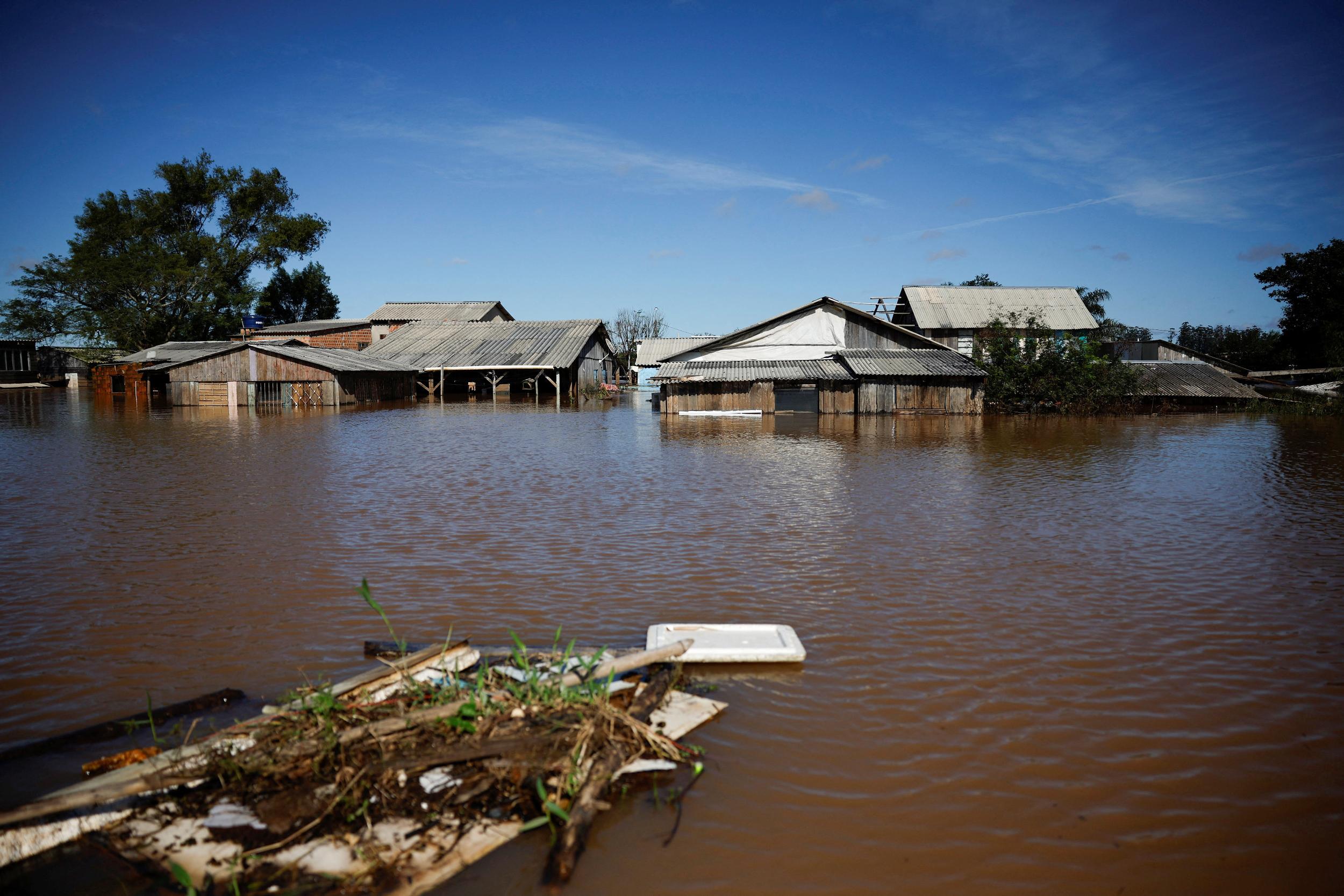
PORTO ALEGRE, Brazil, May 15 (Reuters) - Brazil's southernmost state capital may suffer severe flooding for weeks to come, experts warn, compounding the struggles of half a million people forced to abandon their inundated homes. Parts of Rio Grande do Sul state have seen more than 630 mm (25 inches) of rain so far this month, national weather service INMET reported – more than London's average rainfall in a year. The waters of Lake Guaiba, which breached its banks to flood state capital Porto Alegre, have risen again this week to 5.22 meters (17.13 feet), well above the flood level of 3.0 meters and close to last week's all-time record of 5.33 meters. Meteorologists and engineers at the Federal University of Rio Grande do Sul (UFRGS) said water levels could stabilize or keep rising if it rains again. They said it could take a month before the water retreats below flood levels, based on historical comparisons. The floods have devastated dozens of towns inland from Porto Alegre, where the downtown area remains under water. In the whole state, the death toll was at 149, while 108 were still missing. Some 250,000 addresses are still without power and more than 136,000 people have lost access to water, state officials said. On Wednesday, President Luiz Inacio Lula da Silva announced that the federal government will distribute 5,100 reais ($992) to some 240,000 families which have lost their houses or furniture by the historic floods. The measure would cost some 1.2 billion reais, according to government estimates. At Sao Leopoldo, one of the cities affected by the floods, Lula also said his administration will bring forward the payment of some social benefits for the state's citizens, while planning to buy homes from private sector to give to displaced people. An initial forecast from the UFRGS Institute of Hydraulic Research (IP) suggested the water could take 35 days to return to normal levels based on the previous worst flood in 1941, when it reached 4.76 meters. Tributaries upstream are expected to normalize before then. Lake Guaiba should return slowly to below flood levels within weeks or even by mid-June, said IPH Professor Rodrigo Paiva, but he added that it will depend on the weather ahead. "That may be delayed if it rains more. In 1941 we didn't have the rebound we have now," said IPH hydrologist Fernando Fan. Renewed rainfall over the last few days led to a new rise in the Guaiba water level, leading authorities to warn residents not to return to areas at risk. On the roadside where they sought high ground outside the inundated fishing hamlet of Paquetá, 25 km north of Porto Alegre, villagers are watching the water level closely. On May 1, after two days of intense rain, a broken dike flooded the area outside Porto Alegre, where on Tuesday only the rooftops of the village can be seen. "We are waiting for it to go down. We were happy that it was falling, but now it has started to rise again. It will take at least two months," said Cristiano Pastoriza. "We could only leave with the clothes we were wearing and our documents," the 58-year-old fisherman told Reuters. Moacir Lopes said the fish will not return until the river returns to its normal course. "It will take a long time to return, two or three months. All this bad water has to be drained. When the new water comes, the fish will come back," he said. The fishermen used their boats to rescue residents in the severely flooded neighboring village of Canoas. "When I saw people on the roofs, little children, I cried, it broke my heart," he said. Sign up here. https://www.reuters.com/world/americas/brazil-flooding-will-take-weeks-subside-experts-warn-2024-05-15/
2024-05-15 20:15
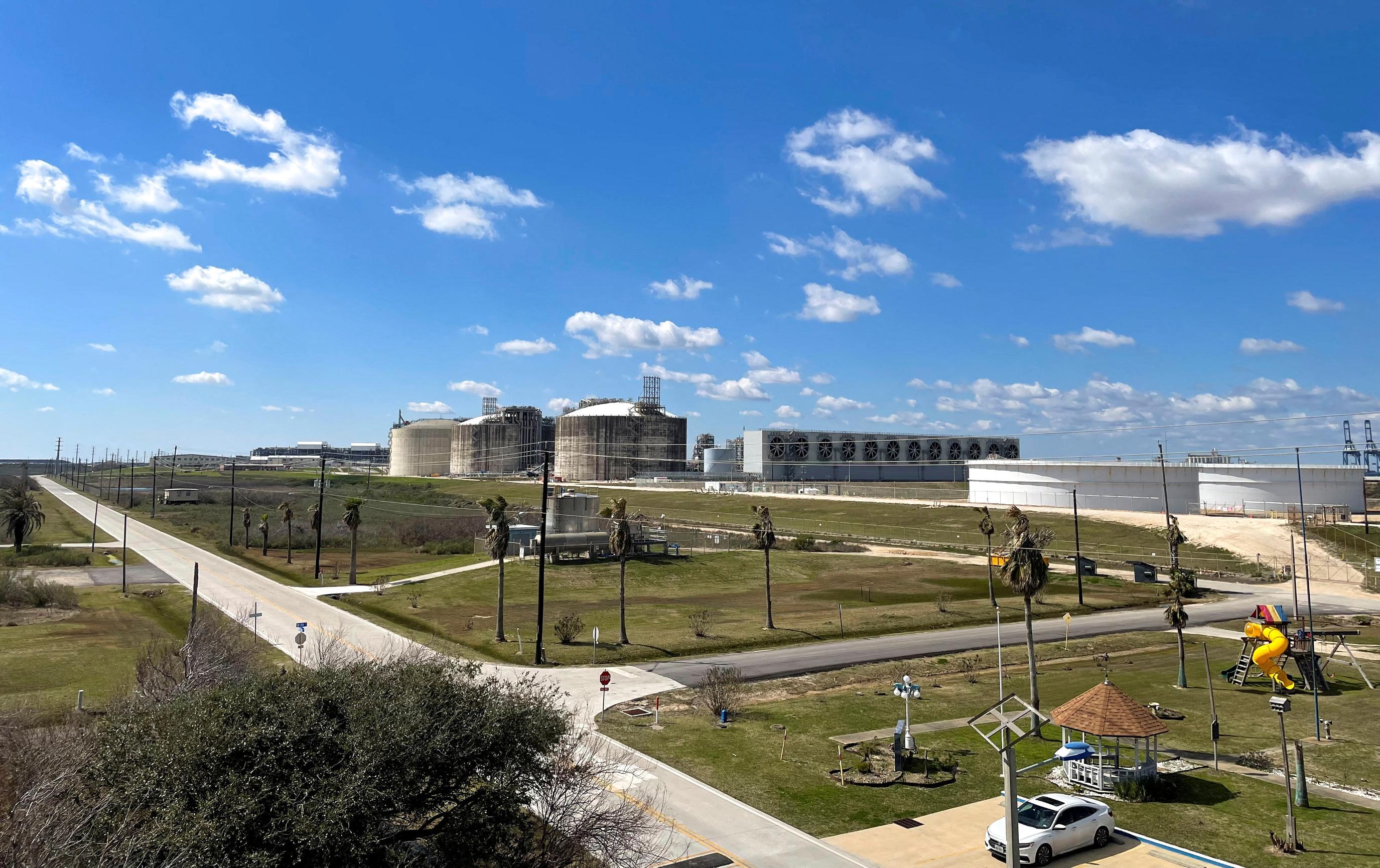
WASHINGTON, May 15 (Reuters) - Two influential U.S. Republican lawmakers have urged the head of the federal energy regulator to process applications for liquefied natural gas, or LNG, projects, saying any delays could force allies and partners to turn to countries like Qatar and Iran for the fuel. President Joe Biden, a Democrat, in January announced a pause on Department of Energy approvals of LNG exports to countries in Asia and Europe in order to study environmental, climate and economic impacts of the booming business. The Federal Energy Regulatory Commission, an independent panel, approves other aspects of LNG projects including construction. Venture Global's Calcasieu Pass 2 LNG project got FERC's environmental approval in July last year, but FERC has not so far voted on its construction. Senator John Barrasso, the ranking member of the Senate energy committee, and Representative Cathy McMorris Rodgers, the head of the House of Representatives energy committee, both Republicans, urged FERC Chairman Willie Phillips in a letter dated April 30 to process applications for LNG projects in a timely and fair manner. The U.S. last year became the world's largest exporter of LNG, which is natural gas supercooled to a liquid before being shipped. Supporters say it can help some economies quit using coal. But many environmentalists say LNG locks consumers into fossil fuel dependence for decades and that LNG once regassified can leak methane, a potent greenhouse gas, from pipelines. WHY IT'S IMPORTANT It shows Biden's pause is becoming more politically charged as it is the first official pressure Barrasso has put on FERC on the matter. This month, nearly 75 Democratic lawmakers sent a letter to Biden expressing support for the pause. Besides CP2, four other LNG projects are waiting approvals from FERC. KEY QUOTES "The Commission must not compromise its independence from the White House and the Department of Energy by 'pausing' or otherwise delaying its review of any application, the approval of which is necessary for the siting, construction, expansion, or operation of an LNG facility," the lawmakers said in their letter. "Injecting any further delay to FERC’s review process would hurt the United States and our allies and would be unfair to project proponents." WHAT'S NEXT? FERC will reveal on Thursday whether it will consider CP2 or other LNG projects at its open meeting on May 23. A FERC spokesperson said Phillips will respond to the lawmakers "in due course." Sign up here. https://www.reuters.com/business/energy/republican-us-lawmakers-urge-regulators-process-lng-project-applications-2024-05-15/
2024-05-15 20:13
NEW YORK, May 15 (Reuters) - The U.S. Southwest and Texas are at an increased risk of power supply shortfalls during times of peak demand this summer due to rising electricity consumption and supply constraints, the North American Electric Reliability Corporation said on Wednesday. Parts of the Midwest and New England are also under elevated threat of inadequate power supplies in high electricity consumption periods this summer, while the U.S. Northwest and most of the East Coast are expected to see normal conditions, NERC said. WHY IT'S IMPORTANT Extreme heat, new data centers, increased manufacturing activity and electric vehicles are raising U.S. power demand forecasts in the summer months. At the same time, predictions for lower wind power and shrinking coal-fired generation are expected to reduce supply in parts of the United States. Heavy demand on power grids without enough supply, or with a hamstrung transmission and distribution network, can raise power bills and lead to outages. A record 25 gigawatts in new solar capacity added over the past year, particularly in Texas and Florida, will help offset some of the increased demand, NERC said. Intermittent power sources, however, can underperform depending on sunshine and wind levels. Without the technology to store renewable energy for long periods, spotty power supply can contribute to a destabilized grid. KEY QUOTE "One of the key challenges operators face as the resource mix evolves is how to get through the summer evening periods with fewer available resources at their disposal," said John Moura, NERC's director of Reliability Assessments and Performance Analysis. CONTEXT Peak summer power demand hours are typically in the evenings, when workers return home, crank up cooling systems and charge electric vehicles. During those same periods, solar resources are low, which can particularly effect states with large solar power generation like California and Texas. Wildfires, which often erupt in summer and autumn, can knock out power and causing electricity prices to spike. Sign up here. https://www.reuters.com/world/us/us-southwest-texas-risk-power-shortfalls-this-summer-regulator-says-2024-05-15/

2024-05-15 20:01
LONDON, May 15 (Reuters) - U.S. gasoline prices and refining margins have come under pressure as inventories deplete more slowly than normal for this time of year, indicating supplies are plentiful, and undermining the bullish case for the fuel. Just over a month ago, investors had amassed one of the largest bullish positions in U.S. gasoline futures and options since before the pandemic, anticipating that prices would continue climbing. Gasoline had become the most attractive part of the petroleum complex for investors to bet prices would rise further in the run-up to U.S. presidential and congressional elections in November. Their bullishness was underpinned by relatively low inventories, employment growth, strong increases in household incomes and the prospect of an active hurricane season. Ukraine’s drone attacks on refineries in Russia threatened to tighten international supplies even further, prompting the Biden administration to warn Ukraine’s government to change its targeting. But the expected inventory depletion and rise in prices has failed to materialise, causing investors to liquidate most of their bullish holdings. U.S. gasoline inventories were less than 3 million barrels or 1% below the prior 10-year seasonal average on May 10, according to data from the U.S. Energy Information Administration (EIA). Rather than swelling, the deficit had narrowed progressively from 6 million barrels or 3% below the prior 10-year average eight weeks earlier on March 15. Chartbook: https://tmsnrt.rs/3wEjQu1 New Tab, opens new tab Nearby futures prices for gasoline have fallen much faster than for crude as traders have reassessed the outlook and concluded supplies will remain ample during the peak summer driving season. Second-month U.S. gasoline futures prices have recently traded $21 per barrel above front-month Brent, with the premium down from more than $28 in the middle of March. The gasoline futures calendar spread between June and September, spanning the driving season, has narrowed to a backwardation of less than $3 per barrel from more than $7 on March 18. If gasoline supplies are going to become tight this summer, leading to downward pressure on inventories and upward pressure on prices and spreads, there has been no sign yet. Investors have noticed and liquidated many of the bullish long positions in gasoline futures and options they had amassed by early April. Hedge funds and other money managers sold the equivalent of 36 million barrels of gasoline futures and options between April 9 and May 7. As a result, fund managers’ net position was cut to 49 million barrels (41st percentile for all weeks since 2013) on May 7 from 85 million barrels (88th percentile) four weeks earlier. The hedge fund community had a neutral or even slightly bearish outlook on gasoline prices having been strongly bullish just a month before. Inflation-adjusted pump prices including taxes rose to a national average of $3.73 per gallon (59th percentile for all months since 2000) in April up from a low of just $3.23 (38th percentile) in January, according to the EIA. But in the first two weeks of May, pump prices have retreated slightly as the effect of lower wholesale prices has filtered through. REFINERY HEAD-FAKE Most of the apparent tightening of gasoline supplies in the first quarter stemmed from the prolonged disruption of BP’s (BP.L) New Tab, opens new tab refinery at Whiting, Indiana following a site-wide electricity failure at the start of February. Gasoline inventories depleted by around 13 million barrels more than the seasonal average between late January and the middle of March. Since then, however, the refining system has stabilised and even rebuilt inventories in response to strong refining margins. U.S. refineries operated at 91.9% of their maximum capacity over the seven-day period ending on May 10, the highest seasonal utilisation rate since 2017. Refineries processed an average of 16.7 million barrels per day (b/d) of crude and other feedstocks, the highest for the time of year since 2019. At the same time, fuel consumption has not accelerated as much as anticipated, making it easier to rebuild stocks. Refiners, blenders and importers supplied an average of 8.6 million b/d of gasoline to the domestic market in February, the latest data available. The volume supplied, a proxy for consumption, was the lowest for the time of year since February 2021 (when the pandemic was still raging) and before that February 2014. HURRICANE SEASON Gasoline supplies are now expected to be comfortable throughout the summer, which has taken the heat and speculative froth out of the market. The main risk comes from hurricane season, which runs from June through November, with storm activity peaking in late August and early September. This year’s season is likely to be more active than usual, and poses a small but non-zero threat of disrupting major refineries clustered along the Gulf of Mexico in Texas and Louisiana. In 2023, the number of hurricanes and tropical storms making landfall on the U.S. Atlantic and Gulf Coasts was below average. El Niño conditions tend to suppress hurricane formation in the Atlantic and last summer was characterised by the formation a very strong El Niño episode. But the El Niño episode is now over and there is an above-average probability that it will be replaced by La Niña conditions that tend to boost the number of tropical storms. In addition, sea-surface temperatures in the tropical area of the North Atlantic are exceptionally warm for the time of year, which will also contribute to the formation of more tropical storms with greater intensity. Tropical storm formation requires a sea surface temperature of at least 26°Celsius (78.8 Fahrenheit), among other complex conditions. Surface temperatures in the tropical North Atlantic were already 27.4°C on average in April, a record for the time of year, and 1.54°C above the 30-year seasonal norm. The number of hurricanes, among them storms in the most severe categories, is likely to be higher this summer than in 2023 and probably above the long-term average. But not all of them will make landfall and the probability of a direct strike on Texas and Louisiana coastal refineries remains relatively low. Major refinery disruption remains a tail risk, concentrated in the months of August and September. The more probable central scenario is that gasoline supplies remain comfortable through the summer driving season. Related column: - Investors bet on further rise in US gasoline prices (April 11, 2024) John Kemp is a Reuters market analyst. The views expressed are his own. Follow his commentary on X New Tab, opens new tab Sign up here. https://www.reuters.com/business/energy/investors-abandon-bullish-case-us-gasoline-kemp-2024-05-15/

2024-05-15 19:47
SANTIAGO, May 15 (Reuters) - Chileans are bundling up with more clothes and clutching cups of hot coffee as the country faces the most intense cold snap in nearly 70 years, bringing winter weather in the middle of autumn. "Since 1950, that is, in the last 74 years, we had not had a cold wave as intense as the current one in May," climatologist at the University of Santiago, Raul Cordero, told Reuters. "So we are in the presence of the longest cold wave ever recorded in the capital, at least since 1950 for fall." For Thursday, the meteorological office expected a minimum temperature of 1 degree Celsius (34 Fahrenheit) in the central Santiago area. The change was abrupt -- within days of summer heat ending, mountains near the capital had snowy peaks. "Before, May was a very autumnal month and now we go from extreme heat to extreme cold," said student Francisca Vergara. The Chilean government also declared a "code blue" in six regions in central and south central Chile to help people living on the streets cope with the extreme cold. Cordero also said that polar cold masses clashing with tropical warm ones can cause storms, like the recent ones in Brazil where severe rains and floods have left almost 150 dead. Aside from climate change and weather events like El Nino and La Nina, Cordero said bad luck contributed to the extreme weather events. "These masses could have been found a few hundred kilometers (miles) further north or a few hundred kilometers further south and the consequences would have been different," Cordero said. Sign up here. https://www.reuters.com/world/americas/chiles-capital-faces-fiercest-cold-snap-decades-2024-05-15/
2024-05-15 19:23
Consumer price index increases 0.3% in April CPI rises 3.4% year-on-year Core CPI gains 0.3%; up 3.6% year-on-year Retail sales unchanged; core sales drop 0.3% WASHINGTON, May 15 (Reuters) - U.S. consumer prices increased less than expected in April, suggesting that inflation resumed its downward trend at the start of the second quarter in a boost to financial market expectations for a September interest rate cut. Hopes of the Federal Reserve starting its easing cycle this year were further bolstered by other data on Wednesday showing retail sales were unexpectedly flat last month. The reports suggested that domestic demand was cooling, which will be welcomed by officials at the U.S. central bank as they try to engineer a "soft-landing" for the economy. "The economic data are picture perfect in favor of interest rate cuts," said Christopher Rupkey, chief economist at FWDBONDS. "The country is not out of the woods from the threat of inflation, but we can start to see the end of the forest." The consumer price index rose 0.3% last month after advancing 0.4% in March and February, the Labor Department's Bureau of Labor Statistics said. The higher cost of living has detracted from the economy's resilience, and is a campaign theme for the Nov. 5 presidential election. President Joe Biden said prices were still too high but argued that his agenda, which includes building two million homes and taking on Big Pharma to lower prescription drug prices "will give families breathing room." Donald Trump's campaign blamed inflation on the Biden administration's policies and touted the former president's America First agenda of low taxes, lower prices and higher wages. The cost of shelter, which includes rents, increased 0.4% for the third straight month. Gasoline prices shot up 2.8%. These two categories contributed over 70% of the increase in the CPI. Food prices were unchanged. Prices at the supermarket fell 0.2%, with eggs dropping 7.3%. Meat, fish, fruits and vegetables as well as nonalcoholic beverages were also cheaper. But cereals and bakery products cost more, while prices for dairy products rose marginally. In the 12 months through April, the CPI increased 3.4% after climbing 3.5% in March. Economists polled by Reuters had forecast the CPI gaining 0.4% on the month and 3.4% year-on-year. The annual increase in consumer prices has slowed from a peak of 9.1% in June 2022. Inflation accelerated in the first quarter amid strong domestic demand after moderating for much of last year. Last month's slowdown was a relief after data on Tuesday showed a jump in producer prices in April. Inflation is being driven by providers of services like motor vehicle insurance, housing and healthcare catching up to higher costs. Economists expect price pressures to ebb this quarter, and inflation to gradually move toward the Fed's 2% target as the labor market is cooling. Fed Chair Jerome Powell said on Tuesday "I expect that inflation will move back down ... on a monthly basis to levels that were more like the lower readings that we were having last year." Financial markets saw a roughly 73% probably of a rate cut in September, up from 69% before the data. A few economists anticipate the Fed will start lowering borrowing costs in July. The central bank early this month left its benchmark overnight interest rate unchanged in the current 5.25%-5.50% range, where it has been since July. The Fed has raised its policy rate by 525 basis points since March 2022. Stocks on Wall Street were trading higher. The dollar fell against a basket of currencies. U.S. Treasury prices rose. RENTS STICKY Excluding the volatile food and energy components, the CPI rose 0.3% in April after advancing 0.4% for three straight months. That lowered the three-month annualized increase in the so-called core CPI to a 4.1% rate from a 4.5% rate. Rents increased 0.4%. Owners' equivalent rent (OER), a measure of the amount homeowners would pay to rent or would earn from renting their property, also gained 0.4% after a similar rise in March and February. Market rents have been trending lower and that is expected to show in the CPI data this year. Motor vehicle insurance increased 1.8% after surging 2.6% in March. There were also increases in the prices of personal care, recreation and education. The cost of healthcare rose 0.4%, reflecting an increase in hospital services. Airline fares cost less. Overall, services gained 0.4% after advancing 0.5% in March. Excluding rents, they climbed 0.2% after surging 0.8% in March. "Consumers' decision to purchase more used cars, and continuing to drive old cars following the pandemic, is resulting in more repairs, which is pushing up premiums, rather than strong demand today for more immediate consumption," said Richard de Chazal, macro analyst at William Blair. Used cars and trucks prices dropped for a second consecutive month. New motor vehicle prices notched their third straight monthly decline. Prices for household furnishings and operations also fell. Core goods deflation continued, though the pace slowed. In the 12 months through April, the core CPI increased 3.6%. That was the smallest year-on-year gain since April 2021 and followed a 3.8% increase in March. Based on the CPI and PPI data, economists estimated that the core personal consumption expenditures price index rose 0.2% in April after gaining 0.3% in March. That would lower the annual increase in core inflation to 2.7% from 2.8% in March. A separate report from the Commerce Department's Census Bureau showed retail sales unchanged in April after increasing 0.6% in March. Economists had forecast retail sales, which are mostly goods and are not adjusted for inflation, gaining 0.4%. Sales rose 3.0% year-on-year in April. While demand is slowing, April's flat reading was partly payback after Amazon's spring promotion boosted sales in March. Sales at online retailers dropped 1.2% after surging 2.5% in March. Sales at food services and drinking places, the only services component in the report, gained 0.2%. Economists view dining out as a key indicator of household finances. Retail sales excluding automobiles, gasoline, building materials and food services fell 0.3% last month after a downwardly revised 1.0% increase in March. These so-called retail sales were previously reported to have advanced 1.1% in March. Core retail sales correspond most closely with the consumer spending component of gross domestic product. March's core retail sales set a higher growth base for second-quarter consumer spending, despite the softness in April. "We see this as the potential start of a softer consumer spending environment rather than the beginning of a sharp retrenchment," said Oren Klachkin, an economist at Nationwide. Sign up here. https://www.reuters.com/markets/us/us-consumer-prices-rise-less-than-expected-april-core-cpi-slows-2024-05-15/