
2024-05-15 08:43
FRANKFURT, May 15 (Reuters) - The use of artificial intelligence in finance is still in its infancy but it needs to be monitored and possibly regulated to prevent harm to consumers and ensure the proper functioning of markets, the European Central Bank said on Wednesday. The ECB saw a number of opportunities from the use of generative AI by banks and other financial institutions, such as superior processing of information, more efficient customer service and even a greater ability to spot cyberthreats. But it also warned about risks including herding behaviour, over-reliance on a limited numbers of providers and more sophisticated cyberattacks. "Therefore, the implementation of AI across the financial system needs to be closely monitored as the technology evolves," the ECB said in an article published as part of its regular Financial Stability Review. "Additionally, regulatory initiatives may need to be considered if market failures become apparent that cannot be tackled by the current prudential framework." The European Union has formulated the world's first artificial intelligence rules, which will force general-purpose and high-risk AI systems to comply with specific transparency obligations and EU copyright laws. So far, however, the ECB said the adoption of such systems by European financial companies was "in the early stages". "Market contacts indicate that euro area financial institutions may be slower to adopt generative AI, given the range of previously discussed risks (and) also considering potential reputational risks," the ECB said. Sign up here. https://www.reuters.com/technology/ais-use-finance-may-need-new-rules-ecb-says-2024-05-15/

2024-05-15 07:43
SINGAPORE, May 15 (Reuters) - Jincheng Petrochemical,a newly restructured independent refiner controlled by the Liaoning provincial government in northeastern China, is seeking crude oil import quotas for its three plants, four sources with knowledge of the matter said. Jincheng Petrochemical has applied to Beijing for quotas to import 15 million metric tons of crude per year, which equates to 300,000 barrels per day (bpd), or about 3% of the shipments the world's largest crude importer brings in. Jincheng Petrochemical, based in the city of Panjin, was formed by the merger of three refineries in Liaoning province previously owned by private refiner Bora Group and Panjin Haoye Chemical Co, both of which were found to have evaded fuel taxes in a government investigation in 2021. Jincheng did not immediately respond to a request for comment on the quota request. The National Development and Reform Commission and Ministry of Commerce, which are responsible for the oil quota system, did not immediately respond to a request for comment. If the quotas are approved, the additional volumes Jincheng purchases could increase the amount of oil that China buys from Russia, Iran or Venezuela that make up much of the crude consumed by independent refiners such as Jincheng, trade sources said. Previously state refiner Sinopec Corp was assigned the oil supplier to the plants now run by Jincheng, which have a combined processing capacity of 400,000 bpd, after the previous owners lost their import quotas following the 2021 investigation. Sinopec's imports are not subject to quota management. Bora and Haoye were among the targets of an official crackdown on fuel tax evasion and illegal oil quota trading in 2021. The regulatory scrutiny quashed some imports leading to the first annual decline in 20 years in shipments to China that year. Several other independent refiners were also stripped of import quotas following that probe. Sign up here. https://www.reuters.com/business/energy/govt-backed-chinese-refiner-seeks-oil-import-quota-after-restructuring-sources-2024-05-15/

2024-05-15 07:13
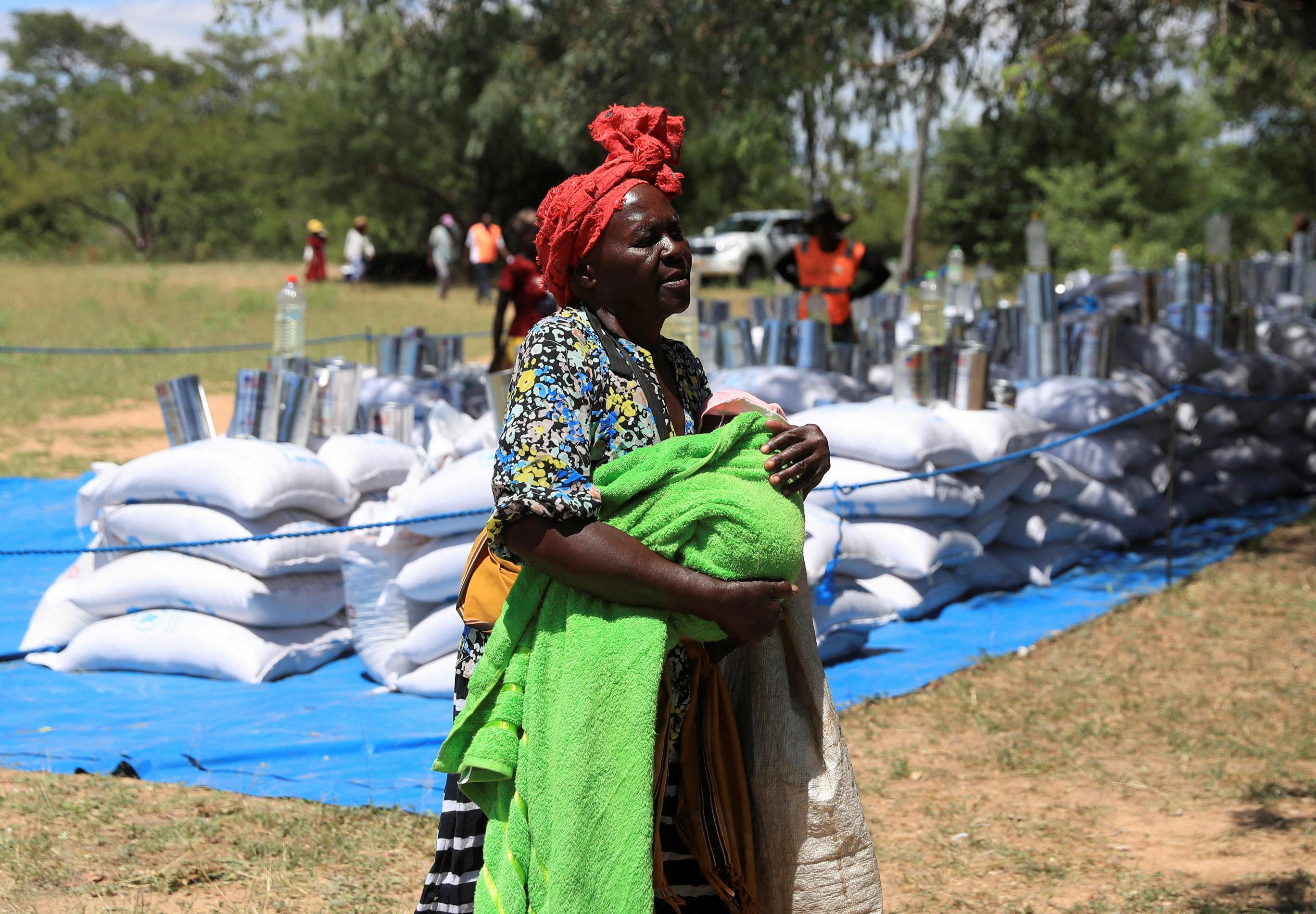
HARARE, May 15 (Reuters) - More than half of Zimbabwe's population will need food aid this year following a devastating drought that led to widespread crop failure as humanitarian organisations seek funding to save many from hunger, the country's cabinet heard late on Tuesday. About 6 million people in rural areas and 1.7 million in urban areas will require assistance, according to the Zimbabwe Livelihoods Assessment Committee (ZIMLAC). Zimbabwe is among the worst hit countries by the El Nino induced drought in Southern Africa, with Zambia and Malawi also facing food shortages this year. This is Zimbabwe's worst drought in 40 years, according to the government. The latest crop assessment presented to the Cabinet of Zimbabwe also revised upwards Zimbabwe's maize production deficit to 77% from last week's predictions. "A 77% reduction in production to 744,271 metric tonnes is estimated for the 2023/2024 summer season, indicating a major shortfall for both food and stock feed," according to a cabinet brief. A local consortium of private millers plan to import 1.4 million metric tonnes of white and yellow maize from Brazil and other countries to cover the food deficit. The United Nations and the United Nations Children's Fund (UNICEF) have appealed for financial assistance to save millions from hunger. It follows the government's appeal for $2 billion in food aid from well wishers and donors. Zimbabwe has failed to feed itself since 2000, when former president Robert Mugabe led land reforms which disrupted production, while climate change has worsened the country's ability to grow enough food. Sign up here. https://www.reuters.com/world/africa/more-than-half-zimbabwean-population-will-need-food-aid-cabinet-says-2024-05-15/
2024-05-15 06:54
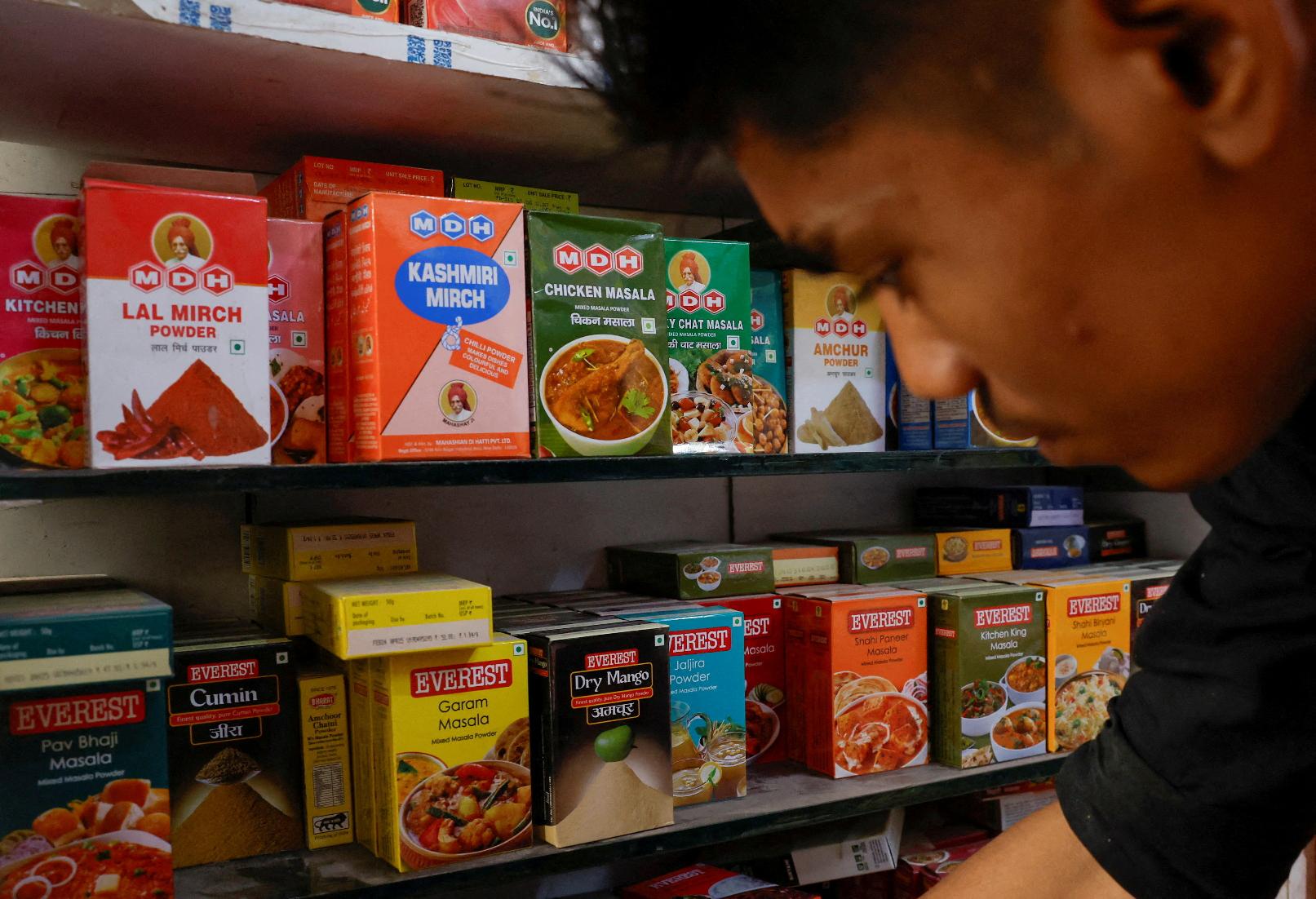
HYDERABAD, May 15 (Reuters) - New Zealand's food safety regulator on Wednesday said it is investigating possible contamination in spice products of top Indian brands MDH and Everest after they faced scrutiny in other countries. The United States and Australia have been looking into contamination after Hong Kong last month suspended sales of three spice blends of MDH and one of Everest, saying they contained high levels of a cancer-causing pesticide, ethylene oxide. Singapore ordered a recall of the Everest spice mix. In a statement to Reuters, the regulator, New Zealand Food Safety, said it is aware of the overseas recalls. "Ethylene oxide is a chemical known to cause cancer in humans, and its use for food sterilisation has been phased out in New Zealand and other countries. As MDH and Everest spices are also available in New Zealand, we are looking into this issue," said Jenny Bishop, the regulator's acting deputy director general. MDH and Everest did not immediately respond to Reuters requests for comment. They have said their products are safe for consumption. Regulators in India have inspected MDH and Everest plants and sent samples for testing after the global scrutiny, though the results have not yet been made public. For decades, MDH and Everest have been household names in India. Their products are also exported to the United States, Europe, South East Asia, Middle East and Australia. MDH has since 2021 also seen an average 14.5% of its U.S. shipments rejected over the presence of bacteria salmonella, a Reuters analysis of U.S. Food and Drug Administration data has found. Sign up here. https://www.reuters.com/world/india/new-zealand-looking-into-indian-spice-brands-over-contamination-2024-05-15/
2024-05-15 06:51
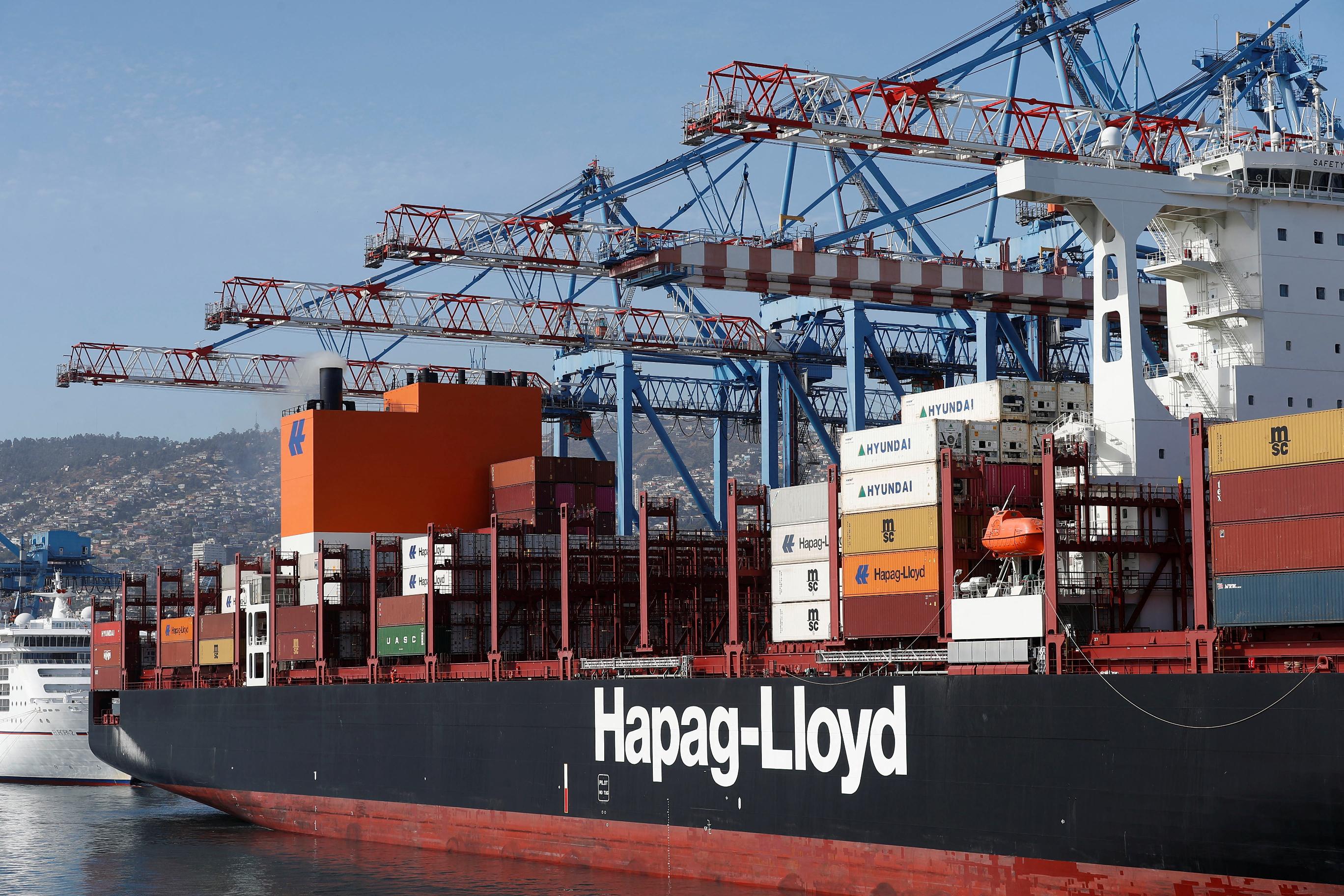
Freight rates rise on Red Sea disruption Lower end of range on 2024 earnings outlook raised Costs in check, demand recovering FRANKFURT, May 15 (Reuters) - German container firm Hapag-Lloyd (HLAG.DE) New Tab, opens new tab on Wednesday posted an 84% drop in first-quarter net profit but raised the lower end of its 2024 outlook amid rising demand and freight rates. "Even though our results are significantly below the exceptionally strong figures from the previous year owing to the normalisation of supply chains, we are pleased to have got the new year off to a good start," said CEO Rolf Habben Jansen. Net profit at the world's number five container shipping operator fell to 299 million euros ($324 million) from 1.747 billion a year earlier. Revenue fell 24% to 4.260 billion euros. However, for 2024 the company said it now expects earnings before interest, taxation, depreciation and amortisation (EBITDA) of 2-3 billion euros versus a forecast of 1-3 billion it issued on March 14. It said it expects earnings before interest and taxes (EBIT) of between zero and 1.0 billion euros, up from a forecast of minus 1 billion to 1 billion. Revenue is expected to be supported by disruption caused by the situation in the Red Sea, where commercial shippers are avoiding the Suez Canal because of attacks on vessels by Yemen-based Houthi militants. The crisis has pushed up freight rates because alternative trips around the southern tip of Africa are longer and therefore more costly and this is being passed on to customers. Also, Hapag-Lloyd, in anticipation of numerous vessels joining the world fleet, has launched measures to keep costs in check. Its first-quarter transport expenses were unchanged from a year earlier at 3.0 billion euros. Transport volumes, meanwhile, increased by 6.8% to 3 million twenty-foot equivalent unit (TEU) containers, reflecting healthy demand, especially on transpacific routes where it is a strong player. ($1 = 0.9241 euros) Sign up here. https://www.reuters.com/world/europe/hapag-lloyd-net-profit-down-84-q1-raises-bottom-2024-outlook-2024-05-15/
2024-05-15 06:43
RBI warned by Treasury about financial system access May 6 letter voiced concern over its Russia presence U.S. concerns remain even after Deripaska deal scrapped-source Raiffeisen says its Russia activities 'significantly reduced' Austria finance ministry - assumes sanctions respected FRANKFURT/VIENNA, May 15 (Reuters) - Raiffeisen Bank International (RBIV.VI) New Tab, opens new tab was warned by the U.S. Treasury in writing that its access to the U.S. financial system could be curbed because of its Russia dealings, according to a person who has seen the correspondence. On May 6, Deputy Secretary of the Treasury Wally Adeyemo sent a letter to RBI, expressing concern about RBI's presence in Russia as well as a $1.5 billion deal with a sanctioned Russian tycoon that the bank has since scrapped, according to the person, who requested anonymity because the matter is private. While the deal linked to Oleg Deripaska was ditched by Raiffeisen days after the letter arrived, the source said that the U.S. Treasury's concerns over the Austrian bank's business in Russia remain. The warning is the strongest yet to the biggest Western bank in Russia and follows months of pressure from Washington, which has been looking into RBI's business in the nation for more than a year. It underscores the deep frustration in Washington with the lender despite its recent decision to abandon a deal that had exacerbated those tensions. While many Western governments and corporations have radically reduced ties to Moscow since it invaded Ukraine over two years ago, Austria remains linked with Russia through critical gas pipelines, with Vienna still serving as a hub for cash from Russia and its ex-Soviet neighbours. Reuters reported in March about strong U.S. opposition to the Deripaska transaction, which Raiffeisen had billed as a means of unlocking some of its funds stranded in Russia. Raiffeisen shares dropped 3% as trading opened, making it the top loser among European banks. A spokesperson for Raiffeisen said that it had walked away from the deal and had not entered into any such transactions. The spokesperson said RBI had "significantly reduced" activities in Russia and taken broad measures to mitigate the risks from sanctions. "RBI will continue to work towards the de-consolidation of its Russian subsidiary," the spokesperson told Reuters. In the letter, Adeyemo, the U.S. Treasury's second-highest ranking official, said Raiffeisen's extending activities would contradict assurances RBI had given to the Treasury that they were trying to wind down in Russia, according to the source. Adeyemo warned that RBI's actions increased the risk of Treasury taking action to restrict its access to the U.S. financial system given concerns that its behaviour put U.S. national security at risk. "The U.S. is losing patience. Enough is enough," said Richard Portes, a professor of economics at London Business School who has written about sanctions. He said there had been "too much" Russian money flowing through Raifeissen and other Western banks, frustrating the Americans. "That (money) has clearly blunted the effectiveness of U.S. sanctions," he added, "This is a big signal." PILING PRESSURE The United States is the world's most powerful regulator chiefly because it can sever a bank's access to the dollar, a cornerstone of international finance. Losing access to the U.S. currency would be likely to plunge any bank into a crisis. In the letter, Adeyemo also made reference to U.S. President Joe Biden's Executive Order authorizing U.S. secondary sanctions on foreign financial institutions that conduct significant transactions involving Russia's military-industrial base. The warning piles more pressure on Raiffeisen, a critical financial bridge for Russian individuals and companies to the West, giving them access to euros and dollars. RBI had vowed to spin off its Russian business, which provides a payment lifeline to hundreds of companies there, after coming under pressure from international regulators. But two years into war, little has changed. A spokesperson for Austria's finance ministry noted the bank's pledge to de-consolidate its business in Russia and said that it assumed all sanctions were being respected. Russian authorities had made it clear to RBI, which has around 2,600 corporate customers, 4 million local account holders and 10,000 staff, that they wish it to stay because it enables international payments, one source has told Reuters. Although Italy's UniCredit also has a business in Russia and is similarly reluctant to leave, RBI is far larger and has become a test of western resolve to end ties with Russia. Sign up here. https://www.reuters.com/business/us-warned-raiffeisen-access-dollar-system-could-be-curbed-over-russia-source-2024-05-15/


