2024-05-15 06:43
Now expects net loss vs break even in 2023/24 Books impairments on materials trading division Thyssenkrupp shares -2.2%, Thyssenkrupp Nucera -7% FRANKFURT, May 15 (Reuters) - German conglomerate Thyssenkrupp (TKAG.DE) New Tab, opens new tab cut its annual forecasts for sales and net profit for the second time in three months, blaming lower demand and prices at its steel unit, half of which is to be sold to Czech billionaire Daniel Kretinsky. The scaled-back guidance underscores a challenging environment for companies focused on capital goods, which need to tackle elevated inflation, raw materials price swings and cooling global demand. It comes less than three weeks after Thyssenkrupp announced a deal to sell 20% of its steel business to Kretinsky's EPCG, a process that has led to a rift with powerful workers that accuse the group's CEO Miguel Lopez of not keeping them in the loop. Thyssenkrupp's supervisory board will meet on May 23 to vote on the deal. Labour representatives hold half the seats but can be outvoted by Chairman Siegfried Russwurm, whose vote will count twice in case of a stalemate. "Mr Lopez should not feel too secure. He has strong opponents," Germany's top union IG Metall said in a statement on Wednesday, calling for an action day at Thyssenkrupp's headquarters on the day of the board meeting. Tensions run high also because cheap Asian steel imports have been a major problem for European steelmakers, including Thyssenkrupp, and the hope is that a deal with EPCG will make the business more competitive. Thyssenkrupp is in talks with Brussels about tightening import conditions to support the local steel sector, Lopez said, amid a cloudy global environment in which tariffs have become more frequent. Highlighting a "gloomy market environment", Lopez said the company had made progress with its turnaround since the start of the year, singling out steps to spin off its marine divisions, which may be sold to private equity firm Carlyle (CG.O) New Tab, opens new tab. Thyssenkrupp, which makes submarines, car parts and bearings for the wind industry, now expects an annual net loss in the low triple-digit millions of euros for the fiscal year to September, it said on Wednesday, having previously forecast breaking even. According to LSEG data, analysts on average expect a net profit of 203 million euros ($220 million) in the year to September. The company had already cut its outlook when it released first-quarter results in February. Thyssenkrupp kept its outlook for adjusted operation profit and free cash flow before mergers and acquisitions. Weakening demand led to impairments at its materials trading division, the company said, with outgoing finance chief Klaus Keysberg quantifying it as a mid double-digit million euro sum. Thyssenkrupp shares were 2.2% lower. Additional headwinds came from lower-than-expected quarterly results at Thyssenkrupp Nucera (NCH2.DE) New Tab, opens new tab, in which Thyssenkrupp owns a majority, shares in which were down 7%. ($1 = 0.9245 euros) Sign up here. https://www.reuters.com/business/thyssenkrupp-cuts-sales-net-profit-forecasts-impairments-lower-demand-2024-05-15/
2024-05-15 06:35
May 15 (Reuters) - Ukrainian grid operator Ukrenergo has cancelled previously imposed emergency country-wide power cuts, private energy firm DTEK said on Wednesday. Ukrenergo imposed restrictions from 6:40 a.m. to 9 a.m. (0440-0700 GMT), saying that power shortages had been caused by damage to generating capacity from Russian strikes. This follows cuts that took place across Ukraine on Tuesday evening. Sign up here. https://www.reuters.com/world/europe/ukraine-emergency-power-cuts-cancelled-grid-operator-says-2024-05-15/

2024-05-15 06:22
KIMENDE, Kenya, May 15 (Reuters) - A landslide that followed heavy rain in central Kenya has swept away at least five people, residents said on Wednesday, and the Red Cross said its workers would assist in rescue efforts. The landslide occurred in Kimende Escarpment in Kiambu County, north of the capital Nairobi, the Kenya Red Cross said in a post on social media platform X late on Tuesday. "The area has been cordoned off and declared a danger zone," it said. Joseph Gitau, a resident of Kimende, said his cousin was among four people engulfed by the landslide, which happened while they were walking along a road. "There were four people altogether and three of them were slightly ahead of the other one who was behind. Unfortunately, the soil covered them all," he told Reuters. A second witness, George Kariuki, said a motorcycle rider was also hit by the landslide, while his colleague managed to escape. "The second motorbike wasn't so lucky because the rider got caught by the landslide as he tried to turn back. I saw that and started screaming for help," Kariuki said. Heavy rains and floods in the East African country since late March have killed at least 289 people and displaced 285,600, latest government statistics show. In the single deadliest incident, at least 61 people were killed in late April in a mudslide and flash floods in the town of Mai Mahiu in central Kenya. Sign up here. https://www.reuters.com/world/africa/kenya-red-cross-says-responding-landslide-area-centre-country-2024-05-15/

2024-05-15 06:17
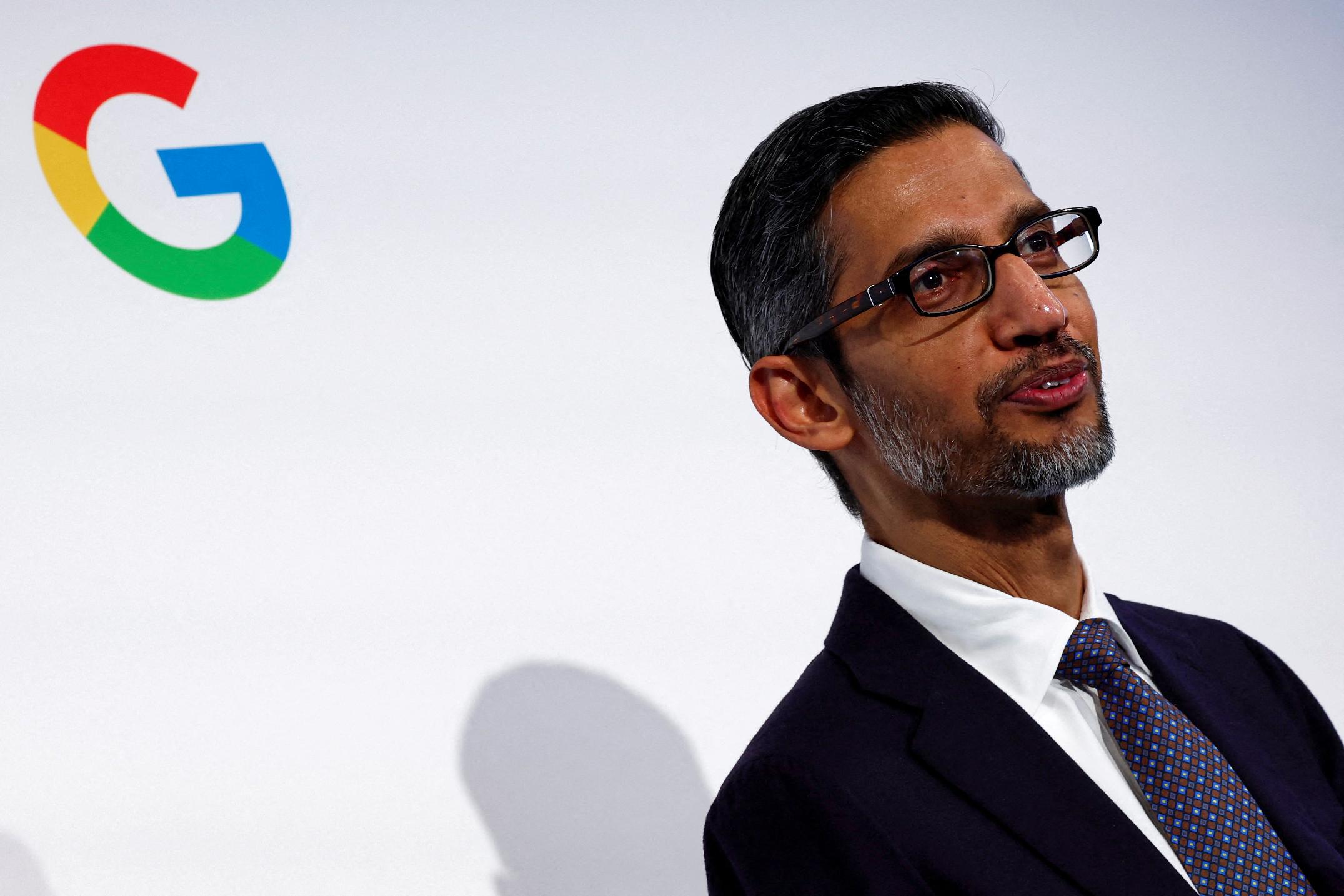
MOUNTAIN VIEW, California, May 14 (Reuters) - Google parent Alphabet (GOOGL.O) New Tab, opens new tab on Tuesday showed how it is building on artificial intelligence across its businesses, including a beefed-up Gemini chatbot and improvements to its prized search engine as it races to compete with AI rivals. The flurry of announcements underscores Google's efforts to refresh its products since Microsoft-backed (MSFT.O) New Tab, opens new tab OpenAI’s 2022 launch of ChatGPT dazzled the public, threatening the incumbent's long reign over online search and AI. Among Google’s latest salvos was an addition to its family of Gemini 1.5 AI models known as Flash that is faster and cheaper to run; a prototype called Project Astra, which can talk to users about anything captured on their smartphone camera in real time; and search results categorized under AI-generated headlines. "This is a moment of growth and opportunity," Alphabet CEO Sundar Pichai told reporters, when asked if the AI updates could risk Google’s profitable business. The product presentation at Google's annual I/O developer event in Mountain View, California, followed a shorter showcase by rival OpenAI on Monday. OpenAI demonstrated how ChatGPT could voice answers with human-like intonation to any written or visual prompt. The startup's CEO, Sam Altman, wrote that OpenAI had delivered software that "feels like AI from the movies." Google’s news at times covered similar ground, underscoring the fierce competition between the two AI developers. For instance, Alphabet’s AI unit, Google DeepMind, has worked to build technology that can carry out day-to-day tasks for consumers. Early results have manifested in Project Astra, a tool that can use a smartphone camera and draw conclusions about the world around it. In a demo video shown during Google I/O, a user deployed it to identify a speaker and locate glasses they had left in another part of the room. The company also teased how it could pair Project Astra with what it calls Gemini Live, a potentially more natural-sounding voice and text aide than its Google Assistant of the past. Demis Hassabis, CEO of Google DeepMind, said of the work behind Project Astra: "We wanted to build a universal AI agent that can be truly helpful in everyday life." Another area in which Google showed how it is facing off against competitors was video generation. The company teased Veo, an AI model that can spin up 1080p-resolution videos lasting longer than a minute, available to approved creators on a preview basis, filmmaker Donald Glover among them. OpenAI has promoted film-conjuring software of its own among Hollywood executives, enthralling and worrying the creative industry. Google also announced improvements to its Gemini Pro 1.5 model that is capable of making sense of a massive amount of data. On Tuesday, it said it was doubling that amount, to 2 million tokens, meaning the AI potentially could answer questions when given thousands of pages of text or more than an hour of video to ingest. The Pro model - starting with prompt sizes of up to 1 million tokens, or pieces of data - will also be available to subscribers to Google’s Gemini Advanced service. Alphabet shares were up 1% at $172.59 on Tuesday afternoon. NEW CHIP, NEW SEARCH Google also shed light on its efforts to power AI with new computing chips and revamp its namesake search engine. The company announced a sixth-generation tensor processing unit (TPU), which aims to give it and its Google Cloud customers an alternative to industry heavyweight Nvidia's (NVDA.O) New Tab, opens new tab powerful processors. The new chip will be available to its cloud customers in late 2024, Google said. Meanwhile, for U.S. users of Google Search browsing the Web in English, the company said it soon will use AI to help organize search results for queries on dining, recipes, and eventually movies, books and other content. Also for Google search, the company is rolling out AI Overviews to all users in the U.S. this week, after a long period of public testing since last year's I/O event. The feature uses generative AI to synthesize information and answer more complex queries for which there is no simple answer on the Web. Analyst Jacob Bourne of eMarketer said: "The AI Overviews launch reception this week will be an indicator of how well Google can adapt its Search product to meet the demands of the generative AI era." He added, "To maintain its competitive edge and satisfy investors, Google will need to focus on translating its AI innovations into profitable products and services at scale." Ads will remain in slots throughout a given Google Web page, the company said, and AI Overviews will roll out to more than a billion people by year end. Alphabet posted revenue of $307.4 billion in 2023, the majority of which came from ads on Google Search and other properties. The company also showed off an experiment that will let users ask questions of videos they upload to Google Search, as they can do with images today. The company demonstrated how this could help diagnose what is wrong with a broken record player. Sign up here. https://www.reuters.com/technology/alphabet-spotlight-ai-innovations-developer-conference-2024-05-14/
2024-05-15 06:06
LONDON, May 15 (Reuters) - Big public debts typically stem from big economic and political junctures that require government to spend big - but reining them back risks 'creative' solutions markets may struggle to price. The cumulative cost of post-pandemic public spending amid new geopolitical realities - including anything from green energy investment, chip-making security or Ukraine-related defence bills for example - are now getting plotted into years ahead of outsize government deficits and debt projections. The uncomfortable question of debt sustainability is top of mind again for many in financial markets. Although an issue across the Western world, much of the sound and fury about mounting debts centres on the United States - and for good reason. The Congressional Budget Office projects a 17 percentage point jump in the U.S. public debt-to-GDP ratio over the next 10 years to 116% - twice the average level of the past 20 years - and then rising even further to 166% by 2054. Describing it as a 'non-controversial' statement, Federal Reserve Chair Jerome Powell on Tuesday said U.S. fiscal policy was on an 'unsustainable path'. While that may be stating the obvious, it's a bald statement from the most powerful public servant presiding over the rising cost of that debt pile. And this is where the whole issue risks looping. Having hit a record low in April 2021, the average interest cost on the U.S. public debt has more than doubled since then to 3.23% - the highest in 14 years - as the Fed has hiked interest rates to contain the post-pandemic inflation spike. The persistence of brisk growth and above-target inflation despite that monetary tightening is, for many economists, at least partly down to the demand stimulus created by those unchecked deficits. And it argues, in turn, for tighter Fed policy than many had hoped. And even though the CBO's long-term debt projections are explosive, they are based unnervingly on relatively modest expectations for borrowing costs ahead - with the average debt servicing cost only getting back above the 20-year average of 3.7% in 2054. The problem comes from the debt accumulated in the interim and the fact the CBO can't see a 'primary' budget gap that excludes interest costs returning back below 2.0% of GDP - also the average of the 1994-2023 period - for the next 30 years. What's more, total debt servicing costs start to exceed its projected nominal GDP growth projections from 2044 onwards - breaching an oft-cited debt sustainability red line on the need to keep "r minus g", or the interest rate minus growth, in negative territory. The CBO is not alone of course. The International Monetary Fund doesn't see the overall annual U.S. deficit back below 6% of GDP for the next five years at least - even if slightly off this year's eye-watering 7.1%. What's for sure is that no one sees any fiscal retrenchment in this election year. And the level of Fed easing expected has been scaled back sharply as inflation gets stuck above target, adding to renewed bond market angst over the past month. What happens after the election is another question - but don't hold your breath. NEEDS BE... Justification for the fiscal largesse has started to take on a different tone in the meantime - even in Europe where the deficit and debt trajectories are more contained over the coming five years. UniCredit's chief economic advisor Erik Nielsen this week recounted an anecdote from the recent IMF meeting during which an unnamed U.S. Treasury official told him people were looking at 'debt sustainability' the wrong way - describing what appeared to be a 'war economy' rationale for heavy spending. Existential threats to U.S. democracy and institutions and the priorities of tense geopolitical rivalry, it was argued, required the outsize public spend to bolster the economy longer-term and to garner internal and external support for American status quo and its position in the world. Narrow debt sustainability, as a result, was merely a subset of that goal and basically irrelevant if the overarching goals failed. As to whether the maths eventually add up, there seemed to some hopes the Fed will smooth the path and that growth holds up. "This may lead to a higher debt burden to GDP for longer – and into the next generations," Nielsen said, recounting the chat. "But, if managed properly, it'll be a future generation still living in the world's leading liberal democracy, as opposed to in a country in chaos ... and/or potentially dominated in several key areas by China or other non-democracies." French President Emmanuel Macron made a similar point about Europe last month in a speech in which he claimed: "There is a risk our Europe might die." Urging the central bank to help ensure that didn't happen was one of his many solutions and he called for an expansion of the European Central Bank's mandate to go beyond inflation and target faster growth and address climate too. Stopping short of endorsing a wider ECB mandate, UniCredit's Nielsen also reckoned the bank had been too severe in its recent tightening relative to the needs of retooling the euro economy and that the resulting recession had undermined investment. "After all, if – just if – a central bank’s reaction function causes unnecessary economic pain inside the electoral cycle, then it runs the risk of a political reaction." So much for centrist voices. In conservative quarters, the knives are also out for central bank independence. The Wall Street Journal reported late last month that allies of Republican U.S. presidential candidate Donald Trump are drafting proposals that would attempt to erode Fed independence if the Republican former president wins - arguing Trump should be consulted on rate decisions and have the authority to remove the Fed Chair before his term ends. And ruling British conservatives trailing in opinion polls ahead of an imminent general election there are also reported to be keen to lean on the Bank of England New Tab, opens new tab too to aid their cause. If the imperatives of fiscal retrenchment and electoral cycles don't quite mix, the easier option may well be to ensure monetary policy makers keep the whole show on the road. Stressing a 'war footing' may just increase those risks. The opinions expressed here are those of the author, a columnist for Reuters. Sign up here. https://www.reuters.com/markets/war-economy-angle-debts-risks-creative-solutions-mike-dolan-2024-05-15/
2024-05-15 05:57
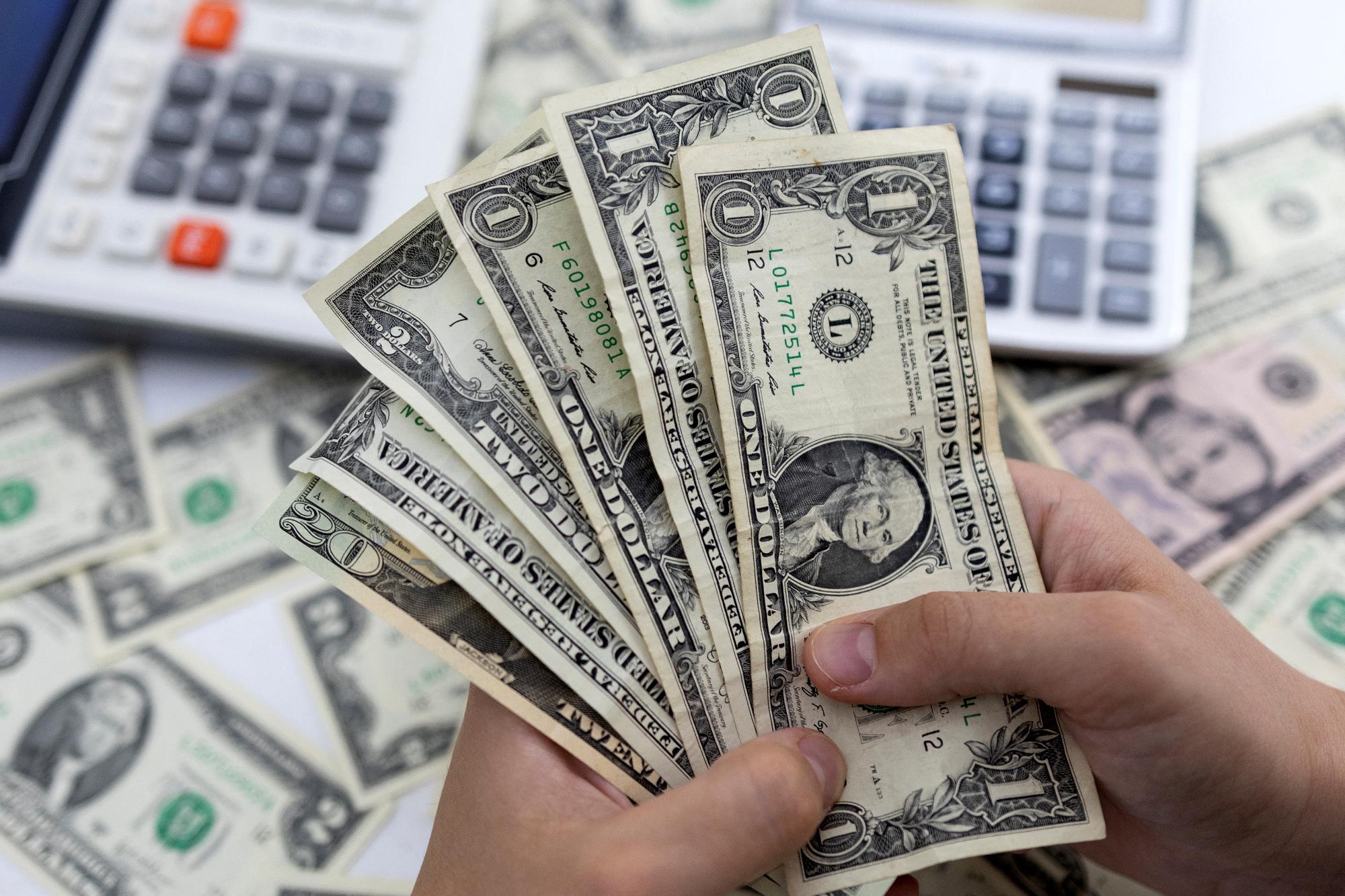
NEW YORK, May 15 (Reuters) - The dollar slumped against major currencies on Wednesday after U.S. consumer prices in April showed inflation had resumed trending lower in the second quarter, raising hopes the Federal Reserve can deliver an interest rate cut as early as September. Also boosting optimism that the Fed was closer to a rate cut was a reading of U.S. retail sales that was unexpectedly flat last month, as higher gasoline prices pulled spending away from other goods in a sign the consumer was retrenching a bit. After inflation proved "sticky" in the first quarter, with housing rental rates and other prices remaining stubbornly high, the market welcomed the CPI data. But slowing retail sales provided the real news for the market. "You go to see the lead actor in the movie, but the supporting actor steals the show and it's retail sales, which is really driving the price action today across the board," said Roosevelt Bowman, senior investment strategist at Bernstein Private Wealth Management in New York. The Australian dollar and other currencies known as high-beta because of their volatility performed well, he said. "Some of the higher-beta currencies that have been under pressure this year, that have been favorite sell positions against the dollar, they're doing quite well today," he said. However, Bowman said the day's data wouldn't change the Fed's outlook on near-term inflation but led the market to buy duration in the form of Treasuries and to sell the dollar. The Australian dollar gained 0.97% to 0.6687, while the Mexican peso rose 0.81% to 16.6971 per dollar. Futures traders priced in a higher probability of rate cuts, with 24 basis points seen for when the Fed meets in September, and almost 51 bps of cuts by December, according to LSEG data. The dollar index , which measures the greenback against a basket of major currencies including the yen and the euro, fell to a fresh one-month low at 104.30, and was last 0.66% lower at 104.35. One of the dollar's biggest declines was against the yen as it weakened 0.96% to 154.94. The drop would likely keep at bay currency intervention by the Bank of Japan and Japanese other authorities, said Marvin Loh, senior global macro strategist at State Street in Boston. "The BOJ is going to like the dollar-yen at 155 again," he said. "The fast money was definitely willing to push the dollar again higher after the intervention." The dollar's surge to a 34-year peak of 160.245 yen on April 29 triggered two rounds of aggressive yen buying that traders and analysts suspect was the work of the BOJ and Japan's Finance Ministry. The consumer price index rose 0.3% last month after advancing 0.4% in March and February, the Labor Department's Bureau of Labor Statistics said. In the 12 months through April, the CPI increased 3.4% after climbing 3.5% in March. Economists polled by Reuters had forecast the CPI gaining 0.4% on the month and advancing 3.4% year-on-year. The unchanged reading in retail sales last month followed a slightly downwardly revised 0.6% increase in March, the Commerce Department's Census Bureau said on Wednesday. Retail sales were previously reported to have risen 0.7% in March. Fed Chair Jerome Powell gave a bullish assessment on Tuesday of where the U.S. economy stands, with an outlook for continued above-trend growth and confidence in falling inflation that, while eroded by recent data, remains largely intact. In other major currencies, the euro rose 0.52% to $1.0877 and sterling rose 0.69% to 1.2675. The dollar dropped 1.3% to 10.6729 versus the Norwegian krone after hitting 10.6671,its lowest level since April 10, with analysts saying the gap between U.S. and Norwegian rates might have peaked. Bitcoin rose 6.12% to $65,397.00. Sign up here. https://www.reuters.com/markets/currencies/dollar-droops-ahead-crucial-cpi-test-yen-under-pressure-2024-05-15/