2024-05-14 05:58
MELBOURNE, May 14 (Reuters) - BHP Group (BHP.AX) New Tab, opens new tab is likely to sweeten its $43 billion takeover offer for Anglo American for a second time and possibly add cash, investors in both companies said on Tuesday, after the London-headquartered target rejected a higher bid. Anglo said the improved all-share offer, up 10% from BHP's initial proposal, continued to significantly undervalue the company. Shares in BHP were trading 0.5% lower at A$43.03 on Tuesday. BHP has until May 22 to return with a binding offer or walk away under UK takeover rules. The revised bid again required Anglo to sell its shares in iron ore and platinum assets in South Africa, a structure Anglo says is unattractive. "The language in the release suggests it's not the best and final offer, said Todd Warren, a portfolio manager at Tribeca Investment Partners, which holds Anglo shares. Anglo said on Monday it had accelerated plans to deliver its standalone strategy and would update investors on Tuesday. "The market is waiting with baited breath for the details of Anglo's strategy day. There's not a lot Anglo can do to realise the immediate value that would be daylighted by accepting a BHP bid," Warren said. BHP CEO Mike Henry is due to present at Bank of America's global mining conference in Miami later on Tuesday. Several Australian fund managers holding BHP shares spoke to Reuters ahead of his presentation on condition of anonymity because of the sensitivity of the matter. One BHP investor said it would be reasonable for the miner to add a cash component to get the deal done, though the overall deal structure was complex, which raised risks around Anglo achieving acceptable prices for unwanted assets. A second BHP investor said he would be surprised if BHP did not come back with another offer, adding that it still had scope to add a cash component. "The copper is what we like," the investor said. "I think there is investor support broadly for another bid." Copper prices have climbed 12% in the past six weeks to hit two-year highs on Tuesday above $10,200 a metric ton. Anglo is attractive to its competitors for its prized copper assets in Chile and Peru, with demand expected to rise as the world moves to cleaner energy and wider use of artificial intelligence will drive power use. Copper is highly efficient at transporting power because of its conductive properties. Anglo's rejection was disappointing but BHP was in a difficult position given the need to balance a strong run in copper prices and the need to stay financially disciplined, said a third BHP investor. BHP's latest offer of 27.53 pounds per share, up from an initial 25.08 pounds, would lift Anglo shareholders' aggregate ownership in the combined group to 16.6% from 14.8%. Anglo shares closed 2.4% lower at 27.07 pounds on Monday. Jefferies analysts said it might need to raise its offer above 30 pounds per share to gain approval from Anglo's board. "We are just not sure that BHP is prepared to go that high. This latest offer could be final," Jefferies said. Sign up here. https://www.reuters.com/markets/deals/investors-expect-bhp-lift-anglo-american-offer-again-2024-05-14/
2024-05-14 05:41
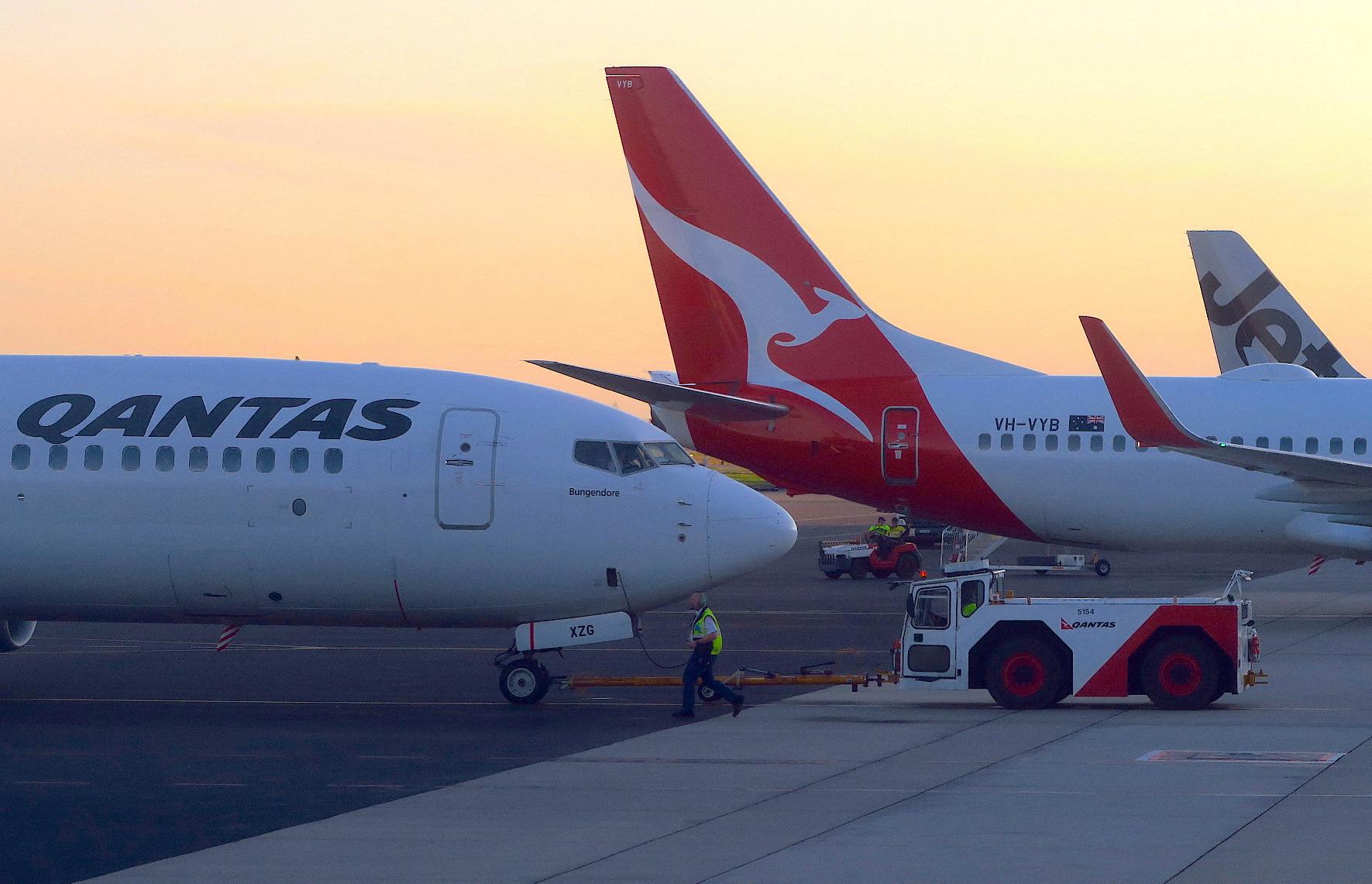
May 14 (Reuters) - Qantas Airways (QAN.AX) New Tab, opens new tab said on Tuesday it will suspend flights to Shanghai starting on July 28, citing low demand, nine months after the Australian flag carrier resumed service from Sydney on hopes of a travel rebound following the pandemic. International flight numbers to and from China are about 70% of pre-pandemic levels and have been slower to recover than in other markets because of fewer tourists and a domestic economic slowdown. "Since COVID, the demand for travel between Australia and China has not recovered as strongly as expected. In some months, our flights to and from Shanghai have been operating around half-full," Qantas International CEO Cam Wallace said. Qantas aircraft on the Shanghai route will be redirected to other destinations across Asia with higher demand or new tourism opportunities, the company said. Qantas will continue to monitor the Australia-China market closely and return to Shanghai when demand has recovered, the carrier added. "Since borders reopened, Chinese visitors have been slow to return to Australia, despite aviation capacity increasing," said Margy Osmond, CEO of industry group Tourism & Transport Forum Australia. She said arrivals from China, now the fourth-largest source of international visitors to Australia, were in March at just 47% of the pre-pandemic levels seen in March 2019. Before COVID-19, China was Australia's top tourism market. Qantas still flies to Hong Kong from Sydney and Melbourne, and has partnerships with other airlines for onward travel within China. The carrier announced a new route from Brisbane to Manila starting in late October, as well as additional flights to Singapore. It will also increase its flight frequency from Sydney to Bengaluru. China's aviation regulator has said it expects international flights to return to 80% of pre-COVID levels by the end of 2024. China's domestic flight capacity recovered faster, surging past 2019 levels in early 2023 soon after the country lifted travel restrictions. U.S.-China flights have seen the slowest recovery but are increasing, with services at 16.5% of pre-pandemic levels, the International Air Transport Association said this month. Sign up here. https://www.reuters.com/business/aerospace-defense/australias-qantas-suspend-flights-shanghai-low-demand-2024-05-14/
2024-05-14 05:31
Euro/dollar down 2.4% this year, off 5-month lows Euro weakness limited as economic divergence with US ebbs Parity still a possibility further out, analysts say LONDON/MILAN, May 14 (Reuters) - The euro has resisted falling to parity with the dollar for now, thanks to a rosier economic backdrop, to the relief of European Central Bank policymakers who could be struggling to detach themselves from the Federal Reserve's monetary policy outlook. Just a month ago, the euro's fall to five-month lows prompted some talk among analysts about a return to parity against the dollar as the fragility of the euro zone contrasted with a resilient U.S. economy that boosted the dollar and prompted investors to dial back Federal Reserve rate cut bets. Lower euro area interest rates than those in the United States remain a headwind, but the euro seems on a stronger footing thanks in part to an improving macro backdrop. The most recent round of purchasing manager surveys, for example, showed business activity in the euro zone expanded at a faster clip than that in the United States in April for the first time in a year. That has helped the euro recover roughly 1.7% from April's lows to around $1.0708 . "We’re starting to see that divergence between economic performance close, offering some help to the euro," said Fiona Cincotta, market strategist at City Index. "That is also a cause for relief for the ECB and a reason for them to be more relaxed as well. It’s almost as if their ducks have lined up quite nicely so far." Citi's economic surprise index for the euro zone (.CESIEUR) New Tab, opens new tab has trended lower in recent weeks, but at 27, is comfortably in positive territory, as business activity and growth improve. In contrast, the U.S. index (.CESIUSD) New Tab, opens new tab has fallen below zero for the first time since early 2023, as crucial data such as growth and employment have missed expectations. On a trade-weighted basis, the euro is up 0.5% this year and not far from 2023's record highs. A lot of this is down to weakness in the likes of the Chinese yuan and Japanese yen. That offers a less negative picture on the euro than purely looking through the lens of the dollar in that it neutralises some imported inflation. GORILLA IN THE ROOM Still, a sustained drop in the euro could boost import prices and rekindle inflation, thereby limiting the ECB's scope to cut rates. The euro has lost around 2.5% against the dollar this year and the ECB, which does not target an exchange rate, cannot easily ignore more weakness. "To a certain extent, our data and decisions are naturally influenced by the Fed. We are not working in a vacuum. With the dollar, the Fed is, figuratively speaking, the gorilla in the room," Austrian central bank Governor Robert Holzmann told Handelsblatt in an interview published on May 8. Other factors such as a spike in the oil price, or a deterioration in geopolitical tensions could undermine the euro area by again hurting the growth outlook and magnifying the inflationary effect of a weaker currency. Right now, markets show traders believe the ECB will deliver three quarter-point cuts, bringing the benchmark rate to around 3.25% by year end. The Fed is expected to cut just twice, to a range of 4.75-5.25%, leaving the premium of U.S. rates over euro zone ones at 175 basis points. Some analysts think three cuts from the ECB and no cuts from the Fed this year, bringing the gap to 213 bps, might tip the euro back to parity, which could sound alarm bells at the ECB if currency weakness threatens to fuel inflation. The euro last hit parity around August 2022, when the rate gap between the two central bank rates was 238 bps. "If the market prices out Fed rate cuts for this year and pushes the cuts later into next year and the ECB pricing remains at the current levels, parity becomes a possibility and such a move would be enough to make the ECB delay its easing cycle," Athanasios Vamvakidis, global head of G10 forex research at BofA, said. Neil Mehta, a portfolio manager at BlueBay Asset Management, said the currency market was where the divergence in interest rates would play out most clearly, with the dollar emerging as the likely winner, with parity for the euro, a possibility. "It's not the base case, but we certainly see the risks tilted in that direction. We think the first step is $1.05," he said. Sign up here. https://www.reuters.com/markets/currencies/recovering-euro-keeps-dollar-gorilla-scuppering-ecb-rate-outlook-2024-05-14/
2024-05-14 05:29
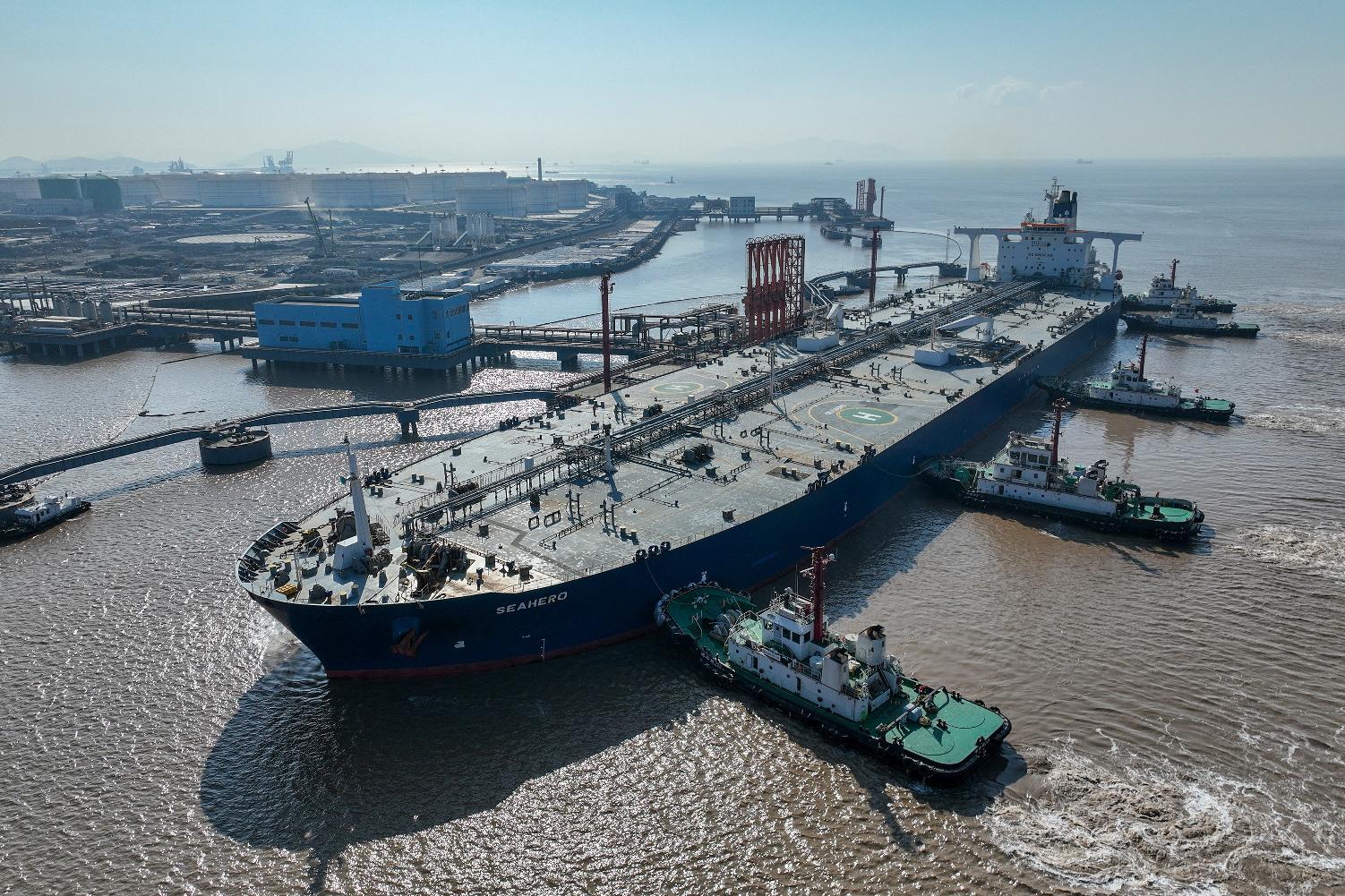
LAUNCESTON, Australia, May 14 (Reuters) - The profit from turning a barrel of crude oil into fuels in Asia is at the lowest in seven months, which is leading refiners to turn away from expensive Middle East grades and seek cheaper alternatives from the Americas. Refiners are being hit by the double whammy of higher prices from Saudi Arabia, the top exporter and price-setter for much of the crude exported from Middle East, as well as soft demand for some refined products, including industrial and transport mainstay diesel. The crack spread, or profit margin, from making fuels from a barrel of Middle East benchmark Dubai crude at a typical Singapore refinery ended at $2.27 a barrel on Monday, down from $2.69 on May 10 and the lowest since Oct. 20. The margin is down 77% from its peak so far in 2024 of $9.91 a barrel, reached on Feb. 13. Refining margins have been squeezed in Asia as crude prices have risen faster than those for refined fuels, with global benchmark Brent crude futures rising from a six-month low of $72.29 a barrel on Dec. 13 to a recent high of $92.18 on April 12, before moderating to end at $83.45 on Monday. Making it tougher for refiners in Asia is the increases in official selling prices (OSPs) for crude from Saudi Arabia, which remains the top supplier to the world's biggest importing region. Saudi Aramco (2222.SE) New Tab, opens new tab, the state-controlled oil major, lifted its OSP for its benchmark Arab Light grade to a premium of $2.90 a barrel over the Oman/Dubai average for Asian customers for June-loading cargoes. This was up from a premium of $2 a barrel for May and took the premium to the highest since January. There are signs that Asian refiners are trying to limit the volume of Saudi crude they purchase. Asia's imports from Saudi Arabia dropped to 4.88 million barrels per day (bpd) in April, down from 5.07 million bpd in March and 5.52 million bpd in February, according to data compiled by LSEG Oil Research. Volumes from Saudi Arabia may remain constrained in coming months, with Chinese refiners expected to lower their imports from there by 5.8 million barrels in June from May's imports of 45 million barrels, according to sources with knowledge of the matter. China is Saudi Arabia's largest customer in Asia, but has been overtaken by Russia as the top supplier to China, as refiners seek Russian cargoes that are at discounted prices because of Western sanctions against Moscow. AMERICAS CRUDE SURGE Asia has largely replaced Saudi barrels with crude from the United States and Brazil, according to LSEG data. Imports from the United States rose to 1.67 million bpd in April, up from 1.40 million bpd in March and 1.16 million bpd in February. Asia's U.S. imports are forecast by LSEG to reach a record high of 1.76 million bpd in May. Arrivals from Brazil increased to 1.28 million bpd in April, up from 1.13 million bpd in March and February's 840,000 bpd. U.S. and Brazilian crude tends to be priced against U.S. West Texas Intermediate (WTI) futures , which trade at a discount to both Brent and Dubai. WTI closed at $79.12 a barrel on Monday, a discount of $4.78 to Dubai's finish of $83.90. Even accounting for higher freight charges, crude from the Americas can enter Asia at prices considerably cheaper than comparable grades from the Middle East. There are limitations as to how much more oil from the Americas that Asian refiners can take, given many refineries are configured to run on medium and heavy crude, as opposed to the lighter grades typical of U.S. crude. But within those restrictions it's clear that refiners are actively trying to move away from Middle East crudes as much as possible, a trend likely to continue until Aramco decides to lower its OSPs in order to maintain market share. The opinions expressed here are those of the author, a columnist for Reuters. Sign up here. https://www.reuters.com/business/energy/weak-asia-refining-margins-see-swing-crude-americas-russell-2024-05-14/
2024-05-14 05:27
KAMPALA, May 14 (Reuters) - Uganda is in talks with Chinese firm Sinohydro (SINOH.UL) Corporation Limited for the development of a $180 million power transmission line to allow Uganda to export power to energy-starved South Sudan, the president's office said. As part of the talks, a delegation led by Yang Yi Xin, Sinohydro Corporation's vice president, met Uganda's President Yoweri Museveni on Monday, a statement from Museveni's office said late on Monday. The project will involve the construction of a 138-km (85.75 miles) high-voltage transmission line to take power to South Sudan, the expansion of two substations and construction of one new one, the statement said. "We are very much willing to help develop this project with the required finance if needed," Xin was quoted as telling the president. Museveni expressed support for Sinohydro's offer to develop the project, the statement said. In June last year the two countries signed a power sales agreement to allow Uganda to sell electricity to South Sudan. The Chinese firm is completing a $1.5 billion, 600 megawatt hydropower project on River Nile in northern Uganda that is meant to be the source for the electricity exports to South Sudan. Sign up here. https://www.reuters.com/business/energy/uganda-talks-with-chinas-sinohydro-over-power-line-south-sudan-2024-05-14/

2024-05-14 05:27
NEW YORK/LONDON, May 14 (Reuters) - The dollar eased on Tuesday after an unexpected increase in U.S. producer prices in April amid strong gains in the costs of goods and services, indicating inflation remained stubbornly high early in the second quarter. The report from the Labor Department also showed wholesale goods prices rising solidly last month, though the cost of food declined. Traders trimmed their expectations for the Federal Reserve to cut interest rates in September after the report. The dollar index , a measure of the U.S. currency against six major peers, slid 0.02% to 104.99, right in the middle of 103 to 107 in what Brad Bechtel, global head of FX at Jefferies in New York, called its range for the year. "It's pressing kind of neutral, almost as if people have cleaned up their positioning and are kind of flat going into tomorrow," he said, referring to the release on Wednesday of the consumer price index (CPI) for April. "In terms of things like carry trades, those are still very much well positioned," Bechtel said. "Aussie-yen, Mexican-yen and even the dollar versus the yen to some extent, risk appetite is still there." The Australian dollar-yen cross rate rose to the second-highest this year, outside of a more than 10-year high of 104.95 touched on April 29. It was last up 0.36% at 103.59. The euro rose 0.28% to 1.0820. The producer price index for final demand rose 0.5% in April after falling by a downwardly revised 0.1% in March, the Labor Department's Bureau of Labor Statistics said. Economists polled by Reuters had forecast that PPI, which can be volatile, would gain 0.3% after a 0.2% rise in March. In the 12 months through April, the PPI increased 2.2% as expected after climbing 1.8% in March. CPI data may provide more insight into how fast the Fed might cut interest rates. But one data print is unlikely to persuade policymakers that the pace of inflation is slowing enough to permit a rate cut in the near term, said Thierry Wizman, global FX and rates strategist at Macquarie in New York. The Fed may not cut at all this year and if it does, it may "cut once and it'll be late in the year," he said, adding that a real downward move in rent inflation may change his mind. YEN WATCHED Wednesday's report on core consumer prices is expected to show CPI rose 0.3% month-on-month in April, down from a 0.4% growth the prior month, according to a Reuters poll. Fed Chair Jerome Powell gave a bullish assessment on Tuesday of where the U.S. economy stands, with an outlook for continued above-trend growth and confidence in falling inflation that, while eroded by recent data, remains largely intact. Speaking in Amsterdam, Powell's comments largely restated those made at his press conference after the Fed's last meeting. Money markets have dialed back their expectations of Fed rate cuts to about 44 basis points of easing this year, according to LSEG data. Earlier in Europe, sterling fell sharply before paring losses after Bank of England Chief Economist Huw Pill said it was not unreasonable to believe that over summer there might be enough confidence to consider rate cuts. Sterling rose 0.25% to 1.2591 after falling to $1.2510 following Pill's remarks. Traders are also closely watching the yen , down to May 1 levels, which then saw suspected interventions by Japanese authorities. It was last 0.12% lower at 156.425 per dollar. Japan's Ministry of Finance is suspected to have intervened in the currency market at the end of April through early May after the yen hit a 34-year low of 160.245 on April 29. But the market remains bearish on the currency given the massive gap between Japan's ultra-low yields and those in other major economies. The Chinese offshore yuan was trading near a two-week low after U.S. President Joe Biden unveiled a bundle of steep tariff increases on an array of Chinese imports, including electric vehicles, computer chips and medical products. The offshore yuan was last flat on the day at 7.240, after falling earlier in the day to its lowest level since May 5. Sign up here. https://www.reuters.com/markets/currencies/dollar-drifts-traders-eye-us-inflation-data-frail-yen-focus-2024-05-14/