
2024-05-13 07:22
STOCKHOLM, May 13 (Reuters) - Private equity firm EQT (EQTAB.ST) New Tab, opens new tab said on Monday it has made a recommended cash offer to buy Swedish renewable energy group OX2 (OX2SE.ST) New Tab, opens new tab for 16.4 billion crowns ($1.51 billion). EQT said it is offering 60 crowns per share for the developer of onshore and offshore wind and solar energy projects, 43% above OX2's closing price on Friday. It said OX2's main owner Peas Industries AB, which holds 46% of shares and votes, has undertaken to accept the offer, and that an OX2 independent bid committee unanimously recommends that shareholders accept it. EQT said the renewables industry is supported by strong underlying trends and expected to grow substantially, although higher interest rates, long development timelines and supply chain disruptions have put pressure on OX2. "OX2 would benefit from evolving its business model from a pure developer to an integrated renewables developer and asset owner, while retaining its ability to sell projects," it said. "EQT is well-suited to partner with the company during this next phase, offering the necessary capital and deep industry expertise to accelerate its growth journey," it added. The offer is subject to regulatory approvals and conditional upon being accepted by owners of more than 50% of the shares in OX2. EQT said its ambition is to obtain 90% ownership and delist the company. OX2's shares were up 42% in early trade. EQT's shares were broadly unchanged. ($1 = 10.8395 Swedish crowns) Sign up here. https://www.reuters.com/markets/deals/private-equity-group-eqt-makes-15-bln-offer-swedish-renewable-energy-platform-2024-05-13/

2024-05-13 06:56
CANBERRA, May 13 (Reuters) - Australia's Queensland state will decide this month whether to give Glencore (GLEN.L) New Tab, opens new tab a key approval to bury liquefied carbon dioxide in the country's largest aquifer, a plan farm groups say must be blocked because it risks poisoning water supplies. Carbon capture and storage (CCS) is needed to achieve the world's net-zero goals and contain global warming, governments say. Its rollout has been slow but is gathering pace. Swiss commodities giant Glencore plans a three-year, A$210 million ($135 million) pilot project that would pump 330,000 metric tons of CO2 from a coal-fired power plant in the northeastern state into an aquifer 2.3 km (1.4 miles) underground. "This is an important test case for onshore CCS in Australia," said Glencore spokesperson Francis De Rosa. Glencore says there is no demand for the low-quality, expensive-to-reach water in its pumping site and the CO2 is extremely unlikely to spread significantly from where it is put. "Our project is based on very robust data, fieldwork and analysis," De Rosa said, adding that several government agencies had reviewed the plan. But farm groups say it risks poisoning part of the Great Artesian Basin, a network of groundwater deposits spanning much of eastern Australia that supports agriculture and communities. They say the acidic CO2 in the rock could release and spread toxic substances like lead and arsenic. The project is "unthinkable," said Michael Guerin, whose AgForce farm association launched a court case in March to force the federal government to review Glencore's plans. Speaking at a beef industry conference this month, Queensland's premier Steven Miles said the project "doesn't sound like a good idea to me" and was unlikely to satisfy the state's environmental rules - prompting a complaint by Glencore that he was interfering in the regulatory process. "Our project should be judged on the science, not misinformation or political opportunism," the company said. Miles's office declined to comment further. The federal environment ministry declined to comment. Queensland's environment department said the state's independent environmental regulator had considered the potential impacts to groundwater and the Great Artesian Basin and was preparing its final assessment report. CONSEQUENCES The Queensland government will decide by the end of May whether to approve Glencore's environmental impact assessment. If approved, further permissions would be needed but the main hurdle would be cleared. Glencore's plan would capture 2% of the emissions of the Millmerran power plant but could eventually store 90%, the company said. The site for the project was originally identified as suitable for carbon storage by a government body. Australia has only one active CCS project, the world's largest, at Chevron's (CVX.N) New Tab, opens new tab Gorgon liquefied natural gas (LNG) project, on an island off the northwest coast. Two more are under construction, including the first onshore operation from Santos (STO.AX) New Tab, opens new tab to inject CO2 into a depleted gas field in South Australia state, and 14 are in development, according to the Global CCS Institute. Most target offshore storage and about half plan to store in depleted oil or gas reservoirs. The use of aquifers to store carbon is becoming more common, said Alex Zapantis at the CCS Institute. The porous rock of many aquifers can host huge amounts of liquefied CO2. But only those where water is so deep and low quality that it is unsuitable for other use would be chosen or approved by regulators, he said. The project is being managed by a Glencore subsidiary, Carbon Transport and Storage Corporation (CTSCo). Japan's Marubeni Corp (8002.T) New Tab, opens new tab and J-POWER (9513.T) New Tab, opens new tab each committed A$10 million to it in 2022. ($1 = 1.5404 Australian dollars) Sign up here. https://www.reuters.com/sustainability/glencore-seeks-australian-carbon-capture-approval-amid-farmer-protests-2024-05-13/
2024-05-13 06:54
May 13 (Reuters) - If financial markets are right, interest rates won't just stay high this year, but possibly forever. The return of inflation means ultra-low rates are history. And markets now reflect a scenario where even the neutral interest rate that balances the economy in the long run after factoring in inflation, dubbed 'R-star', is rising, economists say. Traders see U.S. rates at around 4% at the end of the decade, far higher than policymakers' 2.6% long-run expectations. Euro area rates are seen around 2.5%, above what has prevailed for most of the bloc's history. Yet making the right call on where rates settle is a huge challenge for policymakers and investors -- many economists reckon R-star is lower than before the great financial crisis, but disagree on how to calculate it, its current level and whether it is rising. BNY Mellon Investment Management's chief economist, Shamik Dhar, who reckons R-star has risen is "nervous that hasn't been fully priced into equity and property markets." We explore five factors that will determine interest rates in the longer term: 1/ FOOTING THE BILL Huge investment needs, whether climate or military, and rising interest costs will keep government borrowing high. Economists debate the impact of rising debt but some expect spending needs will drive rates up. Advanced economy budget deficits at 5.6% of output in 2023 were nearly double 2019's 3% and will remain elevated at 3.6% in 2029, the IMF estimates. Aviva Investors' head of rates Ed Hutchings said higher deficits would raise the premium investors demand to hold government bonds. But productivity gains have slowed and potential growth is seen subdued on both sides of the Atlantic, factors economists reckon dampen investment. "That would argue for less of an increase in neutral policy rates," said First Eagle Investment Management portfolio manager Idanna Appio, a former Fed economist. 2/ OLDER Demographics is one of the biggest uncertainties facing longer-term rates, said BNY Mellon's Dhar, a former Bank of England economist. There is consensus that a savings glut helped by pre-retirement hoarding in rich countries has depressed rates. That may continue; 16% of the world population will be over 65 in 2050, from 10% in 2022, the United Nations projects. That will likely be most strongly felt in Europe. But the ratio of dependents, including retirees, to workers is rising. That will cause rates to rise as age-related spending cuts saving, economists Charles Goodhart and Manoj Pradhan argue. Plugging pension shortfalls through borrowing would also put upward pressure to rates, Nomura said. 3/ HEATING UP Gauging the economic impact of climate change is another big challenge. The green transition requires huge investment that could raise rates, says the European Central Bank's Isabel Schnabel New Tab, opens new tab, comparing the scale needed to rebuilding Europe after World War II. The physical impacts of climate change also risk bouts of higher inflation New Tab, opens new tab and price volatility. But they may shave as much as 17% off global output by 2050. The damage threatens productivity and could push R-star lower, an ECB paper New Tab, opens new tab argues. Pricier clean energy may eventually reduce investment demand and therefore rates, the IMF says. Soeren Radde, head of European economic research at hedge fund Point72, called the impact of climate change on rates a "big open debate". "We've got negative shocks that essentially destroy demand. It's not clear that that will raise R-star," he said. 4/ AI MANIA How much the technological revolution can raise productivity and rates is hotly debated. An AI-driven productivity boost may raise U.S. economic growth by 0.4 percentage points and by 0.3 points in other developed economies by 2034, Goldman Sachs expects. It sees upward pressure on rates, especially if AI adoption is frontloaded. If the impact of AI is on par with electricity, growth will offset demographic pressures, Vanguard reckons. But it may disappoint if similar to computers and the internet. 5/ NEW REALITY The COVID-19 pandemic, wars in Ukraine and Gaza and U.S.-China trade tensions point to higher supply-shock risks ahead. "If central banks have to act against them... that can also on average lift the level of interest rates," Point72's Radde said. Also risking higher rates is "friendshoring", whereby Western countries and companies seek to trade more with allies rather than China. "Any of that is going to be, by nature of the fact that it is not the cheapest place to produce, more inflationary," said Columbia Threadneedle's global chief investment officer William Davies. Mexico, for example, is now the biggest source of U.S. imports. (This story has been corrected to fix the quote attribution in paragraph 31) Sign up here. https://www.reuters.com/markets/case-forever-high-interest-rates-2024-05-13/
2024-05-13 06:50
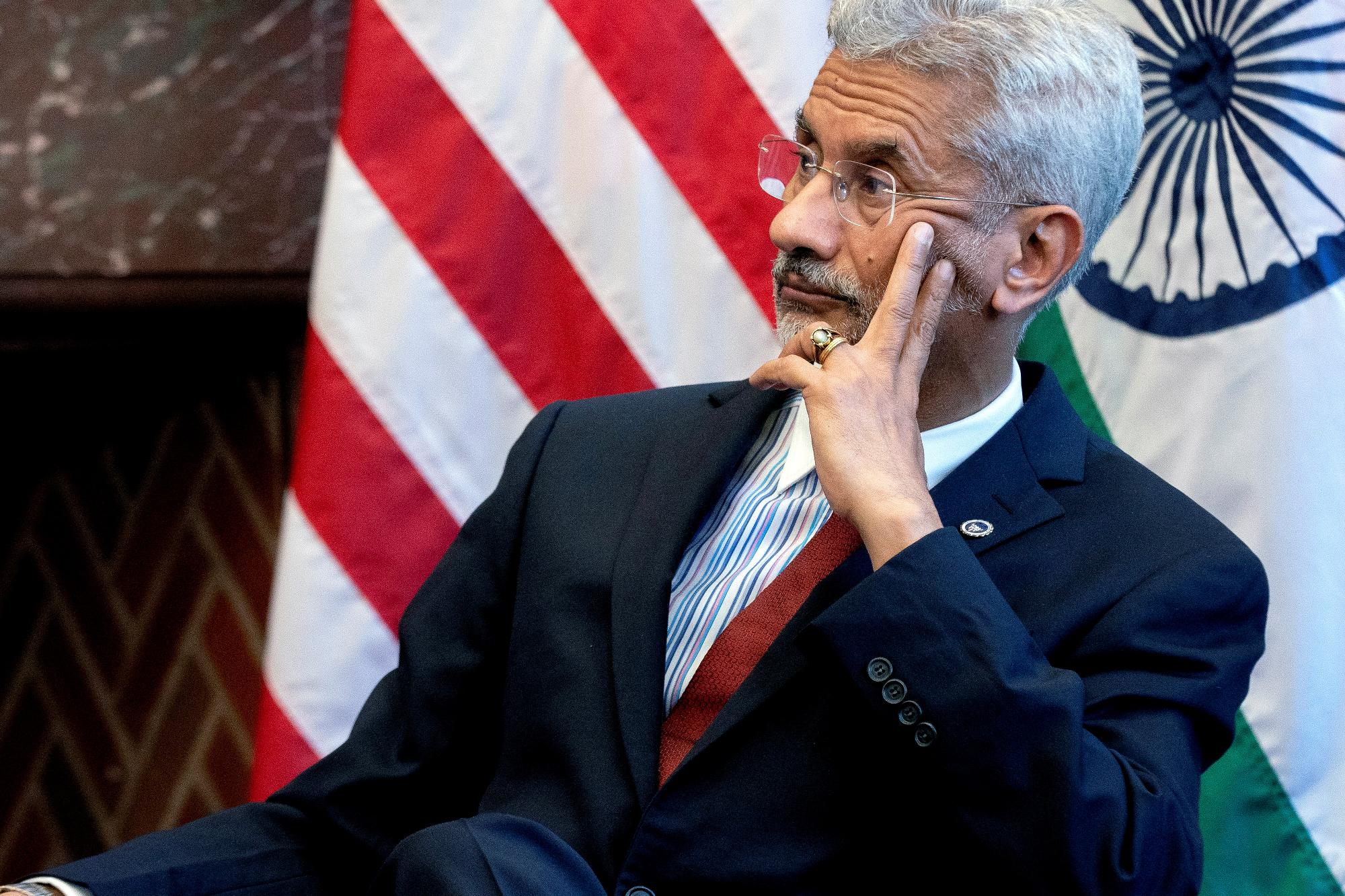
NEW DELHI, May 13 (Reuters) - India signed a 10-year contract with Iran on Monday to develop and operate the Iranian port of Chabahar, the Narendra Modi-led government said, strengthening relations with a strategic Middle Eastern nation. India has been developing the port in Chabahar on Iran's south-eastern coast along the Gulf of Oman as a way to transport goods to Iran, Afghanistan and central Asian countries, bypassing the port of Karachi and Gwadar in its rival Pakistan. U.S. sanctions on Iran, however, slowed the port's development. "Chabahar Port's significance transcends its role as a mere conduit between India and Iran; it serves as a vital trade artery connecting India with Afghanistan and Central Asian Countries," India's Shipping Minister Sarbananda Sonowal said in Tehran, after the signing of the agreement. "This linkage has unlocked new avenues for trade and fortified supply chain resilience across the region." U.S. State Department deputy spokesperson Vedant Patel, asked about the deal, told reporters that U.S. sanctions on Iran remain in place and warned that Washington will continue to enforce them. "Any entity, anyone considering business deals with Iran - they need to be aware of the potential risks that they are opening themselves up to and the potential risk of sanctions," Patel told reporters. The long-term deal was signed between Indian Ports Global Limited (IPGL) and the Port & Maritime Organisation of Iran, authorities in both countries said. Under the agreement, IPGL will invest about $120 million while there will be an additional $250 million in financing, bringing the contract's value to $370 million, said Iranian Minister of Roads and Urban Development Mehrdad Bazrpash. IPGL first took over operations of the port at the end of 2018 and has since handled container traffic of more than 90,000 TEUs and bulk and general cargo of more than 8.4 million tonnes, an Indian government official said. A total of 2.5 million tonnes of wheat and 2,000 tonnes of pulses have been shipped from India to Afghanistan through Chabahar Port, the official added. "It will clear the pathway for bigger investments to be made in the port," Indian Foreign Minister Subrahmanyam Jaishankar told reporters in Mumbai on Monday. Sign up here. https://www.reuters.com/world/india/india-sign-10-year-pact-with-iran-chabahar-port-management-et-reports-2024-05-13/
2024-05-13 06:05
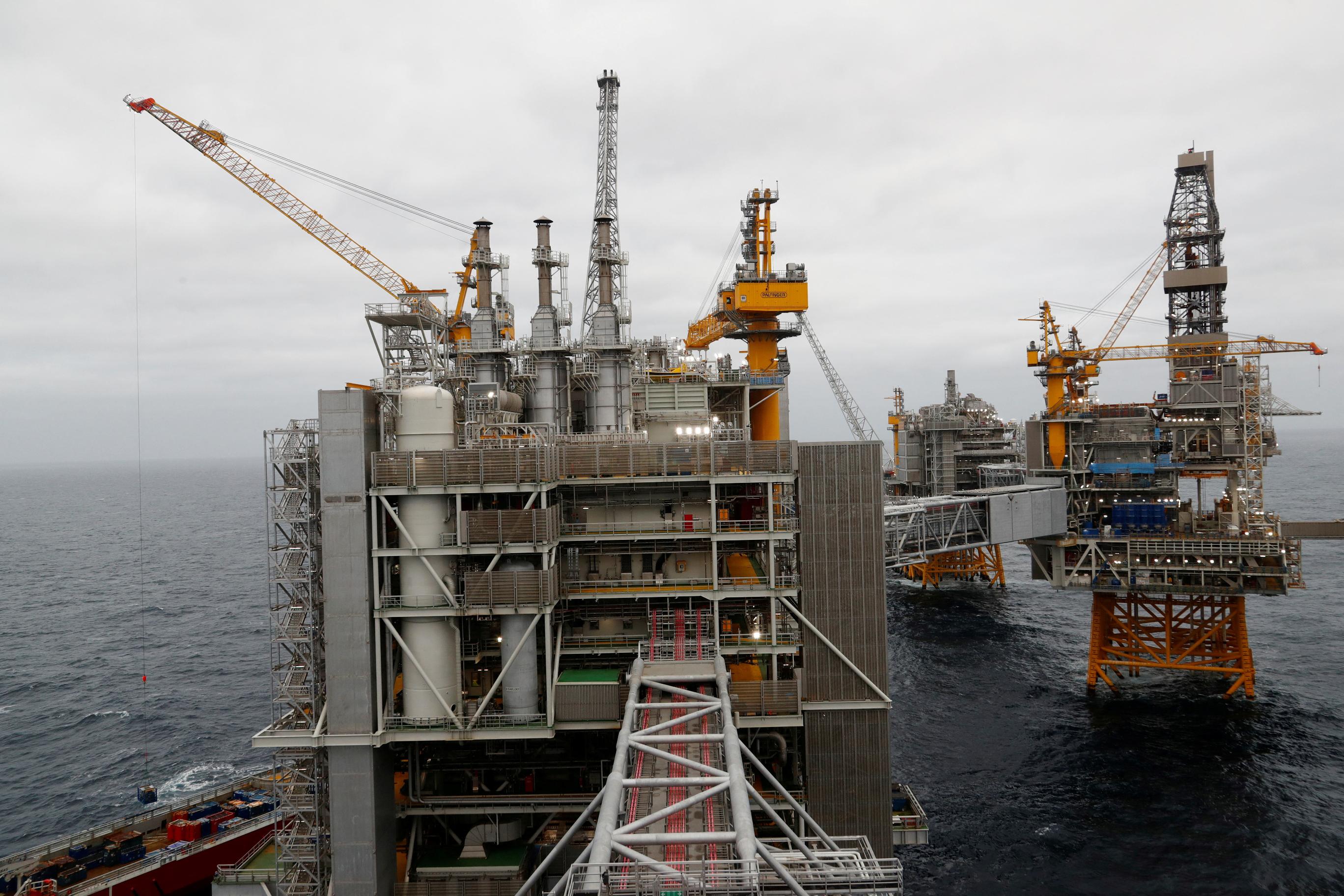
OSLO, May 13 (Reuters) - Two of Equinor's top ten investors will back a shareholder resolution calling on the oil major to align its strategy with global climate goals, which will be voted on at the company's annual general meeting on Tuesday. Filed by a group of investors led by UK-based Sarasin & Partners, the resolution calls on the Norwegian oil and gas producer to specify how any plans for new oil and gas reserve development are consistent with the Paris Agreement goals. Storebrand Asset Management and KLP - Equinor's 7th and 8th largest shareholders, respectively - told Reuters they would vote in favour of the motion. The resolution underlines Norway's dual position as a major oil and gas exporter which at the same time is actively backing international cuts in global greenhouse gas emissions. The vote comes as investors seek more climate action by oil and gas producers after several scaled back their ambitions in the face of an energy crisis and high prices Investors in Australia's biggest gas producer Woodside Energy (WDS.AX) New Tab, opens new tab rejected the company's climate plan at its April AGM, while minority shareholders in Shell (SHEL.L) New Tab, opens new tab have also filed a resolution urging the company to align its medium-term carbon reduction targets with Paris goals ahead of its May 21 AGM. Oslo-based Storebrand Asset Management, which holds a 0.7% stake in Equinor, said the company's current strategy and capital expenditure plans "did not align to its overarching commitment" to the Paris Agreement goals. "We ... have asked Equinor to be more transparent on capex plans and absolute emission targets, preferably accompanied by sensitivity analysis on shareholder value impacts," Chief Investment Officer Baard Bringedal told Reuters. KLP, Norway's largest pension fund which holds a 0.6% stake, said its vote in favour of the resolution should be seen as a clear signal to the company that it should revise its energy transition plan. "We don't see that Equinor's present production plans are aligned with the goals of the Paris climate agreement, which is what we expect from companies," said Arild Skedsmo, a senior advisor for responsible investments. A third investor, British pension fund Railpen, said New Tab, opens new tab it was "disappointed to note Equinor's plan to maintain stable fossil fuel production to 2035 and to continue new reserve exploration and development plans, especially its unsanctioned international projects". In response to a request for comment, Equinor referred to its board's April 22 response to the motion in which it said shareholders should reject it, adding that the company's energy transition strategy was aligned with the Paris Agreement. The company was being "flexible" in executing the strategy and adapting to market conditions, the board said. Equinor in February said it would aim to sustain domestic oil and gas output between 2020 and 2035, while seeking to increase international output by 15% between 2024 and 2030, thanks to new projects in Britain, Brazil and the U.S. Gulf of Mexico. Norway's government, which holds 67% of Equinor, declined to disclose its voting intention. It said last year it expected Equinor to reduce greenhouse gas emissions in line with the Paris Agreement, but added that the board, not the annual general meeting, should decide its strategy. Sign up here. https://www.reuters.com/sustainability/climate-energy/independent-investors-urge-equinor-align-strategy-with-climate-goals-2024-05-13/
2024-05-13 06:04
Gazprom posted a loss of $7 bln in 2023, first since end-1990s Gazprom's pipeline gas sales to Europe slump Russia banks on business with Asia Price of Russian gas for China seen gradually declining MOSCOW, May 13 (Reuters) - Kremlin-owned energy kingpin Gazprom (GAZP.MM) New Tab, opens new tab, once Russia's most profitable company, could face a long period of poor performance as it struggles to fill the gap of lost European gas sales with its domestic market and Chinese exports. The company recently announced an annual net loss of $7 billion, its first since 1999, following a steep decline in trade with Europe. Gazprom's troubles reflect the deep impact the European sanctions have had on Russia's gas industry, as well as the limitations of Moscow's growing partnership with China. The impact of international sanctions on oil exports has been easier for Moscow to absorb because Russia has been able to redirect sea-borne oil exports to other buyers. Gazprom relied on Europe as its largest sales market until 2022, when Russia's conflict with Ukraine prompted the EU to cut Gazprom gas imports. Russia supplied a total of around 63.8 billion cubic metres (bcm) of gas to Europe by various routes in 2022, according to Gazprom data and Reuters calculations. The volume decreased further, by 55.6%, to 28.3 bcm last year. That's compared to a peak of 200.8 bcm Gazprom pumped in 2018 to the EU and other countries, such as Turkey. Mysterious blasts at Nord Stream undersea gas pipelines from Russia to Germany in September 2022 also significantly undermined Russian gas trade with Europe. Russia has turned to China, seeking to boost its pipeline gas sales to 100 bcm a year by 2030. Gazprom started pipeline gas supplies to China via the Power of Siberia in the end of 2019. It plans to reach the 38 bcm annual capacity of Power of Siberia by the end of this year, while Moscow and Beijing also agreed in 2022 about exports of 10 bcm from the Pacific island of Sakhalin. Russia's biggest hope is the Power of Siberia 2 pipeline via Mongolia, which is planned to export 50 bcm per year. But that has hit some pitfalls due to the lack of agreement over pricing and other issues. "While Gazprom will see some additional export revenues when all those pipelines will be up and running, it will never be able to offset completely the business it has lost to Europe," Kateryna Filippenko, a research director on gas and LNG at Wood Mackenzie, said. CHINESE PIPEDREAM? Russia has also struggled so far to establish a gas trading centre in Turkey, an idea first floated by President Vladimir Putin in October 2022. No significant development has been reported since. Even if Gazprom can get its pipeline supply to China up and running, sales revenues will be much lower than from Europe. According to Moscow-based BCS brokerage, Gazprom's revenue from gas sales to Europe in 2015-2019 averaged at $3.3 billion per month thanks to monthly supplies of 15.5 bcm. Taking into account a price of $286.9 per 1,000 cubic metres, as reported by the Russian economy ministry, and Gazprom's gas exports of 22.7 bcm last year, the total value of the company's gas sold to China could have reach $6.5 billion for the whole of 2023. Gazprom did not reveal its revenue from sales to Europe or China for 2023 separately. Dr Michal Meidan, head of China Energy Research at Oxford Institute for Energy Studies, said China is unlikely to replace Europe for Russia as a highly profitable gas export market. "China gives Russia an outlet but at much lower prices and revenue than Europe," she said. In 2023, Russian pipeline gas was sold at $6.6 per million British thermal units (mmBtu) to China and slightly lower than that in the first quarter 2024 at $6.4/mmBtu. That's compared to an average price of Russian gas in Europe of $12.9/mmBtu last year. According to a document seen by Reuters last month, Russia expects its gas price for China to continue gradually declining in next four years, while a worst-case scenario does not rule out a 45% fall to $156.7 per 1,000 cubic metres (around $4.4 per mmBtu) in 2027 versus 2023. It didn't say what might drive prices down, but Russia is facing rivalry from other pipeline gas suppliers to China, such as Turkmenistan, as well as sea-borne liquefied natural gas. The financials of Gazprom, which also include its oil and power units, showed that the revenue from the natural gas business more than halved last year, to just over 3.1 trillion roubles, while oil and gas condensate sales amounted to 4.1 trillion roubles, up 4.3%, according to BCS brokerage. Alexei Belogoriyev of Moscow-based Institute for Energy and Finance said it would be impossible for Gazprom to restore profitability relying solely on its gas business. He said strategic shift to production and export of ammonia, methanol and other gas processing products for Gazprom is possible, but it will not give a quick return. "At the same time, the prospects for the Power of Siberia 2 remain vague: China most likely won't need for so much additional imports in 2030s due to the likely slowdown in demand growth and high domestic gas production rates," he said. Sign up here. https://www.reuters.com/business/energy/gazprom-loss-shows-struggle-fill-eu-gas-sales-gap-with-china-2024-05-13/


