
2024-05-12 23:08
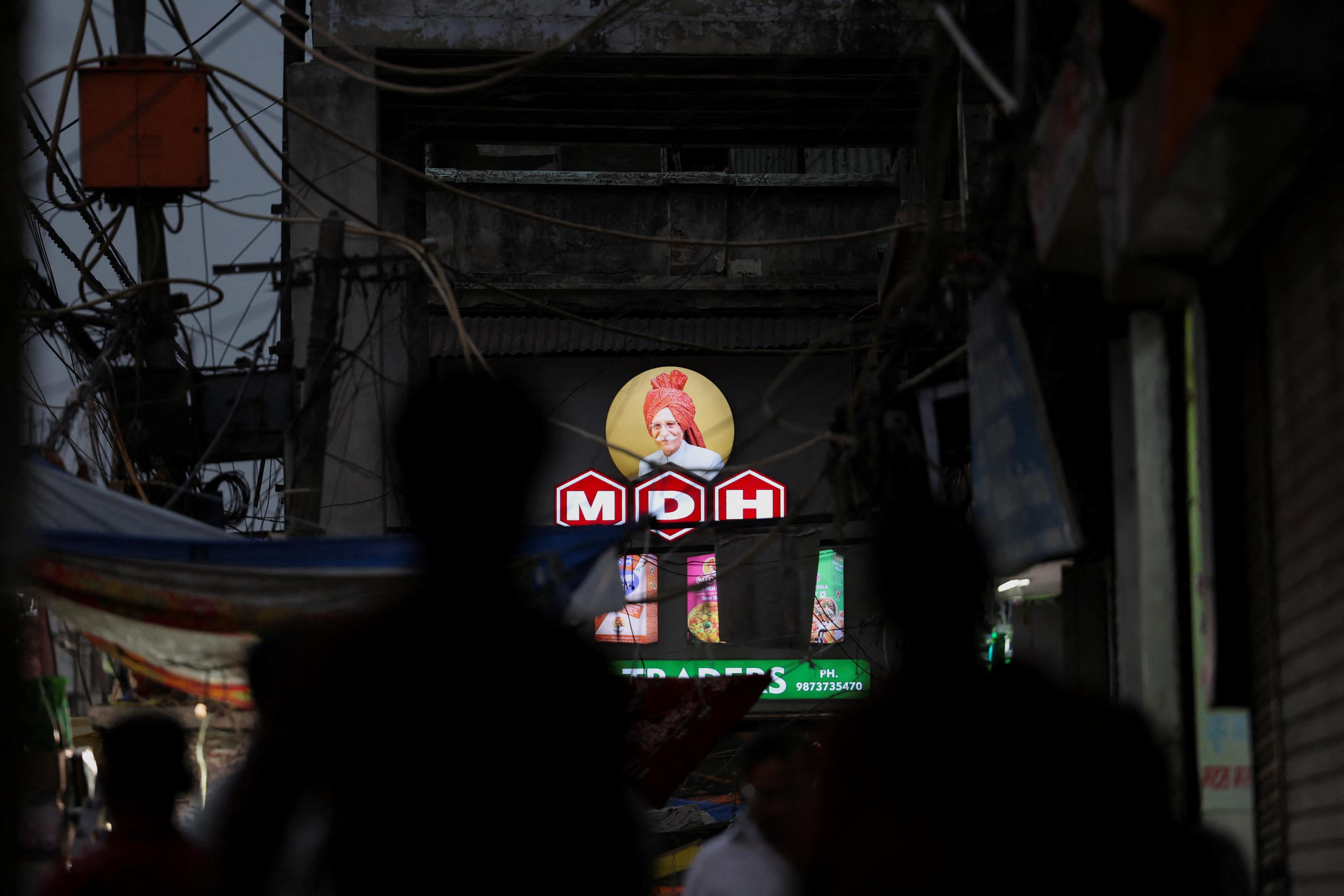
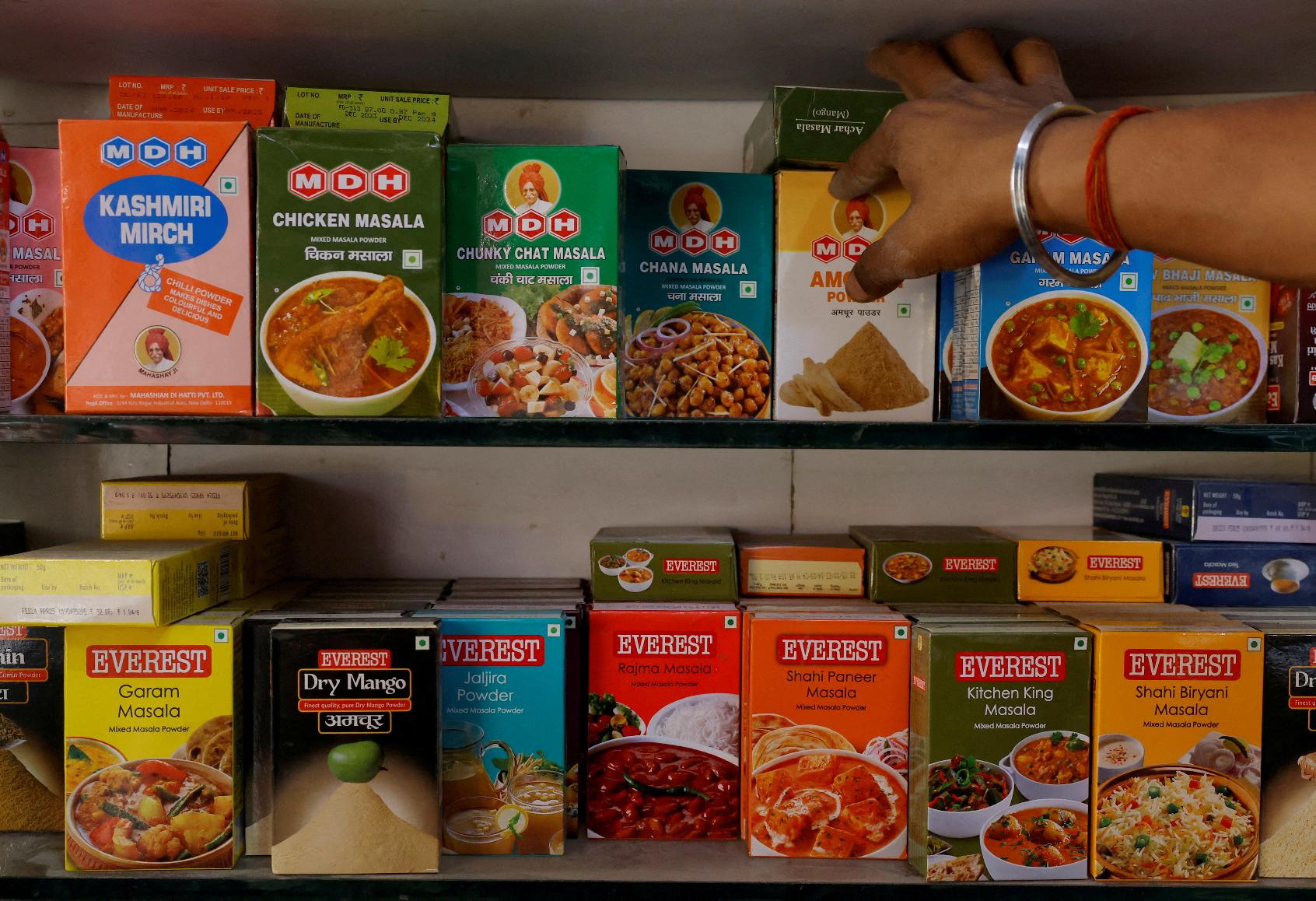
Two popular Indian spice brands face regulatory heat globally Hong Kong's MDH, Everest suspension sparks more scrutiny MDH has had many rejections in the US over bacteria, data show MDH, Everest say their products are safe HYDERABAD, India, May 13 (Reuters) - Popular Indian spice brand MDH, under scrutiny for alleged contamination in some products, has since 2021 seen an average 14.5% of its U.S. shipments rejected due to the presence of bacteria, a Reuters analysis of U.S. regulatory data found. Hong Kong suspended sales last month of three spice blends made by MDH and one by another Indian company, Everest, for apparently containing high levels of a cancer-causing pesticide. Ethylene oxide is unfit for human consumption and a cancer risk with long exposure. The companies have said their products are safe and MDH added it does not use ethylene oxide at any stage of storing, processing, or packing of spices. Authorities in the United States, Australia and India are looking into the matter. Both brands are popular in India and are exported around the world. India is the world's biggest spice producer and is also the largest consumer and exporter of spices. Zion Market Research estimates India's domestic market was worth $10.44 billion in 2022, and the Spices Board said India exported products worth $4 billion during 2022-23. Before the latest scrutiny, products from MDH, a family-run Indian company more than 100 years old, were rejected for sale in the United States due to the presence of salmonella, a bacteria that can lead to gastrointestinal illness. Around 20%, or 13 of MDH's 65 shipments to the United States were rejected after it failed checks for salmonella between October 2023 - when the current fiscal year started - and May 3, according to the latest available data compiled by Reuters from the U.S. Food and Drug Administration (FDA). The FDA did not state what quantity was contained in each shipment but the 13 shipments rejected included mixed spices and seasonings, as well as fenugreek, according to the data. In fiscal 2022-23, about 15% of 119 MDH shipments were rejected mostly for salmonella contamination, while the rejections stood at 8.19% during 2021-22, the data showed. Everest has had fewer rejections in the United States with just one of 450 shipments in the ongoing 2023-24 year having been rejected so far for salmonella. Around 3.7% of Everest's U.S. shipments were halted in 2022-23 and there were no rejections in the 189 shipments to the U.S. the year before, the data showed. In response to queries on the FDA data, an MDH spokesperson said its products are safe. Everest said it had an 'exceptional' rejection rate of its U.S. shipments of less than 1% in fiscal 2023-2024, adding that their products are safe. The U.S. FDA and the Spices Board did not respond to requests for comment. The Board has been inspecting MDH and Everest facilities for compliance with quality standards, but the results have not yet been made public. For decades, MDH and Everest have been among the biggest spice makers in India, making products widely used in home kitchens and restaurants for flavouring curries and many dishes. In 2019, a few batches of MDH's spice mix were taken off the shelves in the U.S. for salmonella contamination and in 2023, the FDA recalled a few of Everest's products over similar findings and issued a public health alert New Tab, opens new tab. Sign up here. https://www.reuters.com/world/india/before-global-scrutiny-indian-spice-maker-mdh-faced-many-us-rejections-2024-05-12/
2024-05-12 23:07
May 13 (Reuters) - For decades, India's spice makers MDH and Everest have been ubiquitous in kitchens around the world with their products being essential ingredients in chicken and fish curries and vegetable dishes. A Hong Kong sales ban on some of their products after a cancer-causing pesticide was found has triggered a wave of scrutiny, including in the United States, the Maldives, India and Australia. Both brands say their products are safe. Here are some facts and background on the two brands: "MAHASHIAN DI HATTI", POPULARLY KNOWN AS MDH * New Delhi-based MDH started in 1919 and is a family-run business. * It rose to popularity with ads and packaging featuring its founder Dharampal Gulati who sported a handlebar moustache and a turban. Gulati, often dubbed as India's "Spice King", died in 2020. * MDH's website says it has 62 products. It deals in grounded spices, as well as spice blends which were created after "decades of research". * MDH has five factories and its products are sold in India and markets such as Australia, the United States, Europe, Canada and the United Kingdom through a network of more than 400,000 retail dealers. * MDH's revenue for 2022-2023 stood at $260 million. EVEREST * Everest Food Products started in 1967 with three products. Its founder Vadilal Bhai Shah started his business from a small 200 square feet spice shop. * With 52 products, Everest today has global presence in around 80 countries, including in North America, Europe, the Middle East, the Asia Pacific and Africa. * Some 20 million households use Everest products every day and 3.7 billion packs of its products are sold each year, according to its website. Around 620,000 outlets sell Everest products in 1,000 small towns and cities of India. * India's Bollywood stars Amitabh Bachchan and Shah Rukh Khan are Everest brand ambassadors, appearing together in many TV commercials to promote its products, especially those to make the famous rice dish, biryani. * Everest's net sales for 2022-23 stood at $365 million. Sign up here. https://www.reuters.com/world/india/who-are-two-iconic-indian-spice-brands-under-scrutiny-2024-05-12/
2024-05-12 21:47
May 13 (Reuters) - A look at the day ahead in Asian markets. Inflation data from the world's three largest economies - China, the United States and euro zone - sets the tone for world markets this week, and Asia gets the ball rolling on Monday following the April figures out of Beijing at the weekend. The general market backdrop on Monday should be positive with a U.S. interest rate cut in September back on the cards, Wall Street revisiting recent peaks, European indexes at new highs, and China and Hong Kong pushing Asian stocks higher. Add in oil prices slipping to two-month lows and a steady dollar pushing down on currency market volatility, and financial conditions are broadly loosening. But much of that may be offset by the news that the Biden administration will announce new China tariffs on strategic sectors, including a major hike in levies on electric vehicles. The full announcement, expected on Tuesday, will maintain existing tariffs on many Chinese goods set by former President Donald Trump, and will also add new tariffs to semiconductors and solar equipment. As analysts at Morgan Stanley note, the inflationary impact of an escalating U.S.-China tariff war will fray nerves in global government bond markets. In truth, sentiment across all markets will likely be negatively affected. Figures on Saturday showed that consumer price inflation in China last month was a bit stronger than expected, but producer deflation deepened, an indication that pipeline price pressures remain firmly to the downside. Also on Saturday, figures showed that new bank lending New Tab, opens new tab in China fell more than expected in April while broad credit growth hit a record low, underscoring how sluggish the economic recovery is and the need for more action from Beijing to rev it up. The U.S. and euro zone inflation readings for April will be released on Wednesday and Friday, respectively, which investors hope will give a clearer picture of the interest rate path ahead in the coming months. Before that, investors in Asia have Indian inflation on their plates too. Economists polled by Reuters expect a slight cooling to 4.8% from 4.9% in March, which would be the lowest since June last year. While headline inflation has moderated recently, food prices, which account for nearly half the consumer price index basket, have remained elevated, squeezing household budgets. Inflation is expected to return to the Reserve Bank of India's 4% target next quarter, also when the central bank is expected to cut rates, according to a Reuters poll. But growth is holding up well and the RBI may want to wait for the Fed to cut rates before moving, so as not to weaken the rupee which is languishing at record lows against the dollar. Money markets put a Q2 rate cut at around a 50-50 probability. Here are key developments that could provide more direction to markets on Monday: - India CPI inflation (April) - Japan money supply (April) - Australia business confidence (April) Sign up here. https://www.reuters.com/markets/asia/global-markets-view-asia-graphic-pix-2024-05-12/
2024-05-12 20:43
PORTO ALEGRE, Brazil, May 12 (Reuters) - Less than two weeks after floods devastated Brazil's southern Rio Grande do Sul state leaving at least 143 dead, the state is again on alert this Sunday with the risk of water rising once more to record levels. Under intense rain since Friday, four rivers about 100 kilometers (60 miles) west of capital Porto Alegre are recording rising levels, according to government data. Guaiba lake, on the edge of Porto Alegre, is already overflowing in several locations and is rising. The Guaiba, which receives water from the entire valley region, could exceed the 5.35 meters (6 yards) recorded last week to reach 5.5 meters, a record flood for the capital, researcher Fernando Fan from the Institute of Hydrological Research at the Federal University of Rio Grande do Sul, told Radio Gaucha, a local radio station. "We already have news of flooding in several cities. And this water will reach Guaiba and Porto Alegre," Fan said. The state has suffered from overwhelming rain since April 29. Storms, landslides and floods have displaced over 538,000 and left 81,000 homeless in 446 of the State's 497 cities. Near the valley of the Taquari river, one of the four where water is rising again, residents were trying to return to their homes as a new alert asked people to leave the area once more. "We are removing people from risky areas. We will have another large event," Mateus Trojan, the mayor of Mucum, one of the towns affected, told Reuters. On Saturday residents of Mucum began to remove mud from inside their homes. The following day, cleaning was interrupted due to the risk of the fourth flood in seven months. Near Porto Alegre, camping under the rain by the side of a road, displaced people looked with apprehension at the resurgence of a flood that they expected to begin to subside. "It's already rising again," said Fernando Ayres, who fled his home when a dike broke and flooded his neighborhood. "If it rises any further, I don't know if it won't flood as far as where we are." Sign up here. https://www.reuters.com/world/americas/brazils-rio-grande-do-sul-may-have-more-record-level-flooding-2024-05-12/

2024-05-12 20:38
Putin proposes civilian Belousov as defence minister Incumbent Shoigu, a long-term ally, to take up new job Change seen bringing more economic rigour Lavrov to stay as foreign minister MOSCOW, May 12 (Reuters) - Russian President Vladimir Putin tapped a civilian economist as his surprise new defence minister on Sunday in an attempt to gird Russia for economic war by trying to better utilise the defence budget and harness greater innovation to win in Ukraine. More than two years into the conflict, which has cost both sides heavy casualties, Putin proposed Andrei Belousov, a 65-year-old former deputy prime minister who specialises in economics, to replace his long-term ally, Sergei Shoigu, 68, as defence minister. Putin wants Shoigu, in charge of defence since 2012 and a long-standing friend and ally, to become the secretary of Russia's powerful Security Council, replacing incumbent Nikolai Patrushev, and to also have responsibilities for the military-industrial complex, the Kremlin said. Patrushev will get a new, as yet unannounced, job. The changes, certain to be approved by parliamentarians, are the most significant Putin has made to the military command since sending tens of thousands of troops into Ukraine in February 2022 in what he called a special military operation. Kremlin spokesman Dmitry Peskov said the change made sense because Russia was approaching a situation like the Soviet Union in the mid-1980s, when the military and law enforcement authorities accounted for 7.4% of gross domestic product (GDP). That, said Peskov, meant it was vital to ensure such spending aligned with and was better integrated into the country's overall economy, which was why Putin now wanted a civilian economist in the defence ministry job. "The one who is more open to innovations is the one who will be victorious on the battlefield," Peskov said. Belousov, a former economy minister known to be very close to Putin, shares the Russian leader's vision of rebuilding a strong state, and has also worked with Putin's top technocrats who want greater innovation and are open to new ideas. Belousov has played an important role in overseeing Russia's drone programme. The shake-up, which caught the elite off-guard, indicates Putin is doubling down on the Ukraine war and wants to harness more of Russia's economy for the war after the West sought, but failed so far, to sink the economy with sanctions. ECONOMIC WAR Russia's economists have so far largely ensured economic stability and growth despite the toughest sanctions ever imposed on a major economy, even though the failings of the Russian military were laid bare shortly after the invasion. "The proposal to appoint one of the main court economists and the main state minister in the economic bloc to head the Defence Ministry may mean that Putin is planning to win the war with the defence industry plants and international markets," said Alexander Baunov, a former Russian diplomat who is now a senior fellow at the Carnegie Russia Eurasia Center. "The winning strategy in this case will not be mobilisations and breakthroughs, but slow pressure on Ukraine with the superior power of the Russian military-industrial complex and the economy as a whole, which, apparently, is supposed to be made to work more effectively for the front and rear." Putin's move, though unexpected, preserves balance at the top of the complex system of personal loyalties that make up the current political system. The shake-up gives Shoigu a job that is technically regarded as senior to his defence ministry role, ensuring continuity and saving Shoigu's face. Valery Gerasimov, the chief of Russia's General Staff and someone with a more hands-on role when it comes to directing the war, will remain in post. Shoigu was heavily criticised by Russian military bloggers for a series of retreats the Russian military was forced to make in 2022. Yevgeny Prigozhin, the leader of the Wagner mercenary group and one of Shoigu's fiercest critics, led an abortive mutiny he hoped would topple Shoigu last year before agreeing to call it off. Prigozhin was later killed in a plane crash. Mark Galeotti, director of the London-based Mayak Intelligence consultancy, said the defence minister's job in Russia at a time of war was to ensure the military had everything it needed, while Gerasimov's job was the "key one" as he now reported directly to Putin, the commander-in-chief. "In that context, having an economist, someone who has been speaking about the need to basically subordinate much of the economy to the needs of the defence sector, makes a certain amount of sense. It is now essentially a financial administrator's job and Belousov can do that," said Galeotti. The change is likely to be seen as an attempt by Putin to subject defence spending to greater scrutiny to ensure funds are effectively spent after a Shoigu ally and deputy defence minister, Timur Ivanov, was accused by state prosecutors of taking kickbacks worth nearly $11 million. Putin left Alexander Bortnikov and Sergei Naryshkin, the chiefs of the Federal Security Service (FSB) and the Foreign Intelligence Service (SVR), in their posts. Sergei Lavrov, the country's veteran foreign minister, will also stay in his job, the Kremlin said. Sign up here. https://www.reuters.com/world/europe/putin-proposes-sacking-defence-minister-shoigu-parliament-says-2024-05-12/

2024-05-12 19:34
TORONTO, May 12 (Reuters) - The season's first major wildfires have spread to roughly 10,000 hectares (24,710 acres) across Western Canada on Sunday as authorities issued an evacuation order for a community in British Columbia and warned of poor air quality across provinces. In British Columbia, thousands of residents in Northern Rockies Regional Municipality and Fort Nelson First Nations were evacuated as the nearby blaze nearly doubled to 4,136 hectares. Fort Nelson First Nation, seven kilometers (4.35 miles) from the town, also issued an evacuation order for Fontas, an Indigenous community. Northern Rockies Regional Municipality Mayor Rob Fraser in a TV interview said most of the 3,500 residents in and around Fort Nelson had been evacuated. Across the border in Alberta, residents of Fort McMurray, an oil hub, faced extensive damage from wildfires in 2016, were asked to prepare to leave. Alberta said two wildfires were extreme and out of control and recorded 43 active fires, including one located 16 km southwest of Fort McMurray. It grew significantly over the weekend to 5,500 hectares, much larger than what was reported on Friday. On Sunday, authorities said the fire had subdued but was expected to increase as the temperatures soar. Winds from the southeast are expected to push the wildfire away from a major highway and toward the Athabasca River. Fraser said the fire was started by a tree blown down by strong winds falling onto a power line. Six crews of wildland firefighters, 13 helicopters and airtankers were taming the fire on Sunday, said Alberta authorities. Evacuation alerts were in place for Fort McMurray, Saprae Creek Estates and expanded to Gregoire Lake Estates and Rickards Landing Industrial Park. Although there is no immediate risk to these communities, the alert ensures residents are prepared to evacuate if conditions change. Smoke in Fort McMurray on Saturday was coming from fires in northern British Columbia, Alberta said. Environment Canada issued a special air quality statement that extends from British Columbia to Ontario on Sunday. Last year, a veil of smoke blanketed the U.S. East Coast, tinging the skies a fluorescent orange as smoke reached parts of Europe as hundreds of forest fires burnt millions of acres of land and forced about 120,000 people to leave their homes. The federal government has warned Canada faces another "catastrophic" wildfire season as it forecast higher-than-normal spring and summer temperatures across much of the country, boosted by El Nino weather conditions. Canada experienced one of its warmest winters with low to non-existent snow in many areas, raising fears ahead of a hot summer triggering blazes in forests and wildlands amid an ongoing drought. Sign up here. https://www.reuters.com/world/americas/spreading-western-canada-wildfire-prompts-thousands-evacuate-2024-05-12/


