
2024-05-10 12:56
NEW DELHI, May 10 (Reuters) - India's industrial output in March rose a weaker than expected 4.9% year-on-year amid slower growth in mining activity, government data showed on Friday. Economists polled by Reuters had expected industrial output to rise 5.1%. Industrial output rose 1.9% in the same month a year ago. Industrial output growth for February was revised down to 5.6% from 5.7%. Manufacturing output in March rose 5.2% year-on-year, faster than 1.5% in the same month the previous year. Mining activity increased 1.2%, compared with a 6.8% rise in the same month a year earlier, the data showed. Electricity generation in March was up 8.6%, against a fall of 1.6% in the corresponding month a year earlier. Industrial output in the fiscal year that ended March was up 5.8%, against a 5.2% rise in the same period a year earlier. Output of consumer durables, such as automobiles, fridges and washing machines, increased 9.5% year-on-year in March against an 8% fall in March 2023. Consumer non-durables increased 4.9% year on year, against a decline of 1.9% in the same month last year. Growth in consumer durables and non-durables should be sustained as the winter sown crop is expected to be good "and along with the wedding season should fuel spending in April and May," said Madan Sabnavis, an economist at Bank of Baroda. Production of infrastructure goods rose 6.9% year on year against 7.2% growth in the same month last year. Capital goods expanded at 6.1% versus an 10% increase a year ago. Sign up here. https://www.reuters.com/world/india/indias-march-industrial-output-up-49-yy-2024-05-10/

2024-05-10 12:50
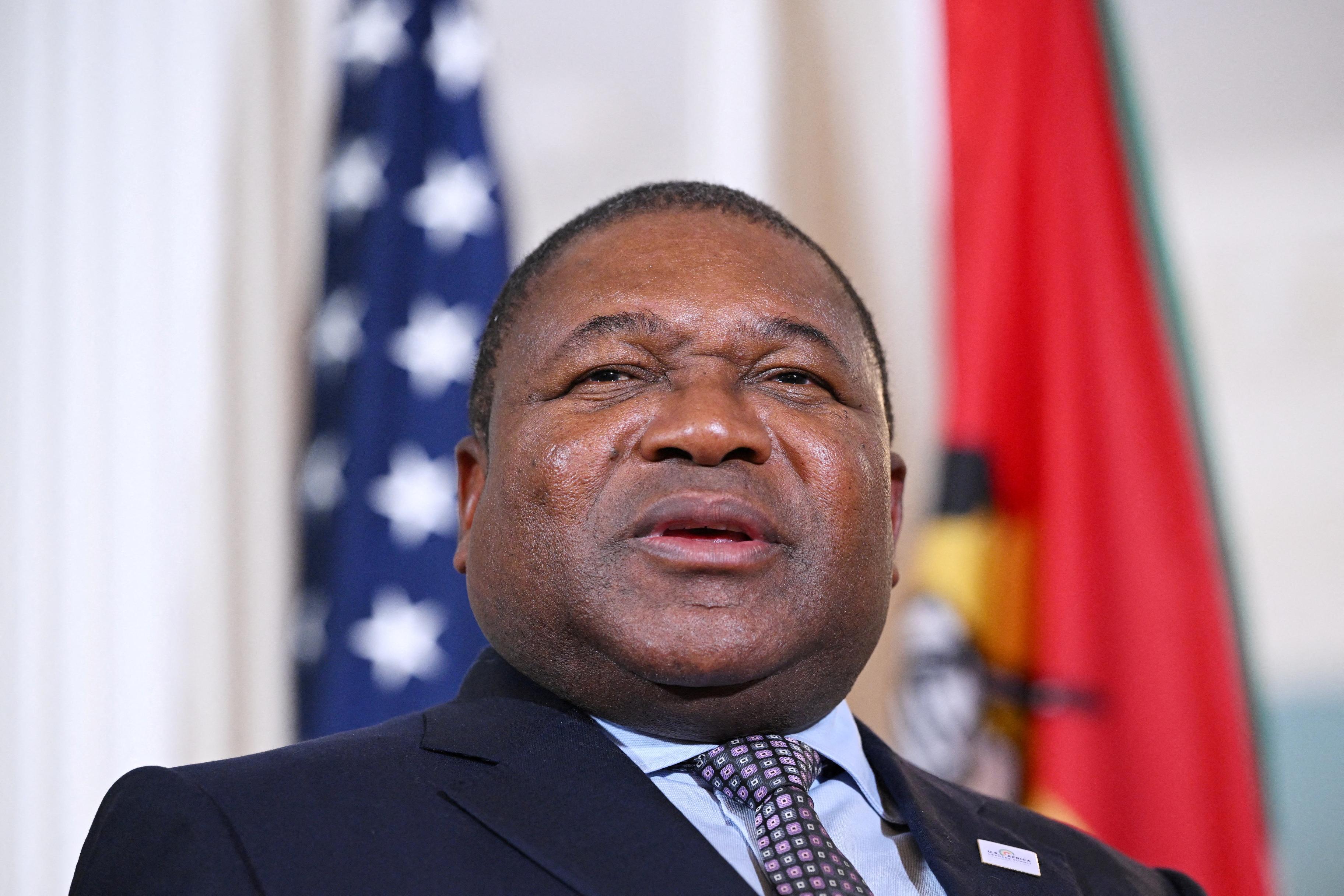
MAPUTO, May 10 (Reuters) - Mozambique's army is fighting Islamist insurgents who launched a major attack on the northern town of Macomia on Friday morning, President Filipe Nyusi said in a televised address. The town is in Cabo Delgado, a gas-rich northern province where Islamic State-linked militants started an insurgency in 2017. Despite a large security response, there has been a surge in attacks since January this year. "Macomia is under attack since this morning. Fire exchange still continues," he said at around 1000 GMT, adding that the militants initially withdrew after about 45 minutes of fighting, but then regrouped and came back. Friday's attack appeared to be the most serious militant attack in some time. Local media reported that a large number of fighters were involved and many residents had fled. A regional force from the Southern African Development Community which deployed in Mozambique in 2021 started withdrawing last month as its mandate ends in July. Nyusi said that attacks can take place in such periods of transition, and that he hoped the SADC forces would be able to step in and help. It was unclear if they were still deployed in the area or involved in the fight. Rwanda has also deployed troops to Mozambique to help fight the insurgency. The offensive comes as French oil company TotalEnergies (TTEF.PA) New Tab, opens new tab is seeking to restart a $20 billion liquefied natural gas terminal in Cabo Delgado that was halted in 2021 due to the insurgency. That project is some 200 kilometres (124 miles) north of Macomia, the town under attack. ExxonMobil, with partner Eni, is also developing an LNG project in northern Mozambique and said last week that it was "optimistic and pushing forward" as the security situation had improved. Sign up here. https://www.reuters.com/world/africa/mozambiques-president-says-northern-town-under-islamist-attack-2024-05-10/
2024-05-10 12:44
May 10 (Reuters) - United Bankshares (UBSI.O) New Tab, opens new tab has agreed to buy smaller rival Piedmont Bancorp in a deal valued at about $267 million, the lenders said on Friday, amid growing consolidation in the U.S. regional banking industry. WHY IT'S IMPORTANT High interest rates, exposure to commercial real estate and muted loan activity have clouded the outlook for regional U.S. lenders which are more susceptible to economic fluctuations compared with larger so-called 'too-big-to-fail' rivals. Last year, the failure of three mid-sized U.S. banks reverberated across the global financial system. In the aftermath, Treasury Secretary Janet Yellen had said the current banking environment and pressures on earnings of some U.S. regional banks may lead to some consolidation in the sector. CONTEXT United Bankshares expects the acquisition will expand its reach in the greater Atlanta area. Its stock is down nearly 9% this year, through previous close, giving it a market cap of about $4.63 billion. Piedmont's CEO Monty Watson will serve as regional president responsible for Georgia operations at United Bankshares after the deal closes. Late last month, regional lender UMB Financial Corp (UMBF.O) New Tab, opens new tab agreed to buy smaller rival Heartland Financial (HTLF.O) New Tab, opens new tab in an all-stock deal valued at about $2 billion. BY THE NUMBERS The deal will create a combined bank with more than $32 billion in assets and a network of over 240 locations. Georgia-based Piedmont has about $2.1 billion in assets and operates in 16 locations. As of March 31, consolidated assets of United Bankshares totaled about $30 billion. United Bankshares reported a first-quarter profit in April that fell to 64 cents per share compared with 73 cents per share a year earlier. WHAT'S NEXT The companies expect the deal to close in the fourth quarter of 2024 or in the first quarter of 2025. Sign up here. https://www.reuters.com/markets/deals/united-bankshares-buy-piedmont-bancorp-267-million-deal-2024-05-10/

2024-05-10 12:28
LONDON, May 10 (Reuters) - Biodiesel and other renewable diesel fuel oils are displacing a small but growing volume of petroleum-derived distillate fuel oil in the United States, especially in California and other parts of the West Coast. The result of this policy-driven change is that manufacturing and freight activity is correlated with total petroleum and renewable fuel oil supplied rather than just petroleum distillates alone. Distillate fuel oils such as diesel and gas oil are overwhelmingly used in freight transport, manufacturing and construction, so consumption is closely correlated with the industrial cycle. The cyclical upturn has remained weak over the last six months, as manufacturers struggle with headwinds caused by high interest rates for expenditure on expensive durable items. But even if the recovery gains more momentum, the eventual increase in petroleum distillate consumption is likely to be smaller than anticipated as more demand is lost to renewable alternatives. Chartbook: U.S. distillate consumption and stocks New Tab, opens new tab The volume of petroleum-derived distillate fuel oil supplied to the U.S. domestic market, a proxy for consumption, fell to 3.9 million barrels per day (b/d) in February 2024 from 4.0 million b/d in the same month in 2023. But this was offset by an increase in the supply of biodiesel and other renewable fuel oils to 0.3 million b/d from 0.2 million b/d, according to data from the U.S. Energy Information Administration (EIA). Total consumption of petroleum and renewable fuel oils has been flat over the last year, consistent with other signs that manufacturers and freight hauliers are struggling to emerge from a long but shallow downturn in 2022/23. Substitution of renewable fuel oils for petroleum-derived distillates is most advanced on the West Coast, where California has adopted state-level regulations New Tab, opens new tab requiring minimum blending rates and usage. On the West Coast, the volume of petroleum distillates supplied fell to 370,000 b/d in February from 460,000 in the same month a year earlier and over 530,000 in February 2021. Over the same period, the volume of renewable fuel oils supplied surged to 170,000 b/d from 90,000 b/d a year ago and less than 40,000 in 2021. DISTILLATE INVENTORIES The shift from consumption of petroleum distillates to renewable fuel oils has been mirrored by a similar shift in inventories (“Petroleum supply monthly New Tab, opens new tab,” EIA, April 30). U.S. petroleum distillate inventories stood at 118 million barrels at the end of February, which was 18 million barrels (-13% or -1.14 standard deviations) below the prior ten-year seasonal average. But petroleum distillates were supplemented by another 11 million barrels of biodiesel and renewable fuel oil stocks, up from 8 million barrels at the same time in 2023 and 7 million in 2022. Combined inventories of petroleum and renewable distillates are 14 million barrels (-10% or -0.84 standard deviations) below the ten-year seasonal average, and broadly similar to levels in 2023 and 2022. From the perspective of combined inventories, the production-consumption balance is only modestly tighter than normal. PRICES AND CRACK SPREADS The relatively small deficit in combined inventories helps explain why diesel prices and crack spreads have softened in recent months. The expected acceleration in distillate fuel oil consumption and depletion of inventories has been repeatedly postponed as manufacturers have struggled to regain momentum. Inflation-adjusted spot prices for ultra-low sulphur fuel oil delivered in New York Harbor averaged just $107 per barrel in April 2024, down from $136 in September 2023 and a high of $205 in May 2022. In real terms, diesel prices have fallen faster than crude, with the diesel premium or crack spread narrowing to $22 per barrel in April from $46 in August 2023 and a high of almost $63 in June 2022. The inflation-adjusted spread has reverted close to the five-year average for 2015-2019 before the coronavirus pandemic and Russia’s invasion of Ukraine disrupted the market. Hedge funds and other money managers have reduced their combined position in U.S. diesel and European gas oil in eight of the most recent 11 weeks, selling the equivalent of 52 million barrels since February 13. As a result, the combined position had been reduced to 35 million barrels (34th percentile for all weeks since 2013) on April 30 down from 87 million (73rd percentile) on February 13. Fund positioning has transformed from bullish to mildly bearish as petroleum distillate inventories have depleted much less than normal for the time of year. Current diesel prices and spreads indicate supplies are not especially tight, which has taken some of the heat out of the crude market as well, contributing to the retreat of Brent prices from their recent highs in early April. Related columns: - Distillate futures see big outflow of speculative money (April 2, 2024) - Diesel prices primed to rise sharply in 2024 (February 6, 2024) - Global diesel shortage eases after summer surge in prices (December 14, 2023) John Kemp is a Reuters market analyst. The views expressed are his own. Follow his commentary on X https://twitter.com/JKempEnergy New Tab, opens new tab Sign up here. https://www.reuters.com/markets/commodities/renewable-fuels-take-bite-out-us-diesel-consumption-kemp-2024-05-10/
2024-05-10 12:12
KYIV, May 10 (Reuters) - Ukraine may face an increase in electricity shortages this summer caused by recent Russian attacks on power stations amid rising consumption and a repair campaign at nuclear power plants, the head of the country's grid operator said on Friday. Since late March, the Ukrainian energy sector has been the target of massive Russian missile and drone attacks, causing blackouts in many regions and raising the issue of decentralisation of generating capacity. "We will definitely face challenges in the summer and these challenges will be primarily related to capacity shortages due to damage to power plants," Volodymyr Kudrytskiy, the head of Ukrenergo grid operator, told a televised briefing. After the latest attacks on the energy system, Ukrenergo imposed power supply restrictions on industrial consumers while the government urged the population to save electricity. "We realise that today is not the most difficult situation yet, we have not yet seen the real summer heat and air conditioning systems are not yet in use," Kudrytskiy said. He added that hydro-electric power plants can produce less electricity in the summer, when nuclear power plants also undergo regular mandatory repairs. Ukrenergo said Ukraine planned to import 13,904 megawatt hours (Mwh) of electricity on Friday versus 16,699 Mwh on Thursday. It said in a statement that Ukraine received emergency power aid from EU countries in the morning, and during the day it expects to import electricity from Romania, Slovakia, Poland, Hungary and Moldova. Ukrainian officials have said the country has lost about 80% of its thermal power generation, relying increasingly on the three nuclear power plants that produce about 60% of its electricity. Thermal and hydro-electric power generation are needed to keep supply and demand balanced during the peak hours of energy consumption in the morning and evening. Sign up here. https://www.reuters.com/world/europe/ukraine-expects-energy-deficit-rise-summer-due-russian-attacks-2024-05-10/
2024-05-10 12:07
WARSAW, May 10 (Reuters) - Thousands of protesters marched through the streets of the Polish capital Warsaw on Friday to show their opposition to European Union environmental regulations that farmers say are driving them out of business. Farmers were joined by representatives of other branches of the Solidarity trade union, which organised the protest, such as miners and workers from the automotive sector. Farmers in Poland and elsewhere in the bloc have been protesting in recent months New Tab, opens new tab against cheap food imports from Ukraine and restrictions placed on them by the EU's Green Deal to tackle climate change. In a sea of red and white Polish flags and Solidarity banners, the protesters, many wearing yellow high-visibility vests, brandished placards with slogans like "Down with the Green Deal, Down with the European Union" and "Green Poison". "The only thing it's good for is throwing in the bin," said retired farmer Wieslaw Czerwinski from Grojec, in central Poland, when asked about the Green Deal. "It raises the costs of production, raises costs every day, costs of heating, costs of energy." The protesters were joined by politicians from the previous nationalist government, who accuse Donald Tusk's pro-European administration of yielding to Brussels at the expense of regular Poles. Tusk's government dismisses such claims and says that their predecessors damaged Poland's relations with Western allies while failing to take action to help sectors such as agriculture. Farmers have already won concessions from the EU and the Polish government, which said it would pay 2.1 billion zlotys ($526.74 million) in subsidies to compensate farmers for low grain prices, but they say it is not enough. However, last month they decided to unblock border crossings with Ukraine, lifting a blockade that had dragged on for months, soured bilateral relations and buffeted Ukraine's trade. ($1 = 3.9868 zlotys) Sign up here. https://www.reuters.com/world/europe/polish-farmers-march-against-green-poison-eu-climate-change-rules-2024-05-10/


