2024-05-09 11:39
May 9 (Reuters) - Pot firm Trulieve Cannabis (TRUL.CD) New Tab, opens new tab posted a narrower first-quarter loss on Thursday, driven by higher sales and robust demand. The Florida-based company's net loss attributable to shareholders narrowed to $23.1 million in the quarter that ended March 31, down from $64.1 million a year earlier. WHY IT'S IMPORTANT Trulieve has been expanding its presence across the U.S. with plans to open 25 new stores in 2024 as it hopes to benefit from the potential legalization of the drug in Florida and at the Federal level. Florida, with a population of more than 22 million, is a crucial medicinal marijuana market for Trulieve, which enjoys significant market share within the state. CONTEXT Last month, the U.S. Department of Justice moved to reclassify marijuana as a less dangerous drug, a step that will allow pot firms to deduct normal business expenses from their profit, thereby reducing the tax burden and boosting profitability. Successful reclassification would also enable pot firms to uplist to major U.S. stock exchanges, improve banking and consumer access, and make medical research easier to conduct. Earlier this year, the Florida Supreme Court had allowed voters to decide on the fate of recreational use of marijuana in the state through a referendum on the November ballot. KEY QUOTES "With strong performance in our core business and several meaningful catalysts on the horizon, the outlook has never been brighter," said CEO Kim Rivers. "Given our financial performance and significant scale in key markets, Trulieve is best positioned for the coming wave of growth catalysts," she added. BY THE NUMBERS Trulieve posted a revenue of $297.6 million in the first quarter, beating analysts' expectations of $285.9 million. Loss from continuing operations narrowed to 16 cents per share in the January-March quarter, from 18 cents per share a year earlier. Sign up here. https://www.reuters.com/markets/us/trulieve-cannabis-quarterly-loss-narrows-demand-boost-2024-05-09/

2024-05-09 11:33
NEW YORK, May 9 (Reuters) - The dollar weakened against most currencies on Thursday after economic data showed more signs of softening in the U.S. labor market, while the pound rebounded from earlier lows after the Bank of England opened the door for an interest rate cut. Weekly initial claims for state unemployment benefits increased 22,000 to a seasonally adjusted 231,000, the highest level since the end of last August and above the 215,000 expected by economists in a Reuters poll. The data followed last week's weaker-than-anticipated U.S. payrolls report and other data that showed job openings fell to a three-year low in March. Market participants have looked towards a softening labor market as a sign that consumers will begin to slow spending and in turn help cool inflation. Data next week will include readings on consumer prices (CPI), producer prices (PPI) and retail sales. "We did have a knee-jerk reaction in yields and the dollar lower this morning after the jobless claims number came in above expectations," said Karl Schamotta, chief market strategist at Corpay in Toronto. Schamotta said there were some seasonal distortions in the claims report that may have led to the higher reading, but added that recent economic data "kind of suggests that we're seeing a deceleration in the world's largest economy, and if we do see a sequential decline in U.S. consumer/producer price indices next week as well as the retail sales number, then that could prick that U.S. exceptionalism trade that's been dominating markets for quite a long time." The greenback showed little reaction to comments from Federal Reserve Bank of San Francisco President Mary Daly, who said she still sees a "really healthy" labor market and inflation that remains too high. The dollar index , which measures the greenback against a basket of currencies, fell 0.22% at 105.28, with the euro up 0.28% at $1.0775. Sterling strengthened in the wake of the U.S. data and was last at 0.18% at $1.2518. The pound had dropped to a low of $1.2446, its weakest level since April 24, after the Bank of England (BoE) paved the way for an interest rate cut. The BoE's Monetary Policy Committee had voted 7-2 to keep the central bank's key policy rate at a 16-year high of 5.25%, with Deputy Governor Dave Ramsden joining Swati Dhingra in voting for a cut to 5%. BoE Governor Andrew Bailey said it was possible the central bank would need to cut rates by more than investors expect. Against the Japanese yen the dollar edged 0.03% higher at 155.52 as hawkish opinions from Bank of Japan members helped slow the yen's fall. The dollar has been slowly recovering against the Japanese currency after it tumbled 3.4% last week, its biggest weekly percentage drop since early December 2022. The yen had earlier strengthened to 155.15 per dollar, after the BOJ's summary of opinions showed board members were overwhelmingly hawkish at their April policy meeting, with many citing the need for steady interest rate hikes. BOJ Governor Kazuo Ueda said the central bank will scrutinize the yen's recent declines in guiding monetary policy. Market participants suspect Tokyo spent some $60 billion last week to stall the yen's slide after it hit its weakest level in 34-years against the dollar around 160 yen. In a note on Thursday, Deutsche Bank's head of FX research, George Saravelos, reiterated that "as long as the BOJ sees no urgency to rapidly normalize policy, the fundamental backdrop for the JPY (yen) will not change." Sign up here. https://www.reuters.com/markets/currencies/dollar-holds-its-ground-key-inflation-data-looms-2024-05-09/

2024-05-09 11:32
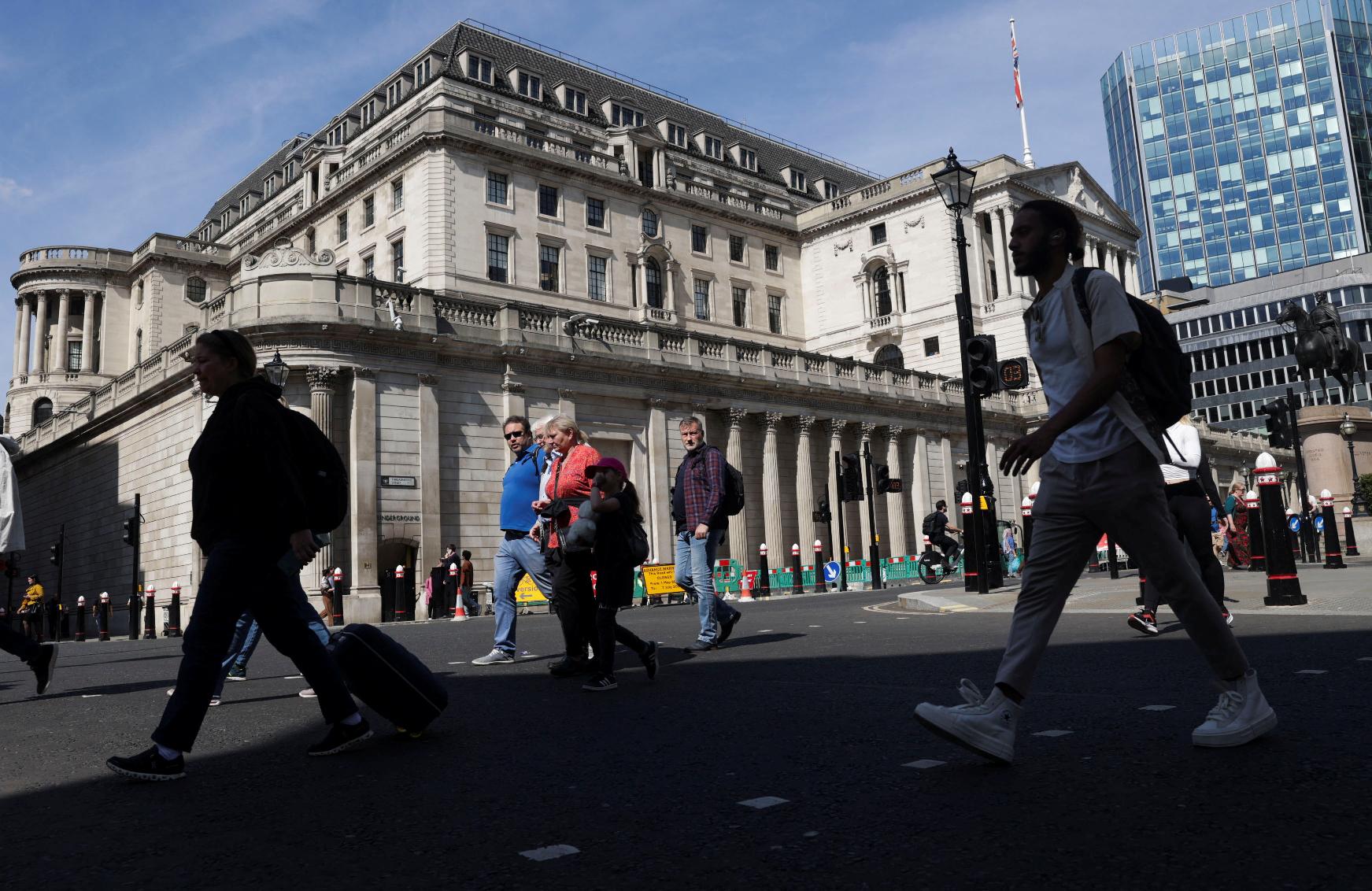
By William Schomberg, David Milliken and Suban Abdulla LONDON, May 9 (Reuters) - The Bank of England took another step towards lowering interest rates, as a second official backed a cut and Governor Andrew Bailey said he was "optimistic that things are moving in the right direction". The BoE said on Thursday its Monetary Policy Committee voted 7-2 to keep rates at a 16-year high of 5.25% after Deputy Governor Dave Ramsden joined Swati Dhingra in voting for a cut to 5%. Economists polled by Reuters had mostly expected another 8-1 split to keep rates on hold. The MPC has now kept rates on hold at six meetings in a row but it hinted that a first cut since March 2020 at the onset of the COVID-19 pandemic could come as soon as its next meeting in June, a potential boost for Prime Minister Rishi Sunak. He has told voters that the economy is turning a corner but is struggling to reduce the opposition Labour Party's big opinion poll lead before an election later this year. The BoE added a line to its post-meeting statement, saying it would be watching the next rounds of economic data closely. "The Committee will consider forthcoming data releases and how these inform the assessment that the risks for inflation persistence are receding," the BoE said. "On that basis, the Committee will keep under review for how long Bank Rate should be maintained at its current level." Over a nearly two-year period from late 2021, the BoE - like other central banks - pushed up borrowing costs to tackle a surge in inflation which peaked at 11.1% in October 2022. Since then, headline inflation has fallen back and the BoE expects it slowed to around its 2% target in April, largely because of falling energy prices. But the BoE has remained on guard because of still-strong wage growth and services price inflation which threaten to push inflation back above 2%. Bailey said the news on inflation had been encouraging. "We need to see more evidence that inflation will stay low before we can cut interest rates," he said in a statement. "I'm optimistic that things are moving in the right direction." JUNE CUT? Investors have been trying to work out whether the BoE is likely to cut rates in June - when the European Central Bank has already signalled it will reduce borrowing costs - or, like the U.S. Federal Reserve, will hold out for longer. On Wednesday, Sweden's central bank cut its key interest rate for the first time in eight years. Shortly before the BoE's announcement on Thursday, financial markets were close to fully pricing a first quarter-point BoE rate cut only in August and another in November or December taking Bank Rate to 4.75%, followed by more cuts in 2025. The BoE sent a fresh message to investors that those bets on rate cuts might be too conservative as it cut its inflation forecasts for two and three years' time to 1.9% and 1.6% - below its 2% target - from its February projections of 2.3% and 1.9%. The BoE's inflation forecasts partly reflect market interest rate expectations in the run-up to its MPC meetings, which now predict fewer cuts this year than in February. Minutes of the BoE's May meeting showed differences between the seven MPC members who voted to keep rates on hold around how persistent inflation pressures would be, and how much more evidence of a slowdown was needed to justify a rate cut. Ramsden and Dhingra said a cut was needed now because of the time lag in monetary policy decisions impacting the economy and because inflation might fall more than the BoE had forecast. The MPC's decision to stress the importance of "forthcoming data releases" will add to the focus on the two official labour market reports and the two sets of inflation figures which are due before its next scheduled announcement on June 20. Wage growth and services price inflation of around 6% remain higher than in the United States or euro zone, even though British economic growth is more sluggish. The BoE slightly lifted its growth forecasts for Britain's economy, saying it expected 0.5% growth in gross domestic product over 2024, up from 0.25% in its February forecast. It also said a recession in the second half of 2023 had probably ended, offering some relief to Sunak and the Conservative Party as they battle to turn around the opinion polls. Bailey and other officials were due to hold a press conference at 1130 GMT. (([email protected] New Tab, opens new tab)) Keywords: BRITAIN BOE/ Sign up here. https://www.reuters.com/markets/europe/bank-england-moves-closer-first-rate-cut-since-2020-2024-05-09/
2024-05-09 11:30
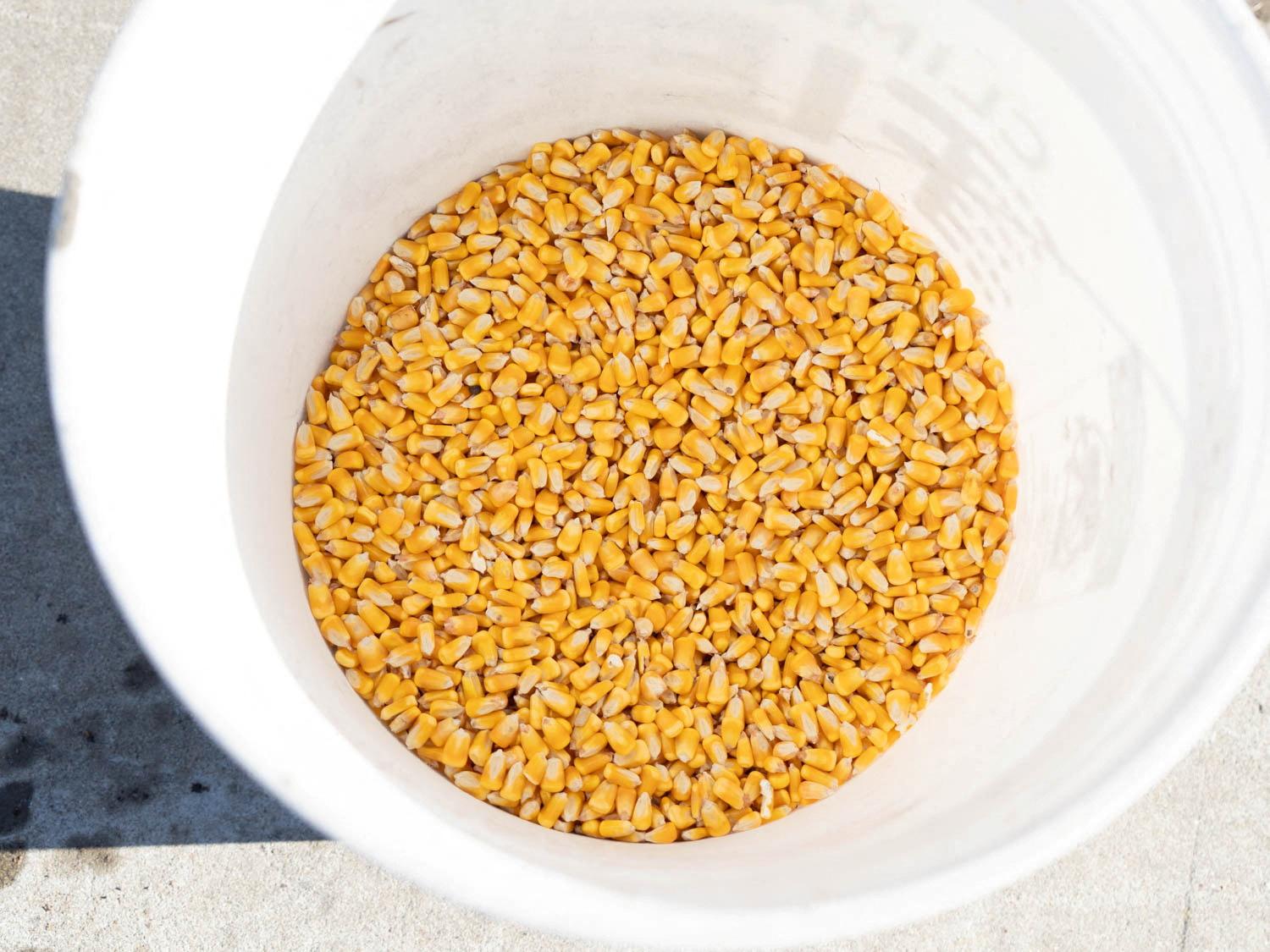
NAPERVILLE, Illinois, May 8 (Reuters) - Industry analysts spent much of 2023 deciding whether new-crop Chicago corn futures were tracking more closely with 2012 or 2013, though 2013 was certainly the better analog in the end. December 2024 futures are now inevitably being compared with 2014, which featured some of the sharpest ever mid-year declines. While prices and some fundamentals look similar, there are also key differences between market conditions in 2014 versus 2024 that may help guide expectations for the coming months. PRICES Through the first four months of the year, new-crop CBOT December corn futures averaged $4.73 per bushel, nearly identical to the January-April 2014 new-crop average of $4.76, not adjusted for inflation. Both averages are between 15% and 18% lower than in the same periods in the prior years. But directionally, things look different. December 2024 corn has dropped as much as 11% since the beginning of January, bottoming on Feb. 26. Yearly losses totaled 4% through Wednesday. New-crop corn was unchanged in January 2014 but jumped nearly 5% in February. December 2014 futures hit their annual high in early April, notching maximum year-to-date gains of 15%. Yearly gains as of May 8 totaled 14% in 2014. December 2024 corn has not yet returned to its annual high of $5.02-1/4 per bushel set on Jan. 2 but came close on Tuesday, topping at $4.91-1/4. SPECULATORS From late 2022 throughout 2023, money managers’ views on CBOT corn futures and options tracked very similarly with the same period in 2012-2013. But 2024 totally diverged from 2014. In late February 2024, funds forged a record corn net short of 341,000 contracts after eight weeks of heavy selling. However, funds were net buyers of corn for 13 consecutive weeks to start out 2014, going from a moderate net short of 95,000 contracts to a net long of 276,000 in that span. Money managers had cut their net short to 218,000 contracts by the end of April 2024. SUPPLY GROWTH The U.S. Department of Agriculture will issue its first official 2024-25 outlooks on Friday, though a tentative one was published in February. That showed 2024-25 U.S. corn ending stocks rising 17% on the year to a 37-year high, following a 60% increase in 2023-24 and a decline of 1% in 2022-23. In February 2014, USDA pegged 2014-15 U.S. corn ending stocks up 43% on the year compared with an 80% increase in 2013-14 and a 17% decline in 2012-13, a year featuring catastrophic drought. Analysts expect USDA on Friday will place 2024-25 U.S. corn ending stocks up 9% from 2023-24. In May 2014, USDA’s first 2014-15 print was up 51% on the year, identical to trade estimates. U.S. EXPORTS Compared with expectations, overseas demand for U.S. corn was on fire in early 2014. USDA between January and May 2014 boosted 2013-14 U.S. export estimates by 31% (450 million bushels), a practically unheard-of increase for that period. USDA’s 2023-24 U.S. corn export outlook has been unchanged since December at 2.1 billion bushels. In 2013-14, U.S. corn exports accounted for 37% of the world total versus an expected 27% this year, though Brazil increased its share to 26% from 16% during that decade. SOUTH AMERICA USDA in the first two months of 2014 reduced Argentina’s 2013-14 corn crop by 8% on warm weather, and Argentine and Brazilian production combined was set to fall more than 10% from the prior season. Slightly higher Argentine corn production was realized later in 2014, though USDA’s 2013-14 Brazilian estimate went through four consecutive upgrades between April and July, gaining a total of 11% (8 million metric tons). A decade later, Brazil’s corn crop has expanded by more than 50% and Argentina’s potential has nearly doubled. But dry weather has cut 2023-24 Brazilian crop estimates, and pest damage could cause large reductions in Argentina. As of April, USDA pegged 2023-24 corn production among the two countries up a combined 3.5% on the year, though analysts see that margin falling to 1% on Friday. Karen Braun is a market analyst for Reuters. Views expressed above are her own. Sign up here. https://www.reuters.com/markets/us/are-2024-chicago-corn-futures-mimicking-those-2014-2024-05-09/
2024-05-09 11:14
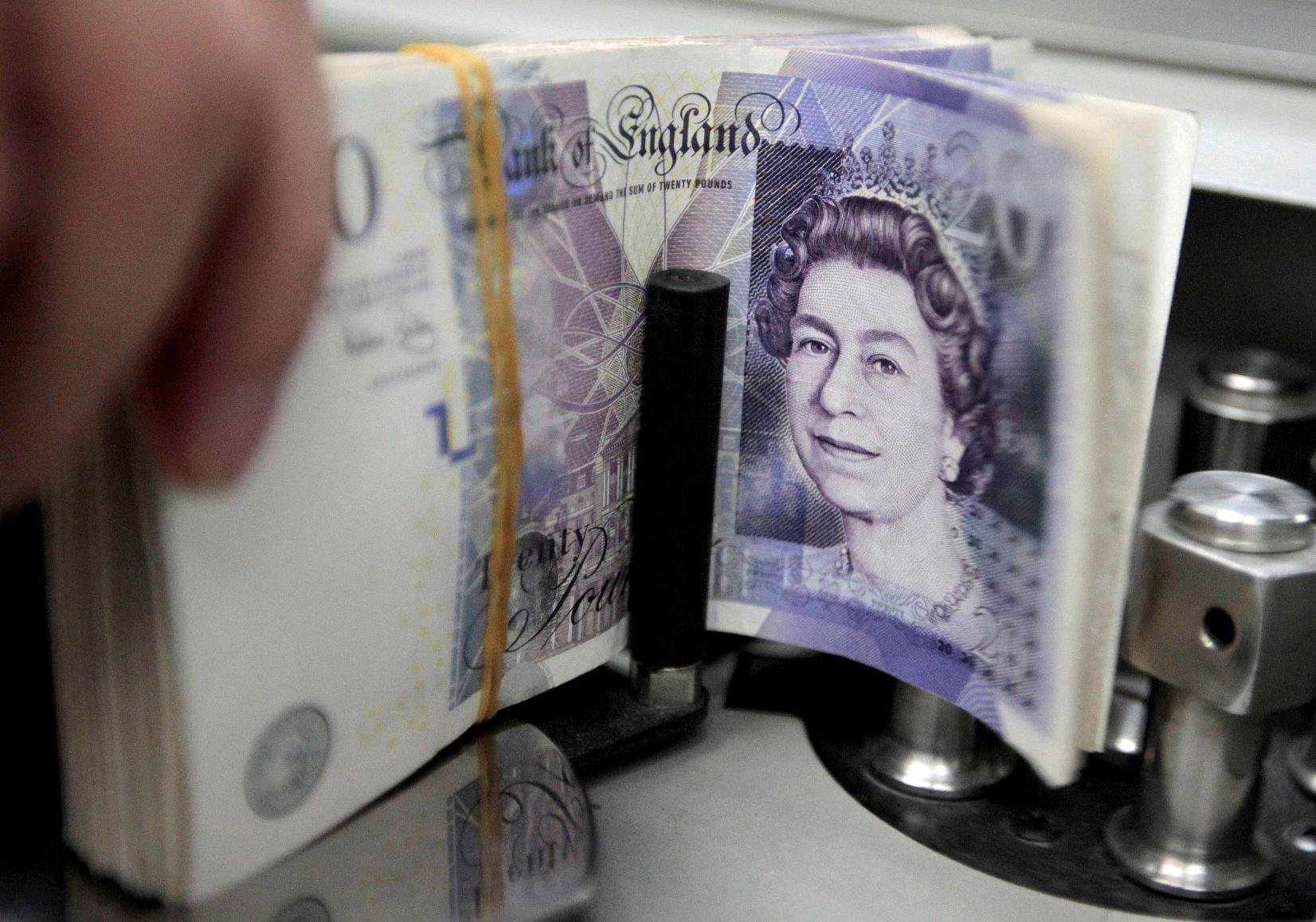
LONDON, May 9 (Reuters) - The pound and gilt yields fell on Thursday, while Britain's blue-chip stock index hit a record after the Bank of England took another step towards lowering interest rates, as a second official backed a rate cut. Sterling fell as much as 0.4% against the dollar to $1.2446 , a two-week low. It was last at $1.2471. The pound was at 86.04 pence per euro , down 0.1%. The BoE said on Thursday its Monetary Policy Committee voted 7-2 to keep rates at a 16-year high of 5.25% after Deputy Governor Dave Ramsden joined Swati Dhingra in voting for a cut to 5%. Economists polled by Reuters had mostly expected another 8-1 split to keep rates on hold. "We believe the BoE is setting the stage for a summer rate cut," said Hussain Mehdi, director, investment strategy at HSBC Asset Management. Money market traders still see around a 45% chance of a rate cut from the Bank of England at next month's policy meeting, while around 55 basis points of easing is priced by year end, implying two quarter-point cuts. BoE Governor Andrew Bailey said future rate cuts may exceed those priced by the market. "It's likely that we will need to cut bank rates over the coming quarters and make monetary policy somewhat less restrictive over the forecast period - possibly more so than currently priced into market rates," Bailey said in the post-decision press conference. Markets fully price the first quarter-point rate cut by the August meeting, earlier than the U.S. Federal Reserve, where a 25 basis point rate cut isn't fully priced until November. Money markets price the first easing from the European Central Bank in June. "The pound has inevitably fallen on the news," said Jamie Dutta, market analyst at Vantage Markets. "Policy divergence with the Fed is increasing, with the Bank of England now potentially more in tune with the ECB." Gilt prices rose, pushing the yield on the benchmark 10-year gilt to 4.138%, little changed on the day. Bond yields move inversely with prices. Britain's two-year gilt yield , which is more sensitive to changes in interest rate expectations, fell 2.5 bps to 4.288%. Britain's blue-chip FTSE 100 stock index (.FTSE) New Tab, opens new tab hit a new intraday record, rising 0.4% to 8394.01 points. "European monetary policy easing and signs of a cyclical rebound support the outlook for the region's equity markets, which have performed well this year and remain attractively valued," HSBC AM's Mehdi said. Sign up here. https://www.reuters.com/markets/currencies/sterling-falls-after-boe-ftse-100-jumps-record-2024-05-09/
2024-05-09 10:50
LONDON/SINGAPORE/NEW YORK, May 9 (Reuters) - Profit margins for diesel are slumping as new refineries boost supplies and as mild weather in the northern hemisphere and slow economic activity eat into demand, putting oil prices under further downward pressure. The lower refining margins for diesel, one of the world's key industrial and transport fuels, have already prompted some refiners in Asia to trim the volume of crude oil they process to reduce their diesel output. Weaker demand has seen crude oil prices fall sharply in recent weeks and OPEC+ producers meet in early June to decide on the fate of a series of supply cuts agreed since late 2022. While the group is yet to begin formal discussions, sources told Reuters the group may keep cuts of 2.2 million barrels per day (bpd) beyond June if demand fails to pick up. Brent crude prices slumped to a two-month low of below $82 a barrel on May 8 on rising inventories and slipping demand. They recovered some losses on Thursday, but are on track to lose over 4% so far this month after four months of gains. "[OPEC+] would ... need to contend with the mixed performance in refined product markets — gasoline crack spreads have improved steadily, but diesel cracks have markedly deteriorated," JP Morgan said, adding that it expected the alliance to keep production cuts beyond June. European diesel profit margins slid to below $16 per barrel in late April, an 11-month low having hit over $40 in February. The difference between U.S. diesel and crude oil, known as a crack spread, eased to a 2-year low of $20 in April at the main trading hubs in New York and the Gulf Coast from above $40 a barrel in February, according to a Commodity Context analysis. Asian diesel margins averaged $17 a barrel in April, down from $22 in the first quarter. RISING OUTPUT, WEAKER DEMAND Analysts say that a mild winter hit diesel demand over the last two quarters, as it meant less buying of heating oil. Rising output is also weighing on prices. Global refining capacity rose by 2 bpd last year, the most since 1977, energy brokerage StoneX said, as new projects were launched in Oman New Tab, opens new tab, Kuwait and Nigeria. Refiners will add another 200,000 bpd of diesel capacity this year, StoneX said. In Europe, where diesel is used more in cars than elsewhere, the shift to hybrid or electric cars is also eating into demand. JP Morgan noted that road diesel demand in the continent contracted by 50,000 bpd over the past year. In the U.S., a different kind of structural change is underway, with a rising volume of biofuels displacing diesel. U.S. West Coast demand for petroleum-derived diesel hit its lowest in nearly 28 years in January, while consumption of renewable diesel and biodiesel hit a record high, according to U.S. government data. Meanwhile slowing factory activity last month in China, the Euro zone and the United States has dragged on diesel demand. "Now that peak heating season is over the issue is more related to general industrial slowdown ... and to the car fleet slowly moving away from diesel," Natalia Losada, an analyst at consultancy Energy Aspects, said. European and U.S. diesel futures markets have been trading in contango since around mid-April - where a current contract trades at a discount to a contract for a later date - a sign of oversupply and a signal for traders to store the fuel for better profit later. On May 3, the 6-month European diesel spread reached nearly $12 a tonne in contango, its widest in a year. While the diesel market is in contango, the crude market is not. Benchmark Brent crude is in backwardation, the opposite of contango, and therefore still signalling market tightness. "It is likely that the current front-end strength in crude curves, reflecting a current tight crude market, will dissipate in not too long due to likely lower refinery runs," SEB analyst Bjarne Schieldrop said. Refining margins in Asia are stuck near one-year lows. Taiwan's Formosa Petrochemical Corp (6505.TW) New Tab, opens new tab, one of Asia's largest refined products exporters, cut its May run rate by about 3 percentage points. South Korea's second-largest refiner, GS Caltex, is trimming output by 20,000-30,000 bpd in May, trade sources said. SUPPORT FROM CHINA, JET FUEL Some support for the Asian diesel market could come from declines in exports from China in April and May due to refinery maintenance, two Singapore-based trade sources said. Bank of America analysts said support could also come from surging air traffic raising demand for jet fuel, which could prompt refiners to produce more aviation fuel and less diesel. Sign up here. https://www.reuters.com/markets/commodities/bear-market-diesel-spells-fresh-troubles-oil-2024-05-09/