2023-10-31 09:53
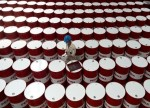
The World Bank, in its recent Commodity Markets Outlook report, has issued a warning about the potential for a global oil crisis due to escalating tensions in the Israel-Hamas conflict. The report suggests that under a "large disruption" scenario, similar to the Arab oil embargo during the Yom Kippur War or 1973 Arab-Israeli war, global oil supplies could decrease by 6-8 million barrels per day. This could lead to a price surge of 56% to 75%, potentially reaching a record high of $157 per barrel, surpassing the Brent trading record of $147.5 set in July 2008. The World Bank's report also outlines "small" and "medium" disruption scenarios, drawing parallels to the Libyan civil war in 2011 and the Iraq war in 2003 respectively. These potential crises follow closely on the heels of the Russia-Ukraine war, which was the largest shock to commodity markets since the 1970s. Despite these risks, Indermit Gill, Chief Economist at the World Bank, expects oil prices to average $90 per barrel in the current quarter, declining to $81 by 2024 due to a projected slowdown in global economic growth. The report also recalls how oil prices quadrupled during the Yom Kippur War when Arab energy ministers imposed an oil embargo on exports. It mentions that as of December 2023, WTI Crude is at risk of a dual energy shock from both Ukraine and Middle East conflicts, even though Palestine is not a major oil player. In light of this potential crisis, countries like the UK face the risk of importing inflation, leading to a possible cost-of-living crisis. The typical response from institutions such as the independent Bank of England has been to increase interest rates, a strategy that fails to address global crisis management. The report suggests that resilience should be built through support measures for low-income individuals most affected by inflation. This includes raising pensions and benefits in line with inflation and compelling employers to offer pay raises to cope with price hikes. The government needs to shift its focus from inflation being the primary economic issue to maintaining economic activity and preventing debt crises. This involves managing the economy without hiking interest rates and adopting a new narrative focusing on government capabilities, including money creation during crises balanced by the taxation of wealth, to prevent asset price inflation. https://www.investing.com/news/commodities-news/world-bank-warns-of-potential-global-oil-crisis-due-to-middle-east-tensions-93CH-3214966

2023-10-31 08:43
Copyrighted Image by: Alpha Footage VanEck has resubmitted its Bitcoin Exchange Traded Fund (ETF) application to the Securities and Exchange Commission (SEC), introducing a unique Bitcoin-based seeding strategy, according to the company's financial attorney, Scott Johnsson. The revised application aims to mirror Bitcoin's after-cost performance through "Creation Baskets" in their Bitcoin Trust. This move comes after VanEck's previous unsuccessful attempts to list its Bitcoin Trust. This latest revision by VanEck aligns with updates made by Bitwise Asset Management, ARK Invest, and 21Shares to their spot Bitcoin ETF applications. Bitwise has provided counter-arguments against regulators' reasons for denial, while BlackRock (NYSE:BLK), ARK Invest, and 21Shares have also made modifications to their applications. VanEck is not only focusing on Bitcoin but also planning to launch an Ether Futures Exchange Traded Fund (ETF). This proposed fund would facilitate standardized cash-settled Ethereum futures contracts, pending SEC approval. In addition to these developments, VanEck has made a bullish prediction for Solana's SOL token price. The firm anticipates the price of SOL to reach $335 by 2030, with a potential rise to $3,211 per token in a bullish scenario. This projection is based on the expectation of Solana hosting the first decentralized application (dApp) with over 100 million users. https://www.investing.com/news/cryptocurrency-news/vaneck-revises-bitcoin-etf-application-plans-ether-futures-etf-93CH-3214764

2023-10-31 08:16
Copyrighted Image by: Reuters Investors are closely monitoring the central bank meetings scheduled for this week, particularly the US Federal Reserve's policy outlook. This scrutiny comes as geopolitical tensions between Israel and Hamas have bolstered gold prices around $2,000, setting bullion on track for an 8% rise this month, according to Manav Modi from MOFSL. On Tuesday, gold opened at Rs 61,117 ($1 = Rs 83.25) per 10 grams on MCX, with an intraday low of Rs 61,110. International prices hovered around $1,992.95 per troy ounce. Silver also experienced a slight increase, opening at Rs 72,492 per kg and reaching an intraday low of Rs 72,261 on MCX before closing up by 1.50% at 72790 levels. The market is also reacting to the retreat of US Treasury yields, though they remain high. The 10-year bond yield recently reached a level not seen since 2007 at 5.02%. Meanwhile, the dollar index holds firm above the 106 mark. Investors are keeping a keen eye on the US Fed's two-day monetary policy meeting and the US monthly jobs report due Friday. They are also watching for the Bank of England's policy decision due this week. These events have gained significance in light of better-than-expected US GDP and core durables goods orders data. As for trading predictions, gold may fluctuate between $1990 to $1205 levels, while silver could range between 70600 and 73500 levels. The structure of bullion appears positive with traders advised to make fresh buy positions in gold and silver near given support levels. December Gold closed at 61268 (0.15%). https://www.investing.com/news/commodities-news/gold-and-silver-prices-steady-amid-geopolitical-tensions-and-upcoming-central-bank-meetings-93CH-3214747

2023-10-31 08:12
Copyrighted Image by: Reuters. Investing.com - The U.S. dollar edged higher in early European trade Tuesday, while the yen slumped after the Bank of Japan maintained its ultra-dovish stance. At 03:20 ET (07:20 GMT), the Dollar Index, which tracks the greenback against a basket of six other currencies, traded 0.2% higher at 106.122. Bank of Japan maintains dovish tone The Bank of Japan was the first of this week’s major central banks to hold its policy-setting meeting earlier Tuesday, and it decided to keep interest rates negative, while only making minimal changes to its yield curve control policy. The central bank said it will allow some more flexibility in its YCC, potentially letting bond yields move above their 1% cap. But this largely disappointed markets hoping for a more aggressive move by the BOJ. USD/JPY surged 0.7% to 150.11, crossing the widely-watched 150 level once more, putting potential government intervention into the spotlight once more. Weak economic data also weighed on the yen, after readings on both industrial production and retail sales disappointed for September. The BOJ also forecast higher inflation and worsening economic conditions in the coming years, and that it will continue with its pace of quantitative easing in the near-term. Fed starts two-day meeting The U.S. dollar index received a boost from the yen weakness, but it has also been underpinned by risks of another rate hike from the Federal Reserve given data points to a still-resilient U.S. economy. The Fed starts its two-day policy meeting later in the session, to be concluded on Wednesday. The central bank is widely expected to keep rates on hold, but it is also likely to reiterate its higher-for-longer stance on interest rates - a scenario that bodes well for the dollar. Euro edges higher ahead of eurozone growth, inflation data EUR/USD rose 0.1% to 1.0623, ahead of the release of latest eurozone growth and inflation data later in the session, offering clues of future European Central Bank monetary policy decisions. Gross domestic product is expected to grow by just 0.2% on an annual basis in the third quarter, a drop from 0.5% growth the prior quarter, while consumer prices are seen rising 3.1% annually in October, a drop from 4.3% the previous month. Data released earlier Tuesday showed that German retail sales fell 0.8% in September, having been expected to rise by 0.5%, as persistently high inflation took its toll on consumption in the euro zone's largest economy. Chinese PMIs disappoint USD/CNY rose 0.1% to 7.3182 after the latest purchasing managers index data showed that China’s manufacturing sector contracted in October, while growth in the non-manufacturing sector slowed substantially. Elsewhere, GBP/USD fell 0.2% to 1.2148, ahead of the Bank of England’s latest policy meeting later in the week, with the central bank widely expected to keep interest rates on hold. AUD/USD fell 0.3% to 0.6354, while NZD/USD traded largely flat at 0.5840. https://www.investing.com/news/forex-news/dollar-edges-higher-yen-slumps-as-boj-maintains-dovish-stance-3214742

2023-10-31 07:21
Copyrighted Image by: Reuters. Bitcoin solo miners have made significant strides in securing block rewards despite the industry's competitive nature, as confirmed by Bitcoin CGMiner software engineer Dr. Con Kolivas. The most recent success was recorded on Saturday, October 28, 2023, when a miner using the Solo Ckpool platform secured the Bitcoin block reward of block 814,308 with just 11 petahash per second (PH/s) of hash power. Solo Ckpool, a platform designed for miners with less advanced hardware or lower hash rates, allows miners to retain a substantial 99% of the reward upon discovering a block. This feature is a departure from traditional mining pools that distribute rewards among all members and offers more independence to individual miners. The October achievement wasn't an isolated event. Earlier this year, there were several instances of solo mining successes. In August, a miner solved block 803,821 with just 1 PH/s of hashpower, securing a $160,000 reward. Further back in June, a miner operating an older Bitmain S9 device with only 17 terahash per second (TH/s) discovered block 793,607. In another instance, a miner with a substantial 1 exahash per second (EH/s) hashpower mined two blocks in quick succession without any large pool support. These successes underscore the potential for individual miners to rival larger mining operations that typically dominate the industry. The allure of solo mining pools lies in their unpredictability and independence, despite high network difficulty. Mining a Bitcoin block isn't always about having immense computational power; it often resembles winning a lottery where luck plays a pivotal role in block discoveries. This year has seen an upward trajectory in the Bitcoin Hashrate, peaking at 456 EH/s earlier this month before slightly dropping to 443 EH/s. Despite the network difficulty reaching 62.46T, the average block time remains approximately 8 minutes and 52 seconds. The rising mining difficulties and competitive Bitcoin mining market have not deterred these solo miners, who continue to secure substantial rewards. https://www.investing.com/news/cryptocurrency-news/bitcoin-solo-miners-secure-significant-rewards-despite-industry-competition-93CH-3214685

2023-10-31 06:37
Copyrighted Image by: Reuters. The escalating Israel-Hamas conflict and Russia's ongoing war in Ukraine may trigger a "dual energy shock" in the global economy, according to a recent report by the World Bank. The conflicts have already resulted in a 6% increase in oil prices and disruptive effects on commodity markets. This situation has been characterized by the World Bank's Chief Economist, Indermit Gill, as the most significant shock since the 1970s. The World Bank's Commodity Markets Outlook report outlines three potential scenarios for global oil supply disruptions based on past conflicts such as the Arab-Israeli war, Libya's civil war, and the Iraq war. In a 'small disruption' scenario, oil prices could decrease to an average of $81 per barrel next year. A 'medium disruption,' comparable to the Iraq war, could reduce global oil supply by 3-5 million barrels per day and inflate prices by 35%. The most severe scenario, a 'large disruption' akin to the Arab oil embargo of 1973, could cut supply by 6-8 million barrels per day and spike prices between $140-$157 per barrel. This would exceed the previous high of $147.5 per barrel from July 2008. Policymakers are urged to remain vigilant in response to these potential risks. Despite these alarming scenarios, the World Bank estimates an average of $90 per barrel this quarter, with prices expected to drop to $81 per barrel in 2024 due to a global economic slowdown. The impact on commodity markets should be limited unless the conflict broadens. While Israel and Palestinian territories are not major oil producers themselves, their location within a key oil-producing region could potentially lead to a dual energy shock if the conflict continues to escalate. This comes on top of Russia's war with Ukraine, which has already been a major shock to commodity markets since the 1970s. https://www.investing.com/news/commodities-news/world-bank-warns-of-potential-dual-energy-shock-due-to-ongoing-conflicts-93CH-3214649