



like_count_tpl like_count_text_tpl
like_tooltip_tpl
comment_count_tpl comment_count_text_tpl
comment_tooltip_tpl
Economic Updates
FX Viewpoint: FX highlights into the Year of the Horse

Key takeaways
- The AUD leads G10 currencies; this is likely to continue in the Year of the Horse…
- …but conditions have yet to materialise for a lasting JPY recovery, in our view.
- Resilience could be found in the RMB throughout the year.
AUD: G10’s top performer
The AUD has appreciated by more than 6.0% against the USD so far this year, outperforming other G10 currencies, with the NOK and NZD following closely behind (Bloomberg, 12 February). The AUD’s robust performance is largely attributed to the Reserve Bank of Australia’s (RBA) rate hike on 3 February − the first such move among G10 central banks in 2026. Additional momentum has come from external drivers, such as a soft USD and strong commodity and equity markets.
Looking ahead, expectations of further rate increases, and Australia’s favourable structural fundamentals are likely to underpin continued AUD strength, even if external tailwinds subside. Notably, net inflows from portfolio investment and foreign direct investment (FDI) are more than sufficient to offset the current account deficit (Chart 1). Furthermore, Australia’s debt profile provides resilience against fiscal vulnerabilities, despite rising public sector demand. Collectively, these factors suggest the AUD is well positioned for ongoing outperformance.
JPY: Post-election volatility remains
Market attention has also shifted to the JPY, following Prime Minister Sanae Takaichi’s Liberal Democratic Party (LDP) securing a supermajority in Japan’s Lower House snap election. Japan’s Ministry of Finance’s (MoF) persistent verbal FX intervention and a soft broad USD backdrop may set a ceiling for USD-JPY over the near term, but a lasting JPY recovery will probably require more rate hikes from the Bank of Japan, fiscal discipline from the authorities or supportive capital flows. We still think that USD-JPY will remain choppy this year.
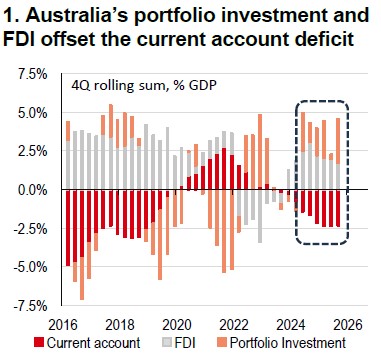
Source: CEIC, HSBC
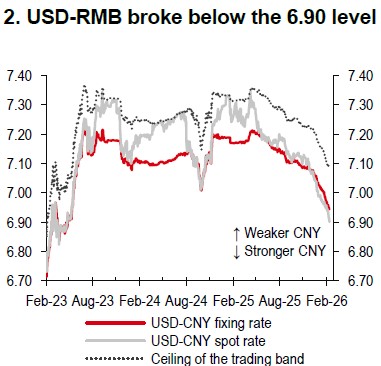
Source: Bloomberg, HSBC
RMB: Resilience
The RMB has strengthened by more than 1% against the USD year-to-date, with USD-RMB breaking below 6.90 for the first time in 33 months (Chart 2). China’s domestic agenda, particularly RMB internationalisation, and favourable seasonal flows are expected to continue supporting the currency throughout 2026.
https://www.hsbc.com.my/wealth/insights/fx-insights/fx-viewpoint/fx-highlights-into-the-year-of-the-horse/

