



like_count_tpl like_count_text_tpl
like_tooltip_tpl
comment_count_tpl comment_count_text_tpl
comment_tooltip_tpl
Economic Updates
Why ESG Matters: Climate tech VC boosts net zero transition
Key takeaways
- Driven by private investment, policy landscapes and stakeholder expectations, climate and clean tech continue to demonstrate robust investment momentum.
- Artificial Intelligence (AI) is poised to play a significant role in future growth.
- While development continues for traditional resources, such as wind and solar, we observe a shift towards EV infrastructure, next-generation batteries and smart grids.
The Venture Capital (VC) market is valued at USD1.6 trillion and we believe it offers an important source of capital for the net zero transition. Mapping trends in the private market helps us identify the next innovations and where transition financing is focusing. We find a shift in the sector, with infrastructure and enablers emerging and Artificial Intelligence (AI) playing a greater role in climate solutions.
Did you know?
- In 2024, the climate and clean tech VC market stood at USD122bn, the 6th largest category in the VC space.
- The global VC market is valued at USD1.6trn, serving as a major funding source for the net zero transition.
- Artificial Intelligence (AI) investments accounted for 16% of all climate and clean tech VC deals in 2025.
- Between 2000 and 2023, 87% of global energy patents targeted clean energy technologies.
- In the EU, more than 40% of climate and clean tech VC deals in 2025 were over USD5mn, up from under 10% in 2019, indicating a shift to larger, capital-intensive projects.
- Investment in AI solutions within climate and clean tech grew fivefold between 2018 and 2022, underscoring AI’s rising importance in decarbonisation.
Sources: PitchBook, 'Energy Technology Patents Data Explorer’, IEA, 05 Aug 2024
1. The pivotal role of technology in the net zero transition
Extreme weather events and impacts from climate change are intensifying globally, with both CO2 levels and ocean heat content continuing to reach record highs. Rising greenhouse gas emissions are pushing temperatures closer to the critical 1.5ºC threshold.
However, significant advances in climate and clean technologies over the last few decades have been pivotal in reducing emissions and strengthening community resilience to climate risks, thereby supporting economic growth and security. By addressing the challenges of rising temperatures, these innovations are driving productivity and enhancing societal well-being.
In 2024 alone, the venture capital (VC) market invested USD122bn in climate and clean tech, with key sectors including AgTech, HealthTech, EdTech and Infrastructure. Analysing these advancements helps us understand how the landscape is evolving and where disruption will occur, while access to capital remains a key factor in the pace of net zero delivery.
Existing climate and clean tech, particularly wind and solar, have seen considerable growth in installed capacity. In 2023, solar generation rose by 23%, reaching 1,600TWh – the highest growth among renewable technologies. This success is enabling further innovation in clean energy sources and supporting the integration and efficiency required for the net zero transition.
Driven by private investment, policy landscapes and stakeholder expectations, climate and clean tech continue to demonstrate robust investment momentum. While challenges such as policy and geopolitical uncertainty persist, opportunities are emerging as the sustainability landscape evolves and the transition to net zero accelerates, with Artificial Intelligence (AI) poised to play a significant role in future growth.
2. VC investment in climate and clean tech
VC data tell us a great deal about innovation in technology and provides important funding for businesses developing potentially transformative solutions. Tracking broad trends in VC can provide useful information to investors, particularly given both the size of the VC industry and its focus on emerging and disruptive business models.
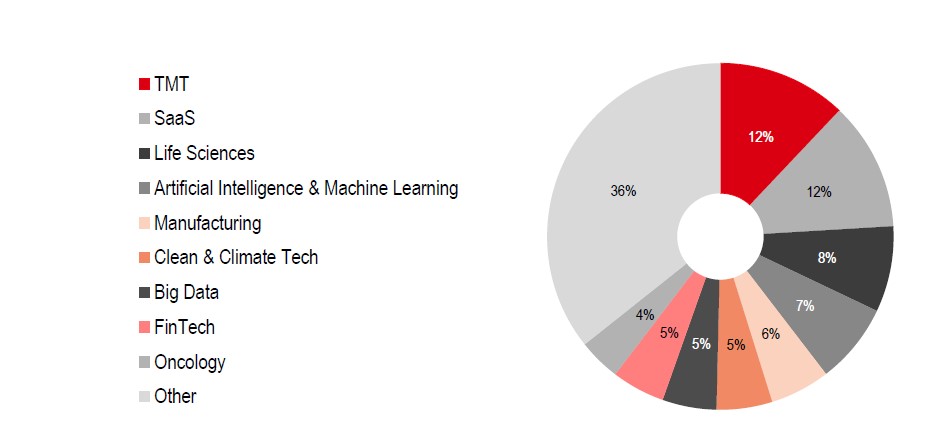
Chart 1. Share of VC capital invested in 2024
Source: Morningstar, HSBC as at 10 October 2025 (using weekly data)
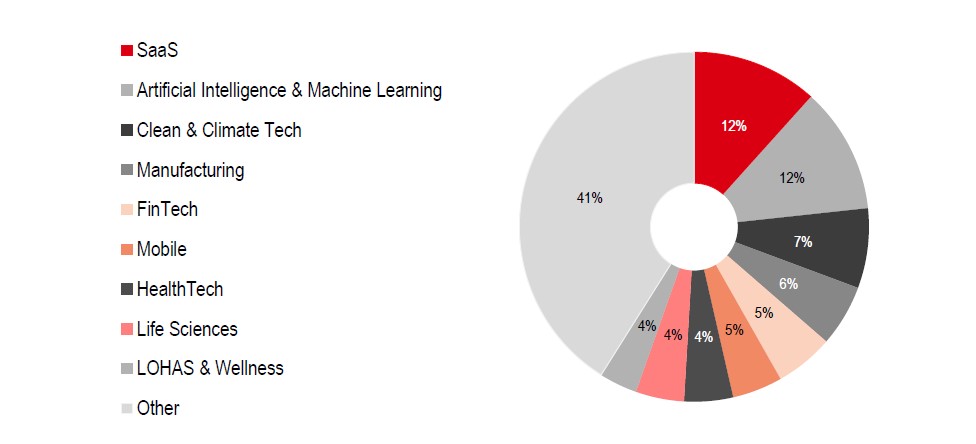
Our analysis of the VC market shows that climate and clean tech represents 5% of VC capital invested in 2024, ranking as the 6th largest category after technology, media and technology (TMT), Software as a Service (SaaS) and AI (Chart 1). When we consider VC deal volume, climate and clean tech climbs up the rankings, representing 7% and the third largest segment. This suggests that, while overall capital invested is comparatively lower, the sector is experiencing a higher number of transactions within the broader VC market (Chart 2).
Chart 2. Share of VC in 2024
Source: Pitchbook Data, Inc., May 2025, HSBC: Note: SaaS (Software as a service)
3. Evolving trends and opportunities
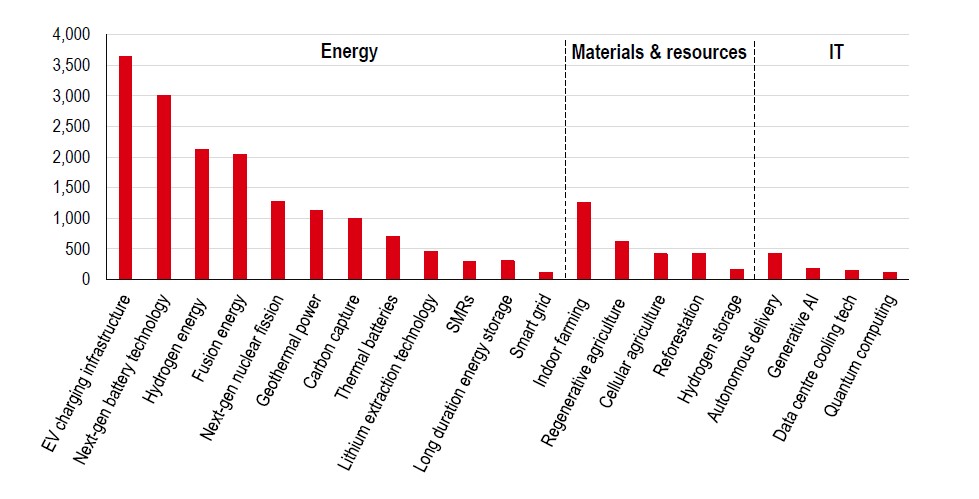
In the VC market, emerging spaces refer to industry verticals within a sector characterised by early-stage investment and technological development. These areas are poised to attract further capital and drive innovation in the climate and clean tech spaces. Chart 3 highlights global emerging spaces within the climate and clean tech category from 2023 onwards. Key to the net zero transition, these technologies provide applications across renewables, industry, nature and efficiency to drive decarbonisation and inclusive resilience.
Chart 3. Climate and clean technology emerging spaces (total capital invested, USD million, 2023 onwards)
Source: Pitchbook Data, Inc., May 2025, HSBC
We believe investment in climate and clean tech is increasingly focusing on enablers of the net zero transition. Development continues for well-established technologies such as solar and wind power. However, we see a shift towards technologies to further integrate and build efficiencies, for example, electric vehicles (EV) charging infrastructure to support the deployment and integration of EVs, as well as smart grids and batteries to effectively store and distribute power. Below, we provide insights into key technologies in the emerging space.
EV charging infrastructure: Despite widespread ambitions, slow infrastructure buildout has been a key factor slowing global EV adoption. Key concerns regarding charging include localisation, access and charging experience. Some countries are more developed than others with China currently having more than 3x the number of charging points than Europe.
Energy Storage: We view energy storage as a key energy transition enabler, providing flexibility to drive renewables and electrification growth. We expect explosive growth to continue with global battery energy storage capacity additions to rise 4x by 2030, with China, the US and Europe leading the way.
Hydrogen: With applications across both energy generation, sustainable transport and industry, hydrogen, in theory, can play a pivotal role in the net zero transition. However, medium-term growth ambitions have faced a reset. Increased costs and project delays have dampened the technology’s popularity; however, policy clarity improvements could help drive investment.
Nuclear: Growing in popularity in recent years, nuclear energy sources, including Small Modular Reactors (SMRs) aren’t without controversy. But their zero-carbon appeal and the rise of energy-hungry AI models mean that nuclear has come back into the picture to address the growing electricity demand and work towards climate goals. We believe extending the life of nuclear plants also makes economic sense, especially in Europe and the US.
Geothermal: We believe there are growing opportunities in geothermal energy because of its stability, low emissions and declining construction costs, especially in regions such as Asia. We estimate that next-generation geothermal energy in developing Asia could reduce fossil fuel emissions by c17%.
Conclusion
We identify areas of growth across the VC market which have the potential to attract new investment. While development continues for well-established resources, such as wind and solar, we observe a shift towards those that enable further integration and efficiency, such as EV infrastructure, next-generation batteries and smart grids.
https://www.hsbc.com.my/wealth/insights/esg/climate-tech-vc-boosts-net-zero-transition/

