



like_count_tpl like_count_text_tpl
like_tooltip_tpl
comment_count_tpl comment_count_text_tpl
comment_tooltip_tpl
Economic Updates
Macro Monthly: Price shocks easing

Key takeaways
- The Middle East conflict is increasingly feeding through to inflation, particularly energy related components…
- …leading to weaker business and consumer survey data, but hard data are still holding up for now.
- We expect rate hikes in the eurozone, UK and Japan while the US is likely to be in wait-and-see mode.
Markets may be finding more reason for optimism on the back of the Memorandum of Understanding (MoU) signed between the US and Iran on 17 June, with oil prices falling back significantly and equity markets picking up again, but the economic fallout will depend on the speed of reopening of the Strait of Hormuz.
Picking up steam
Some parts of the global growth story remain on a tear, largely surrounding AI. Asian exporters continue to see a strong lift from the build out of datacentres in the US and elsewhere, although the pull back in Korean industrial production and Taiwan export orders in May suggests that the broader pace of this growth might slow a touch.Nevertheless, they still are growing at a handsome pace. Mainland China is seeing a similar export boost, but domestic activity data are faltering somewhat.
The broad suite of US data continues to perform well. The labour market, having wobbled at the start of the year, appears to have stabilised, while the American consumer has kept spending – and this may be boosted by football-related spending in June and July.
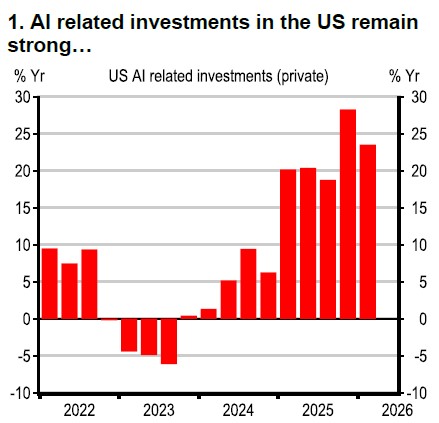
Source: BEA, Latest data: 2026 Q1
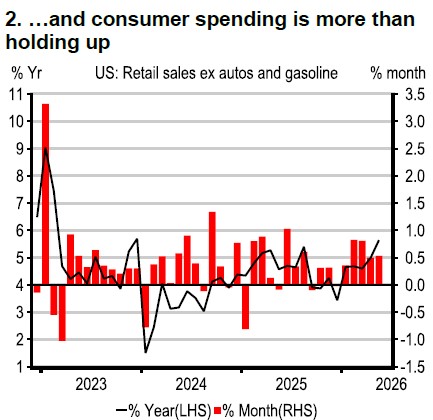
Source: USCB Latest data: May 2026
Europe data mixed
Things aren’t quite as bright in Europe, where the activity data appear to be feeling the squeeze from the jump in energy prices. Survey data have edged up on the back of the drop in oil prices, but we expect growth to slow through Q3. While some consumer services may see a boost from the World Cup and hot-weather related spend, the matches being late at night in European time zones may dampen the uplift.
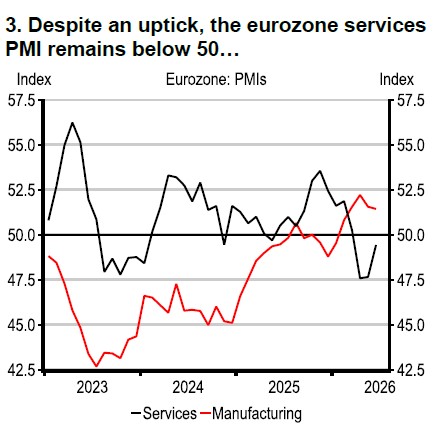
Source: S&P Global, Latest data: June 2026
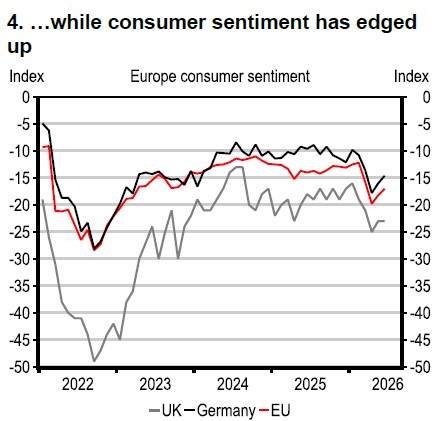
Source: Eurostat, DG ECFIN, GfK, Latest data: June 2026
Inflation pressures diverging
The inflation story is now complicated due to multiple competing forces. The oil price rise through May has lifted inflation, but some of these effects will now fade out on a m-o-m basis over the coming months. However, food inflation is expected to pick up gradually, due to the impact of El Niño adding to conflict-induced cost pressures in food supply chains. PMI data suggest much of the rise in input costs hasn’t been passed on yet – the question is whether firms will now need to at all.
Trade developments
Elsewhere, the US administration has decided not to renew the United States-Mexico-Canada Agreement (USMCA) agreement between the three North American trading partners for now, though the deal remains valid through 2036 at least. The US Treasury refunded USD22bn in tariffs in May, resulting in no net customs duties collected that month. Meanwhile, recent talks between the EU and China were constructive, with both parties agreeing to work to tackle bilateral trade ahead of their next ministerial meeting in October.
Growth forecasts
We recently kept our global growth forecasts steady at 2.5% for this year and 2.7% for 2027, although that masks sizeable revisions to some economies.
While there are no absolute winners from the conflict-driven global supply shock, there are relative winners and losers. The most notable upgrade to our 2027 forecast is to the US while the biggest downgrades are India and Brazil, reflecting a weaker carryover from H2 2026 when lagged effects of the energy shock and an anticipated impact from El Niño are set to weigh on the growth outlook.
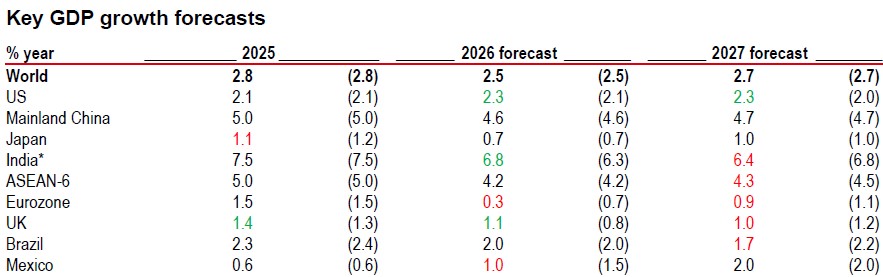
Note: *India data is calendar year forecast here for comparability. Previous forecasts are shown in parenthesis and are from the Macro Monthly dated 9 April 2026. Green indicates an upward revision, red indicates a downward revision.
Source: Bloomberg, HSBC Economics
Source: Bloomberg, HSBC.
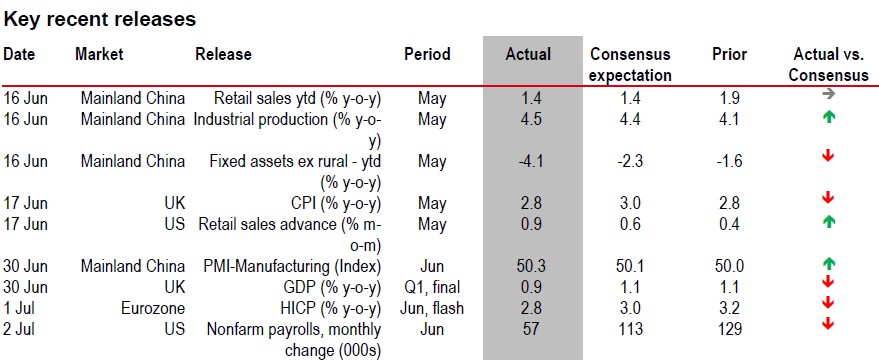
⬆ Positive surprise – actual is higher than consensus, ⬇ Negative surprise – actual is lower than consensus, ➡ Actual is in line with consensus
Source: LSEG Eikon, HSBC
https://www.hsbc.com.my/wealth/insights/market-outlook/macro-monthly/price-shocks-easing/

