



like_count_tpl like_count_text_tpl
like_tooltip_tpl
comment_count_tpl comment_count_text_tpl
comment_tooltip_tpl
Economic Updates
Macro Monthly: Resilient growth amid energy price volatility

Key takeaways
- Volatile energy markets continue to swing inflation and rate expectations…
- …but moves in core inflation have been much more benign…
- …and most activity data are holding up reasonably well.
Uncertainties over the path to a resolution of the Middle East conflict have caused the oil price to move in a volatile manner in recent weeks – firstly back up to USD100/b, then back below USD80/b – the difference having quite a sizeable impact on the global economic outlook. At the time of writing, markets remain hopeful of a resolution; however, as we have seen, this can change quickly.
Headline risks, core contained
Headline inflation risks, therefore, remain acute: beyond oil and gas, other commodity prices remain elevated. And the rising probability of a more powerful El Niño later this year is keeping food prices high, particularly rice prices.
The encouraging part of the inflation story is the lack of spillover into other areas of the inflation basket. Our measures of so-called ‘supercore’ inflation, which strip out food, energy and their related items (such as airfares and food away from home), have hardly budged. In most economies (with the notable exception of the Philippines), inflation increases since February have been concentrated in headline inflation rather than core measures. US inflation in June saw this quite clearly, even if the eurozone flash release saw a slight tick up in core inflation. In most of Asia, for now, inflationary pressures remain on the food and energy side.
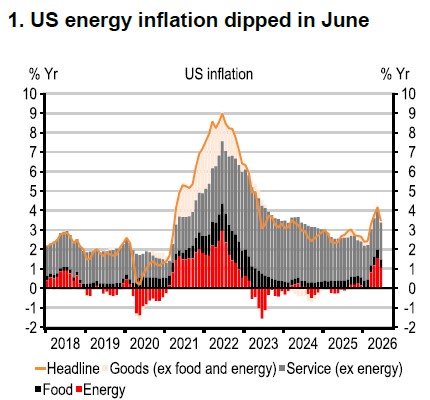
Source: BLS, Latest data: June 2026
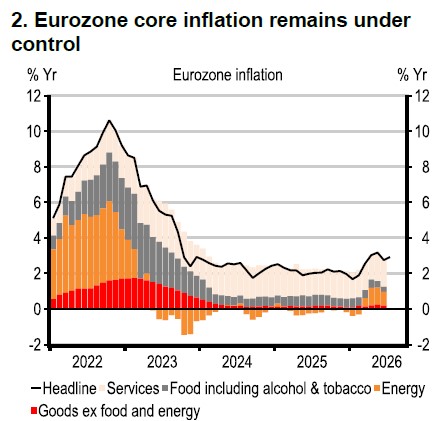
Source: ECB, Latest data: June 2026
Robust Q2 growth
Surprisingly, global growth data for Q2 have broadly performed well. Despite higher headline inflation squeezing household incomes, US and European consumers have kept spending, and, in Asia, Korea and Taiwan recorded robust growth, primarily driven by AI demand. Mainland China’s domestic activity remains subdued, but trade data are still robust, with exports rising for high-tech products. The recent Politburo meeting didn’t announce any new stimulus, but it did emphasise service-related consumption and promoting a more balanced trade profile.
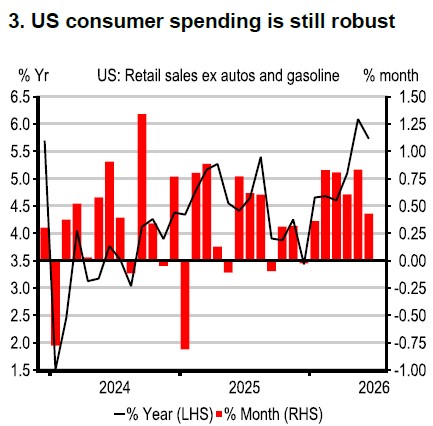
Source: USCB Latest data: May 2026
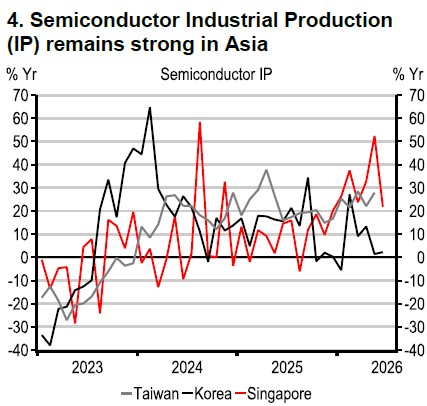
Source: SingStat, MODS,MOEA Latest data: June 2026,June 2026,May 2026
Additional tariffs
On the trade front, the US implemented a 10-12.5% tariff on 60 trading partners under Section 301, effective 24 July 2026, although products subject to Section 232 tariffs are exempt. At the same time, the US administration has threatened the EU with additional tariffs after the EU imposed fines on several US tech companies over unethical conduct.
Policy challenges
How these inflation and growth cross-currents interact is crucial for policymakers. Although we expect the European Central Bank (ECB) to now deliver another rate rise in September, for other major central banks it is a much tougher balancing act. We continue to expect the Federal Reserve and the Bank of England to remain on hold; however, as with so much of the global outlook right now, this hinges on oil prices remaining under control.
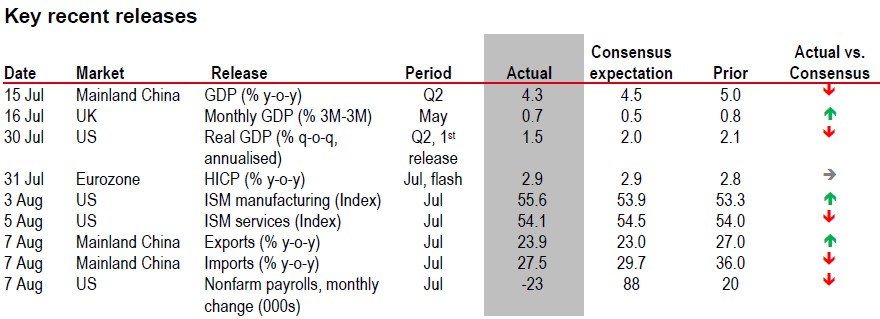
Source: Bloomberg, HSBC.
⬆ Positive surprise – actual is higher than consensus, ⬇ Negative surprise – actual is lower than consensus, ➡ Actual is in line with consensus
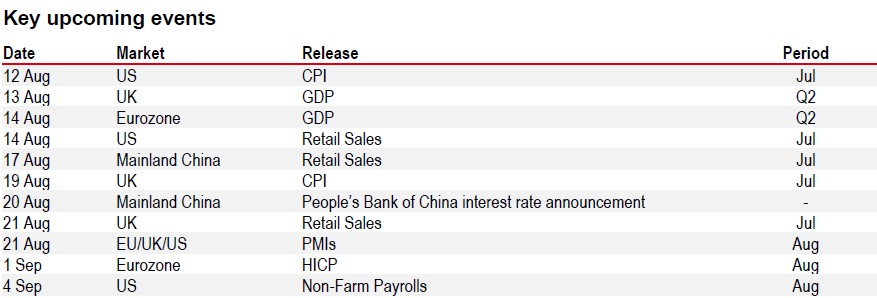
Source: LSEG Eikon, HSBC
https://www.hsbc.com.my/wealth/insights/market-outlook/macro-monthly/resilient-growth-amid-energy-price-volatility/

