2026-01-27 12:27
SAO PAULO, Jan 27 (Reuters) - Brazilian miner Vale (VALE3.SA) , opens new tab has halted operations at units that analysts say account for about 2% of its iron ore production outlook for this year after water overflowed at the sites, a securities filing showed late on Monday. Vale said the city of Congonhas had ordered the suspension of operating permits for its Fabrica and Viga units and the adoption of emergency and control measures following the overflows, which also affected a site owned by steelmaker CSN (CSNA3.SA) , opens new tab and damaged a river, according to local authorities. Sign up here. The overflows on Sunday were reported in two nearby but separate areas hit by heavy rain in Brazil's Minas Gerais state. Vale reaffirmed its 2026 iron ore production guidance of 335 million to 345 million metric tons, but analysts said the suspension was negative, as the units have an annual combined estimated output of around 8 million tons. SHORT-TERM VOLATILITY RBC Europe stressed in a note to clients that the causes behind the overflow, the potential length of the license suspension and remediation costs remained unclear. Vale's shares closed down more than 2% on Monday. Itau BBA analysts said the events could impact Vale's short-term share performance, but argued this was "primarily due to regulatory scrutiny and headline risk rather than a reassessment of structural operational risk." Capacity exposure remains manageable, they added, noting that the run rate in the first quarter is usually slower due to challenging rainfall conditions. INTENSE SCRUTINY AFTER RECENT DISASTERS Vale has faced intense scrutiny since two major dam disasters in Minas Gerais in the 2010s. Sunday's incidents occurred on the anniversary of the 2019 burst of a dam in Brumadinho, which unleashed an avalanche of muddy mining waste, killing an estimated 270 people while ravaging local rivers and communities. Vale said there was no connection between the latest accident and the tailings dams it has in the region, which it described as "in stable and safe conditions," while noting that no injuries were reported. "The company has suspended operations at the mentioned units and will respond in a timely manner to the required actions, fully cooperating with the competent authorities," it said. https://www.reuters.com/business/energy/brazils-vale-halts-two-units-after-water-overflow-triggers-permit-suspension-2026-01-27/
2026-01-27 12:23
PARIS, Jan 27 (Reuters) - The European Commission proposed suspending a scheme allowing some duty-free sugar imports into the bloc, aiming to ease pressure on European producers facing falling prices and increased competition. "I will propose a temporary suspension of the sugar inward processing regime to ease pressures on sugar producers," European Commissioner for Agriculture and Food Christophe Hansen said on X late on Monday. Sign up here. The IPR scheme allows companies to import sugar at zero duty and without limits, provided the sugar is refined or processed into food products and then re-exported outside the European Union. Raw sugar imported into the EU under the IPR in the 2024/25 marketing year totalled 587,000 metric tons, up 19% on the previous year, of which 95% came from Brazil, European Commission data showed. White sugar imports under the IPR totalled 155,000 tons in 2024/25, up 5% year-on-year, of which 43% came from Brazil, followed by Morocco, Egypt and Ukraine, the data showed. European sugar beet producers have raised concerns about unfair competition and the potential impact of a trade deal with the Mercosur bloc of South American countries which includes a larger sugar quota. Producers say imports have contributed to a supply glut that led EU sugar prices to slump to their lowest in at least three years. The European sugar beet growers lobby CIBE expressed strong support for the decision, calling it timely and necessary. "It will provide the right signal and some relief on a very depressed EU sugar market," the group said on X. https://www.reuters.com/business/eu-proposes-suspending-duty-free-sugar-import-scheme-2026-01-27/
2026-01-27 12:18
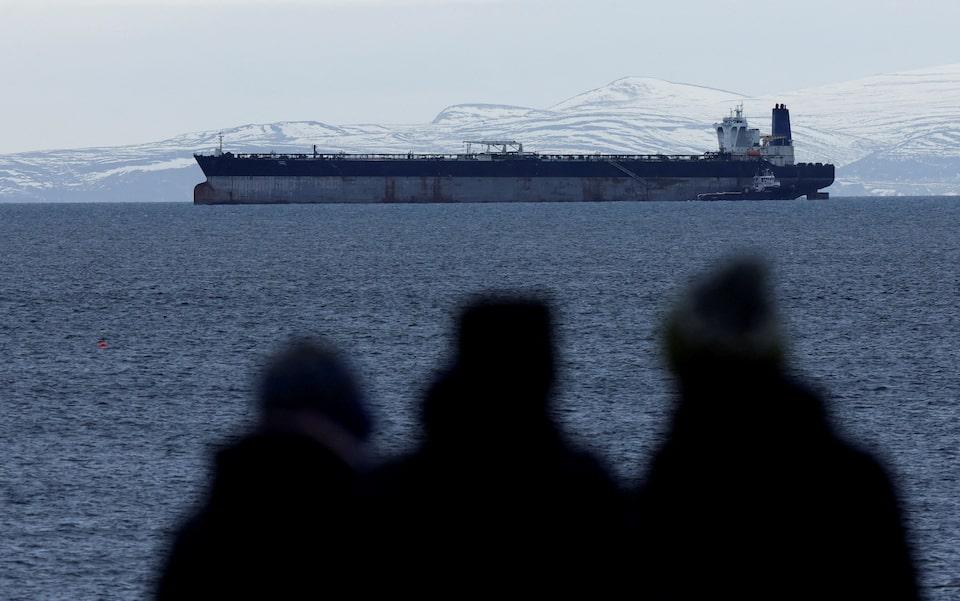
Scrap value of vessels in the tens of millions of dollars Shadow fleet tankers typically uninsured, a risk for oil spills Unregulated vessels a 'ticking time bomb', CEO says LONDON, Jan 27 (Reuters) - Dubai-run GMS has applied for a U.S. license to buy and scrap ships seized by the U.S. government linked to Venezuelan oil trading, the leading ship recycler's CEO told Reuters. The U.S. military and Coast Guard have seized seven vessels in recent weeks in international waters that were either carrying Venezuelan oil or have done so in the past. Sign up here. The seizures were part of Washington's campaign to force Venezuelan President Nicolas Maduro out of power that culminated in U.S. forces capturing him on January 3. The ageing vessels, part of the so-called shadow fleet which typically do not have known insurance or ship safety certification, are a risk for oil spills while they remain on the water. GMS, which describes itself as the world's largest buyer of ships and offshore vessels for recycling, buys vessels and then sells them to ship-breaking yards including in India and Bangladesh, which are home to the world's biggest shipping scrapping industries. Its founder and CEO Anil Sharma described the shadow fleet tankers as "a ticking time bomb", but said that because they are sanctioned, they cannot be recycled without a license. "Hopefully the (U.S.) government fast-tracks this," he said. The company has also held discussions with the State Department in recent weeks, it said. While the U.S. Treasury did not generally comment on license applications and related correspondence, "to safeguard maritime safety, we are committed to responsible solutions to get these designated vessels off the water", a Treasury spokesperson said in response. SCRAP VALUE The scrap value of such ships typically reaches tens of millions of dollars, depending on the type of vessel and its weight. The U.S. government has filed for court warrants to seize dozens more tankers linked to the Venezuelan oil trade, sources told Reuters. Detaining the seized vessels requires U.S. government agency support, including from the U.S. Coast Guard, which ties up resources and costs, shipping industry sources said. In 2025, 16 tankers that were hit with sanctions were recycled in yards willing to take them, versus one tanker in 2024 and one in 2023, GMS analysis showed. The vessels were recycled via non-U.S. dollar transactions, according to the GMS analysis. Such scrapping activity would have been in breach of U.S. restrictions and could have involved potential sanctions penalties due to the vessels being blacklisted, industry officials said. GMS, which is incorporated in the United States, bought the North Korean-flagged bulk carrier Wise Honest in 2019 from the U.S. government in a public auction for recycling. The vessel was seized by Indonesia in 2018 and forfeited to Washington for U.S. sanctions violations. Sharma said that despite the banking complexities of that transaction, even with a U.S. sale approval, it showed there was a "precedent" to disposing of ships that breached sanctions. The overall fleet working with sanctioned oil from Russia, Iran and Venezuela includes 1,423 tankers, of which 921 are subject to U.S., British or EU sanctions, according to analysis from maritime data specialist Lloyd's List Intelligence. https://www.reuters.com/business/energy/top-ship-recycler-gms-says-it-is-talks-buy-venezuela-linked-ships-seized-by-us-2026-01-27/
2026-01-27 12:16
Jan 27 (Reuters) - Slovakia will file a lawsuit to challenge the European Union's decision adopted by a qualified majority to ban Russian gas imports, Prime Minister Robert Fico said on Tuesday. EU countries on Monday gave their final approval to ban Russian gas imports by late 2027, which Slovakia and Hungary both opposed. Sign up here. The ban was designed to be approved by a reinforced majority of countries, allowing the EU to overcome opposition of both countries, which remain heavily reliant on Russian oil and gas and want to maintain close ties with Moscow. Hungary has said it would challenge the law at the European Court of Justice, and Fico said on Tuesday that Slovakia would file its own lawsuit and coordinate with its neighbour. "We will object to the violation of the principles of subsidiarity and proportionality," Fico told a news conference. He did not say when Slovakia would file its suit. SLOVAKIA CALLS IT 'ENERGY SUICIDE' The EU has backed Ukraine since Russia invaded in 2022 and wants to cut funding for Russia's war machine, but Fico has criticised EU military aid. Fico has repeatedly called EU plans to stop Russian gas flows energy "suicide" and says the stoppage of transit will cost Slovakia up to 500 million euros annually. Under the agreement, the EU will halt Russian liquefied natural gas imports by the end of this year and pipeline gas by September 30, 2027, with a possible extension to November 1, 2027, if a country is struggling to fill its storage caverns with non-Russian gas ahead of winter. "I hope that by (the time of this ban) the war will be over and we will all come to our senses," Fico said. https://www.reuters.com/business/energy/slovakia-file-lawsuit-against-eus-ban-russian-gas-imports-2026-01-27/
2026-01-27 12:15
Jan 27 - What matters in U.S. and global markets today By Mike Dolan , opens new tab, Editor-At-Large, Finance and Markets Sign up here. Markets pushed higher on Tuesday despite a fresh tariff threat from U.S. President Donald Trump, this time against South Korea. Investors appear more focussed on the red-hot tech sector and AI boom as they await a slew of mega-cap earnings this week. But lingering caution also reared its head as gold and silver held firm on continued global uncertainty, and the dollar remained under pressure amid continued concerns about coordinated intervention to boost the yen. I’ll get into all that and more below. But first, check out my latest column on why globalization may well forge ahead without the U.S. And listen to the latest episode of the Morning Bid daily podcast. Subscribe to hear Reuters journalists discuss the biggest news in markets and finance seven days a week. RESULTS FIRST, WORRIES LATER Bourses around the world appeared to shrug off a fresh tariff threat from U.S. President Donald Trump on Tuesday as shares hit new record highs, with mega-caps Microsoft, Meta, and Tesla due to report on Wednesday. The S&P 500 ended 0.5% higher on Monday and futures were higher ahead of Tuesday's open, while the Nikkei and even South Korea's KOSPI also rose. The South Korean exchange’s rise – which took it to a new high – came as the country found itself the latest target of Trump’s hammer-and-nail trade policy. Trump announced on Monday that he would hike tariffs on imported South Korean goods to 25% from 15%. He blamed the move on the South Korean parliament’s apparent failure to quickly implement a pact agreed last year with President Lee Jae Myung to boost investment in U.S. business projects. While equity investors’ attention was focused elsewhere, the potential for yet more trade disruption helped keep gold and silver elevated on Tuesday morning, while the greenback remained under pressure after a torrid Monday which saw the dollar index’s biggest three-day slide since last April. The dollar index slipped further after edging higher briefly on Tuesday, while Japan's yen held its best levels of the year on continued speculation about joint U.S.-Japan action to prop it up ahead of next month's Japanese snap election. Investors are also awaiting the Fed’s next policy decision on Wednesday. While rates are expected to be held steady, further dollar volatility could lie ahead depending on how the central bank responds to threats to its independence and how Trump – who has long called for faster cuts – reacts. With another heavy week of debt sales in the background, long-term U.S. Treasury yields have subsided this week ahead of the Fed meeting. In a contrast to the seesawing tariffs of the Trump administration, leaders elsewhere are lifting trade barriers, with India and the EU announcing a long-delayed trade deal to cut duties on most goods – including nearly 97% of EU exports and 99.5% of Indian exports. The formal signing of the deal, dubbed “the mother of all deals”, will take place after vetting is completed in both India and the EU, but an Indian government official said the deal should be implemented within a year. Meantime, at home, the Trump administration on Monday appeared to soften its position on the fatal shooting of a second anti-ICE protestor in Minnesota on Saturday, amid a swelling backlash which has seen rebukes from celebrities and even the NRA. Trump struck a conciliatory note after a private phone call with Minnesota Governor Tim Walz on Monday, while a senior administration official confirmed that Gregory Bovino, a U.S. Border Patrol official who has attracted criticism from Democrats and activists, would be leaving Minnesota soon. This apparent moderation in the administration’s position comes as Americans’ approval of Trump’s immigration policy fell to its lowest level since his second inauguration, according to a new Reuters/Ipsos poll conducted before and after Saturday's fatal shooting. Chart of the day Markets remains on tenterhooks as speculation about joint U.S.-Japan intervention to prop up Japan's yen swirl. The chart shows the past three years of unilateral Japanese action to buy yen, although joint action with Washington authorities has not been seen for about 15 years. Today's events to watch * U.S. January consumer confidence (10:00 AM EST), U.S. 5-year note auctions (1:00 PM EST) * U.S. Federal Reserve's Federal Open Market Committee starts two-day meeting; decision due Wednesday * Richmond Fed January business surveys (10:00 AM EST), Dallas Fed January service sector survey (10:30 AM EST) * U.S. corporate earnings: Boeing, GM, HCA, Invesco, Kimberly-Clark, NextEra Energy, Northrop Grumman, Packaging Corporation of America, PPG Industries, RTX Corp, Seagate, Synchrony Financial, Sysco, Union Pacific, UnitedHealth Group, United Parcel Service Want to receive the Morning Bid in your inbox every weekday morning? Sign up for the newsletter here. You can find ROI on the Reuters website , opens new tab, and you can follow us on LinkedIn , opens new tab and X. , opens new tab Opinions expressed are those of the author. They do not reflect the views of Reuters News, which, under the Trust Principles , opens new tab, is committed to integrity, independence, and freedom from bias. https://www.reuters.com/business/finance/global-markets-view-usa-2026-01-27/
2026-01-27 11:50
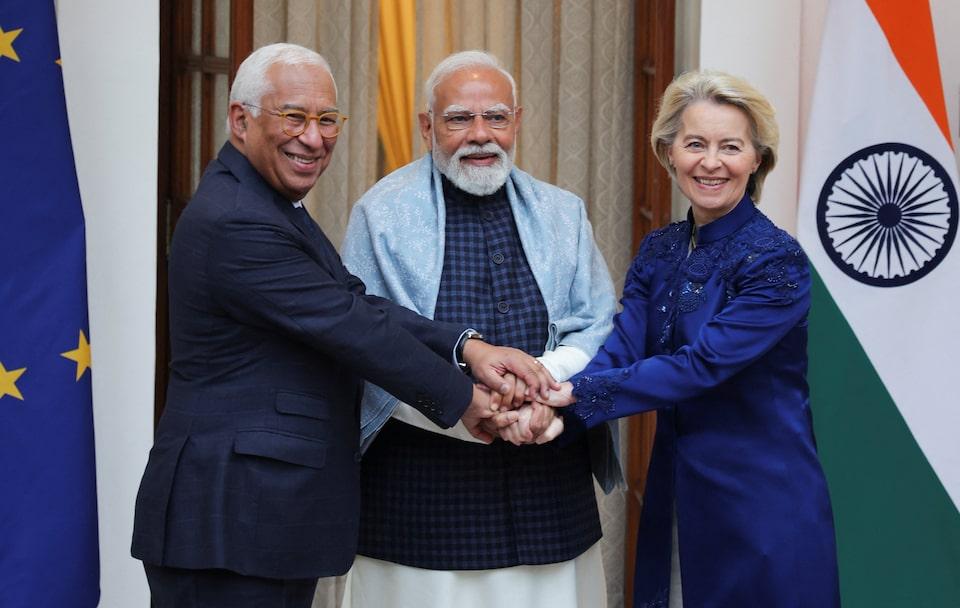
India-EU deal to reduce tariffs on nearly 97% of EU exports India's tariffs on EU cars to fall sharply to 10% over years EU to cut tariffs on 99.5% of Indian goods Trade pact to save European firms 4 billion euros in duties Agreement opens vast and guarded Indian market to EU firms NEW DELHI, Jan 27 (Reuters) - India and the European Union struck a long‑delayed deal on Tuesday that will slash tariffs on most goods, aiming to boost two‑way trade and reduce reliance on the United States amid growing global trade tensions. The deal is expected to double EU exports to India by 2032 by eliminating or reducing tariffs in 96.6% of traded goods by value, and will lead to savings of 4 billion euros ($4.75 billion) in duties for European companies, the EU said. Sign up here. The EU will cut tariffs on 99.5% of goods imported from India over seven years, with tariffs to be cut to zero on Indian marine goods, leather and textile products, chemicals, rubber, base metals and gems and jewellery, India's trade ministry said in a statement. India and the EU said agriculture-related items like soya, beef, sugar, rice and dairy have been kept out of the purview of the trade deal. "Yesterday, a big agreement was signed between the European Union and India," Indian Prime Minister Narendra Modi said earlier. "People around the world are calling this the mother of all deals. This agreement will bring major opportunities for the 1.4 billion people of India and the millions of people in Europe," he said. The two-decade-long EU–India trade talks gained momentum after Washington imposed a 50% tariff on some Indian goods, and as U.S. allies pushed back against President Donald Trump’s tariff threats and his bid to take over Greenland. Canada's Prime Minister Mark Carney, in a speech that got a standing ovation in Davos last week, urged middle powers to come together to avoid becoming victimised. He is planning to visit India to sign deals on uranium, energy and minerals, after striking a deal recently with China. Before signing the deal with New Delhi, the EU agreed a pact with the South American bloc Mercosur, following deals last year with Indonesia, Mexico and Switzerland. During the same period, New Delhi finalised pacts with Britain, New Zealand and Oman. "Europe and India are making history today," European Commission President Ursula von der Leyen said. "This is only the beginning." Trade between India and the EU stood at $136.5 billion in the fiscal year through March 2025, compared to $132 billion of trade between India and U.S., and $128 billion between India and China. The formal signing of the India-EU deal would take place after legal vetting expected to last five to six months, an Indian government official aware of the matter has said. "We expect the deal to be implemented within a year," the official added. The vetting process in the EU region could be subject to some setbacks as in the case with Mercosur. EU lawmakers have voted to challenge the EU-Mercosur agreement in the bloc's top court. OPENING UP GUARDED SECTORS The EU accord with India would open up the south Asian nation's vast and highly guarded market, with New Delhi slashing tariffs on cars to 10% over five years from as high as 110%, according to an EU statement, benefiting European automakers such as Volkswagen, Renault, Mercedes-Benz and BMW. The reduced tariffs on autos would be granted to 250,000 cars a year valued over 15,000 euros and will be cut to 30%-35% as soon as the deal is implemented, both sides said. India is also slashing tariffs on alcoholic beverages like wines to 75% immediately from 150%, which would be lowered to 20% gradually. Tariffs on spirits will be lowered to 40%, the EU said. The deal will also cut tariffs on a slew of EU goods coming to India including machinery, electrical equipment, chemicals and iron and steel, the EU said. However, there was no immediate relief for Indian companies hit by carbon tax under the EU's Carbon Border Adjustment Mechanism (CBAM) that started on January 1. Besides steel, the decarbonisation-oriented levy applies to cement, electricity, fertilisers and other products as well. India said it has got a commitment from EU that it will get flexibilities on the carbon tax if they are granted to any third countries. Separately, the EU agreed to provide financial support of 500 million euros over the next two years to help India in cutting greenhouse gas emissions. ($1 = 0.8422 euros) https://www.reuters.com/business/autos-transportation/india-eu-slash-tariffs-autos-spirits-textile-landmark-deal-2026-01-27/