2025-05-23 05:41
A look at the day ahead in European and global markets from Ankur Banerjee After a volatile week when markets zeroed in on major economies' precarious fiscal health, with a sell-off in Treasuries and government bonds from Japan and Britain, fixed income investors are now setting the broader market agenda. Sign up here. Lacklustre bond auctions in Japan and the U.S. this week underscored the lack of demand for long tenors, as investors send a clear message to governments that in the current climate of uncertainty they need to pay more to borrow for decades down the road. While beaten-down Treasuries found buyers by the end of the week, The 30-year bond yield remained above the psychologically important 5% threshold in Asian hours on Friday. Super-long Japanese government bonds were stable but still near record highs touched earlier this week. The 10-year gilt yield hit its highest since January 15 on Thursday. Wherever you look, there are signs of unease in the markets about the stretched finances of the biggest economies. Fiscal worries have put pressure on the dollar, which is on course for a weekly loss against the euro and the yen for the first time in five weeks. Safe-haven flows are back, too, with gold set to clock its best week in more than a month. Since Moody's downgraded its U.S. debt ratings last week, investor attention has fixated on the country's $36 trillion debt pile and U.S. President Donald Trump's tax bill, which could add trillions of dollars more. Dubbed a "big, beautiful bill" by Trump, it narrowly passed the Republican-controlled U.S. House of Representatives and now heads to the Senate for what is likely to be weeks of debate, keeping investors on the edge. Investors are also pining for more good news on trade deals as we hit the halfway point of the 90-day pause to Trump's so-called reciprocal tariffs. Key developments that could influence markets on Friday: Economic events: Germany GDP data for Q1, UK retail sales data for April Trying to keep up with the latest tariff news? Our new daily news digest offers a rundown of the top market-moving headlines impacting global trade. Sign up for Tariff Watch here. https://www.reuters.com/world/europe/global-markets-view-europe-2025-05-23/
2025-05-23 05:28
JAKARTA, May 23 (Reuters) - Shell Indonesia has agreed to transfer its gas station business in the country to a joint venture between Citadel Pacific Limited and Sefas Group, the company said on Friday. The deal is expected to be completed by next year, Shell said in a statement, adding that the transfer does not include its lubricant business. Sign up here. Shell has around 200 gas stations in Indonesia and a terminal in Gresik. https://www.reuters.com/business/energy/shell-indonesia-transfer-gas-station-business-citadel-sefas-jv-2025-05-23/

2025-05-23 05:23
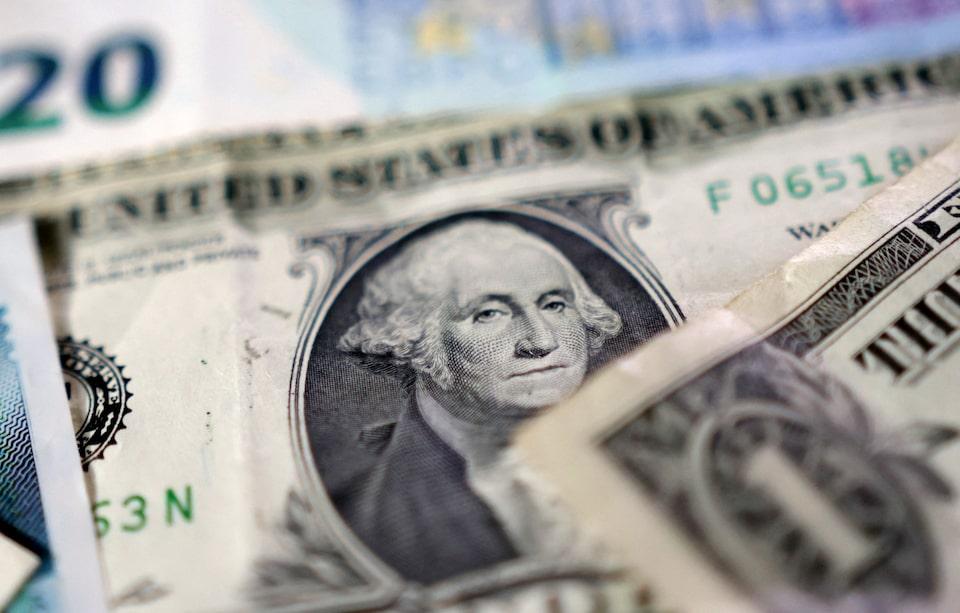
Trump threatens 25% tariffs on Apple, Samsung phones Bessent says that the EU is not negotiating in good faith Yen catches safe-haven boost as dollar index sinks Dollar on pace for its largest weekly fall versus the yen since April 7 NEW YORK, May 23 (Reuters) - The U.S. dollar dropped across the board on Friday, as investors dumped the currency after U.S. President Donald Trump once again ratcheted up his trade war, recommending that the European Union be hit with 50% tariffs beginning June 1. That rekindled concern about the impact of duties on the world economy and global trade. Sign up here. Trump said in comments on social media that the EU was "very difficult to deal with" and "our discussions with them are going nowhere." He threatened in a separate post to impose a 25% tariff on Apple AAPL.O iPhones not made in the United States, as well as Samsung and other smartphone makers. "The key theme that is weighing on the dollar right now is the loss of confidence in U.S. policy," said Elias Haddad, senior markets strategist at Brown Brothers Harriman in London. "There's an ongoing trade war and that's leading countries to reassess their dependency on the U.S." In afternoon trading, the dollar sank 1% versus the safe-haven Japanese yen to 142.48 after earlier falling to a two-week low. For the week, the greenback was down 2.2% against the Japanese currency, on track for its largest weekly fall since April 7. The euro rose 0.8% against the dollar to $1.1363. Earlier in the session, it touched a two-week peak, and was on track for its biggest weekly rise in six weeks. The dollar index , which measures the greenback against a basket of currencies, fell 0.8% to 99.09, hitting a three-week trough. For the week, the greenback was down 1.9%, on track for its biggest weekly percentage decline since early April. Treasury Secretary Scott Bessent noted that Trump's tariff comments were in response to the EU's pace on tariff talks, noting that the U.S. president does not believe the European Union's trade offers to the United States are of sufficient quality. U.S. stocks also fell in tandem with the dollar. Jayati Bharadwaj, a global FX strategist at TD Securities, said the dollar and stocks selling off in unison highlighted the U.S. currency's failure this year to act as a haven currency. "The dollar's correlation with equities is also broken ... it's flipped completely in the last few weeks and we expect it to stay that way. That's because the risks that we've been dealing with since the start of the year are U.S.-centric," she added. The Japanese currency, meanwhile, got a boost earlier from data showing Japan's core inflation accelerated at its fastest annual pace in more than two years in April, raising the odds of another interest rate hike by year-end from the Bank of Japan. The data underscores the dilemma facing the Bank of Japan, which must grapple with price pressures from persistent food inflation as well as economic headwinds from Trump's tariffs. Super-long Japanese government bonds have also scaled record highs this week, although yields dipped on Friday. After Moody's last week downgraded the U.S. debt ratings, investor attention has focused on the country's $36 trillion debt pile and Trump's tax bill, which could add trillions of dollars more to it. The bill narrowly passed the Republican-controlled U.S. House of Representatives and now heads to the Senate for what is likely to be weeks of debate, keeping investor sentiment fragile in the near term. Sterling strengthened 0.9% against the dollar to $1.3533 after earlier climbing to a more than three-year high. For the week, the pound was up 1%, posting its largest weekly gain in five weeks. https://www.reuters.com/world/middle-east/dollar-set-snap-4-week-winning-streak-us-fiscal-health-worries-2025-05-23/
2025-05-23 05:05
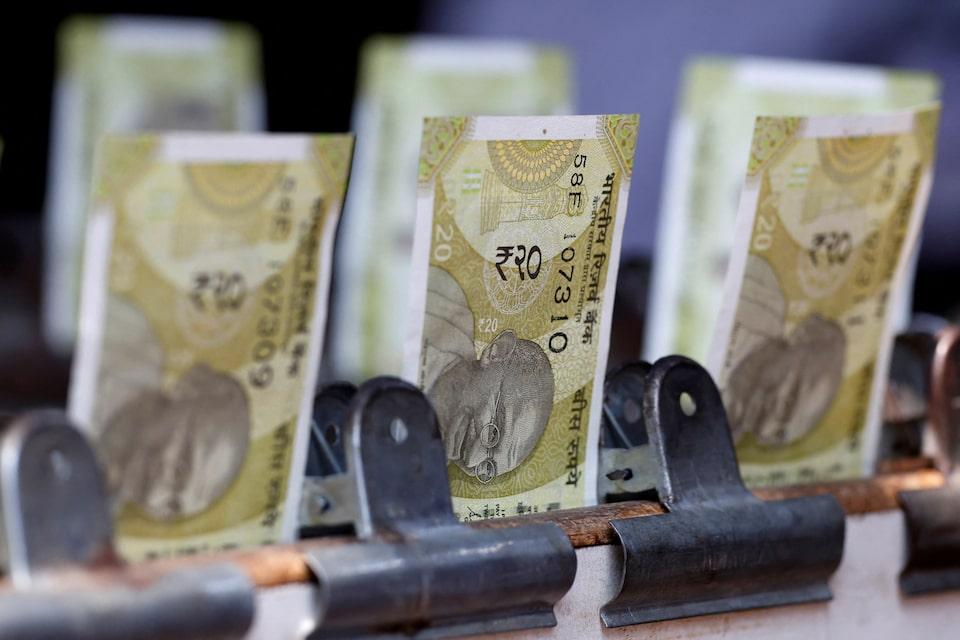
MUMBAI, May 23 (Reuters) - The Indian rupee gained on Friday as the dollar slipped on concerns about the U.S. fiscal outlook, with markets digesting the potential impact of President Donald Trump’s tax-cut bill, which is projected to add to the U.S. debt pile. Emerging market currencies rose across the board, with Asian currencies up between 0.1% to 0.7%. Sign up here. The rupee rose 0.2% to 85.83 as of 10:25 a.m. IST on Friday, recovering after slipping past the 86/dollar level for the first time in over a month on Thursday. The South Asian currency has broadly underperformed its emerging market peers so far in May, with traders citing persistent dollar demand from corporate payments and foreign portfolio outflows. Foreign portfolio investors sold Indian shares worth about $586 million on Thursday, as per provisional data, the third such session of selling in four days. Overseas investors were also net sellers of index-linked Indian bonds on Thursday. The rupee was aided by dollar offers from local private and a few foreign banks early on Friday but could face resistance around the 85.75 level while finding support near 86.20, a foreign exchange trader at a mid-sized Mumbai bank said. The dollar index, meanwhile, was down 0.2% at 99.6 while U.S. bond yields edged lower in Asia trading. The 10-year U.S. Treasury yield had climbed to a three-month peak of 4.62% as a worsening fiscal outlook for the United States raised concerns about demand for U.S. government debt. While India's sovereign bonds have witnessed some selling pressure due to the rise in U.S. bond yields, expectations of monetary policy easing have contained the pressure. Announcement of the central bank's dividend transfer to the government will be in focus on Friday. The Reserve Bank of India's earnings for the previous fiscal "are likely to have a received a hand from a significant increase in FX dollar sales to the tune of ~$400 billion, which is more than double of FY24, in addition to higher interest income from government securities," DBS said in a note. https://www.reuters.com/world/india/rupee-gains-along-with-asian-peers-us-fiscal-concerns-drag-dollar-2025-05-23/
2025-05-23 05:02
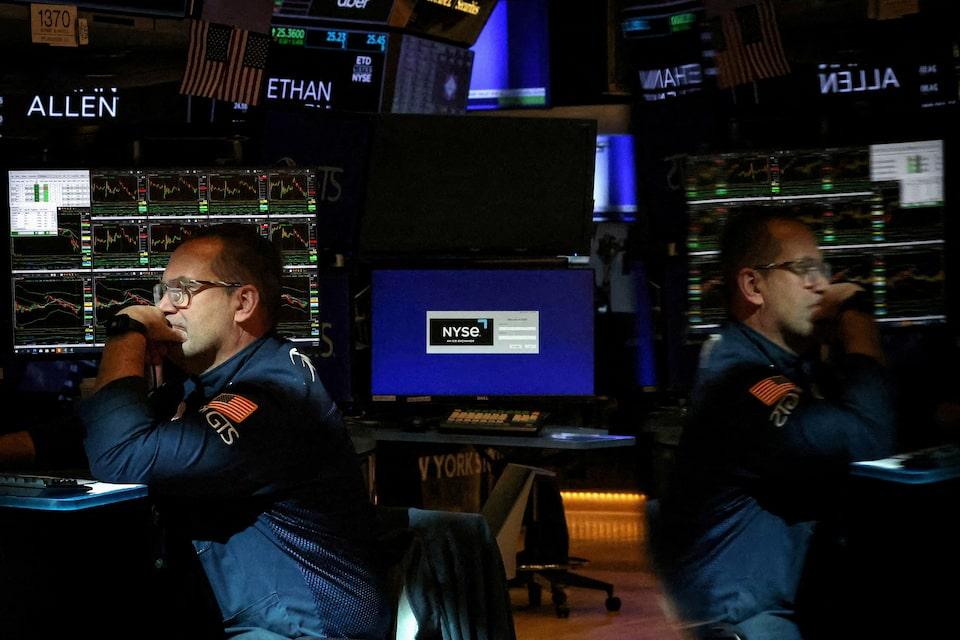
Tariff uncertainty makes economic forecasting hardest since COVID -investors say Rollercoaster asset trading makes asset managers wary of placing bets Herding into leveraged funds, short-dated options heighten volatility risk Abrupt government debt rout, stocks selloff latest signs of market stress LONDON, May 23 (Reuters) - Global investors admit to flying blind in markets roiled by erratic U.S. trade rhetoric and chaotic economic forecasting, stressing that placing long-term bets was harder now than at any time since the 2020 COVID-19 crisis. Anxieties over whether a 90-day White House-China tariff truce will hold, plus U.S. budget gaps and whipsawing currencies have made investors extremely cautious about where to put their money. Sign up here. Markets have been on a rollercoaster ride for weeks, with world stocks rallying 20% (.MIWD00000PU) , opens new tab from more than one-year lows hit after U.S. President Donald Trump's April 2 tariff bombshell, after slumping 15% in three sessions. The turbulence continued on Friday with a sudden selloff in stocks after Trump said he was recommending a straight 50% tariff on goods from the European Union. A day earlier, government debt saw a sudden slump, spooking long-term investors out of markets that they fear have lost the anchoring force of consensus forecasts. "There is no macroeconomic visibility," said Francesco Sandrini, Italy CIO at Europe's biggest asset manager Amundi. He said he was following short-term speculative market trends instead of taking a stance on the global outlook. "You may be right on the end-game for economics and valuations in the long term but the risk is that it is going to be very painful in the short term." Other money managers said they had shifted global portfolios onto neutral settings, which ensure the balance of investments is not tilted towards any particular scenario, because even if their views were right, assets were not trading reliably. "There is no reward for taking any risk at the moment," Lombard Odier Investment Managers head of macro Florian Ielpo said. CTA hedge funds, which mirror prevailing market trends, are also not taking strong directional bets on stocks or bonds right now, J.P. Morgan data on Tuesday showed. UNPREDICTABLE This week, yields on 30-year U.S. Treasuries , rocketed to 5.013% from just 4.84% two weeks ago and equivalent Japanese yields hit record highs, in abrupt moves that analysts have struggled to define exact reasons for. Earlier this month, trade war tremors also sparked a speculative buying frenzy of Taiwan's dollar which rose 8% against the U.S. dollar in two days. John Roe, head of multi-asset funds at Britain's biggest investor L&G, said 2020's pandemic-induced market was "the last time things were so totally unpredictable." He said he had briefly bought Wall Street stocks in early April, then reverted to a neutral stance on global equities and government bonds earlier this month. Economists back in early April were inputting U.S.-China trade war scenarios into their models which produced global recession forecasts, Columbia Threadneedle Investments senior economist Anthony Willis said. Then, the White House and Beijing agreed to suspend reciprocal levies cheering markets. But the nervousness resurfaced this week after U.S. Treasury Secretary Scott Bessent threatened unspecified trading partners with maximum tariffs. "We've got all these scenarios and then it turns out a week later you might as well just chuck them into the bin," Willis said. Barclays, for example, last week scrapped its forecast for the U.S. to enter recession this year. Economic modeling following the COVID-19 was in some ways easier, said Willis, because events such as the arrival of vaccines provided "clear signals" for the economic outlook. WHIPSAWED HSBC Asset Management global chief strategist Joe Little expected further bursts of unusual price action in "whipsawed" markets. "This makes it very difficult (for long-term investors) in terms of running positions and maintaining conviction," he said. Amundi's Sandrini said he saw the risk of markets moving in "very harmful swings," because of debt-fuelled speculation. Flows into leveraged equity index trackers, which deploy borrowed capital in a manner that amplifies market gains and losses, hit a record high in late April as U.S. stocks surged, LSEG Lipper data showed. Citi strategists said trading in risky U.S. derivatives dubbed zero-day options, which offer cheap exposure to stock market moves and can exacerbate market routs, has also hit a record high. "The most dangerous thing that could have happened in markets was the (equity) rebound," said Pictet Wealth Management CIO César Pérez Ruiz, arguing this had lured in amateur traders who might panic sell at the first sign of a U.S. downturn. The Bank for International Settlements warned , opens new tab in March that macro-economic U.S. surprises were "inducing larger market responses abroad." But bearish long-term investors also faced stampedes of retail investors and trend-following hedge funds moving against them each time markets turned briefly positive, Lombard Odier's Ielpo argued. "We need to acknowledge that what we know about investing does not apply at the moment," he said. https://www.reuters.com/business/finance/global-markets-flows-investors-analysis-pix-graphic-2025-05-23/
2025-05-23 03:01
MUMBAI, May 23 (Reuters) - The Indian rupee may find brief support at the open on Friday, buoyed by strength in Asian peers, although scepticism persists about the durability of the initial up move. The 1-month non-deliverable forward indicated a open in the 85.94 to 85.96 range versus 86.0025 in the previous session. Sign up here. The rupee is on track for its third straight weekly decline, having dropped more than 1.5% this month — making it one of the worst performers in the Asian FX space. In contrast, the offshore Chinese yuan has advanced 1% this month, the Korean won is up nearly 4%, while the Indonesian rupiah and Thai baht have each added around 2%. The rupee’s underperformance has been largely attributed to immediate dollar outflows, hedging and the unwinding of long rupee positions. Notably, the currency has closed at its intraday low for the past three sessions, reflecting the persistent downside pressure. “The rupee’s recent behaviour has been unusual, to say the least. Like me, I’m sure most didn’t expect to see 86 this quickly,” a Mumbai-based currency trader at a local bank remarked. Traders are sceptical that Friday’s opening dip in USD/INR will hold, given the recent tendency for dips to fade. "Today, the odds are stacked against the opening move lower sustaining, considering the lack of staying power seen in recent dips," the trader said. ASIA FX MARCHES HIGHER Asian currencies were up on Friday, extending their weekly advance. The rise in U.S. Treasury yields on the back of fiscal concerns has not had an impact on Asian currencies, Expectation of trade and FX deals with the U.S was likely fuelling the move higher in Asian currencies, MUFG Bank said in a note. Whether this divergence can continue will likely be determined by future trajectory of tariffs and whether the extent of rise in U.S. yields constrain growth and risk sentiment, it said. KEY INDICATORS: ** One-month non-deliverable rupee forward at 86.10; onshore one-month forward premium at 14 paise ** Dollar index down at 99.64 ** Brent crude futures down 0.8% at $63.9 per barrel ** Ten-year U.S. note yield at 4.52% ** As per NSDL data, foreign investors bought a net $265.6 mln worth of Indian shares on May 21 ** NSDL data shows foreign investors bought a net $6.2 mln worth of Indian bonds on May 21 https://www.reuters.com/world/india/rupee-receive-early-lift-asian-peers-traders-doubt-follow-through-2025-05-23/