2025-05-13 06:05
LITTLETON, Colorado, May 13 (Reuters) - The main power system for the state of Texas is bracing for a surge in electricity demand as a heat wave is forecast to drive up temperatures across the middle of the state to above 100 degrees Fahrenheit (37.7 degrees Celsius) this week. Widespread use of air conditioners alongside growing demand from data centres and industry is expected to drive peak electricity use to a record 84,000 megawatts (MW) this week, the Electric Reliability Council of Texas (ERCOT) reported. Sign up here. That demand load total is 9% more than the previous demand peak for the month of May, according to industry analysts, and will likely place one of the country's largest power systems under intense strain over the coming days. Below are some of the key tools that power analysts can use to track how the ERCOT system is coping. REAL-TIME MONITORING Analysts with access to power trading tools such as LSEG Workspace can monitor forecasts for temperatures, peak power loads and power supplies from key generation sources. The latest weather models tracked by LSEG forecast that temperatures across the ERCOT system will average around 82 degrees Fahrenheit (28 degrees Celsius) through May 16, which is around 7 degrees or 9% more than the long-term average. In response, power demand models forecast an increase in system load during the May 12 through 16 period. The average of the weather-based power load models deployed by LSEG forecast that power demand will be 14% more than the long-term average from May 12 through May 16, and will be around 30% more than the registered power load so far this week. Power analysts can also track how the ERCOT power generation mix evolves over the coming days in response to the surge in electricity demand. Natural gas plants and solar farms look set to be the two largest power sources within the ERCOT system over the coming days, with wind farms, coal plants and nuclear reactors also playing key supply roles. Analysts can also track power price movements this week to gauge how the stress placed on the ERCOT system is impacting consumers. LSEG Workspace and other power system tools carry real-time and day-ahead power prices for across key geographies throughout the ERCOT system, allowing traders to spot potential localized flashpoints within the broader network. WIDER LENS Tools are also available to see how the ERCOT power system has evolved over time, which allows analysts to see how much better equipped system managers are today compared to previous periods of grid strain. Energy data portal Cleanview allows analysts to track capacity increases of battery storage systems and other power sources, which allows analysts to measure how power supplies have evolved over time. Since 2023, Texas has added around 9,000 megawatts (MW) of solar generation capacity and nearly 4,400 MW of battery storage capacity, Cleanview's portal shows. Those capacity additions are the highest among all states during that time frame, and indicate that ERCOT system managers have been aggressive in adding generation and storage capacity to the ERCOT network. Analysts can also track the ERCOT power mix by generation share over selected periods, which can give insight into how ERCOT managers tweak system resources to meet demand needs. Electricity monitoring portal gridstatus.io allows analysts to see how battery storage is playing an increasingly important role in providing additional power supplies during peak demand periods. Between 8 p.m. and 9 p.m. on May 11, for instance, batteries supplied nearly 9% of total ERCOT power, which was greater than the power supplied by the system's wind farms and nuclear reactors over that same period. Batteries will continue to play a critical system-balancing role this week, especially once solar generation drops in the evening just as households across the state come home from work and school and crank their cooling systems. The opinions expressed here are those of the author, a columnist for Reuters. https://www.reuters.com/business/energy/tracking-texas-power-system-through-looming-heat-wave-stress-maguire-2025-05-13/
2025-05-13 05:44
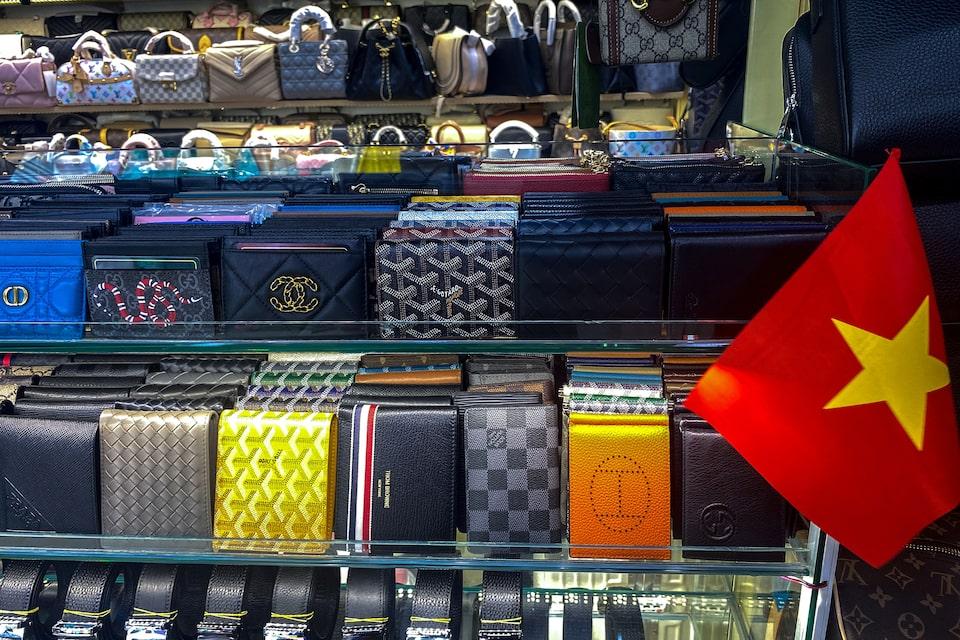
Vietnam is hub for counterfeits trade, digital piracy, US says Inspections strengthened on Google, Mattel, J&J imported fakes Firms warned not to use fake software after industry complained Counterfeits, piracy are part of US-Vietnam trade talks, source says Fakes still on display in 'notorious counterfeit market' Saigon Square HANOI, May 13 (Reuters) - Vietnam is stepping up its fight against counterfeits and digital piracy after the United States accused the country of being a major hub for these illegal activities and threatened crippling tariffs, documents reviewed by Reuters show. Among products that are subject to increased inspections at borders to ascertain their authenticity are luxury goods from Prada (1913.F) , opens new tab and Gucci owner Kering (PRTP.PA) , opens new tab, electronic devices made by Google (GOOGL.O) , opens new tab and Samsung (005930.KS) , opens new tab, and toys from Mattel (MAT.O) , opens new tab and Lego, according to a document dated April 1 from the customs department of the finance ministry. Sign up here. Consumer goods such as shampoos and razors sold by Procter & Gamble (PG.N) , opens new tab and Johnson and Johnson (JNJ.N) , opens new tab products are also included in the list, the document showed. The crackdown focuses on imported counterfeits, not those that could be made in Vietnam, which are also of concern to the administration of U.S. President Donald Trump. A clampdown on the use of counterfeit software is also underway, according to a warning from inspectors at the Ministry of Culture sent on April 14 to a local company, whose name was redacted from the document seen by Reuters. The letter, it says, followed a complaint from the Business Software Alliance (BSA), the industry's global trade association, whose members include Microsoft (MSFT.O) , opens new tab, Oracle (ORCL.N) , opens new tab and Adobe (ADBE.O) , opens new tab. A person familiar with the matter said similar letters have been sent to dozens of companies since the start of April. Vietnam's finance and culture ministries and the customs department did not reply to requests for comment, nor did any of the mentioned companies. A spokesperson for BSA said it has for years urged Vietnam to monitor and take action against the unauthorised use of software. Vietnam's recent moves are part of an array of measures taken or pledged by the Southeast Asian export-reliant industrial hub to persuade the Trump administration to reconsider punitive tariffs. Vietnam faces duties of 46% on exports to the U.S., its largest market, if confirmed in July after a global pause. Vietnam and the U.S. began informal talks to avoid tariffs well before Trump announced global "reciprocal" duties on April 2. Enhanced protection of intellectual property, including the fight against counterfeits and digital piracy, is among the issues being discussed with the U.S. in ongoing tariff talks. Also under discussion are the reduction of Vietnam's big trade surplus, the fight against trade fraud such as illegal transshipment, and lowering tariff and non-tariff barriers for U.S. businesses, according to a person briefed on the matter. Prime Minister Pham Minh Chinh last month instructed officials to strengthen the fight against trade fraud, "especially regarding the origin of goods, counterfeit goods." The measures are meant to please Washington but some may irk China, which is the main source of Vietnam's imports. "NOTORIOUS MARKETS" Despite enhanced controls on imported counterfeits, fake luxury goods targeted by the authorities were on display last week at Saigon Square Shopping Mall in Vietnam's business hub Ho Chi Minh City. The mall is on the list of "notorious markets for counterfeiting" published in January by the U.S. Trade Representative. "They are not authentic and are made in China," said an attendant in one of the stalls in the market, referring to Prada wallets and bags she's selling. She noted counterfeit Prada belts, also available at her stall, were made in Vietnam. The person declined to be named due to the sensitivity of the subject. Calls to Saigon Square went unanswered. Its website , opens new tab says the mall offers "imitations of famous brands at low prices". The USTR removed a Vietnamese marketplace at the border with China from its latest watchlist published in January after a crackdown by local authorities. It praised Vietnam's efforts to combat illegal practices, but also expressed concerns over continuing online sales of counterfeit products and Vietnam's role in producing fakes. The Vietnamese platform of Singapore-based e-commerce giant Shopee remained a major hub for the sale of counterfeits, the USTR said. "As more brands have shifted production from China to Vietnam, stakeholders report that Vietnam has become a key manufacturer of counterfeit products," the USTR said in a separate report published in April. The USTR and Shopee did not reply to requests for comment. To improve copyright protection Vietnam is planning to set up specialised courts "to fulfil Vietnam's commitment... to strictly enforce intellectual property rights" and attract foreign investment, according to a draft law reviewed by Reuters scheduled to be approved by parliament in June. https://www.reuters.com/world/china/vietnam-cranks-up-fight-imported-counterfeits-amid-us-tariff-talks-2025-05-13/
2025-05-13 05:17
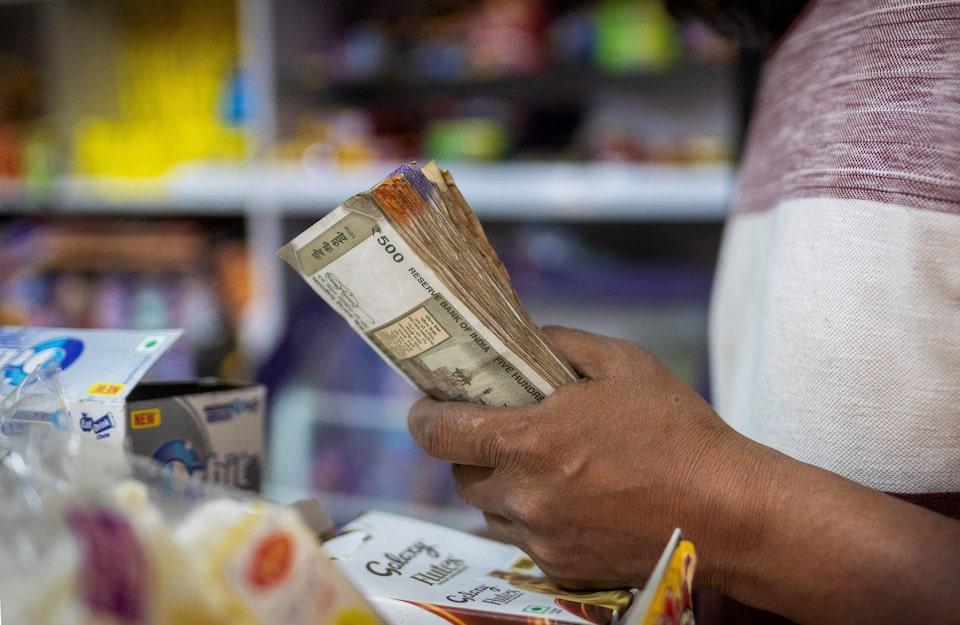
MUMBAI, May 13 (Reuters) - The cessation of military hostilities between India and Pakistan and a tariff truce between the United States and China brought relief for the rupee on Tuesday, helping the currency recoup nearly all of its losses from the previous week. The rupee strengthened to a peak of 84.6350 before paring gains to quote 0.5% higher at 84.9175 against the U.S. dollar. Sign up here. Dollar-rupee forward premiums and volatility expectations eased after the two nuclear-armed neighbours announced a truce over the weekend following four days of intense fighting. India's currency markets were closed on Monday for a local holiday. The rupee found support from another tailwind after the U.S. and China agreed to reduce reciprocal tariffs temporarily, easing fears of a global economic carnage from a trade war between the two largest economies. Easing worries about the conflicts were also reflected in the fall in the cost of hedging against rupee depreciation and in a tempering of near-tenor volatility expectations that came off multi-year peaks. The 1-year dollar-rupee implied yield eased 12 basis points to 2.15% while the 1-month implied volatility retreated to under 6% after hitting a peak of 7.1% on Friday. The 1-month dollar-rupee option volatility skew also eased after spiking last week on the back of a likely surge in demand for options betting on the rupee's decline. Despite the boost to risk sentiment delivered by the two truces, MUFG Bank pointed out that it'll be key to watch not only where U.S. tariffs on China end up on an absolute basis, but also where the tariffs on other Asian countries stand relative to China. "This is perhaps most relevant for the likes of India, Malaysia, Vietnam and Thailand which are most likely to be able to substitute China’s exports," the note said. India has offered to slash the tariff gap with the U.S. by two-thirds in a dash to seal a trade pact with the U.S., Reuters reported last week. https://www.reuters.com/world/india/two-truces-bring-multi-pronged-relief-indian-rupee-2025-05-13/
2025-05-13 05:07
A look at the day ahead in European and global markets from Rocky Swift With markets given another reprieve from a global trade war, attention refocuses on more quotidian cues, like economic data and corporate earnings. Sign up here. Six weeks into the turmoil spurred by U.S. President Donald Trump's "Liberation Day" tariffs, the recurring lessons seem to be: wait for the details and buy the dip. The China and U.S. rapprochement, resulting in a suspension of the worst tariffs between the world's two biggest economies for 90 days, was better than expected, and reverberated in Asian equity markets with strong gains in Japan after a rally in the United States. And while a Trump social media post on Sunday about high U.S. drug prices caused a massive selloff in Japanese pharma shares on Monday, the actual executive order puts the bullseye more on cheaper drugs overseas, prompting a bounce back in healthcare stocks on the Nikkei (.N225) , opens new tab. Keep an eye on the European pharma stock index (.SXDP) , opens new tab, which has outperformed the broader index (.STOXX) , opens new tab so far this year. Trump's comments about a pricey "fat shot drug", presumably speaking of injectable obesity treatments from Novo Nordisk (NOVOb.CO) , opens new tab and Eli Lilly (LLY.N) , opens new tab, could mean pressure for cost cuts in the U.S. or increases in Europe. Or both. Comments from Bayer AG (BAYGn.DE) , opens new tab after first-quarter results today may give a read on how the German healthcare giant plans to navigate the uncertain road ahead. The U.S. dollar was slightly weaker in Asia, but still held most of its gains against the yen, euro and Swiss franc after the trade truce was announced. The policy whipsaw and doubt about what lies after the next three months remain as drags on investment sentiment. Equity futures point to a muted open in Europe and a backslide in the U.S. Analysts are expecting to see a recovery in German investor sentiment when the ZEW economic research institute releases its data for May today, after tariff concerns sent morale to the lowest since the start of the Ukraine war. In the U.S., Consumer Price Index (CPI) figures will provide a signal about the timing of potential rate cuts by the U.S. Federal Reserve. Traders are pricing in 57 basis points of cuts this year, down from over 100 basis points in mid-April. Key developments that could influence markets on Tuesday: - UK employment (March) - BoE Governor Andrew Bailey, chief economist Huw Pill speak at separate events - Germany ZEW business sentiment (May) - U.S. CPI inflation (April) - U.S. earnings: Under Armour (UAA.N) , opens new tab, Venture Global (VG.N) , opens new tab - European earnings: Bayer, On Holding Trying to keep up with the latest tariff news? Our new daily news digest offers a rundown of the top market-moving headlines impacting global trade. Sign up for Tariff Watch here. https://www.reuters.com/markets/europe/global-markets-view-europe-2025-05-13/
2025-05-13 05:04
ECB to keep reference to 'forceful' action Review yields little criticism of past moves Some policymakers had urged deeper soul-searching FRANKFURT, May 13 (Reuters) - The European Central Bank will stand by its aggressive stimulus policy of the last decade in a strategy review, side-stepping calls for self-criticism after a bout of high inflation and sizeable losses, several ECB policymakers told Reuters. The review, which began in March, will address some big questions about the way the ECB works, including whether massive bond purchases, negative interest rates and giving guidance on the future path for rates remain good policy tools. Sign up here. Conversations with ECB policymakers suggest the euro zone's central bank will largely endorse its past largesse, making only minor changes to a strategy document that was last updated four years ago. It will offer little, if any, criticism of steps it took during the sudden surge in inflation seen during 2021-22. In particular, the ECB is likely to keep a reference to the need for "especially forceful or persistent" action - a byword for quantitative easing (QE) bond-buying and other stimulus measures - when inflation and interest rates are at rock bottom, the sources said. They asked not to be named because work on the review is still ongoing. An ECB spokesperson declined to comment. Belgian central bank governor Pierre Wunsch has said the ECB should discuss dropping that clause. His Dutch peer Klaas Knot and German ECB board member Isabel Schnabel have both argued that bond purchases should be used more sparingly in future, arguing that short bursts of QE are effective but lengthy ones become too costly. Policymakers were presented with a preliminary strategy document at a retreat in Porto on May 6-7 and made suggestions for possible changes that will be incorporated in the coming weeks, the sources said. The document is likely to be finalised in early summer. In Porto, ECB staff presented analysis about the effects of the central bank's stimulus policies, concluding that these programmes had been beneficial and should remain part of the ECB's toolbox in the future. There was general agreement, however, that so-called "forward guidance" on interest rates should be used parsimoniously after it led the ECB to react too late to the spike in inflation in 2021-22. The review's preliminary conclusions had left some governors dissatisfied because they were hoping for a more critical retrospective on these policies. The sources nevertheless said the discussion had been collegial, without open rifts, suggesting that the document could be approved by a large consensus. The strategy document is also likely to say that the ECB is operating in an environment of high uncertainty and reaffirm its commitment to a "symmetric" 2% inflation target, meaning that undershoots and overshoots are equally undesirable. By creating large amounts of reserves via bond purchases to avert deflation through a decade of crises, the ECB effectively set up itself and the euro zone's 20 national central banks for losses once inflation and rates rose. The bloc's central banks are currently paying a 2.25% interest rate on some 2.8 trillion euros ($3.11 trillion) worth of bank reserves. While turning a profit is not a central bank's goal, losses deprive governments of dividend income, fuel criticism of it as an institution and risk eventually eroding public confidence. ($1 = 0.8992 euros) https://www.reuters.com/business/finance/ecb-stand-by-past-stimulus-policies-strategy-review-2025-05-13/

2025-05-13 05:02
Fourth consecutive cut to EBRD growth forecasts Germany and China impact EBRD economies indirectly Concerns over debt servicing costs in EBRD regions Average US tariff on EBRD region expected to rise from 1.8% to 10.5% LONDON, May 13 (Reuters) - Tariffs, wars and economic worries in powerhouse economies such as Germany and China led the European Bank for Reconstruction and Development (EBRD) to cut its economic growth forecasts for the fourth straight time, the lender said on Tuesday. In the report, which covers economies in emerging Europe, central Asia, the Middle East and Africa, the EBRD lowered its previous forecast for 2025 made in February by 0.2 percentage points to 3%, with downward revisions across most economies. Sign up here. "Almost no country remains untouched by what's happening in the world," EBRD Chief Economist Beata Javorcik said. "The biggest effect on our countries is indirect via changes in prospects for Germany and China." Slovakia and Hungary will suffer the largest direct hit from U.S. tariff increases, with 2025 growth forecasts revised down by 0.5 percentage points, to 1.4% and 1.5%, respectively. Both countries are heavily geared towards automotive industries. The report was compiled before the latest news on the U.S. and China reaching a deal to temporarily slash tariffs. "Firms are halting investments and waiting to see what will happen," Javorcik said. "We have this very big shift of mindset from resilience of global value chains in terms of security of supply ... now, security of market access is the key concern." Projects underway are already being slowed down and delayed, even as the U.S. paused blanket new "reciprocal" tariffs and said it was ready to negotiate on other levies it imposed as part of U.S. President Donald Trump's aim to convince firms to bring manufacturing back to the United States. But the economic hits to Germany, China and other large European countries are looming; Germany is the largest trading partner for 10 EBRD economies, with exports to it accounting for nearly a quarter of GDP in the Czech Republic, and close to 20% in Slovakia and Hungary. While Europe's push to boost defence spending could be a boon for certain countries including Poland, Turkey and the Czech Republic, "there is a very real concern that the increase in defence spending will crowd out other expenditure". And while the IMF expects average debt in EBRD regions to remain broadly stable at 52% of GDP from 2025-2029, Javorcik said that was "too optimistic given what we are seeing on the ground." The IMF, Javorcik said, is assuming revenues will be high and that new spending will be matched by cuts elsewhere. "We think that actually some budget deficits will be higher," she said. Javorcik said the debt, and reliance for many countries on international bond borrowing, adds an element of risk; already, Egypt is spending 13% of its GDP servicing debt. "If there is flight to safety, if investors choose to go to safer havens, that means our countries might be exposed to that shock," she said during a panel at the EBRD annual meeting. https://www.reuters.com/markets/europe/ebrd-trims-growth-forecast-again-tariffs-wars-loom-2025-05-13/