2025-03-13 05:50
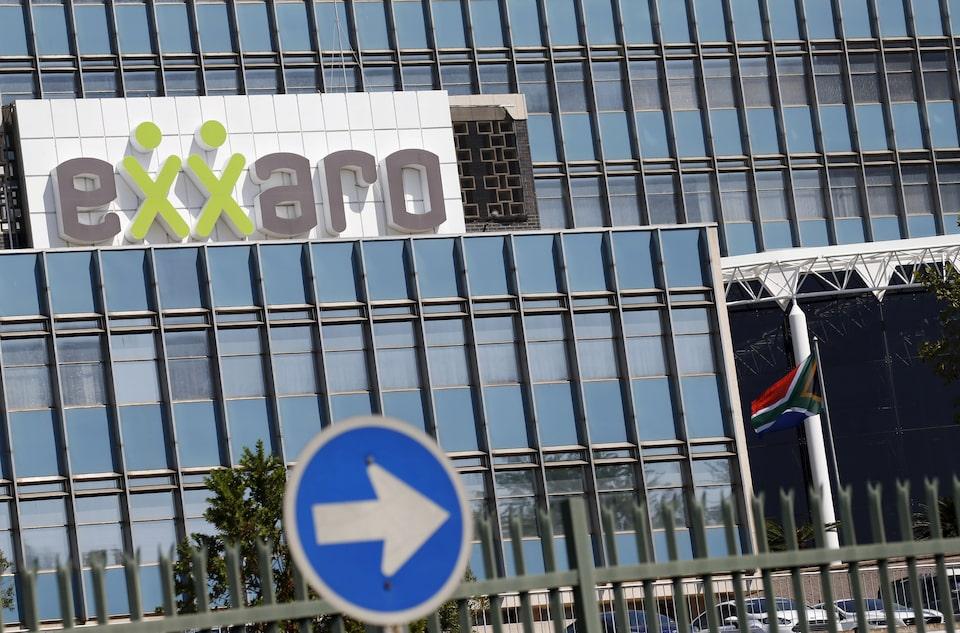
JOHANNESBURG, March 13 (Reuters) - Exxaro Resources (EXXJ.J) , opens new tab, a South African coal miner, said it has appointed veteran mining executive Ben Magara as its new CEO following the departure of Nombasa Tsengwa. Magara, a former CEO of platinum miner Lonmin and a former executive at Anglo American, will assume the role of CEO effective April 1, 2025. He will take over from acting CEO Riaan Koppeschaar, who will continue his role as finance director. Sign up here. The new CEO is expected to steer the coal miner amid declining profits due to lower prices for the fossil fuel as well as drive Exxaro's diversification into green energy transition minerals, Chairman Geoffrey Qhena said in a statement. The South African miner said its profit declined to about 7 billion rand ($381.44 million) in 2024, from nearly 11 billion a year earlier. Exxaro cut its dividend to 8.7 rand per share from 10.10 rand previously. Magara was CEO of platinum miner Lonmin when it was acquired by rival Sibanye Stillwater in 2019. He is succeeding Tsengwa, who resigned after , opens new tab being suspended by the board, which had initiated an investigation into her governance conduct. ($1 = 18.3516 rand) https://www.reuters.com/markets/commodities/south-africas-exxaro-names-veteran-mining-executive-ben-magara-new-ceo-2025-03-13/
2025-03-13 05:46
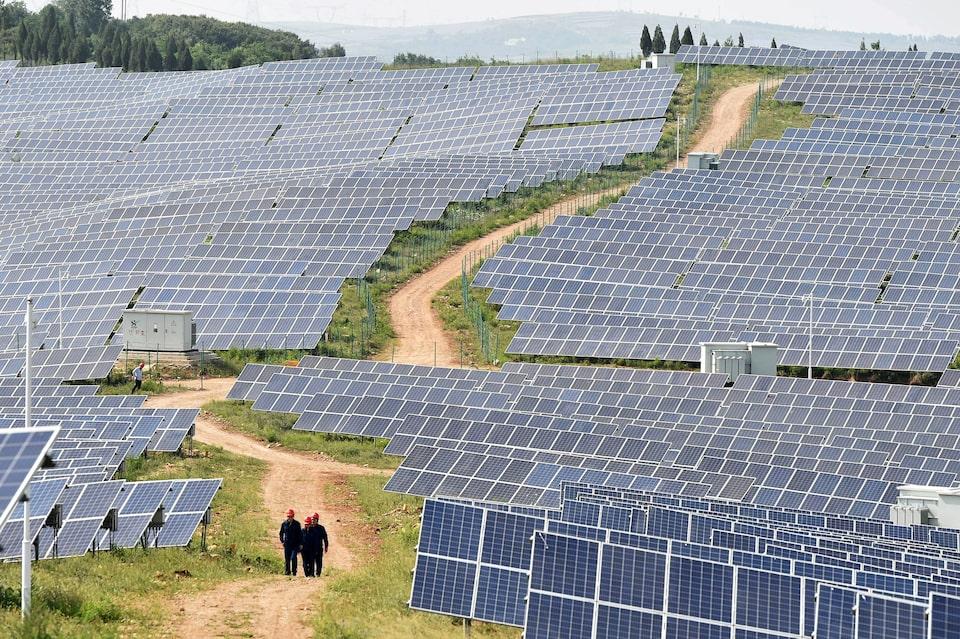
BEIJING, March 13 (Reuters) - China's finance ministry on Thursday published new guidelines for managing special funds for clean energy, providing support for development of renewable energy and clean utilisation of fossil fuels from 2025 until 2029, with a possible extension beyond this period. The guidelines replace temporary ones released in 2020 and expired in 2024 for managing such funds. Sign up here. https://www.reuters.com/sustainability/sustainable-finance-reporting/china-publishes-new-guidelines-managing-special-funds-clean-energy-development-2025-03-13/
2025-03-13 05:42
Gold hit record peak of $2,956.15 on February 24 Analysts expect gold demand and prices in the near term to go higher US consumer price growth slows in February Platinum down 1% March 13 (Reuters) - Gold prices traded near record high levels on Thursday, fuelled by demand for safe-haven assets amid tariff concerns and a U.S. inflation report that reinforced expectations of a future rate cut. Spot gold gained 0.5% to $2,946.68 an ounce, as of 1131 GMT. Bullion hit a record high of $2,956.15 on February 24 due to uncertainty caused by U.S. tariffs. Sign up here. U.S. gold futures were up 0.3% at $2,956. "Gold continues to be supported by the prospect of a tariff-driven economic slowdown, potentially bringing forward U.S. Fed rate cut expectations," Ole Hansen, head of commodity strategy at Saxo Bank, said. "I maintain my bullish stance on gold, expecting an economic slowdown or even stagflation to drive demand and price of gold higher." U.S. President Donald Trump's fluctuating trade policies - imposing and delaying tariffs on Canada and Mexico, while raising duties on Chinese goods - have roiled the global financial markets. In response, China and Canada hit back with tariffs of their own. Data on Wednesday showed consumer prices cooling more than analysts' expectations, indicating that the Fed could cut its interest rate this year. The Fed last year cut rates by 100 basis points, but has held steady since then. Investors prefer non-yielding gold in a low interest rate environment. Investors now await the U.S. Producer Price Index (PPI) data due at 1230 GMT for further insights into the Fed's monetary policy. "A softer than expected PPI report may feed Fed cut bets, fuelling gold’s upside gains. However, a hotter-than-expected report could cap gains, inviting bears to challenge support at $2,930," said Lukman Otunuga, senior research analyst at FXTM. Spot silver was flat at $33.21 an ounce, platinum lost about 1% to $974.45, while palladium dropped 0.2% to $947.17. "We have upgraded our annual silver price forecasts by 2-4%, on account of the metal's precious characteristics, despite downgrading our industrial supply-demand balance," Macquarie said in a note. https://www.reuters.com/markets/commodities/gold-rises-tariff-uncertainty-cooler-inflation-data-lend-support-2025-03-13/

2025-03-13 05:34
JAKARTA, March 13 (Reuters) - Indonesia's tax revenues in the first two months of 2025 were hit by falling commodity prices like coal, nickel and crude oil, as well administrative changes in the way income and value added taxes were collected, a deputy finance minister said on Thursday. However, economic indicators like the purchasing managers' index, motorcycle and car sales suggested revenues from VAT would recover going forward, Anggito Abimanyu told a press conference. Sign up here. https://www.reuters.com/markets/commodities/indonesia-tax-revenues-hit-by-falling-commodity-prices-official-says-2025-03-13/

2025-03-13 05:33
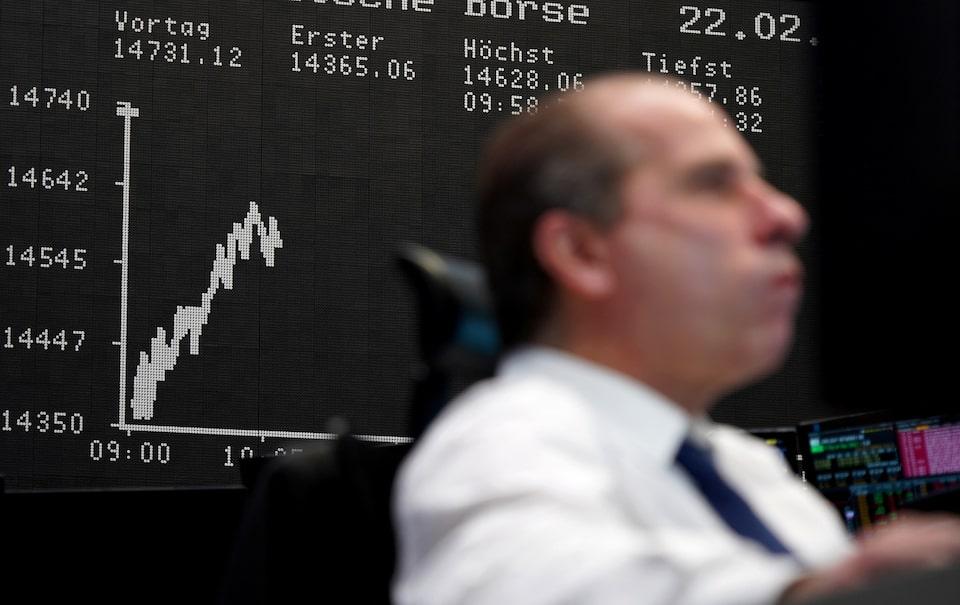
A look at the day ahead in European and global markets from Kevin Buckland Wall Street's mild bounce on the back of a tame CPI reading did not provide much impetus for Asian markets, leaving European investors with little cause for optimism. Sign up here. One problem is that the inflation data, while offering some relief from the run of discouraging indicators lately, won't translate directly into a lower PCE price index - the Fed's preferred gauge of price pressures - because the cooling came mostly in services. Another concern is that February's data doesn't fully capture the impact of President Donald Trump's wave of tariffs. And ultimately, the primary worry for markets is not inflation, but growth. On the subject of tariffs, Europe finds itself directly in Trump's sights after the EU's threat of counter-measures was met by a warning of reciprocal duties from the United States. It remains to be seen whether Trump's approach to Europe mirrors the ramp-up-and-reprieve strategy used for Canada and Mexico, or the tax-and-then-tax-again model applied to China. The good news is that, according to Germany's Kiel Institute, only a "small fraction" of targeted products from the EU are exported to the United States. Meanwhile, Britain continues to keep a relatively low profile, refraining from immediate tariff retaliation but keeping all options open. That may be why sterling continues its steady climb while the euro is slipping back, albeit after a steeper ascent. A majority of Americans believe Trump's economic policy has been too erratic, and an even greater number expect higher prices as a result. Warnings from corporate America are also surfacing, with airline Delta (DAL.N) , opens new tab and retail giant Walmart (WMT.N) , opens new tab indicating that the unusually high level of economic uncertainty will impact their profits. A potential de-escalation in Trump's trade war could be sown at home rather than due to tit-for-tat tariffs from major trading partners. However, a more than 10% slide in the S&P 500 in just three weeks doesn't seem to be prompting a reconsideration of U.S. policy. Key developments that could influence markets on Thursday: - UK RICS housing survey (Feb) - Sweden CPI (Feb) - Euro area industrial production (Jan) - US PPI (Feb), weekly jobless claims https://www.reuters.com/markets/europe/global-markets-view-europe-2025-03-13/
2025-03-13 05:25
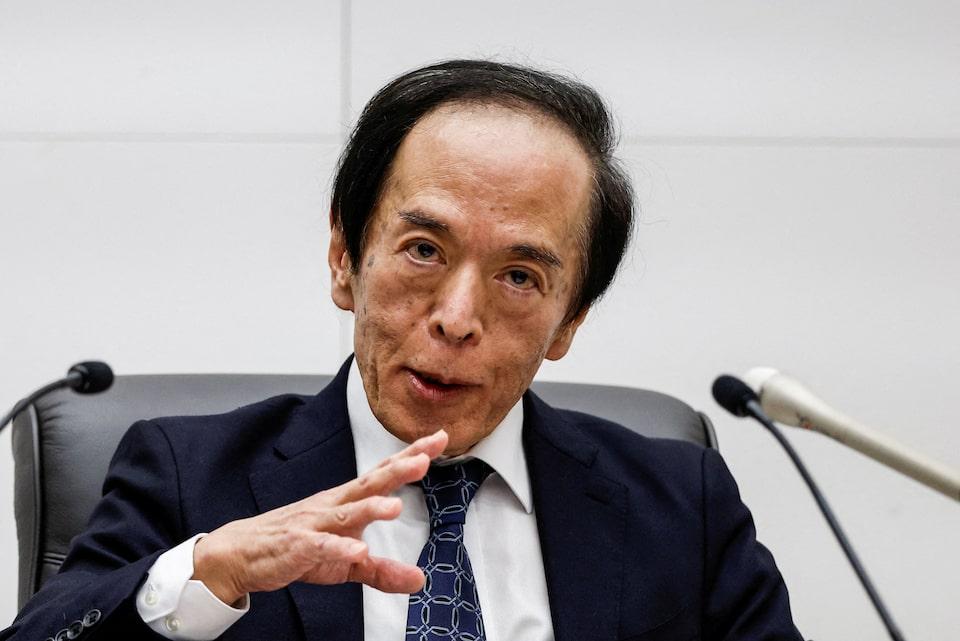
Real wages, consumption likely to improve, Ueda says BOJ will keep tapering to trim 'somewhat too big' balance sheet Ueda says hard to predict size of desirable BOJ balance sheet BOJ seen keeping short-term rates steady at 0.5% next week TOKYO, March 13 (Reuters) - Bank of Japan Governor Kazuo Ueda on Thursday painted an optimistic view on consumption and reaffirmed the bank's resolve to shrink its "too big" balance sheet, a sign it remains on course to wean the economy off monetary stimulus. The remarks suggest the BOJ is sticking to its projection of a moderate economic recovery, even as U.S. President Donald Trump's tariff policy jolts financial markets and fuels a trade war that could hurt Japan's exports. Sign up here. Real wages and consumption have struggled since inflation accelerated in 2022, as the pace of wage gains failed to catch up with the steady rise in import-driven living costs, Ueda told parliament. "From now onward, we will likely see import cost-driven inflation moderate. Wages, on the other hand, continue to rise steadily," he said. "As such, we expect real wages and consumption to improve ahead," Ueda added. The BOJ is set to keep rates steady at next week's policy meeting, though the board may discuss a hike as soon as May with an eye on domestic inflation and market volatility induced by uncertainty on U.S. trade policy, sources have told Reuters. Consumption has been a weak spot in Japan's economy as rising food and fuel costs accelerate inflation, keeping real wage growth stagnant and sapping households' purchasing power. BOJ policymakers expect wage gains to broaden and underpin consumption, allowing the central bank to keep increasing its short-term policy rate from the current 0.5%. Many big firms on Wednesday offered bumper pay hikes in this year's wage talks with unions for a third straight year, backing the BOJ's view that sustained wage gains will keep inflation durably around its 2% target. Economists polled by Reuters expect the BOJ to keep rates unchanged next week with over two-thirds projecting a hike to 0.75% in the third quarter, most likely in July. The BOJ raised short-term rates to 0.5% in January after ending a massive stimulus programme last year on the view Japan was on the cusp of durably achieving its 2% inflation target. The central bank also began a quantitative tightening (QT) programme under a plan laid out in July that would halve monthly bond buying to 3 trillion yen ($20 billion) by early 2026. It will conduct a mid-term review of its QT plan in June to come up with a taper plan thereafter, which is expected to draw market attention as Japanese bond yields rise steadily. "The size of the BOJ's monetary base, balance sheet and current account balance is somewhat too big, which is why we are reducing the scale of our bond buying," Ueda said, signaling there was no change in the bank's plan to continue tapering. Ueda said it was hard to predict how much the BOJ should reduce the size of its balance sheet, which has ballooned to around 745 trillion yen - exceeding the size of Japan's gross domestic product (GDP). "We hope to spend time scrutinising the eventual, desirable size of the BOJ's balance sheet, taking into account the example of other central banks," he said. ($1 = 147.8600 yen) https://www.reuters.com/markets/asia/boj-expects-consumption-improve-solid-wage-gains-governor-ueda-says-2025-03-13/