2025-02-20 06:20
Market eyes Russia-Ukraine peace negotiations Russia damages Ukraine gas facilities in overnight attacks US crude stockpiles rise, gasoline and distillate draw down, EIA says NEW YORK, Feb 20 (Reuters) - Oil prices settled higher on Thursday, marking a three-day streak of gains, after data showed gasoline and distillate drawdowns in the U.S., while worries about supply disruptions in Russia also supported prices. Brent futures settled up 44 cents, or 0.58%, at $76.48 a barrel. U.S. West Texas Intermediate crude futures (WTI) for March delivery rose 32 cents, or 0.44%, to $72.57. The more-actively traded April WTI contract gained 0.35% to $72.50 a barrel. U.S. crude oil stockpiles rose slightly more than expected while fuel inventories fell last week as seasonal maintenance at refineries led to lower processing, the Energy Information Administration said on Thursday. "The crude build was a bit larger than expected, but there was a modest draw in gasoline and larger draw in distillate, keeping total inventories flat," said Giovanni Staunovo, an analyst with UBS. Crude futures extended gains slightly following the report. Russia and the U.S. have had their first meeting since the start of the Ukraine war, aimed at restoring relations and preparing the ground for ending the conflict. However, disruptions to oil supply kept prices elevated. Russia attacked Ukrainian gas infrastructure and damaged gas production facilities overnight, Ukraine's Energy Minister German Galushchenko said. Russia said Caspian Pipeline Consortium oil flows, a major route for crude exports from Kazakhstan, were reduced by 30%-40% on Tuesday after a Ukraine drone attack on a pumping station. Elsewhere, potential restarts of oil flows from Iraq's Kurdistan region were offsetting supply risks, analysts at ING said in a note. Turkey, which hosts the port of Ceyhan that loads Iraqi oil from the Kurdistan region, had not received confirmation from Iraq on the resumption as of Thursday, the country's energy minister told Reuters. A resumption of the Iraqi oil flows would add 300,000 barrels of supply per day onto the market, ING analysts said. Import tariffs announced by U.S. President Donald Trump's administration could dent oil prices by raising the cost of consumer goods, analysts said, weakening the global economy and reducing fuel demand. Concerns about European and Chinese demand were also helping keep prices in check. "It is natural to be concerned about the global economic outlook as Donald Trump takes a sledgehammer smashing away at the existing global 'free-trade structure' with signals of 25% tariffs on car imports to the U.S.," said Bjarne Schieldrop, chief commodities analyst at SEB. Sign up here. https://www.reuters.com/business/energy/oil-prices-ease-after-report-us-crude-inventories-rise-2025-02-20/

2025-02-20 06:13
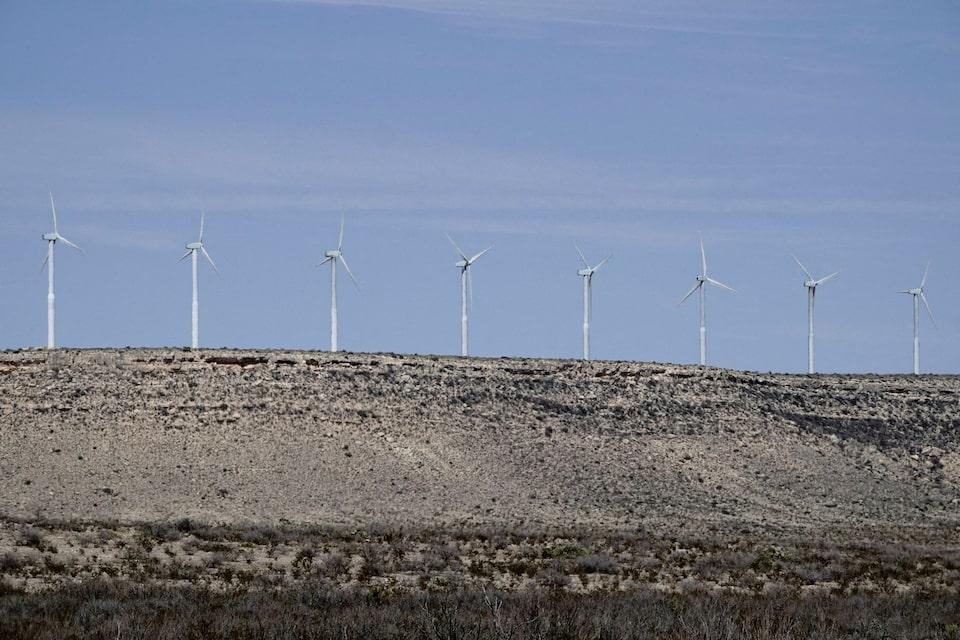
LITTLETON, Colorado, Feb 20 (Reuters) - Wind generation in Texas's power system is forecast to more than double from current levels from the end of February, setting the stage for a jump in renewable energy generation to record highs within the United States' largest power-consuming state. Wind farms are the largest power source in Texas behind natural gas, and along with solar farms accounted for a record average share of 29.8% of total electricity production in 2024, according to the latest data from energy think tank Ember. But the impending rise in wind production could help the cumulative average share of solar and wind power to top the 30% threshold for the first time in 2025. If Texas power firms can secure over 30% of system power needs from renewable assets, that could provide scope for reduced fossil fuel use elsewhere in the generation mix, and help cap overall emissions from the U.S.' largest power system. SPRING PEAK Wind generation levels tend to peak annually in Texas from March through May, as the tail-end of winter leads to higher sustained wind speeds at turbine level. Texas is by far the largest wind power producer in the United States, and generated around 115,000 gigawatt hours (GWh) of wind-powered electricity in January to November of 2024, according to Ember. That total was over twice as much as the next largest wind-producing state - Iowa - and accounted for just under 28% of all U.S. wind electricity output in January to November of 2024. Around a third of Texas' full-year wind generation total is produced during the months of March, April and May, according to LSEG. That period is also when generation from natural gas is at its lowest due to reduced demand for heating and cooling during the spring shoulder season. That same generation pattern looks set to unfold again over this spring, as the current cold snap gives way to warmer temperatures from March onwards and lower demand for heating. At the same time, higher wind speeds look set to boost wind power generation. LSEG's forecast models call for wind power output to climb from the current daily average of around 7,500 megawatt hours (MWh) to around 17,000 MWh per day from later this month. If those forecasts prove correct, Texas' wind farms may be able to grab a new record share of Texas power output during the coming months, and help maintain energy transition momentum within the national power mix. CLEAN POWER PROGRESS Electricity production from clean energy sources in Texas has increased by nearly 60% since 2019, compared to just a 2% rise in fossil fuel-fired generation during that same period, Ember data shows. Texas' total electricity production has climbed by 17% since 2019, resulting in a cleaner overall power mix that has boosted total generation by an average of 5% a year since 2021. As a result of the cleaner generation mix, total power sector emissions in Texas have dropped by 3% since 2019, and have been largely flat for the past three years. However, total U.S. power emissions from fossil fuel use have declined by 8% since 2019, as other states were able to make steeper cuts to fossil fuel use during that period. That has resulted in Texas's share of national power emissions from fossil fuel use rising to record highs in recent years, despite steady additions to clean power output. But if Texas' wind farms boost output as forecast this spring, Texas' power suppliers may be able to make steeper cuts to fossil fuel use and still deliver higher overall power supplies to customers. The opinions expressed here are those of the author, a market analyst for Reuters. Sign up here. https://www.reuters.com/markets/commodities/texas-power-system-set-new-clean-milestone-winds-pick-up-maguire-2025-02-20/
2025-02-20 06:11
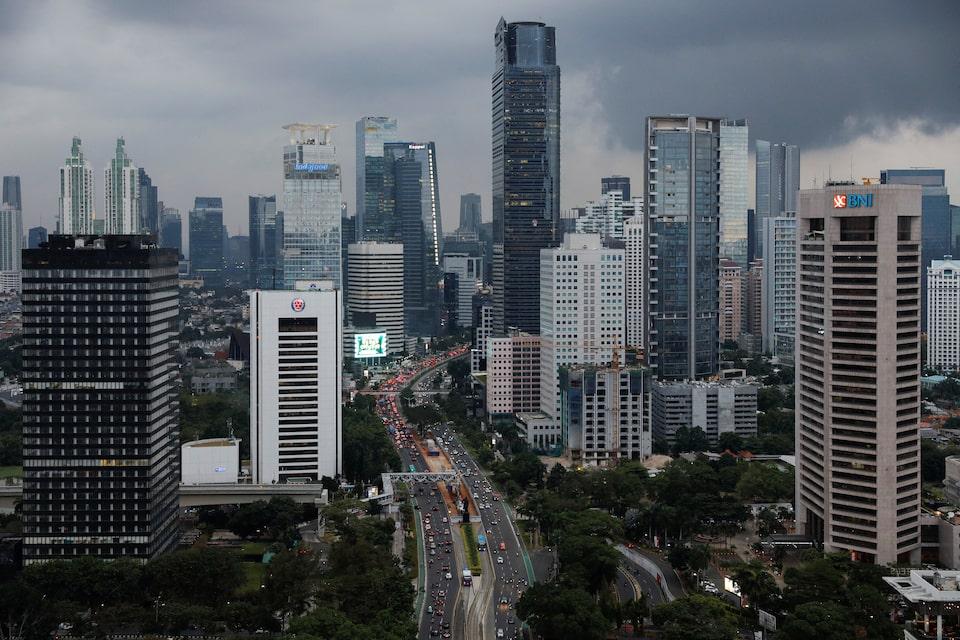
2024 c/a deficit at 0.6% of GDP, vs 2023 c/a deficit at 0.1% 2024 BoP surplus rises to $7.2 bln, vs $6.3 bln surplus in 2023 Q4 c/a deficit narrows to 0.3% of GDP, vs 0.6% deficit in Q3 JAKARTA, Feb 20 (Reuters) - Indonesia's current account deficit widened in 2024 as its merchandise trade surplus shrank amid weaker global demand, the central bank said on Thursday, and analysts pointed to a worsening outlook for global trade this year. Southeast Asia's largest economy reported a current account deficit of $8.9 billion for the year, equivalent to 0.6% of GDP, within the central bank's outlook range of 0.1% to 0.9%, but widening from 2023's gap of $2 billion, or 0.1% of GDP. In 2025, the central bank, Bank Indonesia (BI), expects the current account deficit to be in a range of 0.5% to 1.3% of GDP. However, Indonesia had a $7.2 billion surplus in its balance of payments (BoP) for 2024, larger than 2023's surplus of $6.3 billion, due to a surplus in the capital and financial accounts on stronger portfolio inflows. This year, Indonesia's goods exports will face headwinds from U.S. President Donald Trump's trade threats, which come amid a potential rise in imports following an Indonesian government drive to stimulate domestic economic growth, said Bank Permata economist Josua Pardede. He predicts the current account deficit will widen to 1.18% of GDP in 2025. He projected a small deficit in the balance of payments in 2025. "The BoP deficit may limit room for BI-rate cuts in 2025... underscoring the importance of monetary policy in maintaining Rupiah stability and curbing imported inflation," said Josua, who projected BI would stand pat until the year-end with a terminal rate at 5.75%. BI has cut rates twice in the current monetary easing cycle that started in September, but it kept interest rates steady on Wednesday, emphasising its focus on rupiah stabilisation. In January, Indonesia booked a $3.45 billion merchandise trade surplus, amid surprisingly weak imports, even as exports came in below forecast. Sign up here. https://www.reuters.com/markets/asia/indonesia-current-account-deficit-widens-06-gdp-2024-2025-02-20/
2025-02-20 05:39
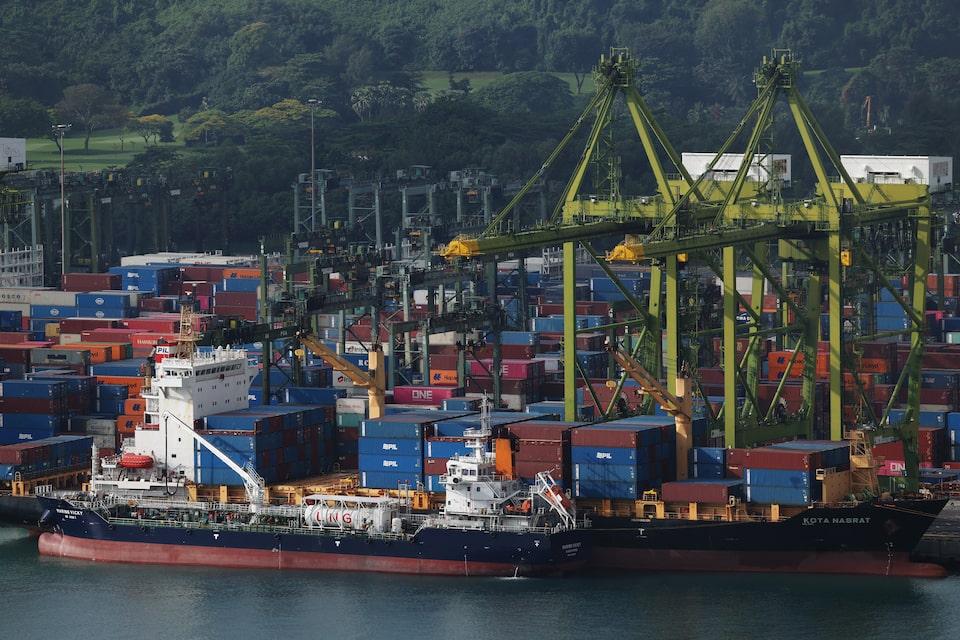
SINGAPORE, Feb 20 (Reuters) - Singapore is set to import multi-year high diesel volumes for February, according to data from two shiptrackers and trade sources, as sellers shipped cargoes to Asia's key oil storage hub amid tepid demand elsewhere. February diesel arrivals into the city-state are slated to top 6.7 million barrels, data from Kpler, LSEG and trade sources showed. This level is a two-year high, LSEG data showed. Meanwhile, diesel outflows from Singapore were headed for a one-year low of around 3.9 million barrels, Kpler data showed. March spot market differentials, including deals on the trading window and refiner sale tenders, both fell into discounted territory last week as a result. Ample supplies in Asia are likely to pressure free on board (FOB) Singapore prices and widen the east-west arbitrage price spread, enabling some sellers to start pivoting their cargoes west in the near-term, multiple trade sources said. The east-west arbitrage price spread - usually represented by the exchange of futures for swaps (EFS) - has been at wider discounts since the end of January, LSEG data showed, with more India-origin barrels heading to Europe in the second half of February. "Arrivals into Singapore for February are indeed on the high side," said LSEG Oil Research senior analyst Charles Ong, which he attributed to higher volumes from South Korea and Taiwan. South Korea-loading cargoes "have limited places to go to", he said, given that demand from key buyer Australia may have been covered partly by Indian-origin cargoes discharging there this month at a three-month high. Slow demand from regional destinations such as Vietnam and the Philippines also forced sellers to ship cargoes to Singapore instead, two trade sources said, despite the current backwardated market structure where it is more profitable to sell front-month loading shipments. February diesel imports to Vietnam and the Philippines were at three-month lows, LSEG and Kpler data showed. Vietnam's fuel distributors and refiners faced high stockpiles this month on slow offtake over Lunar New Year, two importers there said, with private refiner Nghi Son Refining and Petrochemical selling spot diesel for the first time since end-2023. Key charterers of supplies to Singapore were Shell (SHEL.L) , opens new tab, Aramco Trading Singapore, Trafigura and Vitol, data from LSEG and a shipbroking source showed, with two trade sources adding the increased buying from Shell could be due to lower local offtake as it is in the process of handing over its Singapore refinery to a joint venture led by Chandra Asri. Shell declined to comment. Sign up here. https://www.reuters.com/markets/asia/singapore-set-multi-year-high-diesel-imports-feb-while-exports-falter-sources-2025-02-20/
2025-02-20 05:33
A look at the day ahead in European and global markets from Ankur Banerjee A bevy of tariff headlines this week along with geopolitical worries has left investors wary and weary, taking stocks lower in Asian hours, gold to a record peak and the yen to its highest in over two months as sentiment remains fragile. European stocks are poised to tread with caution on Thursday, futures indicate, after the pan-European STOXX 600 index (.STOXX) , opens new tab dropped nearly 1% in the previous session, its biggest daily drop in two months. Bear in mind, the benchmark index, along with other European bourses, has had a strong start to the year, clocking in a double-digit rise so far in 2025, far outperforming U.S. stocks. Markets have sort of grown accustomed to the various tariff vows from U.S. President Donald Trump, with many analysts seeing the threats as an opening gambit in long-drawn-out negotiations with foes and friends alike. But Trump denouncing Ukrainian President Volodymyr Zelenskiy as a "dictator" and warning he had to move quickly to secure peace or risk losing his country brought to the fore the ample worries around geopolitics, sapping risk sentiment. The risk-off mood meant the yen - already underpinned by rising odds of the Bank of Japan hiking rates again - was the main mover among currencies, hitting its highest level since early December and was last at 150.48 per dollar. Gold prices hit yet another record high on safe-haven flows, taking its 2025 gains to 12%. For those keeping track, that's the ninth time the metal has touched an all-time high this year. And that comes after a 27% rise last year, its strongest annual performance in over a decade. Both Citi and Goldman raised their target price on gold this month, predicting it to breach the $3,000 mark. A large part of the reason behind the bullishness is sustained demand from central banks. Perhaps in these uncertain times, gold is all that shines. Focus will also be on earnings from Mercedes-Benz (MBGn.DE) , opens new tab and Renault (RENA.PA) , opens new tab as the European automakers try and allay investor fears on tariffs. Key developments that could influence markets on Thursday: - Germany producer prices for January - Earnings: Airbus, Lloyds Banking, Mercedes-Benz and Renault Sign up here. https://www.reuters.com/markets/europe/global-markets-view-europe-2025-02-20/

2025-02-20 04:51
Vale takes $1.94 billion impairments on operations in Canada Cuts planned capital spending for 2025 by 9% to $5.9 billion Plans to buy back up to 3% of share base over 18 months SAO PAULO, Feb 19 (Reuters) - Brazilian miner Vale (VALE3.SA) , opens new tab reported on Wednesday a $694 million loss in the fourth quarter, missing estimates and swinging from a hefty profit a year earlier, as it logged impairments on some of its base metals assets in Canada. Vale, one of the world's largest iron ore producers, also announced fresh remuneration to shareholders through dividends and a share buyback, which analysts welcomed, and cut its planned spending estimate for this year. The firm's quarterly net loss, far below the $1.95 billion profit expected by analysts in a LSEG poll and the $2.4 billion profit a year earlier, was hit by impairments of $1.4 billion on its Thompson nickel operations and $540 million on a project to expand its Voisey's Bay mine, both in Canada. Vale noted the impairments followed a review of assets in Vale Base Metals, which last month said it had started a "strategic review" of its nickel assets in Thompson, including their potential sale. Vale's core profit as measured by adjusted earnings before interest, taxes, depreciation and amortization (EBITDA) came in at $3.79 billion in the quarter, down 41% and below analysts' estimate of $3.96 billion. Excluding the impairments and one-offs, Vale's net profit would have reached $872 million in the quarter, still 64% lower year-on-year amid a decline in iron ore prices and sales volumes. Vale announced a dividend of about 2.14 reais per share and a share buyback of up to 120 million shares, up to 3% of its share base, to be carried out over 18 months. Santander analysts welcomed "solid results", citing operating numbers that do not include the impairment and other one-offs. "We expect a positive market reaction on the back of a stronger-than-expected shareholder remuneration, and the new buyback program," they wrote in a note to clients. Itau BBA analysts also expected a positive market reaction, noting a quarter of the announced dividends are extraordinary payments. Vale last month released its sales and production report, which showed a near 5% decline in its quarterly iron ore output compared to a year earlier, with the company prioritizing higher-margin products. Still, the miner notched its highest annual production since 2018 in the year. Vale said its net revenue in the fourth quarter came in at $10.1 billion, down 22% and mostly in line with analysts' expectations. In a separate filing on Wednesday, Vale trimmed its projected capital expenditures for this year from about $6.5 billion to some $5.9 billion, mostly on lower planned investments in growth and energy-transition metals. Sign up here. https://www.reuters.com/markets/commodities/miner-vale-posts-694-million-loss-fourth-quarter-2025-02-20/