2025-01-23 10:43
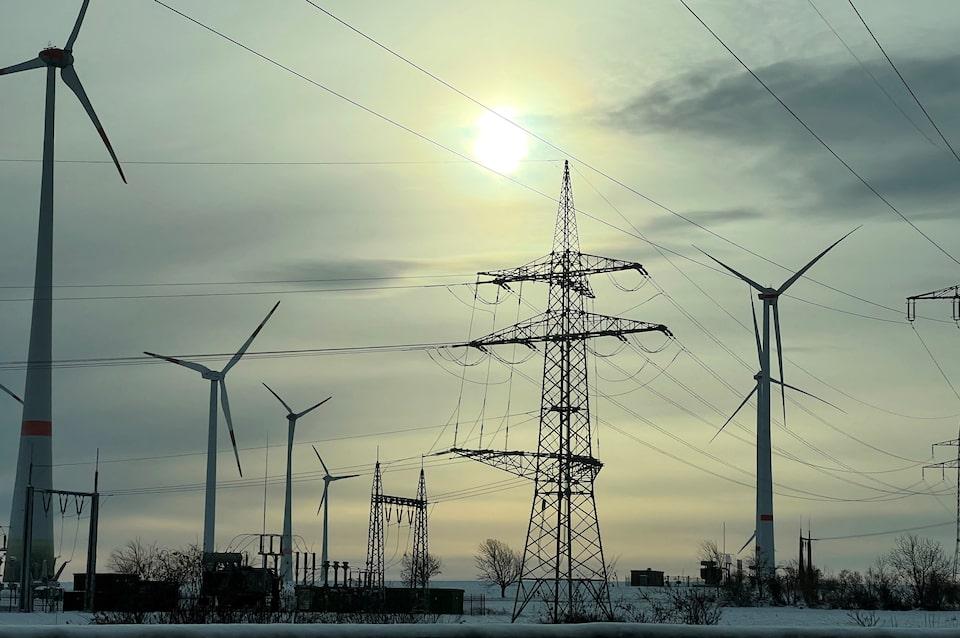
Grid firm wants regulator to grant higher returns Says financing at risk due to low rates BERLIN, Jan 23 (Reuters) - Germany's power grid operators will need the national regulator to raise the cap on their returns on infrastructure spending when it sets new limits in 2029 so they can fund grid expansion and attract investors, the CEO of network company Amprion said on Thursday. Speaking to Reuters on the sidelines of the Handelsblatt Energy Summit, CEO Christoph Mueller said Amprion, 25% owned by utility RWE (RWEG.DE) , opens new tab, wished for the regulatory agency to consider its plea in decisions about the next five-year regulatory period expected later this year. "The German equity interest rate for transmission grids cannot keep up with international competition," he said. The regulatory agency, Bundesnetzagentur, currently allows write-off rates of return on equity employed of 7% on new infrastructure and 5% for existing infrastructure pre-tax. Those compare to rates between 7% and 9% elsewhere in Europe, according to analysts' reports. "If nothing changes, it will present us as a transmission system operator with major challenges in financing the projects of the coming years," he added. Amprion and three sector peers in Germany must operate within the regulatory framework while planning billions of euros of spending on power lines and equipment to help transport a growing share of electricity from renewable sources, which requires sophisticated hardware. They must reach wind and solar generation sites, and transport their output, often via expensive underground cables, that face less resistance from the public than overground lines. Amprion's 11,000 km grid in Germany is second in length behind that of TenneT (IPO-TTH.AS) , opens new tab, with the other two being 50Hertz (ELI.BR) , opens new tab and TransnetBW (EBKG.DE) , opens new tab. In a fee-model, spreading costs among power consumers, what has been invested flows back to the grid operators via depreciation over 40 years, and interest is paid on the capital still tied up via the grid access fees, that are ultimately financed by the end consumers. Amprion plans to invest 27.5 billion euros ($28.60 billion)in the current five-year period through 2028, for example on platforms to connect offshore wind turbines and cables from the North Sea to the industrial Ruhr region in Germany's west. The grid operators fear the regulator might not set satisfactory levels they want, due to its brief to keep grid costs down for consumers, who share them as part of their power bills. That scenario could worsen external funding conditions, and endanger their financial ratings, said Mueller. ($1 = 0.9614 euros) Sign up here. https://www.reuters.com/business/energy/german-power-grid-operators-need-higher-earnings-2029-amprion-says-2025-01-23/
2025-01-23 10:23
Jan 23 (Reuters) - Swedish metal-cutting and mining equipment maker Sandvik (SAND.ST) , opens new tab on Thursday signalled stabilising orders for early 2025 and little immediate threat from U.S. tariffs, after it beat market expectations for fourth-quarter order intake. Sandvik, one of the first Nordic industrial companies to report quarterly results, is considered a reliable indicator of demand given its broad customer base. Its quarterly order intake was 31.56 billion Swedish crowns ($2.86 billion), up 5% from a year earlier and above analysts' consensus according to Jefferies and Kepler Cheuvreux. Demand was solid in the Mining and Rock Solutions division, notably in the aftermarket business that saw double-digit percentage growth in new orders in the quarter, Sandvik said. "While equipment orders were stable year on year, our equipment divisions saw a more favorable demand picture," CEO Stefan Widing said in a statement. Its Manufacturing and Mining Solutions unit continued to suffer from weak demand in Europe and in the automotive sector, which Widing said was "not surprising" as macro-economic instability shakes its key customer markets. However, Sandvik said order intake for the unit had been stable in the first two weeks of January, which Jefferies analysts said could lead to a slight consensus upgrade. Mining and Rock Solutions make up around a half of Sandvik's sales, while Manufacturing and Mining Solutions generate nearly 40%. Sandvik's shares rose 5.3% by 0943 GMT. Looming U.S. tariffs on Canada, Mexico and China are raising concerns for many firms operating globally, but Widing told Reuters that Sandvik, which makes a quarter of its sales in North America, had very little exposure to the countries on top of President Donald Trump's agenda. "We have been preparing in the sense of understanding our flows and what actions we can take, whether it's related to pricing, changing logistics flows or even moving assembly or production," he added about the upcoming U.S. policy changes. Sandvik's adjusted operating profit was stable at 5.74 billion crowns, though it just missed analysts' expectations according to LSEG's IBES data. ($1 = 11.0243 Swedish crowns) Sign up here. https://www.reuters.com/markets/commodities/sandvik-signals-stabilising-orders-q4-intake-beats-estimates-2025-01-23/

2025-01-23 10:22
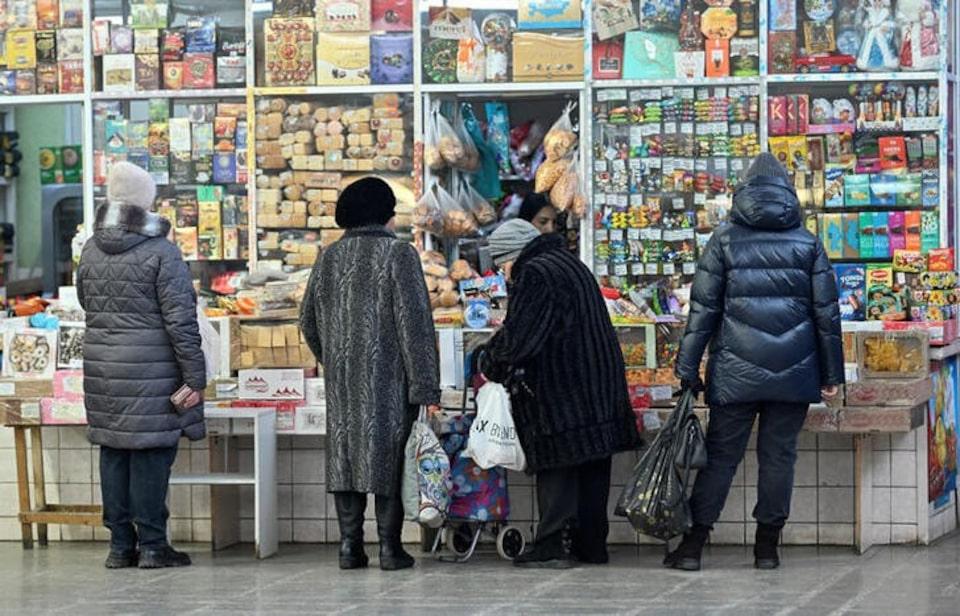
Putin recognizes the strain the war is putting on the economy, source says Weak economy contributing to view that negotiated end to the war is desirable, sources say Putin frustrated with economic issues, scolds officials at Kremlin meeting, sources say MOSCOW, Jan 23 (Reuters) - President Vladimir Putin has grown increasingly concerned about distortions in Russia's wartime economy, just as Donald Trump pushes for an end to the Ukraine conflict, five sources with knowledge of the situation told Reuters. Russia's economy, driven by exports of oil, gas and minerals, grew robustly over the past two years despite multiple rounds of Western sanctions imposed after its invasion of Ukraine in 2022. But domestic activity has become strained in recent months by labour shortages and high interest rates introduced to tackle inflation, which has accelerated under record military spending. That has contributed to the view within a section of the Russian elite that a negotiated settlement to the war is desirable, according to two of the sources familiar with thinking in the Kremlin. Trump, who returned to office on Monday, has vowed to swiftly resolve the Ukraine conflict, Europe's biggest since World War Two. This week he has said more sanctions, as well as tariffs, on Russia are likely unless Putin negotiates, adding that Russia was heading for "big trouble" in the economy. A senior Kremlin aide said on Tuesday that Russia had so far received no specific proposals for talks. "Russia, of course, is economically interested in negotiating a diplomatic end to the conflict," Oleg Vyugin, former deputy chairman of the Central Bank of Russia said in an interview, citing the risk of growing economic distortions as Russia turbo-charges military and defence spending. Vyugin was not one of the five sources, who all spoke on condition of anonymity due to the sensitivity of the situation in Russia. The extent of Putin's concerns about the economy, described by the sources, and the influence of that on views within the Kremlin about the war, are documented here for the first time. Reuters has previously reported that Putin is ready to discuss ceasefire options with Trump but that Russia's territorial gains in Ukraine must be accepted and that Ukraine must drop its bid to join the U.S-led NATO military alliance. Kremlin spokesman Dmitry Peskov, when asked about the Reuters reporting, acknowledged "problematic factors" in the economy, but said it was developing at a high rate and was able to meet "all military requirements incrementally" as well as all welfare and social needs. "There are problems, but unfortunately, problems are now the companions of almost all countries of the world," he said. "The situation is assessed as stable, and there is a margin of safety." Trump "is focused on ending this brutal war," by engaging a wide range of stakeholders, White House National Security Council spokesperson Brian Hughes said in response to Reuters' questions. In recent weeks, Trump's advisers have walked back his boast that the three-year-old war could be resolved in a day. Just days before Trump's inauguration, outgoing U.S. president Joe Biden's administration imposed the broadest package of sanctions to so far target Russia's oil and gas revenues, a move that Biden's national security adviser, Jake Sullivan, said , opens new tab would give Trump leverage in any talks by applying economic pressure on Russia. Putin has said that Russia can fight on as long as it takes and that Moscow will never bow before another power over key national interests. Russia's $2.2 trillion economy had until recently shown remarkable endurance during the war, and Putin has praised top economic officials and business for circumventing the most stringent Western sanctions ever imposed on a major economy. After contracting in 2022, Russia's GDP grew faster than the European Union and the United States in 2023 and 2024. This year, however, the central bank and the International Monetary Fund forecast sub-1.5% growth, although the government projects a slightly rosier outlook. Inflation has edged toward double digits despite the central bank hiking the benchmark interest rate to 21% in October. "There are some issues here, namely inflation, a certain overheating of the economy," Putin said in an annual news conference on Dec. 19. "The government and the central bank are already tasked with bringing the tempo down," he said. 'WAR GOALS MET' Last year, Russia made its most significant territorial gains since the early days of the war and it now controls nearly a fifth of Ukraine. Putin believes key war goals have already been met, including control of land that connects mainland Russia to Crimea, and weakening Ukraine's military, said one of the sources familiar with thinking in the Kremlin. The Russian president also recognizes the strain the war is putting on the economy, the source said, citing "really big problems" such as the impact of the high interest rate on non-military businesses and industry. Russia has hiked defence spending to a post-Soviet high of 6.3% of GDP this year, accounting for a third of budget expenditure. The spending has been inflationary. Along with wartime labour shortages, it has driven wages higher. On top of that, the government has sought higher tax revenues to reduce the fiscal deficit. Vyugin, the former deputy governor, said sustained high rates would put pressure on the balance sheets of businesses and banks. Russian coal and steel producer Mechel (MTLR.MM) , opens new tab, owned by businessman Igor Zyuzin and his family, on Tuesday said it had restructured its debt, under pressure from low coal prices and high interest rates. PUTIN CONCERN Putin's frustration was evident at a Kremlin meeting with business leaders the evening of Dec. 16, where he scolded top economic officials, according to two of the sources, who have knowledge of discussions about the economy in the Kremlin and government. One of the sources, who was briefed after the meeting, was told Putin was visibly displeased after hearing private investment was being cut because of the cost of credit. The Kremlin released Putin's introductory comments praising business but did not identify any of the business participants at the mostly closed-door meeting. Reuters confirmed with one source that Central Bank Governor Elvira Nabiullina was not present. On Wednesday, Putin said in televised comments to ministers that he had recently discussed with business leaders the risks of a decrease in credit activity for long-term growth, in an apparent reference to the December meeting. Some of Russia's most powerful businessmen, including Rosneft CEO Igor Sechin, Rostec CEO Sergei Chemezov, aluminium tycoon Oleg Deripaska and Alexei Mordashov, the largest shareholder in steel-maker Severstal, have publicly criticised the high interest rates. Nabiullina has faced pressure not to raise rates further from two of Russia's most powerful bankers - her former boss, Sberbank CEO German Gref, and VTB CEO Andrei Kostin - who feared that Russia was heading towards stagflation, one source with knowledge of discussions about the economy said. In his Dec. 19 comments, Putin called for a "balanced rate decision." The next day, at its last monetary policy meeting of the year, the central bank held the rate at 21% despite market expectations that it would hike by 200 basis points. In a speech after the decision, Nabiullina denied caving in to pressure. She said criticism of central bank policy increased when rates were high. Nabiullina, Gref and Kostin did not immediately respond to requests for comment for this story. NABIULLINA Nabiullina, a former economic aide to Putin who also served as his economy minister, is one of Russia's most powerful women: she has served as central bank governor since June 2013 and three of the sources said that Putin trusts her. Just a few weeks after sending troops into Ukraine in 2022, Putin proposed Nabiullina take a third term as central bank chief. Her term ends in 2027. Her supporters say critics miss the underlying cause of the inflation - the vast spending on the war - and say that without her, economic stability would have be threatened. Some lawmakers have called for her to be replaced, an unlikely outcome, according to two of the sources. "No one in such a situation will change the governor of the central bank," said one of the sources, who is acquainted with discussions about the economy. "Nabiullina's authority is indisputable, the president trusts her." Sign up here. https://www.reuters.com/world/europe/putin-growing-concerned-by-russias-economy-trump-mulls-more-sanctions-2025-01-23/
2025-01-23 10:05
KAMPALA, Jan 23 (Reuters) - The Ugandan shilling was flat on Thursday, with demand for hard currency subdued from importers and on the interbank market, traders said. At 0941 GMT commercial banks quoted the shilling at 3,680/3,690 to the U.S. dollar, the same level as at Wednesday's close. Sign up here. https://www.reuters.com/markets/currencies/ugandan-shilling-flat-fx-appetite-subdued-traders-say-2025-01-23/

2025-01-23 10:00
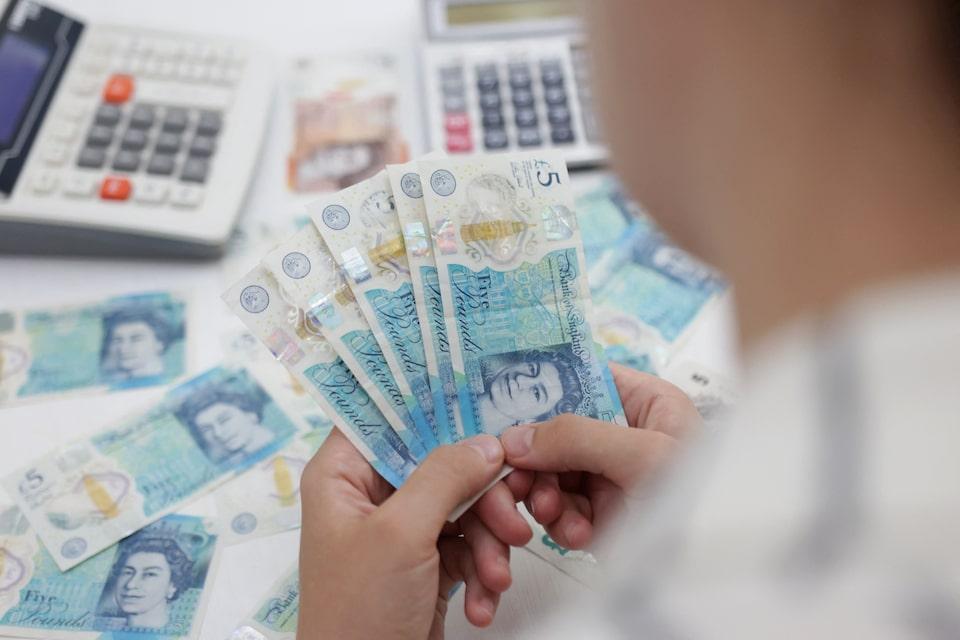
LONDON, Jan 23 (Reuters) - The pound fell slightly on Thursday as currency markets remained focused on U.S. President Donald Trump's threats of tariffs in his early days back in the White House. Sterling was last down 0.14% at $1.2311. It remains around 1.1% higher since the start of the week, reflecting investor relief that Trump has concentrated on other policy areas rather than tariffs since his inauguration on Monday. The euro was marginally higher against the pound at 84.55 pence. Britain's currency slid at the start of the year even as the country's bonds fell and yields shot higher, in what analysts said was a worrying breakdown of a relationship that reflected investor aversion to the UK. Sticky inflation, low growth, and depressed business confidence after Finance Minister Rachel Reeves's tax-and-spend budget in October have all been blamed for the volatile episode, which was also driven by a sell-off in U.S. government bonds. "Sterling has independently been repriced since the start of the year," said Jane Foley, head of FX strategy at Rabobank. "There's less news this week but I think the market is facing the fact that there's going to be less growth and higher inflation than previously imagined." Data this week has shown British pay growth stayed strong in the three months to November, although there were signs of labour market weakness, and that borrowing jumped in December as interest costs climbed. However, bond yields have returned to where they were at the start of the year after weaker than expected readings of underlying UK and U.S. inflation last week. Sterling rallied sharply on Trump's inauguration day on Monday after the Wall Street Journal reported a memo, later seen by Reuters, that Trump would hold off on tariffs on day one. Traders remain on edge, however, given Trump's habit of suddenly floating plans to ramp up trade levies. British officials hope the country will avoid the worst of U.S. tariffs, given trade with its ally is broadly balanced and that services exports outpace goods. Sign up here. https://www.reuters.com/markets/currencies/sterling-dips-traders-remain-cautious-trump-tariffs-2025-01-23/
2025-01-23 09:36
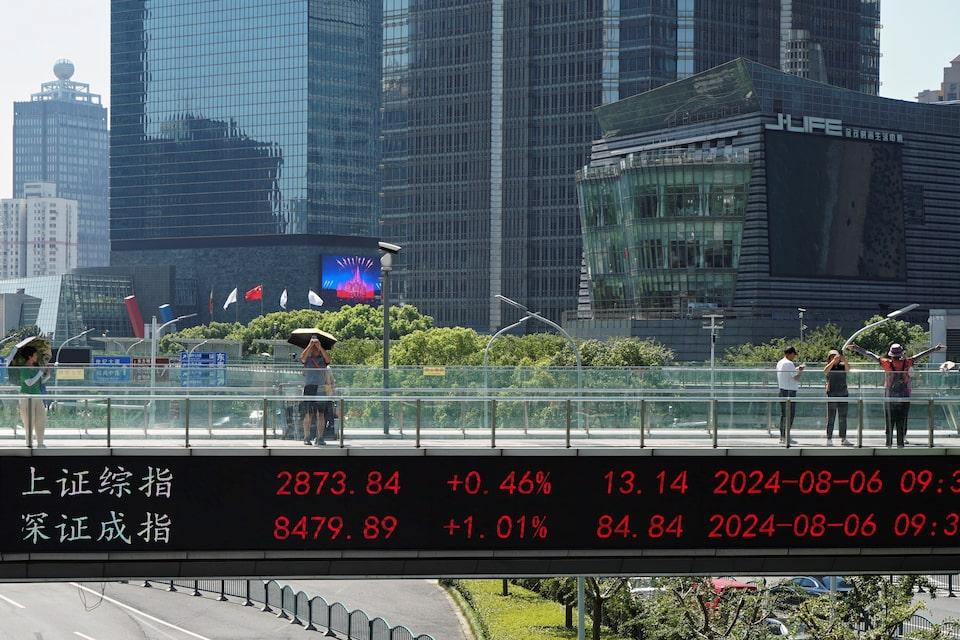
Dollar slides after Trump softens stance on China tariffs Chinese stocks get boost from Trump comments Yen volatile after expected rate hike from BOJ NEW YORK/LONDON, Jan 24 (Reuters) - The U.S. dollar slid on Friday and was set for its biggest weekly loss in over a year after President Donald Trump suggested a softer stance on tariffs against China, adding to uncertainty about the trade policy that kept equity markets on edge. Trump told Fox News on Thursday his recent conversation with President Xi Jinping was friendly and he thought he could reach a trade deal with China. "We have one very big power over China, and that's tariffs, and they don't want them, and I'd rather not have to use it, but it's a tremendous power over China," he said. The U.S. dollar dropped as much as 0.8% against a basket of currencies on Friday, before narrowing losses at the end of the day to be down 0.65%. But it still had its biggest weekly loss since November 2023, having lost 1.8% since Monday. Some analysts warned that the dollar could rise again if the U.S. tariff and interest rate policies shifted. "We think that the dollar has further to climb," said Simon MacAdam, deputy chief global economist at Capital Economics. "Its appreciation so far has reflected both the strength of the economic data in the U.S. relative to peer economies and investors’ assessment of Trump’s policies, both of which have contributed to a shift in interest rate differentials that has been favourable to the dollar." The MSCI index for world stocks (.MIWD00000PUS) , opens new tab ended little changed, while stocks on Wall Street were lackluster. The S&P 500 index (.SPX) , opens new tab was down 0.3%, the Dow Jones Industrial Average (.DJI) , opens new tab lost 0.3%, and the Nasdaq Composite shed 0.5%. China's stock markets and currency rallied on the back of Trump's comments, leaving the blue chip index (.CSI300) , opens new tab up 0.8% and the yuan strengthened against the dollar, which fell 0.7% to 7.239 in the offshore market. Oil prices stabilised and pared losses that were incurred after Trump said he will be asking Saudi Arabia and OPEC to lower oil prices. U.S. crude futures edged higher to $74.66 a barrel and Brent crude was up 0.3% at $78.50. LOW OIL PRICE BENEFITS Amelie Derambure, senior multi-asset portfolio manager at Amundi in Paris, said Trump's pro-America policies require lower oil prices. "These types of policies could also benefit other players in the world, like Europe for instance, if we have a lower oil price that’s going to benefit Europe as well – so at last there is something that he wants to implement that is not detrimental to Europe," she said. "It shows that he’s willing to negotiate and he wants to be maybe a bit more subtle this time." European stocks reflected this greater optimism. The STOXX 600 (.STOXX) , opens new tab initially rose 0.3% on the day, driven by a burst higher in luxury goods retailers after solid earnings from Burberry (BRBY.L) , opens new tab. It retreated by midday in New York to be flat. BlackRock CEO Larry Fink told a panel at the World Economic Forum in Davos that it could be time to start investing in Europe again. "There's too much pessimism on Europe," he said during a panel debate on the global economic outlook. "I believe it's probably time to be investing back into Europe," he said, adding there was still progress to be made in areas such as capital markets union. Surveys earlier on Friday showed euro zone businesses saw a modest return to growth at the start of the new year. In currency markets, the yen gained 0.2% against the dollar to 155.7 after the Bank of Japan raised interest rates to their highest since the 2008 global financial crisis. BOJ Governor Kazuo Ueda said the central bank will keep raising interest rates as wage and price increases broaden, adding that there was scope to push up borrowing costs further before they reach levels deemed neutral to the economy. Treasury yields, which have retreated from January's highs as some of the worry about a renewed spike in inflation has faded, were steady on Friday. The U.S. 10-year Treasury yield edged lower to 4.6194%, below last week's 14-month high of 4.809%. The European Central Bank and the Federal Reserve are due to meet next week as policymakers digest early moves of the Trump administration. The Fed is expected to keep interest rates on hold but the larger story unfolding will be how the central bank confronts early moves by Trump that are likely to shape the economy this year, including demands the Fed continue lowering borrowing costs. Sign up here. https://www.reuters.com/markets/global-markets-wrapup-6-pix-2025-01-23/