2025-01-15 07:17
LONDON, Jan 15 (Reuters) - The pound dipped slightly against the dollar after data that showed British inflation unexpectedly slowed to an annual rate of 2.5% in December and 0.3% month on month. The pound was last down 0.24% on the dollar at $1.2187. It was at $1.220 immediately before the data. It held steady on the euro at 84.45 pence. Core CPI which excludes volatile items such as energy and food, also came in below expectations at 3.2%. Sign up here. https://www.reuters.com/markets/currencies/pound-dips-slightly-dollar-after-british-inflation-unexpectedly-slows-2025-01-15/

2025-01-15 07:05
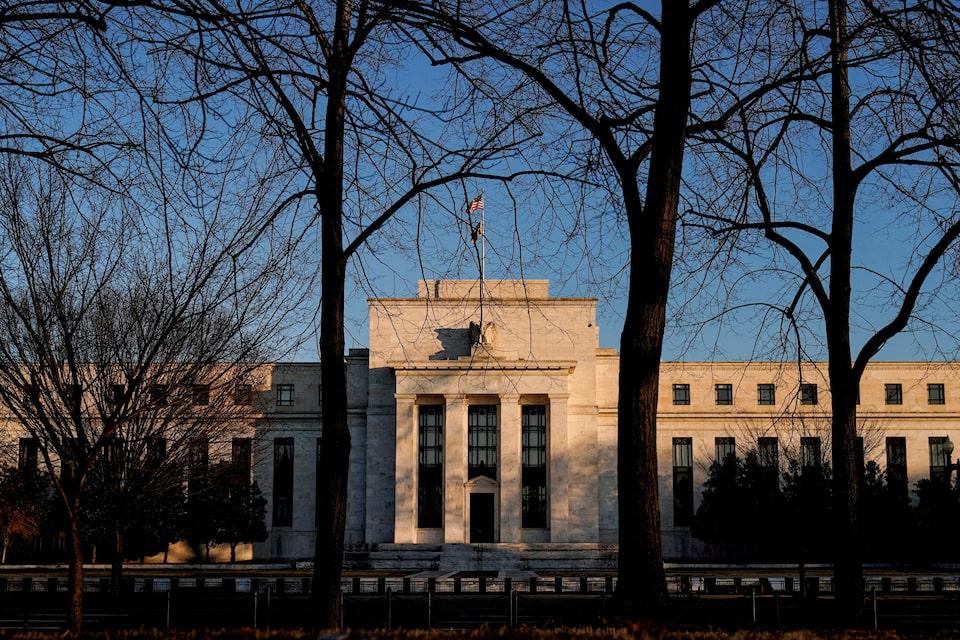
LONDON, Jan 15 (Reuters) - There's always the balance sheet. Battered bond markets are frantically repricing government borrowing costs to levels not seen for decades, raising fears that these ructions may undermine broader markets and even economies. The fundamental causes of the bond furore have been well aired: investor concern about sticky U.S. inflation, Federal Reserve interest rates and ballooning debt as a new U.S. presidential administration takes office. But anxious investors seem to be forgetting that central banks still have an incredibly powerful tool available: their balance sheets. Central banks are mandated to preserve financial stability. If they deem markets to be unjustifiably restive, they can mobilise their theoretically infinite balance sheets at any time. While the last two years have seen several major central banks roll debt off their books and sell it outright in some cases, policymakers can always retreat if needed. We have already seen this happen. The Bank of England temporarily reversed its balance sheet reduction to successfully stabilise the gilt market in late 2022. And the Fed did likewise during the regional bank wobble in March 2023. What's more, the Fed and other central banks already seem set to halt their balance sheet runoffs - or "quantitative tightening" (QT) - early this year. Analysts expect roughly half a trillion dollars more will be run off in the U.S. before the programme ends. This runoff has yet to cause U.S. bank reserves to run short or disturb broader money market liquidity, according to a new New York Fed monitoring tool. For reference, the Fed's $6.9 trillion balance sheet - down from a peak of over $9 trillion in 2022 - now represents about 24% of nominal U.S. gross domestic product output. That's 10 percentage points less than the peak but, extraordinarily after all the pandemic interventions, it's actually below where it was 10 years ago. BALANCE SHEET BALM? The likely end of QT this year then partially clears the decks for emergency interventions, if deemed necessary. That should also act as a balm for bonds if things got out of hand. Former New York Fed boss Bill Dudley noted last year that once a sustainable balance sheet level is found, the holdings should be concentrated in bills and short-term paper. As any necessary interventions would likely occur at the long end and could be easily funded by maturing bills, it would mean the overall size of the balance sheet would not change during a rescue. Still, the size of central bank balance sheets has clearly become politically sensitive. And the post-pandemic consensus among monetary policymakers and governments alike is that the past 15 years of balance sheet expansion should be consigned to history, with every effort made to keep monetary policy and financial stability issues separate. That may be easier said than done if things go sideways. And while markets may still get more volatile from here without spurring central bank action, the knowledge that this tool is available should remain a potentially powerful buffer. PRE-GFC VISTA Although the Federal Open Market Committee meeting minutes show the Fed did not discuss much about the balance sheet last month aside from a technical change to the reverse repo window, policymakers did note the market was pushing back its assumptions about when QT would end. Some Fed officials have also addressed the balance sheet question in light of this year's relentless bond selloff. Intriguingly, Kansas City Fed boss Jeff Schmid said last week the size of the balance sheet is still putting downward pressure on market borrowing costs, begging the question on where bond yields might be if QT weren't being wound down. Schmid estimated that 10-year yields , which are near 4.8% for the first time in 14 months, would be somewhere "between 50 and 100 basis points lower" if the Fed's balance sheet was substantially smaller. It is also useful to look at the so-called term premium in the Treasury market, which has climbed back toward levels seen before the Fed balance sheet was first expanded around the 2008 banking crash. The New York Fed's estimate of the term premium on 10-year Treasury yields has returned to as high 65 basis points for the first time since 2014. But that's far less than the average of 190 bps seen in the 20 years prior to 2008. While "counterfactuals" are hard to prove, it is fair to say the hefty balance sheet is continuing to throw its weight around. And it's also a safe bet that the Fed and other central banks will not be giving up the right to use these powerful tools any time soon. The opinions expressed here are those of the author, a columnist for Reuters. Sign up here. https://www.reuters.com/markets/rates-bonds/restive-bonds-still-have-balance-sheet-backstop-mike-dolan-2025-01-15/
2025-01-15 06:59
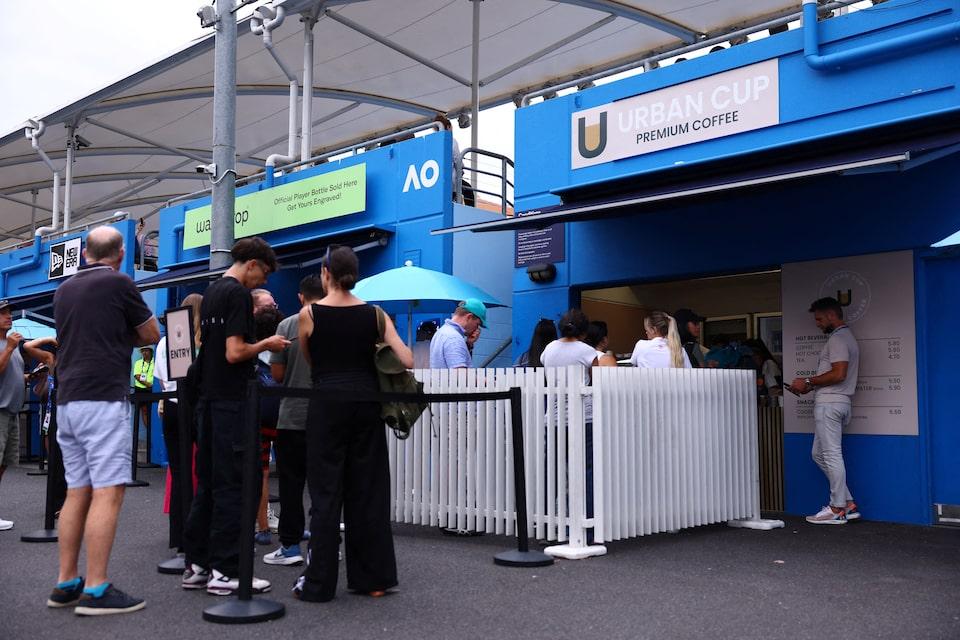
MELBOURNE, Jan 15 (Reuters) - Melbourne prides itself on serving up the world's best coffee, but finding a hot brew at the Australian Open has proved a challenge for some of the tens of thousands of fans attending this year's Grand Slam tennis tournament. Organisers have worked hard over the last decade to improve options for refreshment and an array of outlets at the Melbourne Park precinct now offers everything from gourmet food to cocktails. Yet long queues face fans looking to indulge their passion for the city's favourite beverage at the 15 coffee stores Tennis Australia says dot the 40-hectare (99-acre) site. "We need more coffee places open," said Katherine Wright, who has been coming to the tournament for the five years as she lined up for a hot drink near the Rod Laver Arena on Wednesday. "We are big coffee drinkers, especially Melburnians." The Australian Open attracts more than 90,000 fans a day early on in the tournament, when ground passes are relatively cheap, offering the chance to watch main draw action on the outer courts. Liz, another Melburnian, said she stood in line for half an hour for a cup of coffee on Sunday, when rain halted play for six hours on the outer courts. "This is a well-established global event," she added. "You actually need to be providing better service to the consumer." Melbourne imports about 30 tonnes of coffee beans a day, the Australian Science Education Research Association says, representing a surge of nearly eightfold over the past decade that is sufficient to brew 3 million cups of coffee. For Malgorzata Halaba, a fan who came from Poland on Sunday for her second Australian Open, finding one of those 3 million cups was a must. "It seems it took me a day and a half, and several kilometres of walking around the grounds, to find coffee," she said. "And jet-lagged as I am, coffee is a lifesaver." Sign up here. https://www.reuters.com/sports/tennis/coffee-lovers-find-grounds-complaint-australian-open-2025-01-15/
2025-01-15 06:53
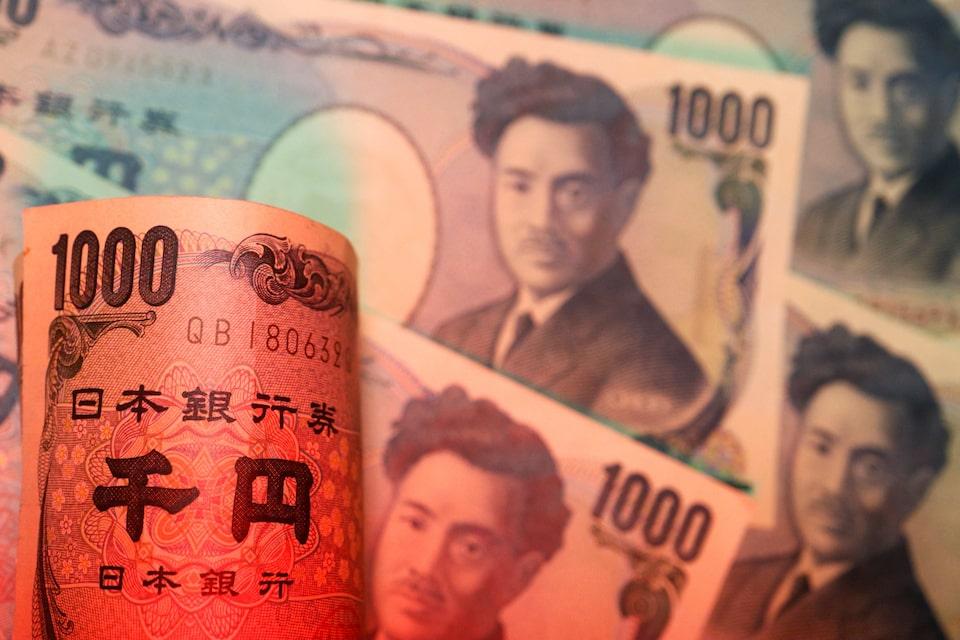
TOKYO, Jan 15 (Reuters) - Japan Finance Minister Katsunobu Kato on Wednesday reiterated that the government would take appropriate action against excessive movement on the foreign exchange market, as the yen has seen high volatility ahead of a key monetary policy meeting. "As I have said previously, we have been seeing rather sharp movement," Kato said at the Japan National Press Club. "The government has been alarmed over foreign exchange movement, including that driven by speculators." Kato made the remarks when asked how a potential interest rate hike by the Bank of Japan would affect foreign exchange, after BOJ Deputy Governor Ryozo Himino said on Tuesday the central bank would debate whether to raise rates at a policy meeting next week. BOJ Governor Kazuo Ueda on Wednesday reiterated the bank's plan to debate a potential rate hike at the upcoming meeting. The yen subsequently rose by roughly 0.5% against the U.S. dollar to hit 157.225. Kato said the finance ministry will closely monitor the BOJ's discussions next week. "We expect the BOJ to pursue appropriate monetary policy" for inflation to sustainably achieve its 2% target, he said. Sign up here. https://www.reuters.com/markets/currencies/japan-take-appropriate-action-against-excessive-fx-moves-finance-minister-says-2025-01-15/
2025-01-15 06:25
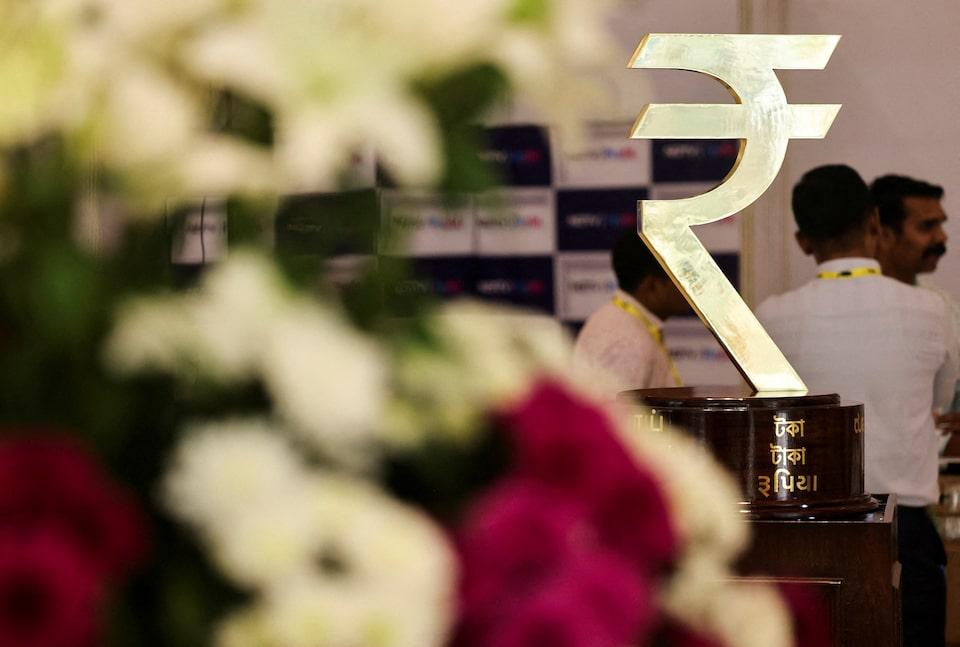
Rate cut forecasts volatile as U.S. dollar jumps after Trump win India cbank seen intervening heavily Tuesday to shore up rupee Policy tradeoffs: rate cut could spur inflation, outflows MUMBAI, Jan 15 (Reuters) - Some analysts are pushing back expectations for interest rate cuts in India as the rupee's slump to record lows fans worries about inflation, even as growth in Asia's third-largest economy slows. The weaker currency could add to elevated inflation through costlier imports, while a cut in interest rates could dampen already tepid capital flows, they said. A majority of analysts polled by Reuters in November had expected Indian rates to be cut in February at the earliest, but the rapid currency slump has prompted many analysts to change their calls. The rate panel next meets on Feb 5-7. The rupee has lost about 3% of its value against the surging U.S. dollar in a little over two months since Trump's victory, a sharp contrast to nearly two years of relative stability and muted volatility. "We push back our call for 50 basis points of repo rate cuts to April-June from February-April," Standard Chartered said in a note this month, citing external sector volatility as one of the reasons. According to the Reserve Bank of India's estimates, a 5% depreciation in the rupee can push up inflation by 35 basis points over several months. "As the first MPC (monetary policy committee) meeting under the new Governor Sanjay Malhotra comes closer, some doubts have risen over the potential risks to inflation from currency pressures," said Rahul Bajoria, chief India economist at Bank of America. Bajoria, however, said that muted underlying demand would prevent a major spillover from a weaker exchange rate into inflation as consumer pricing power remains weak "But currency pressures do matter and can have an impact on monetary policy conduct," he said. "The February MPC remains live for a cut ... but FX weakness is creating policy uncertainty." Rupee volatility has also been fuelled by the selling of equities and debt by foreign investors in recent weeks. Overseas investors have pulled out over $4 billion from local stocks and bonds so far this month, adding to the near $11 billion of outflows in the previous quarter, a complete turnaround from the $30 billion worth of buying witnessed between January and September 2024. Losses in the rupee come despite significant intervention from the RBI, which has seen its foreign exchange reserves fall by around $50 billion in since early November to $634.59 billion as of Jan. 3. Cutting rates now could further narrow the interest rate differential between India's benchmark 10-year bond yield and the 10-year U.S. Treasury yield which has dropped to a two-decade low. "The interest rate differential vs USTs, indeed, makes incremental debt FII inflows difficult," said Aastha Gudwani, chief India economist at Barclays said. Gudwani expects the central bank to cut rates by 25 basis points in February. "That said, we believe a cut at this moment will support the growth outlook and likely attract FII equity inflows." India forecast annual growth of 6.4% in the year ending in March, the slowest in four years, while December retail inflation eased to a four-month low of 5.22%. "Allowing the currency to depreciate will add to imported inflation risks, Nomura analysts said in a note this month, adding that they still expect a 25 bps rate cut rates in February. "If inflation is near target, despite currency weakness, and growth below trend, then we would expect the MPC to support growth." Sign up here. https://www.reuters.com/markets/currencies/plummeting-rupee-could-delay-india-rate-cuts-analysts-say-2025-01-15/
2025-01-15 06:20
78 bodies, 246 survivors pulled from mine Police blocked supplies of food and water for months Trade unions: state allowed miners 'to starve to death' Government calls illegal mining 'war on economy' STILFONTEIN, South Africa, Jan 15 (Reuters) - At least 78 dead bodies have been pulled from an illegal gold mine in South Africa where police cut off food and water supplies for months, in what trade unions called a "horrific" crackdown on desperate people trying to eke out a living. A total of 246 survivors, some of them emaciated and disorientated, have been brought to the surface and immediately arrested for illegal mining and immigration since a court-ordered rescue operation began on Monday. Volunteers who went down to the mine, located 2 km (1.5 miles) underground near Stilfontein, southwest of Johannesburg, told police late on Wednesday they could not see anyone left in the tunnels, a police spokesperson told reporters at the site. Rescuers would keep working on Thursday to make sure all bodies and survivors had been recovered, the spokesperson said. Earlier, there were fears dozens or even hundreds more men could still be trapped. The South African Federation of Trade Unions accused the state on Tuesday of allowing miners "to starve to death in the depths of the earth". "These miners, many of them undocumented and desperate workers from Mozambique and other Southern African countries, were left to die in one of the most horrific displays of state wilful negligence in recent history," it said in a statement. Mametlwe Sebei, a trade union leader who has been trying to help the miners, said police had begun attempting to force the miners up to the surface in August by removing a pulley system used to deliver food and water supplies to them. Sebei said some miners had died crawling through flooded tunnels in an attempt to reach shafts that would have allowed them to climb out. Police said 1,576 miners had got out by their own means between August and the start of the rescue operation. All were arrested and 121 of them have already been deported, they said. "We've never blocked any shafts. We've never blocked anyone from coming out," said Athlenda Mathe, national spokesperson for the South African police, speaking at the site earlier on Wednesday. "Our mandate was to combat criminality and that is exactly what we've been doing," she said. "By providing food, water and necessities to these illegal miners it would be the police entertaining and allowing criminality to thrive." 'TAKING A CHANCE' Illegal mining is common in parts of gold-rich South Africa. Typically, undocumented miners known as zama zamas - from an isiZulu expression for "taking a chance" - move into mines abandoned by commercial miners and seek to extract whatever is left. Some are under the control of violent criminal gangs. Most of the miners at Stilfontein were from Mozambique, though some also came from Zimbabwe and Lesotho. Only 21 of them were South Africans, police said. As the death toll has mounted, so has criticism of the authorities, though the government has defended the siege as part of a necessary crackdown on illegal mining. "It's a criminal activity. It's an attack on our economy by foreign nationals in the main," Mining Minister Gwede Mantashe said at the site on Tuesday. He has said illegal mining cost South Africa over $3 billion last year. But the Democratic Alliance, the second-biggest party in the ruling coalition led by the African National Congress, said on Wednesday the crackdown at the mine had got "badly out of hand" and called for an independent inquiry. A court ruled in December that volunteers should be allowed to send essential supplies down to the miners, and a separate ruling last week ordered the state to launch the rescue. None of the rescued survivors were hospitalised and all were taken into police custody. "If you come out and you are able to walk they take you straight to the cells," said Mzukisi Jam, a civil society activist, who has been at the site throughout the rescue operation. Only two of the bodies have been identified and claimed by their families, said Mathe. Rescue efforts were in their third day on Wednesday, with a red cylindrical metal cage being lowered into the mine to extract survivors and corpses. The cage can hold about a dozen people or dead bodies at once. Mannas Fourie, CEO of a private rescue firm involved in the operation, told Johannesburg's Radio 702 that each round trip took up to 45 minutes. "If you stand at the sides you can see the bodies being taken out of the cage and it's incredibly distressing," said Jessica Lawrence of civil rights group Lawyers for Human Rights, who was at the scene. Sign up here. https://www.reuters.com/world/africa/body-count-south-african-mine-rescue-operation-rises-60-2025-01-15/