2025-01-03 07:40
SINGAPORE, Jan 3 (Reuters) - PacificLight Power (PLP) said on Friday it has received approval from the Singapore government to build a new hydrogen-fuelled gas power plant on Jurong Island. The project forms part of the city state's plans to decarbonise its power grid, which relies on mostly on natural gas to generate power. With approval from Singapore's Energy Market Authority (EMA), PLP will build, own, and operate a hydrogen-ready combined cycle gas turbine (CCGT) facility to supply at least 600 megawatts (MW) of power from January 2029, the firm said in a statement. The island currently houses one CCGT facility owned by PLP, which has been operating since 2014 with a capacity of 830 MW. The new facility, to be built on a greefield site, will be able to use at least 30% hydrogen at inception and 100% hydrogen in the future, and will also include a large-scale Battery Energy Storage System (BESS), the company said. The site can accommodate a second CCGT unit and could integrate carbon capture, utilisation and storage (CCUS) technology in future, it added. PLP is also constructing a Fast Start power generating unit to provide 100MW of power by the second quarter of 2025. Such units can ramp up power output in a short period to ensure continued power supply when unexpected events occur. Together with Indonesia's Medco Power Global (IPO-MEPO.JK) , opens new tab and Singapore-based investment firm Gallant Venture (GLVT.SI) , opens new tab, PLP is also developing a project to import 600MW of solar power from Indonesia's Bulan Island to Singapore. PLP is owned by shareholders under Hong Kong-based First Pacific Group (0142.HK) , opens new tab and the Philippines' power distribution firm Meralco PowerGen Corp. Sign up here. https://www.reuters.com/business/energy/pacificlight-power-build-hydrogen-ready-gas-power-plant-singapore-2025-01-03/

2025-01-03 07:30
KAMPALA, Jan 3 (Reuters) - The Ugandan shilling traded in the same position on Friday from the previous session, with appetite generally subdued across board, traders said. At 0713 GMT commercial banks quoted the shilling at 3,673/3,683, same level as Thursday's close. Sign up here. https://www.reuters.com/markets/currencies/ugandan-shilling-stable-dollar-demand-muted-2025-01-03/

2025-01-03 07:19
Trump says UK making 'a very big mistake' Britain is increasing windfall tax on North Sea energy producers Government aims to quadruple offshore wind capacity by 2030 LONDON, Jan 4 (Reuters) - U.S. President-elect Donald Trump on Friday criticised the British government's energy policy with a demand the country "open up" the ageing North Sea oil and gas basin and get rid of wind farms. The North Sea is one of the world's oldest offshore oil and gas basins where production has steadily declined since the start of the millennium. At the same time, it has become one of the world's largest offshore wind regions. "The U.K. is making a very big mistake. Open up the North Sea. Get rid of Windmills!" Trump said in a post on his social media platform Truth Social. Climate-sceptic Trump has long opposed wind farms. In 2015, he unsuccessfully fought plans to construct one near his luxury golf course in Scotland. His post on Friday included a link to a report from last November about U.S. oil and gas producer APA Corp's (APA.O) , opens new tab unit Apache's plans to exit the North Sea by year-end 2029. The company expects North Sea production to fall by 20% year-on-year in 2025. Prime Minister Keir Starmer's Labour government won last year's elections with a pledge to build up Britain's low-carbon economy. The government aims to quadruple , opens new tab offshore wind generation capacity by 2030 to 60 gigawatts as part of goals to lower carbon emissions and improve air quality. In October, the British government said it would increase a windfall tax on North Sea oil and gas producers to 38% from 35% and extend the levy by one year. The government wants to use the revenue from oil and gas to raise funds for renewable energy projects. Oil and gas companies have said the higher tax rate could lead to a drop in investments. Some companies have sold assets while others merged operations and sought to diversify to other regions. Asked about Trump's remarks, a spokesperson for Britain's government said it would continue to prioritise a "fair, orderly and prosperous transition in the North Sea in line with our climate and legal obligation". "We need to replace our dependency on unstable fossil fuel markets with clean, homegrown power controlled in Britain – which is the best way to protect billpayers and boost our energy independence," the spokesperson added. Claire Coutinho, the opposition Conservative party's shadow energy minister, said in a post on X in response to Trump's comments that "no other major economy is shutting down its domestic oil and gas production... It's totally mad". DECLINING OIL, SLOWING WIND Oil companies have been exiting the North Sea to focus on newer basins. Production has declined from a peak of 4.4 million barrels of oil equivalent per day (boed) at the start of the millennium to around 1.3 million boed now. Britain and countries in mainland Europe have overseen major offshore wind farm development, but the sector's growth has stalled as costs ballooned due to technical and supply chain problems as well as higher interest rates. Some developers been reconsidering their investments in offshore wind, or have assumed impairments, due to the rising cost of building wind farms that can be more than 100 km (60 miles) offshore. Orsted (ORSTED.CO) , opens new tab, the world's biggest offshore wind farm developer, trimmed its investment and capacity targets last year. Britain has a target to largely decarbonise its power sector by 2030, which will mean reducing its reliance on gas-fired power plants and rapidly increasing its renewable power capacity. Sign up here. https://www.reuters.com/business/energy/trump-calls-open-up-north-sea-get-rid-windmills-2025-01-03/
2025-01-03 06:56
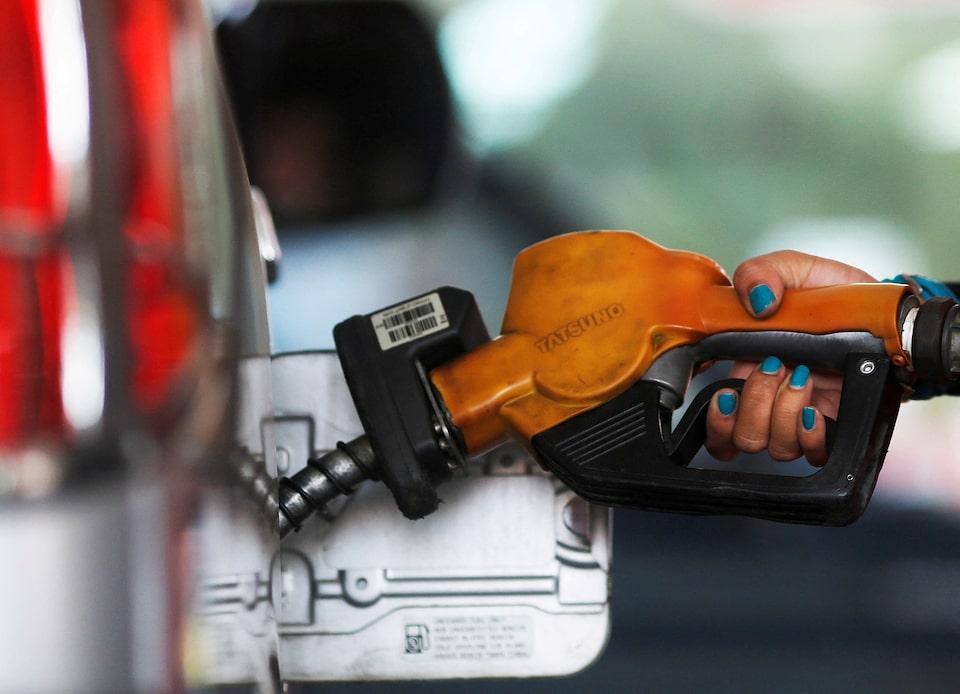
Biodiesel allocation decree was awaited by industry Indonesia had planned to launch higher biodiesel mix on Jan. 1 Palm oil benchmark contract rose 1% after previous fall Government aims for 50% biodiesel mix in 2026 JAKARTA, Jan 3 (Reuters) - Indonesia Energy and Mineral Resources Minister signed a decree on Friday allocating 15.6 million kilolitres (KL) of biodiesel for 2025 distribution, while giving the industry until the end of next month to adapt to the higher level of the fuel in the mix. Indonesia, the world's largest exporter of palm oil, had planned to launch the mandatory requirement of 40% palm oil fuel in biodiesel on Jan. 1, up from 35% now. "The ministerial regulation has been signed," the minister Bahlil Lahadalia told reporters, adding the government was working to increase the mandatory biodiesel mix to 50% next year. Eniya Listiani Dewi, a ministry senior official, said biodiesel producers and fuel retailers will be given until Feb. 28 to adapt to the B40 mix. She said the delay was because of technical challenges linked to subsidies for the fuel. The non-implementation on Jan. 1. had led to a 2.6% drop in the Malaysian palm oil benchmark contract on Thursday. On Friday, it recovered by around 1%. Fuel retailers and biodiesel producers had said they were unable to draw up contracts for biodiesel distribution without the decree. The biodiesel allocation for 2025 indicated an increase from 2024's estimated biodiesel consumption of 12.98 KL, ministry data showed on Friday. Of the total allocation for this year, 7.55 million KL is for the public service obligation (PSO), which covers sectors such as public transportation, whose sales will be subsidised by the country's palm oil fund. "The remaining allocations will be sold at market price. The non-PSO allocation is set at 8.07 million KL," Bahlil said, adding the fund could not subsidise the price gap between the palm oil and fossil fuels for the overall allocation. BPDPKS, the agency in charge of collecting and managing the palm oil funds, estimated in November B40 would require a 68% subsidy increase. To help finance that, Indonesia plans to increase its export levy for crude palm oil (CPO) to 10% from the current 7.5%, but for that to happen, another official regulation is required. Sign up here. https://www.reuters.com/markets/commodities/indonesian-firms-get-1-12-months-implement-new-b40-biodiesel-mix-2025-01-03/
2025-01-03 06:08
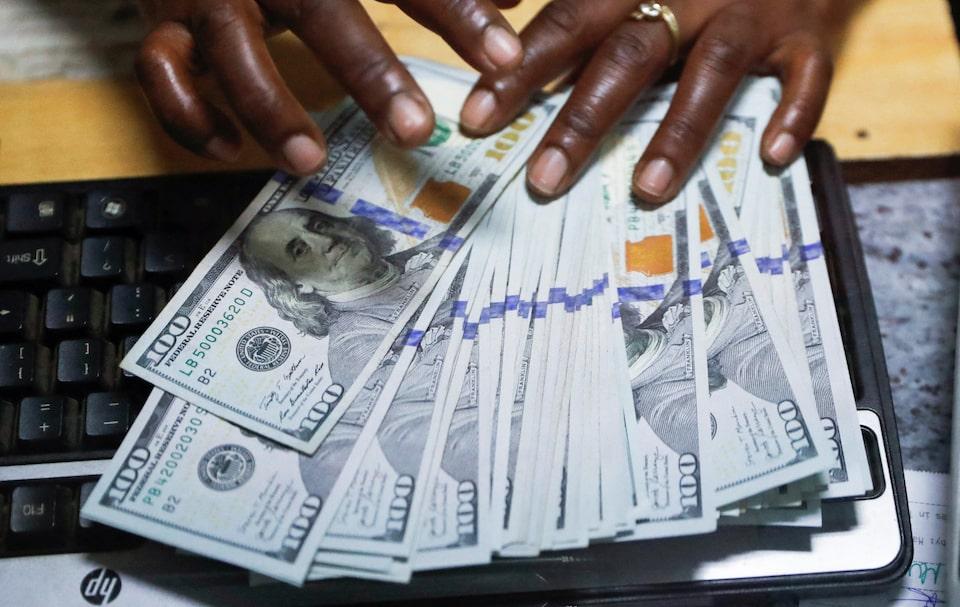
Dollar lower, but on track for best week in two months Dour euro zone outlook weighs on euro this week Traders price in about 40 bps of Fed rate cuts in 2025 NEW YORK, Jan 3 (Reuters) - The dollar dipped on Friday but was on track for its strongest weekly performance in a month on expectations that the U.S. economy will continue to outperform its peers globally this year and that U.S. interest rates will stay relatively higher. A still solid labor market and stubbornly high inflation have lifted Treasury yields in recent weeks and boosted demand for the U.S. currency. New policies under the incoming Donald Trump administration, including business deregulation, tax cuts, curbs on illegal immigration and tariffs, are also expected to boost growth and add to price pressures. The dollar index was last down 0.28% on the day at 108.91, after hitting a two-year high of 109.54 on Thursday. It is on track for a weekly gain of 0.85%. Despite recent dollar gains there remains considerable uncertainty over when policies will be introduced by the new U.S. government, and what their ultimate impact will be. That could pause the dollar rally in the near-term. "We're likely to see a bit of a dollar pullback as the administration comes in because all these proposed tariffs - they're going to take some time to implement and we don't actually know if all of these proposals are going to be implemented or not," said Helen Given, FX trader at Monex USA in Washington. "As we move through the second half of this calendar year I think we're going to see some more dollar strength," Given said. The dollar briefly pared losses after data on Friday showed that U.S. manufacturing moved closer to recovery in December, with production rebounding and new orders rising further. The euro faces a weaker growth outlook and may be hurt by U.S. tariffs, with the European Central Bank expected to cut rates further than the Federal Reserve this year. Traders are pricing in 100 basis points rate cuts by the ECB by year-end, and only a less than certain chance of 50 basis points of cuts by the Fed. Uncertainties including the French budget battle and German elections are also weighing on the single currency. The euro was last up 0.39% at $1.0305 but was headed for a 1.22% weekly decline, its worst since early-November. Sterling gained 0.41% to $1.2431. It was on track to lose roughly 1.15% for the week, the most since early November. The dollar slid 0.26% to 157.11 Japanese yen , holding just below a five-month high of 158.09, reached in December. The Japanese currency has suffered from the wide interest rate differential between the U.S. and Japan, with the Bank of Japan's caution over further rate increases spelling more pain for the yen. China's onshore yuan hit its weakest level in over a year at 7.3199 per dollar, as falling yields and expectations of more domestic rate cuts continued to weigh on the currency. In cryptocurrencies bitcoin gained 1.59% to $98,658. Sign up here. https://www.reuters.com/markets/currencies/dollar-headed-best-week-since-november-us-rates-economic-outlook-2025-01-03/
2025-01-03 06:07
U.S. stocks close higher; S&P, Nasdaq snap losing streak Dollar dips after four sessions of gains U.S. Treasury yields pare declines after manufacturing data NEW YORK, Jan 3 (Reuters) - Global stocks rallied on Friday but remained on track for a weekly decline, while the dollar stalled after its recent rally but found some support from a stronger-than-expected U.S. manufacturing survey. U.S. stocks secured strong gains, with both the S&P 500 and Nasdaq up more than 1% to snap a five-session streak of declines, their longest since mid-April. All 11 major S&P sectors rose, led by a 2.42% jump in consumer discretionary (.SPLRCD) , opens new tab stocks. The U.S. currency rallied late last year as investors bet President-elect Donald Trump's policies would drive growth and inflation, meaning fewer interest rate cuts ahead from the Federal Reserve and higher U.S. Treasury yields, while European central banks are set to keep cutting rates. The Fed's December policy statement led investors to reduce expectations for the number and size of cuts from the central bank in 2025. "The nice thing about today's attempt is that it's kind of persisting into the afternoon even though yields are a couple basis points higher across the curve so it's not like it's coming from just relief on the Treasury yield front that could be reversed next week," said Ross Mayfield, investment strategist at Baird in Louisville, Kentucky. "A lot of this weakness over this month has been related to higher yields and a higher dollar so it's nice to see the kind of follow through today even on a day where yields are kind of holding firm." The Dow Jones Industrial Average (.DJI) , opens new tab rose 339.86 points, or 0.80%, to 42,732.13, the S&P 500 (.SPX) , opens new tab rose 73.92 points, or 1.26%, to 5,942.47 and the Nasdaq Composite (.IXIC) , opens new tab rose 340.88 points, or 1.77%, to 19,621.68. For the week, the S&P 500 shed 0.48%, the Nasdaq fell 0.51% and the Dow lost 0.6%. MSCI's gauge of stocks across the globe (.MIWD00000PUS) , opens new tab advanced 7.52 points, or 0.90%, to 847.45 - on track for its biggest daily percentage gain since Nov. 7 - but still poised for its third weekly decline in the past four. In Europe, equities closed lower, with the pan-European STOXX 600 (.STOXX) , opens new tab index down 0.49%, weighed by luxury companies and alcohol providers, but able to record a second straight weekly gain. Trading volume was light at the end of a holiday-shortened week. The dollar index , which measures the greenback against a basket of currencies, fell 0.29% to 108.90 after briefly paring losses as the Institute for Supply Management (ISM) said a key manufacturing index increased more than expected to 49.3 last month, the highest reading since March, from 48.4 in November. The greenback was poised for its fifth straight week of gains, having hit a two-year high of 109.54 in the prior session. The euro was up 0.43% at $1.0309 but set for its fifth straight weekly loss and its largest weekly percentage drop since mid-November. Against the Japanese yen , the dollar weakened 0.15% to 157.29 while the British pound strengthened 0.36% to $1.2424. The yield on benchmark U.S. 10-year notes was up 2.7 basis points at 4.602%, also paring declines after the manufacturing data. The yield remained above the 4.5% mark that has proven problematic for equities after reaching an eight-month high of 4.641% earlier this week. Richmond Federal Reserve bank president Tom Barkin said the central bank's benchmark policy rate should stay restrictive until it is more certain that inflation is returning to the Fed's 2% target. U.S. crude jumped 1.13% to settle at $73.96 a barrel and Brent settled up 0.76% to $76.51 per barrel, buttressed by colder European and U.S. weather and additional economic stimulus announced by China. Sign up here. https://www.reuters.com/markets/global-markets-wrapup-1-2025-01-03/