2025-12-16 15:01
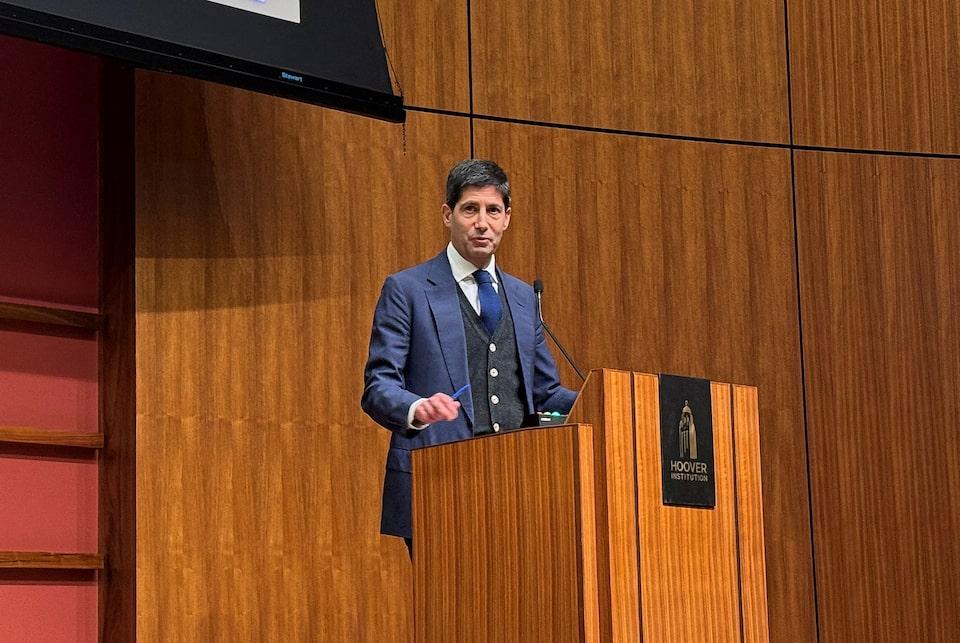
WASHINGTON, Dec 16 (Reuters) - Both Kevin Warsh and Kevin Hassett are qualified to lead the Federal Reserve, U.S. Treasury Secretary Scott Bessent said on Tuesday, adding that any candidate President Donald Trump picks for the job needs to have "an open mind". "They are both very, very qualified," Bessent said in an interview with Fox Business Network. Sign up here. Trump told the Wall Street Journal last week that he was leaning toward either Warsh, a former Fed governor, or Hassett, director of the White House National Economic Council. "We've got to have someone who has an open mind," Bessent said. In particular, he said, they should "break this idea that sometimes, often, the Fed has that growth creates inflation. Growth does not create inflation. The friction creates inflation when there is more demand in the economy than supply." Trump also told the Journal that he wanted to at least be consulted on decisions about interest rates, a departure from the central bank's independent operations. Current Fed chair Jerome Powell, whose term as chair ends in May, has come under blistering attack from Trump for not lowering interest rates faster. Bessent rejected criticism that Hassett was too close to Trump to maintain the Fed's independence and should be disqualified. "This idea that people don't have agency and can't make up their own minds, is wrong," Bessent told FBN's "Mornings with Maria" program. (This story has been corrected to change the show name to 'Mornings,' not 'Morning,' in paragraph 8) https://www.reuters.com/business/us-treasurys-bessent-kevin-warsh-kevin-hassett-both-qualified-fed-2025-12-16/
2025-12-16 14:26
NEW YORK, Dec 16 (Reuters) - The pace of U.S. job growth rebounded in November after a drop in the prior month, but the unemployment rate increased to 4.6%, indicating the labor market continues to show signs of softening, while expectations the Federal Reserve was unlikely to cut rates in January remained largely unchanged. Nonfarm payrolls increased by 64,000 jobs in November, after a drop of 105,000 in October as more than 150,000 federal employees who took deferred buyouts departed, Labor Department data showed on Tuesday. Economists polled by Reuters had forecast 50,000 jobs added last month. Sign up here. The unemployment rate was 4.4% in September. A separate report from the Commerce Department showed retail sales were flat in October, just below the estimate of economists polled by Reuters calling for a rise of 0.1% and followed a downwardly revised 0.1% gain in September. Both reports were delayed by the 43-day government shutdown. MARKET REACTION: STOCKS: S&P E-minis initially moved slightly higher before reversing course and were last down 7.75 points, or 0.11% BONDS: Treasury yields briefly moved lower before erasing declines, with the yield on the benchmark U.S. 10-year note up 1 basis point to 4.182% FOREX: The dollar index extended declines before paring its drop and was last down 0.17% at 98.10 COMMENTS: WILL COMPERNOLLE, MACRO STRATEGIST, FHN FINANCIAL, CHICAGO; “I don't think there's much signal we can get from today, and I think the bond market agrees with me so far. The most important thing I would say is the rise in the unemployment rate to 4.6%. But even there, if you look at the BLS report they have a technical note that says for a number of reasons the margin of error for November is higher. And because this is a low 4.6%... you could take a rosier view and say it's not all that different from 4.5%. And that has been the median projected unemployment rate for the end of 2025 for the last three SEPs. “It looks like the labor market is still gradually cooling rather than showing an acceleration in deterioration. So, I don't think this data overall changes our understanding of how the economy is doing or how the Fed is going to react to it.” KIM FORREST, CHIEF INVESTMENT OFFICER, BOKEH CAPITAL PARTNERS, PITTSBURGH: "A lot of the data that came out points to this not terrible economy - it's not great, but it's not terrible. The government shutdown greatly affected the data, but it looks like the private sector is holding up. "The rise in salaries isn't that great either. So, a lot of this points to better than feared numbers. Still not strong, but at this point in the cycle, especially given the government shutdown, that consumer spending didn't decline as much as feared. Layoffs weren't as much as feared, and the economy is still chugging along in some respects and I think that's good enough for the S&P 500 and the other indexes to finish out the year relatively strong, all things considered. "We needed this data just to see especially consumer sales or retail sales, that's really kind of important. We don't have a whole lot of companies telling us what's going on. At least the more consumer-oriented companies, they're right in the thick of doing holiday selling, so they can't really tell us. And we needed to know how that consumer is doing. And I think that's one of the not only bright spots, but important data elements that we're getting today." JAMIE COX MANAGING PARTNER, HARRIS FINANCIAL GROUP, RICHMOND, VIRGINIA (via email): "The jobs data show further evidence that the Federal Reserve is behind the curve and will need to reduce rates again in January. Try as they might to sell the purchase of short-term Treasuries as not QE, it clearly was and needed to be." ADAM HETTS, HEAD OF MULTI-ASSET INVESTING, JANUS HENDERSON, DENVER (via email): "November NFP at +64k, slightly above +50k consensus, continues the general downtrend in job growth without signaling new recession risks. This print alone shouldn't meaningfully shift expectations for the path of Fed cuts, nor is it low enough to create new downward pressure on risk assets. While October NFP was much lower, at -105k, government payrolls were the discorporate contributor, as widely expected, and private payrolls stayed positive which makes the October headline less concerning.” BRIAN JACOBSEN, CHIEF ECONOMIST, ANNEX WEALTH MANAGEMENT, MENOMONEE FALLS, WISCONSIN: "The nonfarm payroll data drought is over, but the data show the labor market was a barren wasteland basically since April. The more recent data from ADP indicates the labor market may have turned a corner in mid-November, though. In October, the DOGE effect was in full effect with a drop in government employment of 162,000. All the employees who accepted a deferred resignation fell off the payrolls then, so they were on the payrolls, but not working up to that point. "The more dovish members of the Fed might feel a little vindicated as the unemployment rate has moved up to 4.6%, which is at the high-end of the participants’ guesses of where it would end this year. A January cut may not be likely, but a March cut can’t be ruled out. "In October, private sector payrolls expanded by 52,000, but we all know that because of the benchmark revisions announced back in August that the real number is probably closer to -5,000. Despite that, retail sales held up pretty well in October. Consumers will do what they do best, which is consume, even in the face of job market uncertainty. "October and November could be the inflection point for the labor market to emerge from the rough patch and to start getting some traction in 2026. The labor market lags GDP, so cap-ex spending and profit growth can help pull the labor market along." PETER ANDERSEN, FOUNDER, ANDERSEN CAPITAL MANAGEMENT, BOSTON: "Investors were looking for no surprises, something that would have some variability but nothing material. "When the unemployment rate moves up at all like this, it does fuel the potential for continued rate cuts. But as we've seen in the past, this is not a consistent trend. "We are now seeing some dissension in the Fed committee. There are people that were against lowering the most recent rate cut and also there's now considerable focus on who is going to lead the Fed. So right now the Fed is at most distracted as it possibly could be, and I don't think that there will be any major movement decisions until all that resolves." KAY HAIGH, GLOBAL CO-HEAD FIXED INCOME AND LIQUIDITY SOLUTIONS, GOLDMAN SACHS ASSET MANAGEMENT, NEW YORK (via email): "The Fed is unlikely to put much weight on today’s report given data disruptions. Chair Powell commented last week that the report would likely be affected by shutdown-related distortions, making it a less reliable gauge of the labor market’s health than usual. The report on December’s employment data, released in early January ahead of the next meeting, will likely be a much more meaningful indicator for the Fed when it comes to deciding the near-term policy trajectory." SEEMA SHAH, CHIEF GLOBAL STRATEGIST, PRINCIPAL GLOBAL INVESTORS, LONDON (via email): " (Fed Chair) Powell is likely to view today’s jobs data with a fair degree of skepticism. Not only are there likely to be some data distortions, but tighter immigration policies mean the headline November payroll figure should not be taken at face value - the labor market is not as weak as those numbers might initially suggest. That said, the larger-than-expected rise in the unemployment rate will still trigger some creeping concern within the Fed. "The labor market is cooling - probably not sharply, but enough to warrant some additional monetary easing and, at the very least, a move towards neutral policy rates. The Fed may prefer to see further evidence of economic weakness before its next cut, but based on today’s data, more rate reductions are likely next year than the single cut currently pencilled into the dot plot." https://www.reuters.com/business/view-job-growth-tops-expectations-november-retail-sales-unchanged-october-2025-12-16/
2025-12-16 14:24
Dec 16 (Reuters) - Ford's $19.5 billion writedown tied to a reset of its electric-vehicle business highlights the mounting challenges for legacy automakers as they navigate waning demand and a changed regulatory backdrop, analysts said on Tuesday. The writedown was seen as the most visible sign to date of the auto industry's pullback from a technology carmakers wholeheartedly embraced early this decade, exacerbated by President Donald Trump's cancellation of electric-vehicle tax breaks. Sign up here. Ford Motor's (F.N) , opens new tab shares rose 1.3% before the bell on Tuesday following the announcement. Tesla (TSLA.O) , opens new tab edged 0.6% lower and General Motors (GM.N) , opens new tab was flat. U.S.-listed shares of Stellantis were up about 1%. Washington's action has deepened the decline in sales, forcing the Detroit Three automakers - Ford, GM and Chrysler-parent Stellantis (STLAM.MI) , opens new tab - to roll back their ambitious EV plans in the U.S. and pivot back to their hybrids and gasoline-powered vehicles. "Ford's strategic reset is a clear acknowledgement of shifting market realities and consumer demand," Morgan Stanley analysts said. The charges are a "painful reset for the company" but one that is essential to align itself with consumer interests which would eventually improve profitability and returns for Ford, Morgan Stanley said. U.S. sales of EVs fell about 40% in November following the expiration of a $7,500 consumer tax credit on September 30. The incentive had been in place for more than 15 years to stoke demand. Since September, Ford shares gained 14%, GM rose 34% and Tesla advanced about 7%. GM took a $1.6 billion charge in October as it adjusted its EV factory plans, and warned that it would likely take more charges in the future. Stellantis has also backtracked on some of its EV plans, axing a scheduled electric Ram pickup truck and leaning into hybrids. "This move by Ford was to be expected (and should be expected for others) given a new reality on the dramatically weaker U.S. EV environment, driven by weaker demand and heavily reduced compliance requirements," Barclays analysts said. It is, however, a step in the right direction, and can help Ford improve profits, they added. https://www.reuters.com/business/autos-transportation/fords-195-billion-ev-writedown-signals-tough-road-ahead-legacy-carmakers-2025-12-16/

2025-12-16 13:53
Dec 16 (Reuters) - Artificial intelligence is expected to remain the centerpiece of investment strategies, global brokerages outlined in their outlook for 2026, with the benchmark S&P 500 index (.SPX) , opens new tab on pace to post another year of gains. "We think fears of a collapse in the AI narrative are overdone and expect economic expansion to continue for yet another year," Barclays strategists said. Sign up here. Still, risks loom: inflation surprises, lofty valuations and tariff tensions could spark corrections, even as analysts bet on AI and the U.S. Federal Reserve's monetary policy easing to keep the bull market alive. Strategists predict global economic growth to be resilient. Global GDP is expected to grow between 2.4% and 3.3%, as per estimates. The benchmark index will climb nearly 12% to 7,490 by end-2026, marking a fourth straight year of advances if 2025 closes higher, according to a Reuters poll. Following are forecasts from some top brokerages on economic growth and the performance of U.S. stocks in 2026: Forecasts for stocks: Real GDP Growth: * UBS Global Research and UBS Global Wealth Management are distinct, independent divisions in UBS Group * Wells Fargo Investment Institute is a wholly owned subsidiary of Wells Fargo Bank https://www.reuters.com/business/finance/trend-mainstay-ai-cement-its-place-core-2026-investment-strategies-2025-12-16/

2025-12-16 12:24
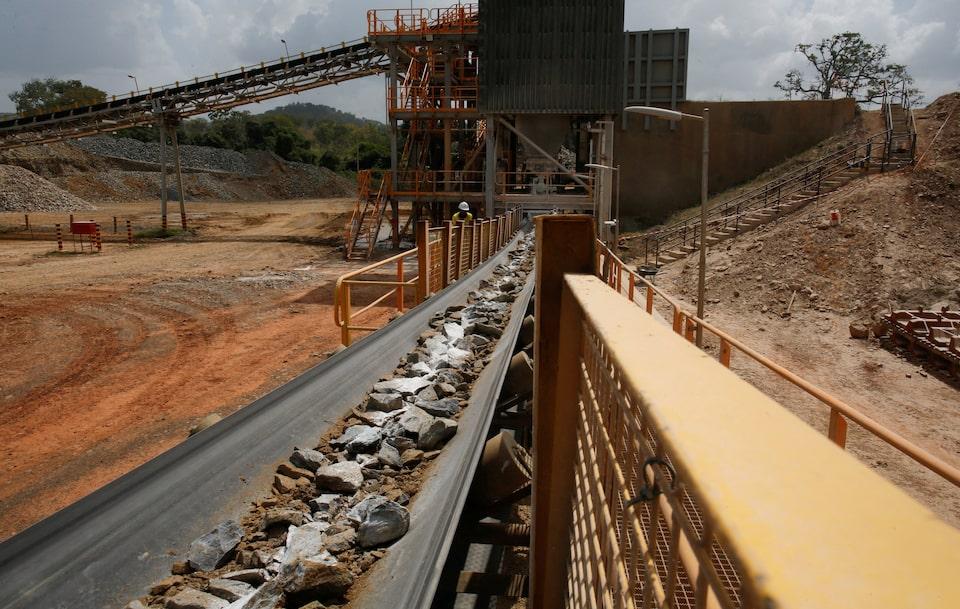
Miners initially resisted, citing contract protections against fiscal changes West African states increase fiscal pressure amid rising commodity prices Gold prices surge over 65% this year, influencing royalty rate adjustments ACCRA, Dec 16 (Reuters) - Gold mining companies in Ivory Coast have begun paying a new 8% royalty on revenue, backdated to January, after months of disputing the legality of the levy, three industry sources told Reuters. Reuters previously reported that the world's top cocoa producer, which is seeking to diversify its economy, replaced the previous 3% to 6% range linked to contract terms with the flat 8% rate. Sign up here. Miners initially refused to pay, arguing that the move was unlawful because their contracts shielded them from fiscal changes and entered negotiations with the government to have the new royalty scrapped. However, companies have since started paying after the government refused to change its position, said the three people familiar with the matter, who declined to be named because they were not authorised to speak to the media. “Everyone has now agreed to pay – the question is whether penalties apply,” said one executive, adding that firms were rushing to settle to avoid fines. Ivory Coast’s mines chamber and its mines and finance ministries did not immediately respond to requests for comment. David Whittle, West Africa chief operating officer at Fortuna Mining (FVI.TO) , opens new tab, confirmed compliance. “We’ve made our payments of 8%, backdated from when it was introduced. We didn’t see negotiations heading anywhere," he said. "The gold price has taken care of it,” Whittle said, referring to its roughly 65% rally this year. Key mining companies in Ivory Coast include Perseus Mining (PRU.AX) , opens new tab, Endeavour Mining (EDV.L) , opens new tab, Fortuna, Allied Gold (AAUC.TO) , opens new tab, and newcomers like Montage Gold (MAU.TO) , opens new tab. As gold and other commodity prices surge, West African states have been increasing fiscal pressure on miners, straining relations with operators, who warn the measures could curb investment. While military-led Guinea, Mali, Niger and Burkina Faso are taking direct steps, such as revoking licenses or seizing assets, to extract concessions from operators, other countries such as Ghana and the Ivory Coast have been introducing new laws and levies to boost state revenues. https://www.reuters.com/sustainability/ivory-coast-miners-start-paying-higher-royalties-after-failed-resistance-sources-2025-12-16/
2025-12-16 12:22
Shell seeks buyers for 37.5% Schwedt stake by January Russia's Rosneft owns majority stake in refinery Germany manages Schwedt refinery amid Rosneft ownership freeze Liwathon Group shows renewed interest in Schwedt investment WARSAW/FRANKFURT, Dec 16 (Reuters) - Shell has restarted efforts to sell its stake in Germany's PCK Schwedt oil refinery, three sources familiar with the matter told Reuters, aiming to exit an asset entangled in Western sanctions on Russia and Berlin's need to secure fuel supplies. Russian state-controlled Rosneft (ROSN.MM) , opens new tab owns 54.17% of the refinery which provides much of Berlin's fuel, but was stripped of control by Germany after Russia invaded Ukraine and energy ties between Germany and Russia were severed. Sign up here. Shell (SHEL.L) , opens new tab opened a data room this month for prospective buyers of the 37.5% it owns in the Schwedt refinery (C}RO7309414219) , opens new tab, a year after a previous attempt to sell it to Britain's Prax Group failed, said two of the people. The global energy firm was seeking offers for the stake by the end of January, one of the sources said. Shell declined to comment. LIWATHON GROUP IS INTERESTED In October, the German government clinched a last-minute deal to exempt the refinery from U.S. sanctions on Rosneft, allowing Schwedt to operate until the end of April under the current license. Among parties interested in the refinery is Liwathon Group, a privately owned energy trader with oil and refined oil product terminals in Estonia and the Bahamas, said Tibor Fedke, a partner at German law firm Noerr, who regularly advises Liwathon in Germany. Shell has long been trying to exit Schwedt and in 2021 chose Liwathon group's Austrian unit Alcmene as a buyer, before the war in Ukraine put on hold any deal relating to the refinery. Liwathon's interest in German investments "includes, among other things, a possible investment in PCK Schwedt, but is not limited to this," said Fedke. Liwathon had no immediate comment. GERMANY MUST EXTEND TRUSTEESHIP EVERY SIX MONTHS The refinery, with capacity to refine around 230,000 barrels per day, has been a problem for the German government, which took control but not ownership of it in 2022, concerned that expropriation could escalate the conflict with Moscow. Since then, Germany has had to extend trusteeship for the refinery every six months, hoping Rosneft would make good on plans to sell its stake while ensuring security of supply. https://www.reuters.com/business/energy/shell-seeks-buyers-stake-germanys-schwedt-refinery-sources-say-2025-12-16/