2026-02-12 07:11
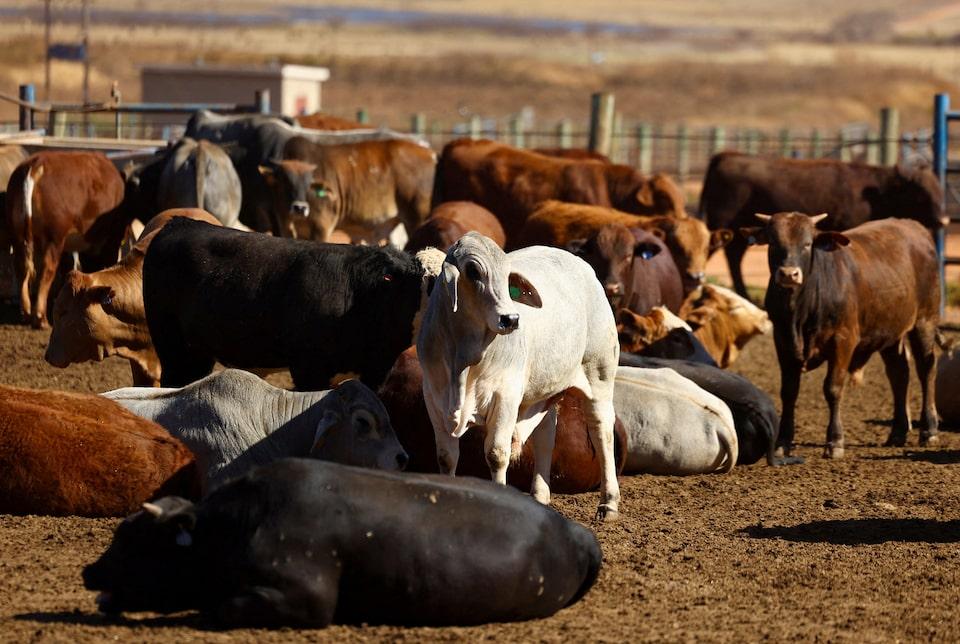
Beef exports fell 26% in 2025 Shipments to China down 69% after ban Viral disease impacts productivity, raises costs MOOI RIVER, Feb 12 (Reuters) - South Africa's beef exports fell 26% in 2025, despite growing global demand, partly due to China's ban on the African country's red meat products as it battles its worst foot-and-mouth disease outbreak in recent memory. The country has faced resurgent foot-and-mouth infections since early 2025 when the disease spread to seven of its nine provinces. Sign up here. Beef shipments to China fell 69% to 1,687 metric tons last year following the ban imposed in May, according to statistics from industry body Red Meat Industry Services (RMIS) seen by Reuters on Wednesday. China was South Africa's third biggest external market in 2024 after the United Arab Emirates and Jordan. When the highly contagious viral disease broke out on James Kean's dairy farm in Mooi River late January, his normal seasonal farm expenses had increased by 1 million rand ($62,985.38) as he fought to keep infections out. Kean says some of his peers have spent three years' worth of veterinary products in just one month. Milk production on his farm declined to about 23,000 litres a day from about 26,000 litres within days of the outbreak, as infected cows eat less and are less productive. "The cost to the economy is enormous. The (national) livestock population could halve in two years, in which case food prices are going to rise as well," Kean told Reuters during a visit to his farm. Kean complains that the government has failed to contain the disease, a concern shared by many farmers. The government plans to vaccinate 80% of South Africa's national herd, which is estimated at 12 million cattle. On February 6, it rolled out South Africa's first foot-and-mouth vaccine in 20 years as it seeks to ease shortages of the inoculation doses. The country is currently importing most of its foot-and-mouth vaccines from Botswana, Turkiye and Argentina. "We are hit now by one of the worst outbreaks at a time when we don't have the capacity to produce the vaccines that are required," agricultural economist Wandile Sihlobo told Reuters. ($1 = 15.8767 rand) https://www.reuters.com/business/healthcare-pharmaceuticals/south-african-farmers-count-mounting-losses-foot-and-mouth-disease-rages-2026-02-12/
2026-02-12 06:44
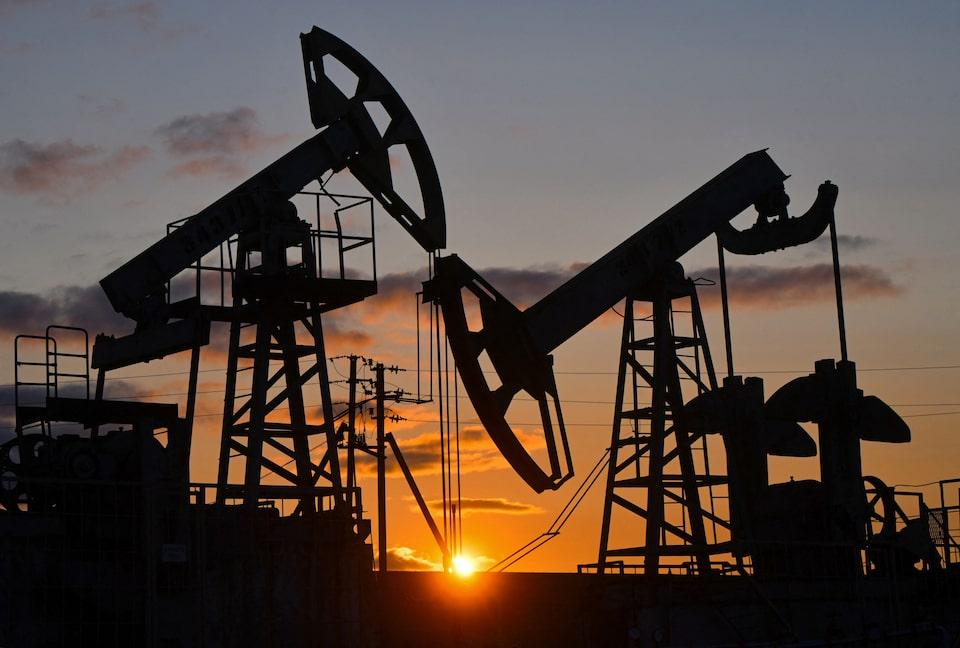
Cuba is facing a severe fuel shortage due to US actions Island warned that jet fuel was no longer available Russia last supplied Cuba with oil in February 2025 MOSCOW, Feb 12 (Reuters) - Russia is preparing to dispatch crude oil and fuel cargoes to Cuba in the near future, Izvestia newspaper said on Thursday, citing the Russian embassy in Cuba. Cuba has experienced a fuel crunch as the United States has moved to cut off the communist-run nation's oil supply. The country has warned international airlines that jet fuel will no longer be available on the island in the latest sign of fast-worsening condition. Sign up here. Cuba has historically relied on Venezuela to provide much of its jet fuel, but the Caribbean island nation has not received any crude or refined products from its top ally since mid-December, when the U.S. moved to block the South American nation's exports. "Supply of crude and oil products is expected from Russia to Cuba in the near future as humanitarian aid," a Russian embassy diplomat was quoted as saying by the newspaper. It said the last time Russia supplied Cuba with oil was in February 2025 when it delivered a cargo of 100,000 metric tons. Russia has said the fuel situation in Cuba was critical and U.S. attempts to "suffocate" the island's economy were causing many difficulties, pledging to act against any sort of military intervention and expressing Moscow's solidarity with Cuba and Venezuela. Russia also said on Wednesday it would suspend flights to Cuba once Russian tourists leave the island. https://www.reuters.com/business/energy/russia-deliver-crude-oil-fuel-cuba-soon-izvestia-newspaper-reports-2026-02-12/
2026-02-12 06:40
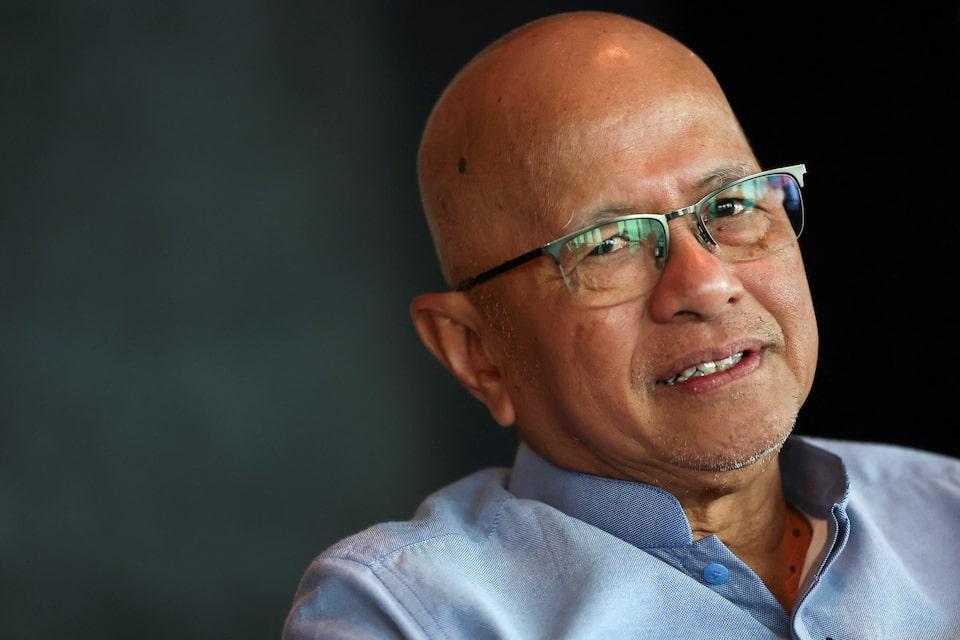
Company president says exploration, acquisitions planned in Southeast Asia, Middle East Medco targeting up to 170,000 BOEPD in 2026, highest ever output Sakakemang block development accelerated for 2027 gas delivery Innovation has helped cut CO2 emissions by 20% - Medco president Medco to restart ethanol plant to align with Indonesia biofuel agenda JAKARTA, Feb 12 (Reuters) - Indonesia's biggest listed oil and gas company PT Medco Energi Internasional (MEDC.JK) , opens new tab plans "aggressive" expansions in Southeast Asia and the Middle East as it bets on rising energy demand, particularly from data centres, its president director said. Medco last year announced the acquisition of the Sakakemang and South Sakakemang blocks on Sumatra island, only months after it increased its ownership in the adjacent Corridor gas block to 70% for $425 million. Medco has also been awarded Malaysia's Cendramas production sharing contract. Sign up here. "The downstreaming activities (pushed by) the government, the construction of many data centres, new power plants, everything - it all requires new gas," Medco's president director Hilmi Panigoro said in an interview at his office in Jakarta. "Despite this big pressure of climate change, we are still bullish on oil and gas, especially in this part of the world," he said. "The demand for all fossil-based energy, whether it is coal, gas, or oil is still increasing." 'NOT PLANNING TO BE FLAT' Medco produced about one-fifth of Indonesia's gas output in 2024. It has interests in 26 oil and gas assets globally and reported $1.76 billion revenue in the first three quarters of 2025, the latest data available. It is targeting production of 170,000 barrels of oil equivalent per day (BOEPD) in 2026, its highest-ever output. "I'm not planning to just be flat. I want to grow ... So my direction for oil and gas business development is to stay aggressive, find as much as possible new reserves, acquisition, exploration, development, EOR," Panigoro said, referring to a technique to extract more oil and gas from depleting reservoirs. Panigoro did not disclose how much he was setting aside for acquisitions. Medco already has a presence in countries including Thailand, Oman, and Tanzania. Panigoro said Medco aims to accelerate development of the Sakakemang gas block and deliver the first supplies by the end of 2027 to capture growing demand in Indonesia's Sumatra and Java - the world's most populous island. ENVIRONMENTAL CONCERNS Panigoro said his company was looking to innovate to reduce greenhouse gas emissions from its operations. "In the last five years, we have reduced our CO2 emissions by 20% - but our production is doubled," he said, adding, "the challenge for a fossil-based energy company like us is to make sure we do that, to basically help this climate change issue. Medco is also tapping into opportunities arising from Indonesia's plan to make it mandatory to add bioethanol to gasoline, he added. The company last week signed a deal with a unit of state energy firm Pertamina to restart Medco's ethanol plant. President Prabowo Subianto's energy self-sufficiency agenda includes wider adoption of biofuels. Energy Minister Bahlil Lahadalia estimated that Indonesia would need 1.4 million kilolitres of bioethanol to implement the mandatory blend of 10% bioethanol in gasoline. https://www.reuters.com/business/energy/indonesias-medco-expansion-plans-bet-rising-energy-demand-southeast-asia-2026-02-12/
2026-02-12 06:23
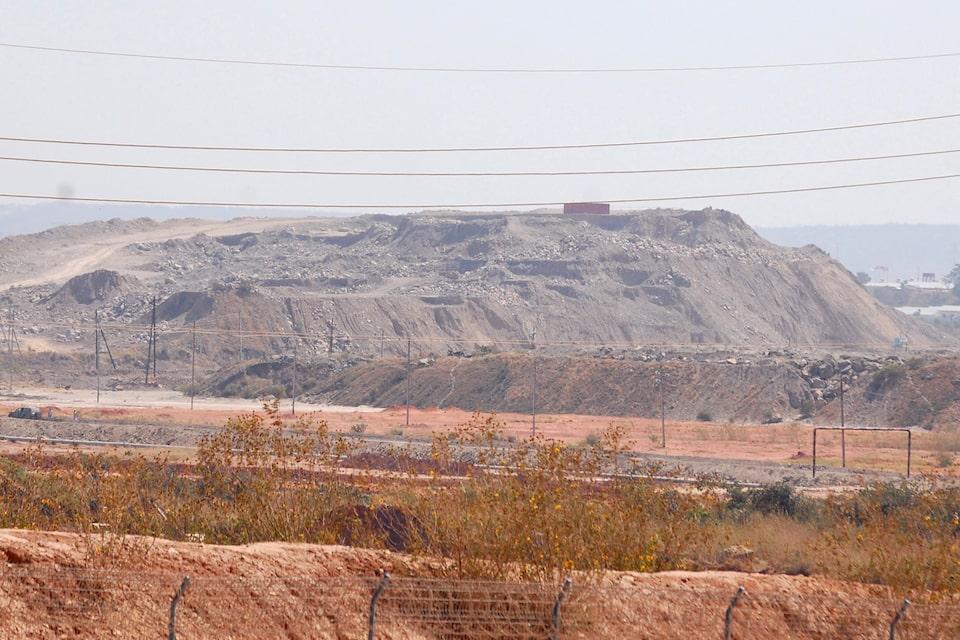
Reuters Open Interest (ROI) CAPE TOWN, Feb 12 (Reuters) - Two multi-billion dollar rail projects in Africa. One headed west, the other east. One backed by Western countries, the other by China. Both aiming to ship vast quantities of critical minerals. Welcome to the new scramble for Africa. The Lobito rail corridor will cost up to $6 billion by the time it's planned to be finished by 2030, with around 1,700 kilometres (1,050 miles) of track taking mainly copper and cobalt from the Democratic Republic of the Congo (DRC) and Zambia west to the Angolan port of Lobito. Sign up here. Much of the funding is coming from the United States and Europe and aims to upgrade the existing railway and build new lines in order to boost the annual capacity to 4.6 million metric tons per year. Heading the other way east to Tanzania is the TAZARA railway, a 1,860 kilometre line that links the same mineral-rich parts of Zambia and the DRC to a port on the Indian Ocean, which offers shorter sailing times to China and other Asian markets. Similar to the Lobito project it is a rehabilitation of an existing colonial-era railway and its Chinese backers are slated to spend around $1.4 billion to upgrade its annual capacity to 2.4 million tons. These two projects are emblematic of how the world's great powers are seeking to source and control the minerals needed to power industrial economies and the energy transition. But they also show the contrasting ways that Western countries and China are trying to achieve their aims of security of supply. Stuck in the middle are African countries, blessed by their resource endowment but cursed by a lack of coordinated policies on how to ensure they are not exploited by stronger nations, as well as too often being hobbled by poor governance and an inability to offer consistent and reliable investment regimes. What is different this time compared to the colonial conquest of Africa two centuries ago is that African countries have far more choice. They can set the rules and decide who they want to partner with, and if they get it correct then they stand to benefit from increased investment, jobs and revenue from taxes and royalties. The models being offered are slightly different, insofar as the Western countries largely prefer private operators, coupled with public partnerships and funding in order to build mines and transport infrastructure. U.S. WOOS One of the major shifts at this week's Mining Indaba conference in Cape Town was how the United States has changed tack, eschewing the bombastic and combative rhetoric of President Donald Trump and trying to focus on promoting trade and investment. It is perhaps a tacit acknowledgement that insulting countries that you need for their resources is not a winning policy, but U.S. officials were out in force touting their capital for investment and their willingness to effectively re-risk mining projects by guaranteeing offtake and prices. If the United States does go down this path, and African countries can look past the prior Trump insults and gutting of U.S. aid, there is a real possibility that new mines and infrastructure will proceed. The planned U.S. "vault" of critical minerals will need African resources and a meeting of more than 50 countries last week shows the Trump administration appears to be serious about building and securing supplies of metals. Will the efforts by the United States, and to a lesser extent the European Union, be enough to wean African states from Chinese investment, which has tended to be more all-encompassing as Chinese companies explore, build, operate and transport minerals. An example is the massive Simandou iron ore mine in Guinea, currently ramping up to its 120 million tons a year capacity. For years the project languished as Western companies struggled to mount a viable economic plan to make it work. But Chinese investment and technical skill has brought the project to life, albeit with a minority partner in Rio Tinto (RIO.AX) , opens new tab, and the ore from Simandou will flow almost entirely to China as a result. The Chinese also have a strong first-mover advantage in Africa, having been active for decades. But the question for African countries is whether China's investment in extracting the continent's minerals has been mutually beneficial, or whether it has been skewed towards Beijing. The follow-up question is whether Western countries and their trading and mining companies will offer anything substantially better. What is almost certain is that more investment is heading to exploit Africa's mineral endowment, which will boost competition and de-risk projects. Is the prize big enough to make everybody a winner? Yes, but it will take considerable effort and cooperation and the track record for that in Africa is patchy at best. Enjoying this column? Check out Reuters Open Interest (ROI), your essential new source for global financial commentary. ROI delivers thought-provoking, data-driven analysis of everything from swap rates to soybeans. Markets are moving faster than ever. ROI can help you keep up. Follow ROI on LinkedIn , opens new tab and X , opens new tab. The views expressed here are those of the author, a columnist for Reuters. https://www.reuters.com/markets/commodities/can-africa-win-west-china-scramble-minerals-2026-02-12/
2026-02-12 06:05
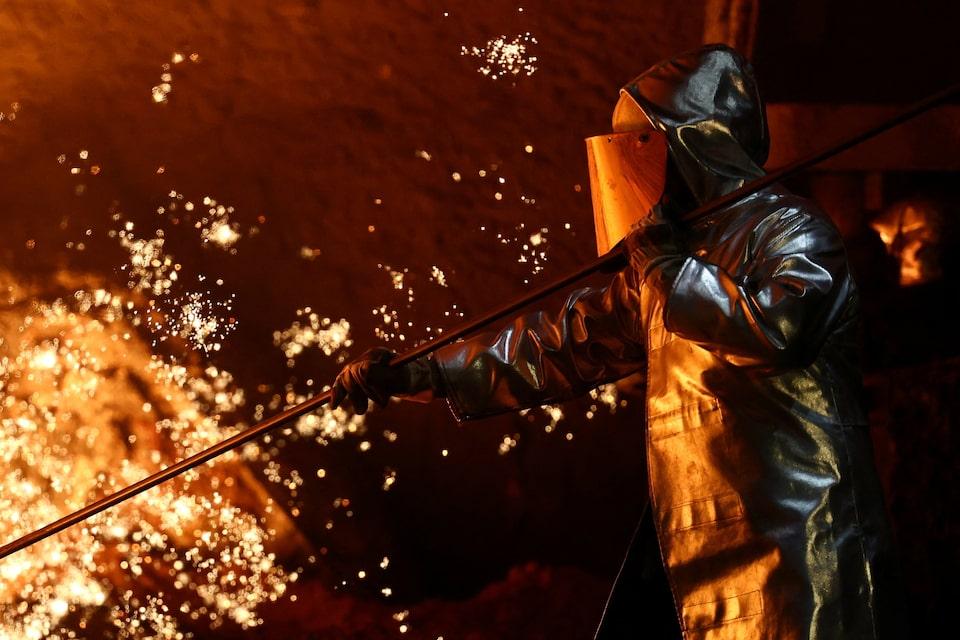
FRANKFURT, Feb 12 (Reuters) - Thyssenkrupp (TKAG.DE) , opens new tab unveiled 401 million euros ($477 million) in expenses to fund far-reaching job cuts at its steel division, as the German industrial conglomerate continues talks with India's Jindal Steel International over a sale of the business. As a result of the charges, Thyssenkrupp reported on Thursday a wider first-quarter net loss of 353 million euros. Analysts polled by LSEG had, on average, expected a net profit of 32 million euros for the period. Sign up here. Thyssenkrupp said that a recently reached agreement to pull out of the steel joint venture HKM earlier than planned could add another disposal loss "in the low to mid three-digit million range". The ongoing restructuring at Thyssenkrupp Steel Europe (TKSE) is aimed at accelerating negotiations with Jindal Steel International on a potential sale of TKSE, a volatile business that its parent has sought to divest for years. A solution for the steel business, closely tied to Germany's industrial history, is seen as the centrepiece of Thyssenkrupp CEO Miguel Lopez's strategy to turn the sprawling group into a holding. Such efforts have already seen the company divest and separately list its electrolyser and warship divisions, lifting Thyssenkrupp's stock price despite a tough macroeconomic environment for the car-parts-to-materials firm. ($1 = 0.8411 euros) https://www.reuters.com/business/thyssenkrupp-books-477-million-restructuring-charge-steel-division-2026-02-12/
2026-02-12 06:04
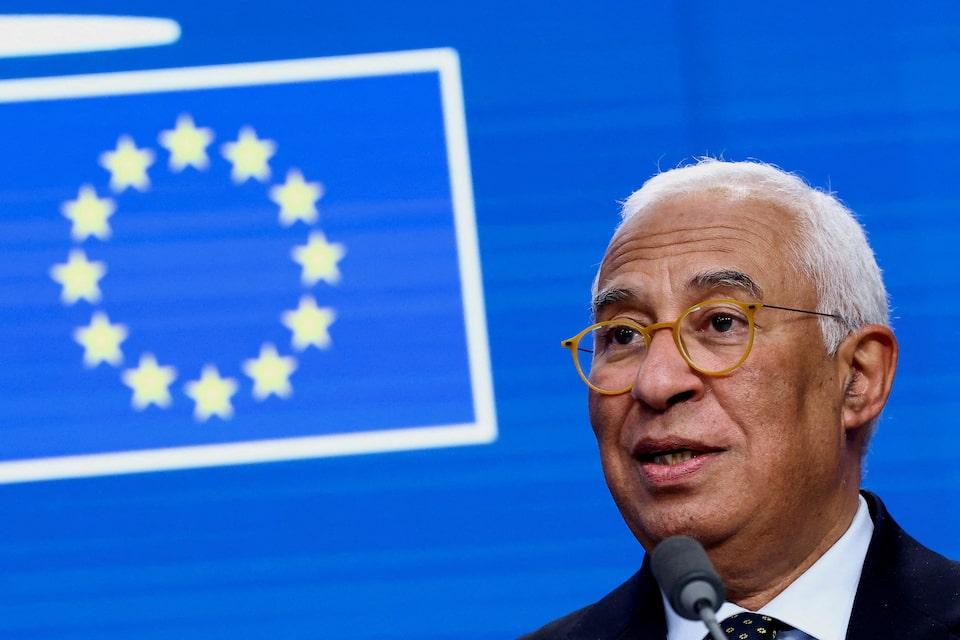
EU Growth has lagged major economic rivals Bloc contending with tariffs, restrictions on key minerals Report by Draghi seen as blueprint to boost competitiveness Von der Leyen wants leaders to commit to timetable at March summit ALDEN BIESEN, Belgium, Feb 12 (Reuters) - European Union leaders are due to hold frank discussions in a Belgian castle on Thursday on how to ensure the bloc is not left trailing the United States and China economically or squeezed by tariffs and export curbs by its global rivals. The bloc is contending with Donald Trump's trade war and Chinese restrictions on exports of critical minerals at a time when it needs greater wealth to decarbonise and digitise its economy and strengthen its defences against Russia. Sign up here. EU growth has persistently lagged that of the United States and China and EU productivity and innovation in fields such as AI has fallen short. DRAGHI REPORT BLUEPRINT European Council President Antonio Costa will host leaders for a brainstorming "retreat" at the 16th-century Alden Biesen castle, in eastern Belgium, to discuss what action to take. Former Italian prime ministers Mario Draghi and Enrico Letta, authors of two influential reports in 2024 on the EU's competitiveness challenge and its single market, have been invited to share their views. The Draghi report has been taken up as a blueprint the EU should follow, but the European Policy Innovation Council think tank says only 15% of its recommendations have so far been implemented, although around 50% were either partially implemented or in progress. The retreat is due to focus on the EU's ambitious trade diversification agenda and on streamlining regulations that businesses lambast. Another focus will be deepening the EU's single market. Letta said his key message to leaders would be to commit to a deadline of completing the now-fragmented single market by 2028. "I think that is the only way to respond to Trump and to external pressures that the European Union is under from China, Russia and the U.S. in different ways," he told Reuters. 'SITUATION DIRE, OUTCOME NOT INEVITABLE' European Commission President Ursula von der Leyen said on Wednesday she wanted leaders to commit to a clear timetable at their next summit in March. A day before the retreat, industry CEOs met in the port city of Antwerp and some 900 companies signed a declaration calling for bold and urgent action. "While the situation is dire, the outcome is not inevitable," it read. Andrea Renda, director of research at think tank CEPS, said Europe could still compete with China and the U.S. with more coordination and pragmatism. It had skills, capital, innovative start-ups and a quality of life to attract top talent, he said. "What is missing, besides deep capital markets integration, is the prioritisation of funding in areas of excellence, rather than spreading resources too thin across the territory of the Union," he said. https://www.reuters.com/world/china/eu-leaders-brainstorm-how-compete-with-us-china-castle-retreat-2026-02-12/