2025-10-29 06:14
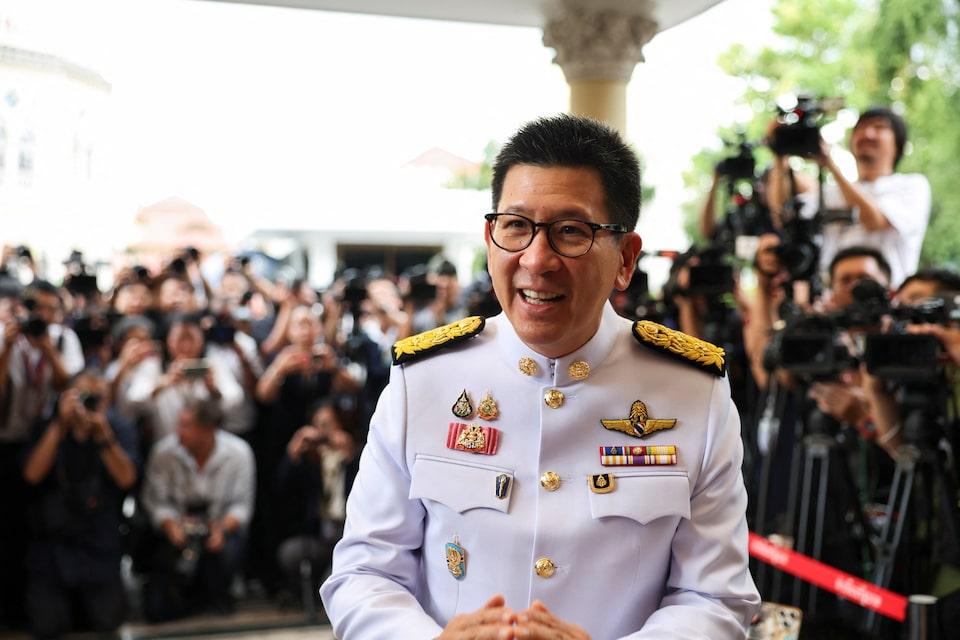
BANGKOK, Oct 29 (Reuters) - Thailand's finance minister said on Wednesday that the country has not engaged in currency manipulation, and said the central bank has the tools to manage the currency without resorting to intervention. Finance Minister Ekniti Nitithanprapas also told reporters that the government would put illicit fund movements under more scrutiny by December. Sign up here. "We have not distorted the management of the baht in the past as it is something our central bank has been very cautious about," he said. "There are mechanisms in place to oversee the currency without the need for intervention. It is our intention not to cause any distortions," he said. Earlier, the U.S. Treasury and the Bank of Thailand said they had agreed not to use any macroprudential or capital flow measures or government investment vehicles such as pension funds to target exchange rates for competitive purposes. The central bank said the agreement did not affect its exchange rate policy and its objective of maintaining exchange rate stability. Its exchange rate policy does not aim to distort the exchange rate market to gain a trade advantage, it said in a statement. Thailand's economy has struggled with U.S. tariffs, high household debt, and a strong baht . Ekniti said he would hold discussions with the United States about lowering tariffs on some Thai products. The United States set a 19% tariff on imported goods from Thailand, lower than the 36% rate announced earlier and in line with other countries in the region. Thailand and the United States on Sunday reached a framework agreement on trade, in which Thailand would eliminate tariff barriers on approximately 99% of U.S. goods. https://www.reuters.com/world/asia-pacific/thailand-has-not-manipulated-currency-finance-minister-says-2025-10-29/
2025-10-29 06:01
OSLO, Oct 29 (Reuters) - Equinor (EQNR.OL) , opens new tab reported a bigger-than-expected decline of 9.9% in third-quarter profits on Wednesday as oil and gas prices fell from a year ago, and maintained its outlook for production growth. The Norwegian energy group's adjusted earnings before tax for July-September fell to $6.21 billion from $6.89 billion a year earlier, slightly lagging the $6.31 billion predicted in a poll , opens new tab of 21 analysts compiled by Equinor. Sign up here. The company maintained a projection that its oil and gas output will grow by 4% this year compared to 2024 and kept its forecast for capital expenditure in 2025 of $13 billion. "High performing fields and new fields coming on stream on the Norwegian continental shelf, drive production growth," CEO Anders Opedal said in a statement. In February, Equinor followed rivals such as Shell (SHEL.L) , opens new tab and BP (BP.L) , opens new tab in promising higher oil and gas output while scaling back investment in renewables, citing challenging market conditions for the green energy transition. Equinor lowered its quarterly guidance for its Midstream, Marketing and Processing segment, home to its energy trading activities, to an average adjusted operating income of around $400 million, from a previous $400 million-$800 million range. "This is due to changing market conditions and earlier divestment of certain assets," the company said in its report. The MMP unit posted earnings of $299 million, down from $545 million a year ago and short of analyst expectations of $307 million. Equinor in the third quarter pumped 2.13 million barrels of oil equivalent per day (boed), in line with expectations in the analyst poll for 2.1 million boed, and up from 1.98 million boed a year earlier. The company in 2022 overtook Russia's Gazprom (GAZP.MM) , opens new tab as Europe's biggest supplier of natural gas when Moscow's invasion of Ukraine upended decades-long energy ties. Equinor's share price has declined by 9% so far this year, lagging an 18% rise in the broader European energy stock index (.SXEP) , opens new tab. https://www.reuters.com/sustainability/climate-energy/equinor-q3-core-profit-falls-more-than-expected-2025-10-29/
2025-10-29 06:00
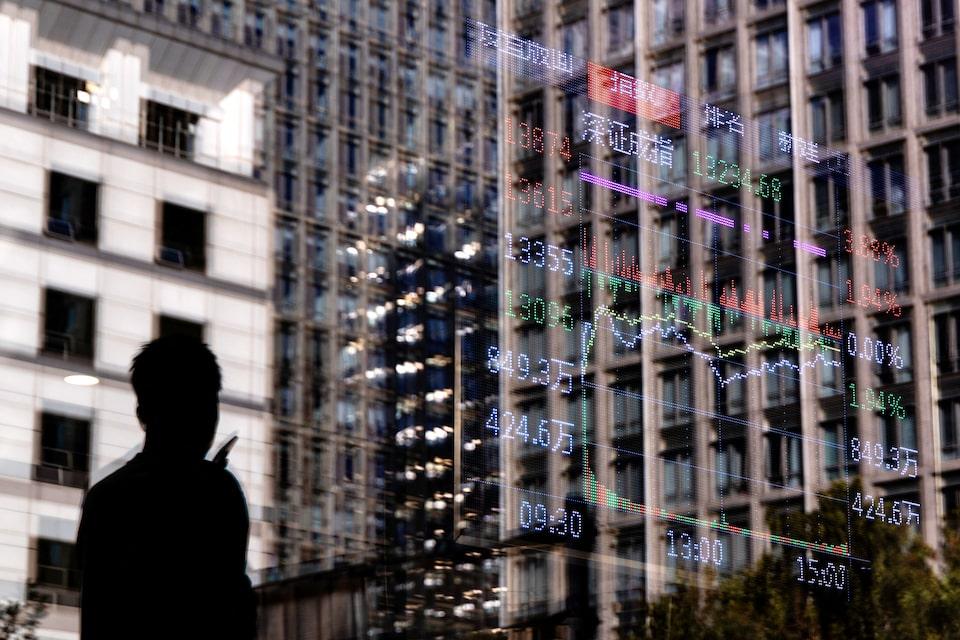
Fed cuts by 25 basis points as expected Powell throws cold water on December rate cut Nvidia tops $5 trillion market capitalization NEW YORK, Oct 29 (Reuters) - Global stocks reversed course and were on pace to snap a four-session streak of gains on Wednesday, while the U.S. dollar extended gains after Federal Reserve Chair Jerome Powell dampened expectations for another U.S. interest rate cut by the central bank in December. The Fed cut rates by 25 basis points, noting the limited data visibility due to the current U.S. government shutdown, and said it is ending the drawdown of its $6.6 trillion balance sheet, also known as quantitative tightening (QT) amid evidence that money market liquidity conditions have begun tightening and bank reserve levels are dropping. Sign up here. Stocks initially held gains after the statement but retreated after Powell said "a further reduction in the policy rate at the December meeting is not a foregone conclusion. Far from it, policy is not on a preset course." This sent U.S. Treasury yields and the dollar higher. "He has basically done that in basically every press conference in which they have had a rate move, he has walked back market expectations for the next meeting," said Tony Welch, chief investment officer at SignatureFD in Atlanta. "We do think the risk to inflation in 2026 is higher and I do believe that December could end up being the last cut in this cycle. The market is expecting three cuts next year, and the market may be sorely disappointed on that." Markets were pricing in a roughly 85% chance of a December cut, which stumbled to about 65% following Powell's comments, according to CME's FedWatch Tool , opens new tab. On Wall Street, U.S. stocks finished off their earlier highs, with the S&P ending the session virtually flat. U.S. stocks have been rallying to record levels recently on cooling U.S.-China trade tensions, expectations for rate cuts from the Fed, outsized spending related to artificial intelligence, and a solid start to the corporate earnings season. Nvidia (NVDA.O) , opens new tab became the first company to cross the $5 trillion valuation mark on Wednesday. Its shares ended up 3%, a day after jumping 5% as CEO Jensen Huang said the AI chip leader will build seven new supercomputers for the U.S. Department of Energy, and that the company has $500 billion in bookings for its chips. After the closing bell, Microsoft (MSFT.O) , opens new tab shed about 3%, Alphabet (GOOGL.O) , opens new tab gained nearly 4% and Meta (META.O) , opens new tab stumbled more than 6% as each of the megacap companies posted quarterly results. The Dow Jones Industrial Average (.DJI) , opens new tab fell 74.37 points, or 0.16%, to 47,632.00, the S&P 500 (.SPX) , opens new tab dropped 0.30 points, or 0.00%, to 6,890.59 and the Nasdaq Composite (.IXIC) , opens new tab rose 130.98 points, or 0.55%, to 23,958.47. MSCI's gauge of stocks across the globe (.MIWD00000PUS) , opens new tab slipped 0.61 points, or 0.06%, to 1,012.99 after hitting an intraday record of 1,017.24 while the pan-European STOXX 600 (.STOXX) , opens new tab index closed down 0.06%. Policy announcements from the Bank of Japan and European Central Bank are due later this week. The dollar index , which measures the greenback against a basket of currencies extended gains after Powell's comments and was last up 0.54% to 99.21, with the euro down 0.47% at $1.1594. Against the Japanese yen , the dollar strengthened 0.47% to 152.82, while sterling weakened 0.67% to $1.318. The Canadian dollar weakened 0.04% versus the greenback to C$1.395 per dollar. The Canadian currency had initially strengthened after the Bank of Canada reduced its key overnight interest rate to 2.25% on Wednesday, as widely expected, and signaled this could mark an end to its cutting cycle unless the outlook for inflation and the economy changes. U.S. President Donald Trump and South Korean President Lee Jae Myung finalized details of their fraught trade deal at a summit in South Korea, and Trump also sounded an optimistic note about an upcoming summit with China's Xi Jinping. In U.S. Treasuries, the yield on benchmark U.S. 10-year notes extended gains after the policy announcement along with the Fed chair's comments, and was last up 9.5 basis points at 4.0785, its biggest one-day jump since June 6. The 2-year note yield, which typically moves in step with rate expectations for the Fed, surged 10.8 basis points to 3.602%, also the biggest rise since June 6. U.S. crude settled up 0.55% to $60.48 a barrel and Brent rose to settle at $64.92 per barrel, up 0.81% on the day on a large drop in U.S. stockpiles and optimism surrounding trade policies. https://www.reuters.com/world/china/global-markets-wrapup-1-2025-10-29/
2025-10-29 05:34
A look at the day ahead in European and global markets from Rae Wee It's a busy day for markets with a key policy decision from the Federal Reserve and a host of earnings in Europe and from Wall Street's tech giants, with much riding on the latter in particular to drive the next leg of the market rally. Sign up here. Results from Microsoft (MSFT.O) , opens new tab, Alphabet (GOOGL.O) , opens new tab and Meta (META.O) , opens new tab are due after the bell. The bar is high for them to deliver solid numbers that would justify stretched valuations. Asia stocks were upbeat on Wednesday thanks to spillover from Wall Street on more optimism over artificial intelligence, with Nvidia (NVDA.O) , opens new tab announcing it would build seven supercomputers for the U.S. Department of Energy. Microsoft meanwhile reached a deal allowing OpenAI to restructure into a public benefit corporation while giving the software giant a stake of 27% in the ChatGPT maker. Things are looking rosy for now, but the key question remains: is the AI boom headed for a bubble or not? Any signals that demand is tailing off or that the massive spending is not paying off as anticipated could spark a rush out of crowded positions in Big Tech stocks. As for the Fed, a 25-basis-point rate cut on Wednesday is pretty much baked in, so investors will be looking for validation of further easing in December. While an ongoing U.S. government shutdown has halted the flow of key economic data at a moment of uncertainty about the health of the U.S. job market, some signs of cooling labour conditions and milder-than-expected inflation should give policymakers confidence to lower rates. Also in focus will be whether the central bank finally announces an end to its long-running balance sheet reduction programme, known as quantitative tightening (QT). Elsewhere in markets, the yen strengthened after U.S. Treasury Secretary Scott Bessent urged Japan's government to give its central bank scope to hike rates, escalating his warning to Tokyo against keeping the yen too weak through prolonged low borrowing costs. The Australian dollar rose after data showed domestic consumer prices jumped by the most in 2-1/2 years in the September quarter, while a shockingly large jump in core inflation seemed to rule out a near-term interest rate cut. And it's golf clubs to golden crowns for U.S. President Donald Trump, who landed in South Korea on Wednesday for the final leg of his Asia trip. He is set to discuss trade, investment and peace with South Korean President Lee Jae Myung in bilateral talks. Lee will gift Trump a replica gold crown and award him with the "Grand Order of Mugunghwa", the country's highest decoration, the presidential office said. Trump arrived in South Korea from Tokyo, where he lavished praise on Japan's first female prime minister, Sanae Takaichi, welcoming her pledge to accelerate a military buildup and signing deals on trade and rare earths. Takaichi had gifted Trump with a putter used by Shinzo Abe, his golfing buddy and Japan's late leader - one of several references to Trump's bond with Abe that underpinned ties between the countries during the U.S. president's first term. Key developments that could influence markets on Wednesday: - Federal Reserve, Bank of Canada rate decisions - Microsoft, Alphabet, Meta earnings - Mercedes-Benz, UBS, Adidas, GSK, Airbus earnings https://www.reuters.com/world/china/global-markets-view-europe-2025-10-29/
2025-10-29 05:32
NEW DELHI, Oct 29 (Reuters) - Goldi Solar, one of India's largest solar module makers, has raised 14.22 billion rupees ($171 million) in growth capital led by electrical equipment major Havells India (HVEL.NS) , opens new tab, the company said on Wednesday. The funding round also drew investments from high-net-worth individuals and firms, including Ambit Global Private Client, Nikhil Kamath, founder of discounted broker Zerodha, Shahi Exports, SRF Transnational Holdings, and NSFO Ventures. Sign up here. The funds raised will support Goldi Solar's manufacturing expansion and solar cell production in Gujarat. The capital infusion, advised by SBI Capital Markets and Saraf and Partners, comes as Goldi ramps up its annual solar PV module capacity nearly five-fold to 14.7 gigawatts, and deepens its push into high-efficiency solar technologies, the company said. The fundraising underscores growing investor interest in India's clean energy transition landscape as the country is looking to double its annual non-fossil fuel power generation capacity to 500 GW. India's clean energy-related manufacturing is also ramping up as Prime Minister Narendra Modi's government is looking to reduce dependence on China through "Make in India" initiatives. Starting June 2026, India's clean energy policy will require developers of government projects and tenders to use only locally-made modules and cells. Most Indian companies use cheaper Chinese solar cells. https://www.reuters.com/sustainability/climate-energy/indias-goldi-solar-secures-171-million-havells-led-funding-round-2025-10-29/

2025-10-29 05:00
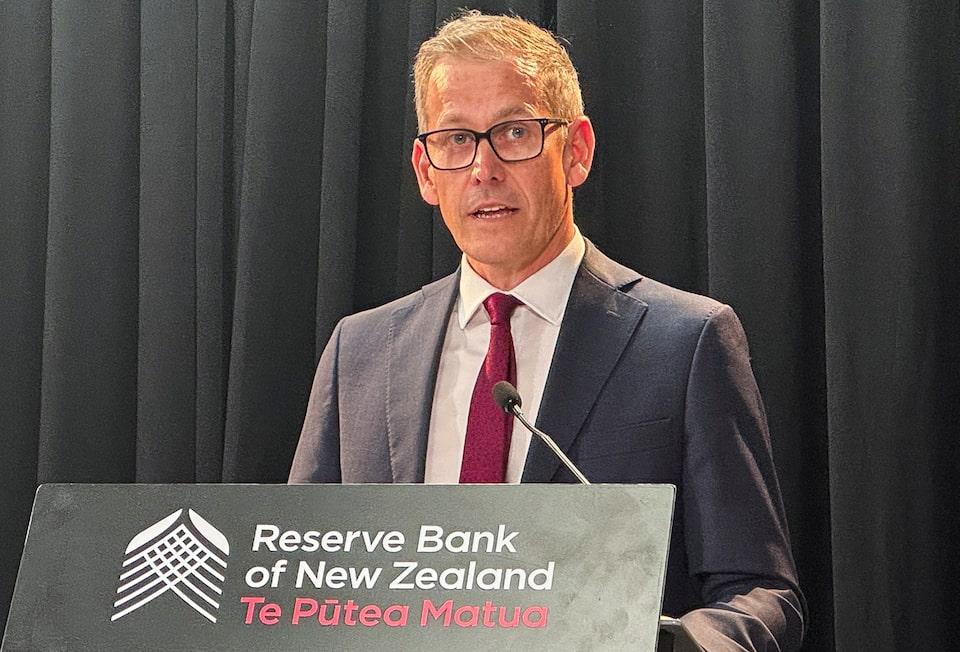
WELLINGTON, Oct 29 (Reuters) - New Zealand central bank Governor Christian Hawkesby said on Wednesday that people did not need to look far to see central bank independence under attack around the globe and that the independence of these banks to set policy remains crucial. Hawkesby said in a speech at a central bank workshop in Auckland that 10 years ago it would have been unheard of for a U.S. president to openly disagree with an interest rate policy decision or call the Federal Reserve chairman a string of names but it has become commonplace. Sign up here. "The worry amongst the global central banking community is that this rubs off and becomes normalised internationally," Hawkesby said. He said that monetary policy is most effective when there are clear, transparent, measurable targets, and a high degree of credibility in the targets and that the government had a role to play in setting those targets. But once the government has set policy objectives "it is crucial that the Reserve Bank has, and is perceived to have, full operational independence to pursue these objectives," Hawkesby said. https://www.reuters.com/world/asia-pacific/rbnz-governor-hawkesby-says-it-is-crucial-central-banks-have-full-independence-2025-10-29/