2024-03-28 11:50
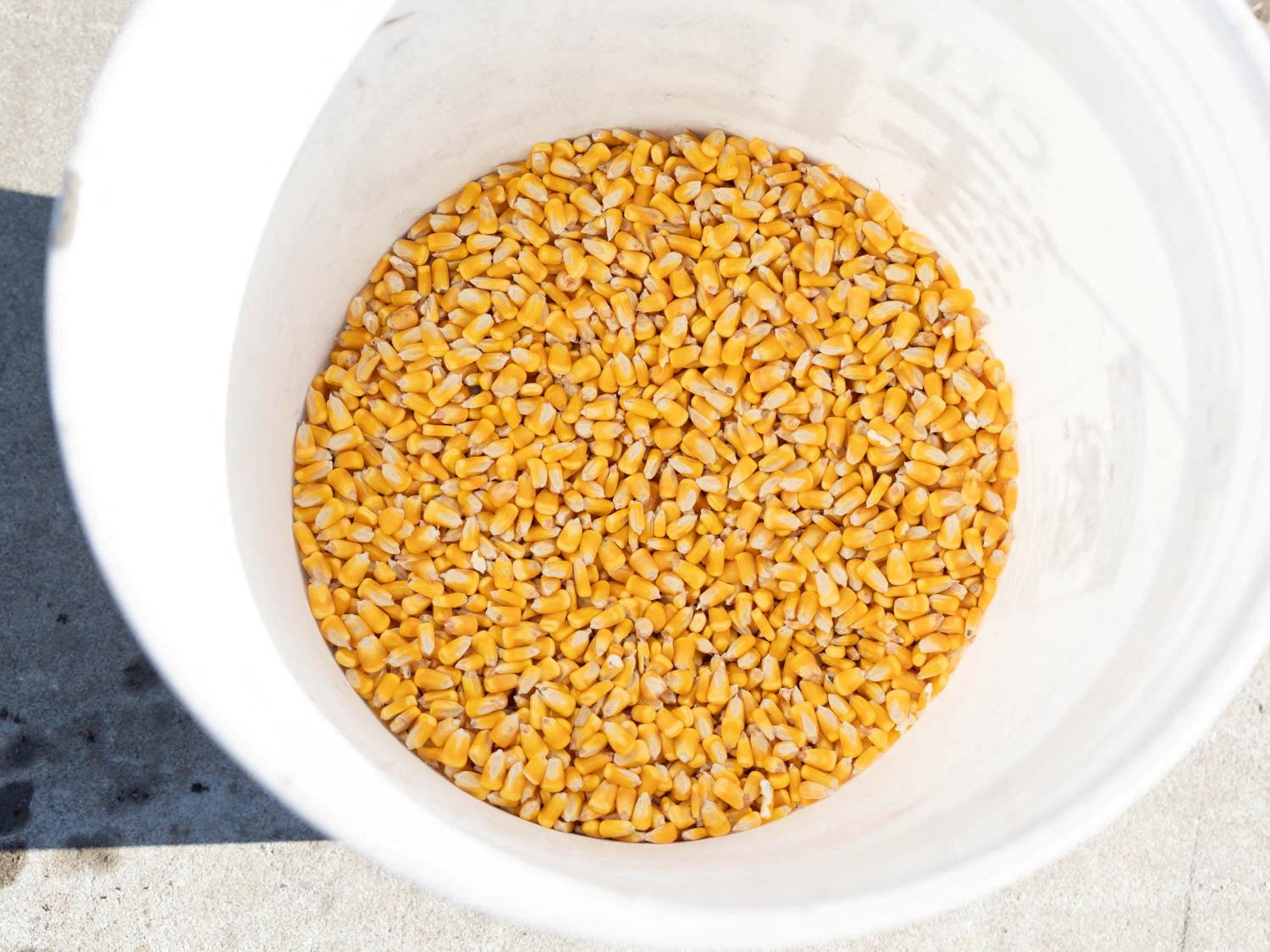
NAPERVILLE, Illinois, March 27 (Reuters) - Thursday’s stocks and acres reports from the U.S. Department of Agriculture always present volatility risks for grain markets since the outcomes are often unpredictable. Chicago corn and soybean prices have moved considerably lower over the last few months with swelling U.S. supplies, so the fear is that stocks and/or acres, if excessively large, will reduce chances for price rallies into spring planting. Chicago futures on this report day tend to follow the trade bias in planted acres instead of stocks, unless the stock miss is huge. For soybeans, bearish March 1 U.S. stocks do not often translate to carryout growth on the full-year balance sheet, but that is usually the case for corn. On average, analysts peg March 1 U.S. corn stocks at 8.427 billion bushels, up 14% from last year to a five-year high for the date. Soybean stocks are seen at 1.828 billion bushels, up 8.4% on the year to a two-year high. March 1 soybean stocks were firmly above trade guesses (bearish) eight times in the last 19 years, but USDA’s ending stock projection rose from March to April only twice in those eight years. However, of the seven solidly bearish March 1 corn stocks results, USDA’s April estimate of U.S. corn ending stocks was higher than in March in six of those years. These trends suggest that perhaps USDA itself learns more about corn disappearance versus that of soybeans following its March 1 stocks survey, and just because the trade might greatly underestimate March 1 soy stocks, that does not mean the USDA was previously off track. March 1 corn stock estimates imply second quarter (Q2, December-February) usage up 9.5% on the year to a two-year Q2 high, though soybean usage during the period is pegged down 12.2% from a year ago to a four-year low. Preliminary export data suggests Q2 corn exports up 38% on the year but soybeans down 28%. Corn-based ethanol production was about 4.8% better than Q2 last year and soybean processing among National Oilseed Processors Association members was up 8.7%. March 1 marks the halfway point of the 2023-24 U.S. corn and soybean marketing year, and USDA projects those ending stocks up 60% and 19% on the year, respectively. Usage is not even throughout the year, so Q2 disappearance may not be proportional to the year-end assumptions. BIASES AND PRICE TRENDS Last year, the trade broke a six-year streak of underestimating March 1 soybean stocks. Interestingly, that followed a bullish soy stocks outcome for Dec. 1, 2022, which broke a four-year streak of bearish Dec. 1 outcomes. Dec. 1, 2023 stocks were slightly bigger than analysts expected (bearish). Analysts are on a four-year streak of overestimating March 1 corn stocks, as the last bearish outcome was in 2019. That was also the last time CBOT corn futures suffered a dramatic fall on this report day, which resulted in fresh contract lows. Large speculators had inked record-large short bets in CBOT corn futures and options in March 2019 but covered some into the report. However, corn acres and stocks were bearish that year, and funds pushed to another record short in April before poor U.S. planting weather forced them to cover. March 1 wheat stocks are seen at 1.044 billion bushels, up 11% on the year to a three-year high. The trade biases on March 1 wheat stocks are completely mixed over the last few years. Karen Braun is a market analyst for Reuters. Views expressed above are her own. Get a look at the day ahead in U.S. and global markets with the Morning Bid U.S. newsletter. Sign up here. https://www.reuters.com/markets/commodities/will-big-us-corn-soy-carryouts-get-bigger-if-stocks-are-bearish-thursday-2024-03-28/
2024-03-28 11:27
NEW DELHI, March 28 (Reuters) - India will send two delegations next month to Chile to scout for lithium and copper resources, a government source said, as rapid economic expansion and New Delhi's efforts to speed up the energy transition stoke demand for critical minerals. Chile is a key target as it is the world's biggest supplier of copper and the second-biggest producer of lithium, which are essential for electric vehicle batteries and renewable energy systems in the push away from fossil fuels. As part of India's drive to explore overseas for mineral assets, state firms National Aluminium Company, Hindustan Copper and unlisted Mineral Exploration and Consultancy have set up a company called Khanij Bidesh India (KABIL). "KABIL has to send a delegation to Chile in April," said the source, who did not wish to be named as details of the plan have not been made public. "We are interested in buying assets. We are trying to facilitate private and government-owned companies to acquire assets in other countries as well." The government is separately sending a delegation to look for copper assets, the source said. The federal Ministry of Mines and KABIL did not respond to Reuters emails for comments. India, the world's third-biggest emitter of greenhouse gases behind China and the United States, has pledged to achieve a net-zero carbon emission target by 2070 and increase the share of renewables in its energy mix to 50% by 2030. In January, KABIL signed a 2-billion-rupee ($24.01 million) lithium exploration pact for five blocks in Argentina. The deal, signed with an Argentinian state-run enterprise, gives KABIL exploration and development rights for commercial production. KABIL, which is currently setting up an office in Argentina, is also in talks with another company in the Latin American country for lithium exploration, the source said. At the same time, KABIL is talking to the Australian government to help appoint a consultant to restart due diligence that would pave the way for a lithium block acquisition in the country, the source said. India is also looking at Africa for copper, cobalt and other critical minerals, V.L. Kantha Rao, the most senior official at the Ministry of Mines, said last week. India is in the process of auctioning 38 critical and strategic minerals blocks, including lithium. ($1 = 83.30 rupees) Get a look at the day ahead in U.S. and global markets with the Morning Bid U.S. newsletter. Sign up here. https://www.reuters.com/markets/commodities/india-send-teams-chile-seeking-lithium-copper-assets-source-says-2024-03-28/

2024-03-28 11:26
PARIS, March 28 (Reuters) - French Bordeaux wine exporters, who supply 9% of China's total wine and spirits imports, expect a rapid fall in exports after China's decision on Thursday to lift import tariffs on Australian wine. France is China's first wine supplier and China is Bordeaux wine's largest export market in volume. "Such trade agreements have a nearly immediate impact on our exports," CIVB spokeswoman Sara Briot-Lesage said. A free trade agreement between France and Japan that went into force in early 2019 had led to a rapid jump in exchanges between the two countries, she said. "This will likely happen rapidly between Australia and China. Those who don't have free trade deals will be penalised," she added. China will lift anti-dumping and anti-subsidy tariffs on Australian wine from March 29, the Chinese commerce ministry said on Thursday, ending three years of punitive levies and offering long-awaited relief to Australian wine producers. China still imposes import duties on French wine, which leaves the country at about 7.7 euros per bottle. The Reuters Daily Briefing newsletter provides all the news you need to start your day. Sign up here. https://www.reuters.com/world/asia-pacific/chinas-duty-clear-australian-wine-will-hurt-bordeaux-sales-producers-say-2024-03-28/

2024-03-28 11:13
Brent forecast raised to $82.33 a barrel for 2024 WTI projection lifted to $78.09 a barrel First upward revision in 2024 price forecasts since October For table of crude price forecasts, click March 28 (Reuters) - Oil prices will gain some momentum this year as demand picks up and output curbs by the OPEC+ producer group continue to squeeze supply that is already being pressured by military conflicts, a Reuters poll showed on Thursday. A survey of 46 economists and analysts forecast that Brent crude would average $82.33 a barrel in 2024, up from the $81.13 consensus projection in February. U.S. crude expectations were raised to $78.09, up from the $76.54 forecast last month. This was the first upward revision in 2024 consensus forecasts since the October poll. "We see the oil price rally going further until the summer months," said Florian Grunberger, senior analyst at data and analytics firm Kpler. "This is due to the geopolitical risk premium and the interests of OPEC+ members, coupled with increasing demand in China." Oil prices have added more than 12% in the quarter so far, fuelled by geopolitical tensions in the Middle East, Houthi attacks on Red Sea shipping and recent Ukrainian drone attacks on Russian refineries. On the demand side, the overall consensus was roughly in line with the 1.3 million barrel per day (bpd) rise for 2024 projected by the International Energy Agency. The IEA's forecast was far less bullish than that of OPEC, which expects demand growth at 2.25 million bpd this year and said the 2024 and 2025 growth trajectories of India, China and the United States could exceed current expectations. "Traders have now fully absorbed the implications of the OPEC+ supply cut extensions at a time when demand is proving more robust than expected," said Matthew Sherwood, lead commodities analyst at the Economist Intelligence Unit. OPEC+ members led by Saudi Arabia and Russia are unlikely to make any oil output policy changes until a full ministerial gathering in June, three OPEC+ sources told Reuters. "Convincing OPEC+ members to under-produce as a group to maintain oil prices above a certain level is not going to be easy," said Suvro Sarkar, energy sector team lead at DBS Bank, pointing to rising surplus capacity and the loss of OPEC+ market share to non-OPEC+ producers such as the United States. The Reuters Power Up newsletter provides everything you need to know about the global energy industry. Sign up here. https://www.reuters.com/business/energy/firmer-oil-prices-expected-demand-builds-supply-curbs-persist-2024-03-28/

2024-03-28 11:09
LONDON, March 28 (Reuters) - Britain's greenhouse gas (GHG) emissions fell by 5.4% in 2023, government data showed on Thursday, with less gas used to generate electricity and heat homes. The country's target to reach net zero emissions by 2050 will require changes to the way people eat and travel, as well as how electricity is produced. "This decrease in 2023 is primarily due to a reduction in gas demand from the electricity supply and buildings and product uses sectors," the Department for Energy Security and Net Zero (DESNZ) said. Total greenhouse gas emissions were estimated at 384.2 million tonnes of carbon dioxide equivalent in 2023. The electricity sector, which makes up around 11% of Britain's GHG emissions, recorded the biggest drop at 41.1 MtCO2e compared with 51.9 MtCO2e in 2022. A rebound in French nuclear power output in 2023 meant Britain was able to import more electricity, cutting the need for homegrown fossil fuel power production, while electricity demand also fell, DESNZ said. Gas power generation in Britain fell by 21.1% in 2023, the data showed. In the buildings and product uses sector emissions fell by 6.2% "largely as a result of reduced demand for heating due to high energy and other costs", DESNZ said. Energy prices for most UK households hit record highs at the end of 2022 despite support from the government and did not begin to fall until July 2023. Emissions from the industrial sector fell by 8% mainly due to reduced fuel consumption in the iron and steel industries. In the domestic transport sector, which includes road travel, aviation and shipping, emissions were down by 1.4%. Emissions of carbon dioxide (CO2), the main greenhouse gas, were estimated at 302.8 million tonnes, 6.6% lower than in 2022. The Reuters Daily Briefing newsletter provides all the news you need to start your day. Sign up here. https://www.reuters.com/world/uk/uks-greenhouse-gas-emissions-fell-54-2023-government-data-shows-2024-03-28/

2024-03-28 10:39
EU neighbours Hungary, Romania struggle with high deficits Data: Fiscal slippage in both countries in first two months High interest bills, inflation-linked items lift spending Delayed fiscal consolidation a top 2024 CEE credit risk -S&P BUDAPEST, March 28 (Reuters) - Hungary's central bank warned on Thursday the 2024 budget gap could exceed the government's recently raised target of 4.5% of gross domestic product, calling for credible fiscal planning to cut market risks for central Europe's most indebted economy. Eastern European Union neighbours Hungary and Romania have struggled since the COVID-19 pandemic to control their budget deficits, with their shortfalls averaging about 7% of GDP over the past four years, well above EU average levels. Data for the first two months showed a rise in the deficit in both countries, leading Hungary to abandon plans to cut the shortfall below the EU's ceiling of 3% of GDP and raising risks to EU fund flows for Romania, one of the bloc's poorest members. "For the debt ratio to decline continuously in 2024 and Hungary's risk perception to improve, it is also necessary to achieve the set deficit targets in a credible manner," the National Bank of Hungary said. "The high inflationary environment over the past two years has led to a significant increase in government interest expenditure, which will continue to be a heavy burden on the budget this year as well." It said the shortfall could exceed the EU's 3% of GDP threshold even in 2026, when nationalist Prime Minister Viktor Orban will face a parliamentary election. Despite tax hikes at the start of the year, the European Commission has warned that Romania's shortfall could rise back to 7% of economic output this year, while Hungary's central bank sees the 2024 budget deficit between 4.5% and 5% of GDP. "We have highlighted delayed fiscal consolidation among top credit risks for CEE sovereigns for 2024," Karen Vartapetov, a sovereign ratings analyst at S&P Global Ratings, told Reuters. "Fiscal consolidation plans will be challenging due to a heavy election calendar, high interest bills and ambitious defence spending commitments," he said in an emailed response to questions. Any loss of EU funding due to a failure to meet fiscal rules could hurt economic growth, Vartapetov added. S&P has projected general government interest spending at nearly a tenth of revenue for Hungary and more than 6% for Romania this year after an inflation surge into the double digits triggered aggressive rate hikes across central Europe. Hungary's central bank, which has slashed borrowing costs by 975 basis points since May to 8.25%, slowed the pace of rate cuts this week, while a rise in inflation at the start of 2024 and other risks have so far prevented rate cuts in Romania. "Hungarian ministers are openly talking about a new deficit target of 4.5% of GDP, which is likely to be officially amended in the spring parliamentary session," ING economist Peter Virovacz said in a note. "However, based on our technical projections, we can already see a slippage of around 1.0 to 1.5 ppt even on the soon-to-be-updated deficit target." Get a look at the day ahead in European and global markets with the Morning Bid Europe newsletter. Sign up here. https://www.reuters.com/markets/europe/hungary-central-bank-says-credible-fiscal-planning-needed-cut-risks-2024-03-28/